


Introduction
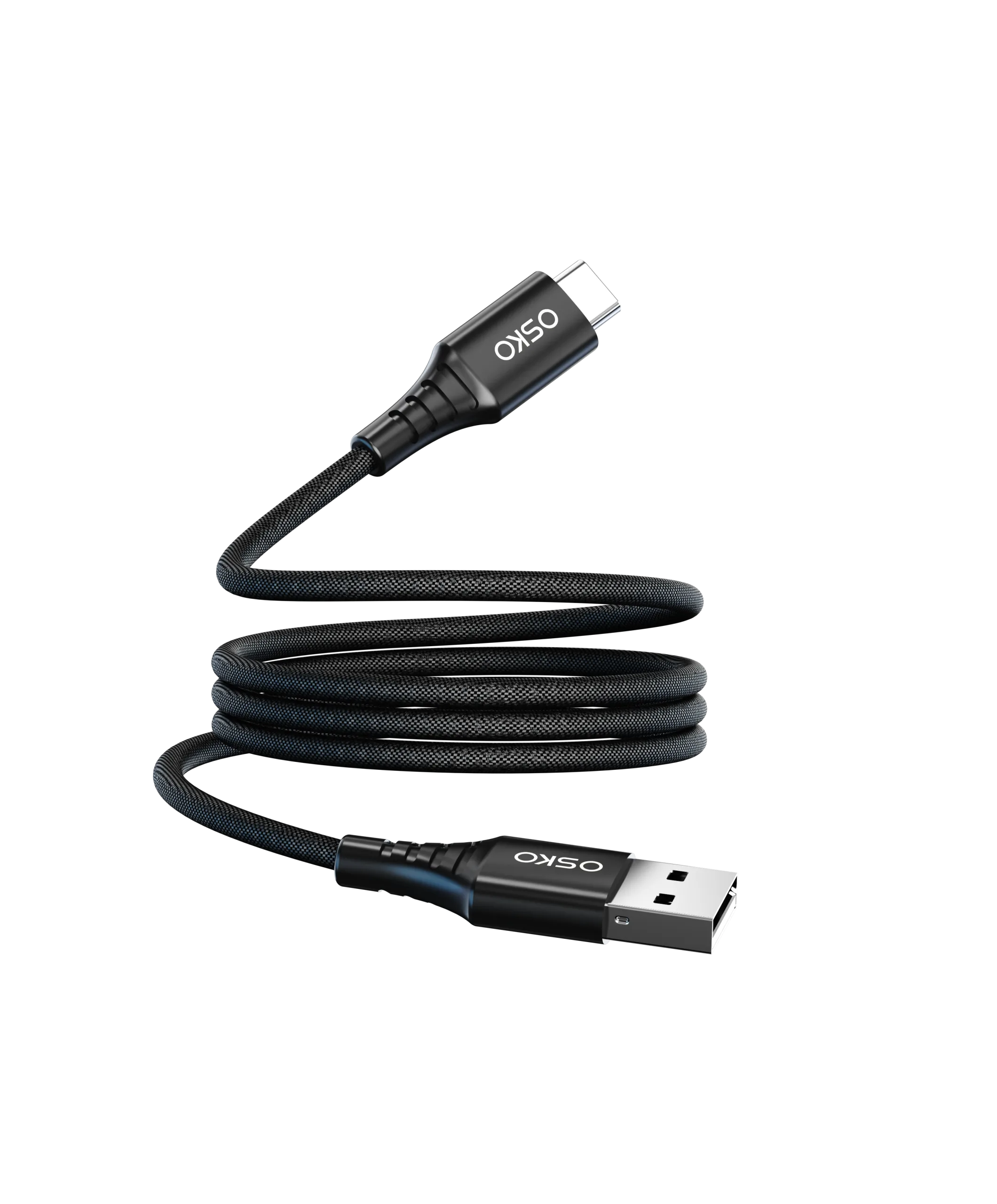
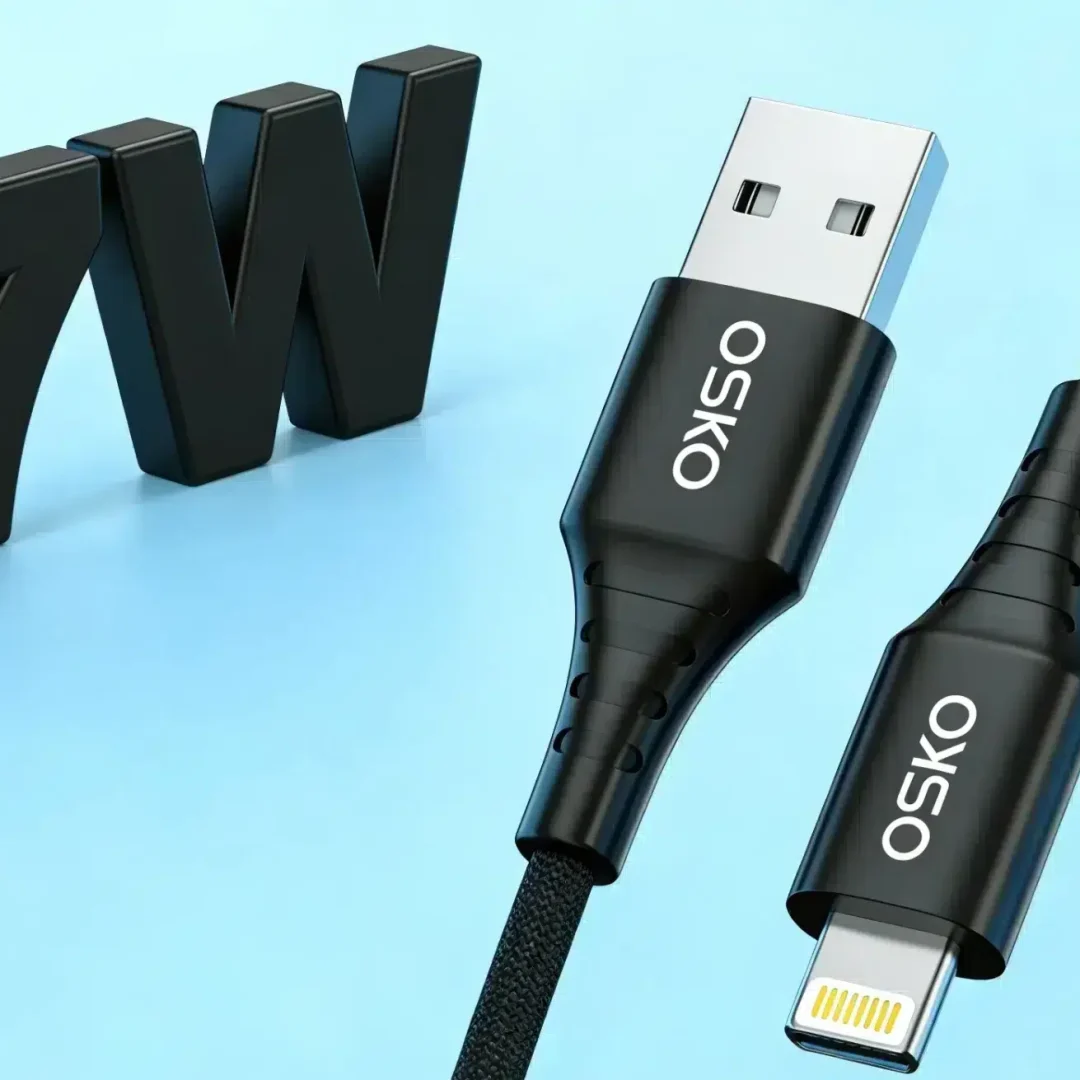
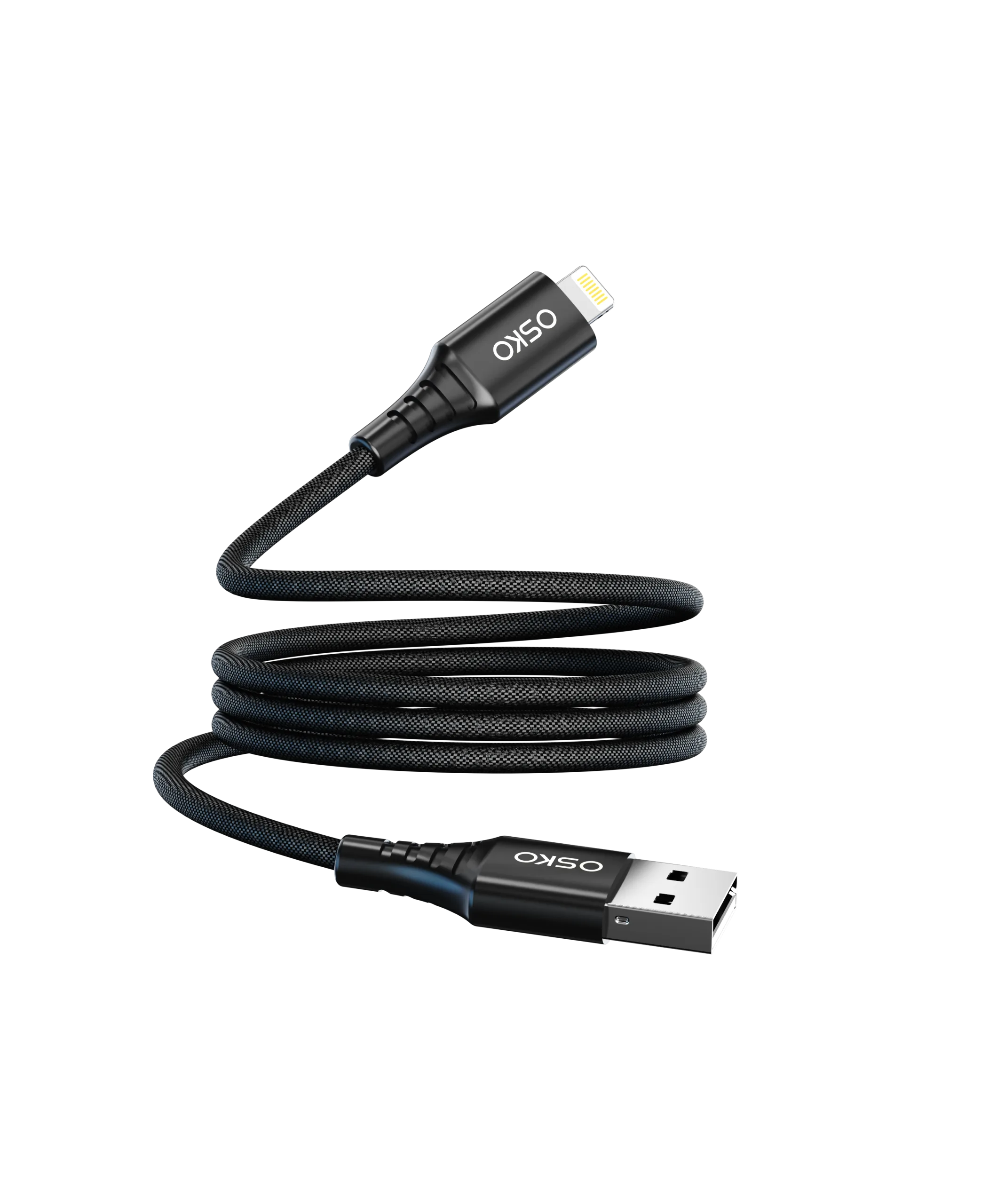
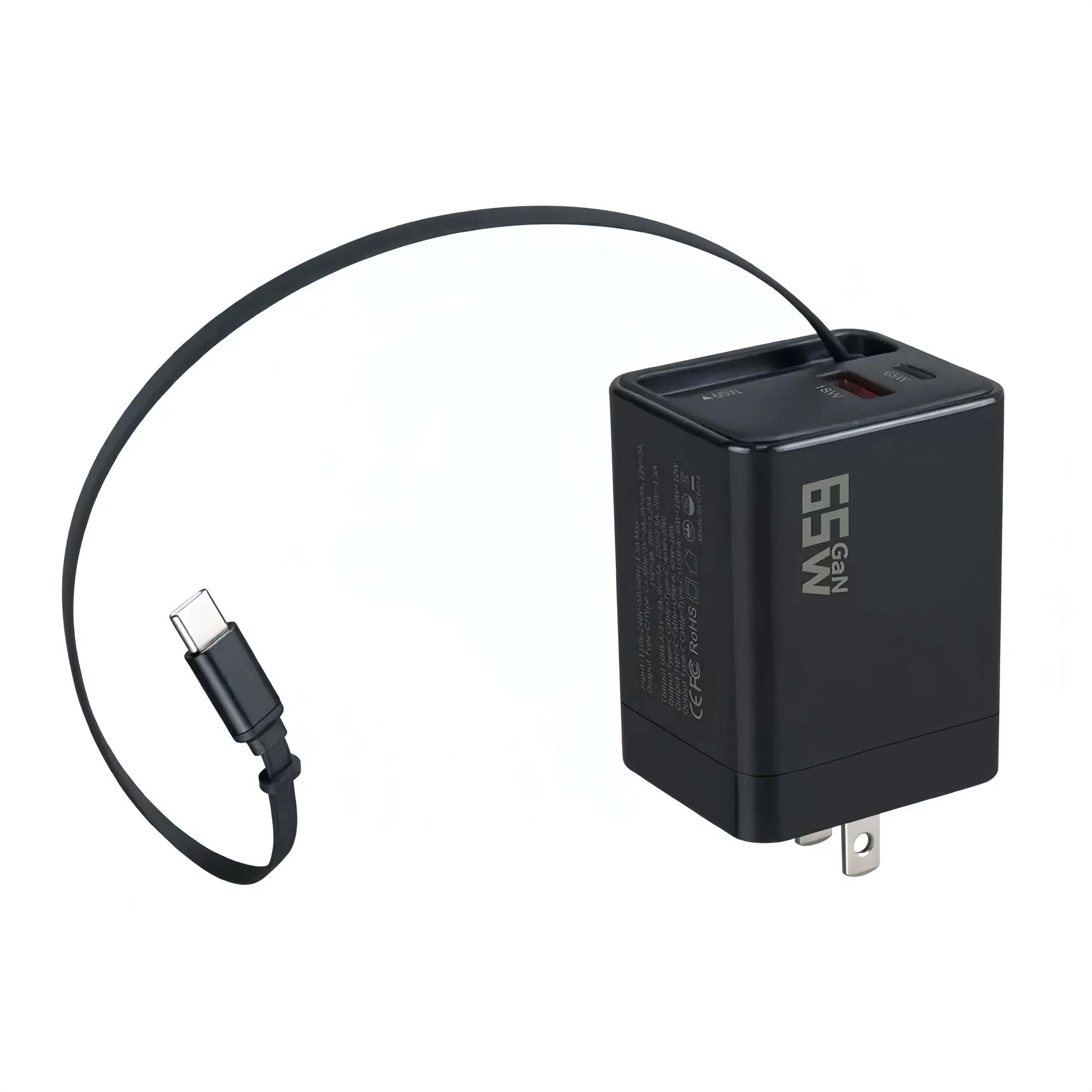
The comparison between a 100W vs 240W USB-C cable is not simply about charging speed. It is fundamentally about power delivery architecture, safety limits, and system-level engineering design.
Both cables are designed for fast charging ecosystems, but they belong to different generations of USB Power Delivery standards:
100W cables: USB PD 3.0 (up to 20V / 5A)
240W cables: USB PD 3.1 (up to 48V / 5A, Extended Power Range)
In real-world usage, the difference is less about current devices and more about future-proofing, thermal control, and compatibility with high-power laptops.
Material Science & Dielectric Properties
The internal structure of a USB-C cable determines how much power it can safely transmit without overheating or signal loss.
Power Delivery Architecture Difference
100W USB-C Cable (PD 3.0)
Maximum power: 100W
Voltage: up to 20V
Current: up to 5A
Common use: laptops, tablets, phones
240W USB-C Cable (PD 3.1 EPR)
Maximum power: 240W
Voltage: up to 48V
Current: up to 5A
Common use: gaming laptops, workstations, docking systems
The key engineering shift is higher voltage architecture, not just higher wattage.
E-Marker Chip Requirement
Both cable types rely on E-Marker USB-C cable technology, but requirements differ:
100W cables: E-Marker recommended (especially 5A versions)
240W cables: E-Marker mandatory
The chip enables:
Power capability identification
Safe current negotiation
Device compatibility verification
Thermal safety control
Without it, systems automatically downgrade power delivery.
Conductor and Resistance Design
Higher wattage cables require stricter resistance control:
100W cable: standard low-resistance copper
240W cable: reinforced oxygen-free copper with lower impedance
Engineering focus areas:
Reduced DC resistance
Improved thermal dissipation
Stable voltage under load
This is critical in fast charging laptop cable systems where sustained load is common.
Insulation and Shielding Structure
Both cable types use similar base materials:
TPE insulation (flexibility + heat resistance)
PE dielectric layers (low signal loss)
PVC outer options (budget applications)
However, 240W cables typically include:
Enhanced multi-layer EMI shielding
Thicker conductor insulation
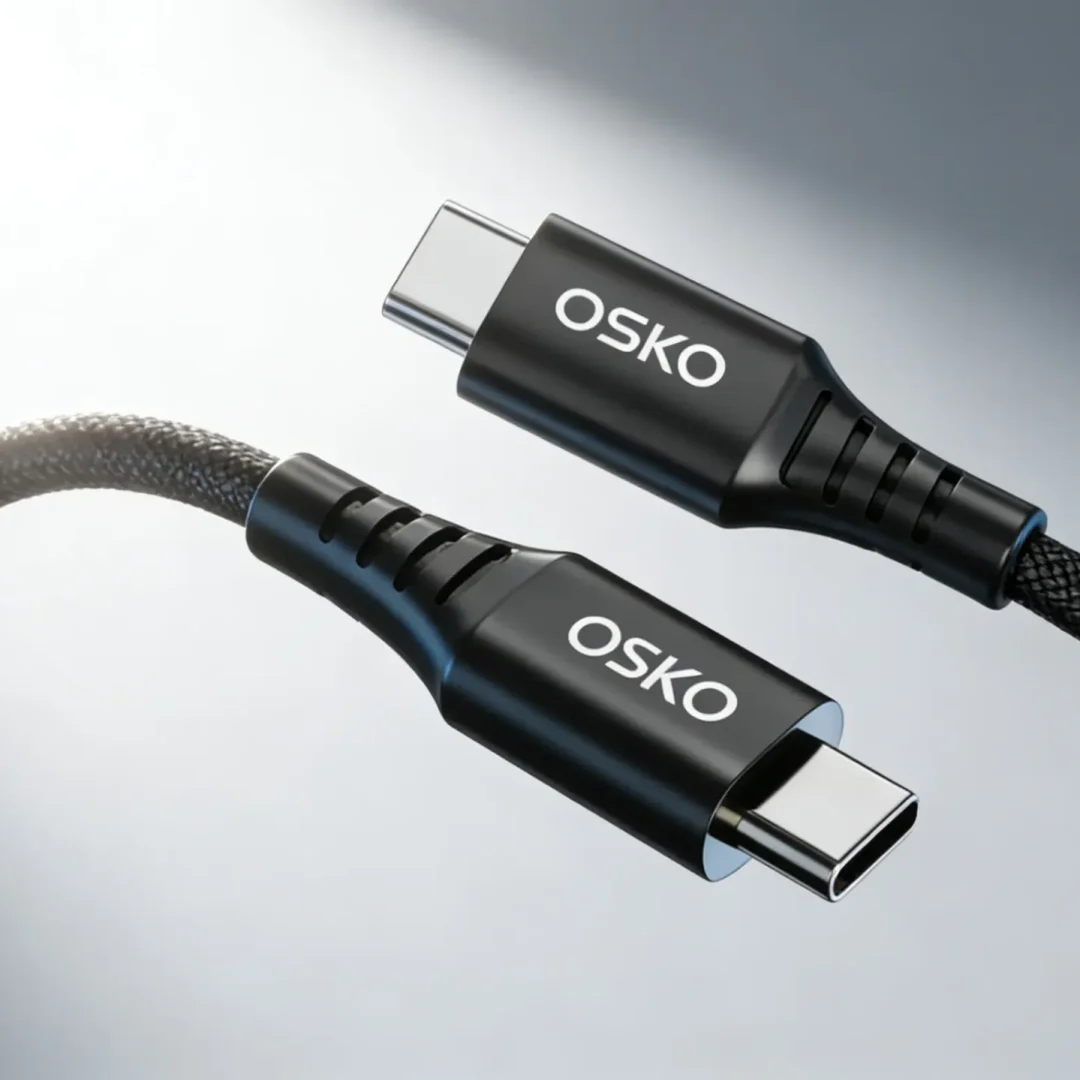
Reinforced connector strain relief
This improves durability under high-load conditions.
Case Study
Global Laptop Charging Ecosystem Optimization Project
A North American distributor evaluated whether upgrading from 100W to 240W cables improved user experience.
Devices Tested
MacBook Pro 14 / 16-inch
High-end gaming laptops (RTX 3070–4090 class)
USB-C docking stations
Universal PD chargers (65W–240W range)
Engineering Observations
MacBook charging performance unchanged (≤140W max input)
Gaming laptops benefited from 240W headroom
100W cables reached thermal limits under peak load
240W cables showed lower temperature rise
OSKO Engineering Analysis
Key conclusion:
100W cable = sufficient for mainstream laptops
240W cable = required for high-performance gaming/workstation systems
Cable wattage does not increase speed; it increases safe delivery ceiling
System-Level Result
100W: cost-efficient, stable for everyday use
240W: higher thermal safety margin, better future compatibility
Selection Guide
100W vs 240W Cable Decision Matrix
| Feature | 100W USB-C Cable | 240W USB-C Cable |
|---|---|---|
| Power standard | PD 3.0 | PD 3.1 |
| Max wattage | 100W | 240W |
| E-Marker | Optional | Required |
| Laptop compatibility | Most ultrabooks | Gaming/workstations |
| Heat performance | Normal | Cooler under load |
| Future-proofing | Medium | High |
When to Choose 100W Cable
A 100W USB-C cable is ideal if:
You use MacBook Air or ultrabooks
Your devices do not exceed 100W charging
You want cost-efficient accessories
You only use phones/tablets/laptops under 100W
When to Choose 240W Cable
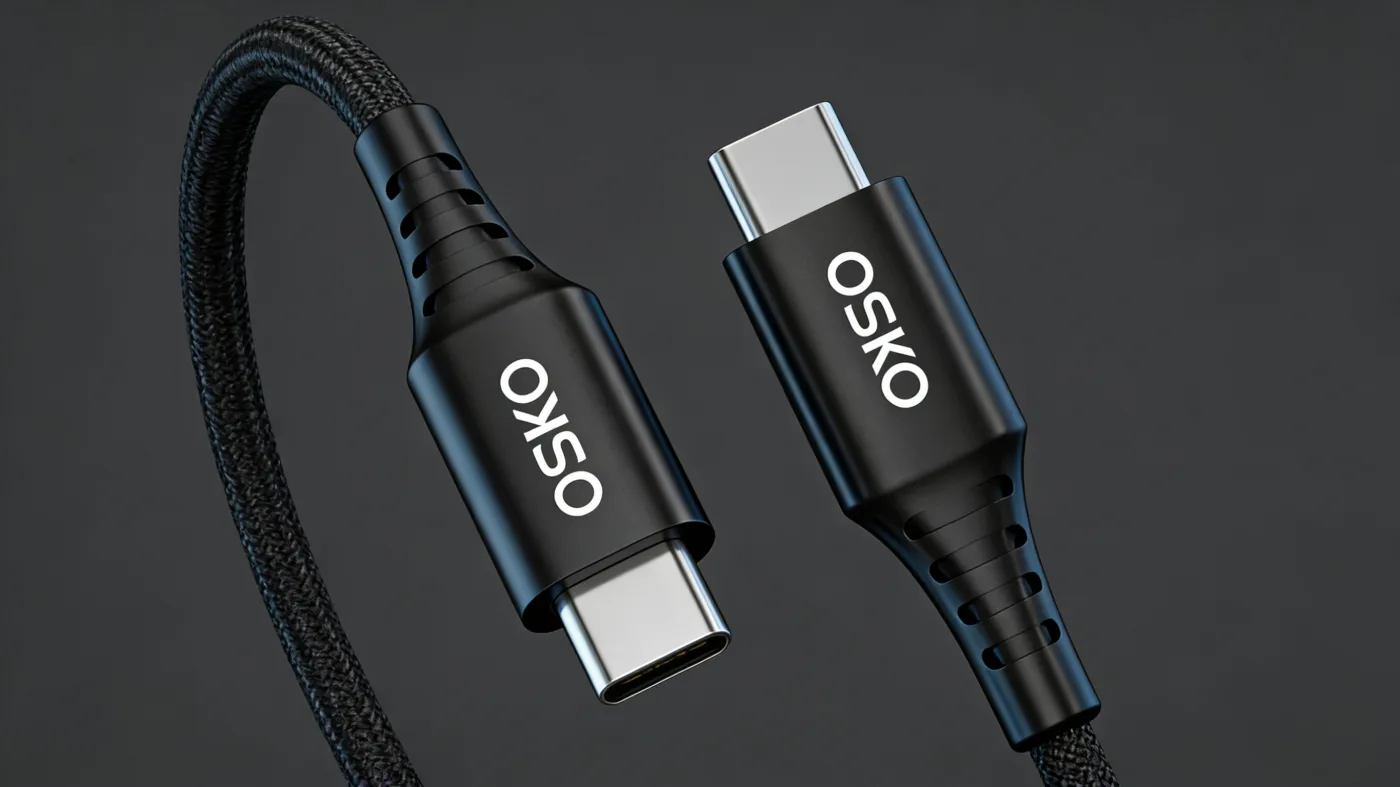
A 240W USB-C cable is better if:
You use gaming laptops or workstations
You need docking station high-power support
You want one cable for all devices
You require PD 3.1 future compatibility
OEM Manufacturing Considerations
For global buyers, selecting between 100W and 240W cables depends on:
USB-IF certification compliance
E-Marker chip sourcing stability
Conductor resistance testing capability
Thermal cycling performance validation
Common sourcing categories include:
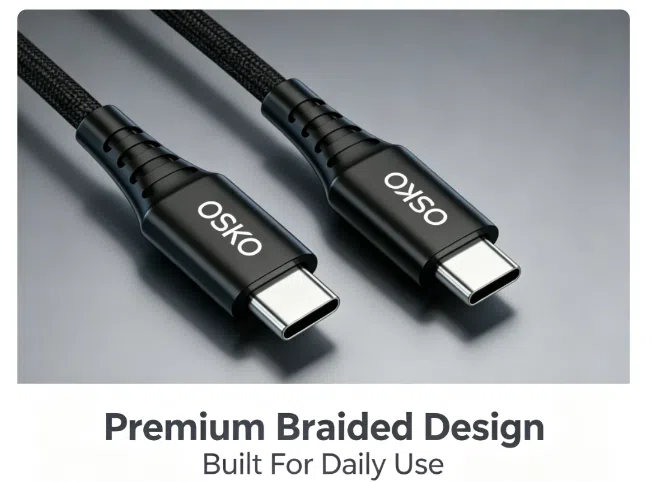
Heavy duty braided USB-C cable manufacturer
White label 240W fast charging cable wholesale
Durable nylon braided Type C charging cable factory
OEM ODM custom length USB C cables
Bulk custom 6ft 10ft USB-C cables
Material Design Impact
100W cables focus on balance between flexibility and cost
240W cables prioritize thermal stability and durability
Typical high-end design uses:
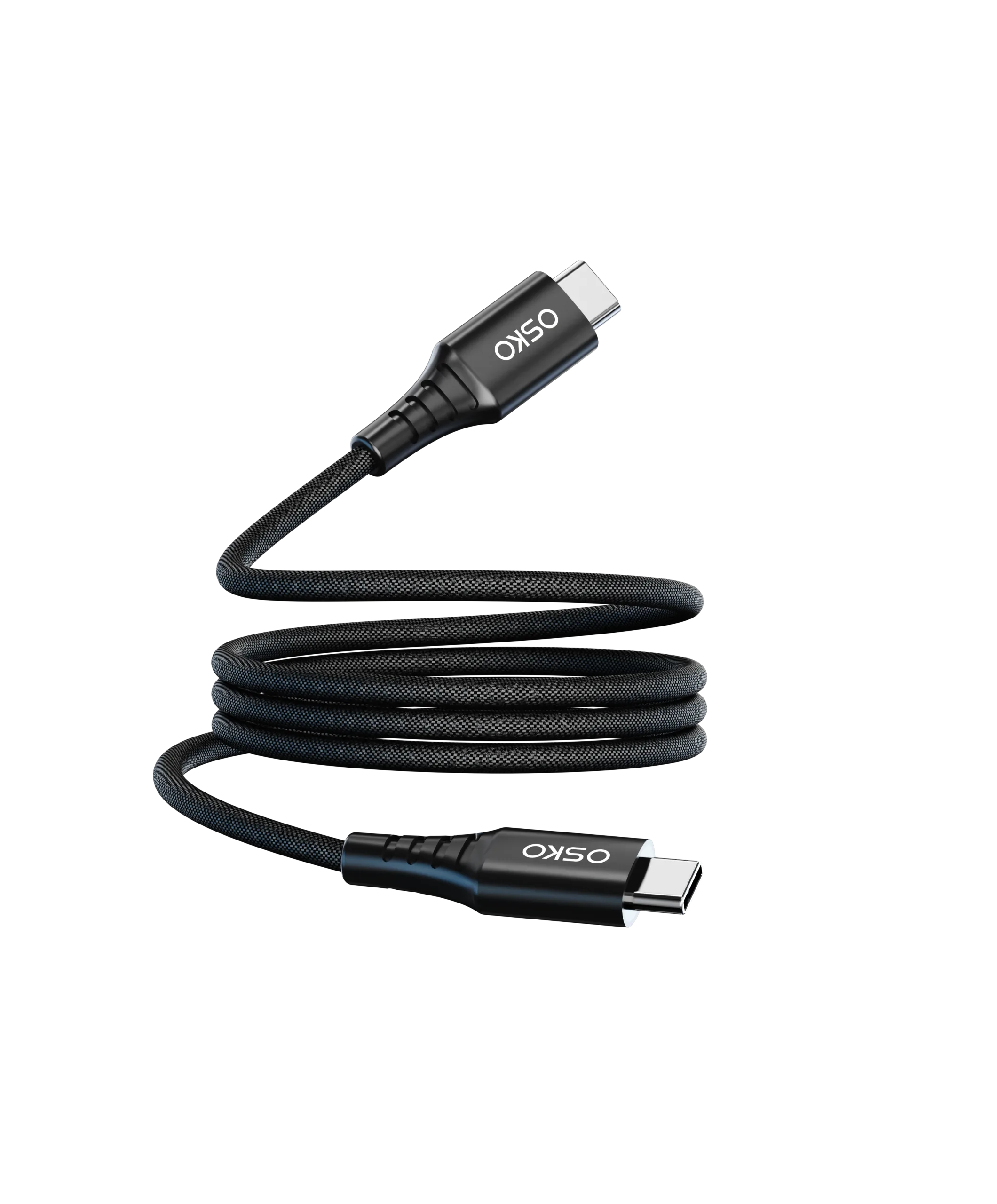
Nylon braided outer layer
Oxygen-free copper conductors
Multi-layer shielding system
Reinforced connector housing
FAQ
Does 240W charge faster than 100W?
No. Device determines charging speed, not cable wattage.
Is 100W enough for most laptops?
Yes. Most laptops operate below 100W or peak slightly above.
Is 240W cable safe for all devices?
Yes. It automatically negotiates lower power when needed
Do I need E-Marker for 100W cable?
Recommended for 5A cables, mandatory for 240W cables.
What is the main advantage of 240W cable?
Higher safety margin and future compatibility, not speed.
Summary
The difference between a 100W vs 240W USB-C cable lies in engineering headroom rather than immediate charging speed.
100W cables are sufficient for most consumer laptops and mobile devices, while 240W cables are designed for high-performance systems requiring PD 3.1 support, stronger thermal control, and future-proof compatibility.
From an engineering standpoint, 240W cables provide a higher safety ceiling and improved durability, while 100W cables offer cost efficiency and wide compatibility.
The correct choice depends on device ecosystem, usage intensity, and long-term upgrade planning rather than wattage alone.
Contact Information
OSKO provides OEM/ODM USB-C cable solutions, including:
60W / 100W / 240W USB-C charging cables
PD 3.0 and PD 3.1 certified cable systems
Nylon braided durable cable designs
Custom branding and packaging
Wholesale and bulk supply programs
Request Engineering Support
Name: ___________________
Company: ___________________
Email: ___________________
Product Type: USB-C Cable / PD Cable / OEM Cable
Target Market: North America / Europe / Global
Requirements: ___________________
OSKO engineering team provides full technical documentation, compliance support, and OEM customization solutions for global cable brands.