
Introduction
USB-C has become the universal connector for smartphones, tablets, laptops, gaming devices, power banks, and charging accessories. However, one of the biggest misconceptions among consumers and even purchasing managers is that every USB-C cable supports fast charging.
The reality is very different.
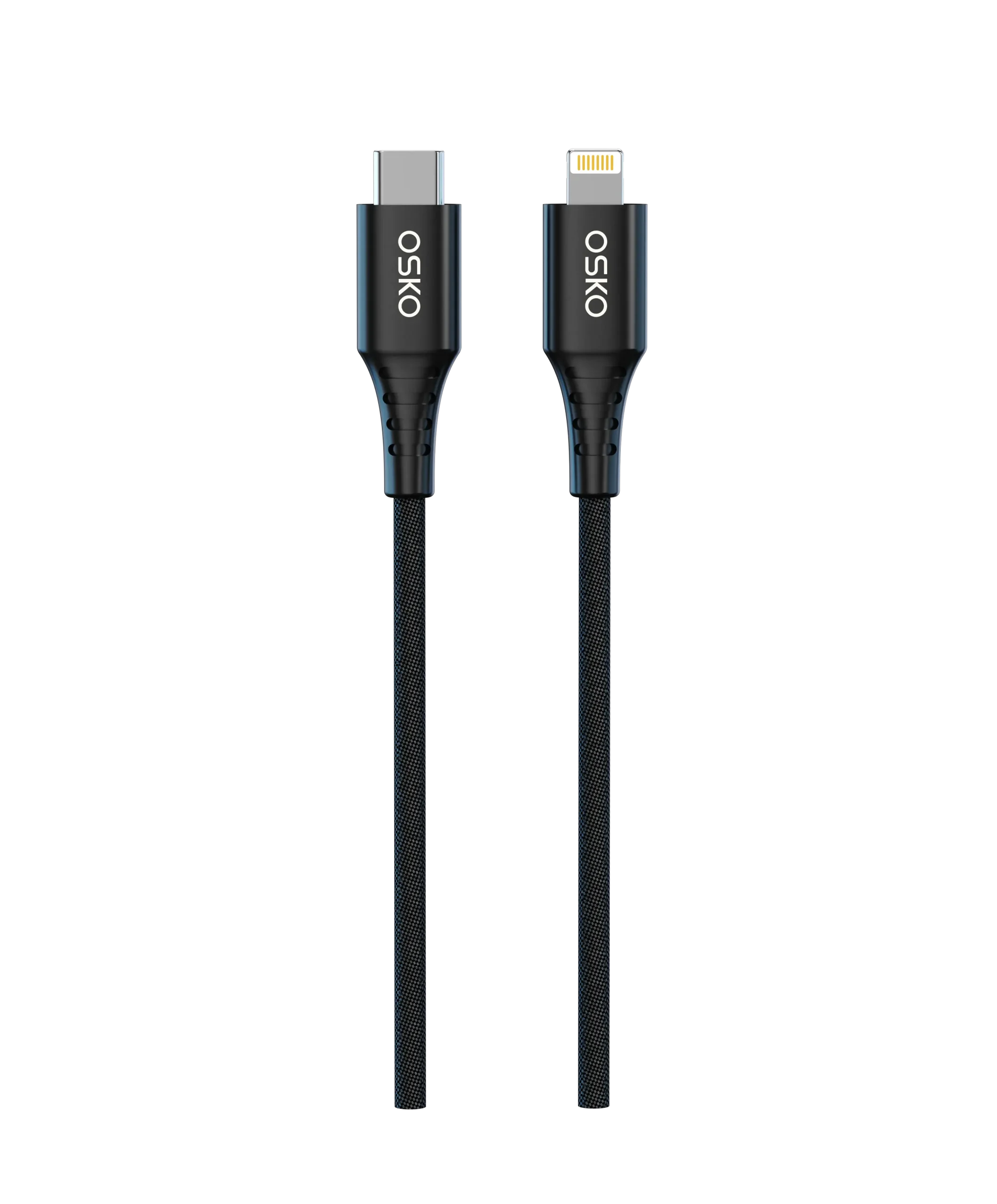
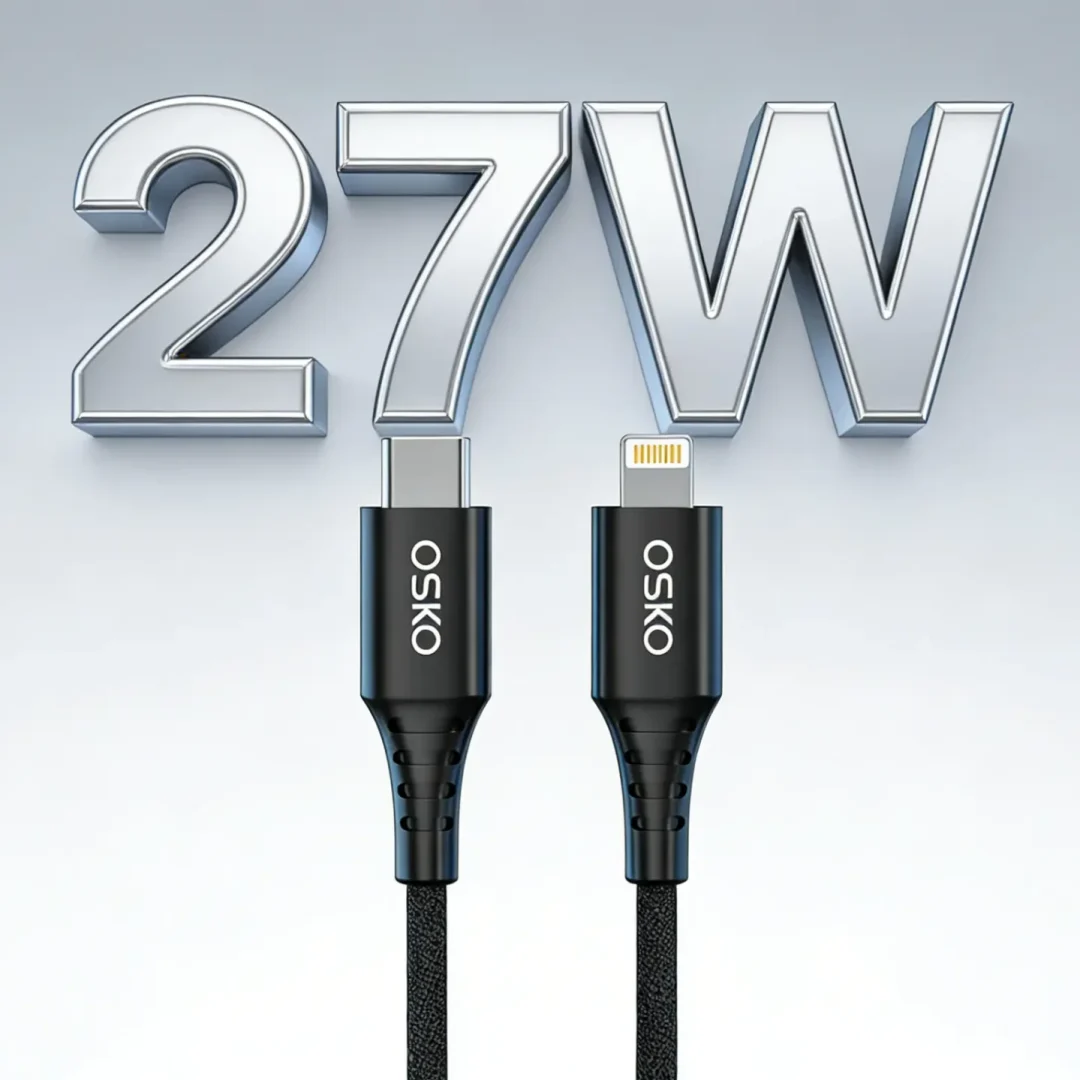
Two USB-C cables may look identical from the outside, yet one may charge a MacBook Pro at 100W while another is limited to only 15W or 27W. This often leads to slow charging, overheating, compatibility issues, and customer dissatisfaction.
For retailers, OEM USB cable brands, and wholesale USB cable buyers, understanding how to identify a fast charging USB-C cable is essential for product selection and quality control.
This guide explains the key technical indicators that determine whether a USB-C cable supports fast charging and how to evaluate cables for consumer and commercial applications.
Applicable Scenarios
Fast charging USB-C cables are widely used across multiple industries and applications.
Consumer Electronics
Typical devices include:
iPhone 15 Series
iPhone 16 Series
Samsung Galaxy devices
Google Pixel phones
Tablets
Power banks
Consumers increasingly expect charging speeds above 20W.
Laptop Charging
High-power charging applications include:
MacBook Air
MacBook Pro
Dell XPS
Lenovo ThinkPad
HP Spectre
These devices typically require 60W, 100W, or 140W charging solutions.
Automotive Charging
Vehicle users increasingly rely on:
USB-C car chargers
Apple CarPlay cables
Android Auto cables
Fast charging support improves user experience during navigation and travel.
OEM and Wholesale Projects
Common commercial requirements include:
ODM USB cable production
Wholesale USB cable sourcing
Bulk USB cable distribution
Retail USB cable packaging
Accurate fast charging specifications are critical for reducing returns and maintaining brand credibility.
Material Science & Dielectric Performance
The charging capability of a USB-C cable is determined by its internal construction.
Conductor Material
Conductors carry electrical current from the charger to the device.
Conductor Comparison
| Material | Conductivity | Fast Charging Capability |
|---|---|---|
| Copper-Clad Aluminum | Medium | Limited |
| Standard Copper | Good | Moderate |
| Oxygen-Free Copper | Excellent | High |
Premium fast charging cables typically use oxygen-free copper conductors.
Wire Gauge Matters
Wire thickness directly affects charging efficiency.
Common USB-C Wire Gauges
| Wire Gauge | Typical Power Rating |
| 28AWG | 15W–27W |
| 24AWG | 60W |
| 22AWG | 100W |
| 20AWG | 240W |
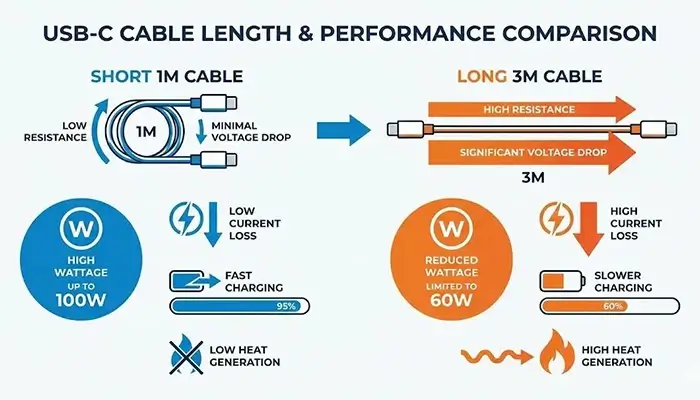
Thicker conductors reduce resistance and voltage drop.
Dielectric Materials
Insulation materials affect signal integrity and thermal stability.
| Material | Flexibility | Heat Resistance |
| PVC | Standard | Moderate |
| TPE | Good | Good |
| PE | Excellent | Excellent |
High-performance cables often use PE or advanced TPE insulation systems.
Shielding Structure
Fast charging cables frequently include:
Aluminum foil shielding
Braided copper shielding
Multi-layer EMI protection
These layers help maintain stable charging and data transmission.
The Most Important Indicator: Power Rating
The easiest way to identify a fast charging cable is by its wattage rating.
USB-C Cable Power Comparison
| Cable Type | Maximum Power | Typical Application |
| Standard Cable | 15W–27W | Smartphones |
| USB-C 60W Cable | 60W | Tablets, ultrabooks |
| USB-C 100W Cable | 100W | MacBook Pro, laptops |
| USB-C 240W Cable | 240W | Gaming laptops, workstation devices |
A cable cannot deliver power beyond its designed rating.
Understanding E-Marker Chips
One of the easiest ways to identify a genuine fast charging cable is the presence of an E-Marker chip.
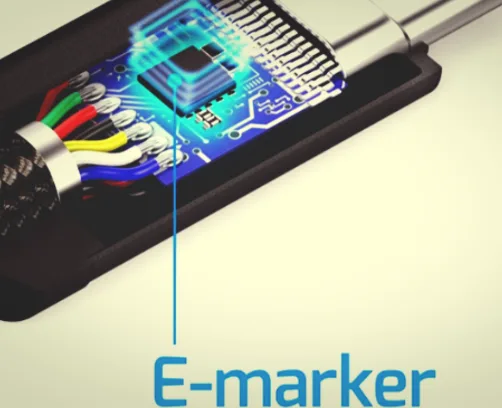
What Is an E-Marker?
An E-Marker (Electronically Marked Cable Assembly) is a small integrated circuit inside the cable connector.
Its purpose is to:
Identify cable capabilities
Communicate power limits
Negotiate charging parameters
Improve charging safety
When Is an E-Marker Required?
| Cable Rating | E-Marker Required |
| Below 60W | No |
| 60W | Recommended |
| 100W | Yes |
| 240W | Mandatory |
If a cable claims to support 100W or 240W charging without an E-Marker, that claim should be questioned.
Visual Methods to Identify Fast Charging Cables
Check Product Markings
Many manufacturers print specifications directly on the cable.
Look for markings such as:
60W
100W
140W
240W
PD
PD 3.1
EPR
Review Packaging Specifications
Professional manufacturers typically indicate:
Power rating
Data speed
Certification status
Compatibility information
Missing specifications often indicate lower-quality products.
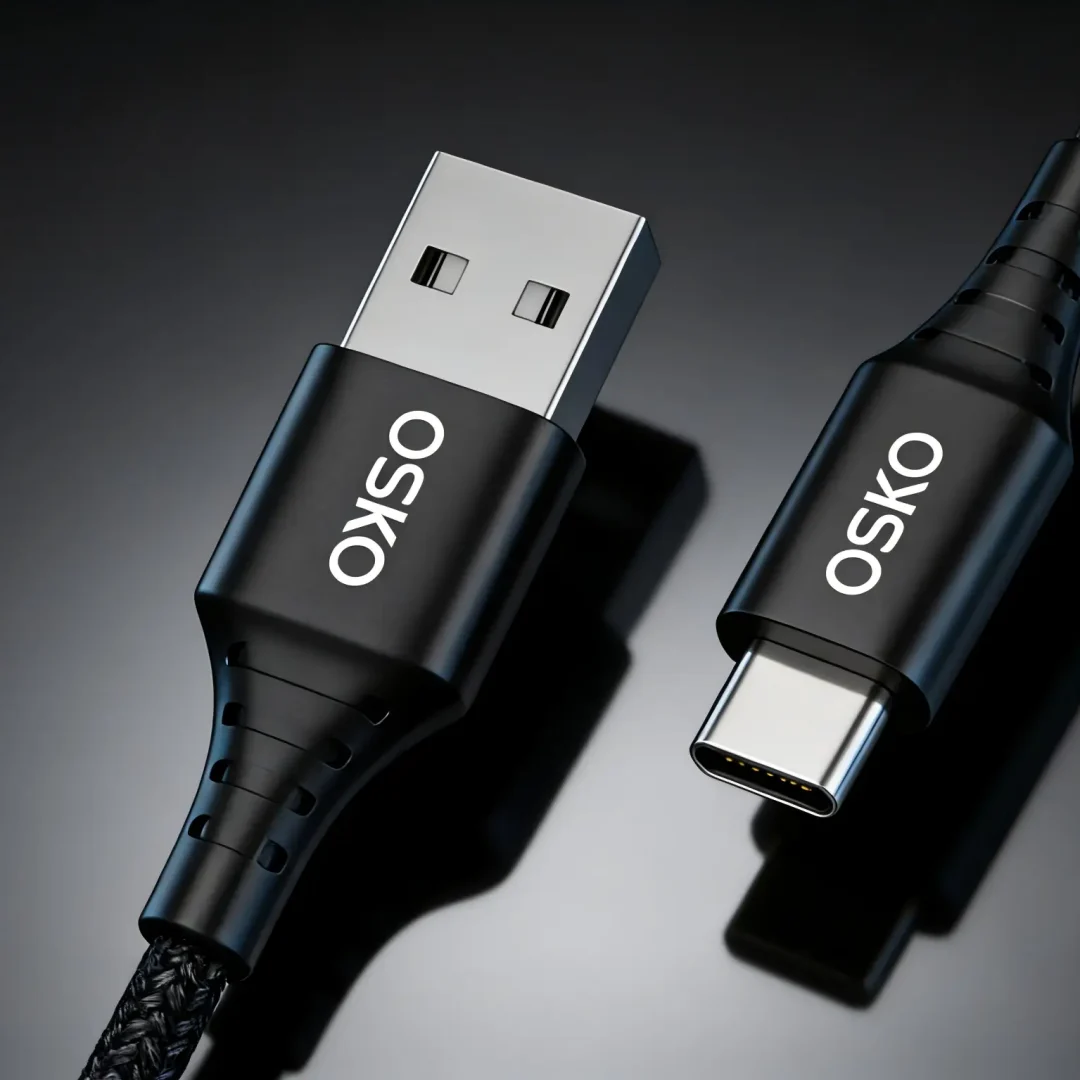
Examine Connector Construction
Premium cables generally feature:
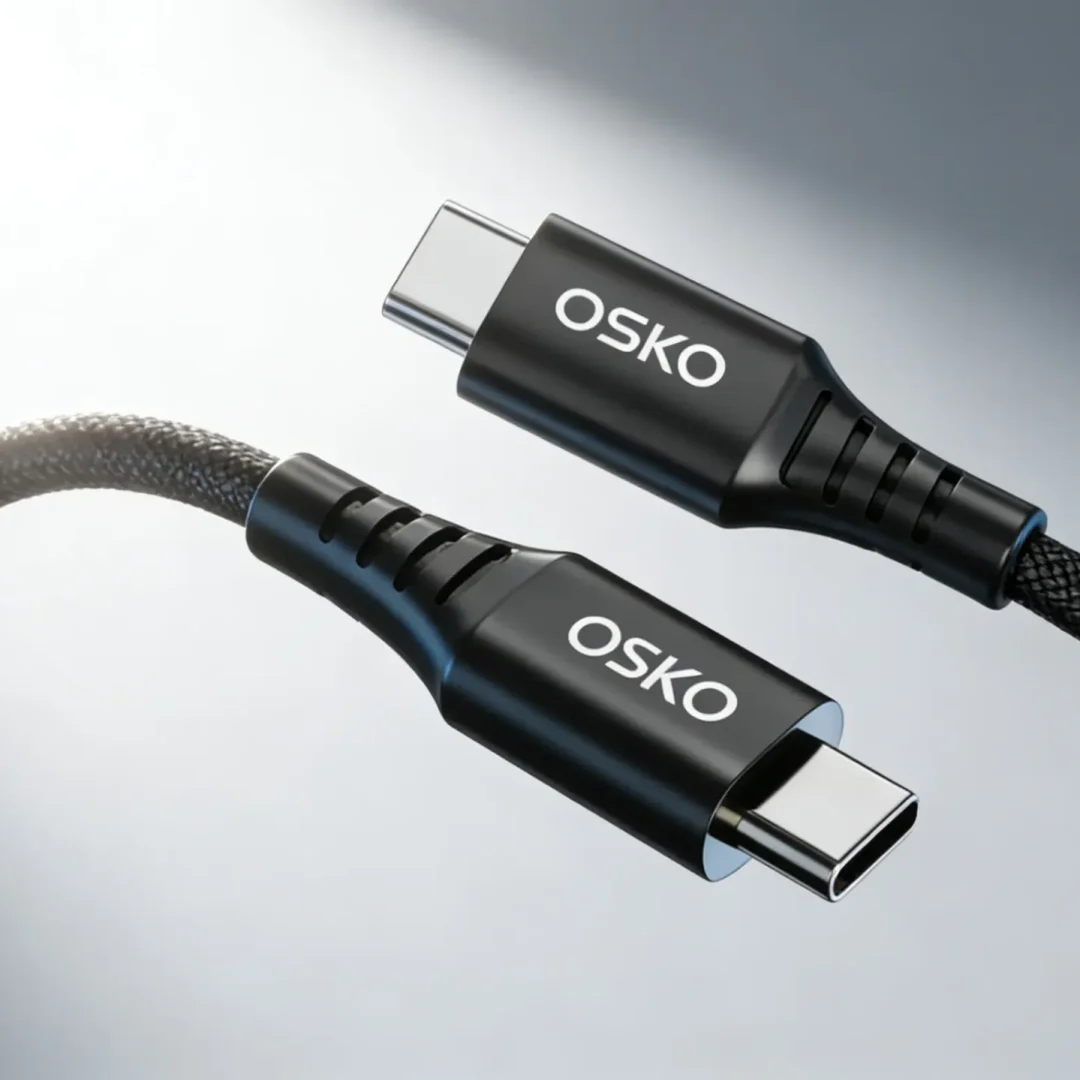
Aluminum alloy connectors
Reinforced strain relief
Gold-plated contacts
Precision molding
These characteristics often correlate with higher performance.
USB-C 60W vs 100W vs 240W Comparison
| Feature | 60W Cable | 100W Cable | 240W Cable |
| Smartphone Charging | Excellent | Excellent | Excellent |
| Tablet Charging | Excellent | Excellent | Excellent |
| Laptop Charging | Good | Excellent | Excellent |
| Gaming Laptop Support | Limited | Moderate | Excellent |
| E-Marker Chip | Optional | Required | Required |
| Cost | Lower | Medium | Higher |
Industry Case Study
OEM Laptop Accessory Brand
Customer Background
A North American electronics brand planned to launch a premium USB-C charging cable series.
Their existing supplier experienced:
High return rates
Inconsistent charging performance
Customer complaints regarding MacBook compatibility
Engineering Analysis
Testing revealed:
28AWG conductors
No E-Marker chip
High voltage loss
The cable could not sustain 100W charging despite marketing claims.
OSKO Solution
OSKO developed a customized solution featuring:
Oxygen-free copper conductors
E-Marker 2.0 IC integration
Double-layer shielding
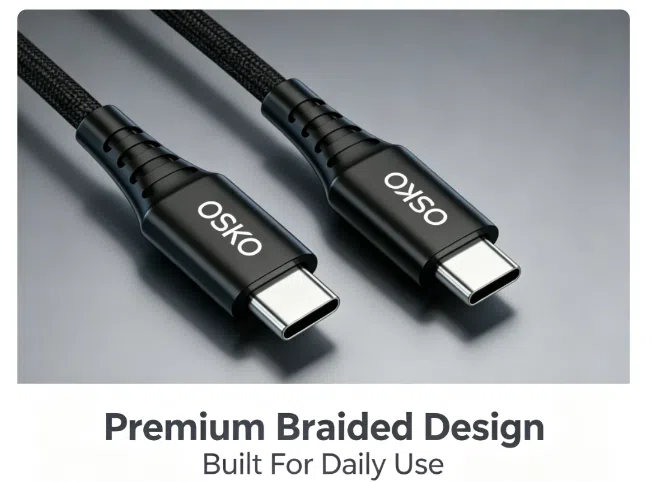
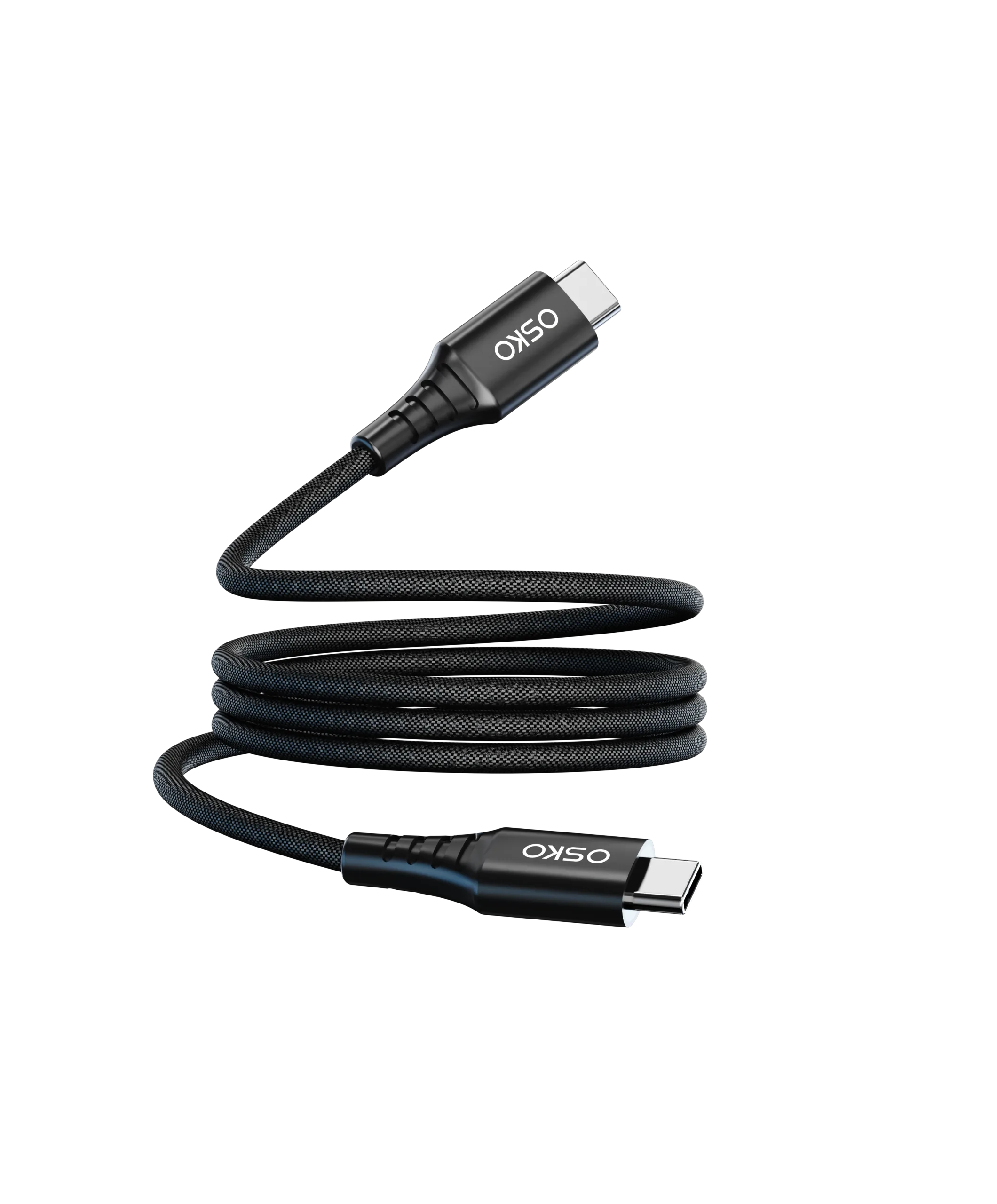
Nylon braided construction
The product aligned with requirements often expected from an:
ISO9001 certified braided USB cable factory
FCC approved nylon braided USB C cable supplier
USB-IF compliant Type C cable manufacturer
Results
The upgraded product achieved:
Stable 100W charging
Reduced product returns
Improved Amazon review ratings
Increased repeat orders
Purchase Recommendations
For Smartphone Users
Recommended:
Quality copper conductors
Reliable brand
For MacBook Users
Recommended:
100W USB-C cable
E-Marker chip
Durable nylon braided construction
A wholesale 60W braided USB C cable may work for MacBook Air, while MacBook Pro users often benefit from 100W options.
For Professional Users
Recommended:
USB4 or Thunderbolt-compatible cables
100W–240W charging support
Enhanced shielding
For OEM Buyers
Prioritize suppliers offering:
OEM ODM custom length USB C cables
White label 240W fast charging cable wholesale
Custom packaging braided charging cable factory services
CE RoHS certified 240W USB C cable production
FAQ
Do all USB-C cables support fast charging?
No. Many USB-C cables only support basic charging and cannot deliver high-wattage power.
How can I tell if a USB-C cable supports 100W charging?
Check for:
100W labeling
E-Marker chip support
Manufacturer specifications
Is a 240W cable faster than a 100W cable?
Only if the charger and device support 240W Power Delivery.
Are braided USB-C cables better?
Braided cables generally offer better durability and resistance to wear, although charging speed depends on internal engineering rather than the outer jacket alone.
What is the safest USB-C cable to buy?
Choose cables from reputable manufacturers that provide:
USB-IF compliance
CE certification
RoHS certification
FCC compliance
Summary
Not every USB-C cable supports fast charging. The ability to deliver high-speed charging depends on conductor quality, wire gauge, E-Marker chips, insulation materials, and overall engineering design.
For most users, identifying a cable’s power rating—60W, 100W, or 240W—is the fastest way to determine charging capability. For professional buyers, additional factors such as certification, shielding design, and manufacturing quality become equally important.
As USB-C technology continues to evolve, demand for high-performance cables will continue growing across North America and Europe. Whether purchasing for personal use, retail distribution, or OEM projects, understanding these technical indicators helps ensure better performance, improved safety, and higher customer satisfaction.
Request an OEM Quote
OSKO Fast Charging USB-C Cable Solutions
Products
60W USB-C Fast Charging Cable
100W USB-C PD Cable
240W USB-C PD 3.1 Cable
USB4 High-Speed Cable
Nylon Braided USB-C Cable
OEM Services
Private Label Manufacturing
Custom Cable Lengths
Custom Colors
Logo Printing
Retail Packaging
Amazon FBA Packaging