
Introduction
In 2026, USB-C has become the global standard for charging and data transmission across smartphones, tablets, laptops, and automotive systems. However, the USB-C cable market has also become highly fragmented, with significant differences in charging speed, durability, and internal engineering.
For consumers and especially for OEM USB cable manufacturers, ODM USB cable suppliers, and Wholesale USB cable distributors, selecting the right product is no longer about appearance alone. It requires understanding electrical design, material science, certification standards, and application-specific performance.
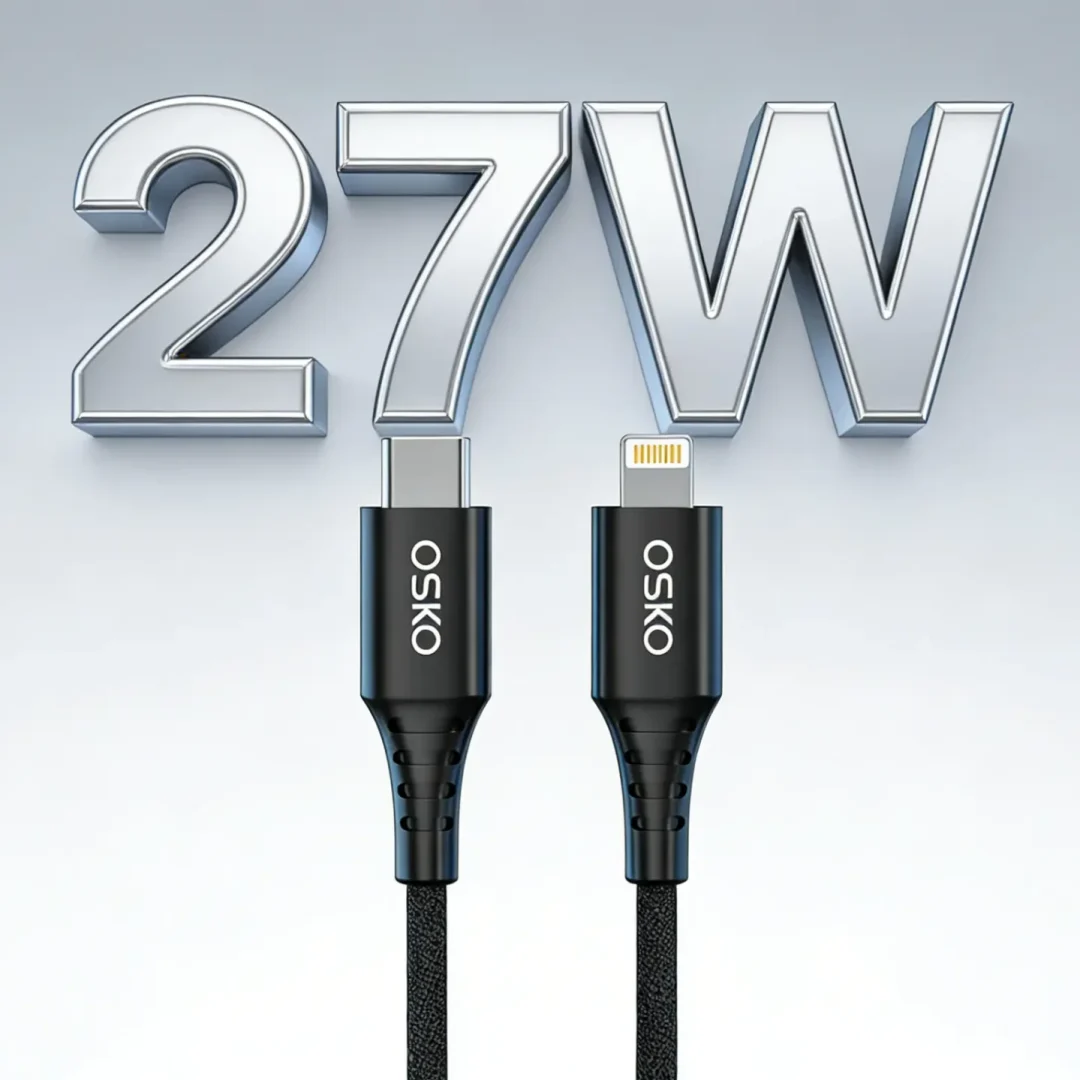
A poor-quality USB-C cable can lead to slow charging, overheating, unstable data transfer, and premature failure. A well-engineered USB charging cable can support 60W, 100W, or even 240W fast charging with long-term reliability.
This guide provides a complete engineering and purchasing framework for 2026 global markets, especially focusing on North America and Europe.
Applicable Scenarios
USB-C cables are used across multiple industries and environments, each with different engineering requirements:
OEM USB cable bundled with smartphones and tablets
ODM USB cable for branded electronics companies
Wholesale USB cable distribution for Amazon and retail chains
Bulk USB cables for enterprise charging infrastructure
Retail USB cable for electronics stores and supermarkets
Travel USB cable for portable charging kits and power banks
Desk charging cable for office and workstation environments
Car charging cable for Apple CarPlay and Android Auto systems
Home USB cable for multi-device household charging setups
Each scenario requires different durability levels, cable lengths, and power ratings.
Material Science & Dielectric Performance
Copper Conductor Engineering
The performance of a USB-C cable is primarily determined by copper purity and wire gauge.
High-quality cables use:
Oxygen-free copper (OFC)
Multi-strand twisted architecture
Low resistance design for reduced voltage drop
Lower-grade cables use thin conductors, resulting in overheating and unstable charging.
Insulation and Dielectric Stability
The insulation layer ensures electrical isolation and safety.
Common materials:
PVC (low cost, low heat resistance)
TPE (flexible, mid-range durability)
High-grade thermoplastic elastomer (premium fast charging systems)
In 100W and 240W systems, dielectric stability becomes critical to avoid thermal breakdown.
Shielding Structure
A high-performance USB-C cable typically includes:
Aluminum foil shielding
Braided copper mesh
EMI protection layer
This ensures stable data transmission and reduces electromagnetic interference in high-density environments such as offices and vehicles.
E-Marker Chip Integration
For cables above 60W, an E-Marker chip is required.
It enables:
Power negotiation between device and charger
Safe current control
Prevention of overheating
Failure of this chip is a common cause of non-functional fast charging cables.
Mechanical Durability (Braided vs PVC)
| Feature | PVC Cable | Braided USB-C Cable |
|---|---|---|
| Flexibility | Medium | High |
| Tangle Resistance | Low | High |
| Durability | Moderate | High |
| OEM Branding Value | Low | High |
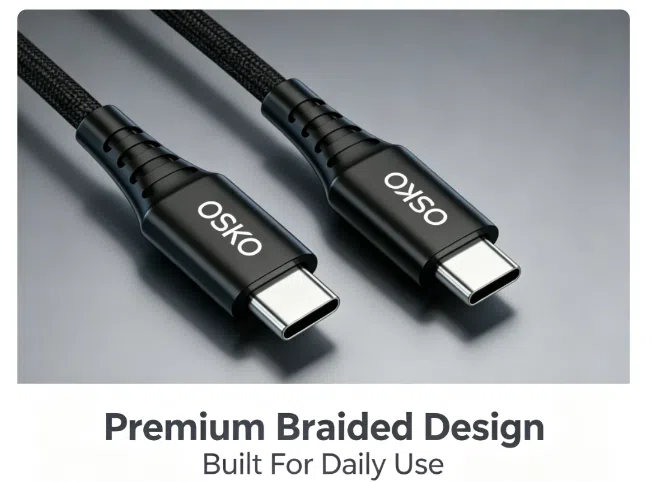
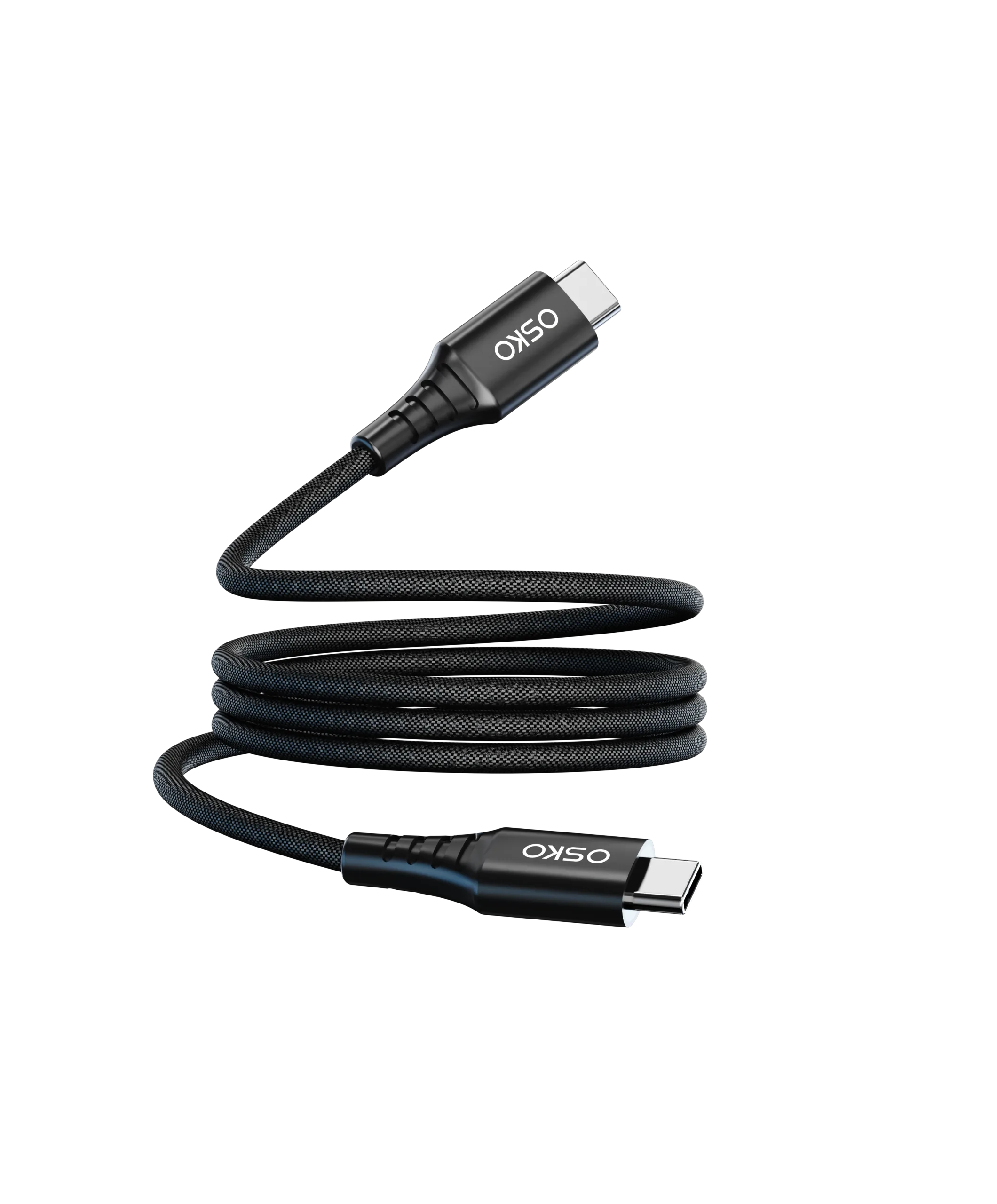
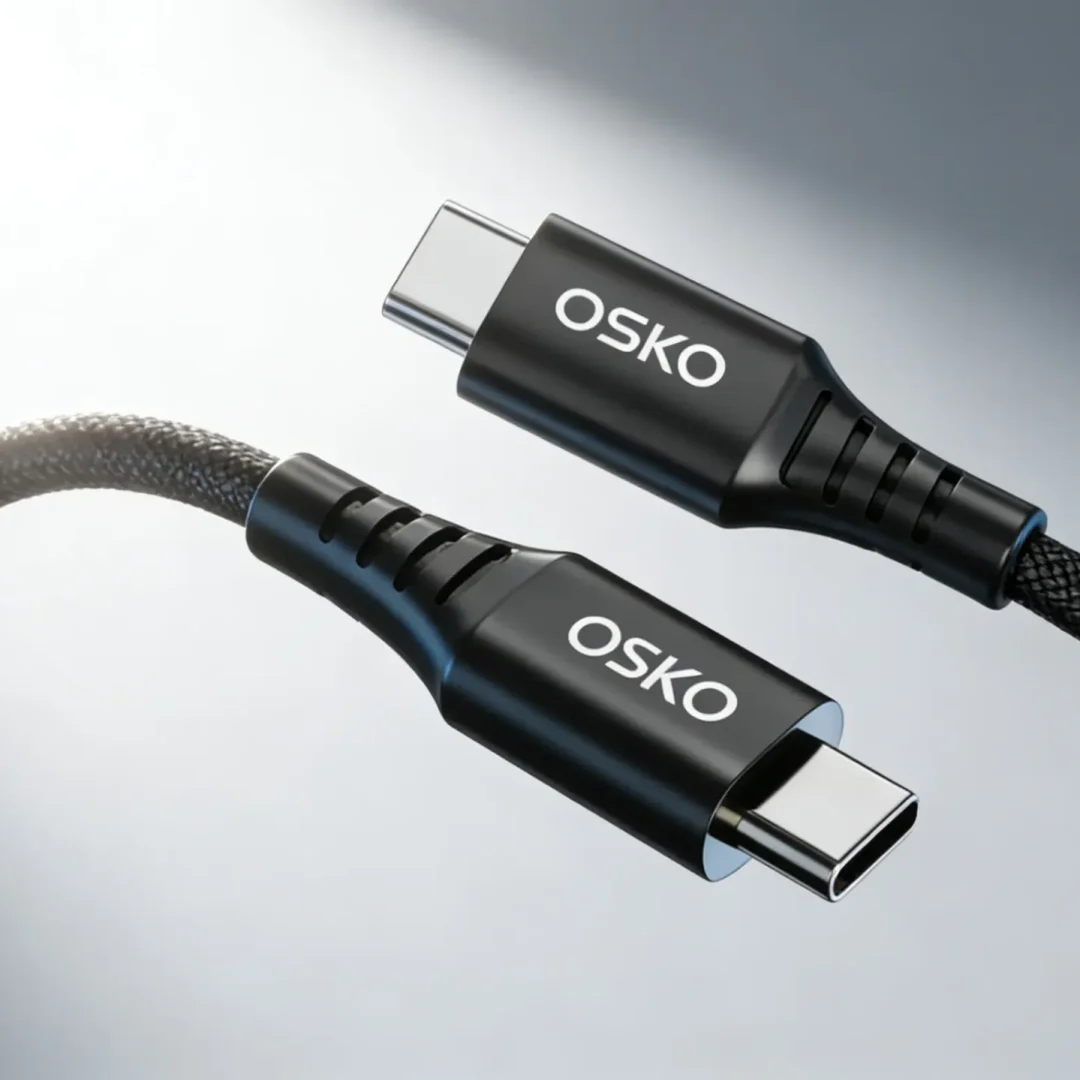
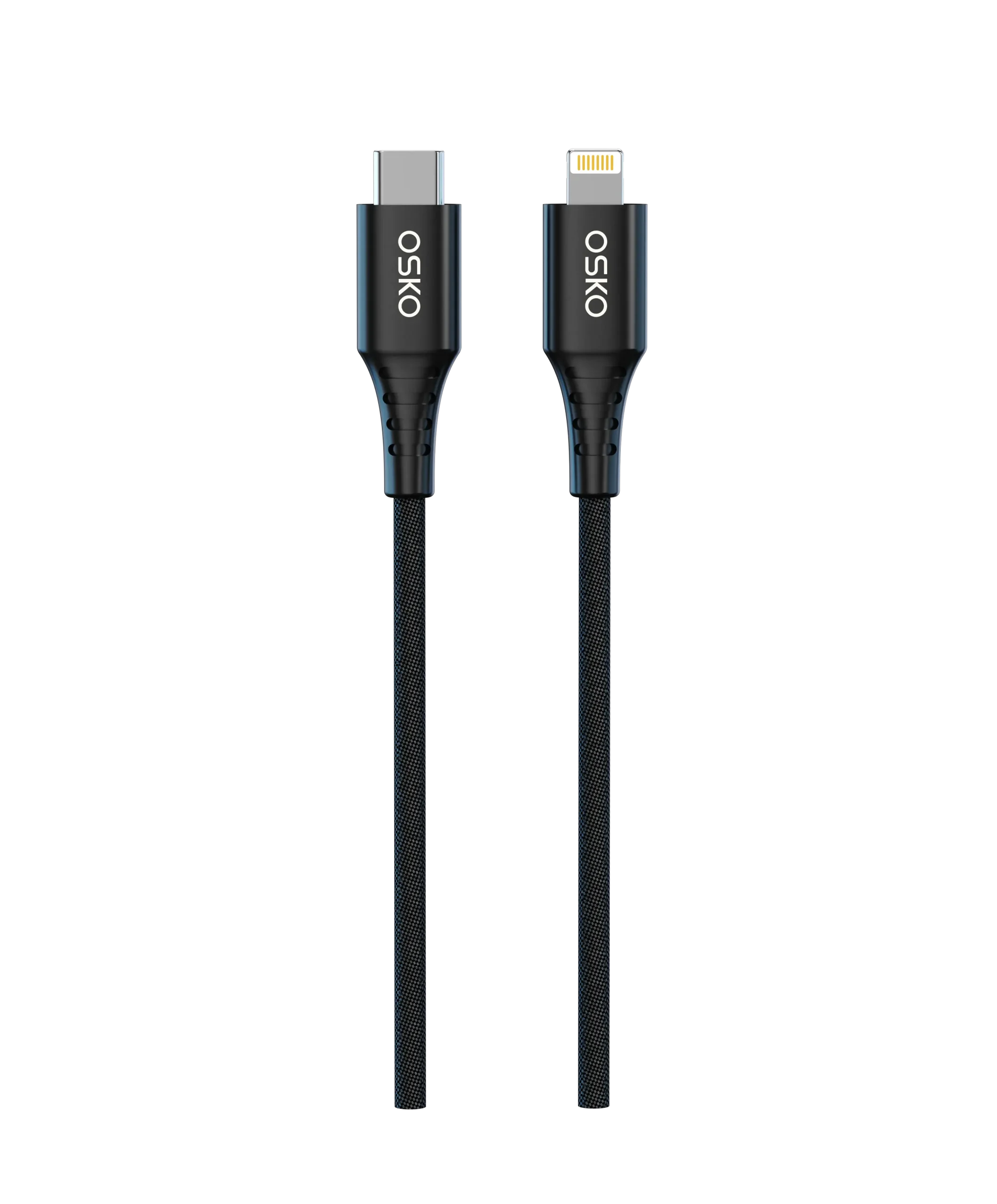
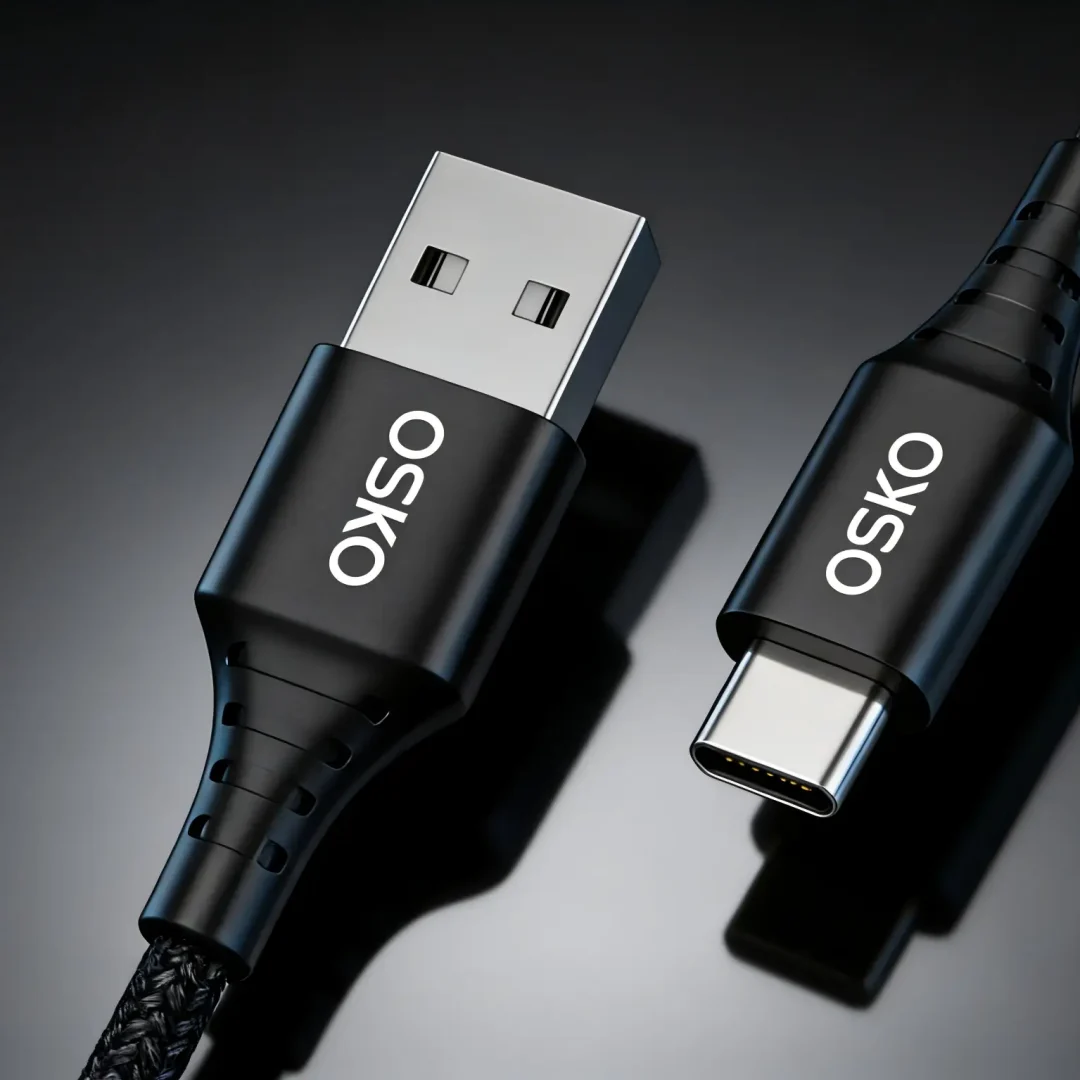
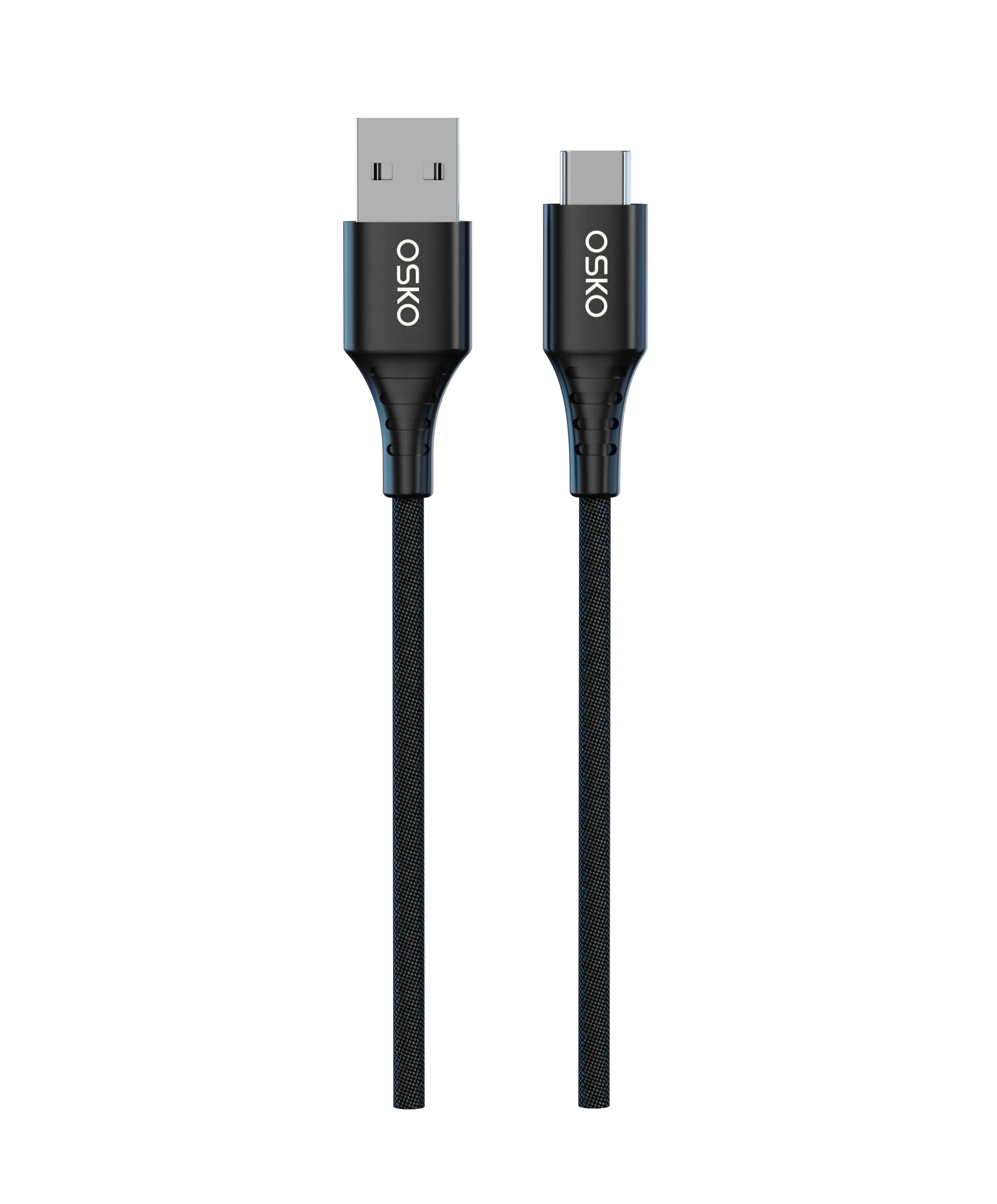
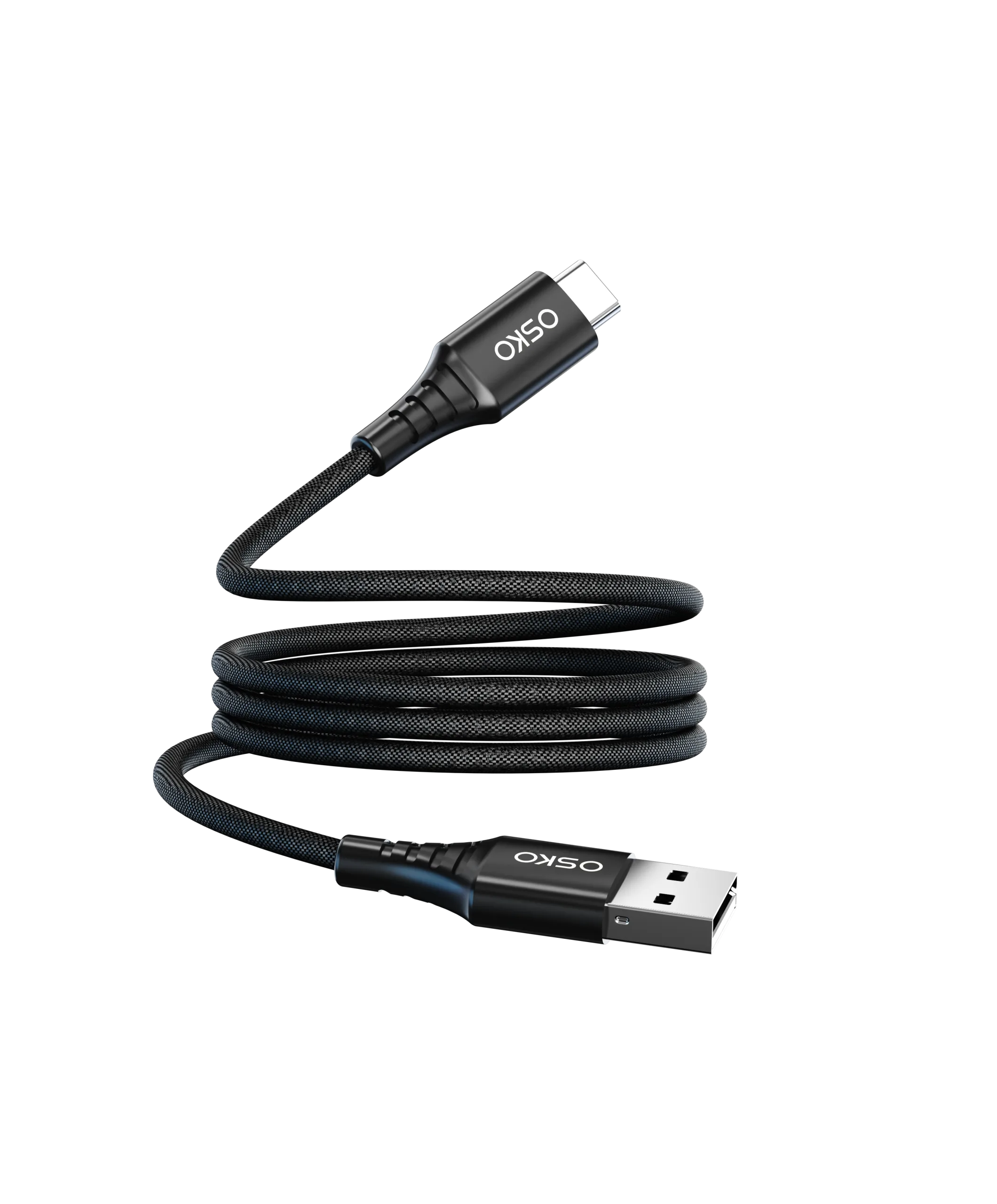
Premium designs such as Tangle-free double-braided USB C cable wholesale and Durable nylon braided Type C charging cable factory significantly reduce mechanical failure rates.
Purchase Recommendations
Power Rating Selection
| Power Level | Device Type | Recommendation |
|---|---|---|
| 60W | Smartphones, tablets | Standard USB-C cable |
| 100W | Laptops, MacBook | Reinforced braided cable |
| 240W | Gaming laptops, future devices | E-Marker certified cable |
Length Selection Strategy
| Length | Application | Market Demand |
|---|---|---|
| 0.5ft | Power banks | OEM bulk use |
| 3ft | Travel use | High retail demand |
| 6ft | Desk/home use | Highest demand |
| 10ft | Car & large spaces | Growing demand |
Bulk custom 6ft 10ft USB-C cables are especially popular in North America.
OEM Manufacturing Strategy Table
| Segment | Requirement | OSKO Engineering Solution |
|---|---|---|
| OEM USB cable | Branding flexibility | Custom length + logo |
| ODM USB cable | Product differentiation | Material + structure redesign |
| Wholesale USB cable | Cost efficiency | High-volume production control |
| Bulk USB cables | Supply stability | Automated QC testing |
| Retail USB cable | Premium appearance | Braided + packaging upgrade |
| Travel USB cable | Portability | Lightweight reinforced design |
| Car charging cable | Vibration resistance | Reinforced connectors |
| Home USB cable | Long lifespan | Heat-resistant materials |
Certification Requirements for 2026 Market
For North America and Europe, compliance is critical:
CE RoHS certified 240W USB C cable
FCC approved nylon braided USB C cable supplier
Prop 65 compliant USB C cable factory
USB-IF compliant Type C cable manufacturer
ISO9001 certified braided USB cable factory wholesale
These certifications directly impact retail approval and import clearance.

Common Buying Mistakes
Choosing cable based only on appearance
Ignoring E-Marker chip requirement for high wattage
Using thin copper wire for long cables
Overlooking shielding quality
Ignoring certification requirements for US/EU markets
FAQ
What is the best USB-C cable in 2026?
A braided USB-C cable with 100W–240W support, E-Marker chip, and certified manufacturing standards.
Do all USB-C cables support fast charging?
No. Only cables with proper conductor design and certification support stable fast charging.
What is the most important factor when buying USB-C cables?
Copper quality and internal structure are more important than external appearance.
Are braided cables better than regular cables?
Yes. They provide higher durability and longer lifespan, especially in OEM and retail environments.
What cable length is most popular in 2026?
6ft cables dominate home and office markets in North America and Europe.
Summary
The 2026 USB-C cable market is defined by high power delivery, stricter certification requirements, and increasing demand for durability and OEM customization. Buyers must evaluate not only external design but also internal engineering such as copper quality, shielding structure, E-Marker integration, and dielectric stability.
For OEM USB cable manufacturers, ODM USB cable suppliers, and Wholesale USB cable distributors, success depends on delivering consistent performance across multiple scenarios including travel, desktop, car, and home charging environments.
High-quality solutions such as 60W braided USB C cable, CE RoHS certified 240W USB C cable, and ISO9001 certified braided USB cable factory wholesale products are becoming the global standard in North America and Europe.
A structured purchasing strategy focused on engineering performance and compliance ensures long-term reliability, reduced returns, and stronger brand positioning in the competitive USB-C accessory market.