
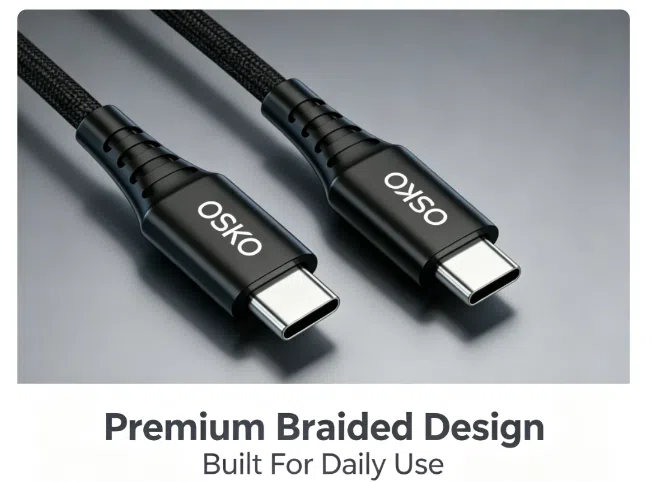
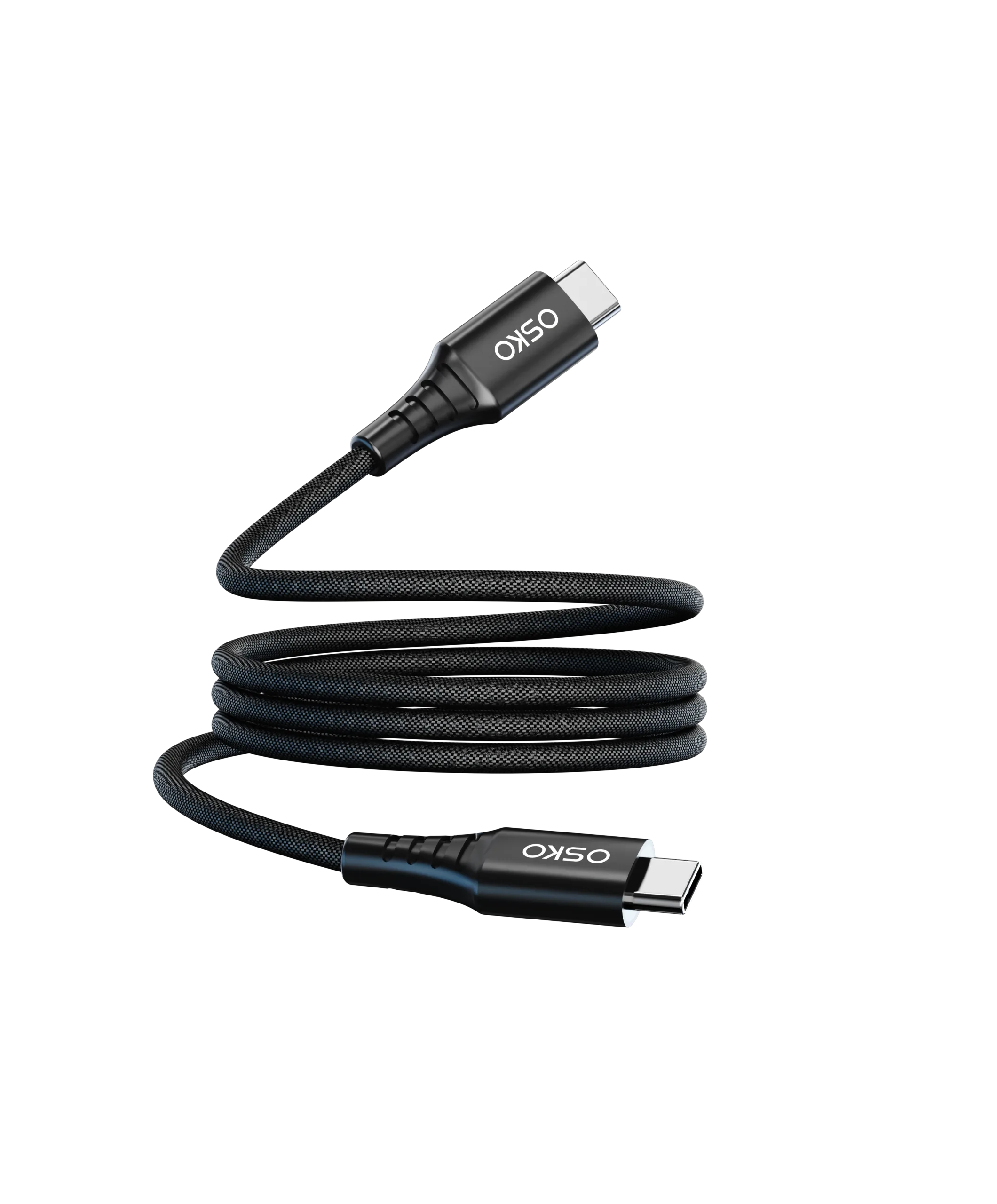
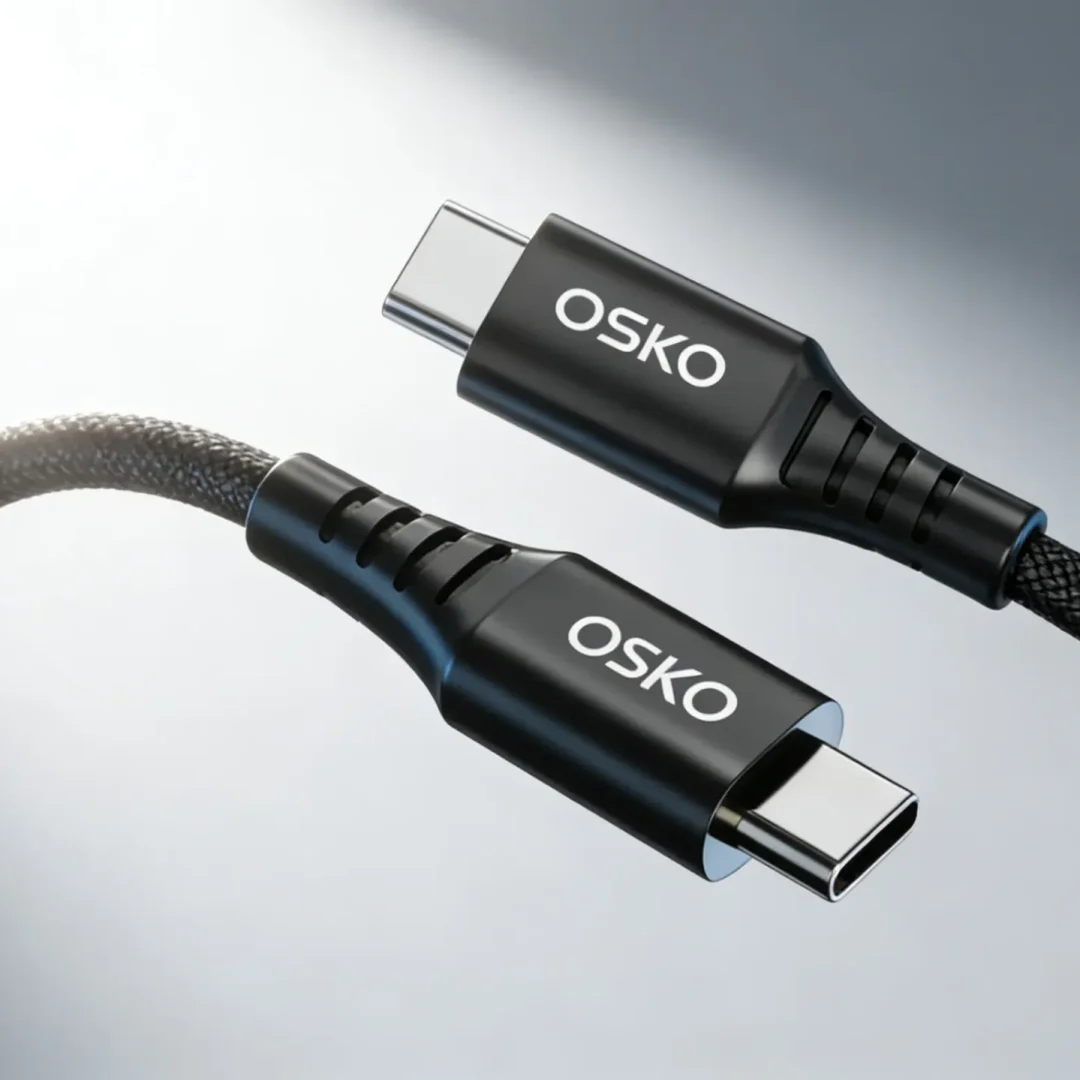
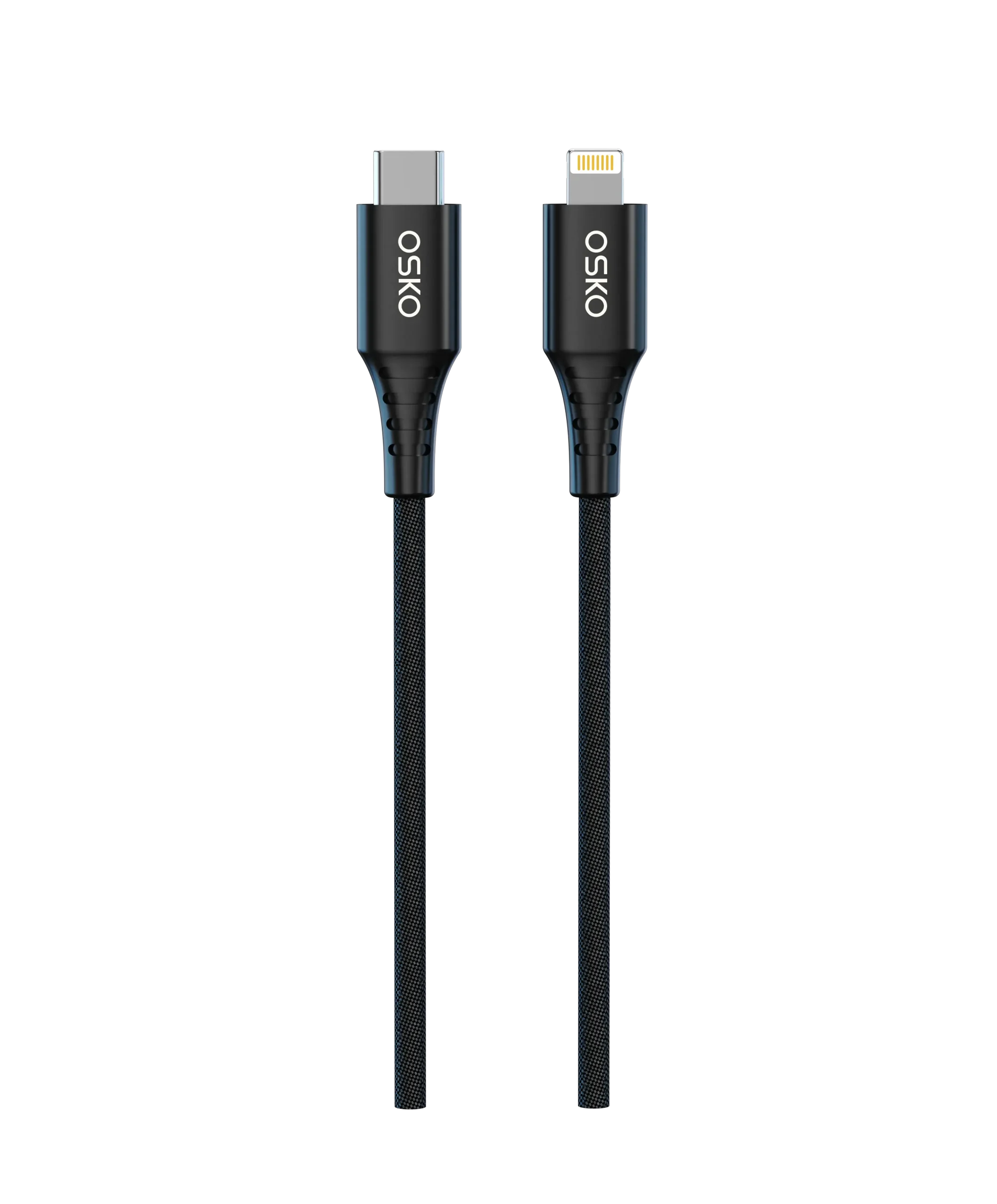
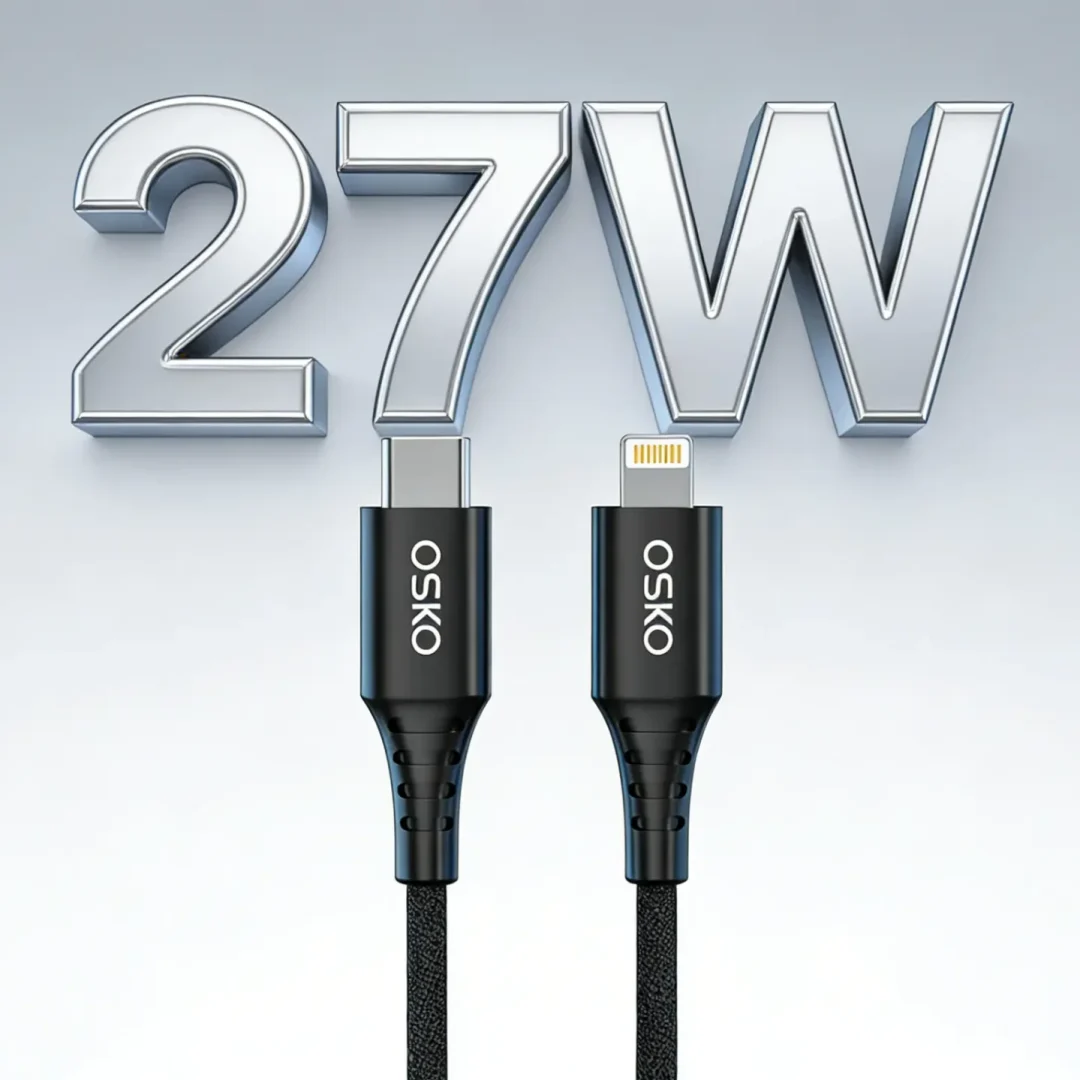
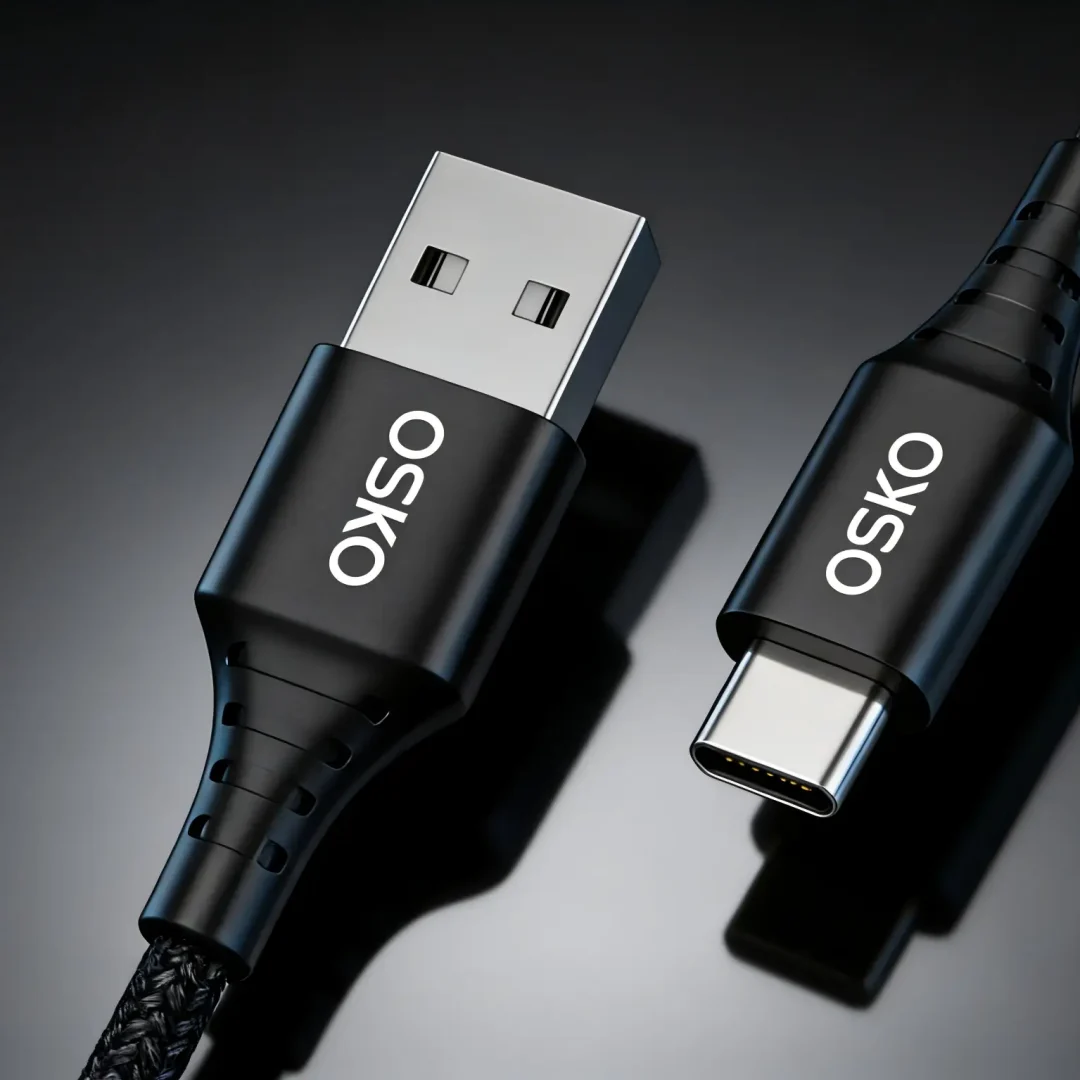
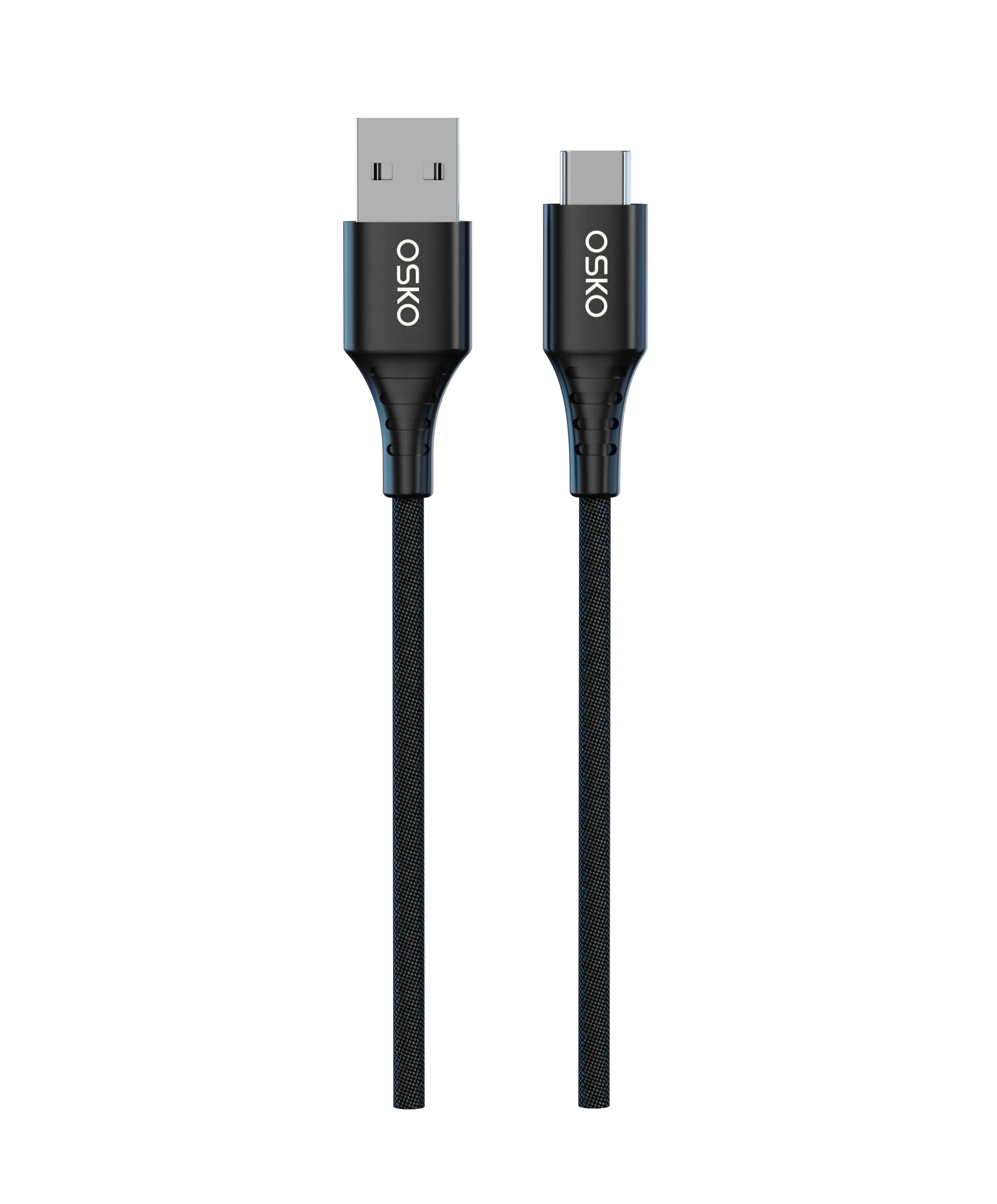
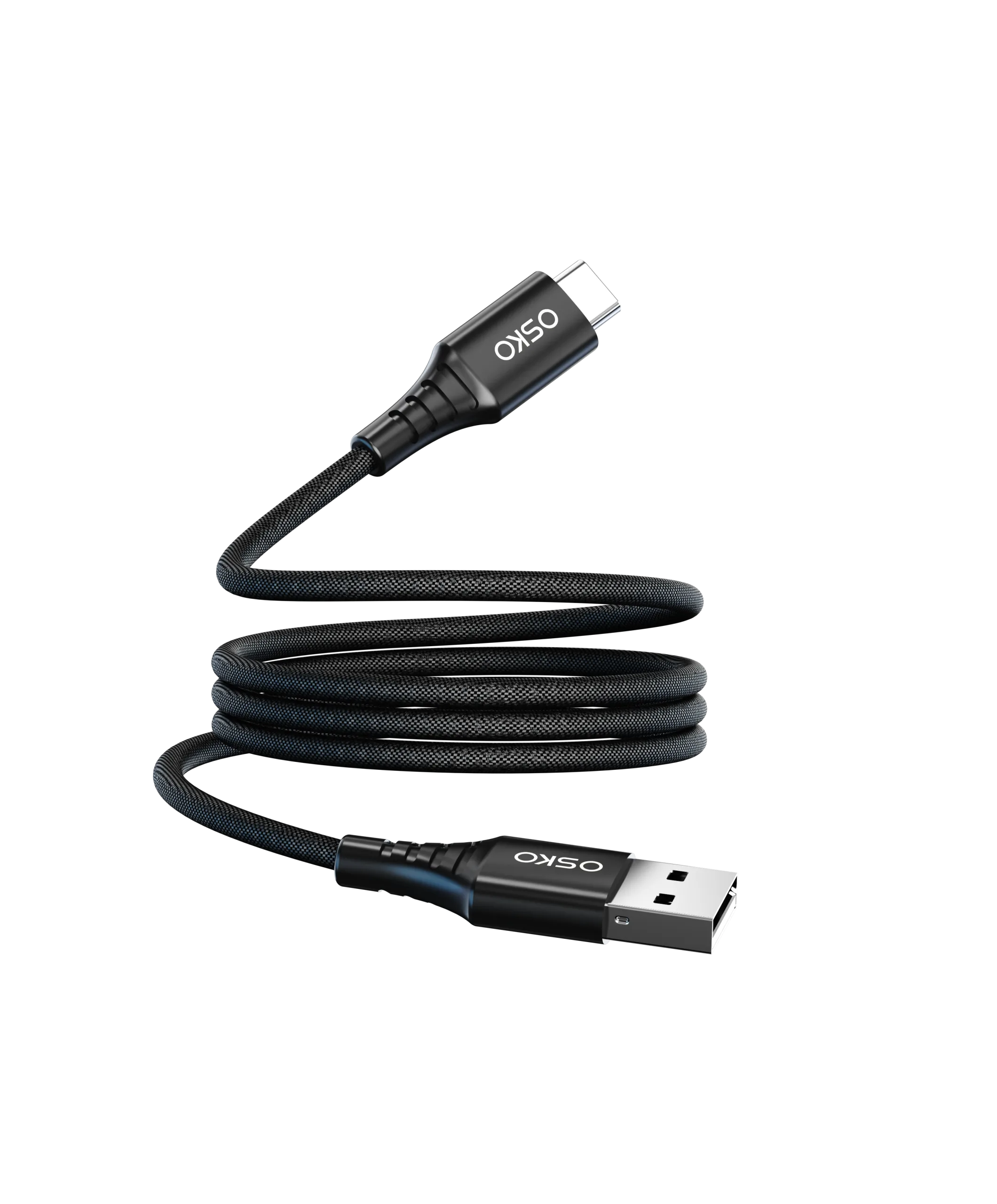
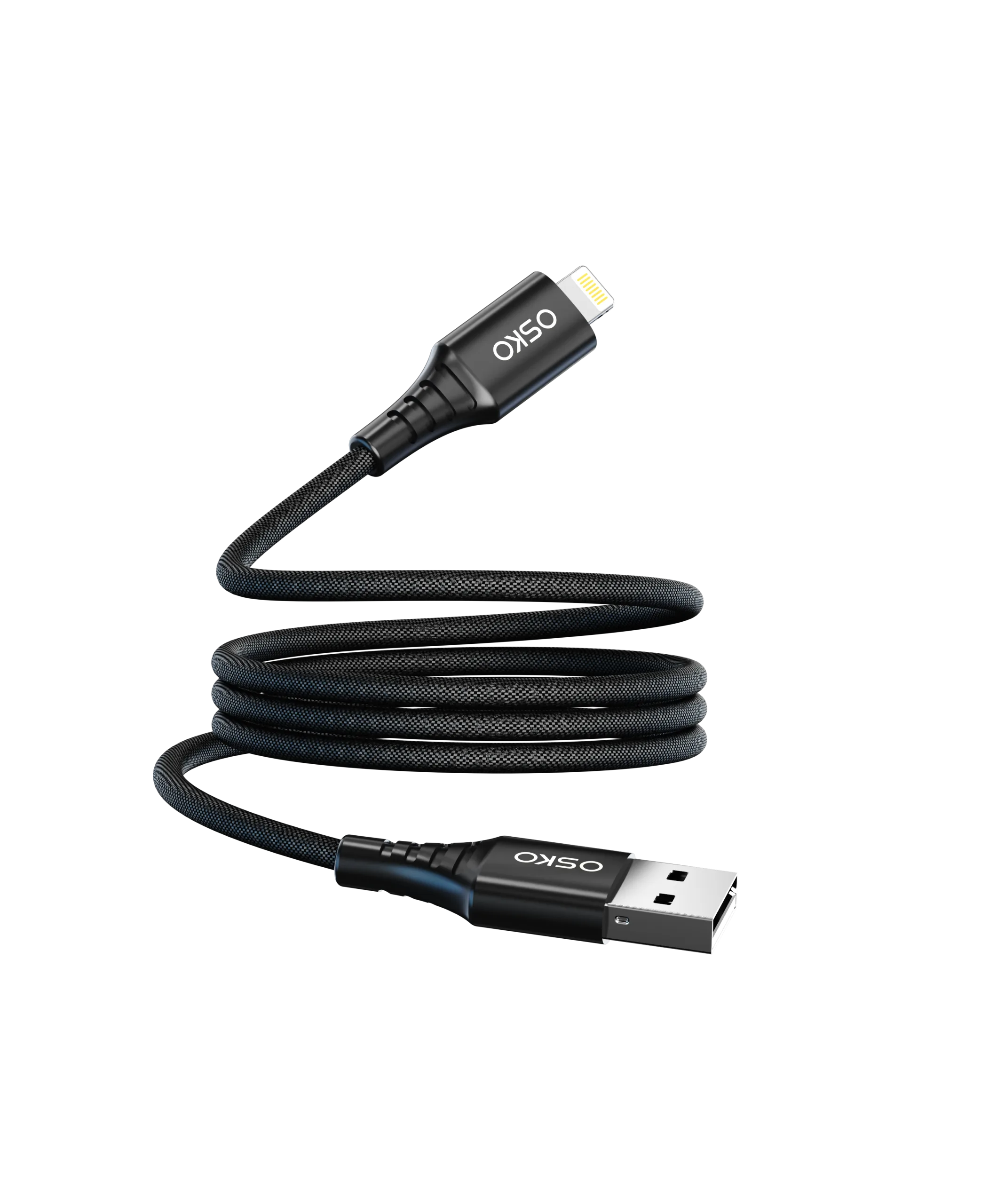
A USB-C cable may look like a simple charging accessory, but inside a professional USB-C cable is a complex engineering structure designed for power delivery, data transmission, safety protection, and long-term durability.
Every day, consumers use USB-C charging cables to power:
Smartphones
Tablets
Laptops
Gaming devices
Portable monitors
Automotive electronics
However, not all USB-C cables are built the same.
Two cables with the same USB-C connector can have completely different performance because of differences in:
Copper conductor quality
Internal wiring structure
Shielding design
E-marker chip technology
Connector construction
Manufacturing processes
For electronics brands, wholesalers, and distributors, understanding the internal structure of a USB-C charging cable helps identify reliable suppliers and avoid problems such as:
Slow charging
Cable overheating
Unstable connection
High return rates
As a professional USB-C cable manufacturer, OSKO provides OEM and ODM cable solutions for global markets, including the United States, Germany, Australia, and the Netherlands.
This guide explains what is inside a USB-C cable and how professional manufacturers design reliable charging solutions.

What Is Inside a USB-C Cable?
A premium USB-C fast charging cable is made from multiple layers working together.
The internal structure usually includes:
| Component | Function |
|---|---|
| Copper conductor | Transfers electrical power |
| Data wires | Enables communication between devices |
| CC wire | Controls USB-C power negotiation |
| Aluminum foil shielding | Reduces electromagnetic interference |
| Braided shielding | Improves signal protection |
| Kevlar fiber | Strengthens cable structure |
| Outer jacket | Provides external protection |
| E-marker chip | Identifies high-power capability |
A simplified structure looks like:
Nylon Braided Jacket
        ↓
TPE Insulation
        ↓
Copper Braided Shield
        ↓
Aluminum Foil Shield
        ↓
Kevlar Tensile Fiber
        ↓
Copper Wire Core
        ↓
E-marker Chip
Each layer affects charging performance, durability, and safety.
1. Copper Conductors: The Core of USB-C Cable Performance
The copper conductor is one of the most important parts of a USB-C charging cable.
It determines:
Current capacity
Charging efficiency
Heat generation
Voltage stability
When charging high-power devices such as laptops, the cable must safely handle higher current levels.
Common USB-C power requirements include:
| Cable Type | Maximum Power | Application |
|---|---|---|
| Standard USB-C cable | Up to 60W | Phones, tablets |
| 100W USB-C PD cable | Up to 100W | Laptops |
| 240W USB-C cable | Up to 240W | Gaming laptops, professional devices |
High-quality USB-C cables typically use:
Pure copper conductors
Multi-strand wire structures
Optimized wire diameter
These designs reduce resistance and improve charging stability.
Low-cost cables may use inferior materials such as CCA (Copper Clad Aluminum), which can cause:
Higher resistance
More heat
Lower charging efficiency
For buyers sourcing USB-C cables wholesale, conductor quality should always be a key evaluation factor.
2. VBUS and GND Wires: Power Delivery System
Inside every USB-C cable are dedicated power transmission wires.
VBUS Wire
The VBUS line transfers power from the charger to the device.
During fast charging, it carries significant electrical current.
A well-designed VBUS structure helps maintain:
Stable voltage
Lower heat generation
Better charging performance
GND Wire
The Ground wire completes the electrical circuit.
A reliable grounding design helps:
Improve safety
Reduce electrical noise
Maintain stable operation
Professional USB-C cable manufacturers carefully balance VBUS and GND wire sizes according to power requirements.
3. D+/D- Data Lines: More Than Just Charging
A USB-C cable is not only a charging cable.
Many USB-C cables also support data transmission.
The D+ and D- lines are responsible for USB 2.0 communication.
Typical performance:
Up to 480Mbps data transfer
Applications include:
Smartphone file transfer
Device synchronization
Peripheral connection
For businesses selling USB-C data cables, stable signal transmission is equally important as charging performance.
4. CC Line: The Intelligence Behind USB-C Charging
One major difference between USB-C and older USB connectors is the Configuration Channel (CC).
The CC line allows devices to communicate with chargers.
It helps identify:
Cable orientation
Supported power level
Charging protocol
USB PD requirements
Before high-power charging starts, the charger and device negotiate the correct power output.
This communication enables:
60W laptop charging
100W USB-C PD charging
240W USB PD 3.1 charging
Without proper CC design, a cable may not achieve its advertised charging capability.se lines also participate in charging protocol communication between chargers and devices.
5. E-Marker Chip: The Smart Component Inside High-Power USB-C Cables
Modern high-power USB-C cables often include an E-marker chip.
The E-marker acts like a digital identification system inside the cable.
It stores information about:
Maximum power capability
Current rating
USB specification
Cable performance information
For example:
Standard USB-C Cable
Usually supports up to 60W
3A current
E-Marker USB-C Cable
Supports higher current
Enables 100W or higher charging
For USB PD 3.1 applications, E-marker technology is essential for safe high-power charging.
For customers purchasing USB-C PD cables, checking E-marker support is an important step.
6. USB-C Cable Shielding Structure: Protection Against EMI
A professional USB-C fast charging cable requires effective shielding.
High-speed electrical signals can be affected by electromagnetic interference (EMI).
Common interference sources include:
Wireless routers
Bluetooth devices
Laptop adapters
Vehicle electronics
Without proper shielding, users may experience:
Data transfer errors
Charging interruption
Signal instability
Professional USB-C cables often use multi-layer shielding.
Aluminum Foil Shielding
Aluminum foil provides:
High-frequency interference protection
Lightweight shielding coverage
Signal stability improvement
Braided Copper Shielding
Copper braid provides:
Additional EMI protection
Better grounding
Improved mechanical strength
A premium structure usually combines both:
Outer Jacket

↓

Braided Copper Shield

↓

Aluminum Foil Shield

↓

Wire Core
This design improves reliability for:
Laptop charging
Gaming equipment
Automotive applications
7. Outer Jacket Materials: Why Cable Appearance Matters
The outside layer protects the internal structure.
Different materials create different product experiences.
TPE USB-C Cable
Advantages:
Flexible
Lightweight
Cost-effective
Suitable for:
Daily charging
Office use
Standard accessories
Nylon Braided USB-C Cable
A braided USB-C cable is popular in premium markets.
Advantages:
Better abrasion resistance
Anti-tangle design
Premium appearance
Longer lifespan
This is why many brands searching for:
“durable USB-C charging cable”
“heavy duty USB-C cable”
“long lasting phone charger cable”
choose braided designs.
PVC Cable
PVC cables are commonly used in budget products.
Advantages:
Low cost
Easy manufacturing
However, premium markets usually prefer TPE or nylon braided solutions.
USB-C Cable Manufacturing Process
A professional USB-C cable factory follows strict manufacturing procedures.
1. Copper Wire Processing
Copper rods are processed into precise wire structures.
Key controls:
Diameter accuracy
Conductivity
Surface quality
2. Wire Insulation
Each internal wire receives insulation protection.
Different wires serve different functions:
| Wire | Function |
|---|---|
| VBUS | Power |
| GND | Ground |
| D+/D- | Data |
| CC | PD communication |
3. Shielding Assembly
Manufacturers add:
Aluminum foil
Copper braid
Drain wire
Protective fibers
This creates EMI protection.
4. Connector Assembly
The connector process includes:
Wire positioning
PCB soldering
Terminal connection
Housing installation
Connector quality directly affects product lifespan.
5. Injection Molding
Injection molding creates:
Connector housing
Strain relief structure
Mechanical protection
A strong strain relief prevents cable neck breaking.

USB-C Cable Quality Control Testing
A reliable USB-C cable manufacturer must perform comprehensive testing.
Electrical Testing
Includes:
Continuity testing
Resistance testing
Charging performance testing
PD negotiation testing
Mechanical Testing
Includes:
Bend testing
Tensile testing
Plug/unplug testing
Premium cables may achieve:
10,000+
30,000+
bend cycle testing depending on design.
Data Testing
Manufacturers verify:
USB 2.0 480Mbps
USB 3.x performance
Signal stability
Engineering Case Study: Improving USB-C Cable Reliability for a US Retail Brand
Customer Background
A US consumer electronics retailer experienced increasing customer complaints from their existing charging cable supplier.
Main problems:
Cable overheating
Connector damage
Charging instability
High return rates
They needed a reliable USB-C cable supplier capable of supporting premium retail products.
Engineering Challenges
The original product had:
Undersized copper conductors
Weak shielding
Poor strain relief design
Although marketed as a fast charging cable, real-world performance was inconsistent.
OSKO Solution
OSKO redesigned the cable structure with:
Improved copper conductor design
Enhanced EMI shielding
Reinforced connector structure
Nylon braided outer jacket
Durability testing
Result
The customer achieved:
More stable charging performance
Improved product reliability
Reduced customer complaints
Better retail positioning
This demonstrates why selecting an experienced OEM USB-C cable manufacturer is critical for long-term brand growth.
How to Choose a Reliable USB-C Cable Manufacturer?
For businesses sourcing USB-C cables, evaluate:
Manufacturing Capability
A professional supplier should understand:
USB PD technology
Cable structure design
Material selection
Testing requirements
Quality Control
Check whether the factory provides:
Material inspection
Production testing
Final inspection reports
OEM Customization
A reliable supplier should support:
Logo printing
Packaging customization
Cable length options
Private label production
Supply Capability
Confirm:
MOQ
Production capacity
Lead time
Sample availability
USB-C Cable Buyer Checklist
| Item | Why Important |
|---|---|
| Copper quality | Determines charging efficiency |
| Power rating | Ensures compatibility |
| Shielding | Protects signal stability |
| Connector design | Improves lifespan |
| Testing standards | Reduces quality risks |
| Factory experience | Ensures reliable supply |
FAQ: USB-C Cable Construction
What is inside a USB-C charging cable?
A USB-C charging cable contains copper conductors, power wires, data lines, shielding layers, protective fibers, and sometimes an E-marker chip.
Why are some USB-C cables thicker?
Thicker cables usually contain larger conductors, additional shielding, and stronger protection materials.
Does a thicker USB-C cable charge faster?
Not necessarily. Charging speed depends on cable specifications, power rating, charger output, and device compatibility.
Are braided USB-C cables better?
Braided USB-C cables usually provide better durability and abrasion resistance, but internal construction quality is equally important.
What USB-C cable is best for fast charging?
Choose a cable based on device requirements:
Smartphones: 60W USB-C cable
Laptops: 100W USB-C PD cable
High-power devices: E-marker USB-C cable
How do manufacturers test USB-C cables?
Professional factories test:
Electrical performance
Charging capability
Data transfer
Mechanical durability
Why Choose OSKO as Your USB-C Cable Manufacturing Partner?
OSKO specializes in USB-C cable manufacturing and OEM/ODM charging cable solutions.
Our capabilities include:
USB-C fast charging cable production
USB-C to USB-C cable manufacturing
USB-A to USB-C cable solutions
Custom logo and packaging
Private label development
Quality inspection
We support:
Electronics brands
Importers
Wholesalers
Online retailers
Procurement teams
From engineering development to mass production, OSKO provides reliable cable solutions for global markets.
Contact OSKO today for customized USB-C cable manufacturing solutions.