
Introduction
Modern USB-C cables are no longer simple charging accessories. With the increasing demand for fast charging, high-speed data transfer, and professional device connectivity, cable structure and material selection have become critical factors affecting performance.
For applications ranging from smartphones and laptops to industrial equipment and automotive systems, users expect USB-C cables to provide stable power delivery, reliable data transmission, and long-term durability.
However, many performance issues are caused by internal cable construction rather than the connector itself.
Common problems include:
Slow charging speed
Unstable USB Power Delivery (USB-PD) communication
Data transfer interruptions
Signal attenuation
Excessive heat generation
For brands, distributors, and engineering procurement teams, choosing the right USB-C cable manufacturer requires understanding the materials behind cable performance.
One important engineering material is High-Density Polyethylene (HDPE).
HDPE insulation is widely used in advanced cable designs because of its excellent dielectric properties, low signal loss characteristics, and ability to maintain stable electrical performance in high-frequency transmission environments.
For OEM and ODM projects requiring reliable USB-C fast charging cables, HDPE insulation can significantly improve product consistency and user experience.

Material Science & Dielectric Properties
Why Insulation Material Matters in USB-C Cable Performance
Inside every USB-C cable, electrical signals travel through conductors surrounded by insulation materials.
The insulation layer does more than protect the wires. It controls how electrical energy moves through the cable.
Poor insulation materials may create:
Higher signal attenuation
Increased electromagnetic interference (EMI)
Impedance instability
Reduced data transmission quality
For high-performance USB-C cables supporting USB 3.2, USB4, and USB Power Delivery systems, insulation material selection directly affects reliability.
How HDPE Insulation Reduces Signal Loss
Low Dielectric Constant for Better Signal Integrity
HDPE has a lower dielectric constant compared with many traditional cable insulation materials.
A lower dielectric constant helps reduce unwanted electrical energy absorption during signal transmission.
This provides several advantages:
Reduced signal distortion
Lower transmission loss
Improved high-frequency stability
More consistent data communication
For USB-C data cables, maintaining signal integrity is essential because higher-speed protocols require precise electrical control.
Improved Impedance Control
High-speed USB-C cables require controlled impedance to ensure stable communication between devices.
When impedance changes unexpectedly, problems may occur:
Data errors
Connection drops
Reduced transfer speeds
Device recognition failures
HDPE insulation helps maintain consistent conductor spacing and electrical field distribution.
This makes it suitable for:
USB 3.1 cables
USB 3.2 Gen 2 cables
USB4 cable designs
USB-C cables supporting external displays
For professional buyers sourcing high speed USB-C data cables, impedance stability is one of the key quality indicators.
HDPE vs Other Cable Insulation Materials
| Material | Signal Performance | Flexibility | Typical Application |
|---|---|---|---|
| HDPE | Excellent | Medium | High-speed USB-C cables |
| PVC | Basic | Medium | Entry-level charging cables |
| TPE | Good | High | Flexible consumer cables |
| Silicone | Very Flexible | Excellent | Premium flexible cables |
While PVC remains popular because of its low production cost, HDPE provides better electrical performance for demanding applications.
For premium OEM USB-C cable manufacturing, HDPE insulation is often selected when reliability and signal quality are priorities.

HDPE Performance in USB-C Fast Charging Applications
Modern USB-C Power Delivery technology has increased charging requirements dramatically.
Today’s cables may support:
60W USB-C charging
100W laptop charging
140W high-power charging
240W USB-C PD charging
Higher power transmission requires:
Stable electrical resistance
Accurate power negotiation
Reliable E-marker communication
Effective heat management
HDPE insulation supports stable internal electrical conditions, helping USB-C cables maintain consistent PD communication between chargers and devices.
This is especially important for:
MacBook charging cables
Gaming laptops
Professional workstations
High-power USB-C charging systems
Case Study: Improving USB-C Cable Reliability for a US Electronics Bran
Customer Background
A US consumer electronics company planned to expand its USB-C charging cable product line for online retail channels.
Their target products included:
60W USB-C charging cables
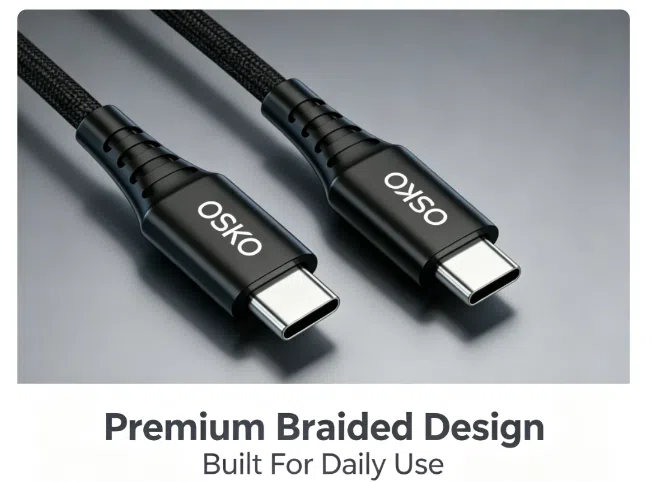
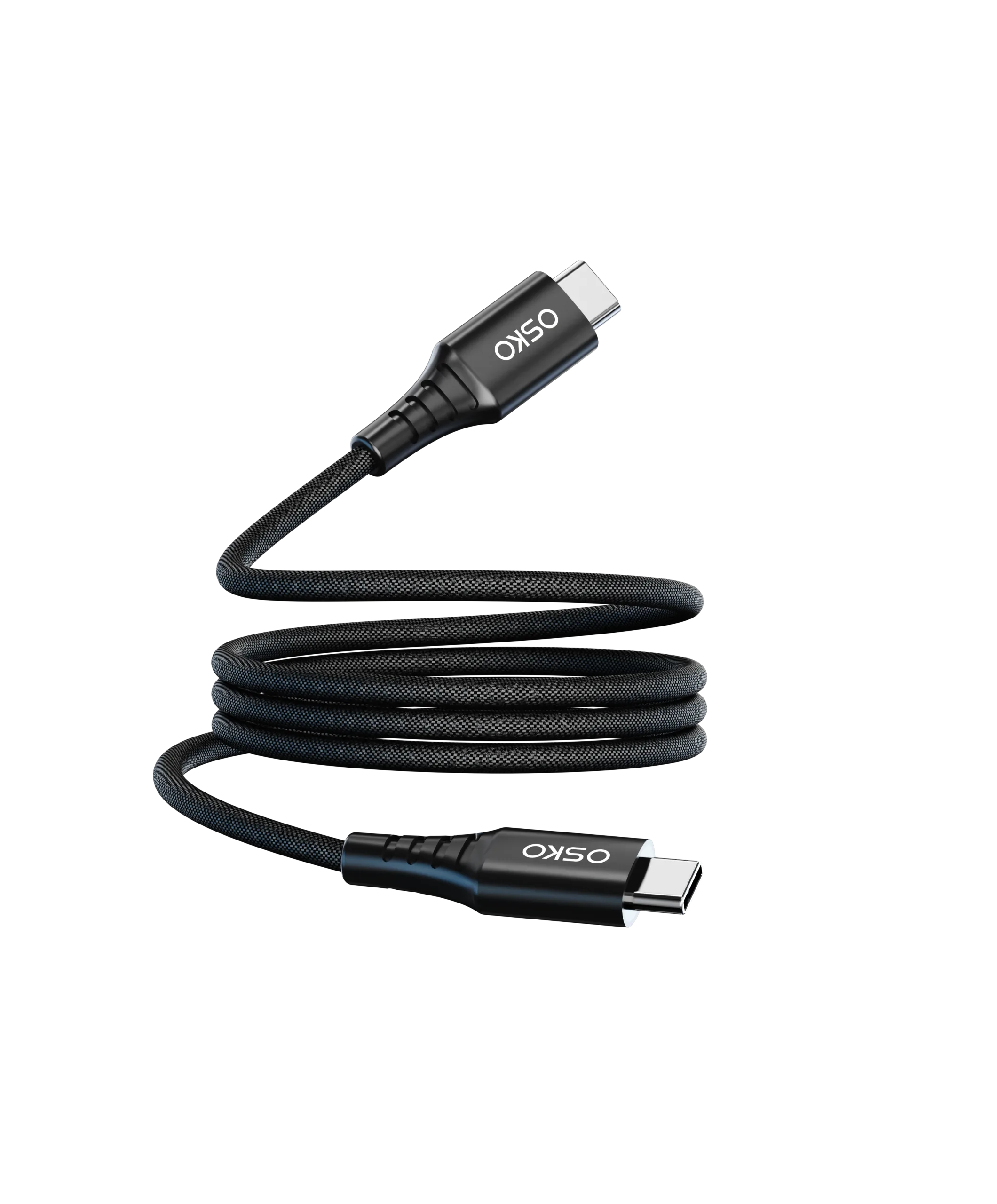
Braided USB-C cables
Laptop charging cables
Private label retail packaging
The company wanted to improve product reliability before launching in major US marketplaces.
Customer Challenges
Previous suppliers caused several issues:
Different charging performance between production batches
Unstable fast charging connection
Reduced data transfer speed
Increasing customer complaints
Testing showed that inconsistent insulation materials affected signal performance during high-frequency transmission.
The customer needed a supplier capable of providing engineering-level improvements instead of simple cable assembly.
OSKO Engineering Solution
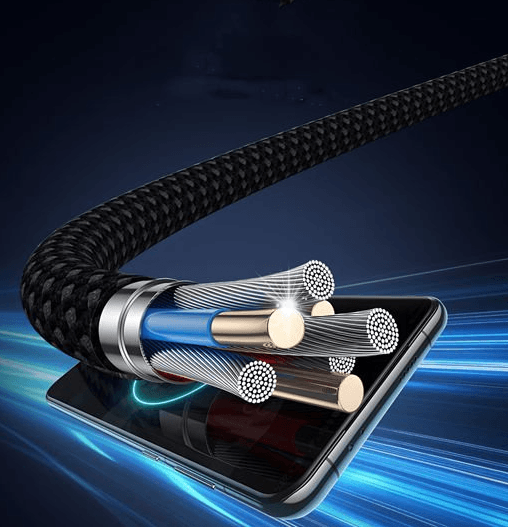
OSKO optimized the cable structure through:
HDPE Insulation System
Improved dielectric performance and reduced signal attenuation.
High-Purity Copper Conductors
Enhanced current stability and reduced electrical resistance.
Multi-Layer Shielding Design
Reduced EMI interference during data transmission.
PD Compatibility Testing
Verified stable communication between chargers and devices.
The solution supported:
OEM USB-C cable production
ODM cable development
Custom USB-C cable projects
Bulk USB-C cable supply
Project Results
After optimization:
Charging stability improved
Data transfer performance became more consistent
Batch quality variation decreased
Retail return risks were reduced
The project demonstrated that internal cable engineering directly influences customer satisfaction.
Selection Guide
How Buyers Choose a Reliable USB-C Cable Manufacturer
When sourcing USB-C cables internationally, buyers should evaluate more than price.
A professional supplier should provide:
Technical Manufacturing Capability
Check whether the factory can support:
USB-C PD cable development
High-power charging cables
Custom cable structures
Material optimization
Quality Testing Process
Reliable manufacturers should conduct:
Resistance testing
PD charging tests
Data transmission tests
Bending tests
Tensile strength tests
Temperature testing
Certification Support
For global markets, buyers commonly require:
| Market | Common Requirements |
|---|---|
| USA | FCC compliance, safety testing |
| Germany | CE, RoHS compliance |
| Australia | Product safety documentation |
| Netherlands | CE, environmental compliance |
A qualified USB-C cable wholesale supplier should understand different market requirements.
Why OEM Buyers Choose Advanced USB-C Cable Factories
Professional brands usually require more than standard products.
A capable custom USB-C cable factory can provide:
Cable length customization
Logo printing
Packaging customization
Material selection
Power specification adjustment
Private label solutions
For example:
A retailer may need a durable 6ft braided USB-C cable for consumers.
An enterprise customer may require a 240W USB-C PD cable for laptops.
Different applications require different engineering solutions.
FAQ
What is HDPE insulation in USB-C cables?
HDPE insulation is a high-performance dielectric material used inside USB-C cables to improve electrical stability. It reduces signal loss and helps maintain reliable charging and data transmission performance.
Does HDPE insulation make USB-C cables charge faster?
HDPE does not directly increase charging power. However, it improves signal stability and supports more reliable USB Power Delivery communication, helping devices maintain consistent charging performance.
Is HDPE better than PVC for USB-C cables?
For high-performance applications, HDPE generally provides better signal characteristics than PVC because it has lower dielectric loss and better high-frequency transmission performance.
Why do USB-C cables lose signal quality?
Signal loss can happen because of conductor resistance, poor insulation materials, electromagnetic interference, or incorrect impedance control. High-quality cable designs reduce these problems through better materials and engineering.
What should businesses look for when buying USB-C cables?
Businesses should evaluate supplier experience, material quality, testing procedures, certifications, production capability, and customization options before choosing a USB-C cable supplier.
Are all USB-C cables suitable for fast charging?
No. USB-C cables have different power ratings and internal designs. Some support basic charging, while advanced USB-C PD cables can support 60W, 100W, 140W, or even 240W charging.
Summary
HDPE insulation plays an important role in modern USB-C cable engineering by improving signal integrity, reducing transmission loss, and supporting stable fast charging performance.
For high-speed USB-C applications, cable performance depends on more than the connector design. Internal materials, conductor quality, shielding structure, and manufacturing processes all influence the final product.
For global brands, distributors, and procurement teams sourcing:
OEM USB-C cables
USB-C fast charging cables
High-speed data cables
Wholesale USB-C cable solutions
choosing an experienced manufacturer with strong engineering capability can reduce quality risks and improve market competitiveness.
OSKO provides professional OEM and ODM USB-C cable manufacturing solutions, including material engineering support, customized designs, quality testing, and global supply capability.
Contact Information
OSKO specializes in:
OEM USB-C cable manufacturing
Custom USB-C charging cable solutions
USB-C PD cable development
Wholesale and bulk cable supply
Private label cable production
With engineering-focused manufacturing and quality control systems, OSKO helps global brands develop reliable USB-C cable products for modern charging and connectivity markets.