
Introduction
Fast charging technology has become a core feature of modern Android smartphones. Brands such as Samsung, Google Pixel, OnePlus, and Xiaomi rely on USB-C based fast charging systems to deliver higher power output and shorter charging times.
However, not every fast charging cable for Android can support high-speed charging. Many users experience slow charging, overheating, or unstable power delivery due to poor cable quality rather than charger limitations.
For OEM USB cable manufacturers, ODM USB cable suppliers, and Wholesale USB cable distributors, understanding Android fast charging standards is critical to meet demand in North America and Europe, where fast charging adoption is rapidly increasing.
A properly engineered USB-C cable determines whether the charging system can achieve full power output or fall back to basic charging speed.

Applicable Scenarios
Fast charging cables for Android are widely used across different industries and environments:
OEM USB cable bundled with Android smartphones
ODM USB cable for branded accessory ecosystems
Wholesale USB cable distribution for Amazon and retail chains
Bulk USB cables for telecom operators and enterprise deployment
Retail USB cable for electronics stores
Travel USB cable for power banks and portable chargers
Desk charging cable for office environments
Car charging cable for Android Auto systems
Home USB cable for multi-device charging setups
Each scenario requires different durability levels, power ratings, and cable lengths.
Material Science & Dielectric Performance
Copper Conductor Efficiency
Fast charging depends heavily on conductor quality.
High-performance cables use:
Oxygen-free copper (OFC)
Multi-strand low-resistance architecture
Thick wire gauge for reduced voltage drop
Low-quality cables often result in:
Heat buildup
Reduced charging speed
Power instability
USB Power Delivery and PPS Support
Modern Android fast charging relies on:
USB Power Delivery (USB-PD)
PPS (Programmable Power Supply) technology
These systems adjust voltage dynamically to optimize charging efficiency and battery health.
| Charging Standard | Power Output | Device Examples |
|---|---|---|
| Basic Charging | 5W–10W | Entry-level Android phones |
| Fast Charging | 18W–30W | Samsung, Pixel |
| Super Fast Charging | 45W–65W | Flagship Android devices |
| Ultra Fast Charging | 100W+ | Gaming phones, tablets |
A high-quality USB-C cable for Android ensures stable negotiation between charger and device.
Shielding and Signal Stability
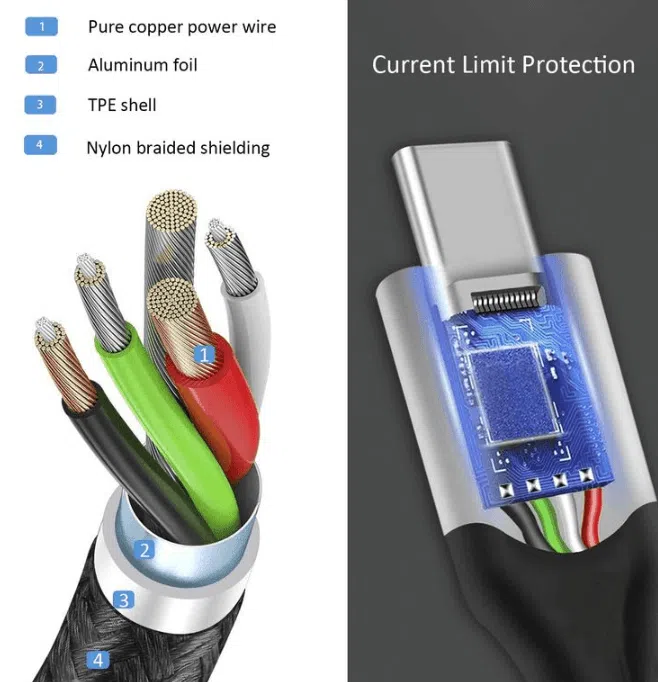
Android fast charging cables must also support stable data and power transmission.
Typical shielding includes:
Aluminum foil layer
Braided copper mesh
EMI protection layer
This prevents interference that can reduce charging efficiency or cause connection drops.
E-Marker Chip (High Power Systems)
For cables above 60W, an E-Marker chip is required.
It enables:
Safe current control
Device identification
Thermal protection
Without it, Android devices may limit charging speed automatically.
Braided Cable Durability
| Feature | PVC Cable | Braided USB-C Cable |
|---|---|---|
| Durability | Medium | High |
| Heat Resistance | Medium | High |
| Tangle Resistance | Low | High |
| OEM Branding Value | Low | High |
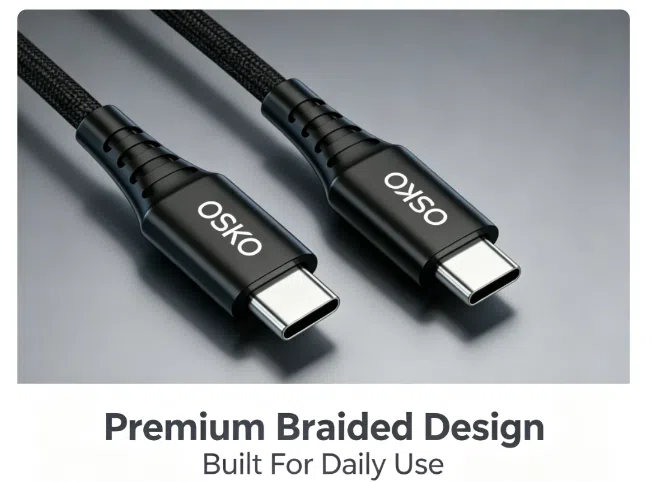
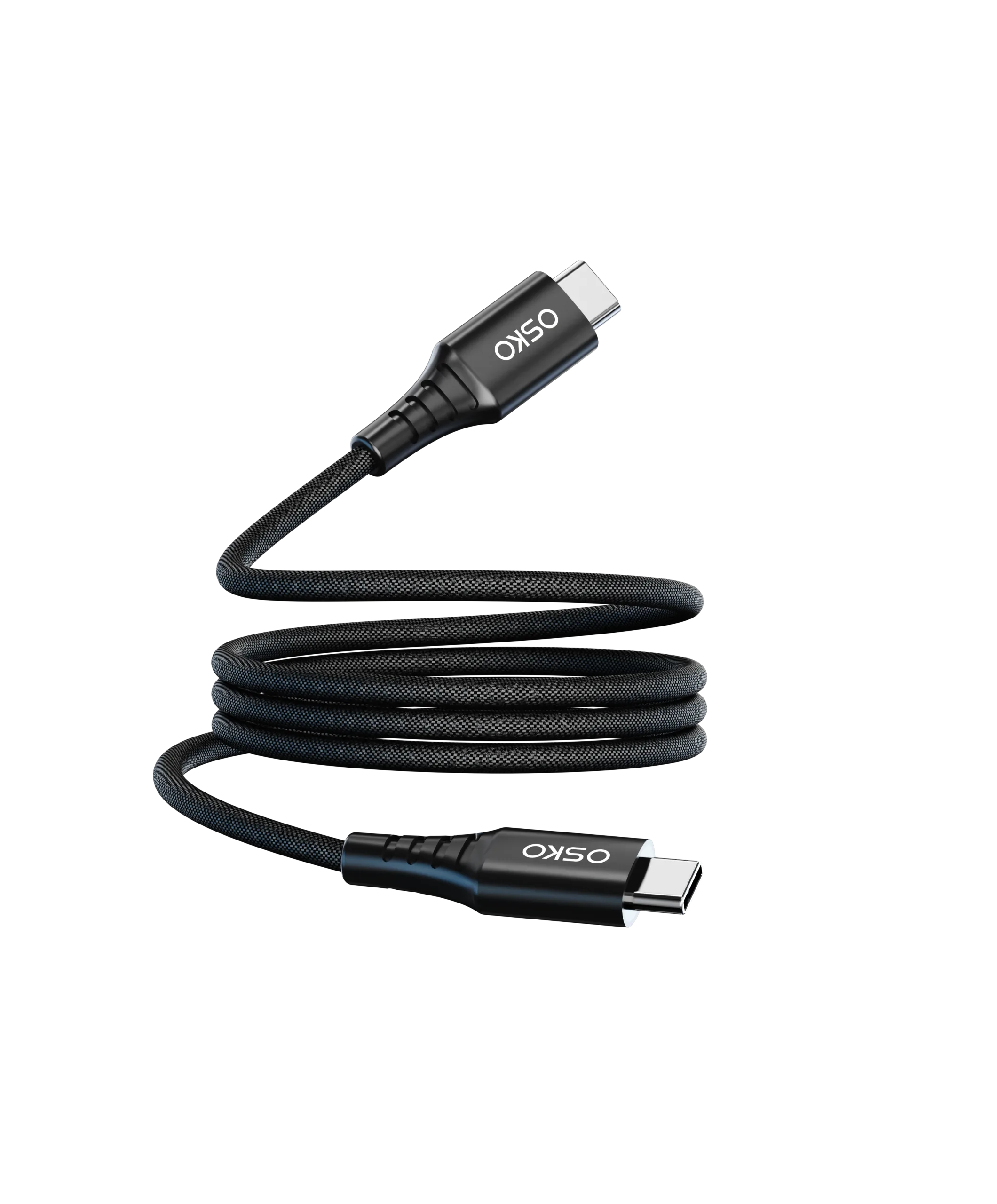
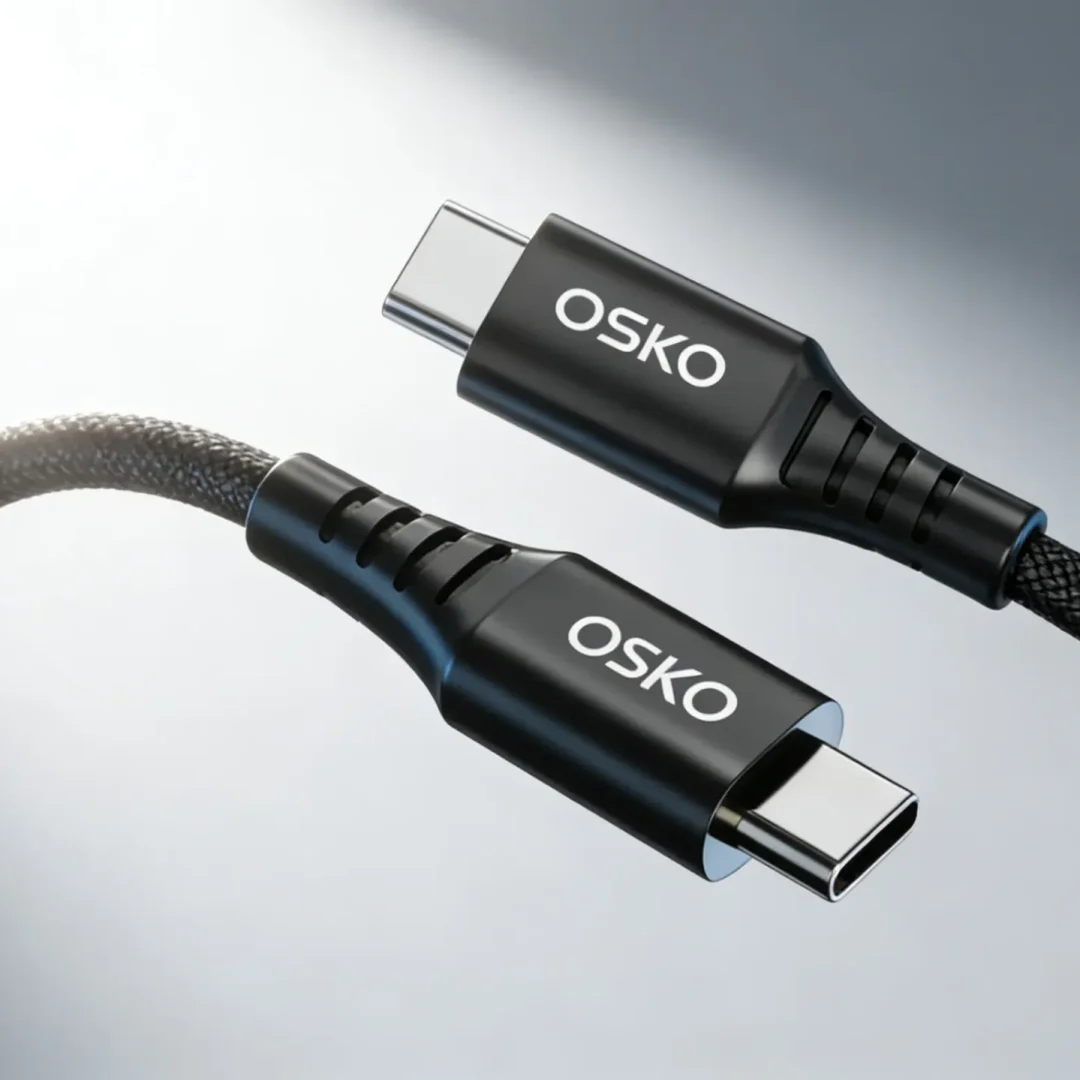
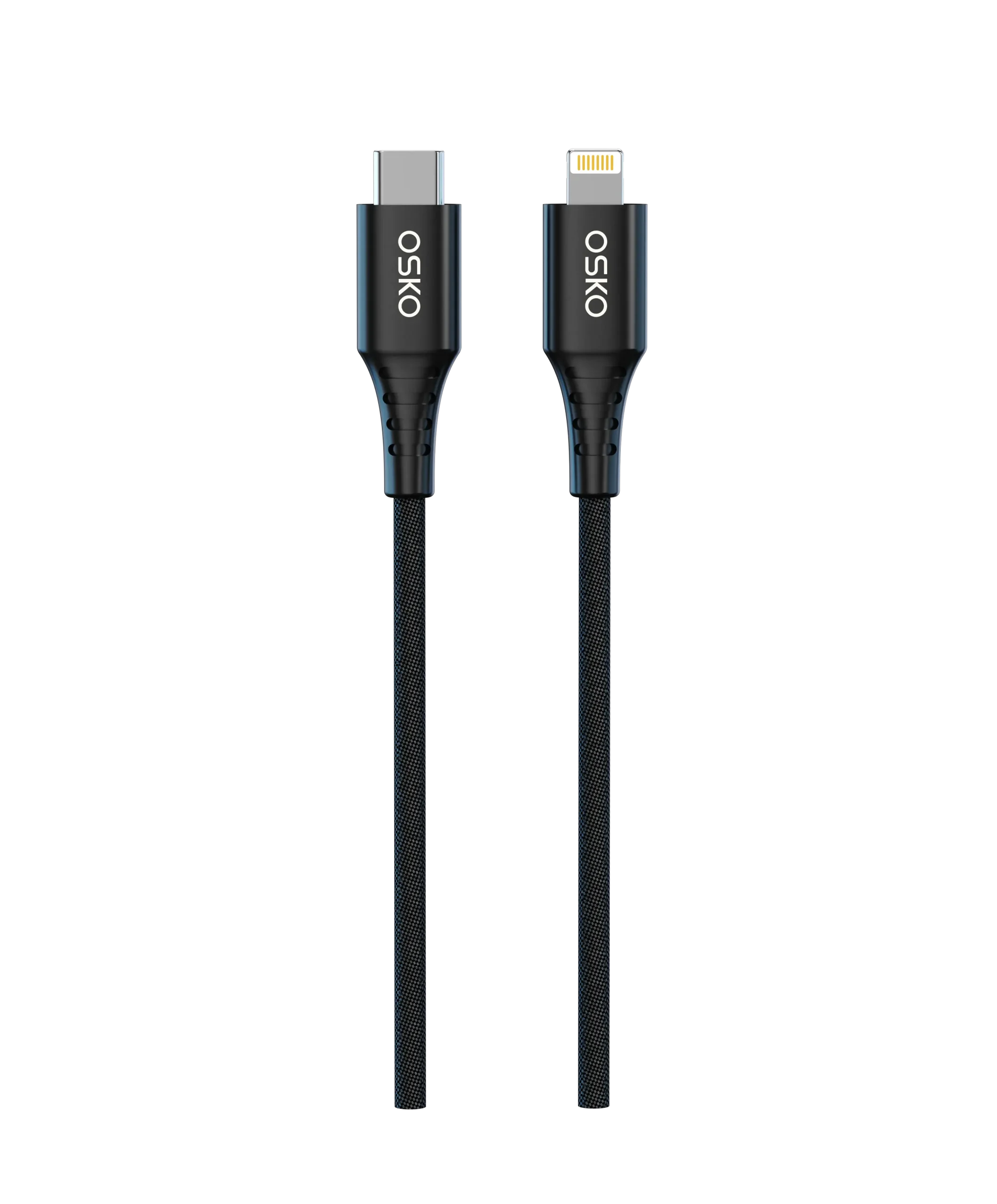
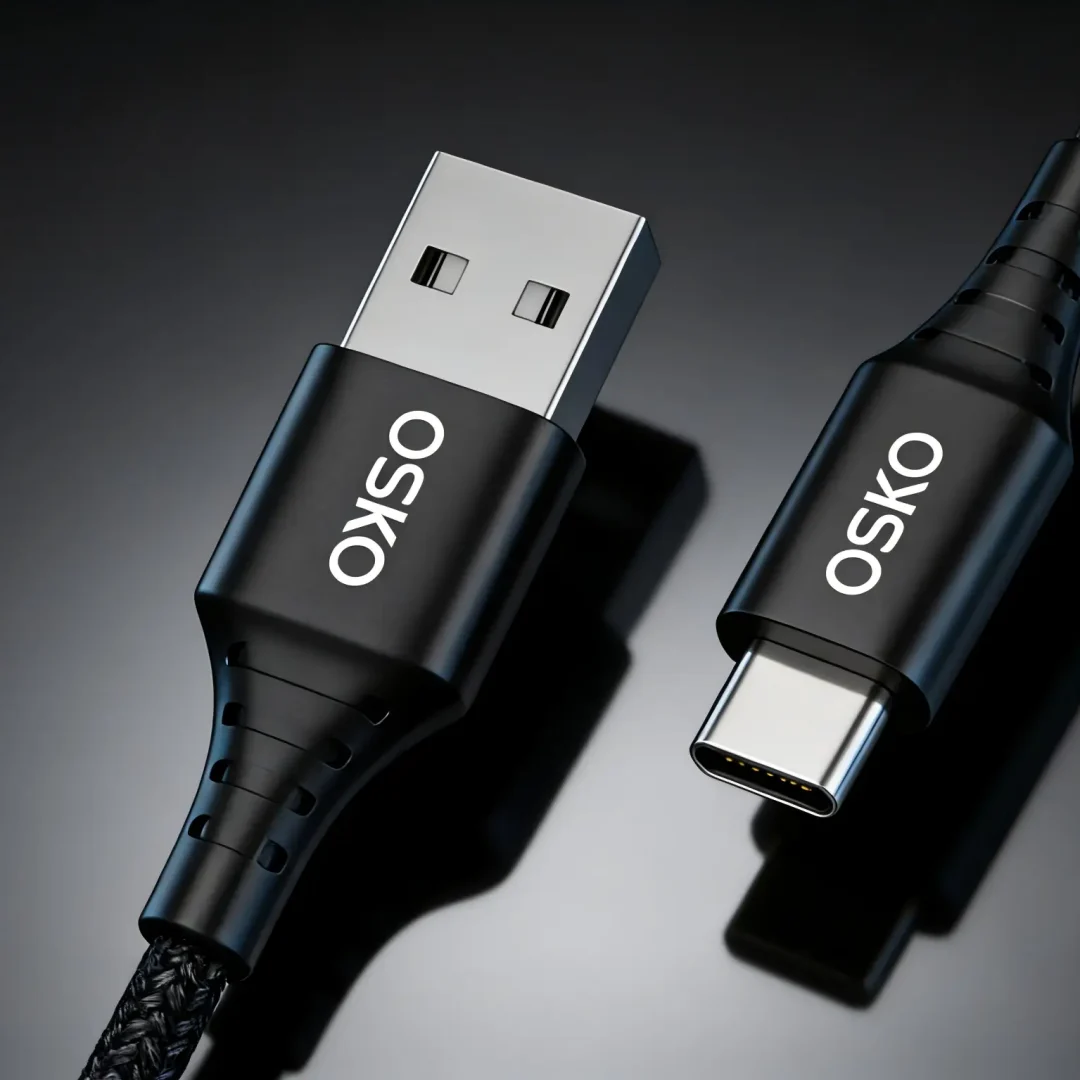
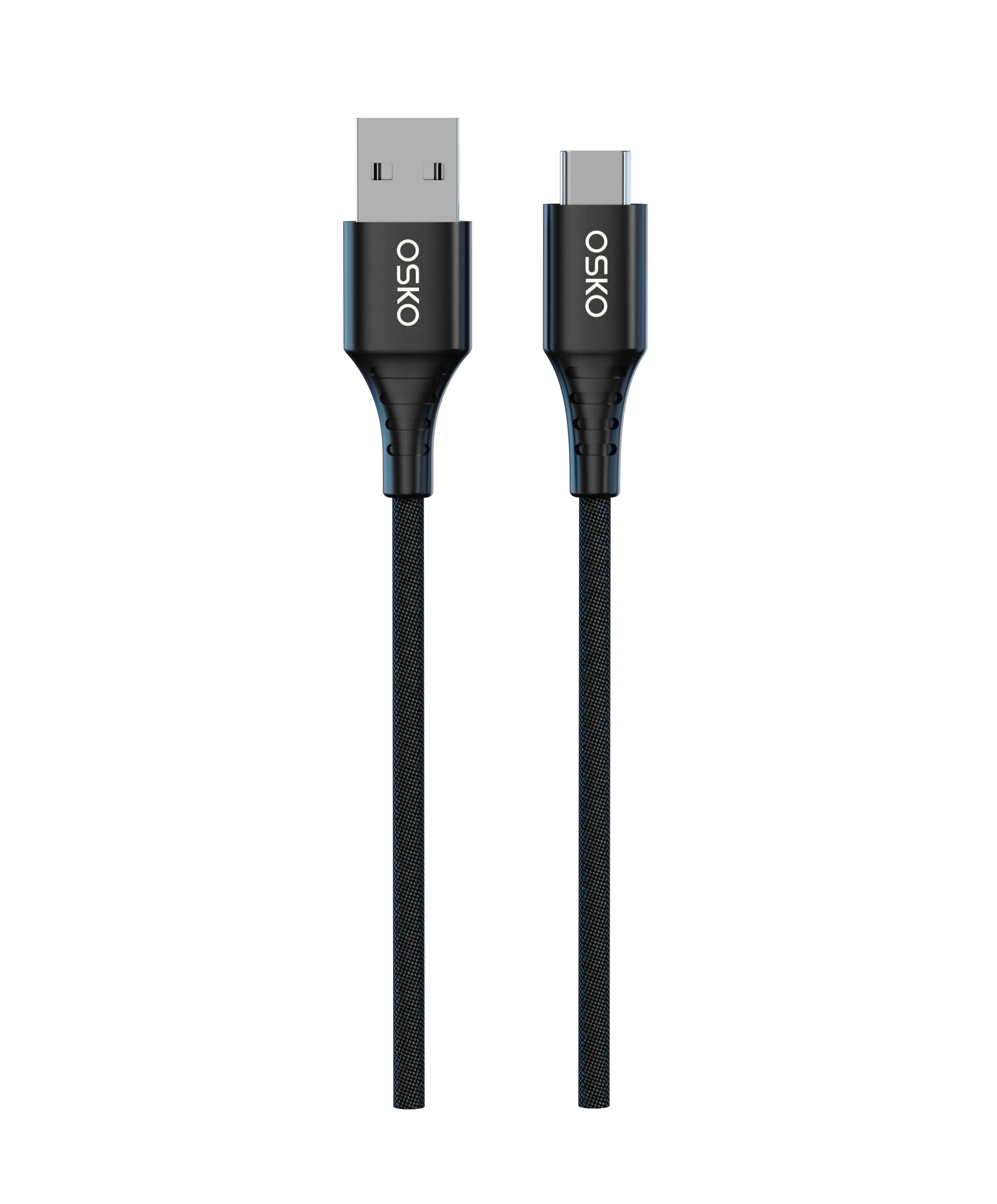
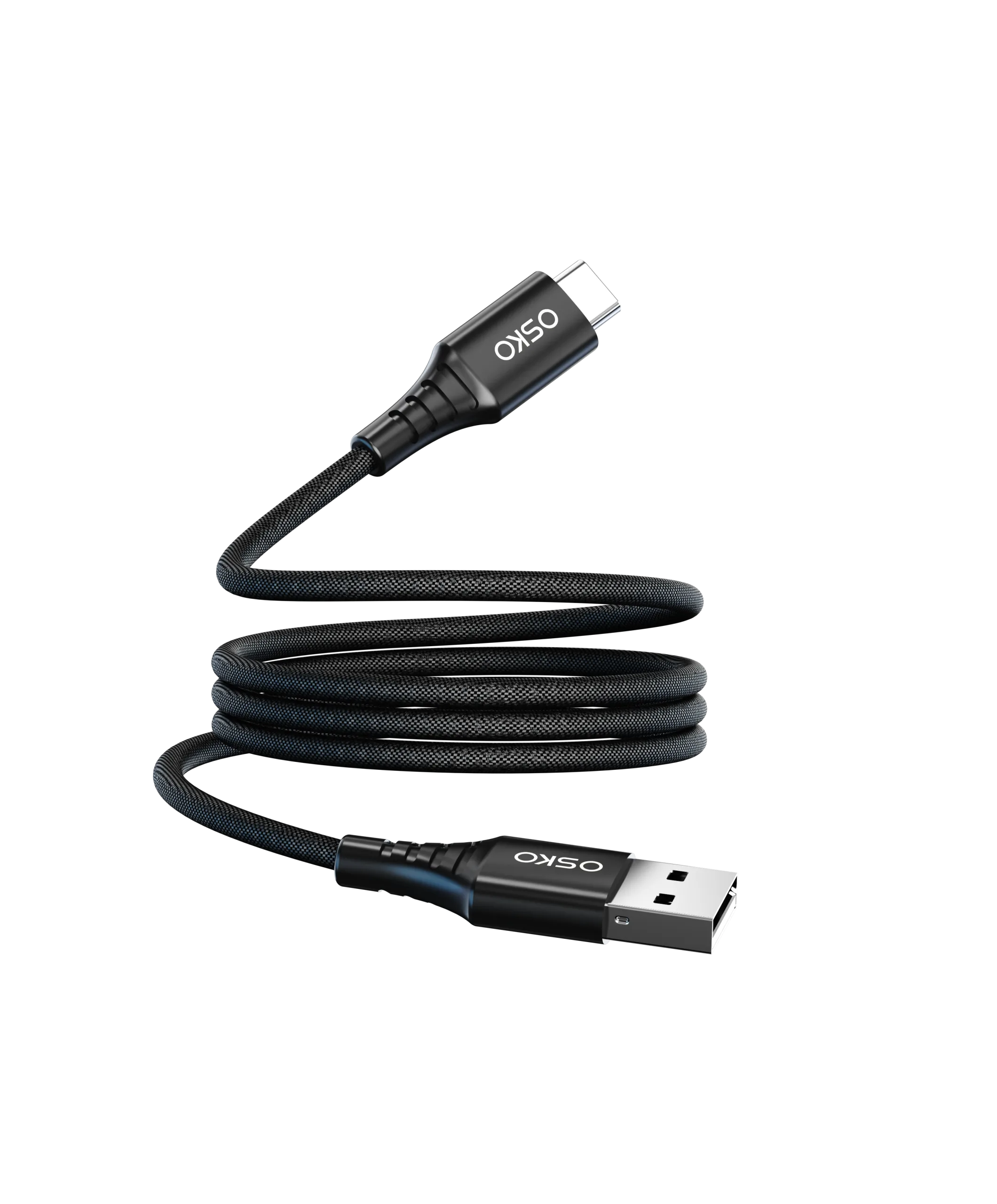
Premium options such as Durable nylon braided Type C charging cable factory production are widely used in retail and OEM markets.
Charging Speed Performance
Real Android Charging Behavior
Charging speed depends on:
Charger wattage
Cable resistance
Device chipset compatibility
Typical real-world performance:
50% charge in 20–30 minutes (fast charging systems)
Full charge in 1–1.5 hours (flagship devices)
A low-quality cable can reduce performance by up to 40%.
Common Fast Charging Issues
Phone charges slowly despite fast charger
Charging stops intermittently
Device switches to “normal charging mode”
Cable overheats during use
These problems are often caused by poor conductor quality or missing E-Marker support

Purchase Recommendations
Android Cable Selection Table
| Use Case | Recommended Cable Type |
|---|---|
| Daily smartphone charging | 60W braided USB-C cable |
| Gaming phones | 100W reinforced cable |
| Travel use | 3ft lightweight cable |
| Desk charging | 6ft durable cable |
| Car charging | Right-angle USB-C cable |
| High-performance use | 240W E-Marker cable |
OEM Manufacturing Strategy Table
| Category | Engineering Focus | OSKO Solution |
|---|---|---|
| OEM USB cable | Branding + stability | Custom logo + QC testing |
| ODM USB cable | Product differentiation | Material redesign |
| Wholesale USB cable | Cost efficiency | Mass production control |
| Bulk USB cables | Supply consistency | Automated inspection |
| Retail USB cable | Premium design | Braided + packaging upgrade |
| Travel USB cable | Portability | Lightweight structure |
| Car charging cable | Vibration resistance | Reinforced connectors |
| Home USB cable | Long lifespan | Heat-resistant materials |
Certification Requirements (US/EU Market)
CE RoHS certified 240W USB C cable
FCC approved nylon braided USB C cable supplier
Prop 65 compliant USB C cable factory
USB-IF compliant Type C cable manufacturer
ISO9001 certified braided USB cable factory wholesale
These certifications ensure compliance in North American and European retail channels.
FAQ
Why is my Android phone not fast charging?
Most often due to low-quality cable resistance or missing PD/PPS support.
Do all USB-C cables support fast charging?
No, only cables designed with proper conductor and shielding structures.
Is braided cable better for Android fast charging?
Yes, it improves durability and reduces internal wire damage.
Do I need 100W cable for Android phones?
Not always. Most phones use 18W–65W charging, but higher wattage ensures future compatibility.
What is the best cable length for Android users?
3ft for travel, 6ft for home and desk use.
Summary
Fast charging cables for Android devices are a critical component in achieving stable, high-speed power delivery. While charging technology such as USB-PD and PPS continues to improve, cable quality remains the limiting factor in real-world performance.
A well-designed USB-C cable for Android must combine high-quality copper conductors, stable shielding, proper E-Marker integration (for high wattage), and durable braided construction.
For OEM USB cable manufacturers, ODM USB cable suppliers, and Wholesale USB cable distributors targeting North America and Europe, producing certified, durable, and high-performance braided USB-C cables is essential for competitive success in the fast-growing Android accessory market.