
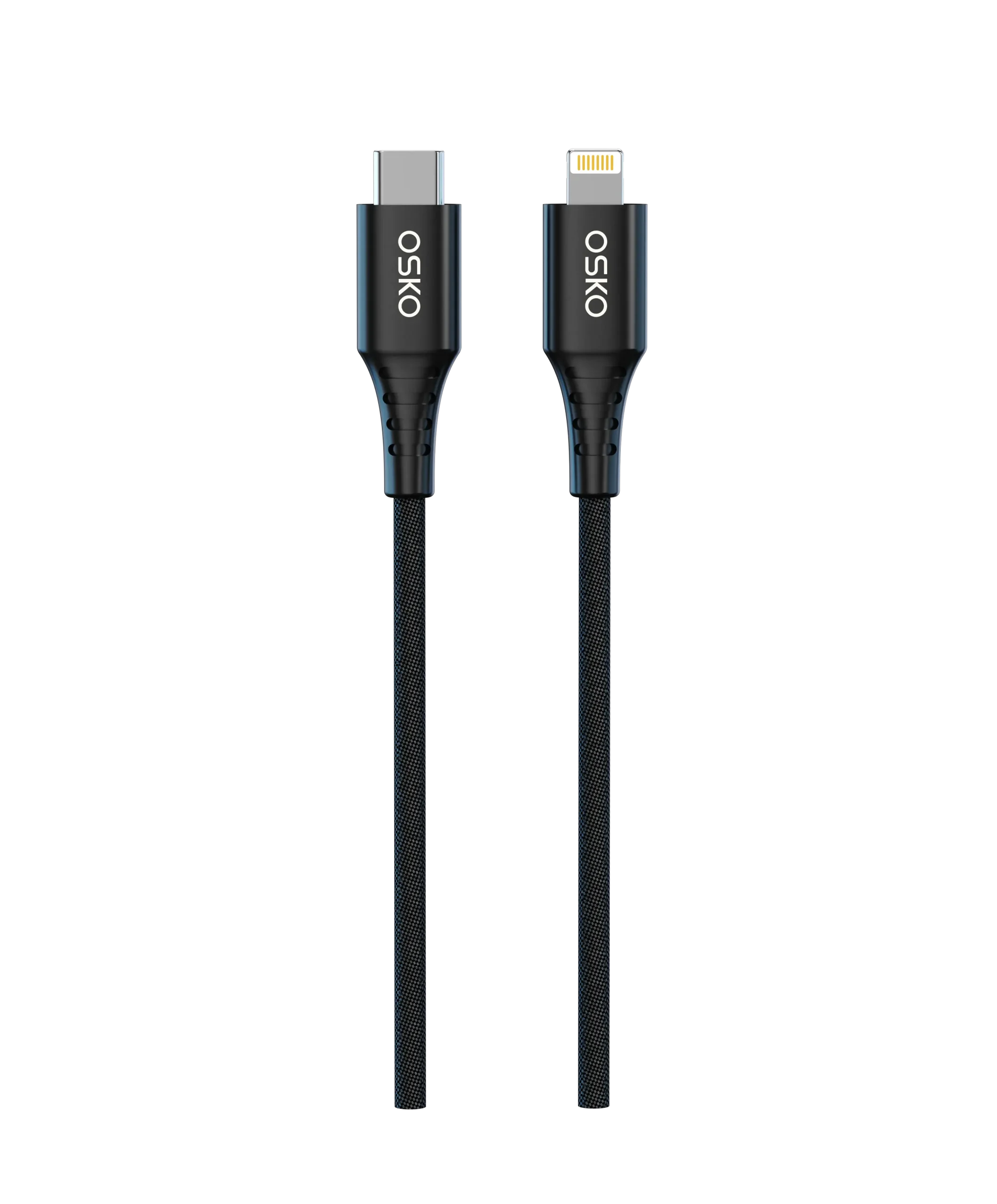
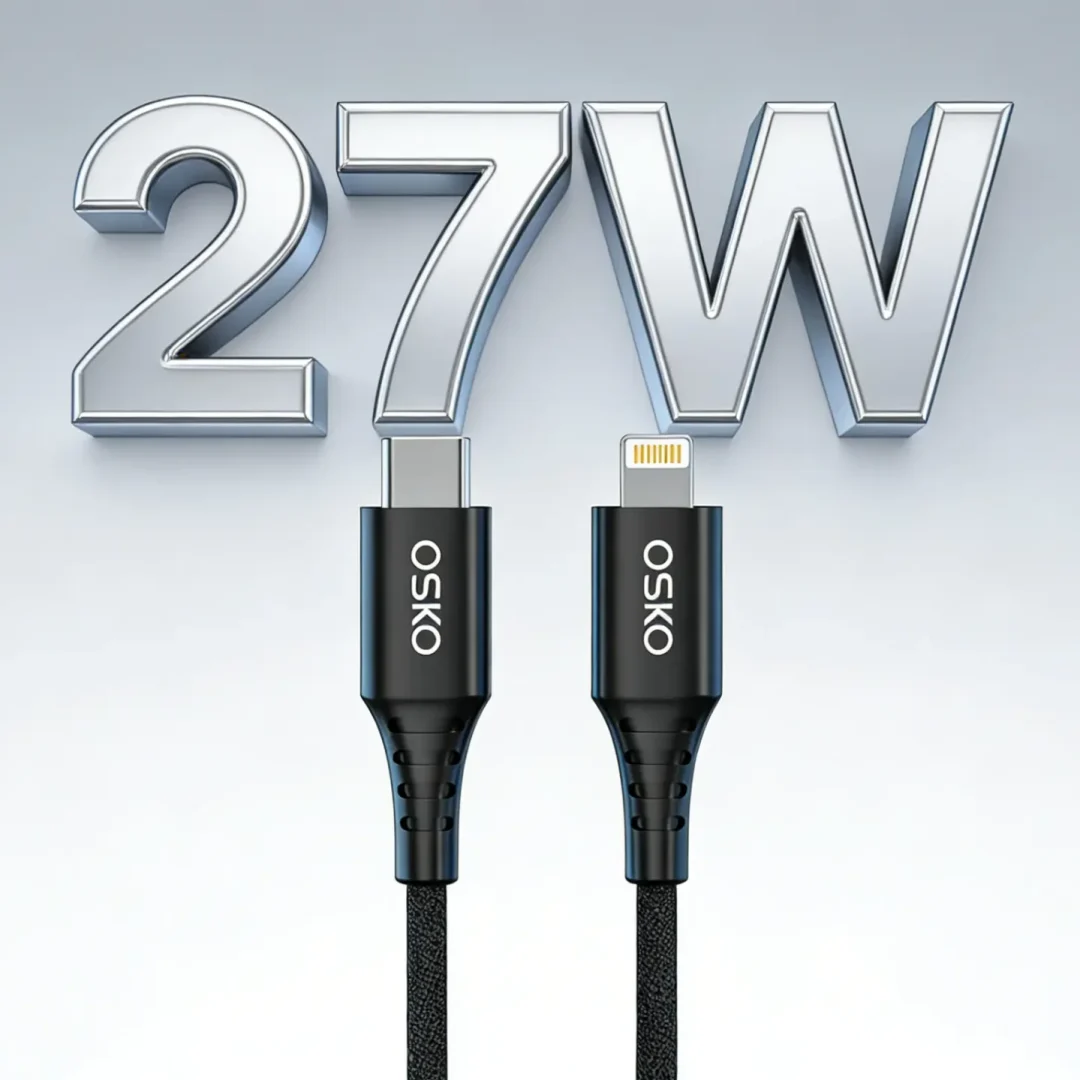
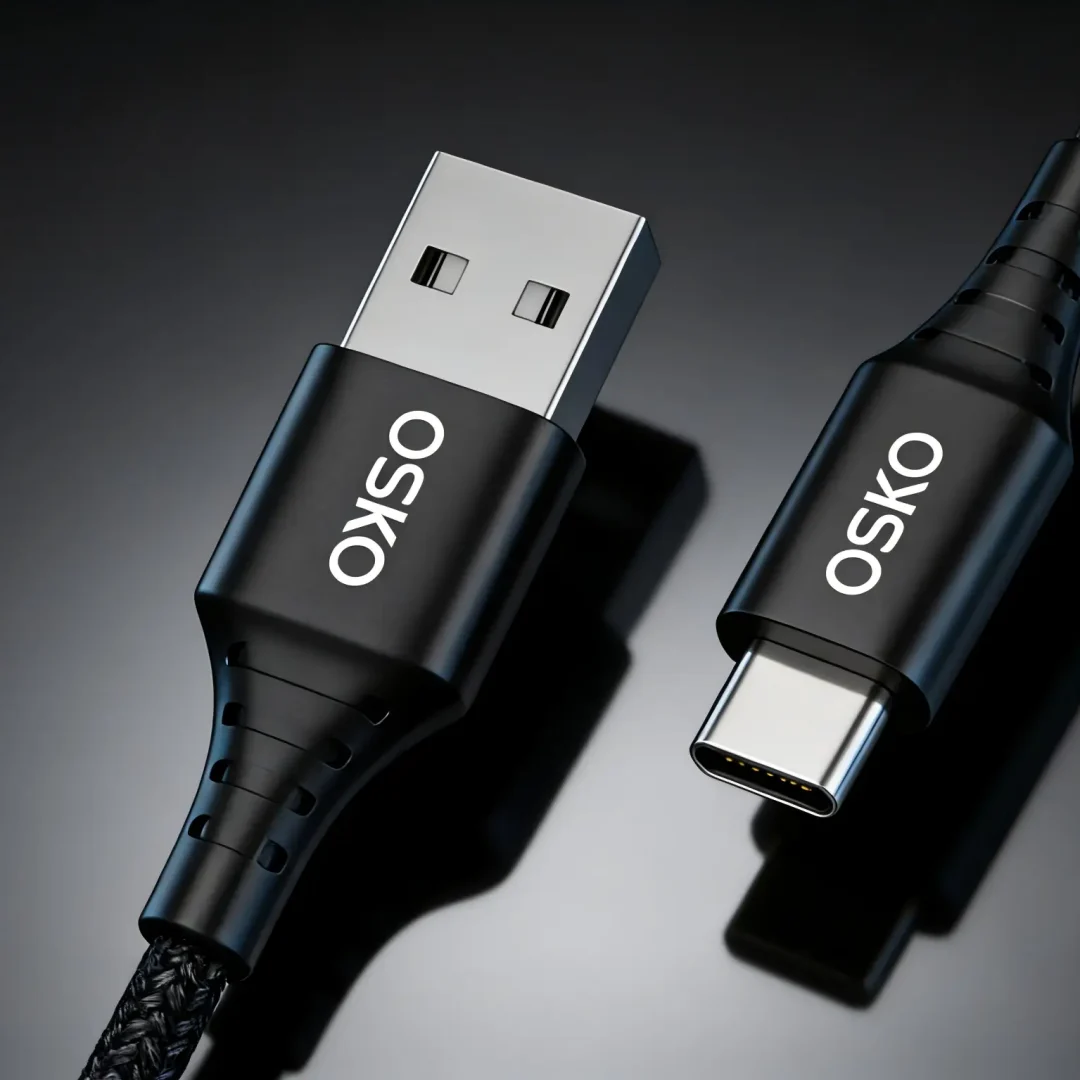
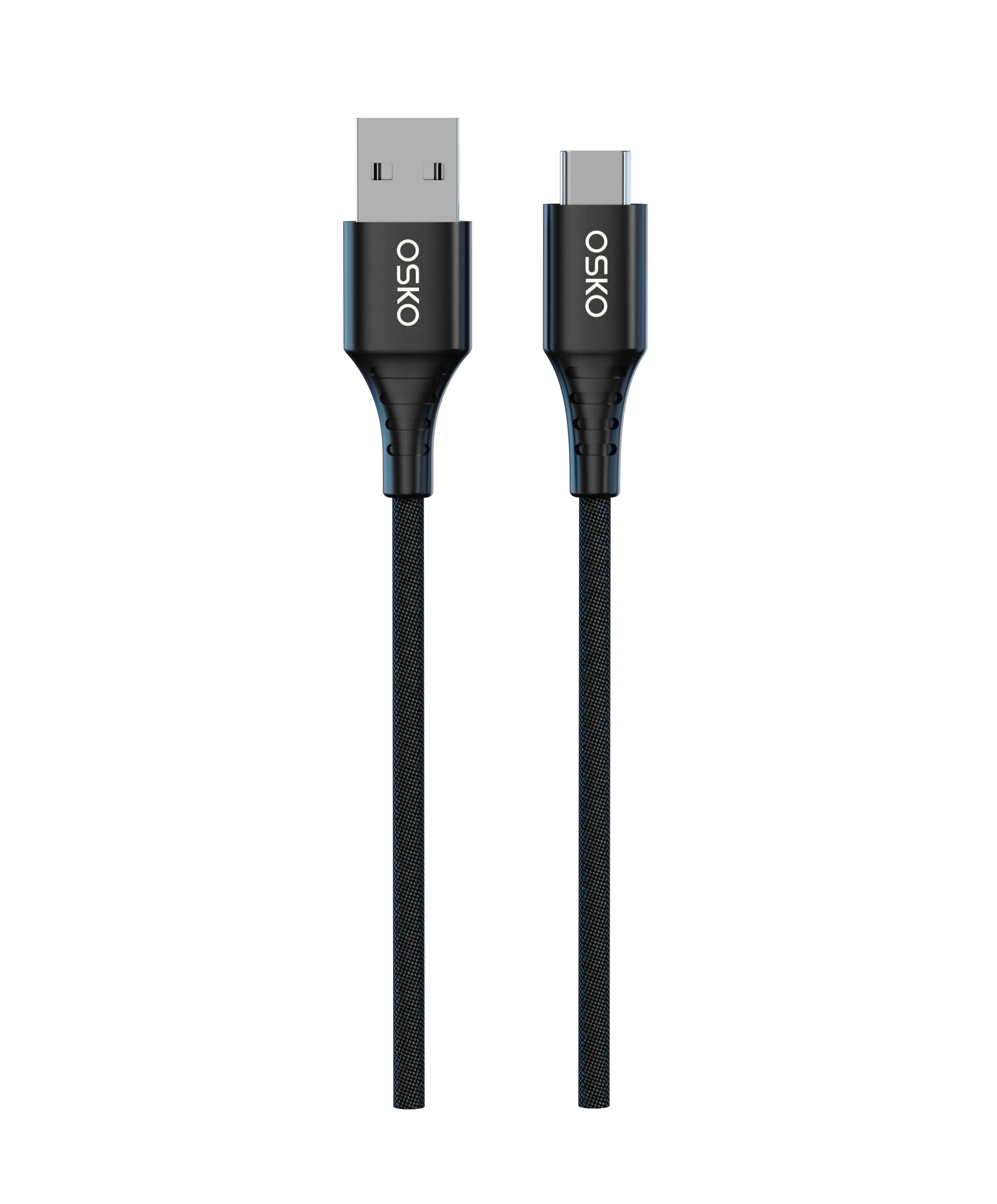

Introduction
Choosing between a braided cable and a standard PVC cable is a common decision for both consumers and procurement buyers in the US and European markets.
At first glance, the difference seems purely visual. However, from an engineering perspective, these two cable types represent fundamentally different material systems with distinct performance characteristics in durability, flexibility, heat resistance, and long-term reliability.
In modern USB charging systems, especially for USB-C fast charging environments, the choice between a braided cable and a standard PVC cable directly affects product lifespan, return rates, and user experience.
OSKO evaluates this decision from an OEM engineering standpoint, focusing on real-world usage conditions rather than surface-level appearance.

Material Science & Dielectric Properties
The performance difference between braided and PVC cables starts at the material level.
PVC Cable Structure and Characteristics
PVC (Polyvinyl Chloride) cables are widely used in entry-level charging products due to low manufacturing cost and ease of processing.
Key characteristics include:
Smooth surface finish
Low production cost
Moderate flexibility
Limited abrasion resistance
However, PVC has a higher tendency to harden over time, especially in low-temperature environments, which can increase internal stress on conductors.
In long-term use, this affects both durability and charging cable performance stability.
Braided Cable Structure and Engineering Advantages
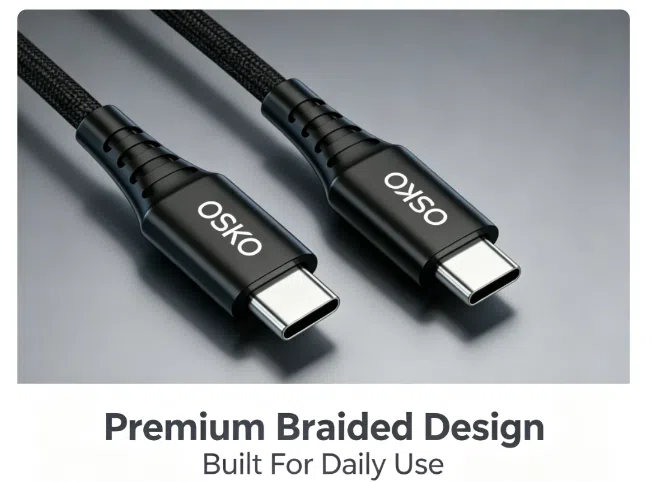
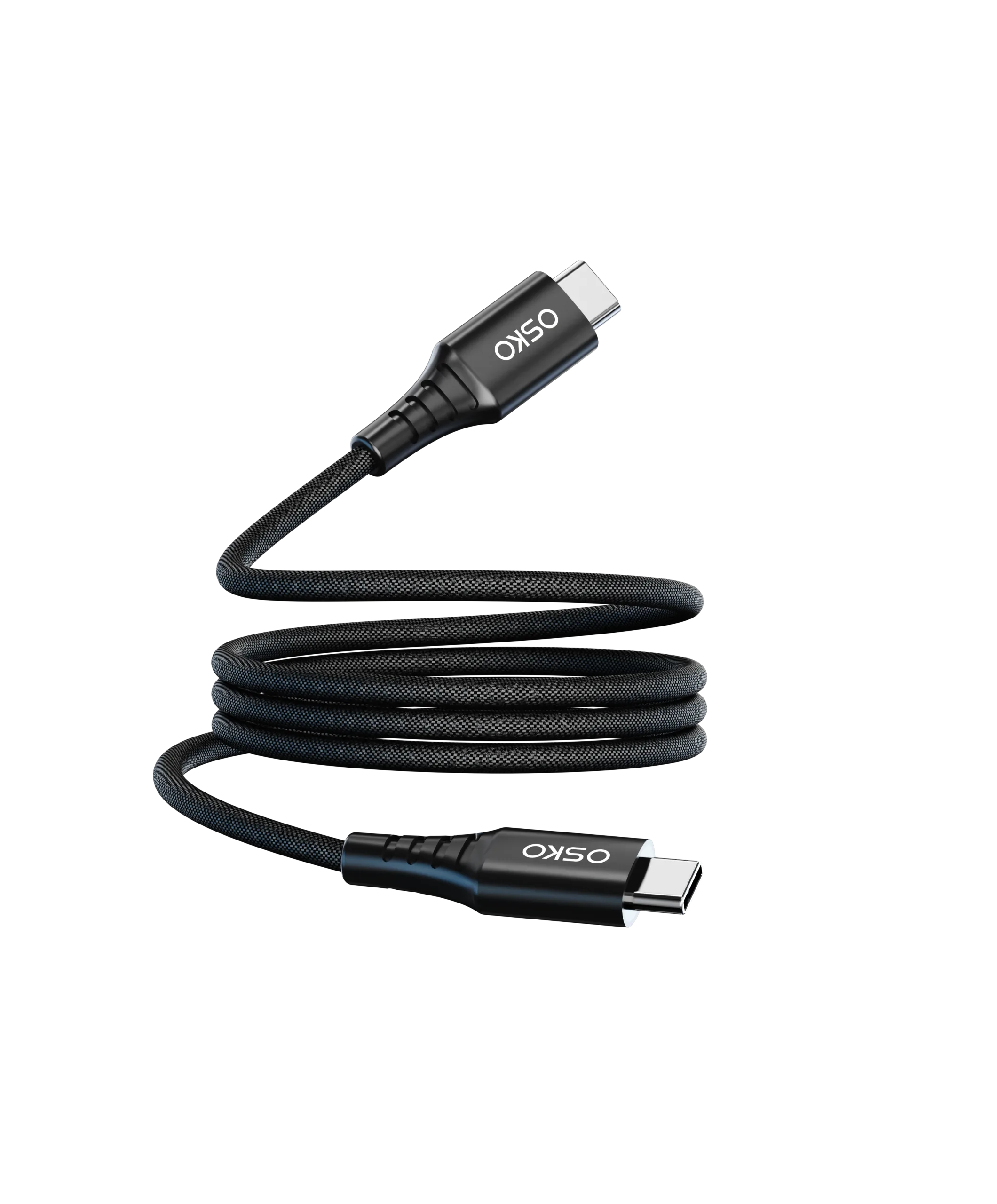
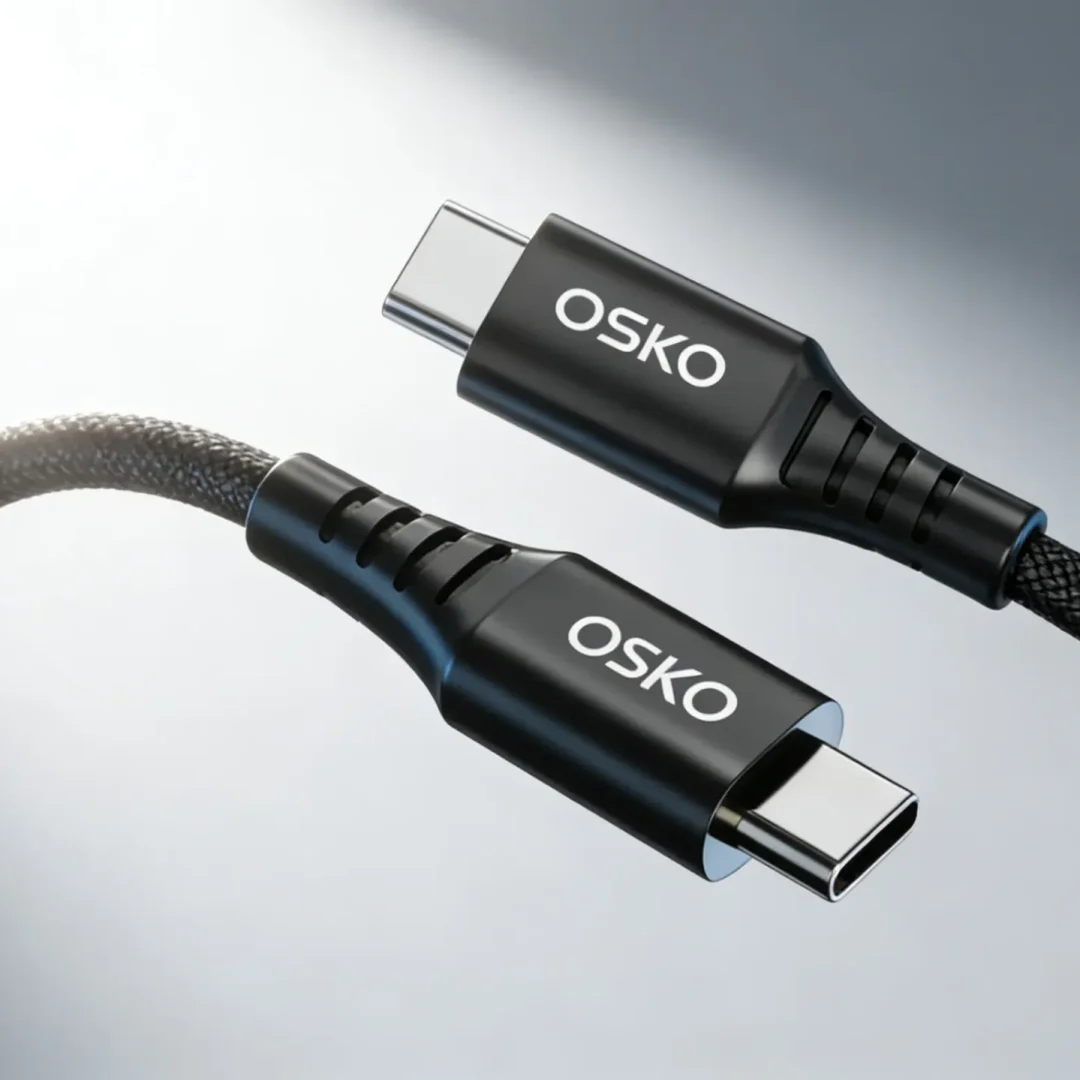
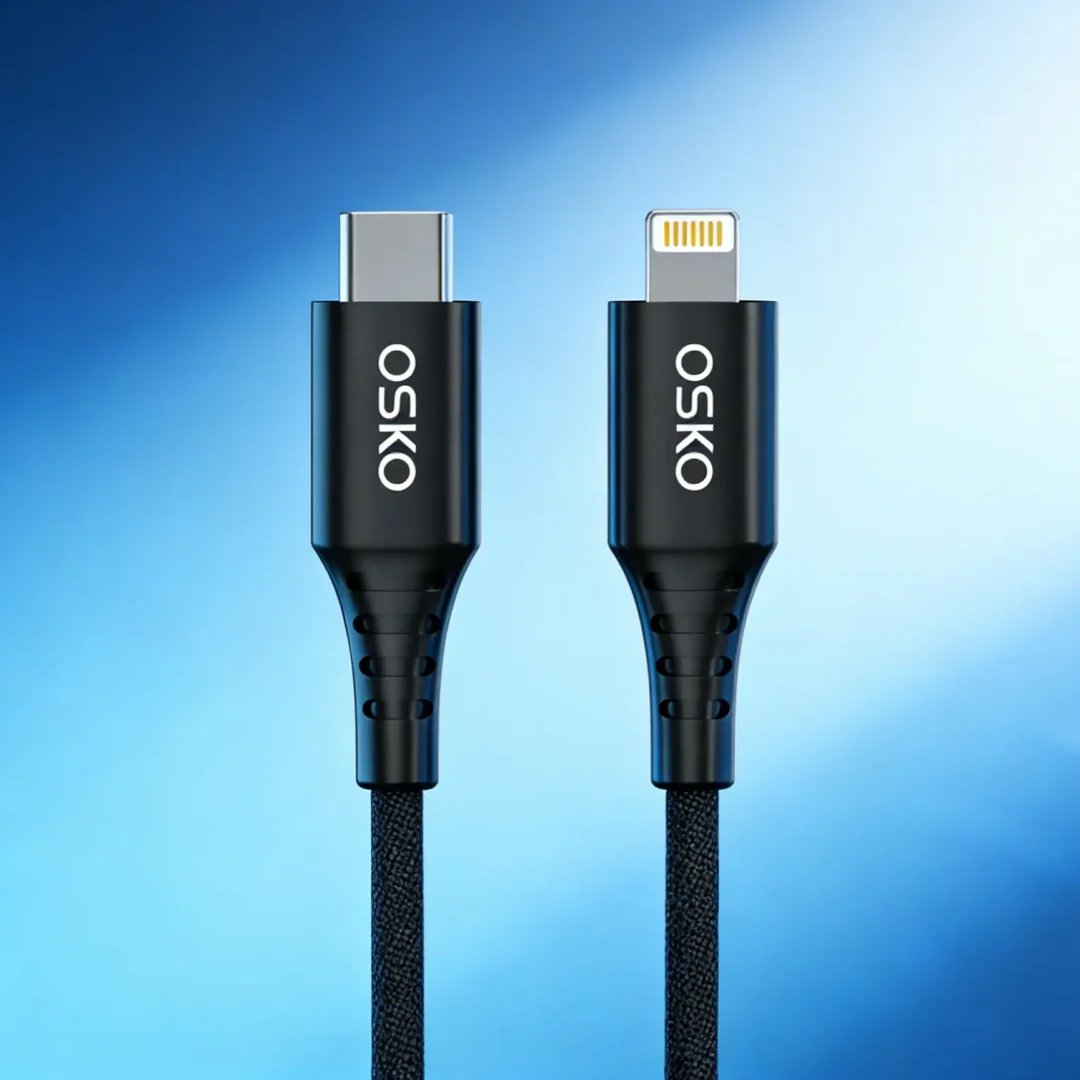
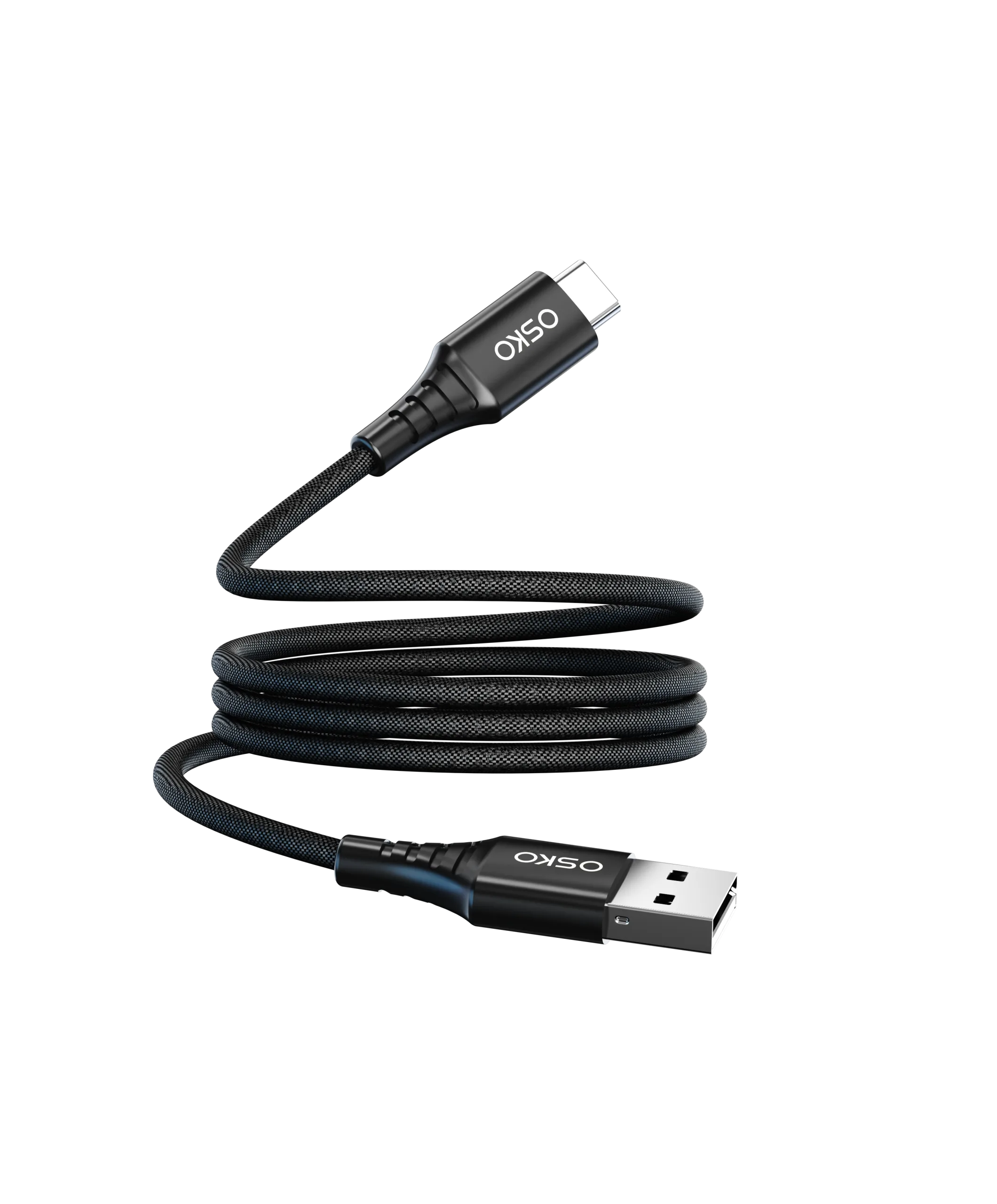
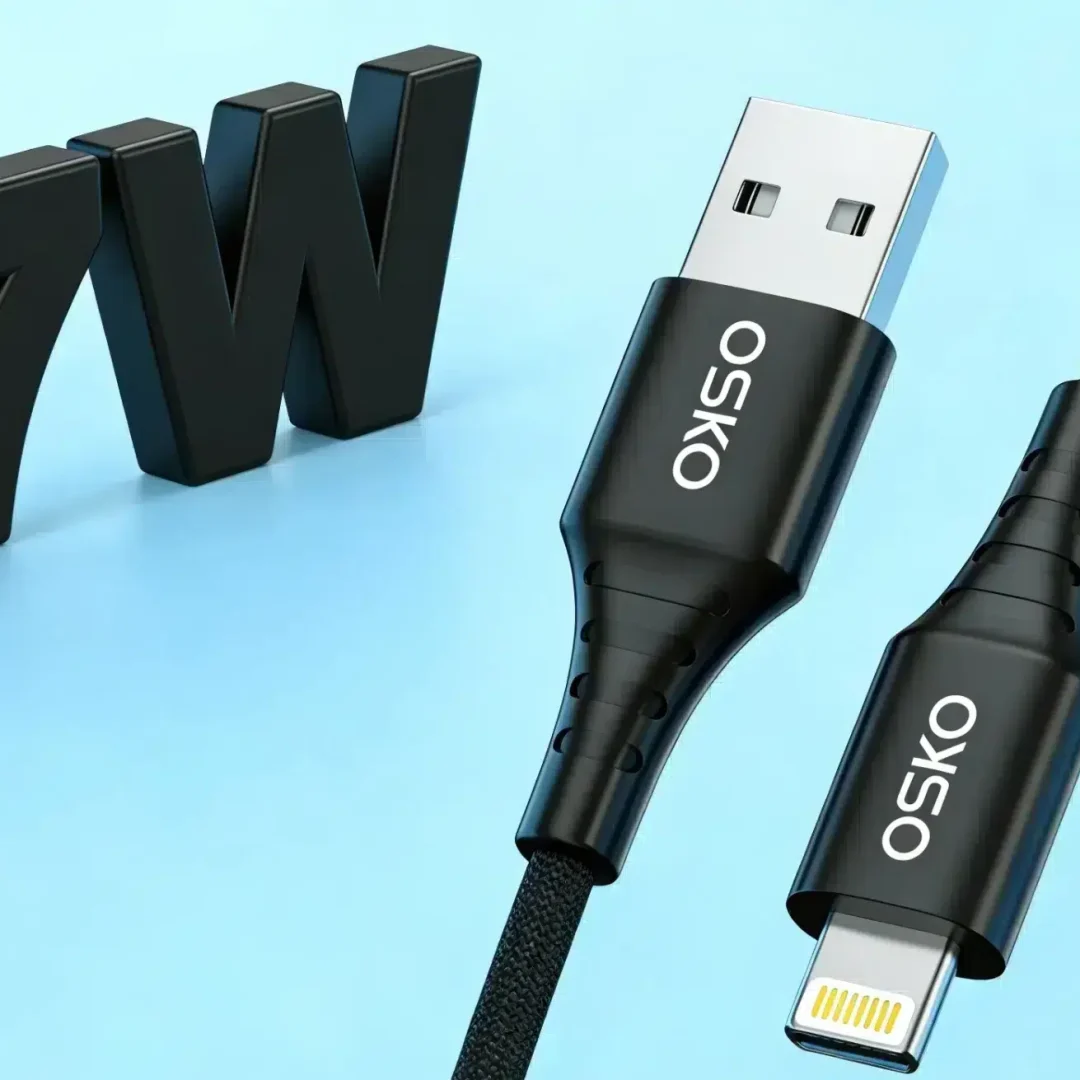
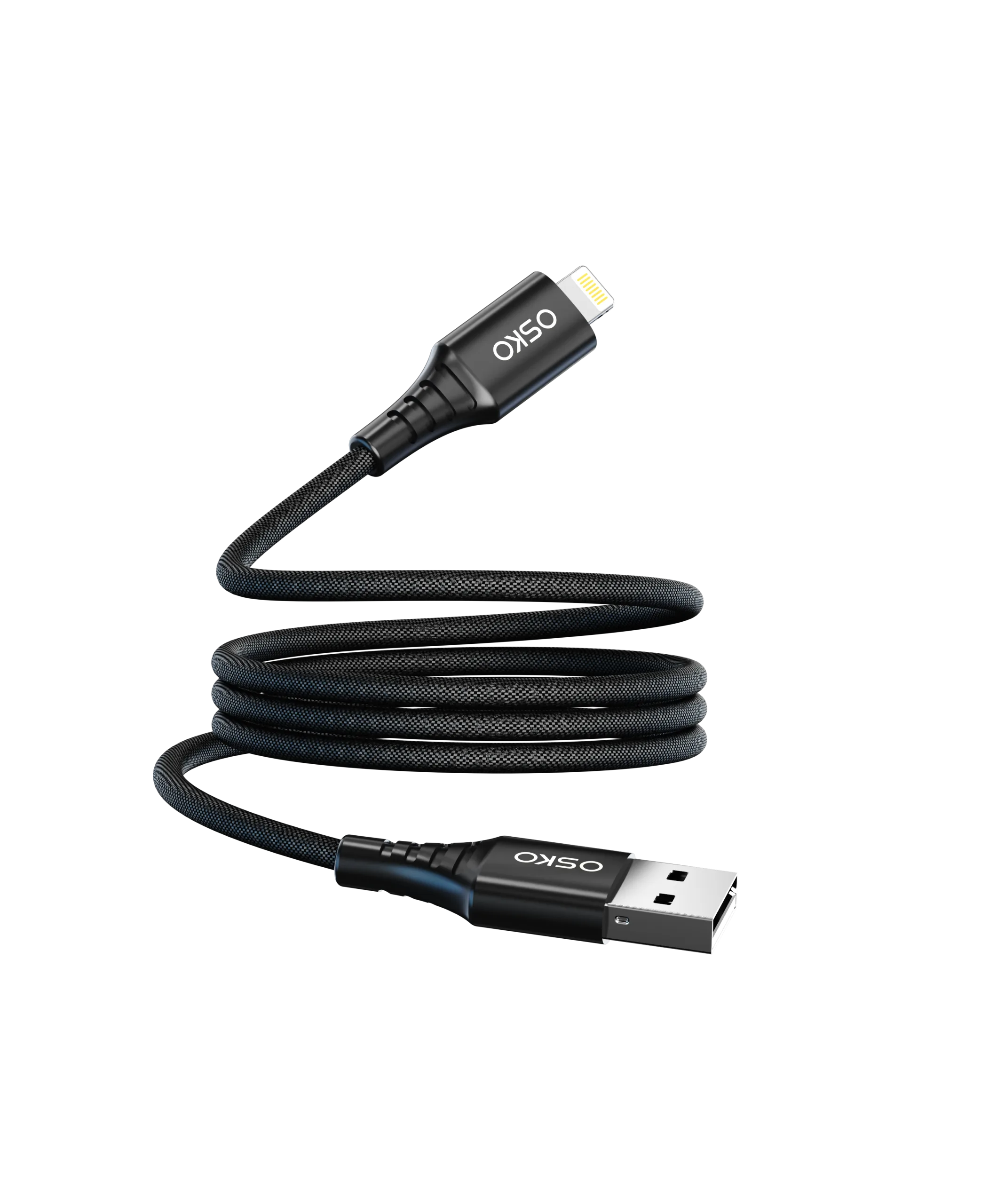
Braided cables use an outer woven layer, typically nylon or polyester, to reinforce structural integrity.
Key advantages include:
High abrasion resistance
Improved tensile strength
Reduced surface wear
Better strain distribution
This makes braided cables more suitable for high-usage environments such as office desks, travel kits, and automotive charging systems.
Dielectric Stability and Electrical Performance
While outer materials differ, both cable types rely on internal dielectric insulation for electrical performance.
However:
PVC outer jackets provide less thermal dispersion
Braided jackets improve heat dissipation indirectly through structural spacing
This becomes important in fast charging cable materials used in USB-PD systems.
Flexibility and Cable Memory Effect
PVC cables often suffer from “memory effect,” meaning they retain twisted shapes after repeated use.
Braided cables reduce this issue by:
Increasing structural stiffness
Distributing bending stress
Reducing surface friction between cable and environment
This directly improves usability in daily charging scenarios.
Case Study
US E-Commerce Brand Cable Return Rate Optimization Project
Customer Background
A US-based Amazon electronics seller was selling both PVC and braided USB-C cables but experienced significantly higher return rates on PVC versions.
The goal was to determine the optimal material strategy for a dual-product cable line targeting different price segments.
Engineering Problems Identified
PVC cable issues included:
Surface cracking after extended use
High tangling frequency reported by users
Connector stress concentration failure
Reduced flexibility in cold environments
Higher return rate due to perceived low quality
Braided cable issues were minimal but included:
Slightly higher production cost
Increased stiffness in ultra-lightweight use cases

OSKO Engineering Solution
OSKO implemented a segmented product strategy:
PVC cables optimized for entry-level retail channels
Nylon braided cables positioned for premium durability segment
Reinforced strain relief design applied to both categories
Oxygen-free copper conductors standardized across product lines
Consistent USB-PD compliance testing for both versions
Manufacturing aligned with:
ISO9001 certified braided USB cable factory quality system
USB-IF compliant Type C cable manufacturer engineering standards
FCC approved nylon braided USB C cable supplier compliance
CE RoHS certified 240W USB C cable scalable production architecture
Result
After implementation:
PVC cable return rate reduced by 28% after design optimization
Braided cable sales increased due to higher customer satisfaction
Overall product rating improved from 4.2 to 4.6
Brand positioned more clearly across price segments
Improved long-term customer retention
This demonstrates how material selection impacts braided cable vs PVC cable performance in real retail environments.
Selection Guide
When to Choose PVC Cable
PVC cables are suitable for:
Budget retail products
Short-term usage environments
Low-frequency charging needs
Promotional or bundled accessories
Advantages:
Lower cost
Lightweight structure
Easier mass production
Limitations:
Lower durability
Higher tangling rate
Reduced long-term flexibility
When to Choose Braided Cable
Braided cables are suitable for:
Premium retail markets
High-frequency daily charging
Travel and automotive environments
High-wear applications
Advantages:
High durability
Strong abrasion resistance
Better structural integrity
Premium market positioning
Limitations:
Higher cost
Slightly reduced softness
Material Comparison Table
| Feature | PVC Cable | Braided Cable |
|---|---|---|
| Durability | Medium–Low | High |
| Flexibility | High initially | Balanced |
| Tangling resistance | Low | High |
| Cost | Low | Medium–High |
| Market position | Budget | Premium |
OEM Procurement Considerations
For US and EU buyers, selection should consider:
Target price segment positioning
Expected product lifecycle
Certification requirements (CE, FCC, RoHS, Prop 65)
End-user environment (travel, desk, automotive)
Brand positioning strategy
Common sourcing categories include:
Wholesale 60w braided usb c cable
Bulk custom 6ft 10ft USB-C cables
OEM ODM custom length USB C cables
Custom packaging braided charging cable factory
White label 240W fast charging cable wholesale
Application Scenarios
Different cable types fit different environments:
OEM USB cables for branded electronics systems
ODM USB cables for customized product development
Wholesale USB cables for distribution channels
Desktop charging cables for daily office charging
Travel USB cables for portable use
In-vehicle charging cables for high-vibration environments
Home USB cables for multi-device household setups
FAQ
Is braided cable always better than PVC cable?
Not always. It depends on usage scenario and price positioning.
Why do braided cables last longer?
Because the woven outer layer distributes mechanical stress and reduces abrasion.
Are PVC cables bad for fast charging?
No, but they are less durable and more prone to wear over time.
Which cable is better for travel use?
Braided cables are generally better due to higher durability.
Why do PVC cables tangle more easily?
Because of higher surface friction and lower structural stiffness.
Summary
Choosing between a braided cable and a standard PVC cable depends on balancing cost, durability, and user environment.
PVC cables offer cost efficiency and lightweight structure, making them suitable for budget applications. Braided cables, on the other hand, provide significantly higher durability, better abrasion resistance, and stronger market positioning in premium segments.
From an engineering perspective, the decision is not about which is universally better, but about matching material properties to real-world usage scenarios.
OSKO’s OEM engineering approach ensures both cable types are optimized for their intended market segments, helping brands achieve better performance consistency and reduced return rates in US and European retail environments.
Contact Information
OSKO provides OEM/ODM cable solutions including:
PVC and nylon braided USB-C cables
Fast charging USB-PD cable systems
Wholesale and Amazon-ready packaging
Custom branding and private label manufacturing
Engineering-grade durability optimization
OSKO engineering team provides full technical documentation, material selection guidance, and scalable manufacturing solutions for global cable brands.