You’re staring at 47 different Alibaba suppliers, all claiming “premium quality” USB cables, with prices ranging from $0.80 to $2.50 for what appears to be the exact same product. And you’re about to make the same expensive mistake that almost everyone makes when buying bulk USB cables from China for the first time.
Here’s what nobody tells you: the real decision isn’t about finding the lowest price. It’s about understanding which type of failure you absolutely cannot afford – because with wholesale USB cables, failure isn’t a question of if, it’s a question of which kind and how often.
I’m going to walk you through how this actually works, because the difference between a smart bulk cable purchase and a disaster isn’t what most people think it is.

Why Sorting By Lowest Price Will Destroy Your Business
Let me guess your process so far. You searched “wholesale USB-C cables from China,” got overwhelmed by options, filtered by lowest price, and messaged the five cheapest suppliers who had decent-looking product photos.
This is exactly how you end up with 5,000 cables that technically charge devices but can’t actually deliver the power they claim. Or worse – cables that work fine for three weeks then start falling apart right when your return window closes.
The problem isn’t that cheap cables exist. The problem is that you’re optimizing for the wrong variable. Price tells you almost nothing about what you’re actually getting. A $0.90 cable and a $2.20 cable might come from factories right next to each other, using similar materials, with wildly different quality control standards.
What you actually need to understand first are the three ways these cables fail – and which failure mode would hurt your business most.
The Three Failure Modes That Actually Kill Bulk USB Cable Orders (And They’re Not On The Spec Sheet)
Every USB cable can fail in basically three ways. Your job is to figure out which one you can’t tolerate, because that determines everything else about your sourcing decision.
Failure Mode 1: The Cable That Works But Doesn’t Actually Work
This is the sneaky one. Customer plugs it in, and technically yes, something is happening. The device is charging. Data transfers. But it’s not doing what the label promises.
Your customer bought a 60W USB-C PD cable for their laptop. They plug it in expecting fast charging. Instead, they’re getting maybe 25W. The laptop charges, just painfully slowly. Or the data transfer rate is so slow they think something’s wrong with their computer.
This happens constantly with 60W USB-C cables for laptops. The supplier assures you “yes, 60W PD certified” but what they actually mean is “we used some components that are rated for 60W and we’re hoping it works out.” The cable might hit 60W for a few seconds before throttling down. It might work perfectly with certain devices and fail with others.
The wire gauge is wrong. The power delivery chipset is knockoff. The certification is… creative.
For laptop users, this is infuriating. They paid for fast charging and they’re not getting it. They don’t blame the cable – they assume something’s wrong with their laptop or charger. By the time they figure out it’s the cable, they’re already leaving you a one-star review.
Failure Mode 2: The Cable That Breaks Embarrassingly Fast
This is the classic failure everyone worries about, and for good reason. Customer uses the cable normally – nothing crazy, just regular daily use, maybe tossing it in a bag occasionally – and within three to four weeks, it’s done.
The nylon braiding starts unraveling. The connector gets loose and only works at specific angles. The cable just stops working entirely with no obvious external damage.
This is where the difference between real quality and cosmetic quality becomes painfully obvious. Yeah, that nylon braided USB cable looked great in the product photos. But some factories use nylon braiding that’s purely decorative – it’s so thin and loosely woven that it provides almost zero actual protection. It looks premium for about two weeks, then starts coming apart.
Or the strain relief at the connectors is inadequate. You know that annoying thing where you have to hold the cable at a weird angle to get it to charge? That’s the internal wires breaking right at the connector point. The outer sheath looks fine, but inside, the copper strands are snapping one by one.
For consumer sales, this failure mode kills you through reviews and returns. For B2B sales, it kills you through reputation. IT departments have long memories about vendors who sold them cables that failed across their entire office within a month.
Failure Mode 3: The Actually Dangerous Cable
This is the one that can genuinely destroy your business and possibly hurt people.
The cable overheats during normal use. It damages the device it’s connected to. In the worst cases, it becomes a fire hazard.
Sounds dramatic, right? But I’ve seen it happen. Cheap cables with inadequate wire gauge trying to push 60W through conductors that physically cannot handle that current load. The cable gets hot. The insulation starts melting. The connector housing warps.
This happens when factories cut corners on the internal wire gauge – they use 24AWG or even 28AWG wire in a cable that should have 20AWG for the power lines. On paper, maybe it can technically handle 60W for brief moments. In real-world sustained use? The resistance is too high, heat builds up, bad things happen.
For any cable claiming 60W PD charging capacity, this is non-negotiable. You cannot cut corners. The safety margin needs to be real.
Matching The Failure Mode To Your Customer Type
So which failure mode should you care about most? That depends entirely on who’s buying from you and what they’re using these cables for.
If You’re Selling To Businesses and IT Departments
B2B customers buying bulk USB cables for their office care overwhelmingly about consistency and reliability. They’re provisioning 50 or 100 cables for employee laptops. They need those cables to work properly, every time, for a reasonable lifespan.
The failure mode that kills you here is Mode 1 – cables that don’t perform as specified. An IT manager doesn’t want tickets flooding in about “my laptop isn’t charging properly” when they just rolled out new cables to the entire team. They’ll pay more for boring, predictable performance.
They can tolerate a small percentage of early failures (Mode 2) if you handle replacements professionally. They absolutely cannot tolerate safety issues (Mode 3) or cables that technically work but don’t deliver the promised charging speed.
For this market, you want verified specs, actual USB-IF certification if you’re doing PD cables, and a supplier who can provide consistent quality across multiple orders. The cheapest option is almost never the right choice.
If You’re Selling Direct To Consumers on Amazon or Your Own Store
Consumer customers care about value and reviews. They want cables that work as advertised and don’t break quickly. They’re reading reviews obsessively before buying, and they’re quick to leave their own review if something goes wrong.
Failure Mode 2 is your biggest enemy here. Cables that break within weeks generate angry reviews that tank your conversion rate. One person saying “stopped working after 2 weeks” does more damage than you’d think. The algorithm notices. Your visibility drops.
Mode 1 matters too – if your 60W cable doesn’t actually deliver 60W, people will notice and complain. But consumers are slightly more forgiving of performance variations than B2B buyers, as long as the cable basically works.
Mode 3 is still critical for reputation and legal liability, but statistically less likely to affect many customers if you’re sourcing from even halfway decent manufacturers.
For consumer sales, you need a balance of acceptable quality and competitive pricing. You’re optimizing for “good enough that reviews stay positive” while keeping costs low enough to compete on price-sensitive marketplaces.
If You’re Dealing With 60W PD Cables For Laptops (Where Safety Can’t Be Compromised)
Laptop charging cables, especially 60W USB-C PD cables, are a different category entirely. You’re dealing with higher power levels, longer sustained charging sessions, and devices that are expensive and important to users.
Here, Failure Mode 3 moves to the top of your priority list. A cable that overheats and damages a $1,500 laptop isn’t just a return and a bad review – it’s potential legal liability and the end of your business.
You need actual verified wire gauge specifications. You need real USB-IF certification, not “compatible with USB PD.” You need suppliers who do proper testing and can show you documentation.
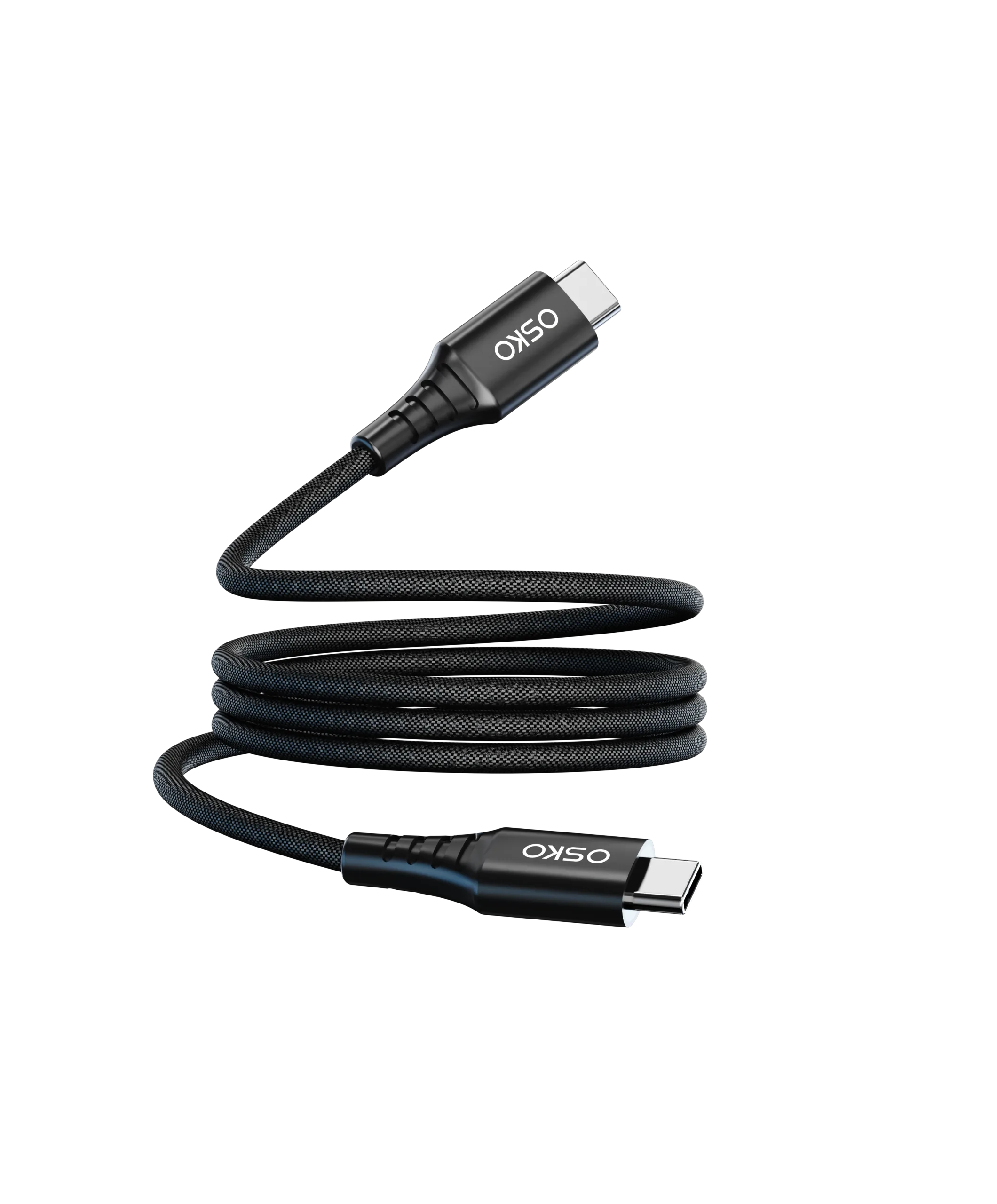
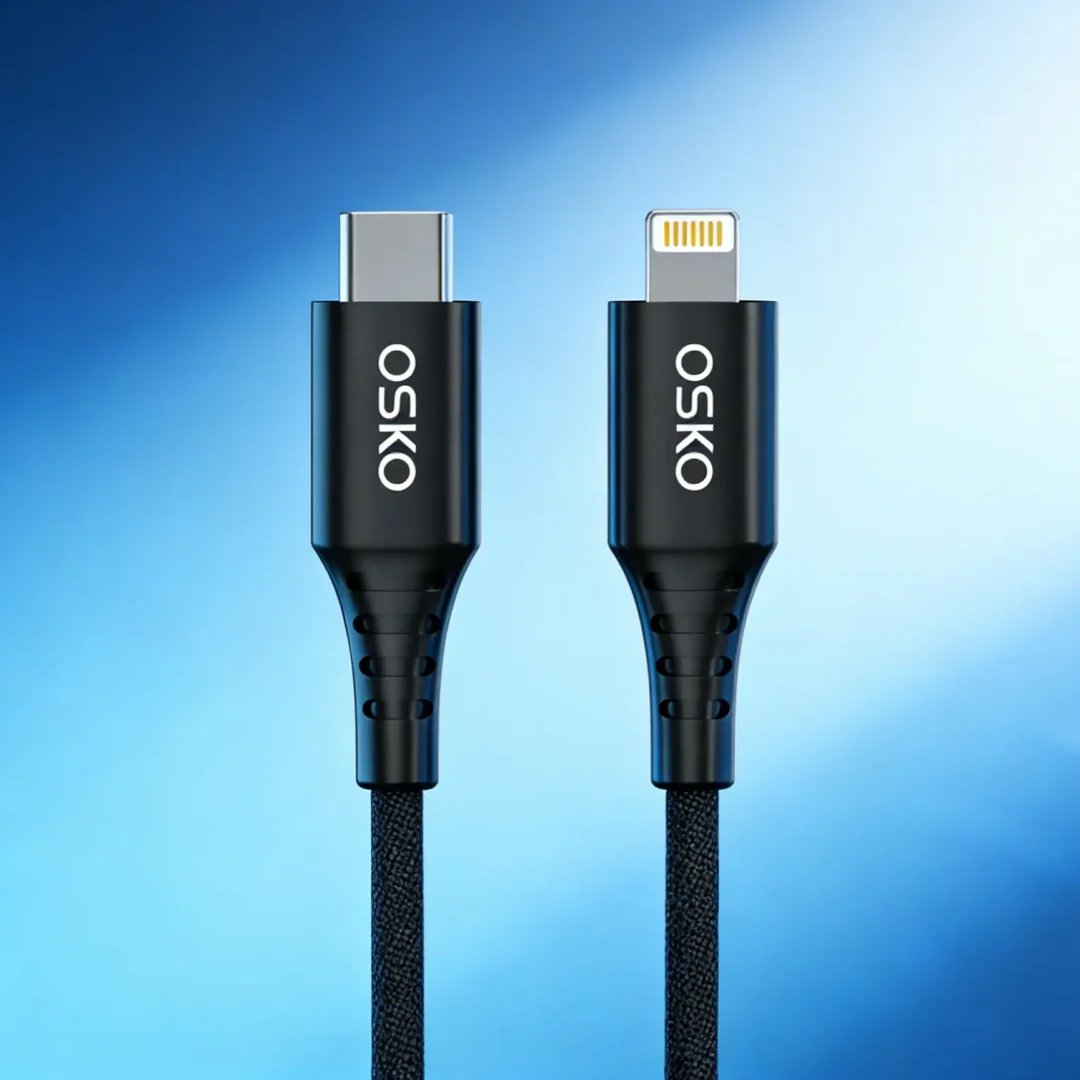
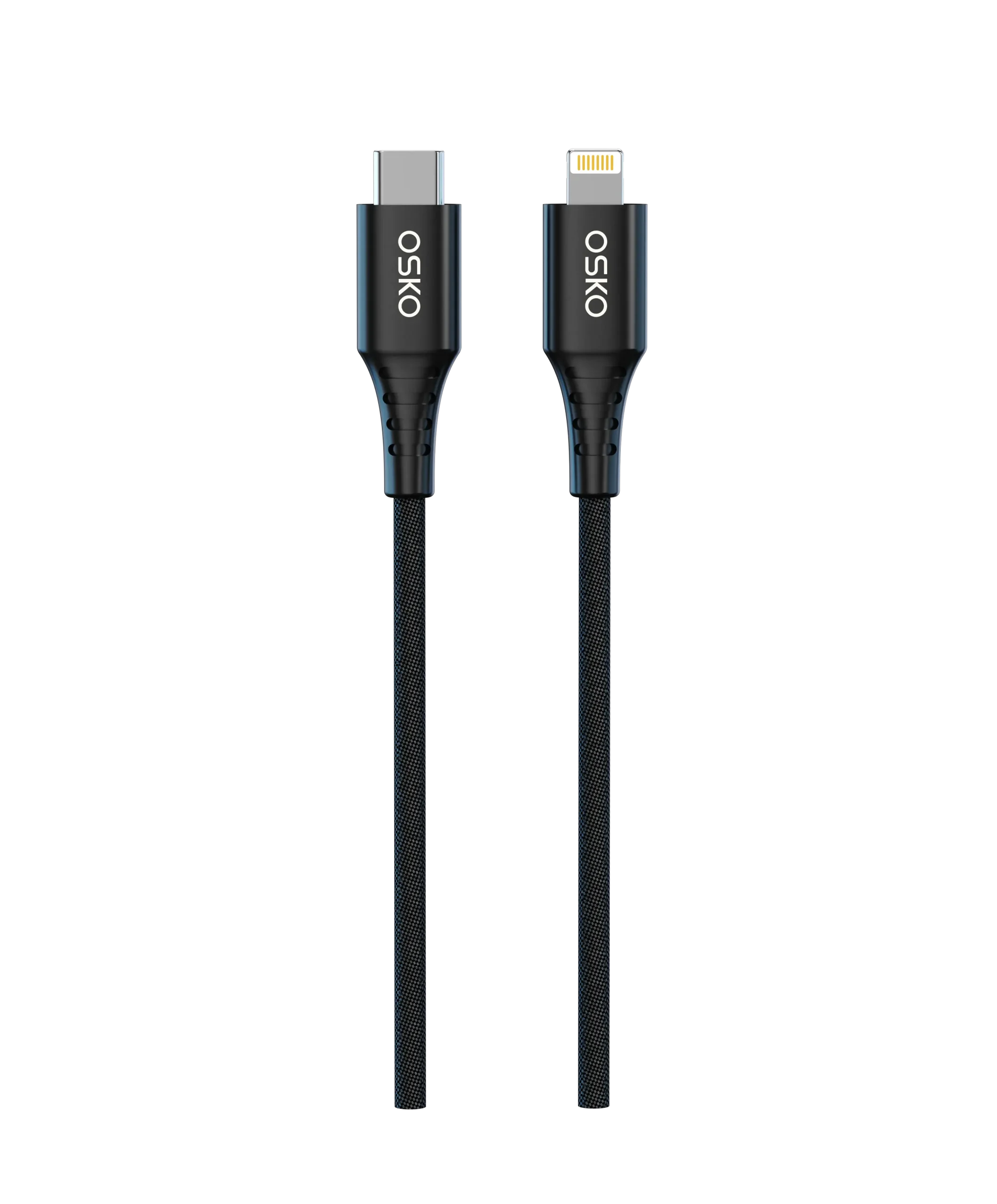
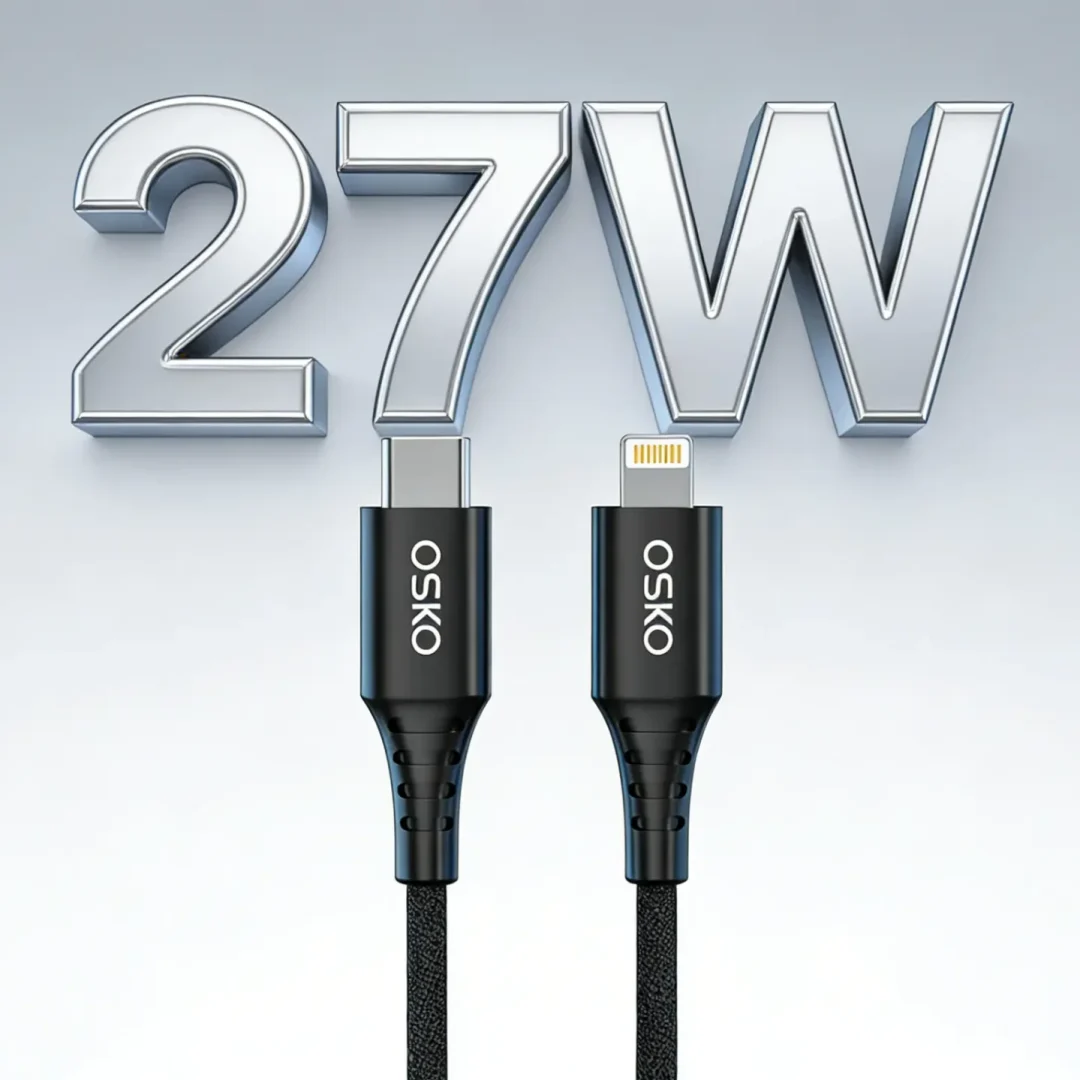
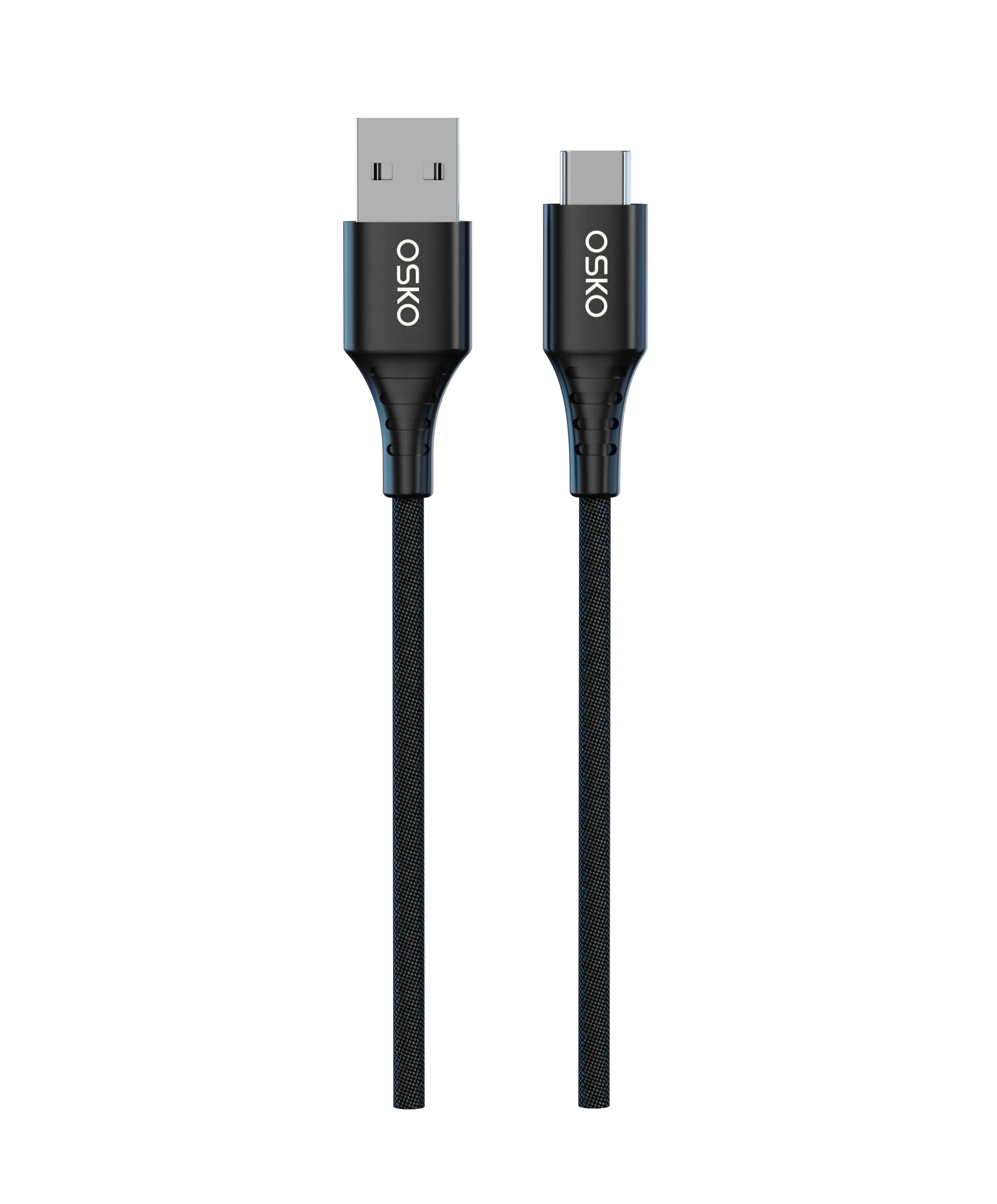
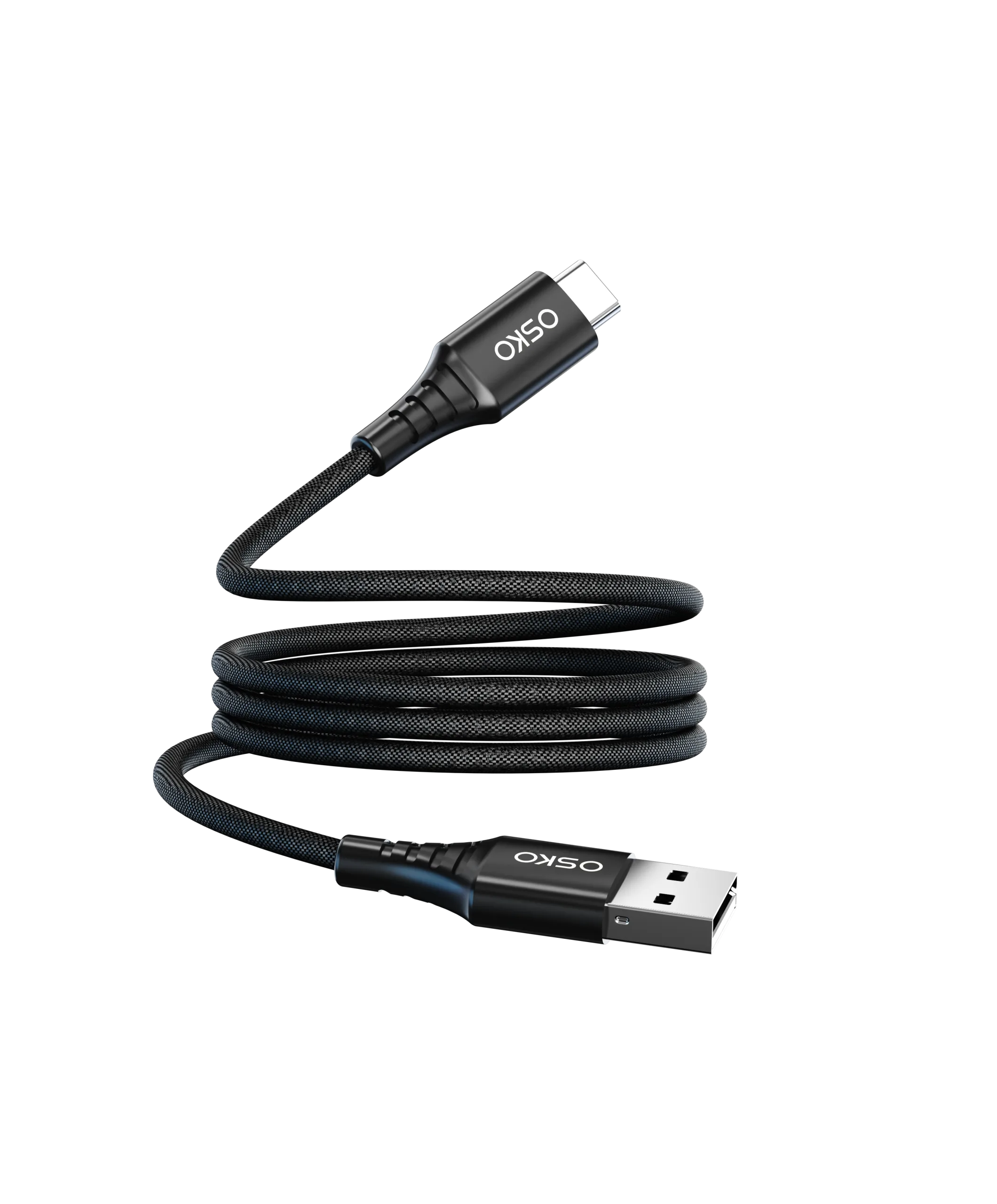
This is also where something like OSKO’s 60W USB-C to USB-C cable becomes relevant to understand as a quality benchmark. When you look at a properly engineered 60W PD cable – appropriate wire gauge, verified power delivery, proper strain relief – you start to see what corners cheaper alternatives are cutting. The difference isn’t always visible in product photos, but it’s absolutely there in the internal construction and real-world performance.
For laptop charging, paying $2.00 per cable instead of $1.20 might seem expensive until you factor in the cost of even one damaged laptop claim or safety incident.
The Questions About USB Cable Manufacturer Selection That Nobody Asks (But You Should)
You’ve narrowed down some suppliers. Their product photos look good. Prices are competitive. They responded to your messages quickly. You’re ready to order.
Not yet. Here’s the conversation that actually matters, and almost nobody has it.
“What’s Your Actual Failure Rate and What Do You Do When Cables Fail?”
Ask this directly. Good suppliers will have a real answer. They’ll say something like “our return rate on this model averages 0.3-0.8%, and our policy is replacement at our cost for any verified manufacturing defects within the first 90 days.”
They might show you their testing protocols. They might offer data on common failure points and how they’ve addressed them in newer production runs.
Bad suppliers will give you vague reassurances. “Very good quality, no problem.” “Customer very satisfied.” “We have quality control.”
Those aren’t answers. Those are red flags.
The best suppliers will actually acknowledge that yes, some percentage of cables will fail – that’s manufacturing reality – and they’ll be specific about how they handle it. That specificity tells you they’ve thought about this, tracked it, and have systems in place.
“Can You Send Me Your Worst Cable From The Last Batch That Still Passed QC?”
This question confuses people, but it’s brilliant.
You don’t just want to see the perfect sample they send every potential customer. You want to see the bottom end of their acceptable range. Because in any manufacturing run, there’s variation. Some cables are perfect, some are merely acceptable.
When you place a 5,000 unit order, some percentage of those cables will be at the lower end of their quality spectrum while still technically passing inspection. You need to know what that looks like.
If a supplier is willing to send you a “barely acceptable” cable, that’s actually a good sign – it means they’re confident even their worst output is decent. If they refuse or act confused by the question, what does that tell you about what you might receive?
Private Label USB Cables vs Generic: The Real Cost Isn’t The Logo
Here’s where people get the math wrong. They assume private labeling – putting your brand on the cable – is automatically more expensive, so they shy away from it initially.
The per-unit cost difference between generic and custom logo USB cables is usually only $0.15-0.30. That’s not the issue.
The real cost is the MOQ – minimum order quantity for private labeling.
Generic cables? You can often order 500-1,000 pieces for a test run.
Custom branded cables? Most manufacturers want 3,000-5,000 minimum. Some require 10,000 pieces, especially if you want custom packaging too.
So the question isn’t really about cost per unit. It’s about: Do you have confidence you can sell 5,000 cables before they become obsolete?
And here’s the thing about USB cables that people forget – they absolutely become obsolete. USB-C is standard now, but technology moves. New standards emerge. Faster charging specs become expected. Suddenly you’re sitting on inventory nobody wants.
The MOQ Trap That Changes Everything
This is where the strategy gets interesting. If you’re just starting out, committing to 5,000 private label cables is genuinely risky. You haven’t verified the supplier quality. You don’t have sales data proving you can move that volume. You don’t know if your target market even wants this specific cable type.
But buying generic cables in smaller quantities lets you test everything. You verify the supplier actually delivers quality. You test the product with real customers. You validate there’s demand.
Then, when you’re ready to reorder – that’s when private labeling makes sense. Now you have data. You know the supplier is reliable. You know the product quality holds up. You have actual sales proving you’ll move the volume.
Why You Should Start Generic (Then Go Private Label On Reorder)
My actual recommendation: First order should be generic, 500-1,000 pieces, from a supplier you’ve thoroughly vetted with samples.
Sell those. Watch return rates. Read customer feedback. See what issues come up.
If everything looks good and you’re reordering, that’s when you commit to private label. The risk is dramatically lower because you’re not guessing anymore.
Plus, there’s another benefit people miss – you can test multiple suppliers with small generic orders, then private label with whoever performs best. If you go private label from the start, you’re locked into that supplier for the entire MOQ.
The Obsolescence Problem With USB Cables
One more thing about MOQ that matters: technology timeline.
USB-C cables are the standard now, but for how long? When does USB4 become the expected baseline? When does 100W or 140W PD become what laptop users demand instead of 60W?
If you order 10,000 private label cables today, will you sell through them in 12 months? 18 months? Or will you still be sitting on inventory 24 months from now when the market has moved on?
This is another reason to be cautious with large MOQs until you have velocity data. Better to reorder three times at decent margins than order once and get stuck with aging inventory.
Understanding USB-IF Certification Without Getting Lost
Let’s talk about certifications, because this is where things get genuinely confusing and where bad suppliers love to be deliberately vague.
You’ll see suppliers mention USB-IF certification, CE marking, FCC, RoHS… and you’re supposed to just know what matters?
What CE, FCC, and RoHS Actually Mean For Your Market
Here’s the practical hierarchy for selling in Europe and North America:
CE marking is basically required for Europe, but it’s not as meaningful as it sounds because manufacturers can self-certify in many cases. It’s a checkbox, not necessarily proof of rigorous testing.
FCC matters for the US market, particularly if there’s any radio frequency component, though for basic cables it’s less critical. Still, if you’re selling in the US and the supplier can’t provide FCC documentation, that’s a yellow flag.
RoHS is about hazardous materials restrictions and definitely matters for Europe. You need this documentation. Reputable suppliers will have it ready.
But none of these tell you whether the cable actually performs as claimed. They’re regulatory compliance issues, not quality indicators.
USB-IF Certification vs “Compatible With USB PD” (This Matters For 60W Cables)
Here’s where it gets important, especially for higher-power cables.
USB-IF certification means the cable was actually tested and verified by the USB Implementers Forum to meet the USB Power Delivery specification. This costs money and takes time, which is why many manufacturers avoid it.
“Compatible with USB PD” means… the manufacturer thinks it probably works with PD devices. Maybe they tested it themselves. Maybe they just used some components that are rated appropriately and called it good.
That word difference – certified vs compatible – is enormous.
For a 60W USB-C cable for laptop charging, I would not compromise here. You either want actual USB-IF certification, or you need to be very confident in your supplier’s testing capabilities and willing to do your own verification.
When something goes wrong with a high-power cable, the consequences are potentially serious. Device damage, safety hazards, liability issues. “Compatible” isn’t good enough.
This is also why cables like OSKO’s 60W USB-C to USB-C cable exist at a specific price point – proper certification and verified power delivery specs cost money to implement and validate. When you see cables at half the price claiming the same specs, you have to ask: where did they cut corners?
When Does Certification Actually Protect You, and When Is It Just Paper?
Certifications matter most when:
You’re selling higher power cables where safety is critical
You’re dealing with regulated markets that actually enforce compliance
You want documentation to protect yourself legally if something goes wrong
Certifications matter less when:
You’re dealing with basic charging cables at lower power levels
The supplier has strong QC processes regardless of official certifications
You’re doing extensive testing yourself before selling
The ideal is certified cables from suppliers with good QC. The reality is sometimes you’re choosing between certified cables with uncertain quality control, or uncertified cables from suppliers with demonstrably good QC processes.
There’s no perfect answer, but for 60W PD laptop cables specifically, I’d strongly lean toward actual certification.
The Cable Specs That Actually Affect Real-World Performance
Spec sheets are full of technical details, most of which don’t matter much in practice. But a few specs make a huge difference in whether your bulk USB cables actually work as expected.
Wire Gauge: Why 20AWG Matters For 60W PD Cables
This is the most important spec that nobody pays attention to until it’s too late.
For a 6ft cable delivering 60W through USB-C Power Delivery, you need 20AWG wire (or thicker) for the power conductors. Some cheap cables use 24AWG or even 28AWG, and they simply cannot sustain 60W without excessive voltage drop and heat buildup.
The thinner the wire, the higher the electrical resistance. Higher resistance means more power lost as heat and less power actually delivered to the device. Your 60W cable might technically be capable of brief 60W bursts, but sustained charging? It’s dropping to 40W or 35W. The cable gets warm. Charging is slow.
Worse, if the wire gauge is really inadequate, you’re moving into safety concern territory. That heat has to go somewhere.
Good suppliers will specify wire gauge clearly: “20AWG power, 28AWG data” or similar. Sketchy suppliers will avoid mentioning it or give vague answers.
If you’re sourcing 60W USB-C cables and the supplier won’t clearly state the wire gauge, walk away.
Connector Quality and The “Specific Angle” Charging Problem
You know that incredibly annoying experience where a cable only charges if you hold it at exactly the right angle? Where you have to prop your phone against something and not move it?
That’s failed connector strain relief and poor connector construction.
Inside every USB cable connector, there are multiple small wires soldered to pins. When the strain relief is inadequate – meaning the cable doesn’t properly distribute bending stress – those solder joints and wires take all the mechanical stress.
Plug and unplug the cable 50 times, bend it a few times, and those tiny wires start breaking. First one strand goes, then another. The connector starts getting loose. Eventually it only makes proper contact at certain angles.
Good connectors have thick, robust strain relief that actually extends into the cable itself. They use proper gauge wire all the way to the connector. The pins are gold-plated thick enough that the plating doesn’t wear off after 100 insertion cycles.
Cheap connectors look fine in photos but use thin wires, inadequate strain relief, and minimal plating. They work great initially, then degrade fast.
This is hard to evaluate from supplier photos, which is why physical samples you actually test are essential. Plug and unplug the cable 50 times. Bend it back and forth at the connector point. See if it still works perfectly.
Nylon Braiding: Real Protection vs Theater
Since nylon braided USB cables are specifically in your search, let’s talk about what actually matters here.
Nylon braiding can be genuinely protective – it resists abrasion, prevents the cable from tangling, adds flexibility without stiffness, and looks premium. Or it can be purely cosmetic nonsense that provides zero actual benefit.
The difference is in the density and quality of the braiding, and how it’s integrated with the cable structure.
Good nylon braiding is tightly woven, securely attached at both ends under the connector housing, and actually surrounds a durable inner cable. The nylon isn’t just wrapped around a regular PVC cable – it’s part of the structural design.
Bad nylon braiding is loosely woven, slides around on the cable, and starts fraying or unraveling after a couple weeks of normal use. It’s basically a decorative sleeve that does nothing.
You cannot tell the difference from photos. You have to physically handle the cable, bend it, see how the braiding responds to stress, and use it daily for a few weeks.
When you’re evaluating nylon braided cable samples, pay attention to the ends where the braiding meets the connector housing. Is it cleanly integrated, or can you see it’s just wrapped around? Pull on the braiding gently – does it slide along the cable, or is it secure?
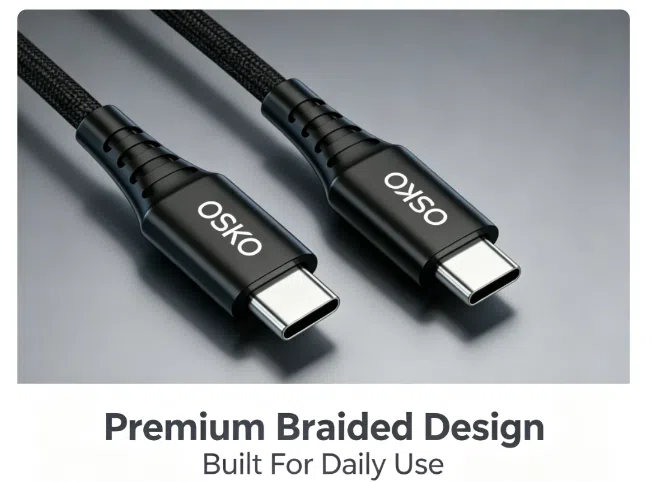
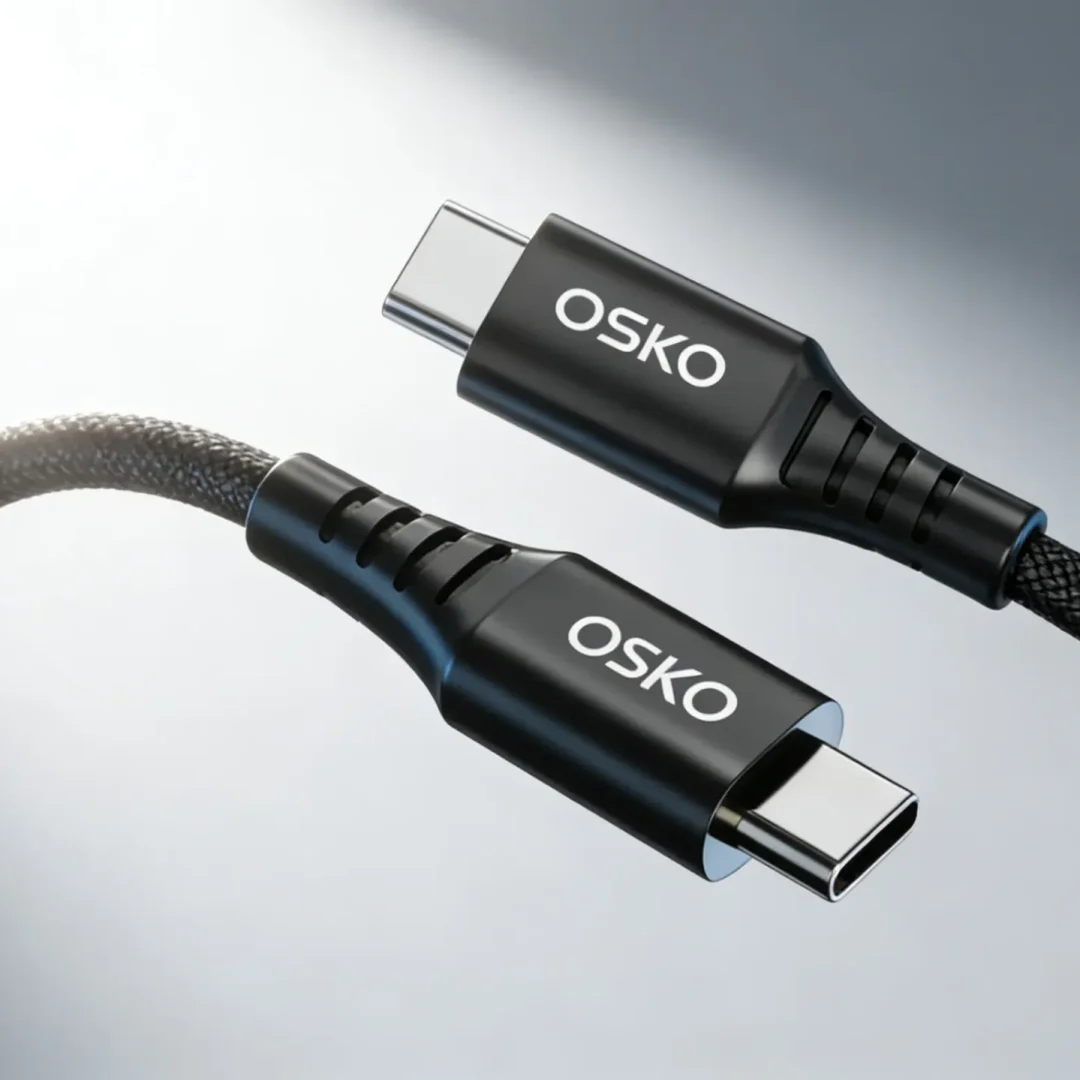
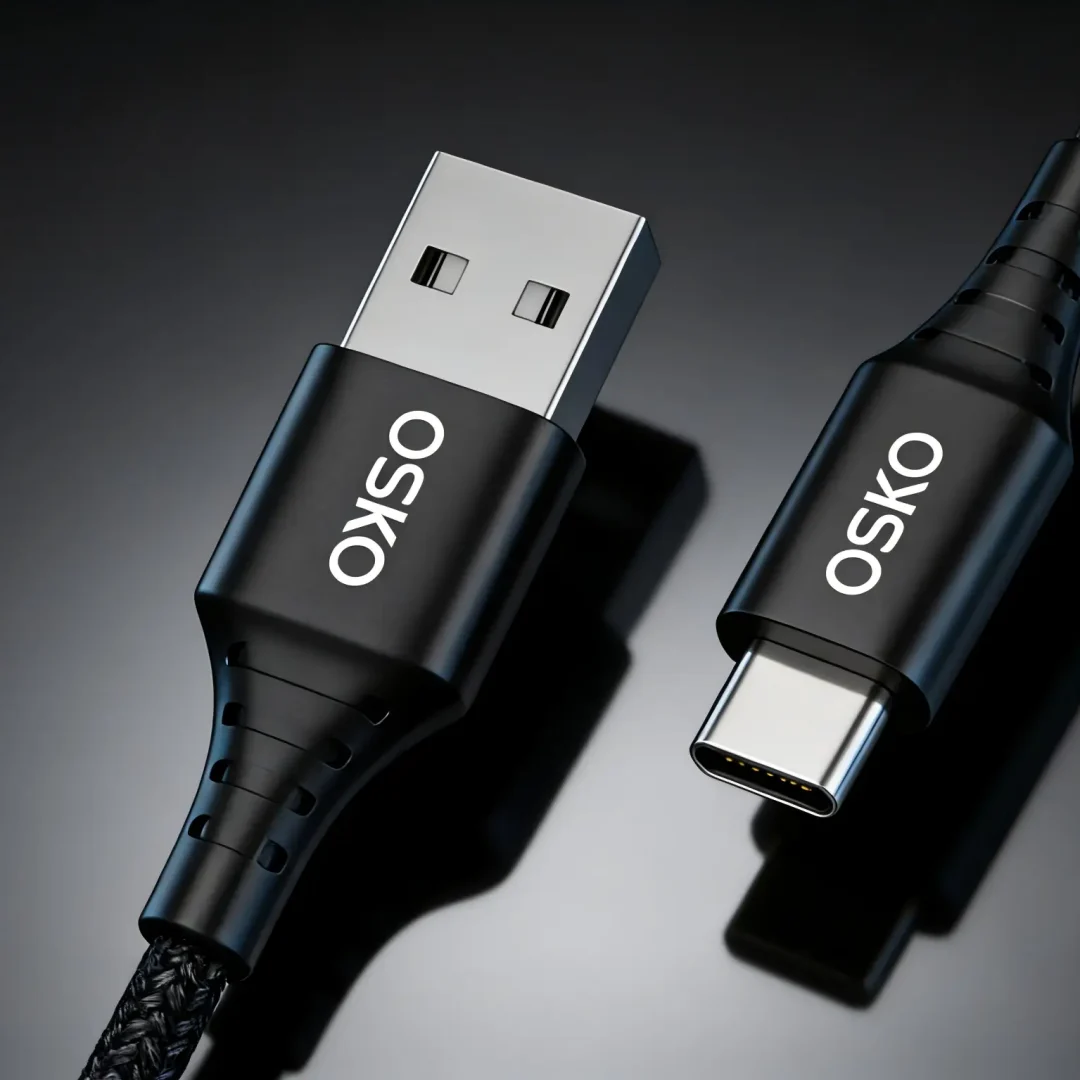
This is one reason why looking at an established product like OSKO’s nylon braided USB-C cable as a reference point is useful. When braiding is done properly, it’s immediately obvious in the feel and durability. That gives you a baseline for evaluating supplier samples – anything substantially cheaper is probably cutting corners somewhere in the braiding quality or construction.
The Hidden Costs Everyone Forgets Until It’s Too Late
You found a supplier. You negotiated a good unit price. You’re feeling confident about your margins. Then the actual costs hit, and suddenly your profit calculation looks very different.
Why A Box Of USB Cables Weighs More Than You Think
Here’s something that surprises everyone on their first bulk cable order: these things are heavy.
You think “it’s just cables, how much can they weigh?” But 1,000 USB cables with packaging weighs somewhere around 150-200 pounds depending on cable length and construction. The copper inside adds up. The connectors are metal. The packaging has weight.
This matters because shipping cost is largely determined by weight, and you’re moving a lot of weight.
Sea Freight, Air Freight, and Express: The Real Numbers For $1.50 Cables
When shipping from China to Europe or North America, you basically have three options, and the cost difference is wild.
Sea freight is the cheapest per unit – maybe $0.15-0.25 per cable depending on volume and destination. But it takes 4-8 weeks depending on the port, requires dealing with customs clearance and often freight forwarding, and you need to be comfortable with the complexity.
For your first order, sea freight might be overwhelming unless you’re working with a supplier who handles logistics end-to-end.
Air freight is significantly faster – typically 1-2 weeks – and costs roughly 3-5x more than sea, so maybe $0.40-0.60 per cable. You still deal with customs, but at least you’re not waiting two months to receive inventory and start selling.
Express shipping (DHL, FedEx, UPS) is fastest – usually 3-7 days – and most expensive, potentially $1.00-1.50 per cable depending on volume. But they handle customs clearance for you, which dramatically reduces complexity.
Let me give you a real example from a 2,000-unit order I dealt with:
Sea freight quote: $0.18 per cable
Air freight quote: $0.45 per cable
Express quote: $1.20 per cable
On a cable with a $1.50 factory price, that shipping variance is massive. Your all-in cost ranges from $1.68 to $2.70 per unit depending on shipping method.
How Per-Unit Shipping Affects Your Profit Math
This is where people’s margin calculations fall apart. They see a $1.50 cable price, plan to sell for $10, and think “great, I’m making $8.50 per unit.”
But you’re not. You’re making $8.50 minus actual shipping cost per unit, minus marketplace fees if you’re on Amazon, minus payment processing, minus your storage costs, minus the percentage you’ll lose to returns and replacements.
Suddenly that $8.50 margin is more like $5-6. Still good, but not the 85% gross margin you initially calculated.
My recommendation: Always calculate margins based on landed cost per unit (product + shipping + any duties or taxes), not just the factory price. Then subtract another 15-20% for marketplace fees, returns, and overhead.
If the math still works, great. If it doesn’t, you need either a cheaper supplier or higher retail pricing.
The Step-By-Step Approach That Actually Works
If I were making this decision today – sourcing bulk USB cables for the first time – here’s exactly what I’d do, in order.
Steps 1-3: Finding and Filtering The Right Suppliers
Step 1: Search deliberately, not desperately. Go to Alibaba, search for your specific cable type (“6ft USB-C to USB-C 60W PD cable” or whatever you need), and filter for suppliers who have been in business at least 5 years and show reasonable transaction volumes.
Don’t just sort by price. Look at the supplier’s other products – do they specialize in cables and accessories, or are they selling random unrelated products? Specialists are usually better.
Step 2: Check reviews carefully, especially negative ones. Every supplier has some negative reviews – that’s normal. What you’re looking for is patterns. Do multiple buyers complain about the same issue? Are complaints about quality, or mostly about shipping delays and communication?
Quality complaints are red flags. Shipping and communication complaints might be manageable, especially if the supplier seems to respond and try to resolve issues.
Step 3: Message 5-7 suppliers with specific questions. Don’t just ask for a quote. Ask about:
Wire gauge for power conductors
Whether cables are USB-IF certified or just “compatible”
Actual failure/return rates from previous customers
MOQ for an initial test order
Their QC process
How they respond tells you a lot. Do they actually answer your questions, or give vague non-answers? Do they respond quickly but thoughtfully, or do you get obvious copy-paste replies?
Steps 4-6: Testing, Small Batch Orders, and Customer Feedback
Step 4: Order samples from your top 3 choices. Pay for the samples, get them shipped express so you can test within a week or two. The sample cost is tiny compared to the risk of ordering 5,000 bad cables.
Test them properly. Don’t just plug one in and say “yep, charges my phone.” Use them daily for two weeks. Plug and unplug multiple times per day. Test with different devices. Intentionally stress the connector points. See if the nylon braiding starts looking worn. Check if they get hot during sustained charging.
Actually measure the charging power with a USB power meter if you’re doing PD cables. Does your “60W” cable actually deliver close to 60W?
Step 5: Order a small batch from your top choice. Negotiate a test order of 500-1,000 pieces even if the MOQ is normally higher. Expect to pay slightly more per unit for the smaller volume – that’s fine.
You’re not trying to maximize profit on this order. You’re validating that the supplier can deliver consistent quality at scale and that the logistics actually work.
Step 6: Sell these and obsessively track feedback. What’s your return rate? Are customers complaining about anything specific? Are reviews positive? Do the cables hold up over time?
This is your real quality test. Samples can be cherry-picked. A 500-unit batch is much harder to fake.
Step 7: When To Finally Scale Up With Private Label
If your test batch performs well – return rate under 2%, no systematic complaints, reviews are positive – that’s when you consider the larger private label order.
Now you have actual data. You know the supplier delivers consistent quality. You know customer satisfaction is good. You have sales velocity data showing you can move the volume.
This is the right time to commit to 3,000-5,000 private label units. The risk is substantially lower because you’re not guessing anymore.
And here’s the thing – if your test batch revealed issues, you just saved yourself from a much bigger problem. Maybe you go back to the supplier and address specific concerns. Maybe you test a different supplier. Either way, you didn’t commit to thousands of units based on a couple of nice-looking samples.
For something like competing with established cables in the market – let’s say you’re trying to offer an alternative to products like OSKO’s USB-C cable at a different price point – this testing process is how you verify you can actually deliver comparable quality and reliability. You can’t just claim it, you have to prove it to yourself first, then to customers.
The Questions People Actually Want Answered (But Don’t Always Ask)
Let me address the questions that are probably on your mind but might feel too basic or too specific to ask directly.
“Can You Really Trust Chinese Manufacturers?” (You’re Asking The Wrong Question)
Here’s the thing: this question assumes manufacturers in China are somehow inherently less trustworthy than manufacturers anywhere else. That’s not how it works.
There are world-class factories in China making cables for Apple, Samsung, Anker, and every other major brand you trust. There are also terrible factories making garbage products. Your job isn’t to “trust China” – it’s to differentiate between good and bad manufacturers, regardless of location.
The trust question should be: “How do I verify this specific supplier can deliver what they promise?”
Use trade assurance on Alibaba for your initial orders. Request factory audits if you’re doing serious volume. Start with small orders and verify quality before scaling. Ask for references and actually contact them. Request documentation for certifications.
It’s not about trust, it’s about verification. Good suppliers welcome this because it differentiates them from bad ones.
“What’s A Realistic Margin Selling Bulk USB Cables?”
This depends heavily on your market positioning and sales channel, but let me give you realistic numbers.
If you’re sourcing decent quality 6ft nylon braided USB-C cables, your landed cost (product + shipping) is probably $1.80-2.50 per unit for medium quantities (1,000-5,000 pieces).
Consumer retail (your own store, Amazon, etc.): You can sell these for $8-15 depending on your branding, marketing, and market positioning. The low end is commodity pricing competing on value. The high end requires strong branding and differentiation.
After marketplace fees (Amazon takes about 15%), payment processing (3%), and factoring in 2-5% return rate, your net margin is probably 50-65% on a $10 retail price.
B2B bulk sales (selling to businesses, resellers, IT departments): Margins are tighter because you’re competing with other wholesale suppliers. You might sell for $4-7 per unit. Your margin is smaller per unit, but you’re moving larger volumes with less marketing cost.
The honest answer: margin depends more on your marketing, positioning, and brand than on the product cost. If you’re competing purely on price as a commodity, margins get squeezed. If you differentiate on reliability, service, or niche positioning, you have more pricing flexibility.
“Should I Stock Multiple Cable Types or Focus On Just One?”
Unless you have a very specific reason to offer variety from day one, start with one cable type.
Here’s why: every additional SKU is complexity.
You need to test each type thoroughly. You need to manage inventory for each. You need to forecast demand for each. You need marketing and product descriptions for each. Your minimum order quantities multiply.
If you start with three different cable types and order 1,000 units of each, you’ve committed to 3,000 total units across products you haven’t validated yet. If one type doesn’t sell, you’re stuck with inventory.
Better approach: Pick one cable type that you think has the best market opportunity. Get really good at sourcing, selling, and supporting that one product. Build your systems, validate your supplier, understand your customers.
Then expand. Add a second cable type once you’ve proven you can successfully execute on the first one. Your learning curve is much less steep, and you’re expanding from a position of knowledge rather than guessing three times simultaneously.
The exception: if you have data showing you need variety (like you’re supplying a B2B customer who specifically needs multiple types), that’s different. But for most people starting out, focus beats variety.
“What About Warranty and Return Rate Reality?”
Let’s talk numbers based on actual reality, not supplier promises.
Most decent USB cable suppliers will offer something like 1-2% replacement allowance for manufacturing defects. Get this in writing as part of your purchase agreement. This means if you order 5,000 cables and 50-100 have legitimate manufacturing defects, they’ll replace them.
This doesn’t cover damage from misuse, just actual defects.
For your customers, offering a 6-month to 1-year warranty is standard for cables. Your actual return rate will depend on product quality and customer type.
With decent quality cables in consumer sales, expect 2-5% returns. Some will be legitimate defects. Some will be customer damage that they claim is defective. Some will be buyer’s remorse.
With B2B sales, return rates are often lower (1-3%) because business buyers are more deliberate, but when problems happen, they’re usually larger volume returns.
Budget for this. If you don’t have a buffer for handling returns and replacements, you’re going to have a bad time when you get a cluster of returns from a bad batch or a demanding customer.
Also, returns aren’t just the product cost – factor in customer service time, return shipping (if you cover it), processing time, and the hit to your reputation if you handle returns poorly.
Companies like OSKO can offer strong warranties because they’ve engineered their cables to have low failure rates and built the warranty cost into their pricing model. If you’re sourcing cheaper alternatives, you need to either accept higher return rates or invest significantly in quality verification to keep failure rates low.
What This Decision Actually Means
Look, here’s the reality that nobody says clearly enough.
Buying USB cables in bulk from China isn’t technically complicated. The process is straightforward. Suppliers are easy to find. Ordering is simple.
What makes it hard is the risk assessment.
You’re making decisions with incomplete information. You’re trusting suppliers you’ve never met. You’re committing money to inventory before you know if customers will actually buy it. You’re balancing quality against cost against speed against complexity.
The decision you’re actually making isn’t “which supplier has the best price.” It’s “what’s my acceptable risk level, and what quality threshold can I not go below?”
If you’re selling to laptop users who need reliable 60W charging, your quality threshold is high and your acceptable risk is low. Pay more per unit, get verified specs, test thoroughly. The cost of getting this wrong is too high.
If you’re selling basic charging cables in a price-sensitive consumer market, your quality threshold is “good enough to avoid returns and bad reviews” and your acceptable risk is moderate. You have more flexibility on price, but you still need baseline reliability.
If you’re supplying B2B customers who value consistency, your quality threshold is about predictable, boring performance. They’ll pay a premium for cables that work correctly every time with zero drama.
Figure out which category you’re in. That determines everything else.
And maybe most importantly: don’t try to compete on being the absolute cheapest option unless you really know what you’re doing. There’s always someone willing to sell junk for less. That’s not a sustainable business.
The business that actually survives is selling reliable products at fair prices to customers who value reliability. Finding suppliers who can consistently deliver that. Building systems for testing and quality verification. Handling the inevitable problems professionally.
That’s not as sexy as “I found cables for $0.80 and I’m selling them for $12!” But it’s what actually works long-term.
Start small, test thoroughly, verify quality, and scale only when you have data supporting it. That’s how you buy bulk USB cables without getting burned.
FAQ
How do I verify if a USB cable supplier’s quality claims are actually true?
Request samples and test them extensively for at least two weeks of daily use. Ask specific technical questions about wire gauge and certifications – good suppliers will answer precisely, bad ones will be vague. Check for documented failure rates and replacement policies in writing. Start with a small test order (500-1,000 units) before committing to larger volumes, and track your actual return rate on that initial batch.
What’s the minimum order quantity I should expect for bulk USB cables?
For generic unbranded cables, many suppliers will work with 500-1,000 piece minimums, though you’ll pay slightly higher per-unit costs. For private label cables with your logo, expect MOQs of 3,000-5,000 pieces from most manufacturers. Some factories require 10,000+ units for custom branding, especially with custom packaging.
Is USB-IF certification really necessary for 60W USB-C PD cables?
For 60W power delivery cables, USB-IF certification provides important verification that the cable can safely and reliably deliver that power level. While “USB PD compatible” cables might work, certified cables have been independently tested to meet the standard. Given the safety implications of higher-power charging and the potential for device damage if cables fail, certification provides valuable protection for both you and your customers.
How can I compete with established brands like OSKO when sourcing similar cables?
Rather than directly competing on identical features, focus on thorough supplier vetting and quality verification to match reliability standards, then differentiate through pricing strategy, customer service, or targeting specific underserved niches. Starting with generic cables to test your supply chain, then moving to private label once you’ve validated quality, lets you build a reliable product without the upfront costs of building a brand from scratch. Some businesses succeed by offering comparable quality at a lower price point; others add value through bundling, superior customer service, or specialized solutions for specific markets.
What shipping method should I use for my first bulk USB cable order from China?
For your first order, air freight or express shipping (DHL/FedEx) is usually worth the extra cost despite being 3-5x more expensive than sea freight. You’ll receive inventory in 1-2 weeks instead of 4-8 weeks, can start selling and getting customer feedback faster, and express shipping handles customs clearance for you, reducing complexity significantly. Once you have proven sales velocity and understand your reorder timing, sea freight makes sense for larger reorders where you can plan around the longer transit time.
What’s a realistic return rate for bulk USB cables, and how should I plan for it?
With decent quality cables, expect 2-5% return rates in consumer sales and 1-3% in B2B sales. Some returns will be legitimate defects, others will be customer damage or buyer’s remorse. Factor this into your margin calculations – if you’re paying $2 per cable and expecting 4% returns, your real cost is $2.08 per unit. Good suppliers typically offer 1-2% replacement allowance for manufacturing defects, but get this in writing. Budget not just for the replacement product cost, but also customer service time, return shipping if you cover it, and the relationship cost if you handle returns poorly.