
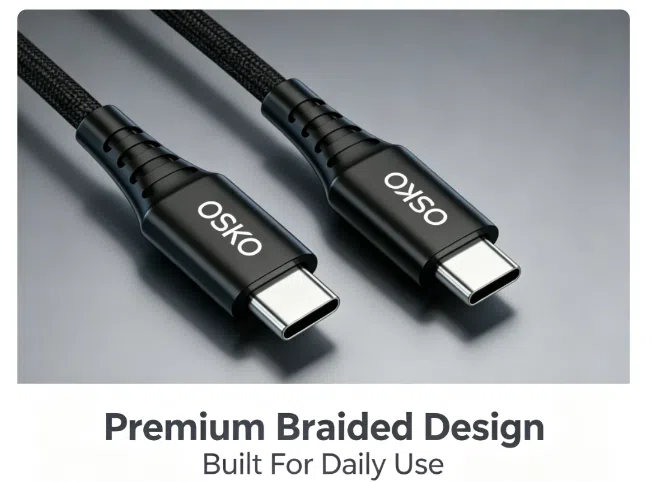
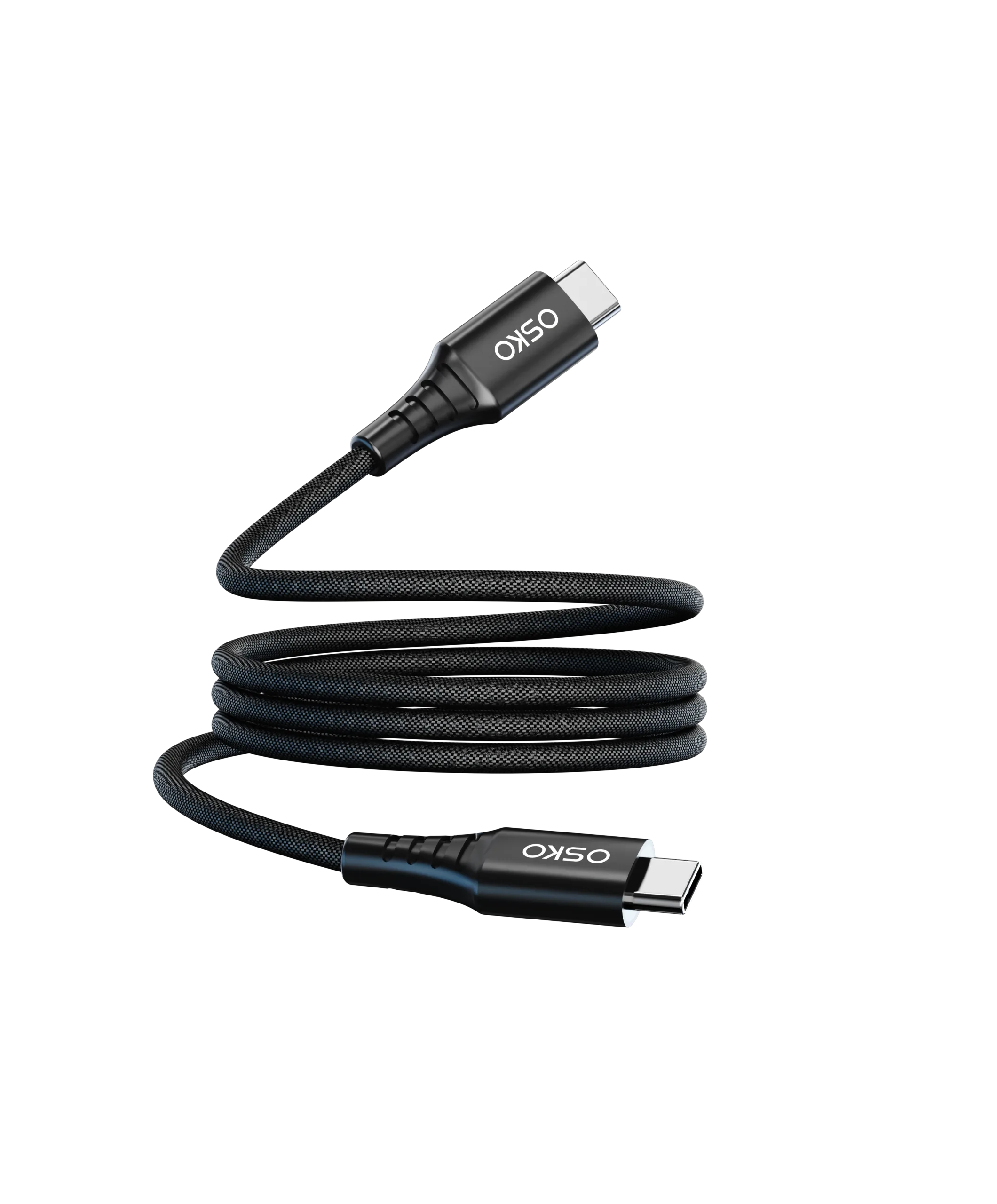
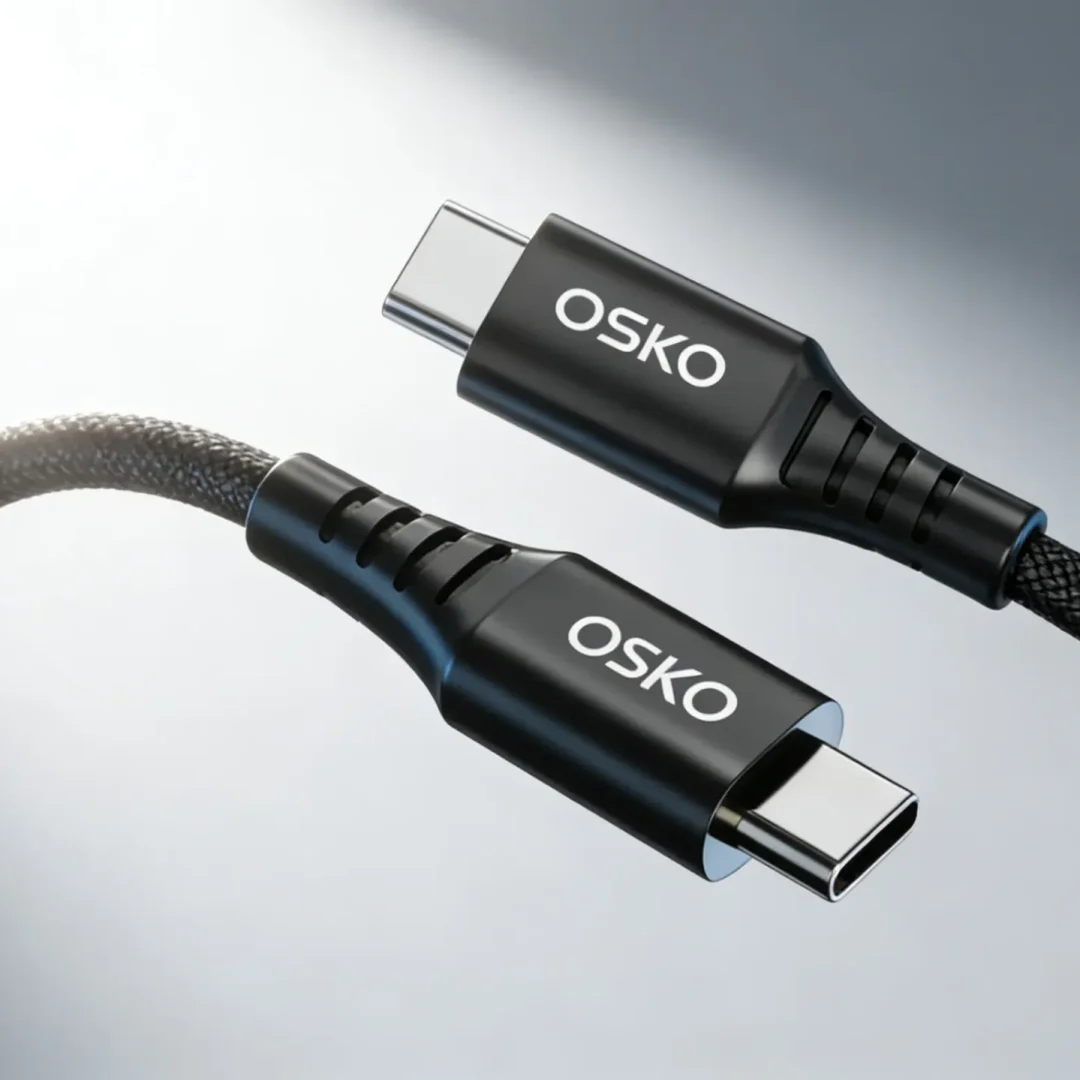
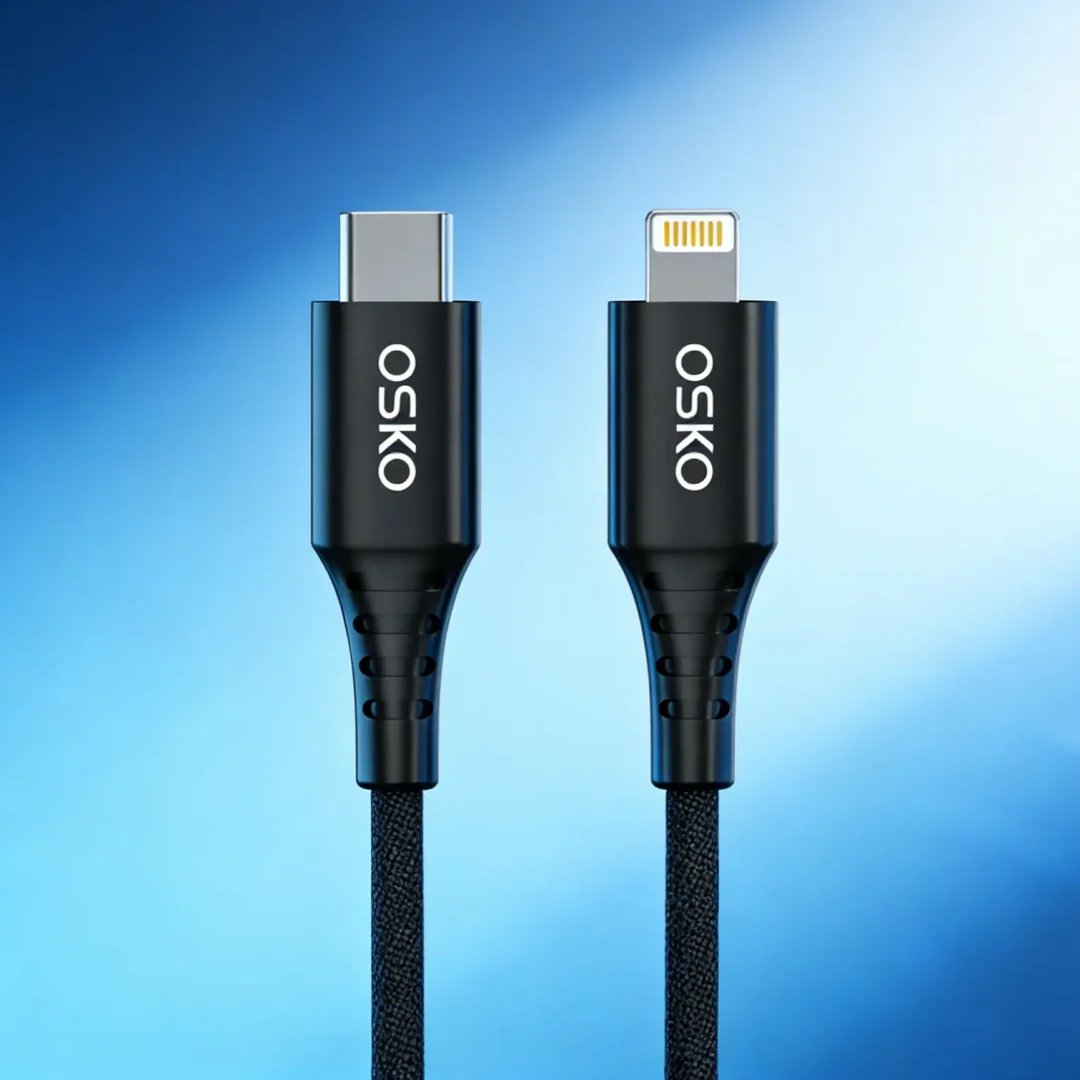
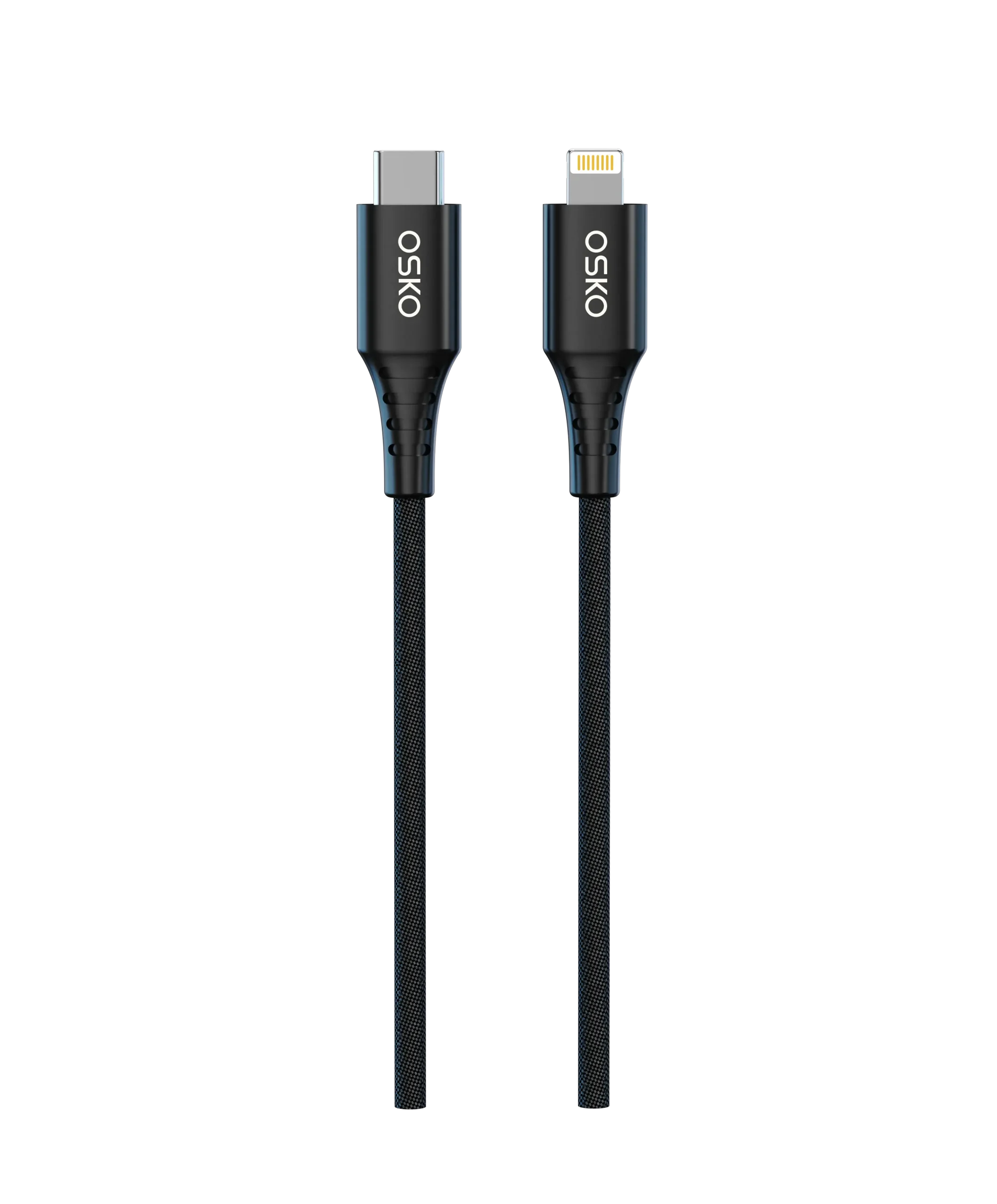
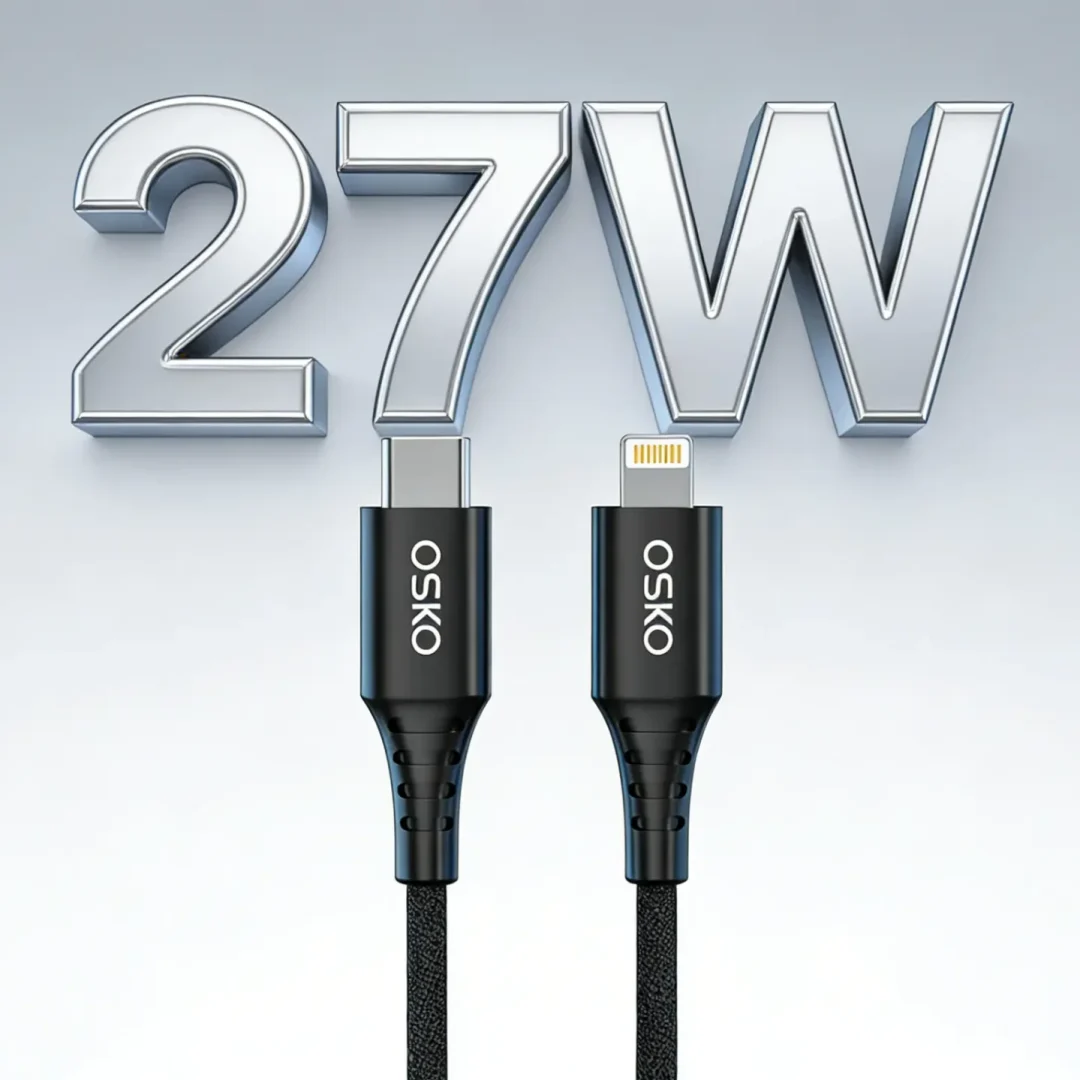
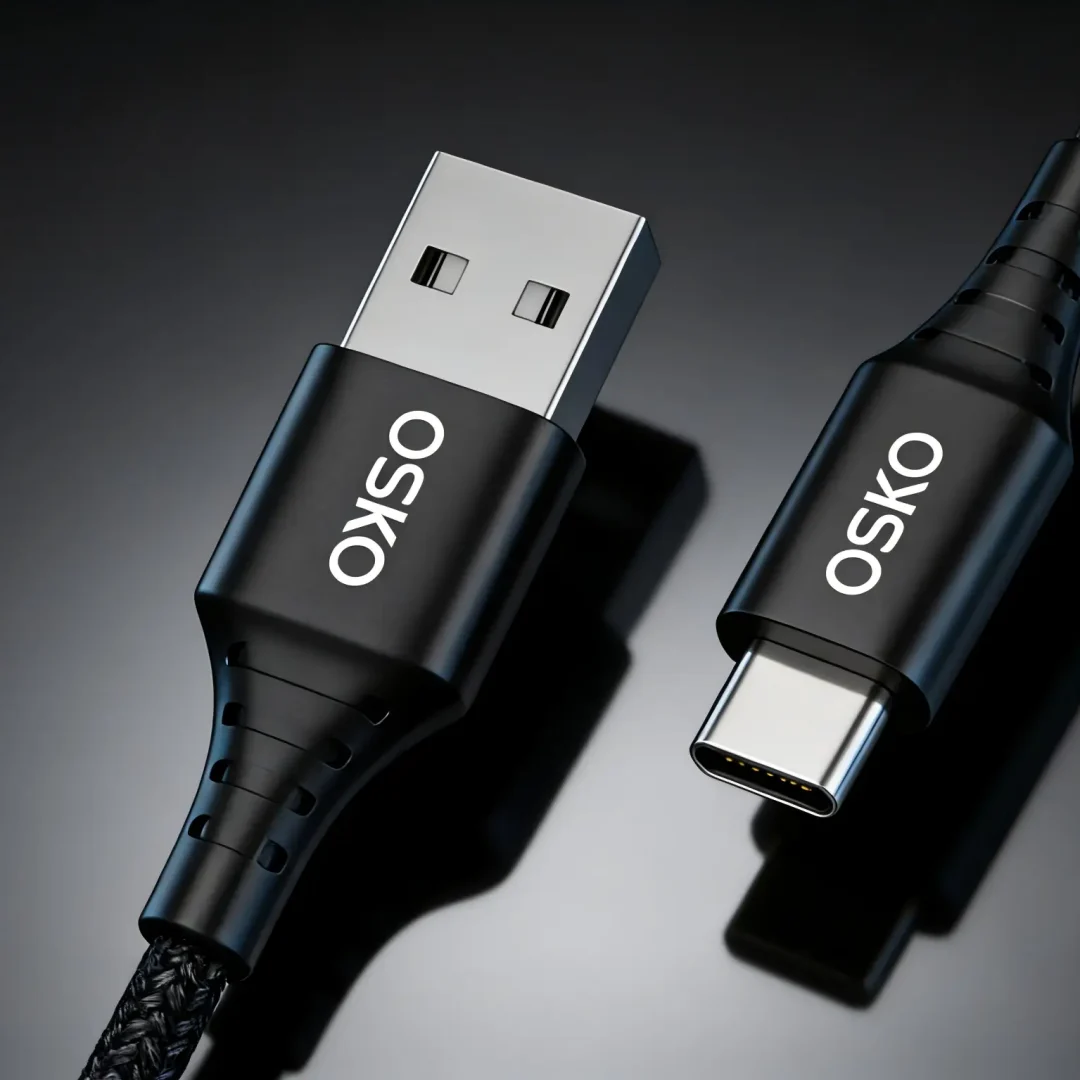

When buyers compare charging cables, they usually look at charging wattage, cable length, connector type, data speed, and price. Few people think about the tiny metal contacts inside the connector.
Yet USB connector pins are one of the most important interfaces between a cable and the device it serves.
Every time you plug a USB-C, USB-A, or Lightning cable into a charger, smartphone, laptop, power bank, vehicle, or docking station, the connector contacts establish the electrical and communication path. Their material, surface finish, geometry, contact force, manufacturing tolerance, and connection to the cable all influence long-term reliability.
This becomes increasingly important as modern charging systems move toward higher current and higher power levels. A USB-C cable designed for demanding applications may need to handle power negotiation, charging current, high-speed data signals, and repeated mechanical insertion without developing unstable contact.
For brands, distributors, wholesalers, and engineering procurement teams, therefore, evaluating a USB-C charging cable requires more than looking at the outside jacket.
The connector is part of the electrical system.

What Are USB Connector Pins?
USB connector pins are the conductive contacts inside a USB connector. They physically mate with corresponding contacts in the receptacle and provide the electrical interface between the cable and connected equipment.
Depending on the connector and cable design, contacts can be used for:
Power delivery
Ground return
Device and charger communication
USB data transmission
High-speed differential signaling
Identification and configuration functions
A USB-C connector has a much more sophisticated contact arrangement than older USB interfaces. However, the presence of a USB-C connector alone does not guarantee a specific charging wattage or data speed.
That distinction is important for buyers.
A cable can have a USB-C connector but still be designed primarily for USB 2.0 data, lower charging power, or a specific application. Performance depends on the complete cable construction and the capabilities of the charger and device.
Why the Connector Matters
Electrical current does not travel only through the long copper conductors inside the cable.
It must also pass through the termination between the conductor and connector contact and through the mating interface between the cable and device.
That means the connector introduces another part of the electrical path where resistance, mechanical wear, contamination, or poor manufacturing can affect performance.
For a high-quality fast charging USB-C cable, engineers therefore consider the connector as part of the complete electrical and mechanical system.
Why Phosphor Bronze Is Used for Connector Contacts
One common material used for connector contacts is phosphor bronze.
Phosphor bronze is a copper-based alloy containing tin and a controlled amount of phosphorus. Compared with pure copper, it offers a useful combination of electrical conductivity, mechanical strength, spring characteristics, and resistance to deformation.
This makes it suitable for contact applications where the metal must maintain reliable mating force over repeated use.
Pure Copper vs. Phosphor Bronze
Pure copper has excellent electrical conductivity, but connector contacts also need mechanical performance.
A contact that repeatedly moves, flexes, and mates must maintain its designed shape and contact force.
For this reason, connector engineers often select an alloy rather than using pure copper for the contact spring itself.
| Property | Pure Copper | Phosphor Bronze |
|---|---|---|
| Electrical conductivity | Excellent | Good to very good |
| Mechanical strength | Relatively low | Higher |
| Spring characteristics | Limited for many contact designs | Better suited to contact applications |
| Resistance to deformation | Lower | Higher |
| Connector application | Limited depending on design | Widely used for contacts |
The important point for procurement teams is that connector material cannot be evaluated by conductivity alone.
A connector must balance electrical performance with mechanical durability.
How Gold Plating Improves Connector Reliability
High-quality connector contacts may use a gold-plated mating surface over a suitable base material.
The structure can include:
Phosphor bronze base → nickel underlayer → gold contact plating
The exact construction and plating thickness vary according to connector design and application.
Gold Plating and Corrosion Resistance
Gold is valued in electrical contacts because it is highly resistant to oxidation and corrosion.
This is especially useful for a mating surface that must maintain a relatively stable electrical interface over repeated use.
The purpose of gold plating is not simply to make the connector look premium.
Its engineering value comes from surface reliability.
A properly designed plated contact can help reduce problems associated with oxidation and surface degradation.
Does Gold Plating Make a Cable Charge Faster?
Not directly.
This is an important distinction.
Gold plating does not magically increase the cable’s rated charging wattage.
A cable rated for 60W does not become a 100W cable simply because its connector is gold plated.
Instead, good connector design helps the cable maintain a reliable electrical connection under its intended operating conditions.
Actual charging performance depends on the complete system, including:
Charger output
Device charging capability
Cable current rating
USB Power Delivery or other supported protocol
Conductor resistance
Connector contact resistance
Cable length
Temperature
Connector construction
Therefore, gold-plated USB-C connector pins should be viewed as one element of overall cable quality rather than a standalone fast-charging technology.
How USB Connector Pins Affect Fast Charging
Modern fast charging is not determined by one component.
A charger, device, cable, connector, and charging protocol must work together.
For example, USB Power Delivery can negotiate an appropriate power level between compatible equipment. In higher-power USB-C applications, the cable itself must be designed and rated for the required current and power conditions.
The connector contacts become important because they form part of the current path.
If the contact interface has excessive resistance, poor contact force, contamination, or mechanical degradation, the connection may become less stable.
Potential symptoms include:
Intermittent charging
Charging that repeatedly starts and stops
Increased localized contact heating
Device connection failures
Reduced charging performance
Data connection instability
However, it is important not to blame connector pins for every charging problem.
A cable can have excellent contacts but still perform poorly because of undersized conductors, poor soldering, excessive cable resistance, inadequate insulation, incorrect protocol implementation, or a weak connection elsewhere in the system.
That is why professional USB-C cable manufacturers evaluate the complete assembly rather than one component in isolation.
Connector Pins and USB-C Data Performance
Connector quality also matters for data communication.
Modern USB-C cable designs may support USB 2.0, USB 3.x, USB4, or other high-speed applications depending on their internal wiring and validation.
Higher-speed signaling places greater demands on the complete cable system.
The connector must maintain reliable electrical contact while the internal cable construction must preserve signal integrity.
A poor connector interface can contribute to unstable connections, especially when combined with marginal cable construction.
For this reason, buyers looking for a high-speed USB-C cable should not evaluate the product based only on the connector’s appearance.
A proper technical specification should address:
Connector construction
Contact material
Plating
Cable conductors
Shielding
Internal pair construction
Termination quality
Data capability
Power capability
Testing and validation
USB-IF’s cable compliance framework also treats USB Type-C cable capability, USB Power Delivery, and signal integrity as technical areas that require appropriate testing rather than relying only on visual inspection.
Why Cheap Charging Cables Often Develop Connector Problems
Two cables can look almost identical from the outside while having very different internal construction.
Low-cost products may reduce cost through:
Lower-grade contact materials
Inadequate plating
Poor dimensional control
Weak termination
Insufficient contact force
Inconsistent soldering
Low-quality connector housings
Limited production testing
Over time, these issues can become visible to the end user.
A connector may feel loose.
Charging may become intermittent.
The cable may need to be repositioned before the device recognizes it.
Data transfer may disconnect when the cable is moved.
For a consumer buying one cable, this is frustrating.
For a retailer or wholesaler buying thousands of cables, it becomes a quality-control and return-rate problem.
That is why professional buyers should ask for more than a product photograph.
What Makes a High-Quality USB-C Cable Connector?
When evaluating a USB-C charging cable supplier, procurement teams should examine the connector as part of the complete product specification.
| Connector Factor | What to Evaluate | Why It Matters |
|---|---|---|
| Contact material | Phosphor bronze or suitable engineered alloy | Mechanical reliability |
| Surface finish | Gold or other appropriate plating | Corrosion and contact stability |
| Plating thickness | Supplier specification | Wear resistance and application suitability |
| Contact geometry | Dimensional consistency | Reliable mating |
| Contact force | Stable spring performance | Connection reliability |
| Termination | Solder/crimp quality | Electrical continuity |
| Housing | Mechanical strength | Strain and impact protection |
| Testing | Electrical and mechanical validation | Production consistency |
A useful purchasing principle is simple:
Do not judge connector quality from color alone.
A gold-colored connector is not automatically a high-quality connector.
The base material, plating process, plating thickness, contact geometry, termination, and production controls all matter.
Material Science and Electrical Reliability
For engineering teams, connector performance can be understood through a combination of electrical and mechanical properties.
Electrical resistance exists throughout the current path.
That includes the conductor, termination point, connector contact, and mating interface.
When current increases, resistive losses become more important.
The relationship can be simplified as:
Power loss = I²R
where I is current and R is resistance.
This is why a small amount of additional resistance can become more significant as current increases.
However, connector resistance should not be considered independently.
A professional cable design must manage:
Conductor resistance
Contact resistance
Termination resistance
Thermal behavior
Mechanical stress
Insulation
Cable length
Connector geometry
This engineering approach is especially important for USB-C cables for laptop charging, multi-device charging systems, automotive applications, and commercial charging accessories.

Engineering Case Study: 6FT 60W USB-C Cable for Retail and Automotive Use
A practical cable program illustrates why connector engineering matters.
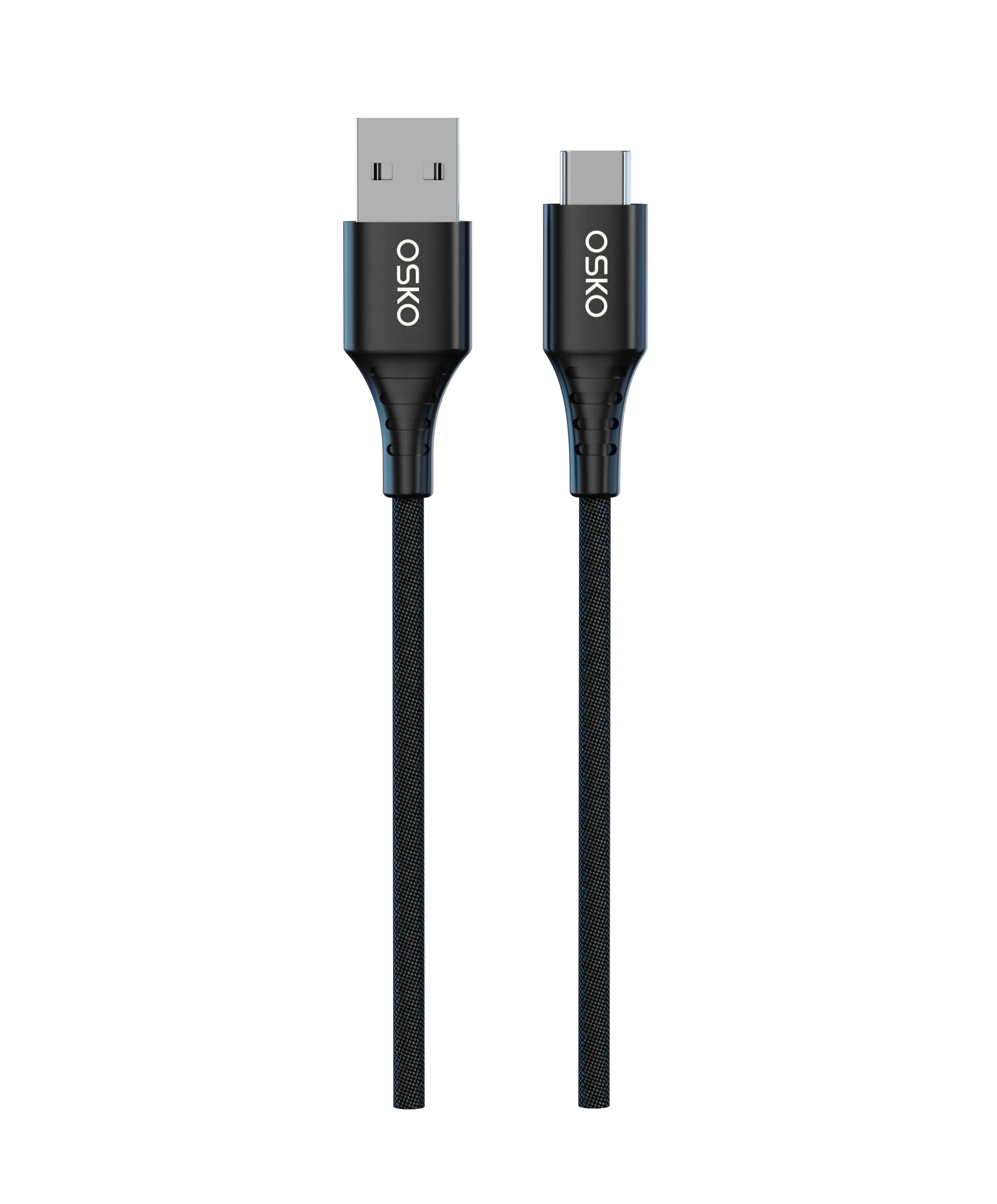
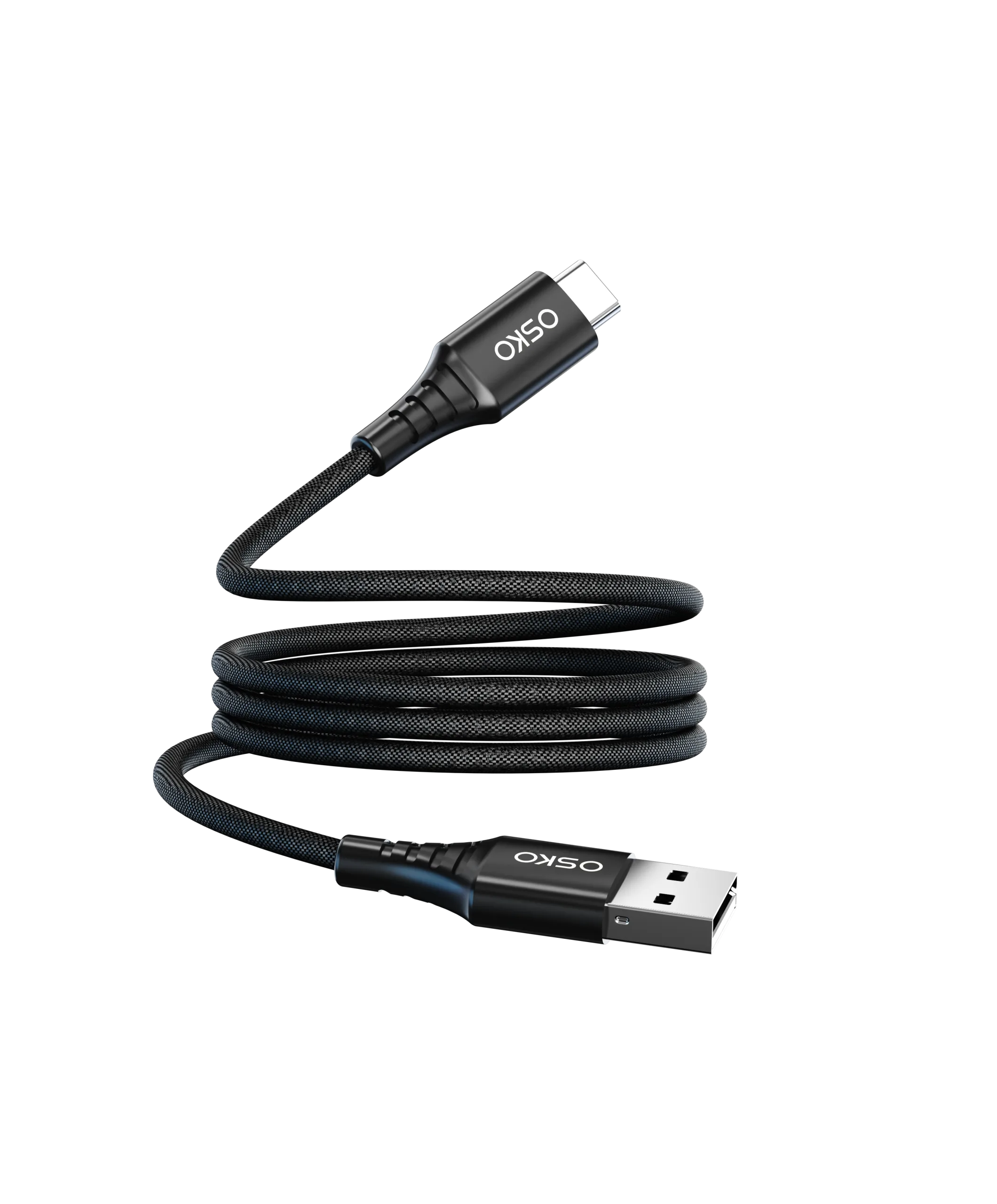
Consider a retail product designed as a 6FT USB-A to USB-C cable for everyday charging, desk use, and vehicle applications.
The buyer’s requirements were straightforward:
6FT length
USB-A to USB-C connector configuration
60W product positioning
Durable braided exterior
Repeated daily use
Stable charging connection
Retail-ready appearance
The engineering challenge was not simply selecting a connector.
The connector had to work with the internal conductor system, strain relief, braided jacket, termination process, and intended current rating.
From an engineering and procurement perspective, OSKO’s approach is to evaluate the cable as a complete assembly.
The connector design is considered together with:
Contact material → plating → terminal structure → conductor termination → strain relief → cable jacket → electrical testing → production consistency
This matters particularly for 6FT cables because longer cable assemblies introduce additional conductor resistance compared with shorter versions.
For a retail buyer, the target is not simply “a gold connector.”
The target is a cable that maintains the intended electrical and mechanical performance across production batches.
For an OEM or private-label program, this approach also allows the connector specification to be aligned with the buyer’s application, target price, durability requirements, and packaging position.
How to Choose a USB-C Charging Cable for Wholesale or OEM
For retailers, distributors, and importers, connector specifications should be part of the supplier qualification process.
Ask your USB-C cable manufacturer these questions:
What is the contact base material?
Do not accept only “premium metal.”
Ask whether the contact uses phosphor bronze or another specified alloy.
What is the plating material?
Ask whether the mating surface is gold plated and request the relevant specification where necessary.
What is the cable’s rated charging capability?
Do not confuse connector plating with charging power.
A 60W, 100W, or 240W claim should be supported by the complete cable design and applicable testing.
Does the cable use an E-Marker?
Not every USB-C cable needs an E-Marker.
For higher-current USB-C applications, especially cables designed for 5A operation and USB PD Extended Power Range applications, the appropriate electronic identification and cable construction are important.
How is the connector tested?
A serious supplier should be able to explain its quality-control process.
Depending on the product, this may include:
Continuity testing
Resistance testing
Charging-function testing
Data testing
Connector insertion/removal testing
Pull testing
Bend testing
Appearance inspection
Batch quality inspection
USB-C Cable Buying Intent in the US, Germany, Australia and the Netherlands
Different markets may use different search phrases, but the underlying purchasing requirements are similar.
| Market | Common Search Intent | Buyer Focus |
|---|---|---|
| United States | USB-C cable wholesale, fast charging USB-C cable, USB-C cable supplier | Price, compatibility, reliability, MOQ |
| Germany | USB-C Ladekabel, USB-C Kabel Großhandel, Schnellladekabel USB-C | Technical specifications, quality, compliance |
| Australia | USB-C charging cable, braided USB-C cable, USB-C cable wholesale Australia | Durability, travel, automotive, retail |
| Netherlands | USB-C kabel, USB-C snellaadkabel, USB-C kabel groothandel | Product specifications, sustainability, wholesale |
For B2B buyers, the search often moves beyond “cheap USB cable.”
Commercial searches increasingly focus on high quality USB-C charging cables, private-label production, consistent specifications, bulk pricing, OEM packaging, and reliable manufacturing.
That creates an opportunity for manufacturers that can explain the engineering behind the product rather than competing only on price.

Selection Guide: What Should Buyers Check?
Before purchasing a USB-C charging cable for retail or wholesale, review these areas:
Connector material
Confirm the base contact material and surface finish.
Charging capability
Verify the actual rated power and current rather than relying on generic “fast charging” language.
Cable construction
Check conductor design, insulation, shielding, jacket material, and strain relief.
Connector termination
Ask how the connector is attached to the conductors and how the joint is tested.
Data performance
If data transfer matters, verify the actual USB data specification.
Durability testing
Request mechanical test information for insertion, bending, pulling, and repeated use.
Quality consistency
For wholesale orders, confirm how incoming materials and finished cables are inspected.
Customization capability
For private-label programs, confirm logo, color, connector housing, packaging, MOQ, and sample approval procedures.
FAQ
Do gold-plated USB connector pins improve charging speed?
Not automatically. Gold plating primarily helps provide a stable, corrosion-resistant contact surface. Actual charging speed depends on the charger, device, cable rating, protocol, conductor resistance, connector design, and other system factors.
Are phosphor bronze pins better than pure copper?
For many connector-contact applications, phosphor bronze provides a useful balance of conductivity, strength, and spring performance. Pure copper has higher conductivity but is softer, so the appropriate material depends on the connector design.
Does a gold-plated USB-C cable support 240W charging?
No. Gold plating alone does not determine power capability. A 240W USB-C cable requires an appropriate cable design, current rating, power-delivery implementation, and supporting equipment.
Do all USB-C cables need an E-Marker?
No. E-Marker requirements depend on the cable’s electrical and functional specification. Buyers should verify the cable’s current and power rating instead of assuming every premium USB-C cable requires one.
Can connector pins cause a USB-C cable to charge slowly?
They can contribute to poor charging performance if the contact interface has excessive resistance, poor contact force, contamination, or mechanical degradation. However, slow charging can also result from the charger, device, cable conductors, protocol negotiation, or temperature.
Why does my USB-C cable keep disconnecting?
Possible causes include worn connector contacts, poor mating, damaged receptacles, weak termination, internal conductor damage, contamination, or a cable that does not meet the required data or power specification.
Are gold-plated contacts more durable?
Gold plating can improve resistance to surface oxidation and corrosion. Durability still depends on plating thickness, base material, contact geometry, mechanical design, and how the connector is used.
Is a braided USB-C cable automatically better?
No. Braided nylon mainly relates to mechanical protection and exterior durability. Electrical performance depends on the complete internal design, connector, conductors, shielding, termination, and testing.
What should wholesalers ask a USB-C cable manufacturer?
Ask about contact material, plating, cable construction, charging rating, data specification, E-Marker requirements, testing, MOQ, customization, sample approval, packaging, and quality-control procedures.
What makes a high-quality USB-C charging cable?
A high-quality cable combines appropriate connector materials, reliable contact design, suitable conductors, effective strain relief, correct power and data specifications, controlled manufacturing, and consistent testing.
Summary
USB connector pins may be only a small part of a charging cable, but they form one of the critical physical interfaces in the complete electrical system.
Phosphor bronze can provide the mechanical characteristics needed for repeated connector mating, while an appropriate plated contact surface can help maintain reliable electrical contact and resist surface degradation.
However, connector material alone does not determine charging speed.
For modern USB-C applications, performance depends on the complete system:
Connector + conductors + termination + protocol + charger + device + cable design + testing
This is especially important when sourcing fast charging USB-C cables, laptop charging cables, automotive charging cables, and private-label products.
For retailers, distributors, and OEM buyers, the best specification is not simply “gold-plated.”
It is a complete, measurable cable specification backed by controlled manufacturing and testing.
OSKO provides OEM and ODM USB cable solutions for brands, wholesalers, distributors, and procurement teams, including custom connector configurations, cable construction, logo and packaging customization, sampling, and bulk production.
Contact OSKO
If you are sourcing USB-C charging cables, USB-C cable wholesale, or a custom USB-C cable manufacturer for your private-label product, send OSKO your required connector type, cable length, charging target, data requirement, quantity, logo, and packaging requirements.
OSKO can help evaluate the appropriate cable structure and provide samples for testing before mass production.
Contact OSKO for samples, technical specifications, OEM/ODM solutions, and bulk cable pricing.