
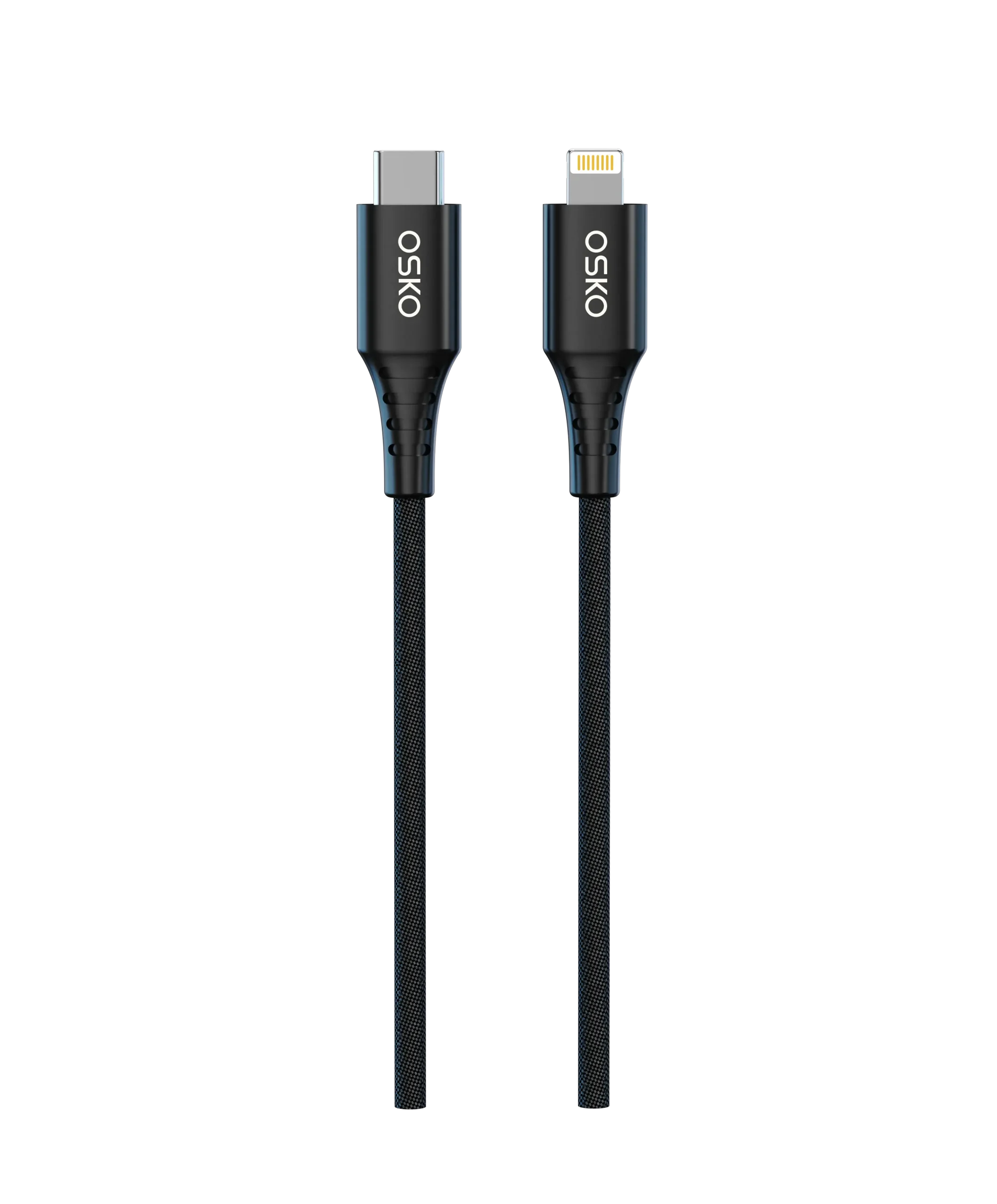
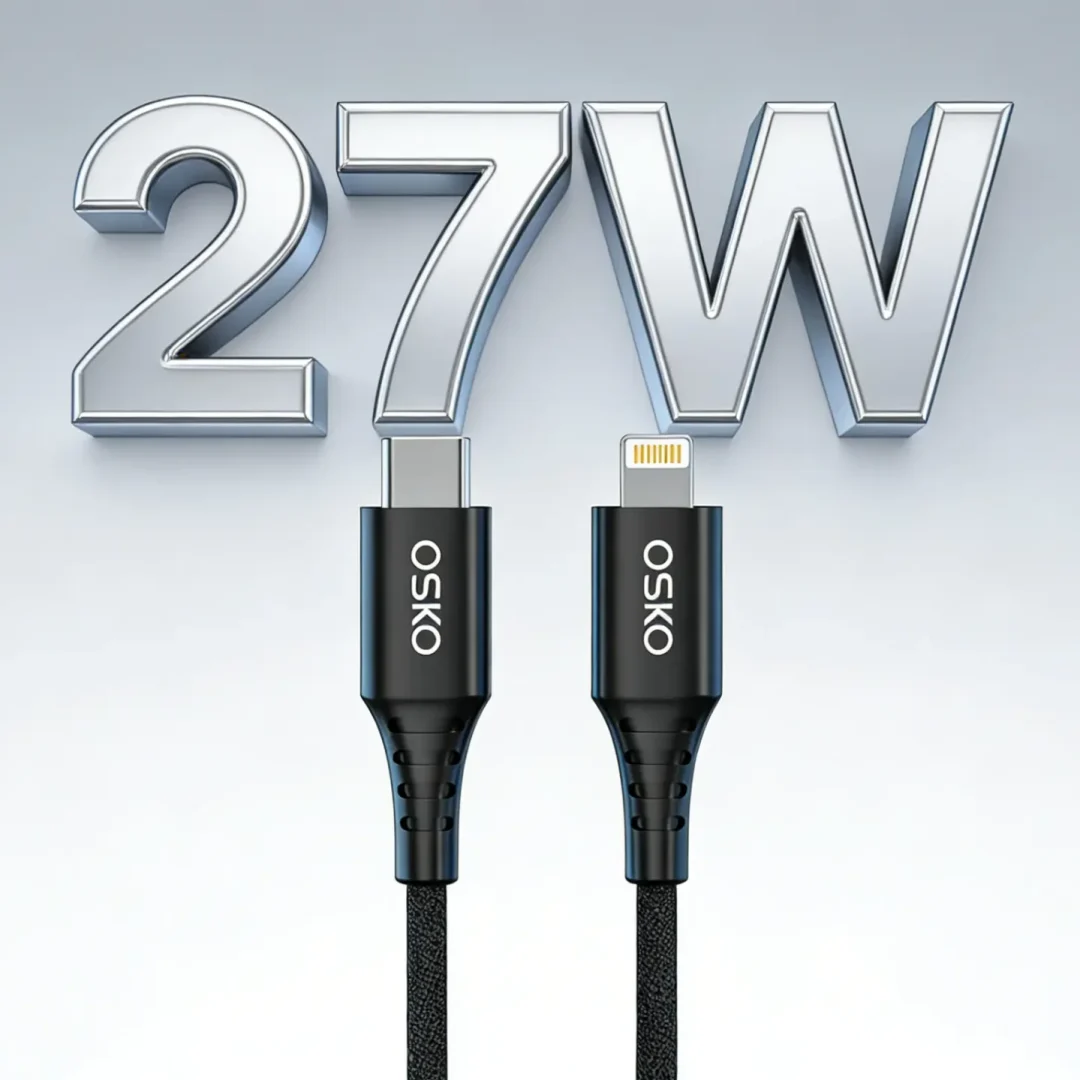
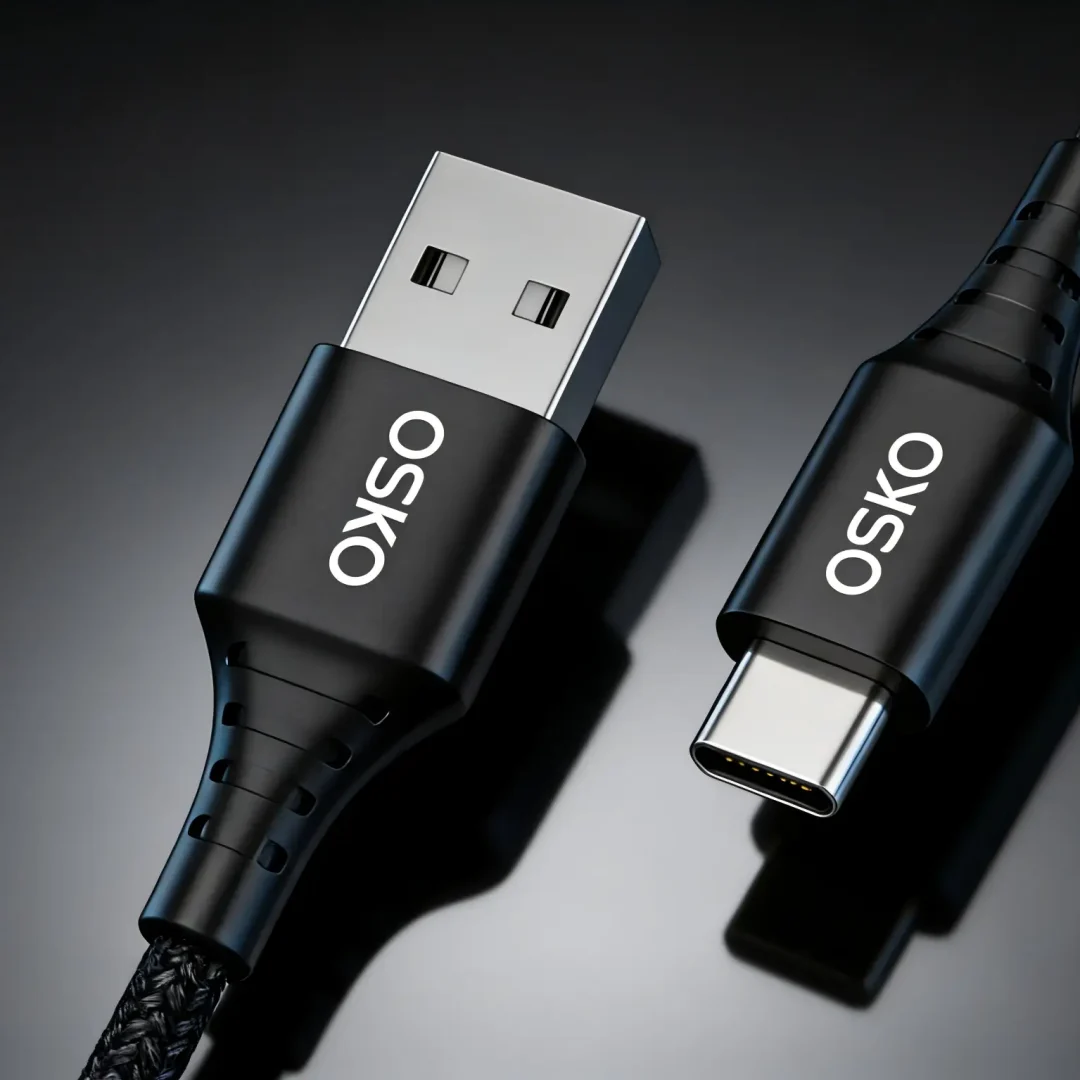
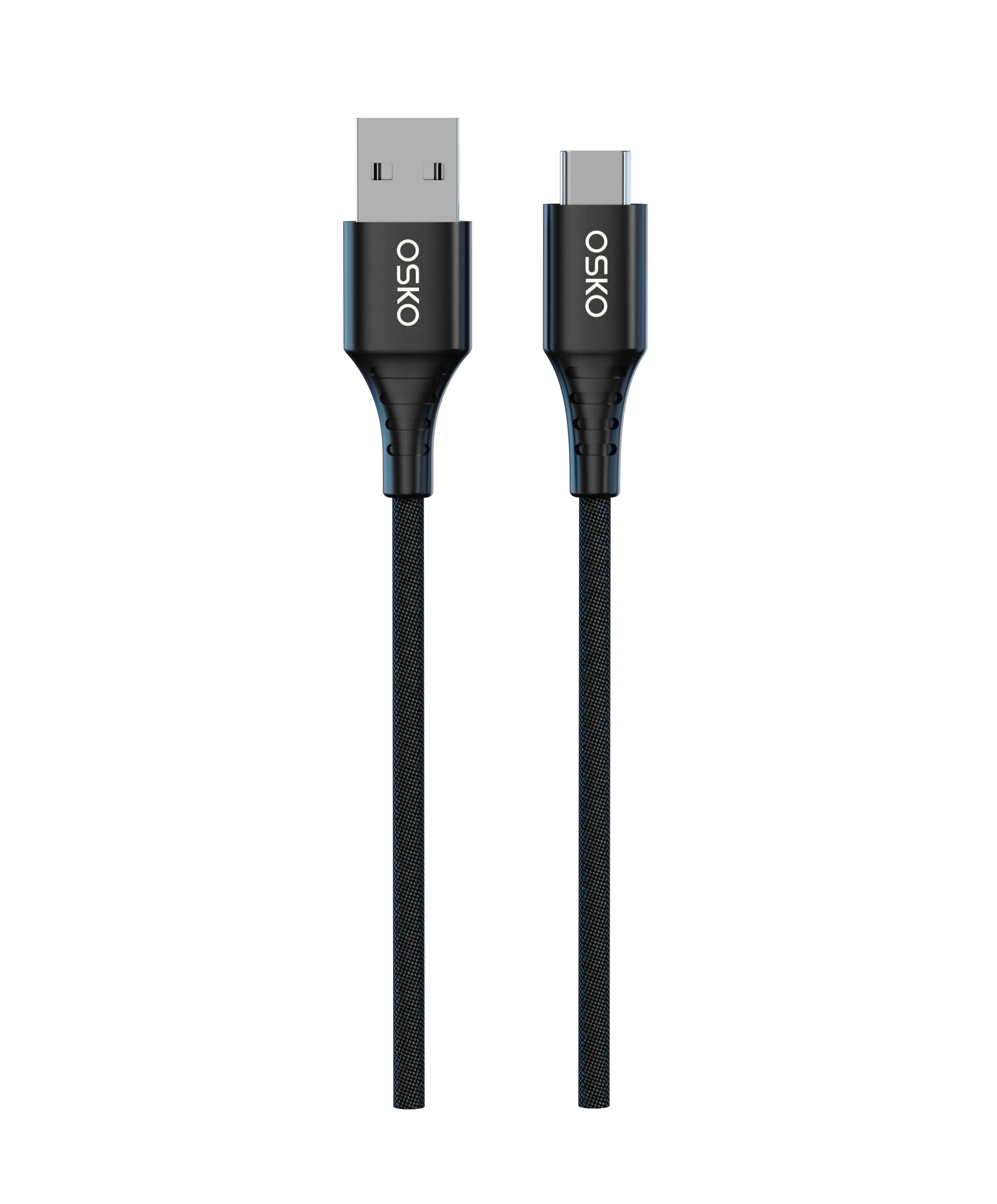
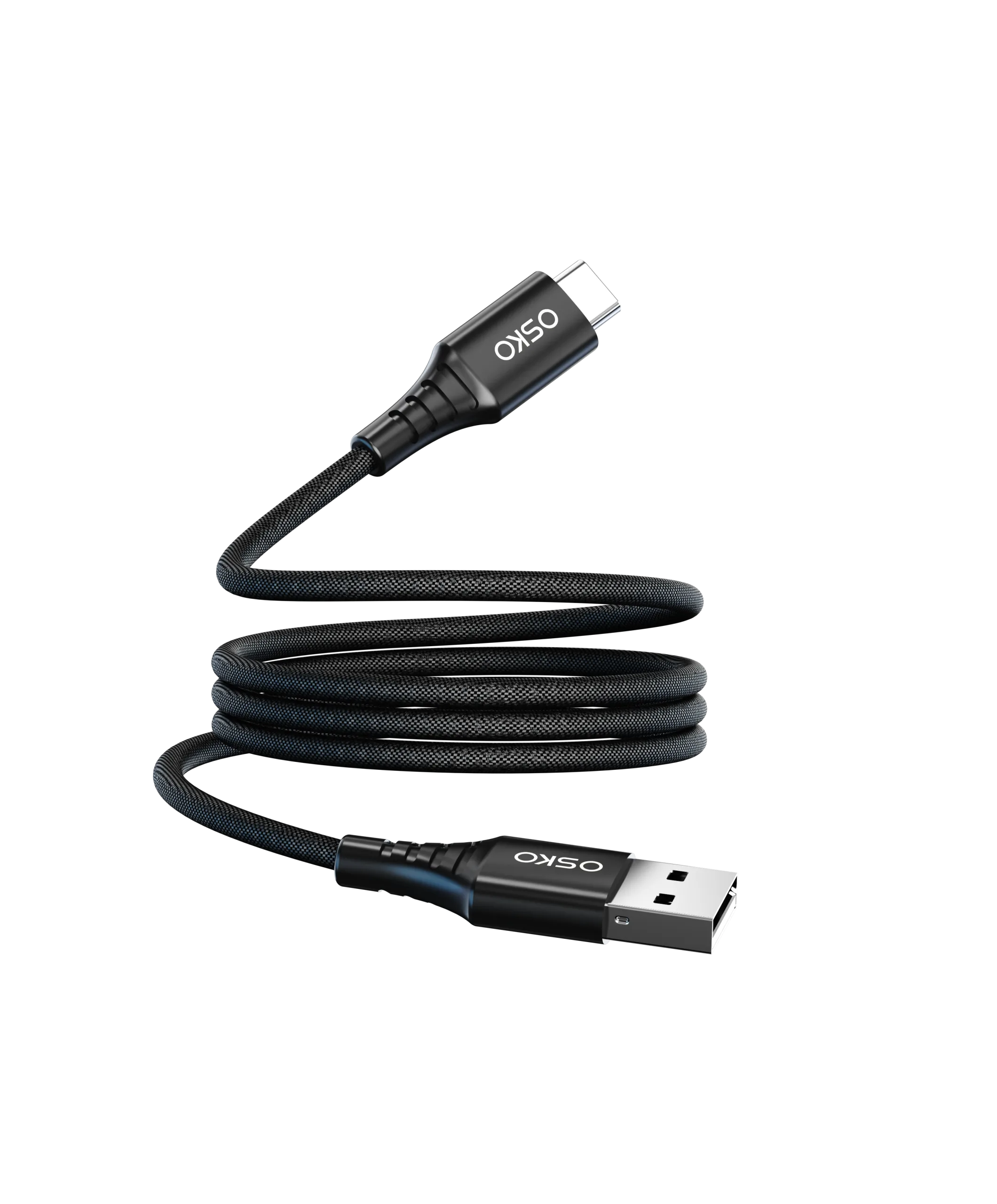
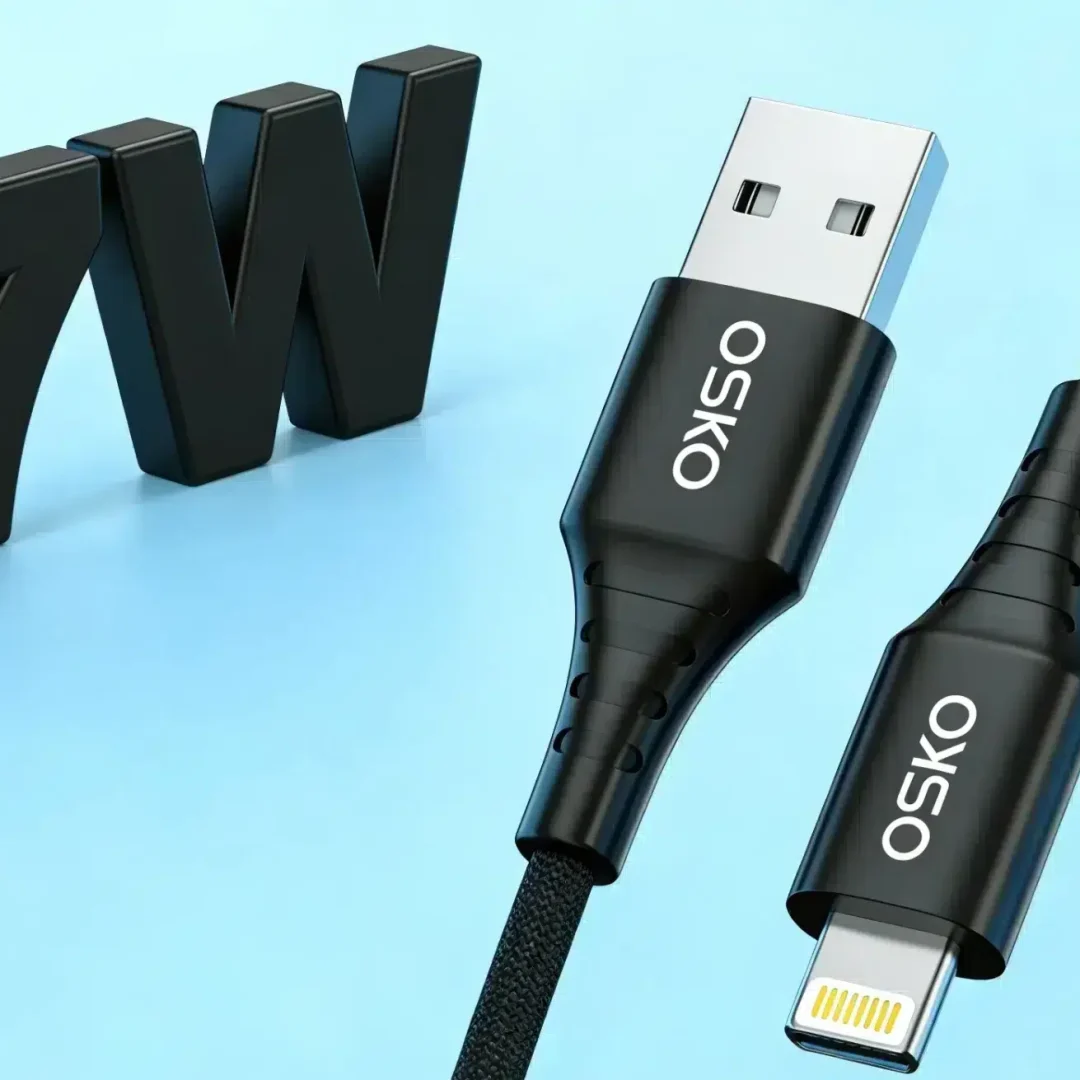
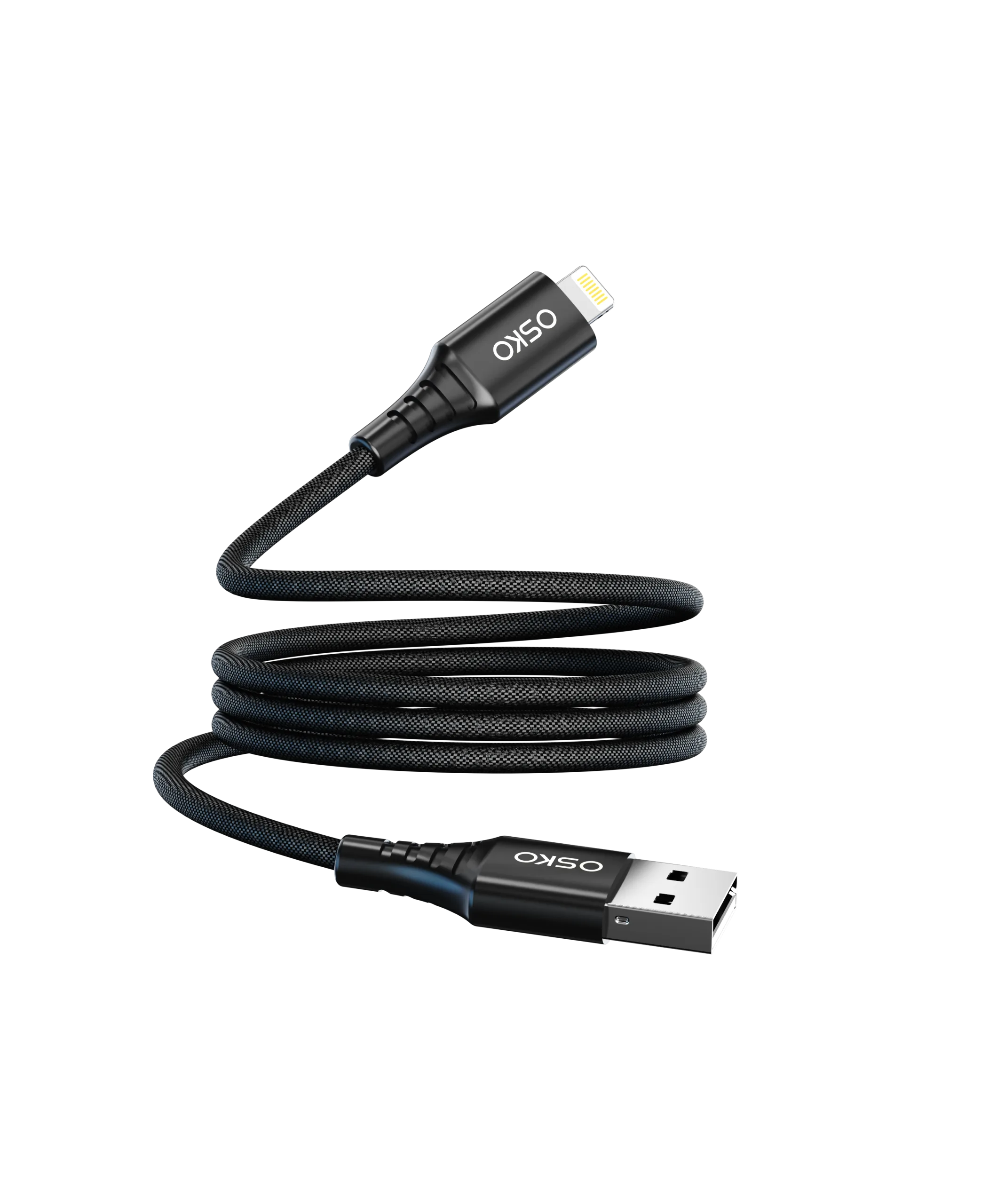
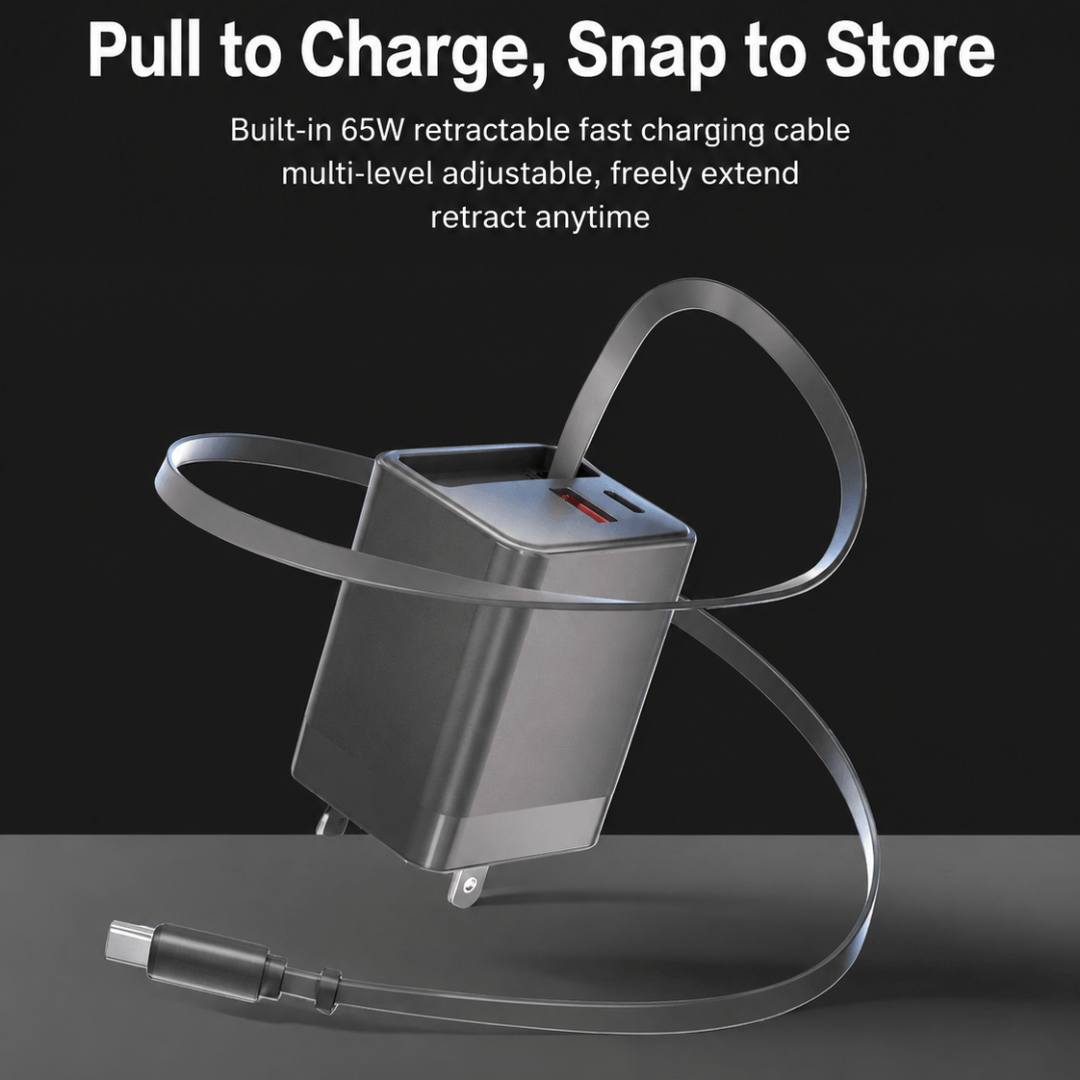
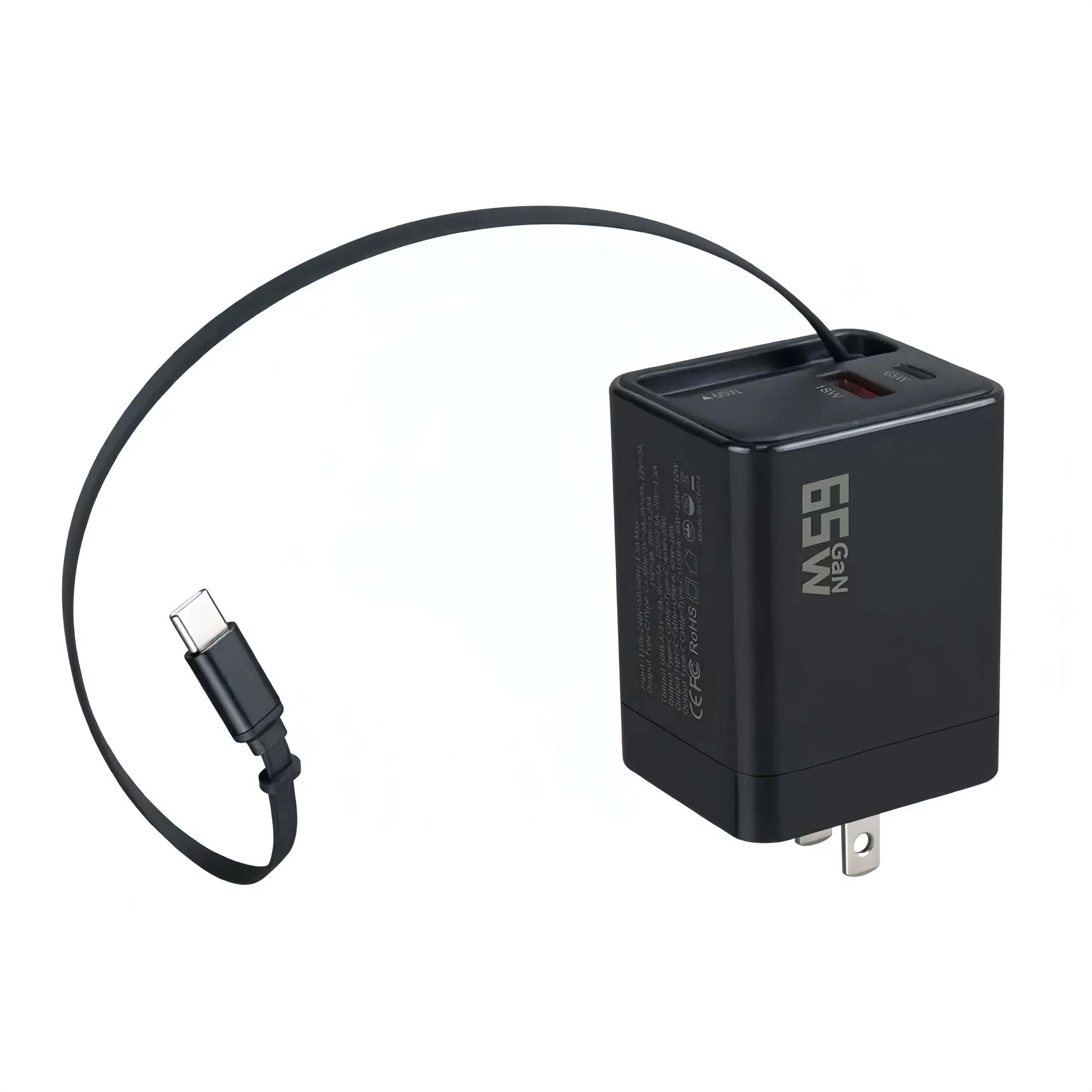
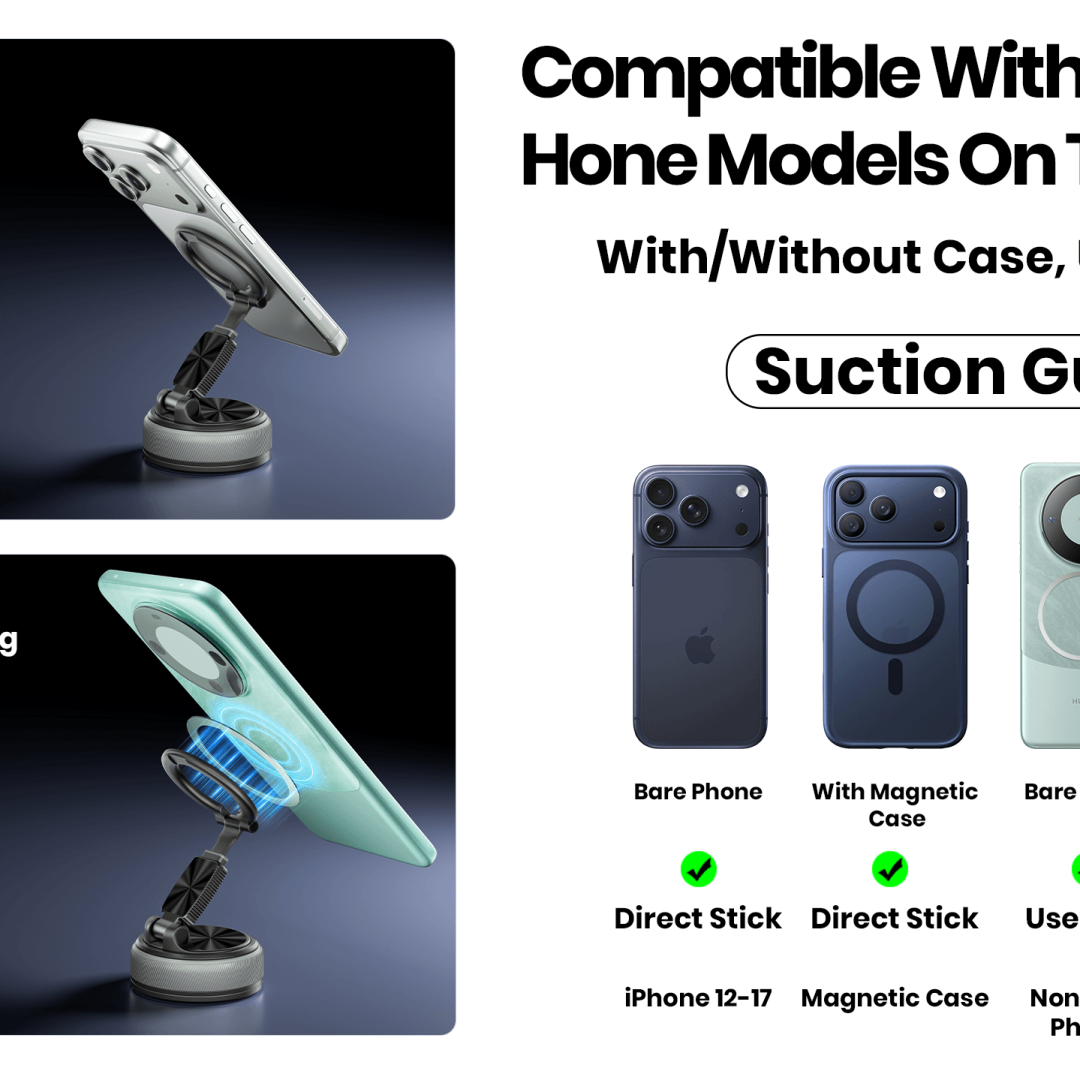
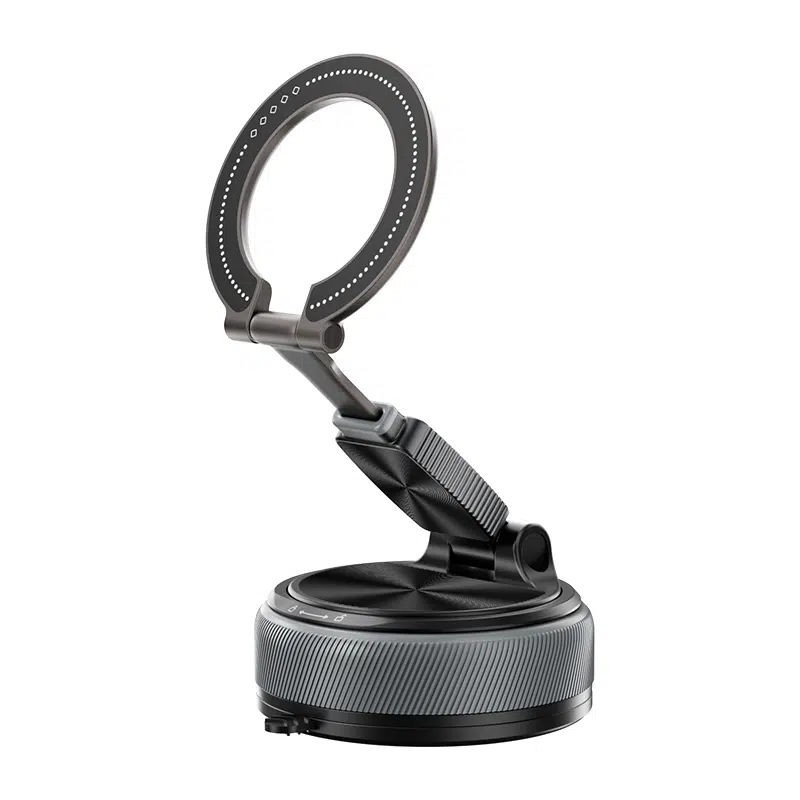
Modern charging systems are no longer limited to a single desk or wall charger. A single USB-C cable may be used at a workstation in the morning, inside a vehicle during a commute, and with a power bank while traveling.
That makes mechanical durability just as important as charging performance.
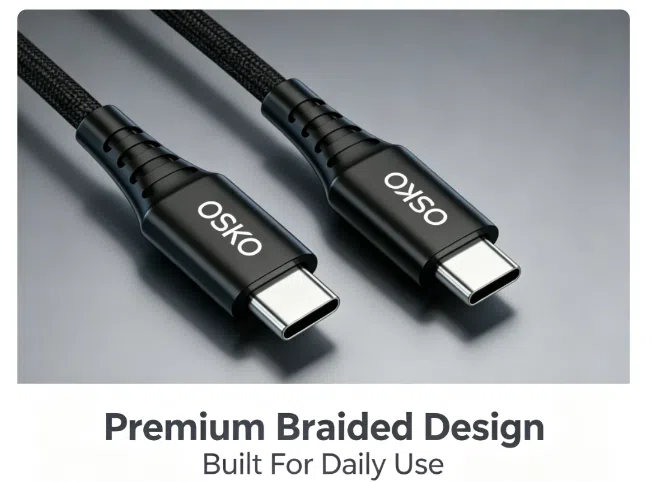
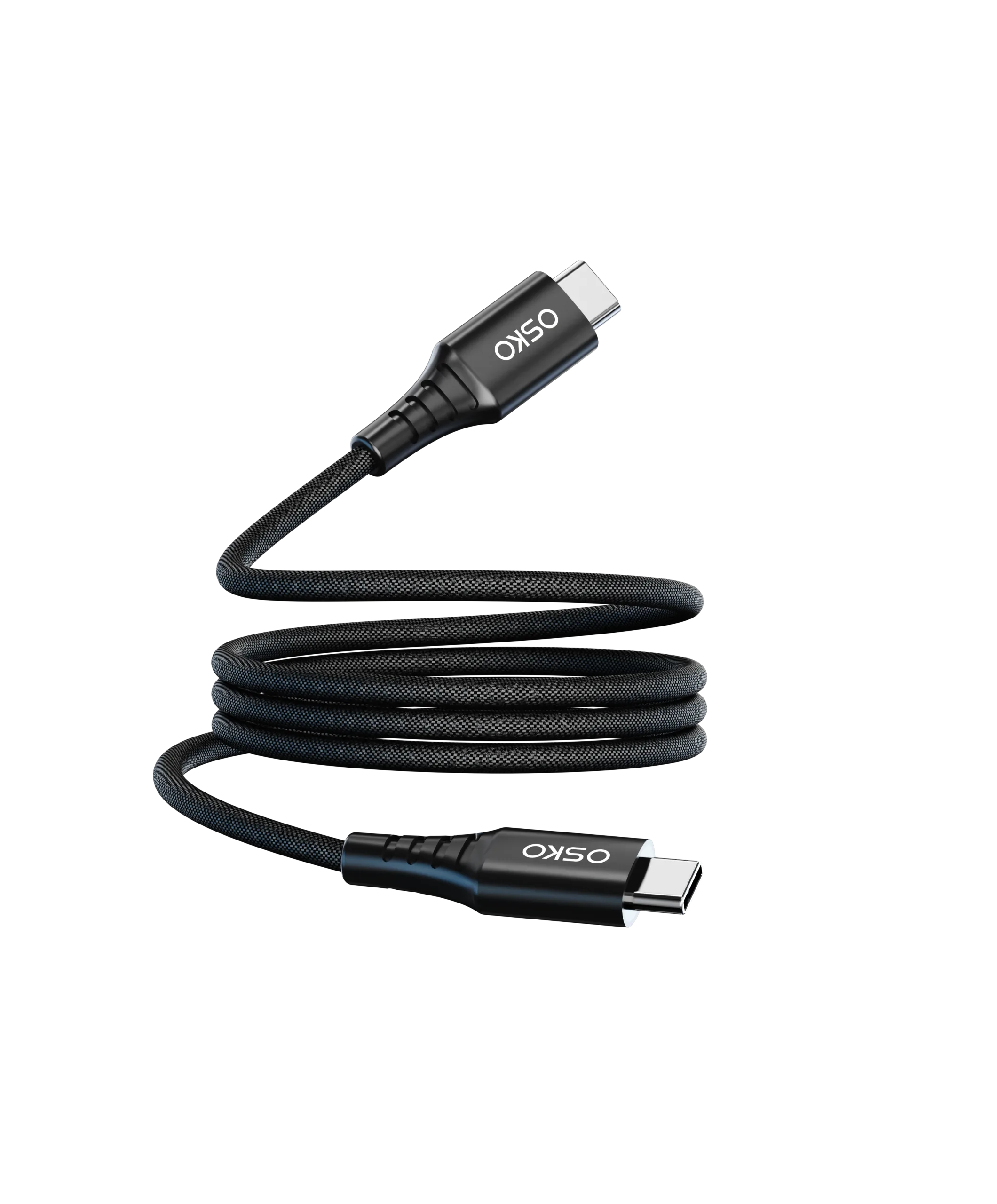
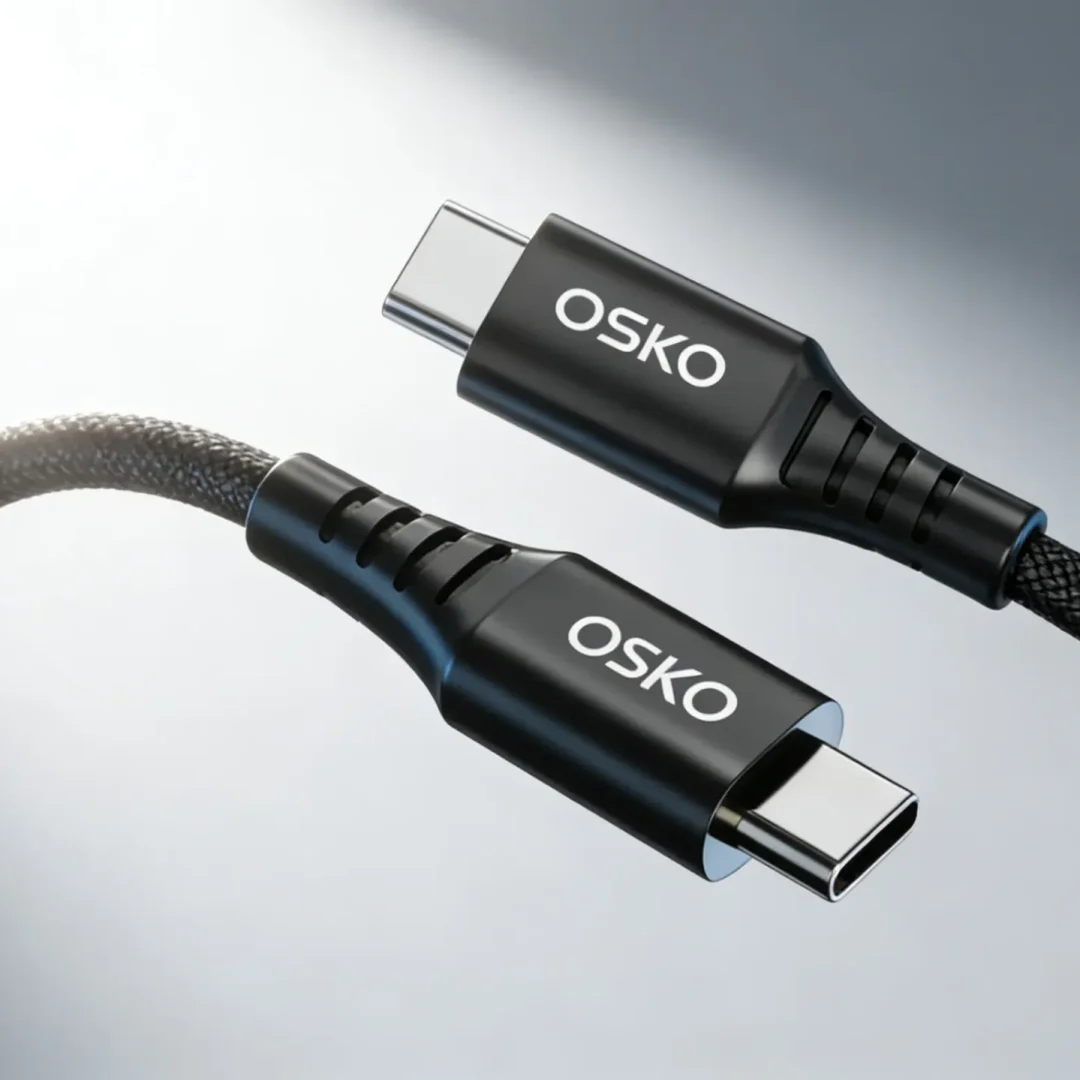
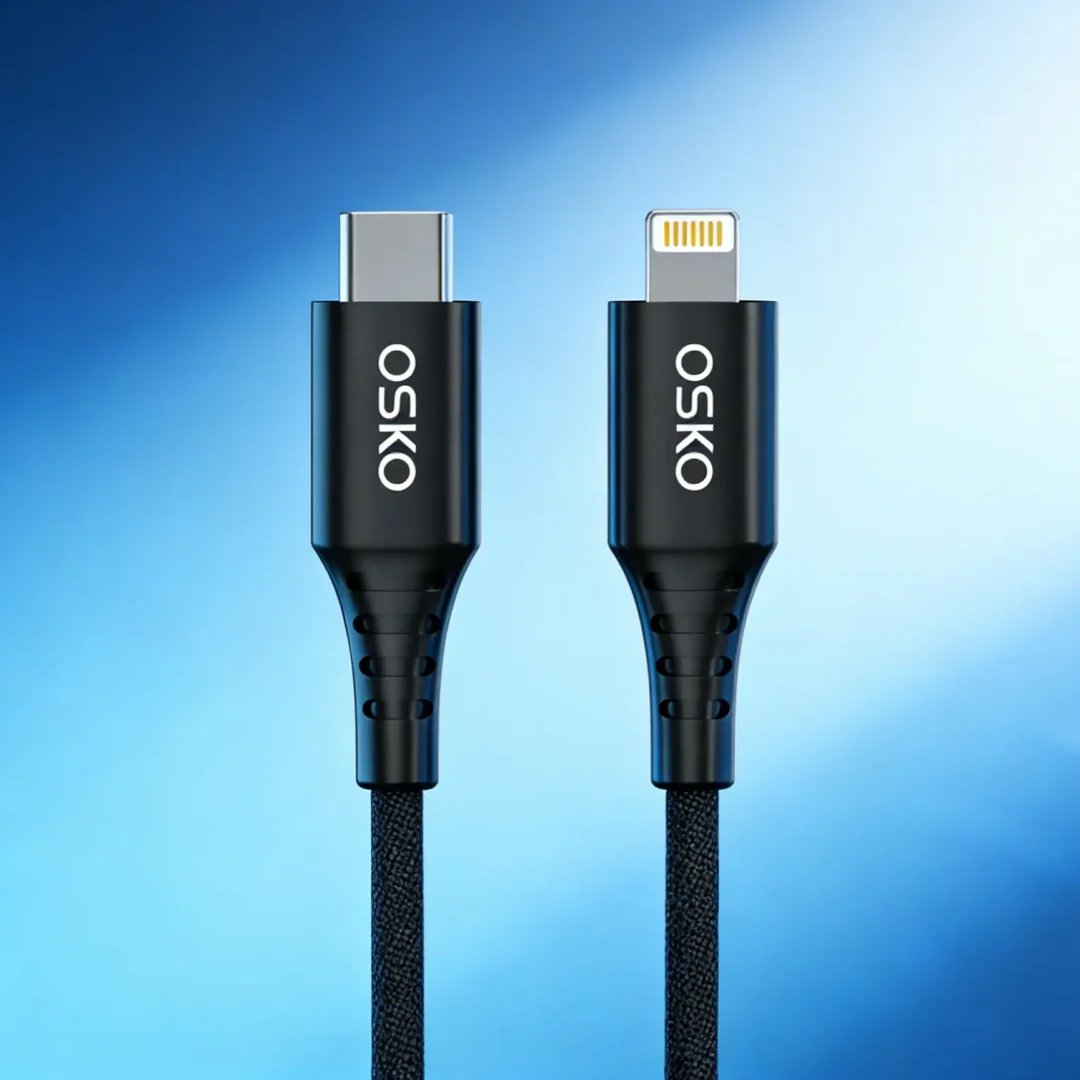
A heavy duty nylon braided USB-C cable combines a reinforced cable structure with an abrasion-resistant outer braid and carefully designed connectors. When correctly engineered, this type of cable can provide a practical balance between durability, flexibility, charging performance, and premium product appearance.
For desk charging systems, the cable must withstand repeated plugging, bending, and movement around a workstation. In vehicles, it may experience vibration, tight routing, temperature changes, and repeated connection cycles. The cable design therefore needs to consider more than the advertised wattage.
It is also important to separate the cable’s physical construction from its electrical capability. A nylon braid does not automatically make a cable suitable for 100W or 240W charging. Actual charging performance depends on the power source, device, USB Power Delivery implementation, cable rating, conductor resistance, connector design, and other system-level factors.
This guide explains how to select and integrate heavy duty nylon braided USB-C cables into desk, car, travel, retail, wholesale, and OEM charging systems.

Why Heavy Duty Nylon Braided USB-C Cables Work Well in Charging Systems
A charging cable used every day faces several types of stress:
Repeated bending near the connector
Pulling and twisting
Abrasion against desks or vehicle interiors
Frequent insertion and removal
Cable tangling
Heat generated during higher-power charging
Vibration in automotive applications
Storage and transport stress
A heavy-duty design addresses these issues through multiple layers rather than relying on the nylon jacket alone.
A typical construction may include:
Conductor → insulation → internal shielding where required → filler/binder → outer jacket → nylon braid → connector and strain relief
Each layer serves a different engineering purpose.
The nylon braid primarily contributes mechanical protection and appearance. The conductor determines electrical resistance and current-carrying behavior. The connector affects contact reliability. The strain relief controls how bending forces are transferred into the cable.
For procurement teams, this distinction is important when comparing a premium braided USB-C charging cable with a low-cost cable that only looks similar from the outside.
Desk Charging Applications
Home and Office Workstations
Desk charging is one of the most common applications for a durable USB-C cable.
A workstation cable may be connected and disconnected multiple times every day. It can also be dragged across the desk, bent around a monitor stand, or routed behind a laptop dock.
For these applications, 4ft to 6ft is often a practical range.
A 6ft cable can provide enough reach for:
Laptop charging
Phone charging
Tablet charging
USB-C monitor setups
Desk power stations
USB-C hubs
Shared office workstations
Longer cables such as 8ft or 10ft can be useful when the power source is farther away, but the electrical design should be validated for the intended power level.
Cable Length Is an Engineering Variable
Longer does not automatically mean worse.
However, increasing cable length increases the amount of conductor material through which current travels. The manufacturer therefore needs to control conductor resistance, connector termination, thermal behavior, and voltage drop.
This is why a heavy duty USB-C charging cable manufacturer should specify both cable length and electrical performance rather than simply offering a longer cable with the same marketing claims.

Car Charging Applications
Automotive charging introduces a different set of mechanical challenges.
A cable inside a vehicle may be exposed to:
Continuous vibration
Tight bending
Repeated movement
Connector pulling
Seat movement
Center-console routing
Door or compartment abrasion
Temperature fluctuations
For this reason, cable routing is as important as the cable itself.
A 3ft cable may work well for a driver using a center-console charger, while 6ft or longer configurations may be useful for rear-seat passengers.
A USB-C cable for car charging should ideally provide enough flexibility without leaving excessive cable length loose inside the cabin.
Coiled and Right-Angle USB-C Cables for Vehicles
Coiled cables can help manage excess cable length in automotive applications.
Instead of leaving several feet of cable loose around the center console or rear seat, a spring-style structure can keep the cable more compact.
Potential advantages include:
Better cable management
Reduced loose cable around passengers
Easier storage
Less tangling
More controlled routing
Right-angle connectors can also be useful when the USB-C port is positioned close to a device edge or vehicle console.
However, a right-angle connector does not automatically improve electrical performance. Its main advantage is mechanical routing and reduced bending space.
For OEM development, the connector angle, housing dimensions, cable exit direction, strain relief, and bend radius should be considered together.
USB-C Power Delivery: 60W, 100W and 240W
Power rating is one of the most important purchasing considerations for a USB-C cable.
However, buyers should avoid treating 60W, 100W, and 240W as interchangeable marketing labels.
USB Power Delivery 3.1 introduced higher power levels up to 240W over compatible full-featured USB Type-C cable and connector systems. USB-IF specifies 28V, 36V, and 48V fixed voltage levels for up to 140W, 180W, and 240W respectively.
This does not mean every USB-C cable can deliver 240W.
Actual charging capability depends on:
| System Factor | Effect on Charging |
|---|---|
| Charger output | Determines available power |
| Device input | Determines requested/accepted power |
| PD implementation | Enables power negotiation |
| Cable rating | Determines supported cable power capability |
| Conductor resistance | Affects voltage drop and heat |
| Cable length | Influences electrical resistance |
| Connector design | Affects contact reliability |
| Thermal behavior | Influences sustained operation |
For a 100W USB-C PD cable manufacturer, testing should validate the complete cable design at the intended current and power level.
For 240W applications, buyers should also verify that the cable is designed and identified for the appropriate USB PD EPR use case rather than assuming that a thick braided jacket indicates 240W capability.
Is a Nylon Braided USB-C Cable Better?
For many consumer and B2B applications, nylon braiding provides meaningful mechanical advantages.
Compared with a basic smooth PVC jacket, a braided outer layer can offer:
Better abrasion resistance
More premium appearance
Improved handling
Better resistance to visible surface wear
Increased perceived product value
Suitable positioning for retail and premium accessory bundles
But “braided” should not be treated as a technical performance rating.
A nylon braid does not automatically mean:
Higher charging power
Faster data transfer
Better EMI shielding
USB-IF certification
Longer electrical lifespan
A professional nylon braided USB-C cable supplier should therefore specify the internal construction separately from the outer jacket.
Internal Construction and Conductor Design
For charging performance, the internal conductor system is more important than the visual appearance of the cable.
Key engineering variables include:
Conductor material
Cross-sectional area
Strand structure
DC resistance
Cable length
Insulation thickness
Thermal performance
Connector termination
Larger or better-engineered conductors can help control resistance and voltage drop, but AWG alone does not fully define a cable’s performance.
The complete conductor structure should be validated under the intended current.
For buyers looking for a high quality heavy duty USB-C cable, requesting electrical test data is more meaningful than relying on descriptions such as “premium copper” or “extra thick wire.”
Connector and Strain Relief Engineering
Many cable failures occur close to the connector.
This area experiences concentrated mechanical stress because the flexible cable transitions into a relatively rigid connector housing.
A robust connector design may include:
Reinforced housing
Controlled cable exit
Proper overmolding
Flexible strain relief
Reliable internal termination
Appropriate contact materials
Dimensional consistency
The goal is to distribute bending forces gradually rather than allowing the cable to flex sharply at one point.
This is especially important for car charging, where the cable may be bent repeatedly while the phone is being used for navigation, music, or hands-free applications.
Shielding: Important for Data, Different from Braiding
One common misunderstanding in cable marketing is treating nylon braiding as EMI shielding.
They are different.
Nylon braid: primarily provides mechanical protection.
Conductive shielding: helps control electromagnetic interference and signal integrity.
Depending on the cable design, conductive shielding may include:
Aluminum foil
Metal braid
Drain wire
Twisted signal pairs
Multiple insulation layers
For a USB-C data cable for desk and car use, shielding requirements depend on the supported data specification and cable architecture.
Therefore, procurement buyers should ask:
Does the cable have internal conductive shielding, or is the outer braid purely mechanical?
That single question can prevent a significant amount of specification confusion.
Choosing the Right Cable Length
Cable length should be selected according to the actual installation environment.
| Length | Recommended Application |
|---|---|
| 3ft | Travel, power banks, compact car setups |
| 4ft | Desk and front-seat vehicle charging |
| 6ft | Office desks, laptops, rear-seat charging |
| 8ft | Larger workstations and flexible routing |
| 10ft | Extended desk or passenger applications |
| Custom | OEM charging systems and retail kits |
Longer cables should not be specified simply because “longer is better.”
A longer cable can increase resistance and may require different conductor construction to maintain the intended electrical performance.
For OEM programs, the length should be defined together with the charging and data requirements.
Heavy Duty USB-C Cables for Travel
Travel creates a different combination of requirements.
Users typically want:
Compact storage
Reduced tangling
Durable outer protection
Flexible handling
Compatibility with chargers and power banks
Sufficient charging performance
A 3ft or 4ft durable braided USB-C charging cable for travel is often easier to pack than a long desk cable.
For travel kits, OEM buyers may also combine:
USB-C cable + charger + carrying pouch + retail packaging
This creates an opportunity for private-label brands to sell a complete charging solution rather than a standalone cable.
OEM and Private-Label USB-C Cable Opportunities
For brands, distributors, and retailers, cable construction can be customized around the target application.
A custom braided USB-C cable manufacturer may offer:
3ft–10ft lengths
Custom cable colors
Nylon braid colors
TPE or PVC alternatives
Connector housing customization
Logo printing or molding
Retail packaging
Private-label packaging
Barcode and labeling
Custom specifications
OEM sample development
For automotive accessory brands, coiled or right-angle designs can be developed around specific vehicle charging scenarios.
For office accessory brands, 6ft braided cables can be positioned for desk charging, laptop charging, or multi-device workstations.
For travel brands, shorter and more compact configurations may be more appropriate.
The important point is to define the application first and the cable specification second.
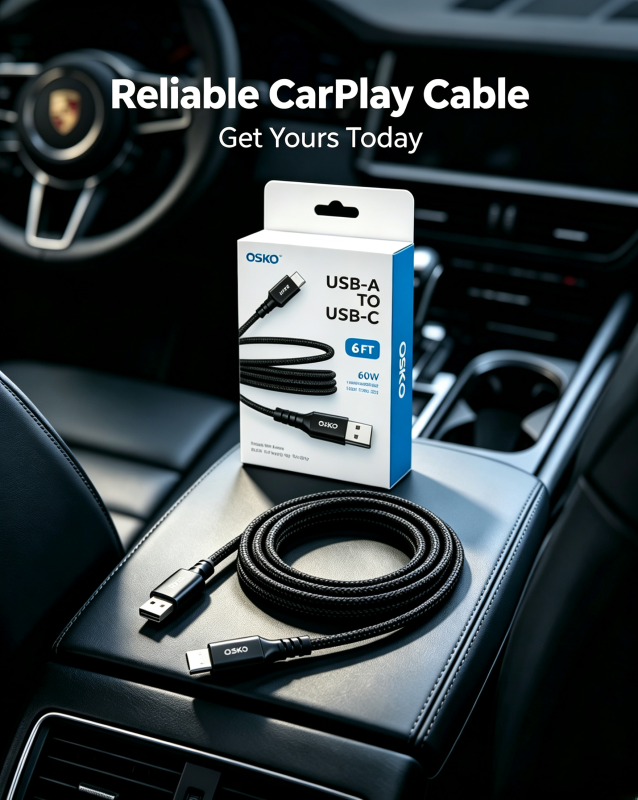
OEM Sourcing Checklist for Wholesale Buyers
When comparing a USB-C cable wholesale supplier, procurement teams should evaluate more than unit price.
Electrical Specifications
Ask for:
Rated power
Rated current
Supported charging protocol
Data rate
Cable length
Resistance or relevant electrical test results
Mechanical Specifications
Check:
Bend testing
Connector pull testing
Strain relief
Connector insertion/removal testing
Jacket durability
Braiding quality
Manufacturing Quality
Review:
Incoming material inspection
Production QC
Finished product testing
Batch traceability
Sample approval process
Packaging inspection
Commercial Requirements
Confirm:
MOQ
Sample availability
Lead time
Custom logo
Custom color
Packaging options
Shipping method
Documentation
This creates a much more useful comparison between factories than simply asking:
What is your price for 1,000 cables?
Compliance and Certification: What Buyers Should Actually Verify
The original version of this article treated CE, FCC, RoHS, USB-IF, and Prop 65 as if they were interchangeable certifications. They are not.
USB-IF has specific compliance programs for USB Type-C cable assemblies and Power Delivery implementations. USB-IF also states that its certification program covers cables with different capabilities, so buyers need to select the appropriate specification and certification status for the actual product.
For USB-IF logos, additional trademark licensing requirements apply.
For European sales, CE requirements depend on the applicable EU legislation for the product. CE marking should therefore not be presented simply as an independent “quality certification.”
For US sales, applicable FCC requirements should be evaluated according to the actual product configuration rather than assuming that every passive charging cable requires the same FCC certification.
California Proposition 65 is also different. It concerns warnings for significant exposures to listed chemicals and is not a general USB cable safety certification.
For Germany and the Netherlands, buyers should request the relevant technical documentation for their specific product and sales channel.
For Australia, importers and distributors should similarly verify the requirements applicable to the final product configuration and market.
Engineering Case Study: 6ft Braided Cable for Desk and Car Charging
Consider a representative OEM development project for a brand selling charging accessories in both retail and automotive channels.
Buyer Requirement
The buyer needed one cable platform that could serve:
Office desk charging
Home charging
Vehicle front-seat charging
Travel kits
The preferred configuration was a 6ft black nylon braided USB-C cable with reinforced connectors.
Engineering Challenges
The development team had to balance several competing requirements:
Durability
Flexibility
Connector strength
Cable length
Charging capability
Retail appearance
Production consistency
A cable designed for a desk does not automatically perform well in a vehicle. Automotive use introduces additional vibration and cable-routing stress.
OSKO Engineering Approach
OSKO evaluated the cable as a complete assembly.
The engineering process included:
Conductor specification review
Cable resistance evaluation
Connector termination inspection
Strain-relief design
Braiding consistency
Mechanical bending tests
Charging validation
Finished-product QC
The final specification was then aligned with the intended retail application instead of using a generic “high-power” claim.
Procurement Lesson
The key lesson is simple:
Cable integration should begin with the application, not the marketing wattage.
A 60W cable may be the correct choice for one retail system, while another application may require a higher-rated USB-C PD configuration.
The appropriate specification depends on the charger, device, cable length, environment, and required performance.
Recommended Cable Configurations
| Configuration | Typical Application | Key Consideration |
|---|---|---|
| 3ft braided USB-C | Travel, power bank, compact car setup | Portability |
| 6ft braided USB-C | Desk, office, front/rear car charging | Flexible reach |
| 8ft–10ft braided USB-C | Extended workstation or rear-seat use | Electrical design |
| Coiled USB-C | Automotive charging | Cable management |
| Right-angle USB-C | Tight device/console spaces | Connector routing |
| Custom OEM USB-C | Retail and branded solutions | Specification control |
The final power and data ratings should always be stated according to the actual tested cable configuration.
How US, German, Australian and Dutch Buyers Search
A strong B2B SEO strategy should reflect how buyers describe the product.
United States
Commercial searches commonly revolve around:
USB-C cable wholesale
heavy duty USB-C charging cable
USB-C cable supplier
braided USB-C cable bulk
USB-C cable manufacturer
USB-C cable for car charging
private label USB-C cables
US buyers often combine product terms with “wholesale,” “bulk,” “supplier,” “manufacturer,” or “OEM.”
Germany
German buyers may use searches such as:
USB-C Kabel Großhandel
USB-C Ladekabel Hersteller
USB-C Kabel Lieferant
hochwertiges USB-C Ladekabel
USB-C Kabel Auto
USB-C Kabel für Büro
The English equivalents should also remain on the page because many German B2B procurement teams use English technical terminology.
Australia
Commercial searches may include:
USB-C cable wholesale Australia
heavy duty USB-C charging cable
braided USB-C cable supplier
USB-C car charging cable
bulk USB-C cables
Durability and travel-related use cases are useful content angles for this market.
Netherlands
Search behavior can combine Dutch and English:
USB-C kabel groothandel
USB-C kabel leverancier
USB-C laadkabel
braided USB-C charging cable
USB-C cable wholesale Europe
For European distributors, technical documentation, consistency, and private-label capabilities are useful conversion elements.
FAQ: Heavy Duty Nylon Braided USB-C Charging Cables
Are heavy duty nylon braided USB-C cables suitable for car charging?
Yes, provided the cable’s power rating and connector configuration are compatible with the vehicle charger and connected device. The braided construction can provide additional mechanical protection, while cable routing and strain relief remain important in automotive environments.
Can a USB-C cable in a car support 100W or 240W?
A compatible USB-C PD system can support high power, but the cable alone does not determine the charging output. USB PD 3.1 supports up to 240W over compatible USB Type-C systems. The charger, device, cable rating, and implementation must all support the intended power level.
Is a 240W USB-C cable necessary for car charging?
Not necessarily. Many phones, tablets, and other mobile devices require substantially less power. The correct cable should match the actual device and charger requirements rather than simply choosing the highest advertised wattage.
Does nylon braiding make a USB-C cable more durable?
It can improve abrasion resistance and mechanical protection, especially during frequent handling. However, overall durability also depends on conductor construction, connector quality, strain relief, jacket materials, and manufacturing quality.
Does a braided USB-C cable provide EMI shielding?
Not necessarily. Nylon is a non-conductive mechanical covering. EMI shielding requires an appropriate conductive structure inside the cable, such as foil or metal braid, depending on the design.
What is the best USB-C cable length for a car?
For front-seat charging, 3ft to 4ft is often sufficient. A 6ft cable can be more convenient for passengers or rear-seat use. Longer cables should be engineered for their intended electrical load.
Are coiled USB-C cables better for vehicles?
They can improve cable management by reducing loose cable length. They may be useful for vehicle interiors where excess cable can become inconvenient. However, the electrical rating and mechanical design still need to be validated.
Can an OEM factory customize a braided USB-C cable?
Yes. OEM customization can include cable length, color, braid, connector housing, logo, packaging, labeling, and selected electrical specifications.
What should I ask a USB-C cable manufacturer before placing a bulk order?
Ask about power rating, data specification, conductor design, cable length, connector construction, strain relief, testing, MOQ, samples, packaging, lead time, and applicable compliance documentation.
Does USB-IF certification apply to every USB-C cable?
No. USB-IF has specific compliance programs and different cable capability categories. Buyers should verify whether the specific cable configuration has completed the relevant compliance process and whether any USB-IF logo usage is authorized.
Is CE certification the same as USB-IF certification?
No. They address different requirements. CE marking relates to applicable EU legislation, while USB-IF compliance concerns USB specifications and certification programs.
Is Prop 65 a certification for USB-C cables?
No. Proposition 65 is a California chemical exposure warning framework. Whether a warning is required depends on applicable chemical exposure and legal conditions.
What makes a good heavy duty USB-C charging cable?
A good cable should have a clearly defined electrical rating, appropriate conductor construction, reliable connectors, effective strain relief, suitable jacket materials, validated mechanical performance, and documentation appropriate to its intended market.
Summary
A heavy duty nylon braided USB-C cable is more than a cable with a thicker-looking outer jacket.
For desk charging, the cable needs to handle repeated bending, movement, and daily connection cycles. For car charging, it must also cope with vibration, routing limitations, and frequent handling.
The most important factors are:
Correct power rating
Appropriate USB PD implementation
Conductor design
Cable length
Connector construction
Strain relief
Mechanical durability
Internal shielding where required
Testing and quality control
Applicable market documentation
For wholesale and OEM buyers, the best specification is not necessarily the cable with the highest wattage. It is the cable whose electrical and mechanical design matches the intended application.
For brands targeting the US, Germany, Australia, and the Netherlands, combining durable braided construction, clear technical specifications, private-label customization, reliable production QC, and appropriate compliance documentation creates a stronger product proposition for retail and B2B distribution.
OEM and Wholesale Heavy Duty USB-C Cable Solutions
OSKO is a professional USB cable manufacturer specializing in OEM and ODM charging cable solutions for brands, wholesalers, distributors, and retailers.
Available customization includes:
Heavy duty nylon braided USB-C cables
3ft, 6ft, 8ft, 10ft and custom lengths
Custom cable and braid colors
USB-C charging cable configurations
Coiled and specialized cable designs
Reinforced connectors
Custom logos
Private-label packaging
Retail-ready packaging
OEM and ODM development
Sample testing before mass production
For a custom braided USB-C cable manufacturer, the most useful starting information is:
Cable type + length + charging requirement + data requirement + quantity + logo + packaging + target market.
OSKO can then evaluate the appropriate cable construction and provide a quotation based on the actual application.
OSKO — OEM & ODM USB Cable Manufacturing for Global Brands, Wholesalers and Distributors.