
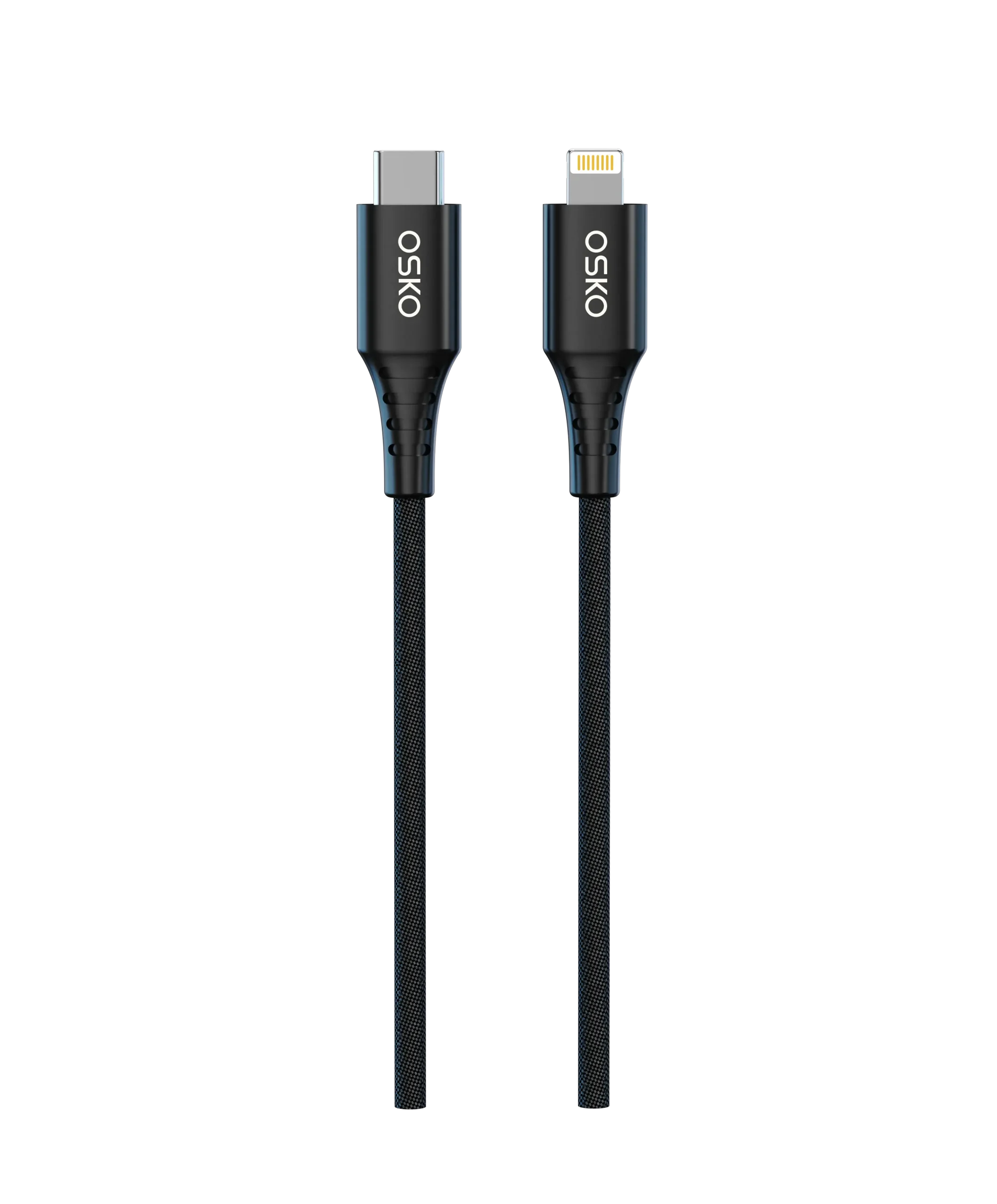
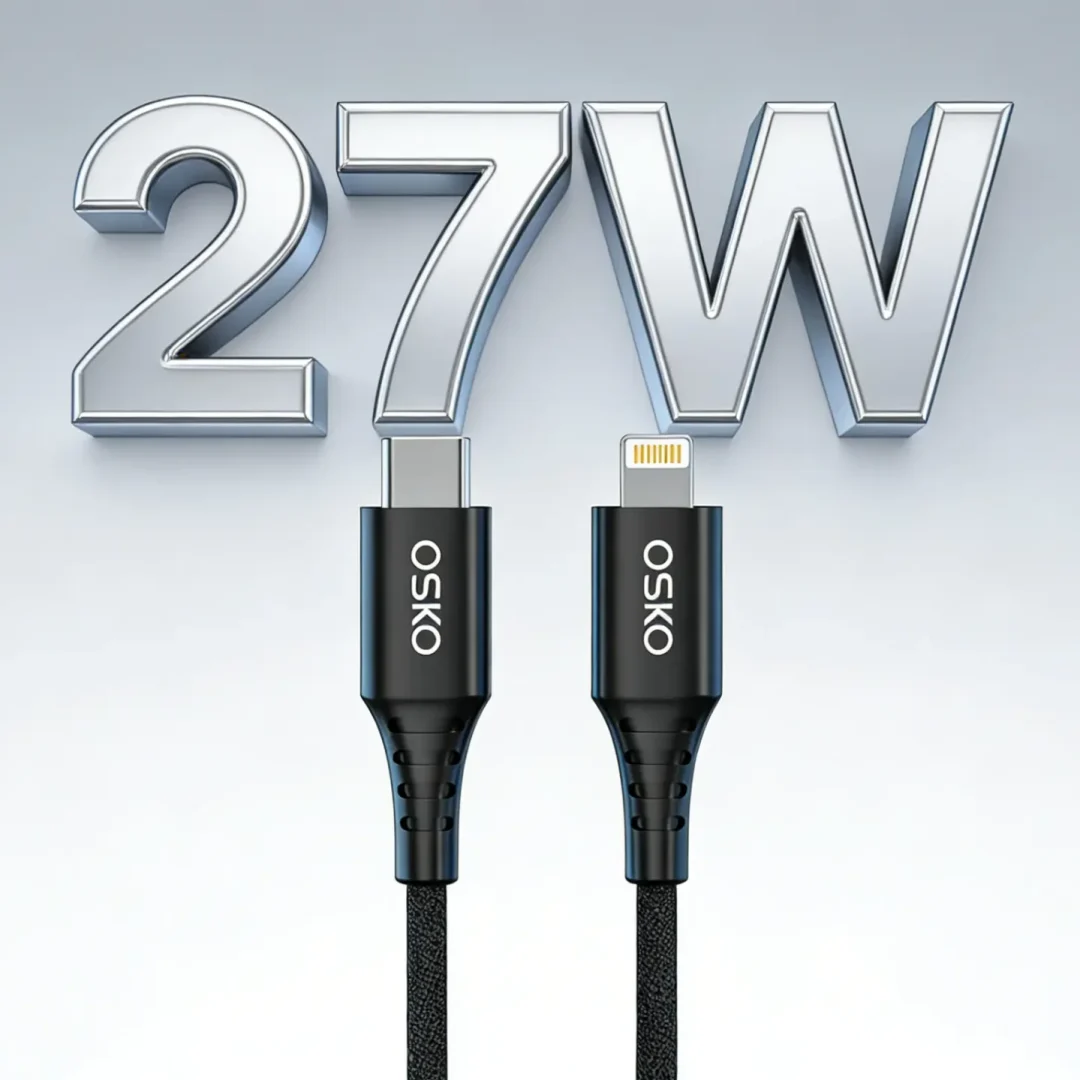
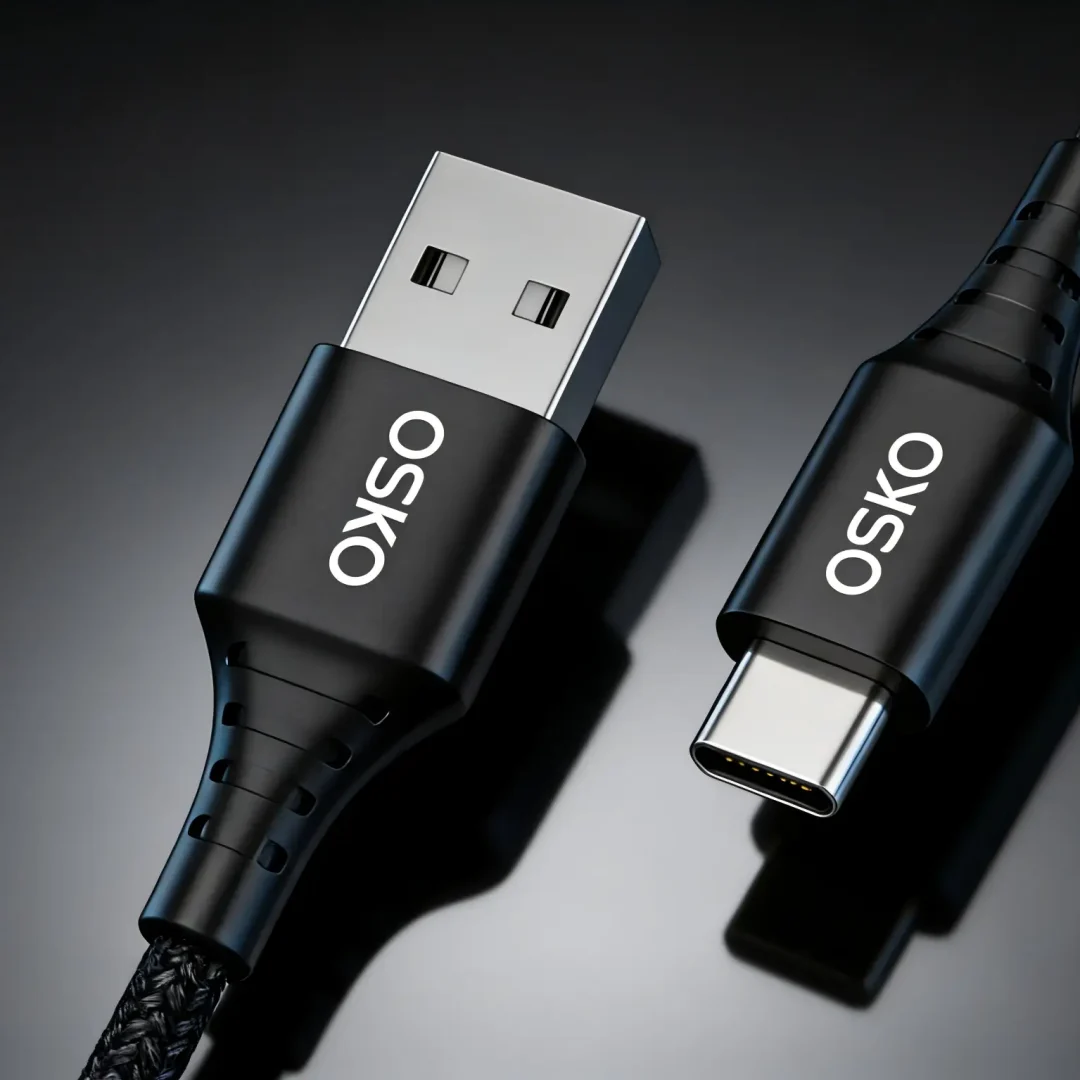
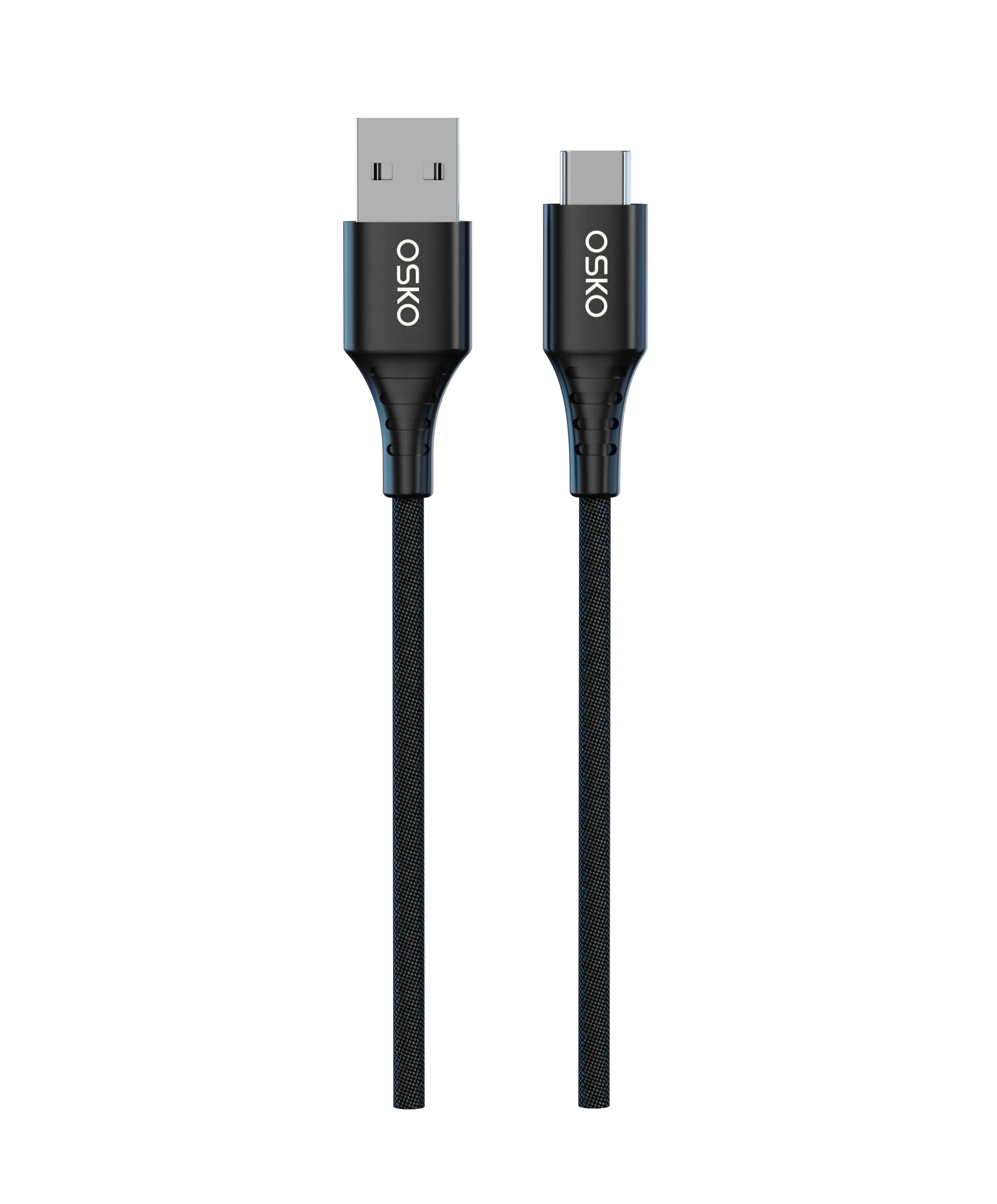
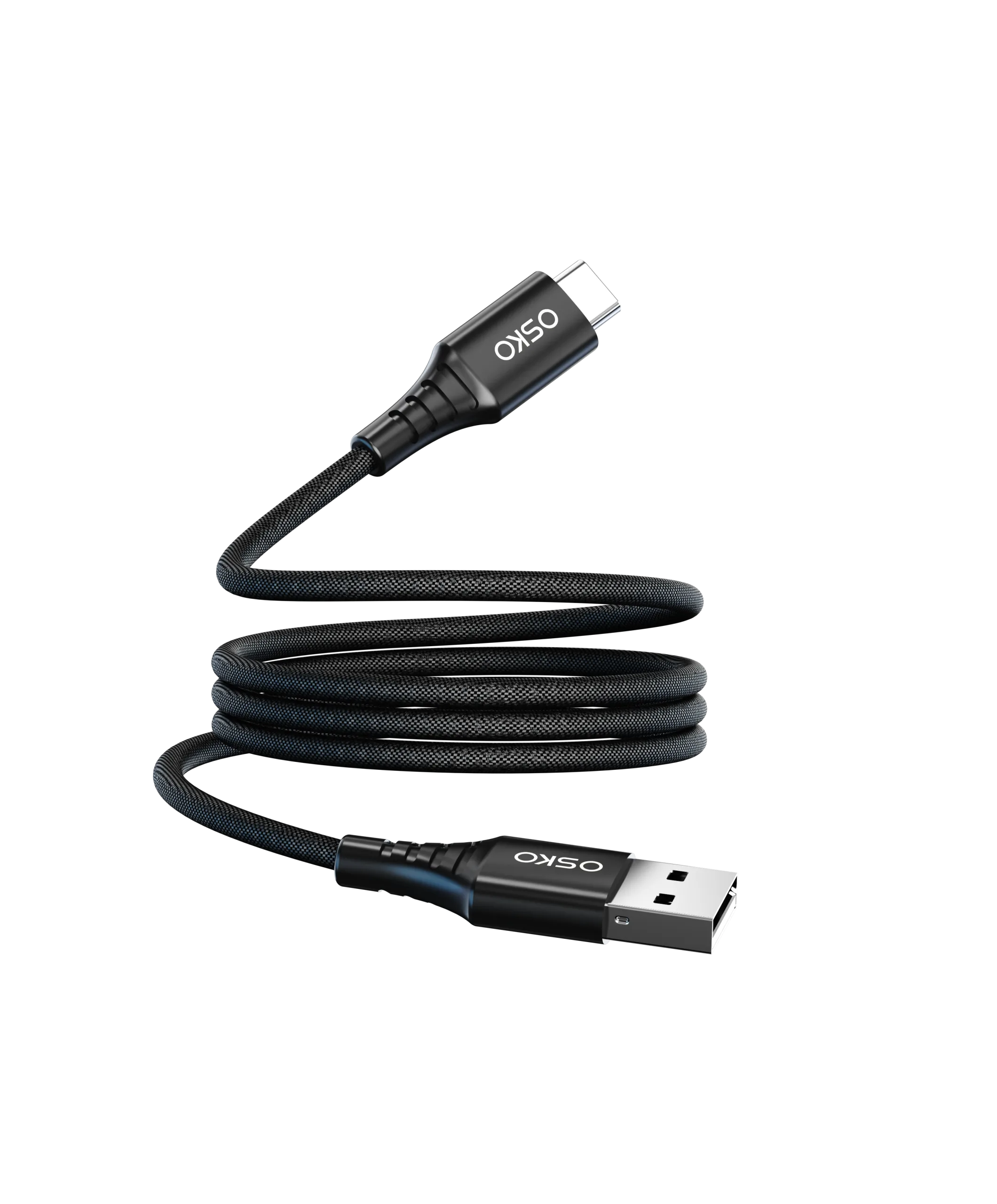
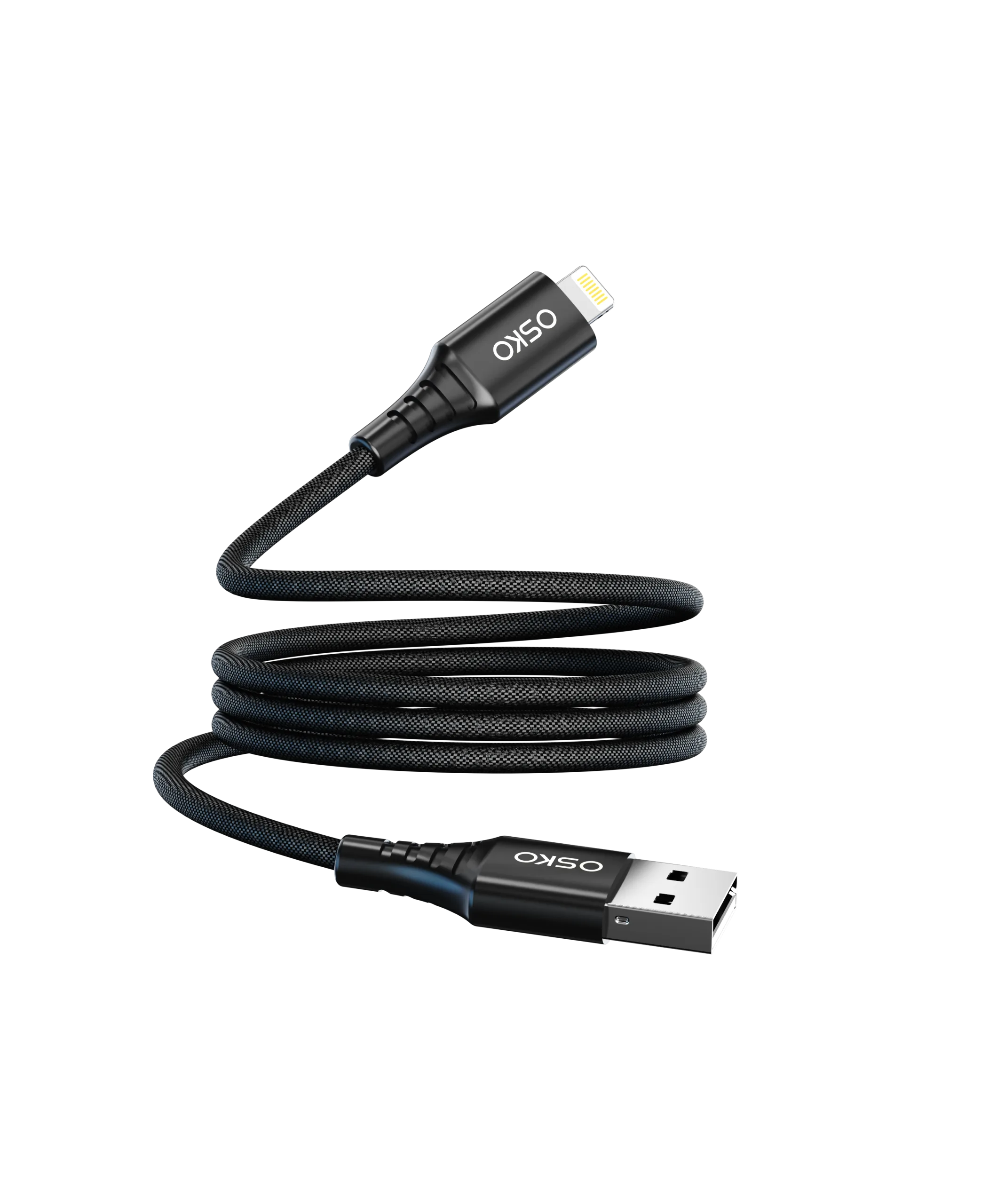
For brands, distributors, retailers, and electronics wholesalers, choosing the right ISO 9001 certified USB cable factory is about more than finding a competitive unit price. A reliable cable supplier must be able to control materials, manufacturing processes, electrical performance, mechanical durability, inspection, documentation, and repeat-order consistency.
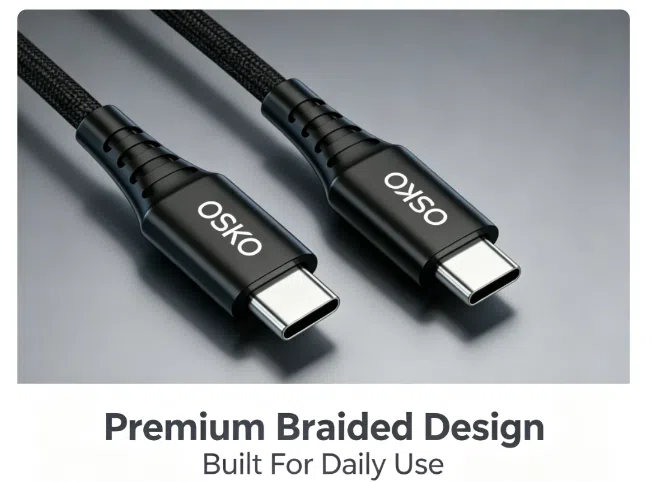
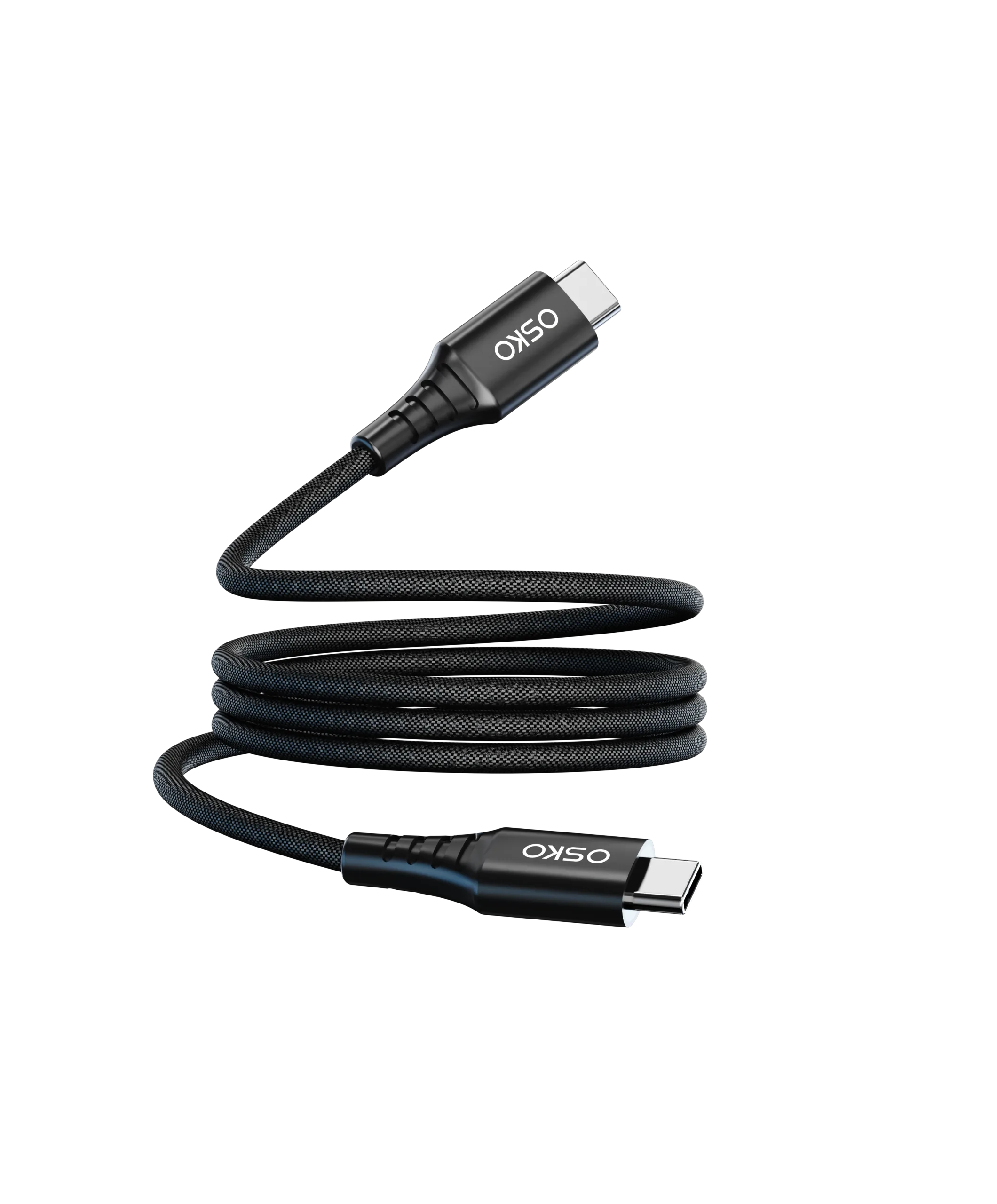
Braided USB cables are increasingly used in premium charging and data-transfer products because their nylon or textile outer construction can provide better abrasion resistance, flexibility, and everyday handling compared with conventional PVC jackets. However, the braided appearance itself does not determine charging speed or data performance. Those characteristics depend on the complete cable design, including conductors, insulation, shielding, connectors, termination, and the supported USB protocol.
For North American and European buyers, the sourcing question is therefore more specific:
Which USB cable manufacturer can combine a controlled quality management system with the electrical and mechanical specifications required for the target market?
That is where an experienced braided USB cable factory can provide value beyond basic contract manufacturing.
OSKO provides OEM and ODM USB cable manufacturing for brands, wholesalers, distributors, and private-label businesses looking for customized USB-C, USB-A, Lightning, charging, and data cable solutions.

What Does ISO 9001 Mean for a USB Cable Manufacturer?
ISO 9001 is a quality management system standard. It provides a framework for organizations to establish, maintain, and continually improve controlled quality processes. ISO itself does not issue company certifications; certification is performed by independent certification bodies. The current standard is ISO 9001:2026, which was published in September 2026 and replaced ISO 9001:2015.
For a USB cable buyer, the important point is that ISO 9001 certification should be evaluated as evidence of a structured quality management system—not as proof that every cable automatically has a particular charging speed, USB certification, or regulatory approval.
A professional ISO 9001 certified USB cable manufacturer should be able to demonstrate controlled processes such as:
Incoming material inspection
Supplier and material management
Production process control
Connector and cable assembly control
Electrical testing
Mechanical testing
Final inspection
Nonconformance management
Corrective and preventive actions
Production traceability
Continuous process improvement
For procurement teams, these systems can reduce variation between production batches and make supplier performance easier to manage.
ISO 9001 vs Product Compliance
| Item | What it addresses |
|---|---|
| ISO 9001 | Quality management system |
| USB-IF certification | Applicable USB product/specification compliance |
| CE | Applicable EU conformity requirements |
| RoHS | Restriction of specified hazardous substances in applicable EEE |
| FCC | Applicable US electromagnetic compatibility requirements |
| MFi | Apple-licensed technologies and accessories within the MFi program |
This distinction matters when comparing USB cable manufacturers in China. A supplier showing an ISO certificate should still provide product-specific technical documentation and compliance evidence where required.
Why Choose a Braided USB Cable Factory?
A braided cable is not automatically electrically superior to a PVC cable. Its main advantages are usually mechanical and user-experience related.
A well-designed braided USB cable can offer:
Better abrasion resistance
Improved resistance to everyday rubbing and bending
A more premium retail appearance
Better handling and flexibility
Reduced tendency to form sharp kinks
More opportunities for custom colors and branding
Stronger differentiation for private-label products
For retail products, these characteristics can be commercially important because consumers often judge cable quality through both performance and physical construction.
For a USB cable wholesale supplier, however, appearance is only one part of the specification.
Procurement teams should also evaluate:
Conductor construction
Conductor cross-sectional area
Cable resistance
Connector quality
Strain-relief design
Shielding where applicable
Data-transfer capability
Power capability
Connector retention
Bend-cycle test conditions
Batch-to-batch consistency
This is why selecting a braided USB-C cable manufacturer should involve engineering specifications rather than simply comparing photographs and unit prices.
Braided USB Cable Construction: What Buyers Should Check
A professional USB cable consists of several functional layers.
Outer Braided Jacket
Nylon or other textile braiding protects the cable from external abrasion and contributes to flexibility and appearance.
The braid density, underlying jacket, construction method, and termination all influence the final mechanical performance.
Conductors
Conductors carry charging current and, depending on the cable design, high-speed data signals.
Copper conductor design should be evaluated based on resistance, current requirements, cable length, temperature rise, and the intended application rather than using AWG as the only quality indicator.
Insulation
The insulation system separates conductors electrically and helps control dielectric performance and mechanical protection.
For high-speed data cables, insulation and geometry can also influence signal integrity.
Shielding
Shielding may be required or beneficial for certain high-speed data designs or electrically noisy environments.
A braided outer jacket should not be confused with an electrical shielding braid. Textile braiding is primarily mechanical protection; conductive shielding is a separate cable construction feature.
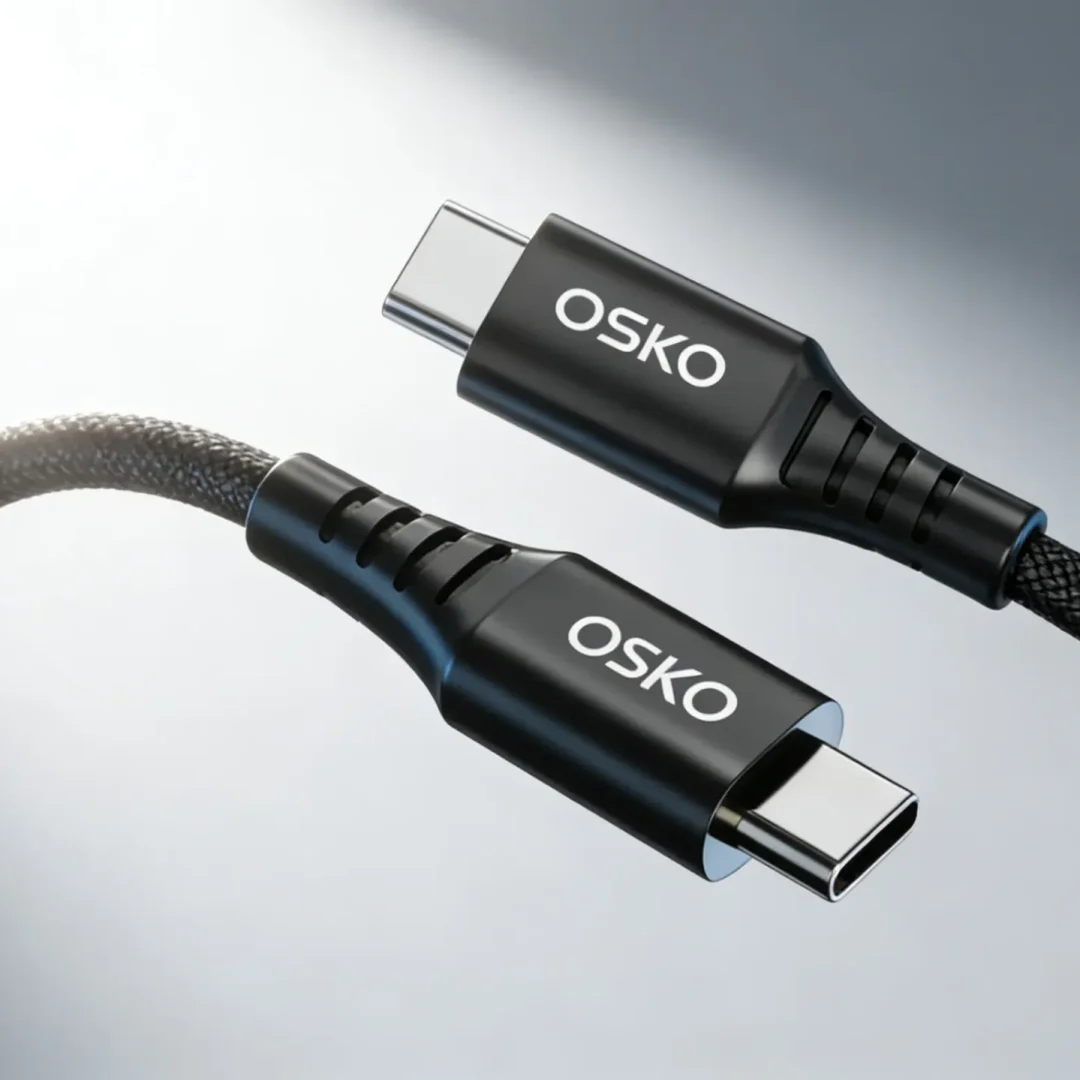
Connectors and Strain Relief
Connector quality affects both electrical contact and mechanical durability.
A professional custom USB cable manufacturer should control:
Connector material
Contact plating
Housing design
Crimping or termination
Overmolding
Strain relief
Pull-force performance
Connector retention
Visual inspection
USB-C Charging Performance: Don’t Buy by Wattage Alone
One of the most common sourcing mistakes is assuming that a braided USB-C cable automatically supports high-wattage charging.
It does not.
Actual charging performance depends on the complete charging system:
Power source + charger protocol + cable + connector + device + battery/thermal conditions
USB-C Power Delivery can support much higher power levels than traditional charging systems, but the cable must be designed for the required electrical specification.
For example, USB PD Extended Power Range can support up to 240W on compatible USB-C systems. A 240W application is not simply a matter of putting a larger conductor inside a braided jacket. The cable, connectors, E-Marker implementation, charger, device, and relevant specifications all need to be compatible.
USB-C Cable Power and E-Marker Considerations
| Application | Typical design consideration | E-Marker |
|---|---|---|
| Up to 60W | Depends on cable current rating and system | May not be required |
| 100W-class USB-C PD | Higher-current cable design | Typically required for 5A operation |
| 240W USB-C PD EPR | 5A high-power EPR design | Required for applicable 5A cable implementations |
The important procurement rule is:
Do not specify a USB-C cable only by “60W,” “100W,” or “240W.”
A professional RFQ should identify:
Power target
Voltage/current requirements
Cable length
Connector-to-connector configuration
Data speed
E-Marker requirements
Applicable USB specification
Testing requirements
Packaging and labeling
This produces much more reliable quotations from a USB-C cable supplier.
USB Cable Wire Gauge: A Procurement Perspective
Wire gauge is relevant, but it should not be treated as a universal shortcut for cable performance.
A buyer may see specifications such as 24 AWG, 22 AWG, or 20 AWG and assume that the lowest AWG automatically means the best cable.
That is not necessarily correct.
Actual performance also depends on:
Conductor material
Conductor construction
Length
Resistance
Number and arrangement of conductors
Insulation
Connector termination
Temperature
Current requirement
Overall cable architecture
For this reason, an experienced USB cable manufacturer China should provide a complete technical specification rather than simply advertising a large conductor size.
OEM & Private Label USB Cable Manufacturing
For brands and distributors, an OEM USB cable manufacturer should be able to support both engineering requirements and branding requirements.
Typical OEM options include:
| Customization | Examples |
|---|---|
| Cable type | USB-A to USB-C, USB-C to USB-C, USB-C to Lightning |
| Length | Short travel cables, 3ft, 6ft, longer custom lengths |
| Cable color | Black, white, custom colors |
| Jacket | Nylon braided or PVC |
| Connector housing | Custom appearance and finish |
| Logo | Printing, engraving or other approved methods |
| Packaging | Retail box, polybag, custom packaging |
| Labeling | Barcode, model number, private label |
| Product configuration | Charging, data, automotive or application-specific |
For a private label USB cable supplier, packaging and product consistency are often just as important as the cable itself.
A strong OEM workflow should move through:
Specification → Sample → Testing → Approval → Mass Production → QC → Packaging → Shipment
This gives procurement teams a clear approval path before committing to a large production order.
MOQ and Bulk USB Cable Sourcing
MOQ should be evaluated against customization requirements.
A standard stock cable can normally have a different MOQ from a fully customized OEM product.
For example:
| Project Type | Typical Procurement Logic |
|---|---|
| Stock cable | Lower entry quantity |
| Custom cable color | Higher MOQ |
| Custom connector/housing | Higher development requirement |
| Custom logo | MOQ depends on process |
| Private-label packaging | Packaging MOQ applies |
| Fully customized OEM cable | Higher production MOQ |
For fully customized OSKO OEM cable projects, the typical MOQ is 5,000 units, depending on the product and customization requirements.
When requesting a quotation, buyers should provide:
- Cable type
- Length
- Quantity
- Charging requirement
- Data-transfer requirement
- Cable color
- Logo requirements
- Packaging requirements
- Target market
- Required compliance documentation
This allows a USB cable wholesale supplier to prepare a more accurate quotation.
Quality Control for Bulk USB Cable Orders
A low unit price does not necessarily produce a low total procurement cost.
For distributors and retailers, defective products can create:
Returns
Replacement costs
Negative reviews
Warranty claims
Customer-service workload
Lost retail shelf space
Repeated freight costs
A professional USB cable factory for wholesale should therefore have quality controls at multiple stages.
Incoming Material Inspection
Check incoming:
Copper conductors
Cable jacket materials
Connectors
ICs or E-Markers where applicable
Packaging components
In-Process Inspection
Monitor:
Cutting length
Stripping
Soldering or termination
Connector assembly
Overmolding
Braiding
Labeling
Electrical Testing
Depending on the product:
Continuity
Resistance
Charging performance
Data-transfer performance
Short-circuit testing
Relevant protocol or signal testing
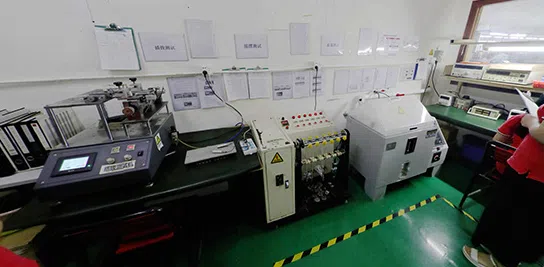
Mechanical Testing
Potential tests include:
Bend testing
Pull testing
Connector retention
Strain-relief testing
Abrasion testing
Test values should always be linked to defined test methods and conditions. A statement such as “30,000 bends tested” is much more useful when the buyer knows how the test was conducted.
North American and European Market Requirements
Different markets can require different documentation and product strategies.
United States
US buyers commonly search for:
USB cable manufacturer
USB-C cable supplier
bulk USB-C charging cables
braided charging cable wholesale
private label USB cables
USB cable supplier for retailers
For US distribution, buyers should identify the applicable product and electromagnetic compliance requirements rather than assuming that every passive USB cable requires the same FCC pathway.
Germany
German B2B buyers often place strong emphasis on:
Technical documentation
Product consistency
Traceability
Material information
RoHS
CE where applicable
Reliable delivery
Quality management
Long-term supplier relationships
Search intent may include phrases such as USB Kabel Hersteller China, USB-C Kabel Großhandel, and English-language searches for USB-C cable manufacturer Germany suppliers.
Australia
Australian buyers commonly focus on:
Product reliability
Charging compatibility
Retail packaging
Wholesale pricing
Import documentation
Private labeling
Durable braided construction
Typical commercial intent includes USB-C cable wholesale Australia, braided charging cable supplier, and custom USB cable manufacturer.
Netherlands and European Distribution
For Dutch and broader European distributors, procurement considerations can include:
CE requirements where applicable
RoHS compliance
Packaging requirements
Product traceability
Consistent supply
Private-label customization
Typical search intent includes USB-C kabel groothandel, USB-C cable supplier Europe, and USB cable manufacturer China.
The common requirement across these markets is not simply certification. Buyers need a supplier that can connect product specifications, production control, documentation, and repeat-order consistency.
OEM Engineering Case Study: Private-Label Braided USB-C Cable
Buyer Requirement
A representative North American electronics distributor planned to launch a private-label braided USB-C cable range for online retail and regional distribution.
The buyer wanted:
Premium braided construction
3ft and 6ft versions
Consistent charging performance
Retail-ready packaging
Private-label branding
Repeat-order consistency
Procurement Challenges
The buyer’s previous sourcing process focused heavily on unit price. During repeat production, however, variations in connector assembly, cable construction, and packaging created quality-control problems.
The procurement team therefore changed its supplier evaluation criteria.
Instead of asking only:
“What is your price?”
the new RFQ focused on:
Cable construction
Power specification
Data specification
Connector design
Material control
Testing process
Production QC
Packaging
Documentation
Repeat-order capability
OSKO Manufacturing Approach
OSKO structured the project around a controlled specification before mass production.
The process included:
Technical specification → sample production → sample evaluation → production approval → incoming material inspection → in-process QC → finished-product inspection → packaging inspection
The braided jacket was treated as one component of the overall product rather than the sole indicator of quality.
This approach gave the buyer a clearer way to compare suppliers and establish a repeatable product specification for future purchase orders.
Procurement Lesson
For a custom braided USB-C cable manufacturer, the most important question is not whether the factory can produce one acceptable sample.
The more important question is:
Can the factory reproduce the approved specification consistently across repeated bulk orders?
That is where a structured quality management system, documented production process, and product-specific QC become commercially important.
How to Evaluate an ISO 9001 Certified USB Cable Factory
Before placing a bulk order, buyers should request the following information.
Factory Qualification
Ask for:
ISO 9001 certificate
Certificate scope
Certification body
Certificate validity
Factory address
Manufacturing capability
Production capacity
Because ISO 9001 is a management-system certification, buyers should verify that the certificate actually applies to the relevant organization and scope. ISO recommends using the full certification reference and notes that accredited certification bodies provide independent confirmation of certification-body competence.
Product Qualification
Ask for:
Product specification
Cable construction
Connector specification
Power rating
Data-transfer specification
E-Marker information where applicable
Applicable test reports
Material information
Compliance documentation
Commercial Qualification
Confirm:
MOQ
Sample policy
Lead time
Payment terms
Packaging MOQ
Shipping terms
Warranty
Replacement policy
Production inspection procedure
This three-level evaluation—factory, product, and commercial qualification—is more useful than relying on an ISO logo alone.
Common Mistakes When Buying Braided USB Cables Wholesale
Choosing by Appearance
A premium-looking braid does not prove electrical performance.
Choosing by AWG Alone
AWG is only one part of conductor design.
Assuming 240W Means Every USB-C Cable
240W capability requires an appropriate USB PD EPR system and compatible cable design.
Treating ISO 9001 as a Product Certification
ISO 9001 evaluates the quality management system, not the individual charging capability of every cable.
Asking for “All Certificates”
A better approach is to identify the actual target market, product type, electrical specification, and applicable requirements first.
Comparing Only Unit Price
For wholesale buyers, the total procurement cost also includes defects, returns, freight, packaging, warranty, and supplier-management time.
FAQ: ISO 9001 Certified USB Cable Factory
Is ISO 9001 certification important when buying USB cables wholesale?
Yes, it can be a useful supplier-qualification signal because ISO 9001 provides a structured quality management framework. However, buyers should still verify product-specific testing, specifications, and applicable compliance documentation.
What is the current ISO 9001 standard in 2026?
ISO 9001:2026 is now the current edition. It was published in September 2026 and replaced ISO 9001:2015. Organizations certified to the previous edition should work with their certification body on the transition process.
Does ISO 9001 mean a USB cable is CE certified?
No. ISO 9001 concerns the manufacturer’s quality management system. CE marking relates to applicable EU conformity requirements for products within the scope of relevant EU legislation. The two should not be treated as interchangeable.
Can braided USB cables support 100W or 240W charging?
They can, when the complete cable design is engineered and specified for the required USB Power Delivery system. The braid itself does not create higher charging power.
Does every 100W USB-C cable need an E-Marker?
A USB-C cable designed for 5A operation generally requires appropriate electronic marking. Buyers should specify the intended current and USB PD requirements rather than selecting a cable based only on the advertised wattage.
What is the difference between a USB cable factory and a trading company?
A factory directly manages manufacturing processes, equipment, production QC, and assembly. A trading company may outsource production to one or more factories. Buyers looking for long-term OEM programs should verify who actually manufactures the product.
Can I order private-label USB cables?
Yes. Private-label programs can include cable colors, lengths, logo branding, packaging, labeling, and product configuration depending on the project.
What is the MOQ for custom USB cables?
MOQ depends on the degree of customization. Fully customized OEM projects normally require a higher MOQ than stock products. For OSKO’s fully customized OEM cable projects, the typical MOQ is 5,000 units.
Can a USB cable factory provide samples before bulk production?
Yes. A professional OEM supplier should normally establish a product specification and sample-approval process before mass production.
What cable length sells well in the US and Europe?
3ft and 6ft are common choices for everyday charging and data use. Shorter cables can be useful for travel and power banks, while longer versions can serve desks, workstations, and other applications.
How should I compare two USB cable suppliers?
Compare more than price. Evaluate manufacturing capability, materials, product specifications, testing, quality control, documentation, MOQ, lead time, packaging, warranty, and repeat-order consistency.
Is a nylon braided cable better than PVC?
Nylon braiding can provide advantages in abrasion resistance, flexibility, handling, and appearance. It does not automatically mean superior electrical performance. The internal construction and connector design remain critical.
Buyer Checklist for Bulk USB Cable Procurement
Before placing a purchase order, confirm:
ISO 9001 certificate and scope
Factory identity and manufacturing capability
Exact cable type
Cable length
Charging requirement
Data-transfer requirement
Connector configuration
Conductor specification
E-Marker requirement
Jacket material
Strain-relief construction
Mechanical test requirements
Electrical test requirements
Applicable market compliance
Packaging specification
MOQ
Sample approval
Lead time
Warranty terms
Shipping arrangement
A detailed RFQ helps prevent the common problem of receiving several quotations that appear comparable but actually describe different products.
Why Work With OSKO for OEM USB Cable Projects?
OSKO is a professional USB cable manufacturer specializing in OEM and ODM charging cable solutions for brands, distributors, wholesalers, and private-label businesses.
Our product development and manufacturing capabilities cover:
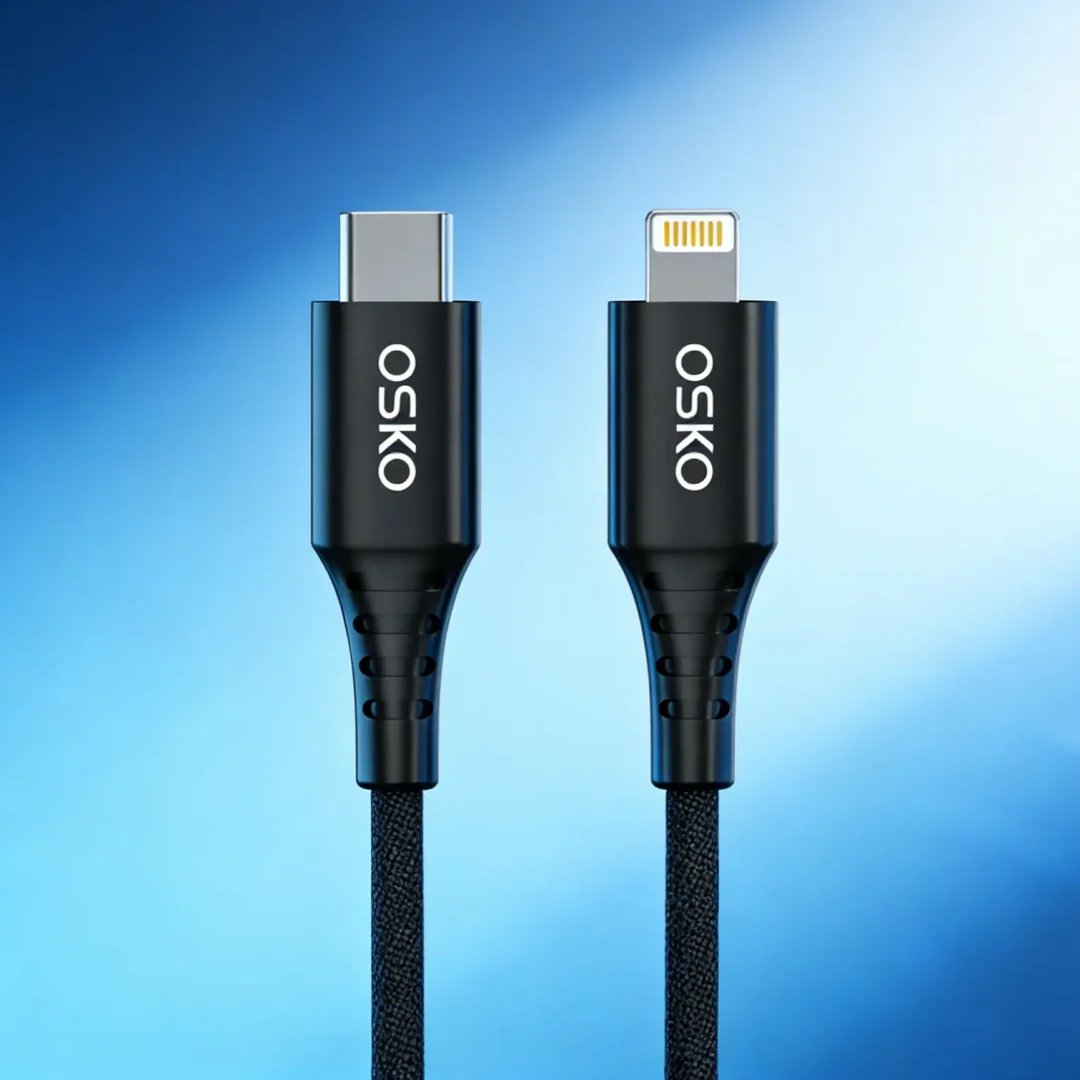
USB-C to Lightning cables
Charging and data cables
Braided nylon cable constructions
Custom cable lengths
Custom colors
Logo branding
Private-label packaging
OEM and ODM development
For buyers sourcing from China, the objective is not simply to find the cheapest USB cable manufacturer China.
The objective is to establish a supplier relationship where specifications are clearly defined, samples can be evaluated, production is controlled, quality is inspected, and repeat orders can follow the same approved standard.
For bulk and OEM projects, buyers can submit the required cable type, length, quantity, charging specification, data requirement, branding, and packaging requirements to receive a project-specific quotation.
Summary
Choosing an ISO 9001 certified USB cable factory can provide an important foundation for supplier qualification, but certification should be only one part of the purchasing decision.
For North American and European buyers, a complete evaluation should combine:
Quality management + product engineering + testing + compliance documentation + OEM capability + production consistency
A braided USB cable can provide a durable and premium physical construction, but charging performance depends on the complete electrical design. Similarly, ISO 9001 demonstrates a quality management framework but does not by itself certify a cable’s wattage, data speed, or market-specific compliance.
For distributors, retailers, OEM brands, and wholesalers, the best sourcing process begins with a clear technical specification and ends with controlled mass production.
If you are looking for a braided USB cable factory, USB cable OEM manufacturer, or private label USB-C cable supplier for North America or Europe, OSKO can support sample development, customization, bulk production, and OEM/ODM cable programs.