















Introduction
When evaluating USB-C cable braided vs silicone, most buyers initially focus on appearance or flexibility. However, in OEM engineering and US/EU retail markets, the real difference lies in material structure, mechanical durability, thermal behavior, and long-term charging stability.
Both braided and silicone USB-C cables serve different market needs. Braided cables prioritize durability and abrasion resistance, while silicone cables prioritize softness, flexibility, and lightweight handling.
Understanding the technical differences between these two materials helps wholesalers, Amazon sellers, and OEM buyers select the right product strategy for different consumer segments.
OSKO evaluates both materials from an engineering performance perspective rather than aesthetic preference.
Material Science & Mechanical Properties
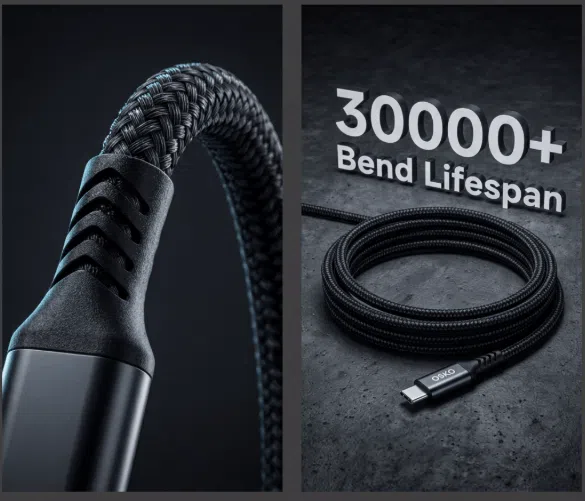
Braided USB-C Cable Structure
Braided cables typically use:
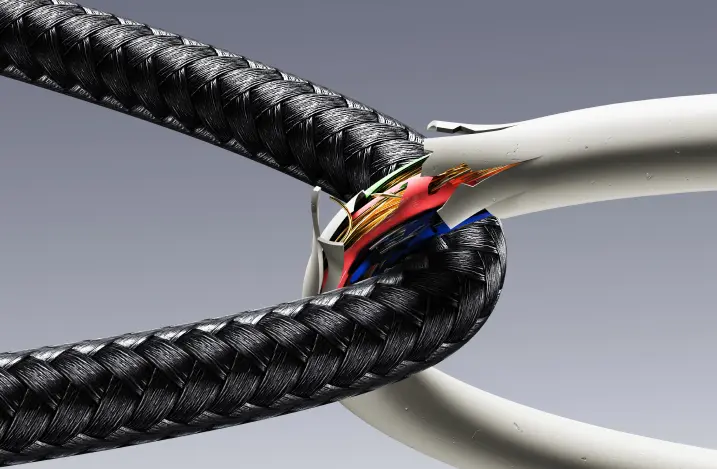
Nylon or PET woven outer layer
Multi-strand copper internal conductors
Reinforced strain relief at connector joints
Engineering characteristics:
High tensile strength
Excellent abrasion resistance
Strong anti-tangling behavior
Better long-term structural stability
Braided design is widely used in heavy-duty USB-C cable OEM manufacturing.
Silicone USB-C Cable Structure
Silicone cables use:
Soft silicone outer jacket
Flexible internal copper wiring
Smooth surface coating for tactile comfort
Engineering characteristics:
Extremely high flexibility
Smooth and soft touch feel
Lightweight and portable
Lower friction during bending
Silicone is increasingly popular in modern lifestyle electronics markets.
Thermal and Electrical Behavior
Both materials must support USB-PD charging:
Braided cables dissipate heat more effectively due to structure spacing
Silicone cables retain slightly more heat but offer better flexibility under movement
In high-power applications (60W–240W), internal conductor design matters more than outer material.
Durability and Lifecycle Performance
Braided cables generally outperform silicone in:
Abrasion resistance
Pull strength
Long-term bending cycles
Silicone cables perform better in:
Flexibility under extreme bending
Lightweight travel usage
Daily casual charging scenarios

Case Study
US Retail Product Line Segmentation Project
Customer Background
A US Amazon seller wanted to launch two product lines: one targeting durability-focused users and another targeting lifestyle-oriented consumers. They needed a clear differentiation between braided and silicone USB-C cables.
Engineering Problems Identified
Initial issues included:
Customer confusion between cable types
High return rates for “too stiff” braided cables
Silicone cables showing faster wear in outdoor usage
Lack of clear performance segmentation
Inconsistent product positioning across listings
OSKO Engineering Solution
OSKO implemented a dual-material strategy:
Nylon braided cables for heavy-duty and OEM USB cables applications
Silicone cables for lifestyle-focused retail USB cables segments
Defined wattage segmentation (60W / 100W / 240W compatibility)
Reinforced strain relief for braided versions
Optimized softness and anti-kink structure for silicone versions
Compliance alignment included:
USB-IF compliant Type C cable manufacturer standards
ISO9001 certified braided USB cable factory quality system
FCC approved nylon braided USB C cable supplier testing
RoHS material safety validation
Result
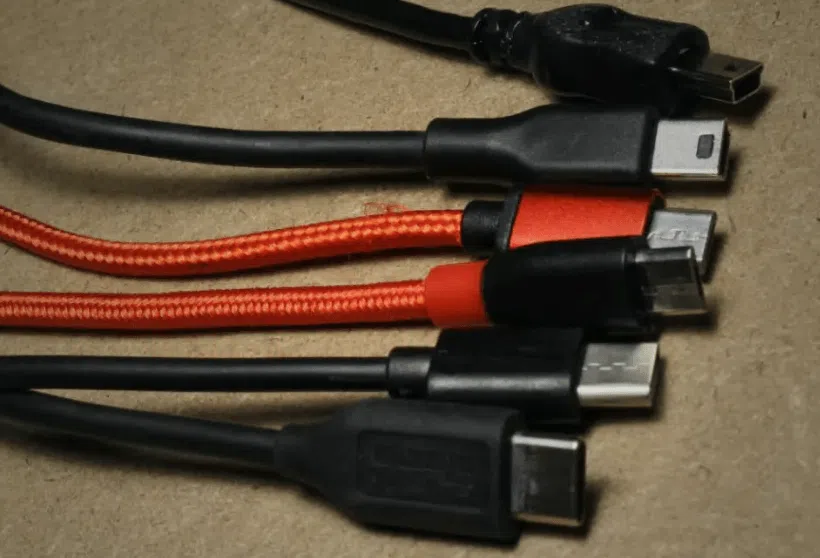
Clear product positioning improved conversion rates
Reduced return rates due to correct user matching
Increased customer satisfaction across both segments
Better Amazon listing clarity and SEO performance
Expanded wholesale distribution channels
Selection Guide
Braided USB-C Cable vs Silicone Cable Comparison
1. Durability Performance
Braided: High resistance to wear, tearing, and bending fatigue
Silicone: Moderate durability, better for light daily use
2. Flexibility
Braided: Slightly stiffer, structured feel
Silicone: Extremely soft and flexible
3. Tangle Resistance
Braided: Naturally anti-tangle due to woven structure
Silicone: Smooth surface reduces friction but can coil easily
4. Heat Resistance
Braided: Better heat dissipation
Silicone: Stable but retains more heat under high load
5. Market Positioning
Braided cables → premium, industrial, OEM wholesale
Silicone cables → consumer lifestyle, travel, retail packaging
Comparison Table
| Feature | Braided Cable | Silicone Cable |
|---|---|---|
| Durability | High | Medium |
| Flexibility | Medium | Very High |
| Heat Dissipation | Strong | Moderate |
| Weight | Heavier | Lighter |
| Market Use | OEM / Wholesale | Retail / Lifestyle |
Application Scenarios
Both cable types are widely used in:
OEM USB cables for branded manufacturing
ODM USB cables for customized engineering projects
Wholesale USB cables for distribution networks
Desktop charging cables for office environments
Travel USB cables for portable charging kits
In-car charging cables for automotive systems
Home USB cables for multi-device households
FAQ
Which cable lasts longer, braided or silicone?
Braided cables generally last longer due to higher mechanical resistance.
Which cable is more flexible?
Silicone cables are significantly more flexible.
Are braided cables better for fast charging?
Performance depends on internal conductors, but braided cables handle heat better.
Do silicone cables break easily?
They are less resistant to abrasion compared to braided cables.
Which is better for travel?
Silicone cables are lighter and easier to pack.
Summar
In the comparison of USB-C cable braided vs silicone, each material serves a different engineering and market purpose.
Braided cables prioritize durability, structural strength, and long-term reliability, making them ideal for OEM and wholesale markets. Silicone cables prioritize flexibility, softness, and lightweight usability, making them suitable for lifestyle and travel-focused consumers.
OSKO designs both cable types based on application-specific engineering requirements to ensure optimal performance across US and European markets.
Material choice is not about which is better overall, but which is better for the intended use case.
Contact Information
OSKO provides OEM/ODM cable solutions including:
Nylon braided USB-C cables (60W–240W)
Silicone flexible USB-C cables
Private label retail packaging
Amazon-ready product development
Full certification and testing support
OSKO engineering team delivers application-specific cable solutions for global markets.
