
Introduction
Have you ever plugged your MacBook or iPhone into a charger and wondered why charging feels slower than expected?
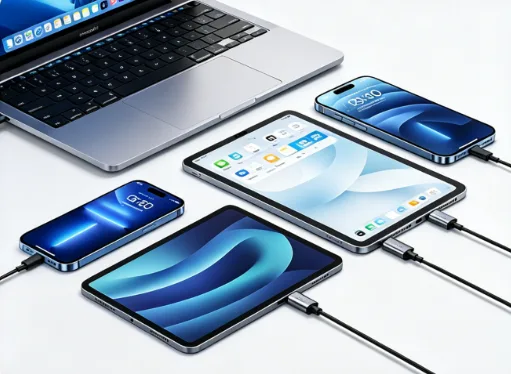
Many Apple users assume that all USB-C cables perform the same. In reality, there are significant differences in charging capabilities, data transfer speeds, durability, and compatibility.
As Apple continues transitioning its ecosystem to USB-C, consumers and businesses alike need to understand how to select the right cable. Choosing the wrong cable can result in:
Reduced charging speeds
Limited data transfer performance
Excessive heat generation
Poor durability
Shorter cable lifespan
Whether you are purchasing cables for personal use, retail distribution, or OEM projects, understanding USB-C technology is essential.
This guide explains everything you need to know about choosing a USB-C to USB-C cable for Apple devices, including technical specifications, charging performance, and sourcing considerations.

Applicable Scenarios
Different Apple devices require different cable capabilities.
Understanding your usage scenario helps ensure optimal performance.
MacBook Charging
Modern MacBooks rely heavily on USB-C Power Delivery.
Common devices include:
MacBook Air
MacBook Pro 14-inch
MacBook Pro 16-inch
These devices may require:
60W charging
100W charging
140W charging
Using an underpowered cable can significantly reduce charging efficiency.
iPhone Fast Charging
Recent iPhone models utilize USB-C connectivity.
Examples include:
iPhone 15 Series
iPhone 16 Series
Future USB-C iPhone models
A high-quality USB-C cable supports:
Fast charging
Stable power delivery
Reliable daily use
iPad Applications
Apple tablets frequently use USB-C for both charging and data transfer.
Professional users often connect:
External storage
Monitors
Docking stations
Charging adapters
Cable quality directly affects performance.
Office and Desktop Workstations
Many professionals use a single USB-C cable for:
Charging
Data transfer
Display connectivity
A premium cable reduces clutter while improving productivity.
Travel and Mobile Work
Frequent travelers require cables that can withstand:
Repeated packing
Frequent unplugging
Portable charging
Durability becomes especially important in these situations.
Understanding Apple USB-C Charging
Apple devices support USB Power Delivery (USB PD), which dynamically negotiates charging power.
This technology enables:
Faster charging
Better efficiency
Lower heat generation
Enhanced battery protection
However, charging speed depends on more than just the charger.
The cable also plays a critical role.
Apple Device Charging Requirements
| Device | Typical Charging Power |
|---|---|
| iPhone 15 | Up to 27W |
| iPhone 16 | Up to 30W |
| iPad Air | Up to 30W |
| iPad Pro | Up to 45W |
| MacBook Air | 30W–70W |
| MacBook Pro | 96W–140W |
Selecting the correct cable ensures your device can access its maximum charging capability.
Why Cable Quality Matters
Not all USB-C cables are designed for high-power charging.
The internal construction determines performance.
Copper Conductors
Premium cables use:
Oxygen-free copper
Multi-strand conductor designs
Low-resistance pathways
Benefits include:
Faster charging
Lower voltage drop
Reduced heat generation
Cable Gauge
Conductor thickness directly impacts charging efficiency.
| AWG | Performance |
|---|---|
| 28AWG | Basic charging |
| 24AWG | Fast charging |
| 22AWG | Laptop charging |
| 20AWG | 240W charging |
Lower AWG numbers indicate thicker conductors and better current carrying capability.
Shielding Design
Quality USB-C cables typically include:
Aluminum foil shielding
Braided shielding
Ground protection layers
These features help ensure reliable data transfer while minimizing interference.

USB-C Charging Power Levels
Understanding cable power ratings helps prevent compatibility issues.
60W USB-C Cables
Suitable for:
iPhone
iPad
MacBook Air
Advantages:
Lightweight
Cost-effective
Excellent for everyday use
100W USB-C Cables
Suitable for:
MacBook Pro
Professional workstations
Docking stations
These cables commonly include E-Marker technology.
140W USB-C Cables
Designed for:
High-performance Apple laptops
Advanced USB-C chargers
These cables support Apple’s higher-wattage charging ecosystem.
240W USB-C PD 3.1 Cables
The latest USB Power Delivery standard supports:
Future-proof charging
High-performance devices
Professional applications
Many businesses sourcing premium accessories now prioritize 240W compatibility.
E-Marker Technology Explained
One of the most important features in high-power USB-C cables is the E-Marker chip.
What Does an E-Marker Do?
The chip communicates with:
Chargers
Laptops
Smartphones
It tells devices:
Maximum power rating
Current capability
Supported specifications
Without an E-Marker, many devices will limit charging performance.
Why Apple Users Should Care
For MacBook charging, E-Marker technology helps ensure:
Safe charging
Stable power delivery
Full charging capability
This becomes increasingly important above 60W.
Braided vs Standard USB-C Cables
Material selection affects both durability and user experience.
Standard PVC Cables
Advantages:
Affordable
Flexible
Lightweight
Disadvantages:
Less resistant to wear
More prone to damage
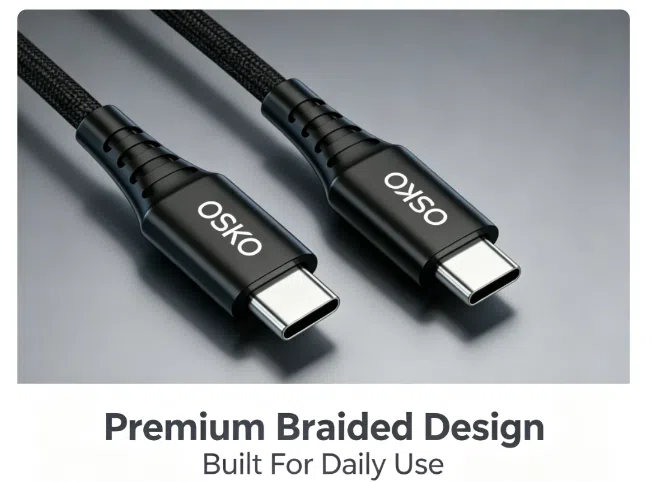
Nylon Braided USB-C Cables
Advantages:
Enhanced durability
Improved abrasion resistance
Premium appearance
Better tangle resistance
Many Apple users prefer braided cables because they better withstand daily use.
Comparison Table
| Feature | PVC Cable | Nylon Braided Cable |
|---|---|---|
| Durability | Standard | High |
| Appearance | Basic | Premium |
| Tangle Resistance | Moderate | Excellent |
| Lifespan | Moderate | Long |
| Retail Value | Standard | Premium |
Data Transfer Performance
USB-C cables vary significantly in data capability.
USB 2.0
Transfer speed:
Up to 480Mbps
Suitable for:
Basic charging
Simple file transfers
USB 3.2
Transfer speed:
Up to 20Gbps
Suitable for:
External SSDs
Large media files
Professional workflows
Thunderbolt Compatible Cables
Transfer speed:
Up to 40Gbps
Ideal for:
Video editing
External displays
Professional content creation
MacBook users frequently benefit from Thunderbolt-capable cables.
Case Study: Apple Accessory Retail Brand
Customer Background
A European electronics brand wanted to launch a premium Apple-compatible charging cable series.
The target audience included:
MacBook users
iPhone users
Business professionals
Challenges
Their previous supplier experienced:
Slow charging complaints
Connector failures
High return rates
The company required a more reliable solution.
OSKO Solution
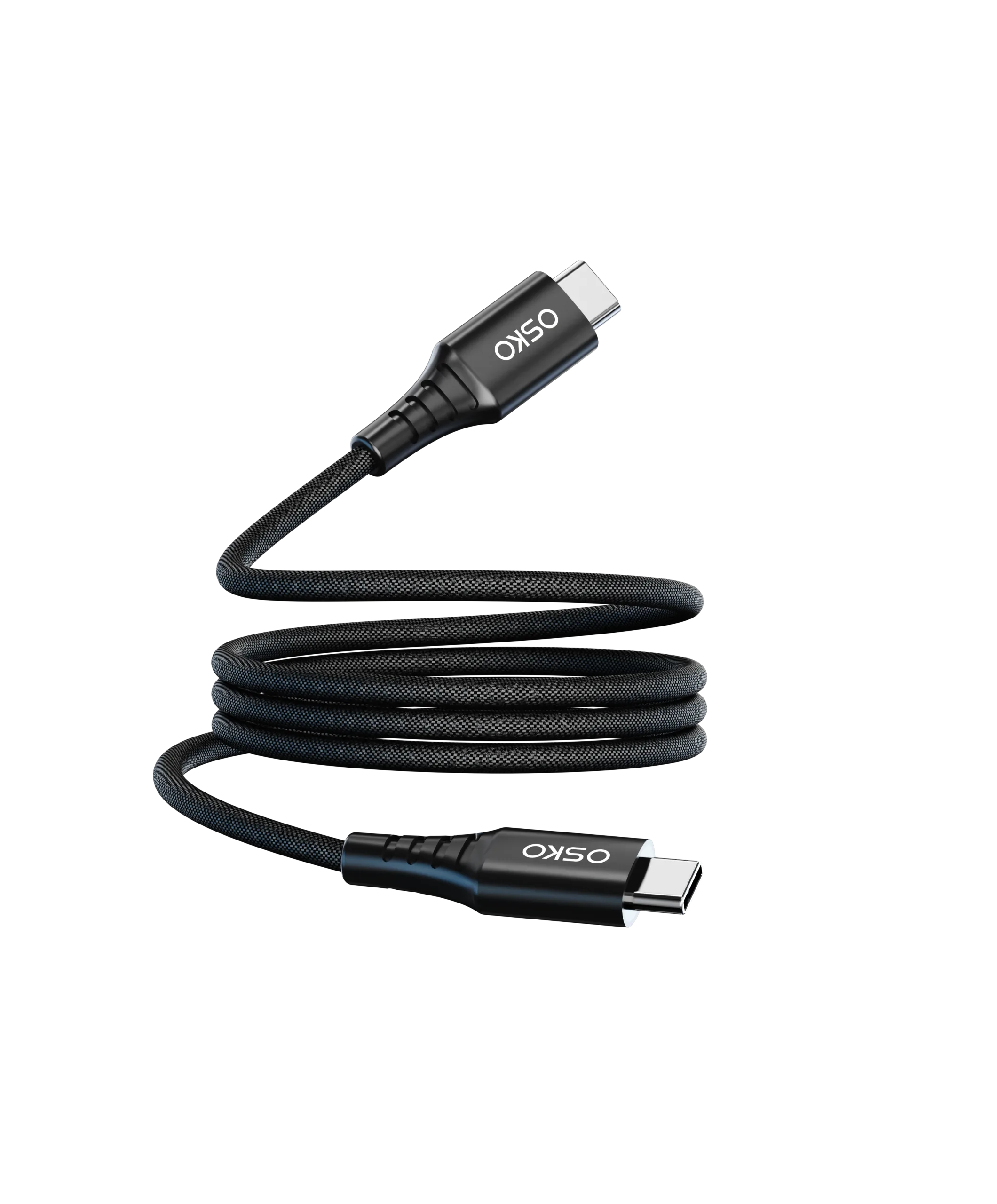
OSKO developed a premium cable series featuring:
USB-C PD support
E-Marker technology
Oxygen-free copper conductors
Nylon braided construction
Custom retail packaging
Results
The new product line achieved:
Better charging performance
Lower warranty claims
Higher customer satisfaction
Improved brand reputation
Purchase Recommendations
When choosing a USB-C to USB-C cable for Apple devices, focus on quality rather than price alone.
| Evaluation Factor | Importance |
|---|---|
| Power Rating | High |
| E-Marker Integration | High |
| Conductor Quality | High |
| Data Transfer Speed | High |
| Braided Construction | Medium |
| Certification Compliance | High |
| Packaging & Branding | Medium |
Request custom Apple-compatible charging cable solutions.
FAQ
Can I use any USB-C cable with a MacBook?
Technically yes, but charging speed and performance may vary significantly depending on cable specifications.
Do I need a 240W cable for an iPhone?
No. Most iPhones require far less power, but a 240W cable remains fully compatible and offers future-proof flexibility.
Are braided USB-C cables better?
For most users, yes. They provide greater durability and longer service life.
What is the benefit of an E-Marker chip?
It enables proper communication between devices and chargers, ensuring safe and efficient charging.
Which cable is best for both charging and data transfer?
A high-quality USB-C cable supporting USB 3.2 or Thunderbolt functionality offers the best balance of charging and transfer performance.
Summary
As Apple continues expanding its USB-C ecosystem, selecting the right USB-C to USB-C cable has become more important than ever. A premium cable delivers faster charging, more reliable data transfer, improved durability, and better long-term value.
For consumers, the key considerations include power rating, E-Marker support, conductor quality, and cable construction. For distributors, retailers, and private-label brands, sourcing from an experienced OEM manufacturer ensures consistent quality and compliance with international standards.
Whether you’re charging an iPhone, powering a MacBook Pro, or transferring large files between devices, a well-engineered USB-C cable helps maximize performance while protecting your investment.
Request OEM USB-C to USB-C Cable Solutions
OSKO Offers
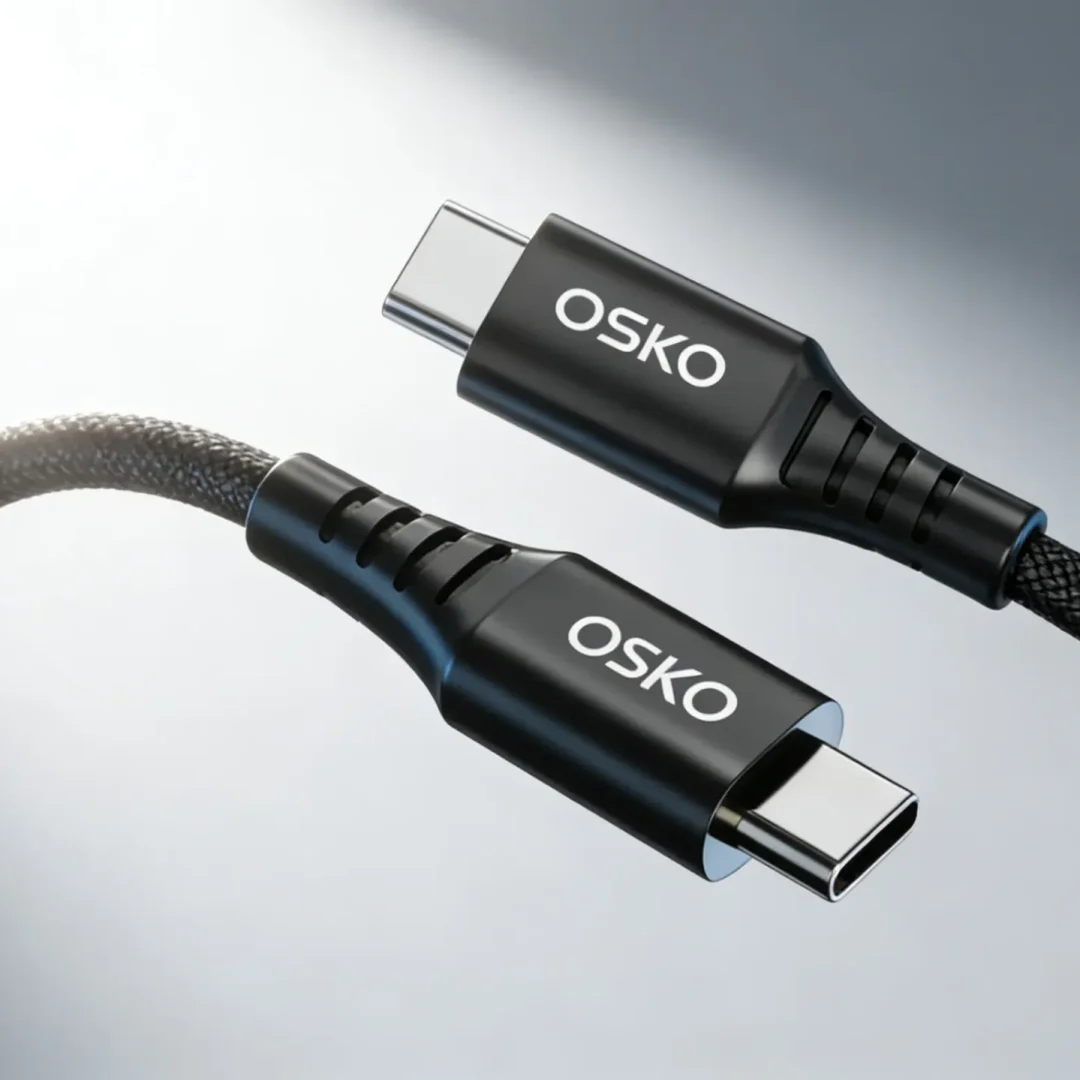
USB-C to USB-C Cables
60W, 100W, 140W, and 240W PD Solutions
Nylon Braided Fast Charging Cables
E-Marker Integrated Designs
OEM & ODM Manufacturing
Private Label Packaging
Custom Colors and Lengths
CE, FCC, RoHS Compliant Products
Request a Quote
Name: ___________________
Company: ___________________
Email: ___________________
Required Cable Type: USB-C to USB-C
Power Rating: 60W / 100W / 140W / 240W
Required Length: 3ft / 6ft / 10ft / Custom
Estimated Quantity: ___________________
Target Market: North America / Europe / Global
Project Requirements: ___________________
Contact OSKO today for samples, technical specifications, and customized OEM pricing solutions.