
Introduction
Many users experience the same problem:
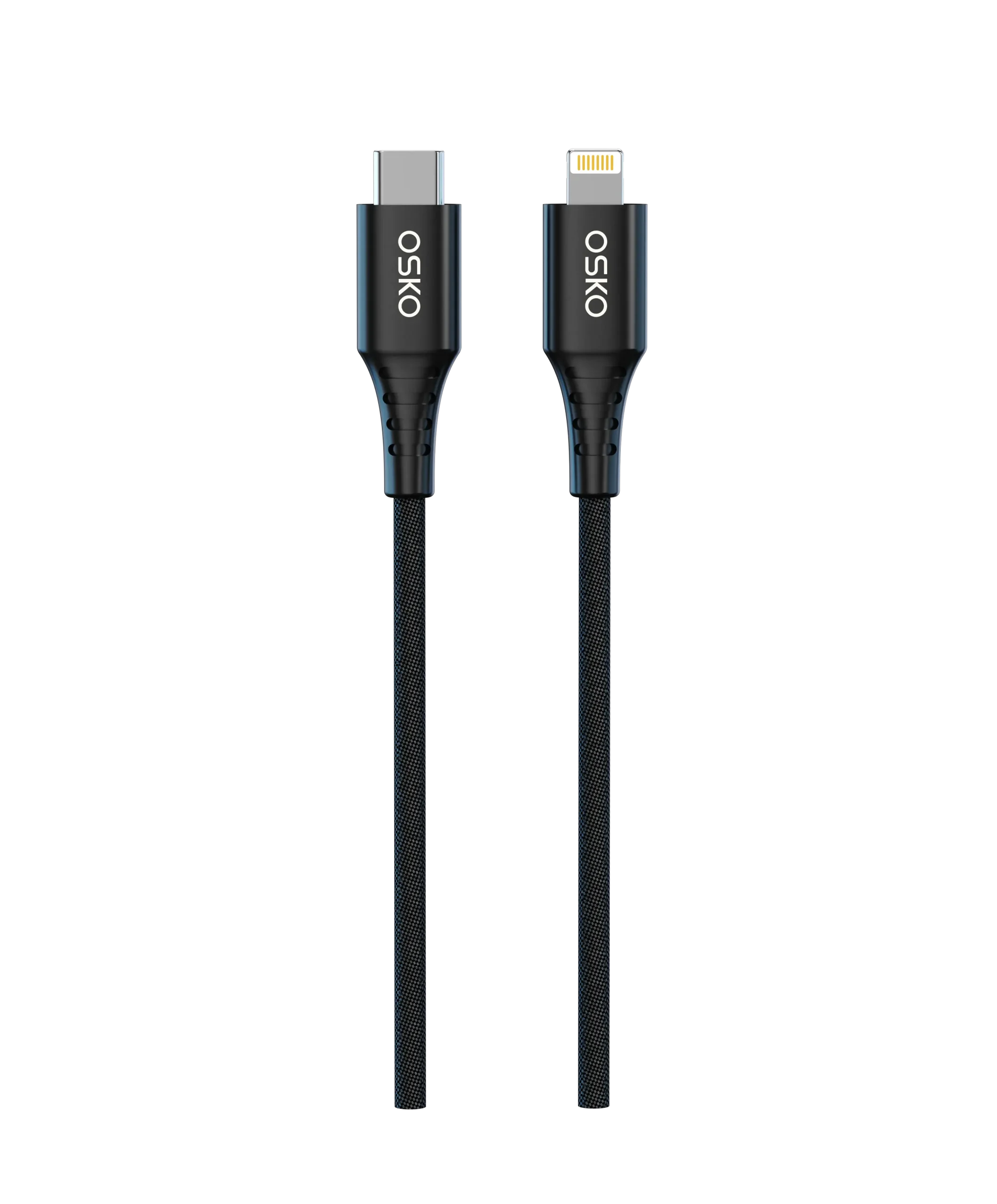
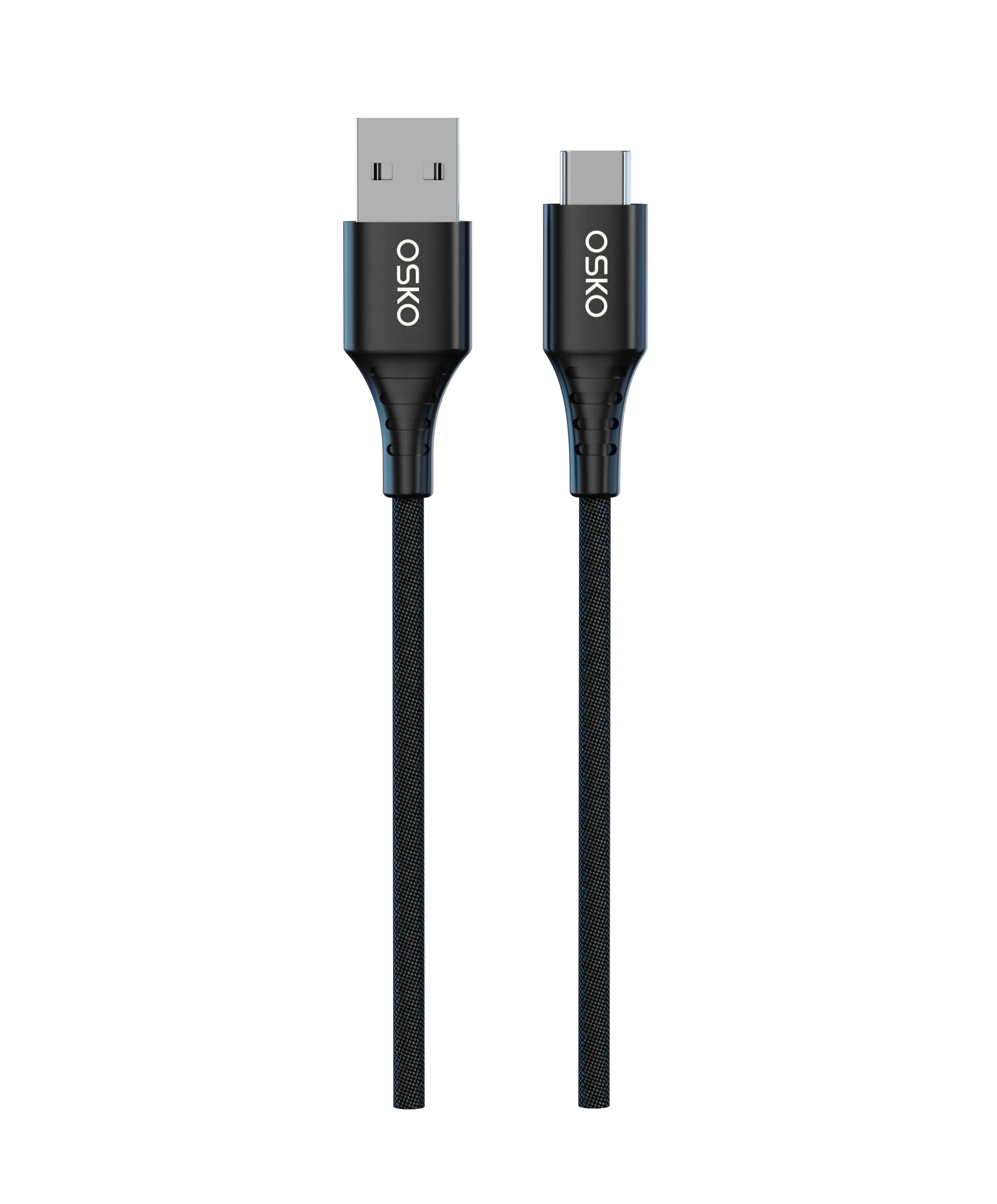
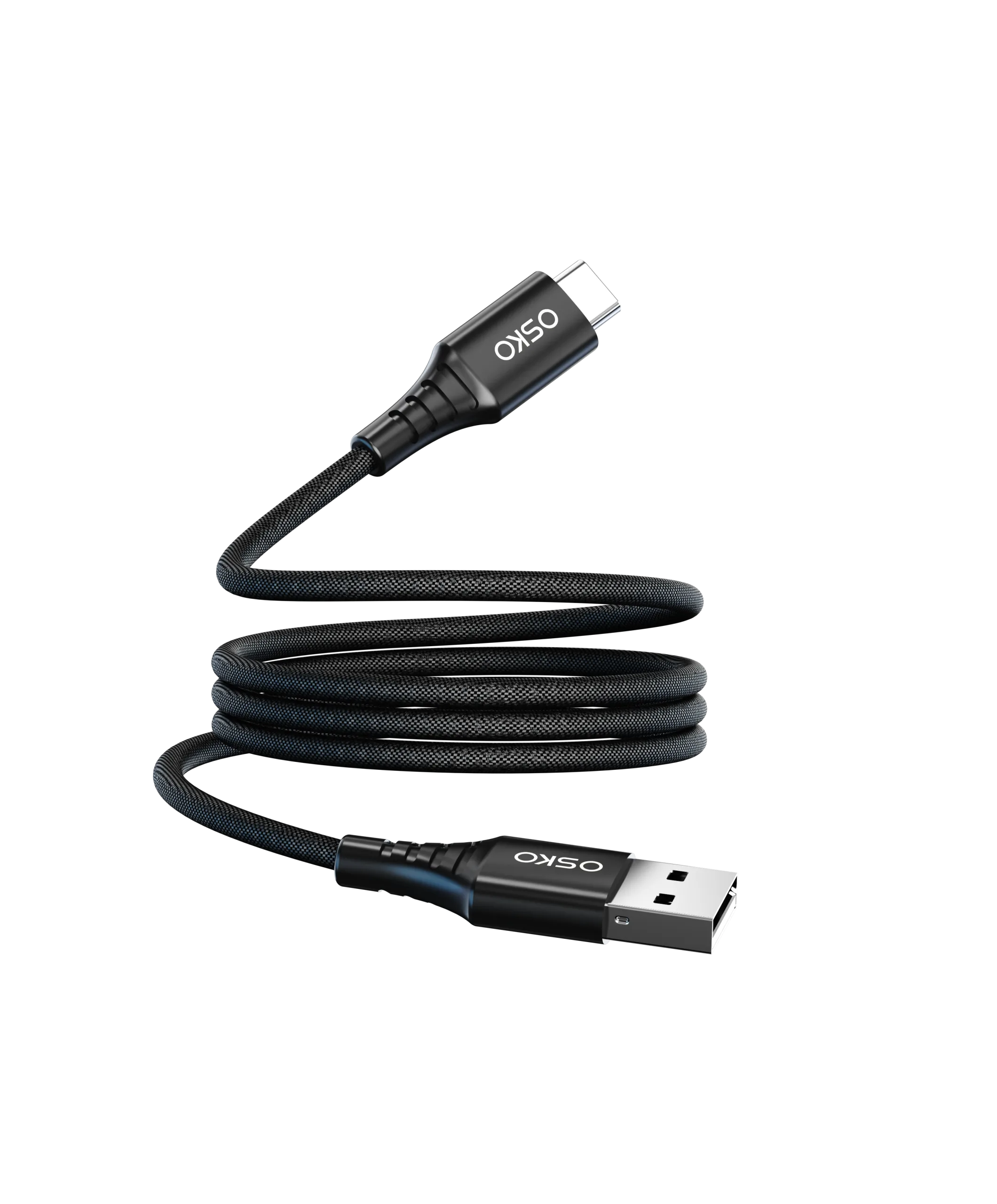
A USB-C cable looks identical to another cable, but one charges a laptop quickly while another charges slowly. Some cables support fast charging, while others only provide basic power.
This leads to an important question:
Why do charging speeds vary so much among USB-C cables?
The answer is that USB-C is only a connector standard. The connector shape does not determine charging performance.
The actual charging speed depends on multiple technical factors:
Cable power rating
USB Power Delivery (PD) support
Internal conductor size
E-marker chip availability
Cable length
Material quality
Charger and device compatibility
A smartphone, tablet, power bank, and laptop may all use USB-C connectors, but they require different cable specifications.
Understanding these differences helps users avoid:
Slow charging
Charging interruptions
Overheating cables
Device compatibility issues
For brands, retailers, and distributors, cable performance differences are critical when selecting an experienced USB-C cable manufacturer for OEM and wholesale projects.
Material Science & Dielectric Properties
USB-C Connector Does Not Mean Same Charging Speed
The biggest misunderstanding about USB-C cables is assuming:
“All USB-C cables are the same.”
In reality, USB-C cables can have very different internal designs.
A USB-C cable may support:
Basic 5W–15W charging
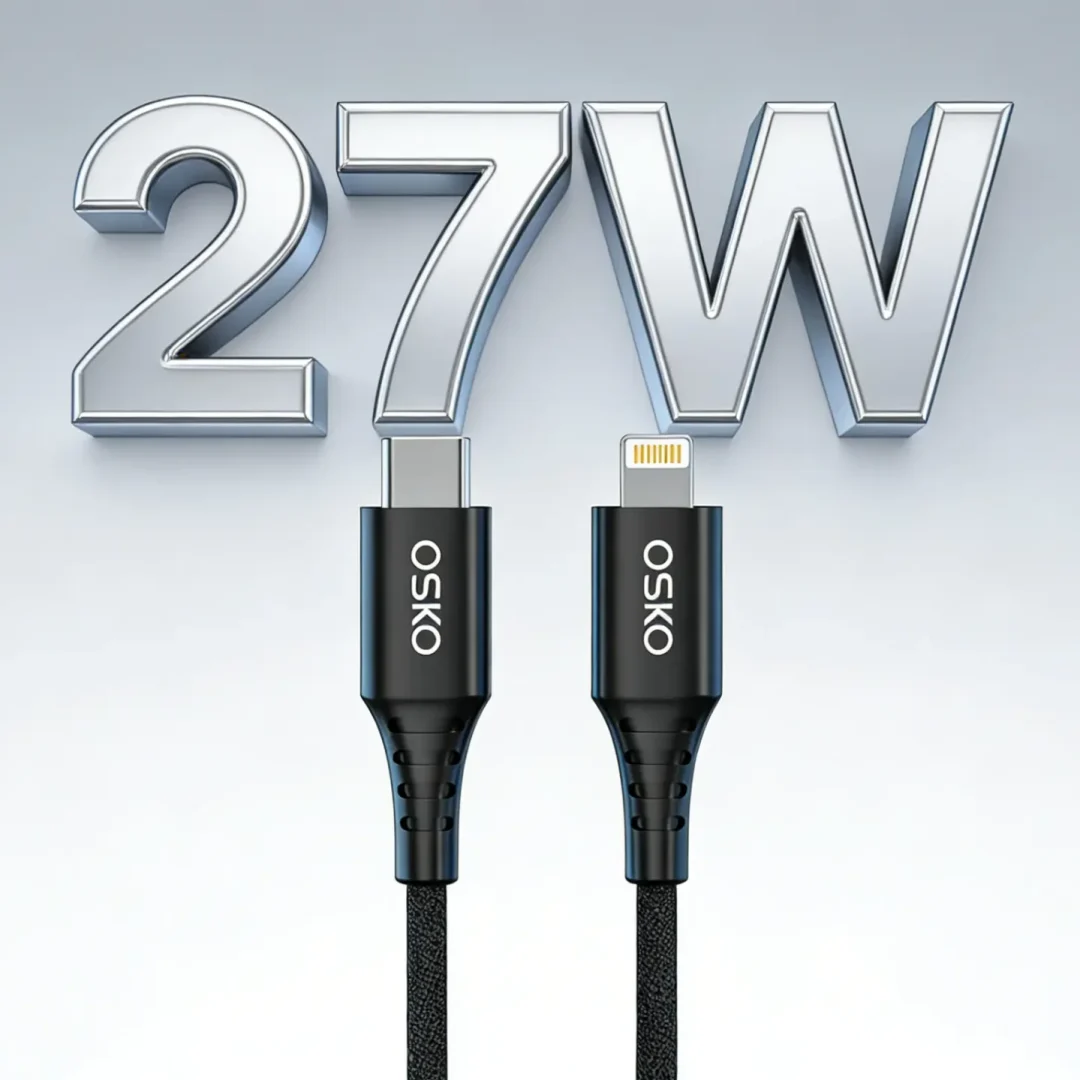
60W fast charging
100W laptop charging
240W USB PD 3.1 charging
The connector is only the physical interface.
The internal engineering determines:
Current capacity
Voltage stability
Heat generation
Data capability
Power Rating Determines Maximum Charging Speed
Charging speed depends on electrical power.
The formula is:
Power (W) = Voltage (V) × Current (A)
For example:
| USB-C Cable Rating | Current Capability | Common Applications |
|---|---|---|
| Basic USB-C Cable | 3A or below | Phones and accessories |
| 60W USB-C Cable | Up to 3A | Smartphones, tablets, MacBook Air |
| 100W USB-C Cable | Up to 5A | MacBook Pro, laptops |
| 240W USB-C Cable | PD 3.1 EPR | High-power devices |
A device can only charge as fast as the weakest component:
Charger + Cable + Device
If one part has a lower limit, charging speed will be reduced.
Why Some USB-C Cables Support Fast Charging and Others Do Not
Internal Copper Conductor Size
The conductor inside the cable carries electrical current.
Higher-power charging requires:
Larger conductor diameter
Lower electrical resistance
Better heat control
A low-quality cable may use thinner conductors.
Possible results:
Voltage drop
Slower charging
Increased heat
Professional USB-C fast charging cable production requires precise conductor selection.
E-Marker Chip Controls High-Power Charging
For high-power USB-C cables, an E-marker chip is essential.
The chip communicates:
Maximum current capability
Supported power level
Cable identification information
Example:
A 100W USB-C cable tells the charger:
“This cable supports up to 5A current.”
Without E-marker communication:
The charger may limit output
Laptop charging may slow down
High-power charging may fail
This is why professional 100W USB-C cable and 240W USB-C cable designs include electronic identification components.
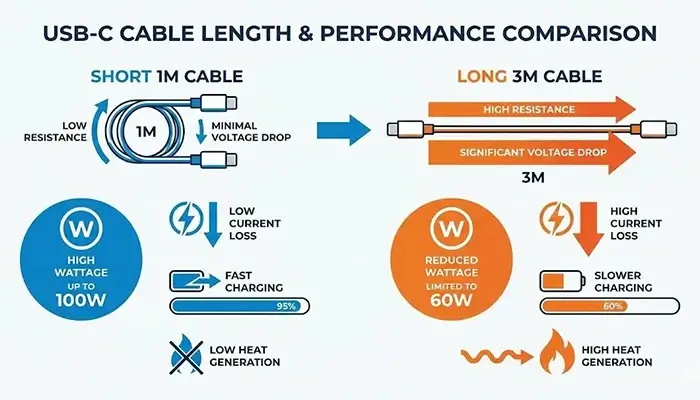
Cable Length Affects Charging Performance
Cable length is another important factor.
A longer cable creates:
More electrical resistance
Greater voltage loss
Higher energy loss
Comparison:
| Cable Length | Performance Consideration |
|---|---|
| 1ft | Lowest resistance, portable |
| 3ft | Daily charging standard |
| 6ft | Requires better engineering |
| 10ft | Needs optimized conductor design |
For example, a poorly designed 10ft cable may charge slower than a high-quality 6ft cable.
Professional suppliers often develop:
OEM ODM custom length USB C cables
for different applications.
USB-C Cable Materials Affect Charging Stability
Charging performance is not only about specifications.
Cable materials directly influence reliability.
Copper Core
High-quality copper provides:
Better conductivity
Lower resistance
More stable charging
Insulation Layer
Insulation protects against:
Electrical leakage
Short circuits
Heat damage
Shielding Layer
Shielding reduces:
Electromagnetic interference
Signal instability
This is especially important for:
USB-C data cables
USB-C monitor cables
Car charging cables
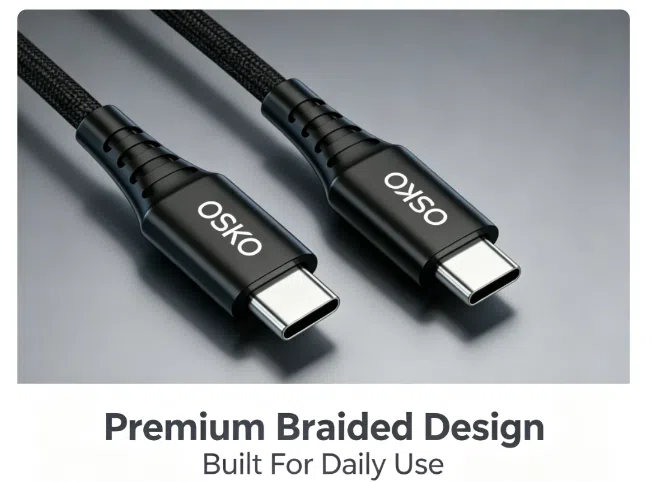
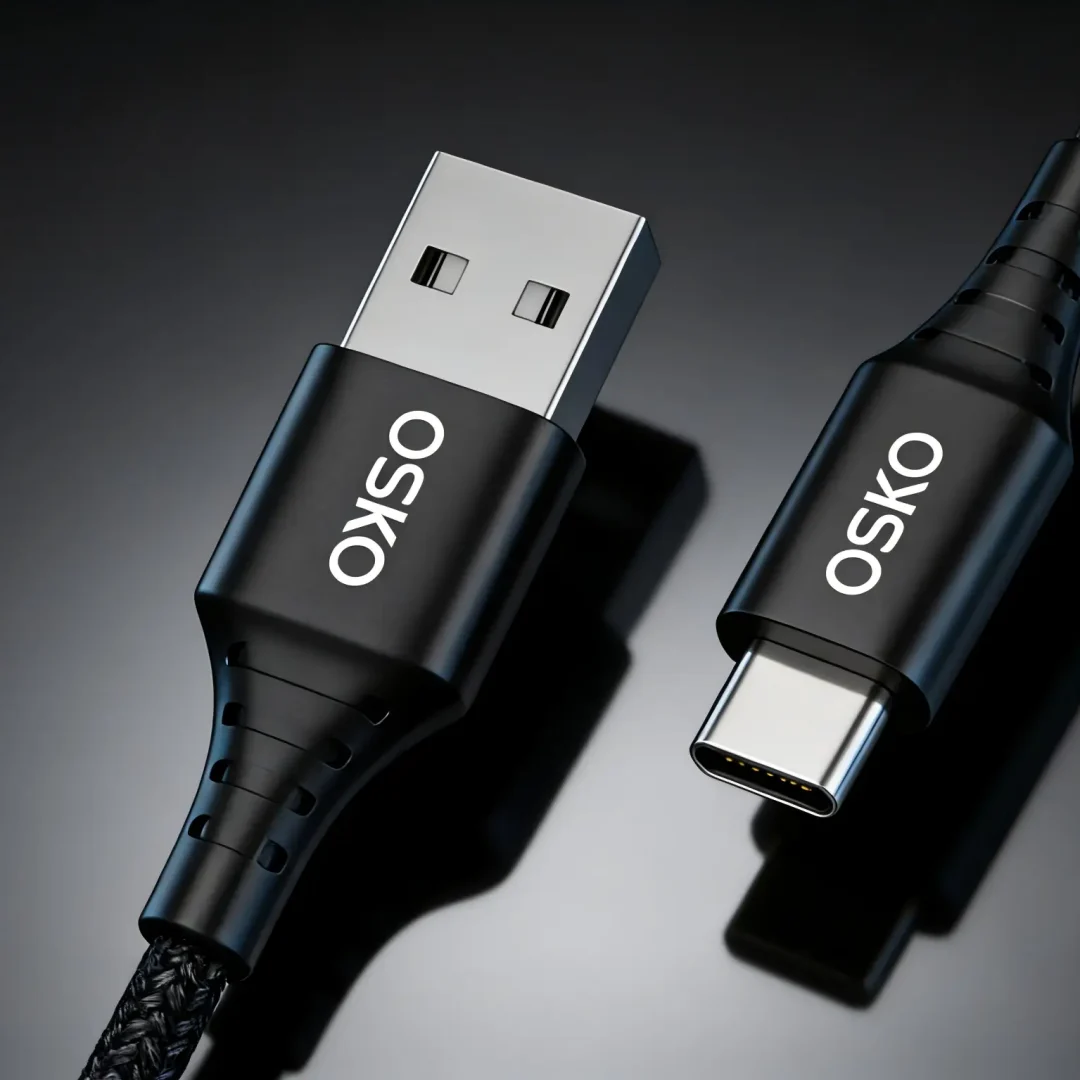
Nylon Braided Outer Jacket
A braided structure improves:
Flexibility
Wear resistance
Service life
Applications include:
Premium retail products
Travel cables
Desk charging cables
Automotive charging solutions
Many brands choose a Heavy duty braided USB-C cable manufacturer for durable product lines.

Different USB-C Cable Types and Their Charging Performance
| Cable Type | Charging Capability | Typical Use |
|---|---|---|
| USB-C Charging Cable | Basic power | Accessories |
| USB-C 60W Cable | Fast charging | Phones/tablets |
| USB-C 100W Cable | Laptop charging | Professional devices |
| USB-C 240W Cable | Maximum PD charging | High-power systems |
| USB-C Data Cable | Power + data | Computers and peripherals |
Case Study
European Electronics Retailer Solves USB-C Charging Complaint Issues
Customer Background
A European consumer electronics brand sold USB-C charging cables through online retail channels.
Their products targeted:
Smartphone users
Laptop users
Office customers
Travel users
The company received negative feedback because customers reported inconsistent charging speeds.
Customer Challenges
Different Devices Required Different Cable Specifications
The original product line used one cable design for multiple applications.
Problems included:
Smartphones charged normally
Laptop charging was slow
Long cables showed performance loss
Product Quality Consistency
The customer needed:
Clear power ratings
Better cable durability
Stable production quality
OSKO Solution
OSKO developed different USB-C cable categories.
| Product Category | Engineering Solution |
|---|---|
| Smartphone cable | 60W USB-C charging design |
| Laptop cable | 100W PD + E-marker |
| Premium cable | 240W PD 3.1 design |
| Long cable | Enhanced conductor structure |
The solution supported:
OEM USB-C cable manufacturer
ODM USB cable supplier
USB-C cable wholesale
Bulk USB cables
Retail USB cable products
Selection Guide
How to Choose the Right USB-C Cable for Charging Speed
For Smartphones
Recommended:
60W USB-C cable
USB PD compatibility
Durable connector design
Suitable for:
iPhone USB-C devices
Android smartphones
Power banks
For Tablets
Recommended:
Benefits:
Faster charging
Better future compatibility
For Laptops
Recommended:
100W USB-C cable or higher
Important features:
E-marker chip
5A current support
Strong conductor structure
For High-Power Devices
Recommended:
140W–240W USB-C cable
Applications:
Professional laptops
High-performance workstations
Wholesale Buyer Evaluation Guide
When sourcing USB-C cables, buyers should evaluate:
| Factor | Why It Matters |
|---|---|
| Power rating | Determines charging capability |
| E-marker chip | Enables high-power charging |
| Cable resistance | Affects efficiency |
| Material quality | Determines durability |
| Testing standards | Ensures reliability |
Reliable suppliers should support:
USB-IF compliant Type C cable manufacturer
CE RoHS certified USB-C cable factory
ISO9001 certified braided USB cable factory
FCC approved nylon braided USB C cable supplier
FAQ
Why does one USB-C cable charge faster than another?
Because USB-C cables have different power ratings, conductor designs, and charging technologies.
Can a 100W USB-C cable charge a phone faster?
Not necessarily. The phone controls the maximum charging power it accepts.
Is a thicker USB-C cable always faster?
Not always, but thicker conductors often support higher current and better heat management.
Does a longer USB-C cable charge slower?
A poorly designed long cable may lose performance due to higher resistance.
Do all USB-C cables support laptop charging?
No. Many USB-C cables are designed only for basic charging or data transfer.
Summary
USB-C charging speeds vary because USB-C cables are not identical internally.
The main factors affecting performance include:
Power rating
USB PD compatibility
E-marker chip
Conductor quality
Cable length
Material construction
For everyday smartphones and tablets, a 60W USB-C cable is usually sufficient.
For laptops such as MacBook Pro, a 100W USB-C cable provides better charging capability.
For advanced high-power applications, 240W USB-C cables support the latest USB PD standards.
Choosing the right cable requires matching:
Device requirement + Charger capability + Cable specification
For businesses, retailers, and distributors, partnering with an experienced USB-C cable manufacturer ensures reliable engineering, customized production, and consistent quality for global markets.
Contact Information
OSKO provides professional USB-C cable manufacturing solutions:
60W / 100W / 240W USB-C cables
Fast charging cables
OEM and ODM cable production
Private label USB-C cables
Custom length and packaging solutions