

Introduction
Have you ever connected your laptop to a 100W charger, only to discover that charging is surprisingly slow?
Many users assume the charger is responsible for charging speed. However, the charging cable is often the real bottleneck.
A low-quality USB-C cable may only support 60W charging, even when paired with a 100W power adapter. In some cases, incompatible cables can trigger charging warnings, generate excess heat, or cause unstable charging performance.
As laptops become more powerful and USB-C Power Delivery (PD) becomes the global charging standard, choosing a reliable 100W USB-C PD cable for laptop use is more important than ever.
Whether you are a consumer, distributor, OEM brand, or wholesale buyer, understanding the technical requirements behind a 100W USB-C cable helps ensure better performance, improved safety, and longer product life.
In this guide, we’ll explain how 100W USB-C PD cables work, what technical specifications matter most, and how to select the right supplier for North American and European markets.
Applicable Scenarios
Different laptop users require different cable solutions.
Understanding the intended application helps buyers select the most suitable cable design.
Office Workstations
Modern offices increasingly rely on USB-C connectivity.
Common devices include:
MacBook Pro
MacBook Air
Dell XPS
Lenovo ThinkPad
HP EliteBook
Microsoft Surface
A 100W USB-C PD cable enables:
Fast laptop charging
Docking station connections
Monitor connectivity
Data synchronization
For desk charging cable applications, durability and stable power delivery are essential.
Business Travel
Business travelers frequently carry:
Laptops
Power banks
Portable monitors
Smartphones
Instead of carrying multiple chargers, many professionals use a single USB-C PD charger with a 100W cable.
This simplifies travel while maintaining fast charging capability.
Home Office Setups
Remote workers often require:
Long charging cables
Flexible workstation layouts
Multi-device charging
Many users prefer Bulk custom 6ft 10ft USB-C cables because they provide greater freedom without sacrificing charging performance.
OEM Laptop Accessory Projects
Laptop brands and accessory companies frequently require:
OEM USB-C cables
Private-label packaging
Custom cable lengths
Custom connector designs
This makes OEM and ODM manufacturing an important segment of the USB-C ecosystem.
Understanding USB-C Power Delivery
Before selecting a cable, it’s important to understand how USB Power Delivery works.
USB Power Delivery (PD) is a charging protocol that allows devices and chargers to negotiate power requirements dynamically.
Instead of fixed charging outputs, USB PD adjusts voltage and current based on device requirements.
Common PD profiles include:
| Voltage | Current | Power |
|---|---|---|
| 5V | 3A | 15W |
| 9V | 3A | 27W |
| 15V | 3A | 45W |
| 20V | 3A | 60W |
| 20V | 5A | 100W |
To achieve the full 100W charging rate, both the charger and cable must support 20V/5A operation.
This is where E-Marker technology becomes critical.
Why E-Marker Chips Matter
Many consumers are unaware that not all USB-C cables are capable of delivering 100W.
The key difference is the presence of an E-Marker chip.
What Is an E-Marker?
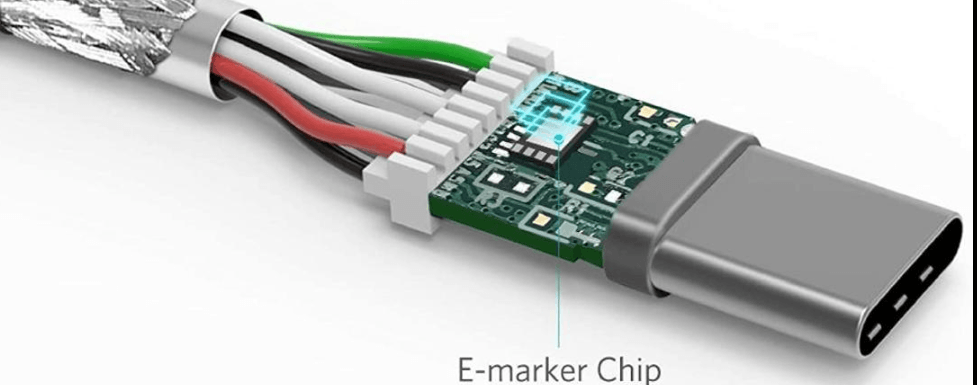
An E-Marker (Electronically Marked Cable Assembly) is a small integrated circuit embedded inside the cable connector.
Its purpose is to communicate cable capabilities to connected devices.
Information includes:
Maximum current rating
Power handling capability
Data transfer specifications
USB compliance information
Why Is It Required for 100W Charging?
According to USB-IF specifications, cables carrying more than 3A must contain an E-Marker chip.
Without an E-Marker:
Charging may be limited to 60W
Devices may reduce charging speed
Compatibility issues may occur
For this reason, every quality 100W cable should include E-Marker technology.
Many professional buyers specifically look for a USB-C cable with E-Marker 2.0 IC when sourcing laptop charging cables.
Cable Construction and Performance
The internal structure of a cable significantly affects performance.
Copper Conductors
High-quality cables use:
Oxygen-free copper
Tinned copper
Multi-strand conductors
Benefits include:
Lower resistance
Improved charging efficiency
Reduced heat generation
Inferior conductors often cause voltage drop and slower charging.
Shielding Systems
Professional USB-C cables include:
Aluminum foil shielding
Braided shielding
Ground protection layers
Benefits include:
Stable data transmission
Reduced interference
Improved reliability
This is especially important for users connecting external SSDs or monitors.
Connector Design
Connector quality directly impacts durability.
Features found in premium products include:
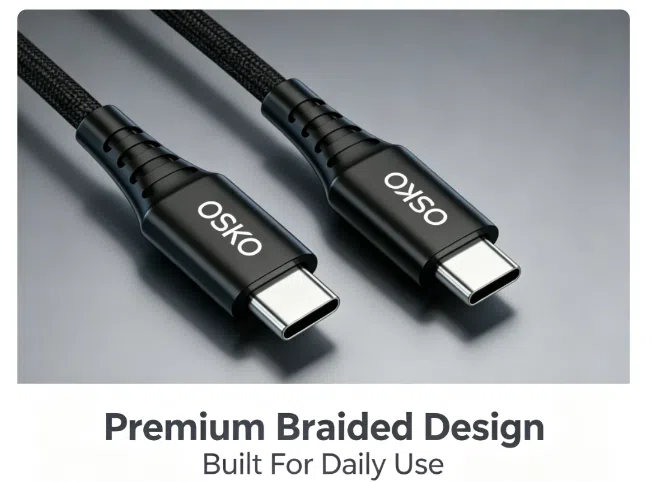
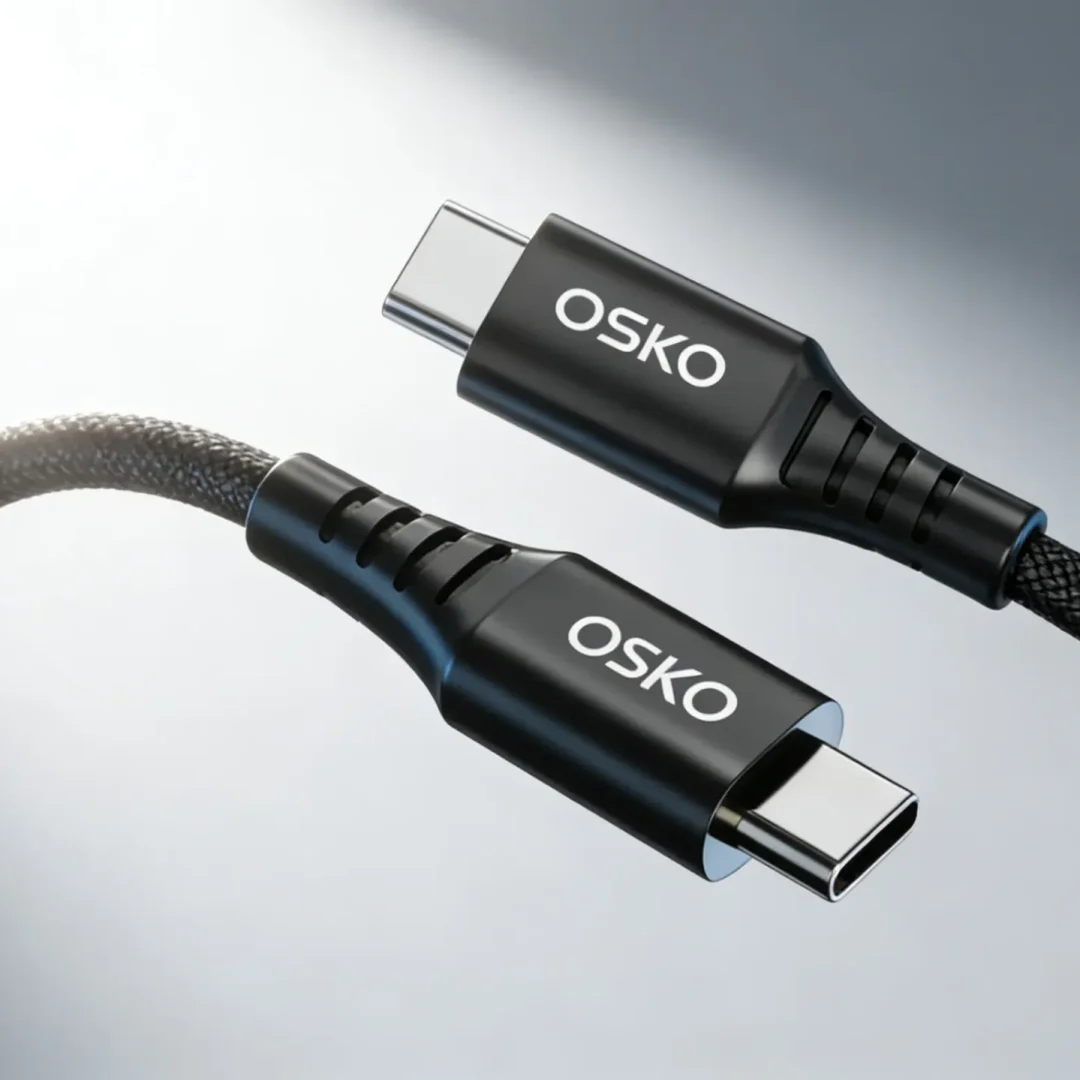
Reinforced overmolding
Extended strain relief
Precision-machined USB-C terminals
These features help prevent failures during daily use.
Nylon Braided vs PVC USB-C Cables
One of the most common purchasing questions is whether braided cables are worth the extra cost.
The answer depends on the application.
Standard PVC Cables
Advantages:
Lower cost
Lightweight
Flexible
Disadvantages:
Lower abrasion resistance
Shorter lifespan
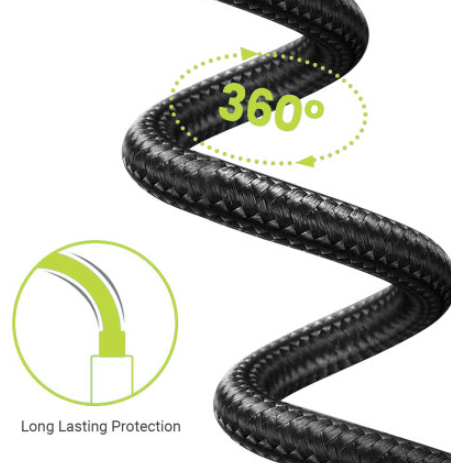
Nylon Braided Cables
Advantages:
Better durability
Improved wear resistance
Premium appearance
Reduced tangling
Many buyers sourcing from a Durable nylon braided Type C charging cable factory choose braided cables because they reduce warranty claims and improve customer satisfaction
Comparison Table
| Feature | PVC Cable | Nylon Braided Cable |
|---|---|---|
| Durability | Standard | High |
| Abrasion Resistance | Moderate | Excellent |
| Appearance | Basic | Premium |
| Lifespan | Moderate | Long |
| OEM Branding Value | Standard | Premium |
Data Transfer Performance
Many users assume charging cables only carry power.
However, USB-C cables also support data transmission.
Common specifications include:
| Standard | Data Speed |
|---|---|
| USB 2.0 | 480 Mbps |
| USB 3.2 Gen 1 | 5 Gbps |
| USB 3.2 Gen 2 | 10 Gbps |
| USB4 | Up to 40 Gbps |
Laptop users often require both charging and data capabilities simultaneously.
For this reason, understanding the intended use case is essential before selecting a cable.
Certifications Buyers Should Verify
Compliance is increasingly important in North American and European markets.
Reliable suppliers should provide:
| Certification | Purpose |
|---|---|
| CE | European compliance |
| FCC | US compliance |
| RoHS | Environmental compliance |
| USB-IF | USB standards verification |
| ISO9001 | Quality management |
| REACH | Chemical safety compliance |
Many procurement teams prefer working with an ISO9001 certified braided USB cable factory because it demonstrates established quality control systems.
Case Study: Laptop Accessory Brand
Customer Background
A European laptop accessory company planned to launch a premium USB-C charging product line.
The company required:
100W charging support
High durability
Retail packaging
Private labeling
Engineering Challenges
Previous suppliers delivered products that:
Failed after heavy use
Did not consistently achieve 100W charging
Generated customer complaints
The brand needed a more reliable solution.
OSKO Solution
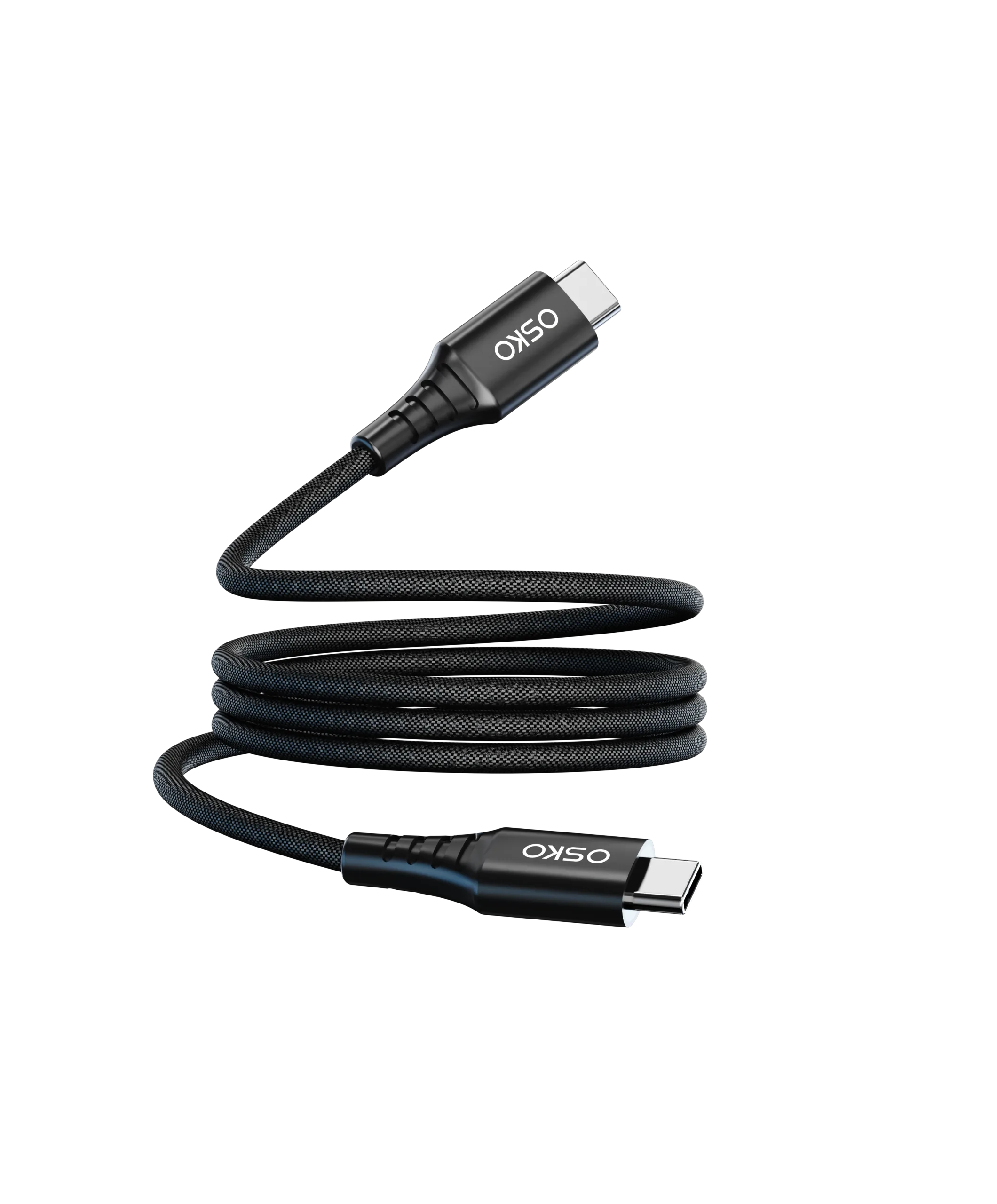
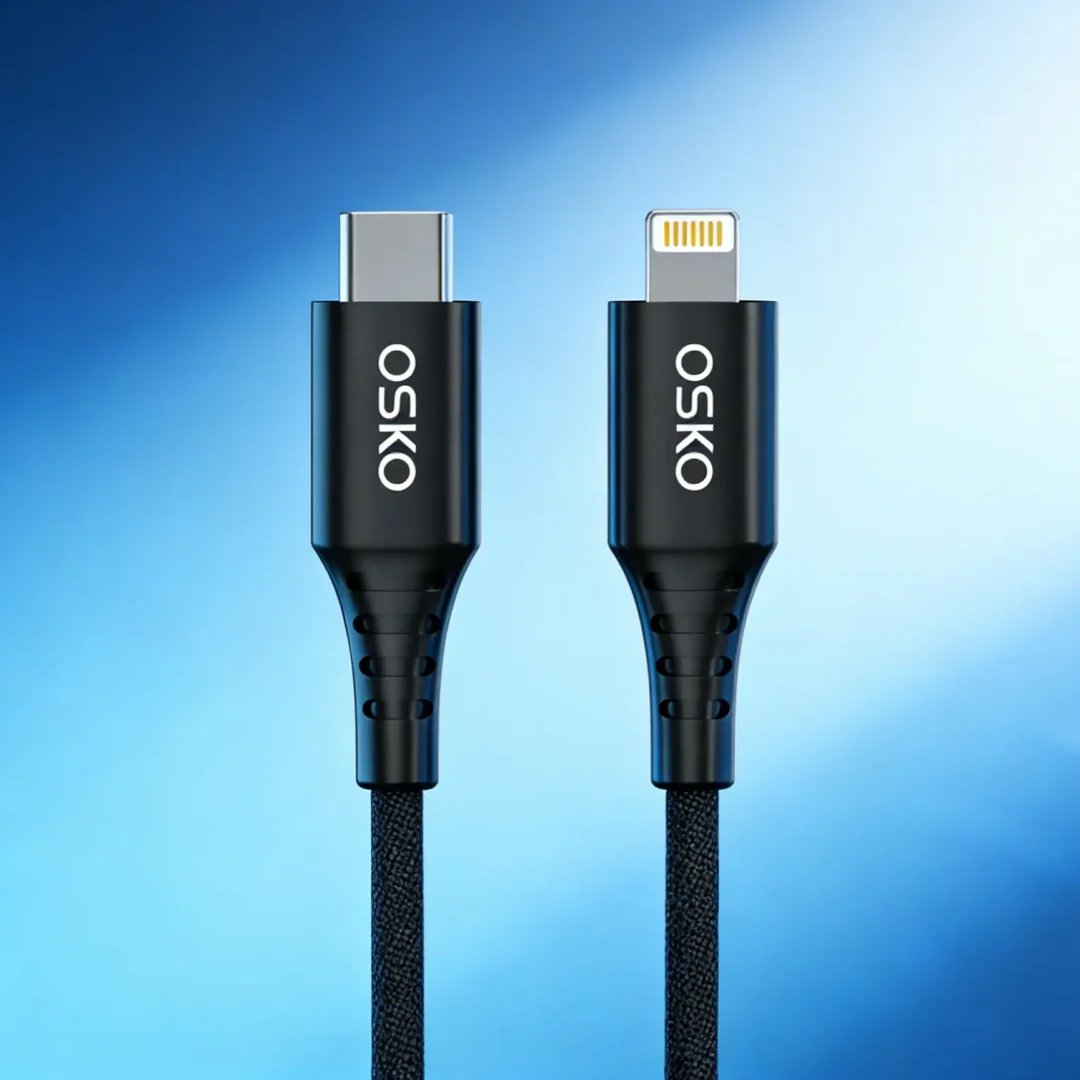
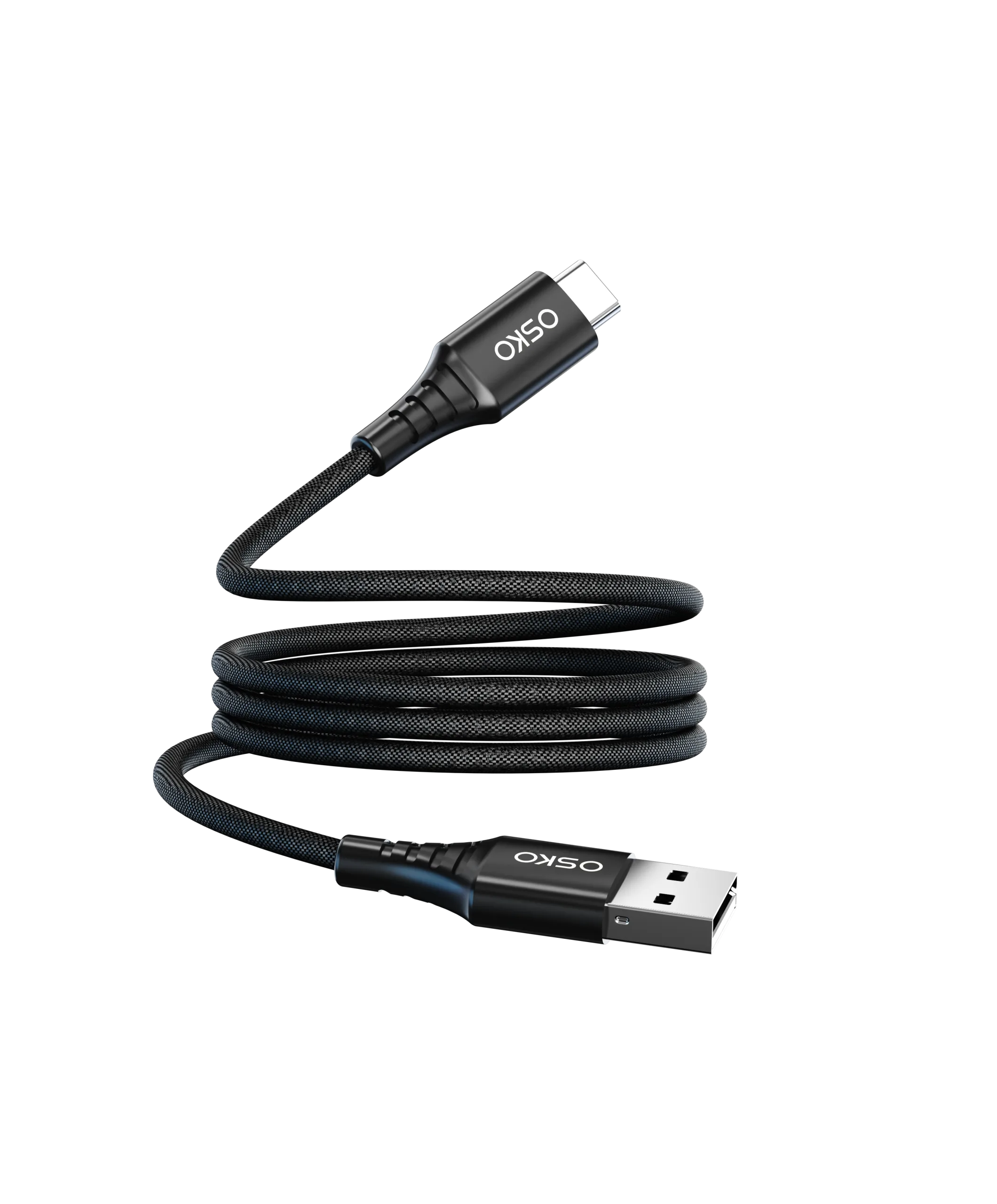
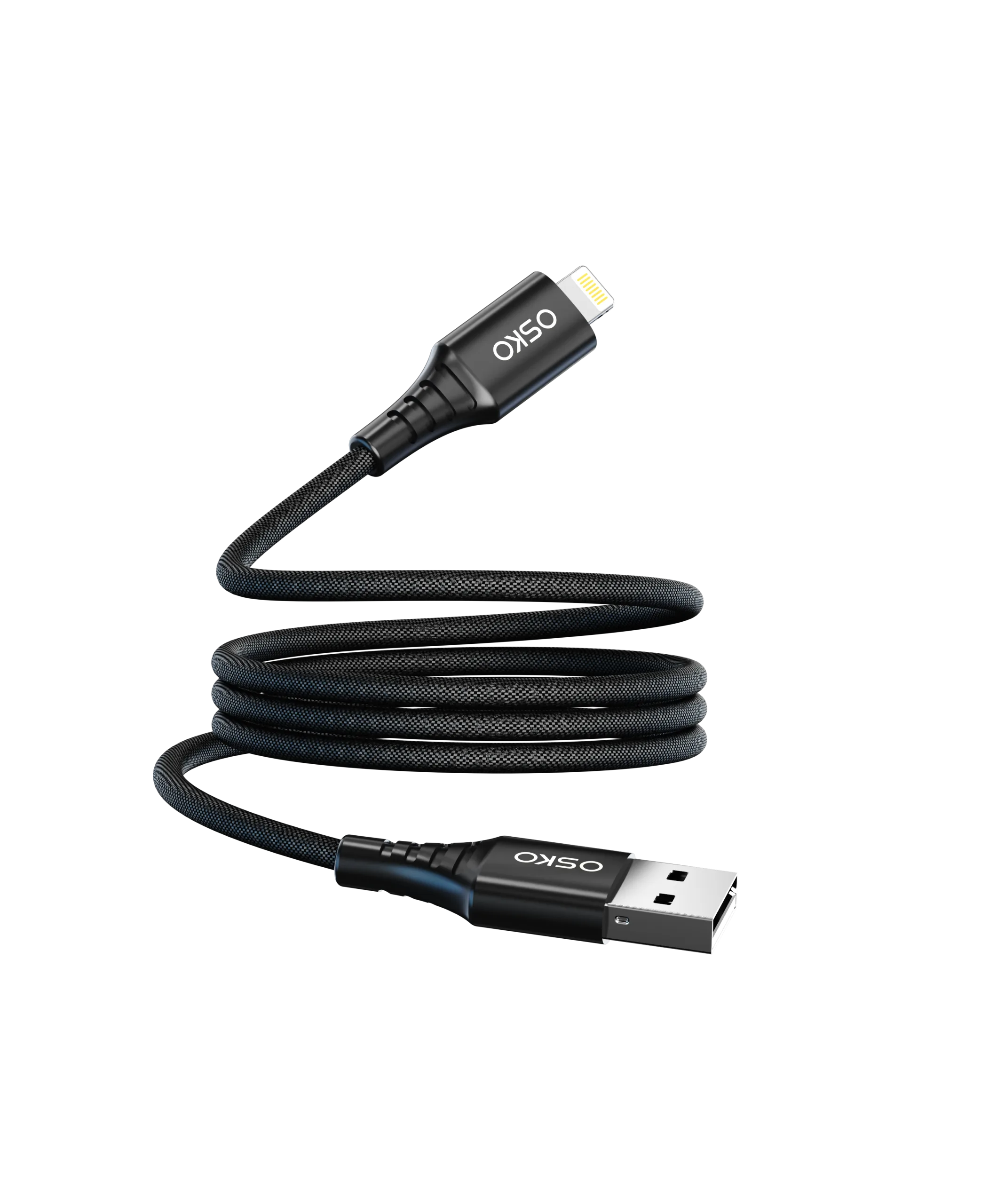
OSKO developed a premium 100W cable featuring:
E-Marker 2.0 IC
Oxygen-free copper conductors
Double-braided nylon construction
Reinforced strain relief
USB-IF compliant design
Custom packaging and branding were also provided.
Results
After launch, the customer achieved:
Reduced return rates
Improved product reviews
Increased wholesale orders
Better retailer satisfaction
The project demonstrated the importance of combining charging performance with durability.
Purchase Recommendations
When sourcing a 100W USB-C PD cable for laptop applications, focus on the following criteria.
| Evaluation Factor | Importance |
|---|---|
| E-Marker IC | High |
| Copper Quality | High |
| USB-IF Compliance | High |
| Connector Design | High |
| Braided Construction | Medium |
| Data Speed Support | Medium |
| OEM Capability | Medium |
| Price | Medium |
FAQ
Can a 100W USB-C cable charge a MacBook Pro?
Yes. Most modern MacBook Pro models support USB-C PD charging and can utilize a 100W cable when paired with a compatible charger.
Does every USB-C cable support 100W?
No. Only cables rated for 5A operation and equipped with an E-Marker chip can support 100W charging.
Are braided USB-C cables better?
For most users, yes. Braided cables generally provide better durability, abrasion resistance, and lifespan.
Is USB-IF certification important?
Yes. USB-IF compliance helps ensure compatibility, safety, and reliable charging performance.
Can OEM manufacturers provide custom lengths?
Yes. Professional suppliers commonly offer 0.5ft, 3ft, 6ft, 10ft, and custom-length USB-C cable solutions.
Summary
Choosing the right 100W USB-C PD cable for laptop applications requires more than selecting the cheapest option. Power delivery performance depends on E-Marker technology, conductor quality, shielding design, connector durability, and manufacturing standards.
For brands, distributors, wholesalers, and OEM buyers, investing in high-quality cables helps reduce warranty claims, improve customer satisfaction, and strengthen brand reputation.
As laptop charging standards continue evolving, a reliable 100W USB-C cable remains one of the most important accessories in the modern USB-C ecosystem.
Request OEM 100W USB-C Cable Solutions
OSKO Provides:
100W USB-C PD Charging Cables
USB-C Cables with E-Marker 2.0 IC
OEM & ODM Manufacturing
Custom Lengths and Colors
Private Label Packaging
Wholesale Distribution Programs
Request a Quote
Name: ___________________
Company: ___________________
Email: ___________________
Cable Type: USB-C to USB-C
Required Length: 3ft / 6ft / 10ft / Custom
Estimated Quantity: ___________________
Target Market: North America / Europe / Global
Project Requirements: ___________________