
Introduction
In the global fast-charging ecosystem, USB-C cable power rating has become one of the most important technical parameters affecting charging speed, device compatibility, and long-term reliability.
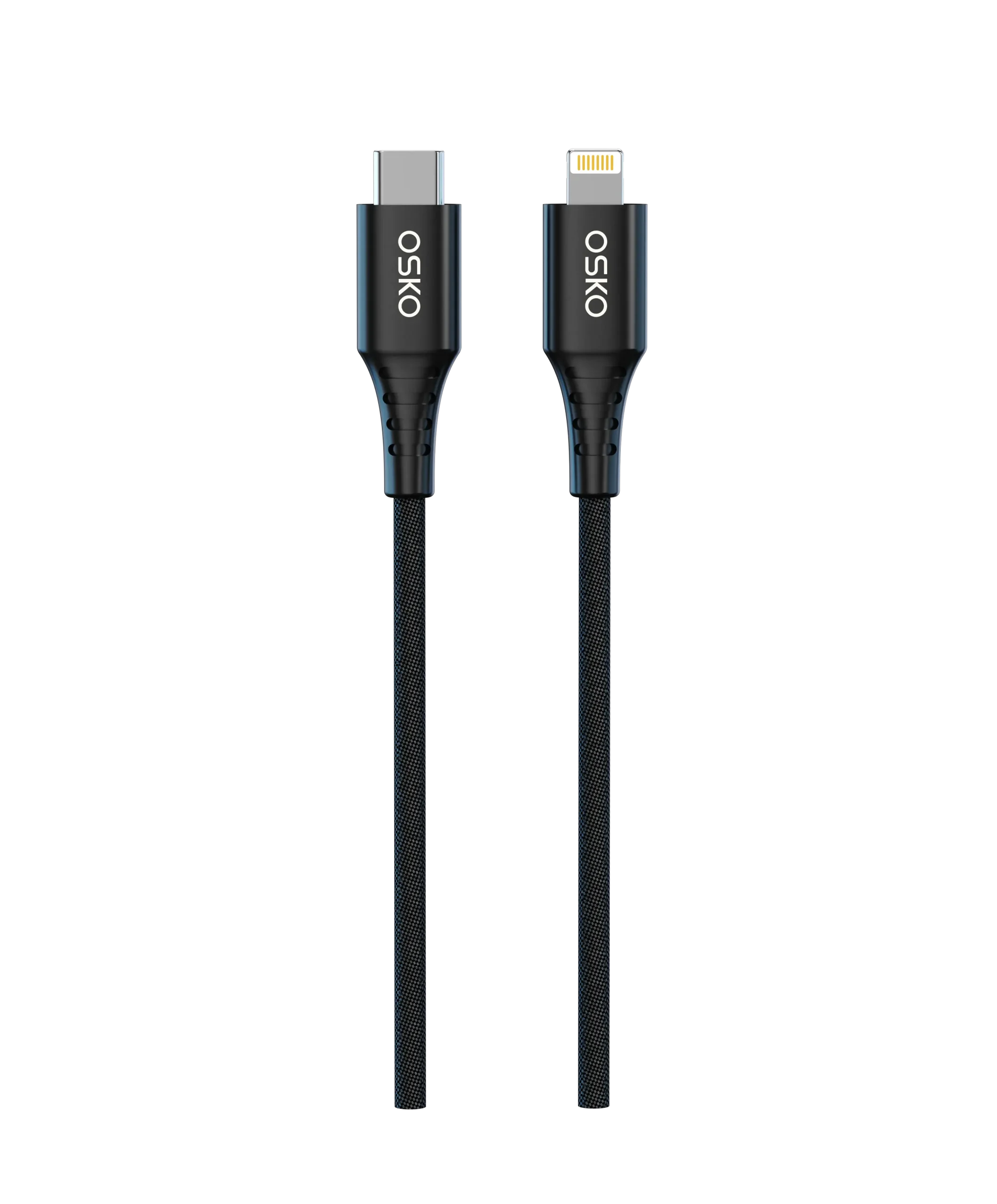
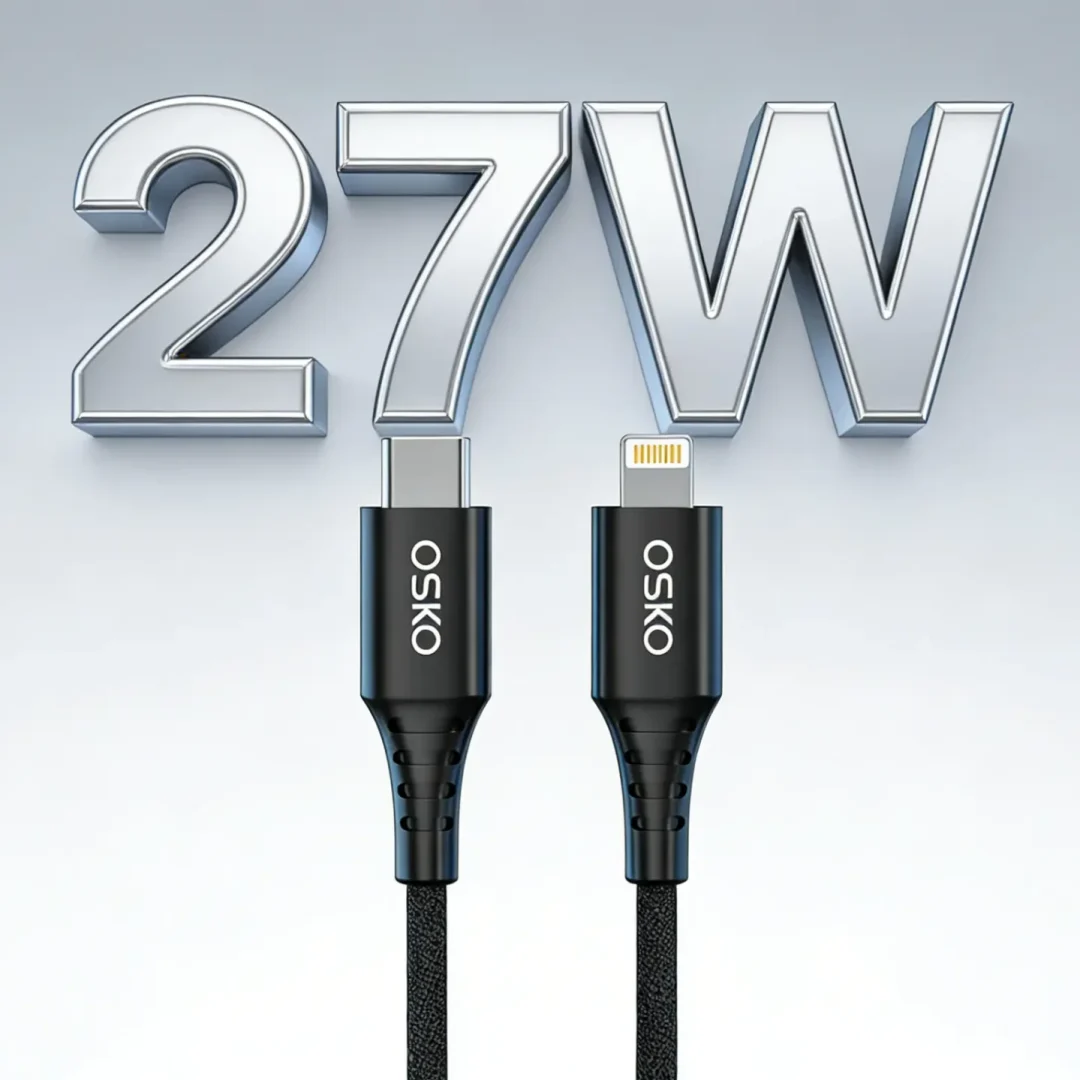
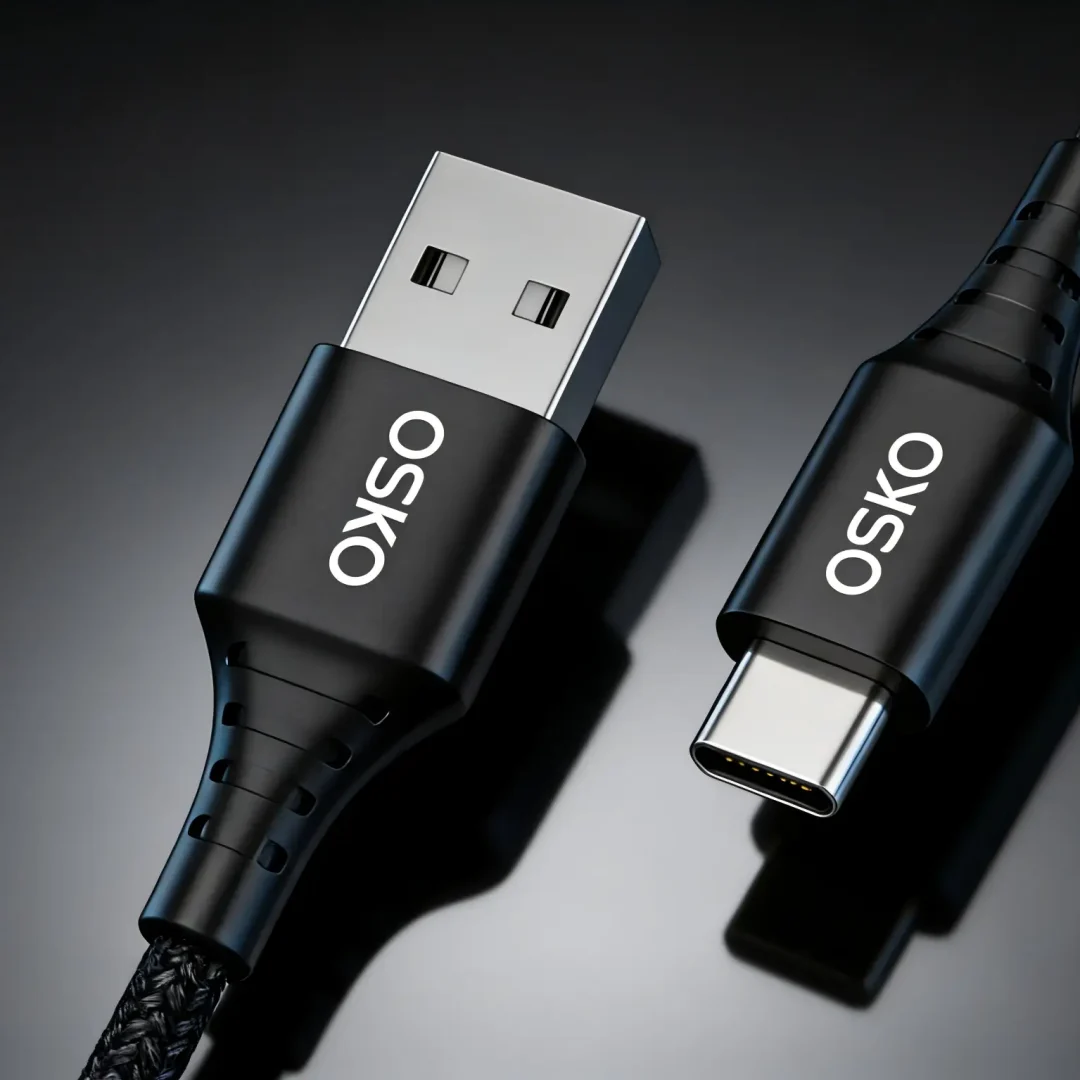
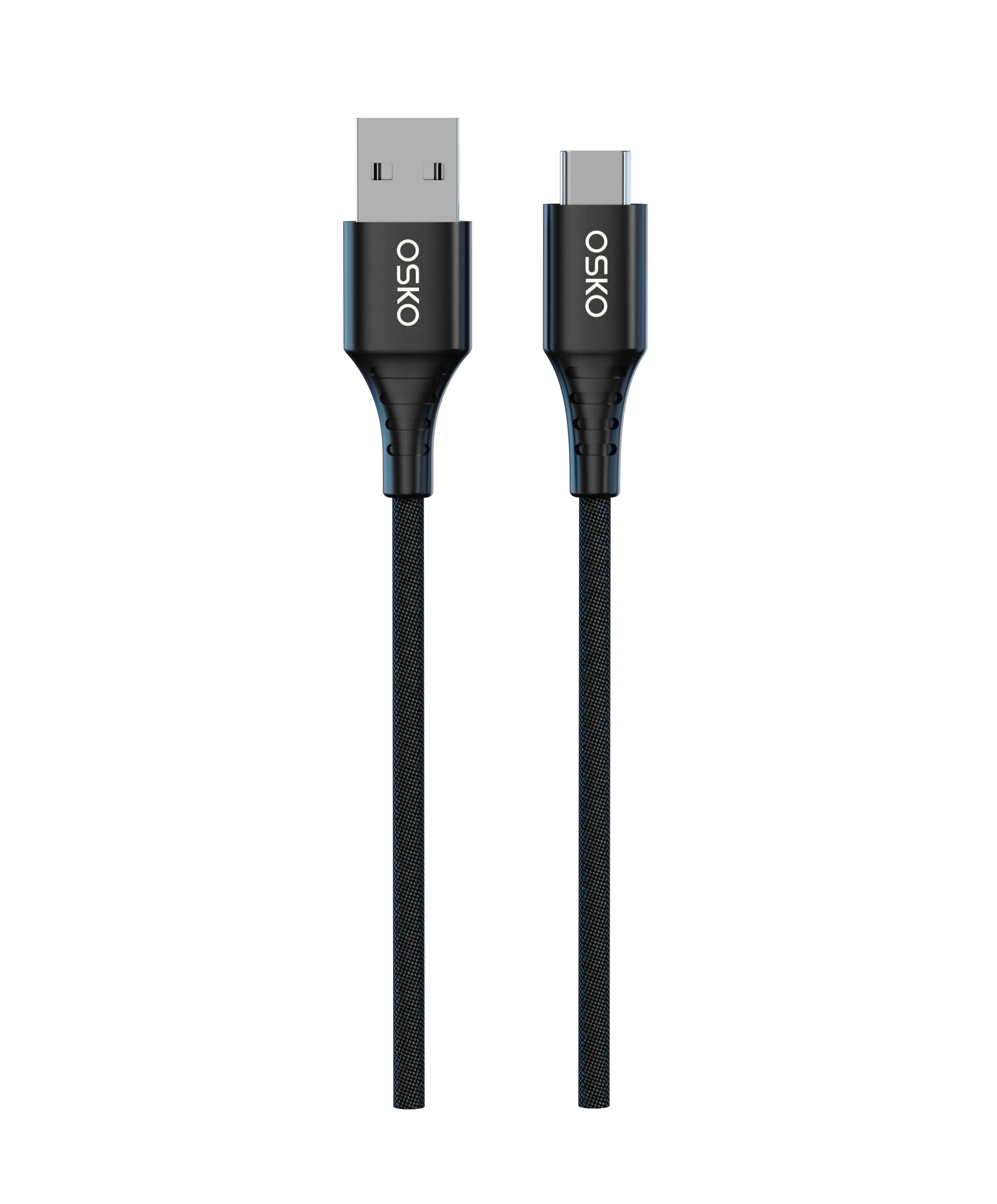
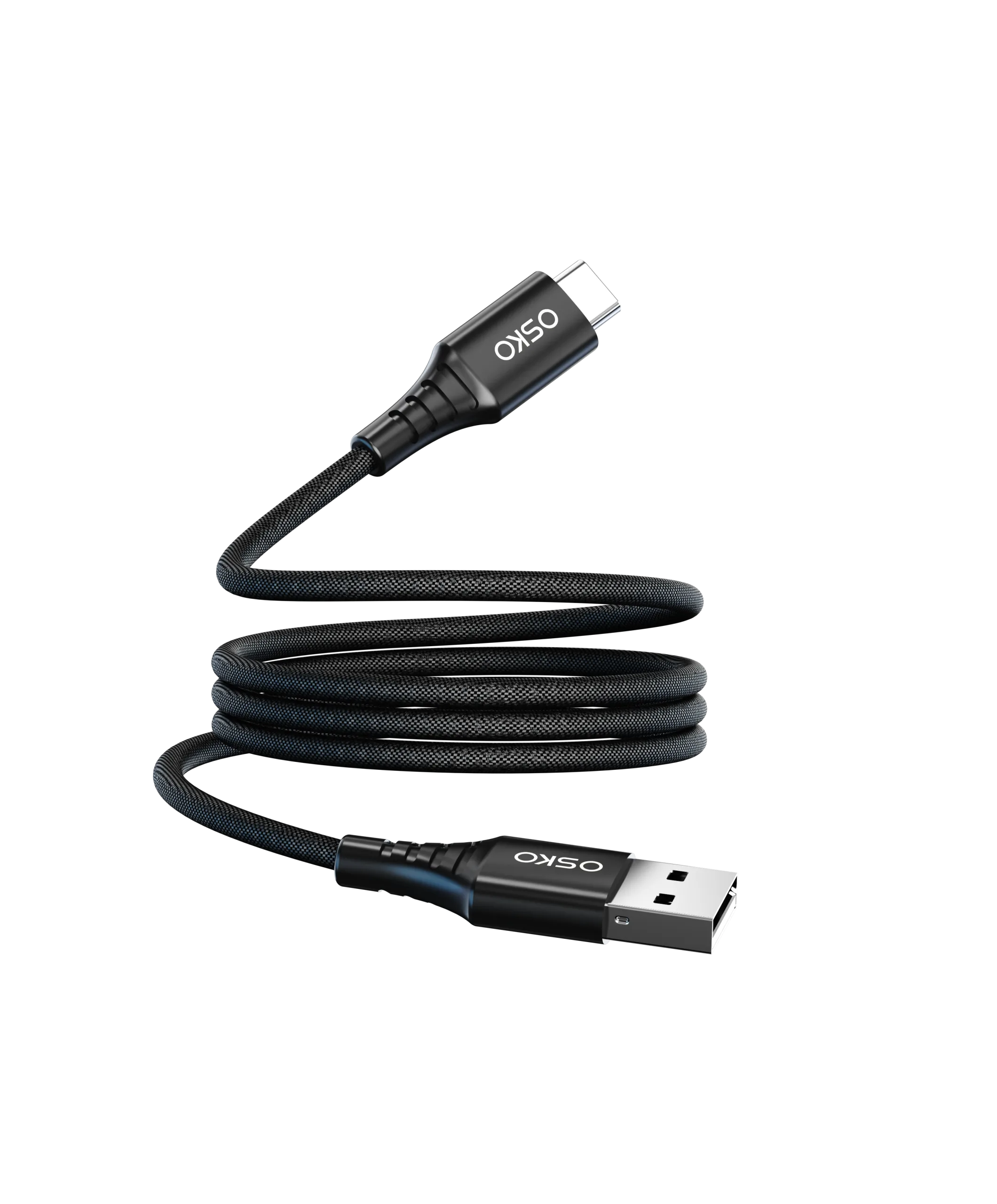
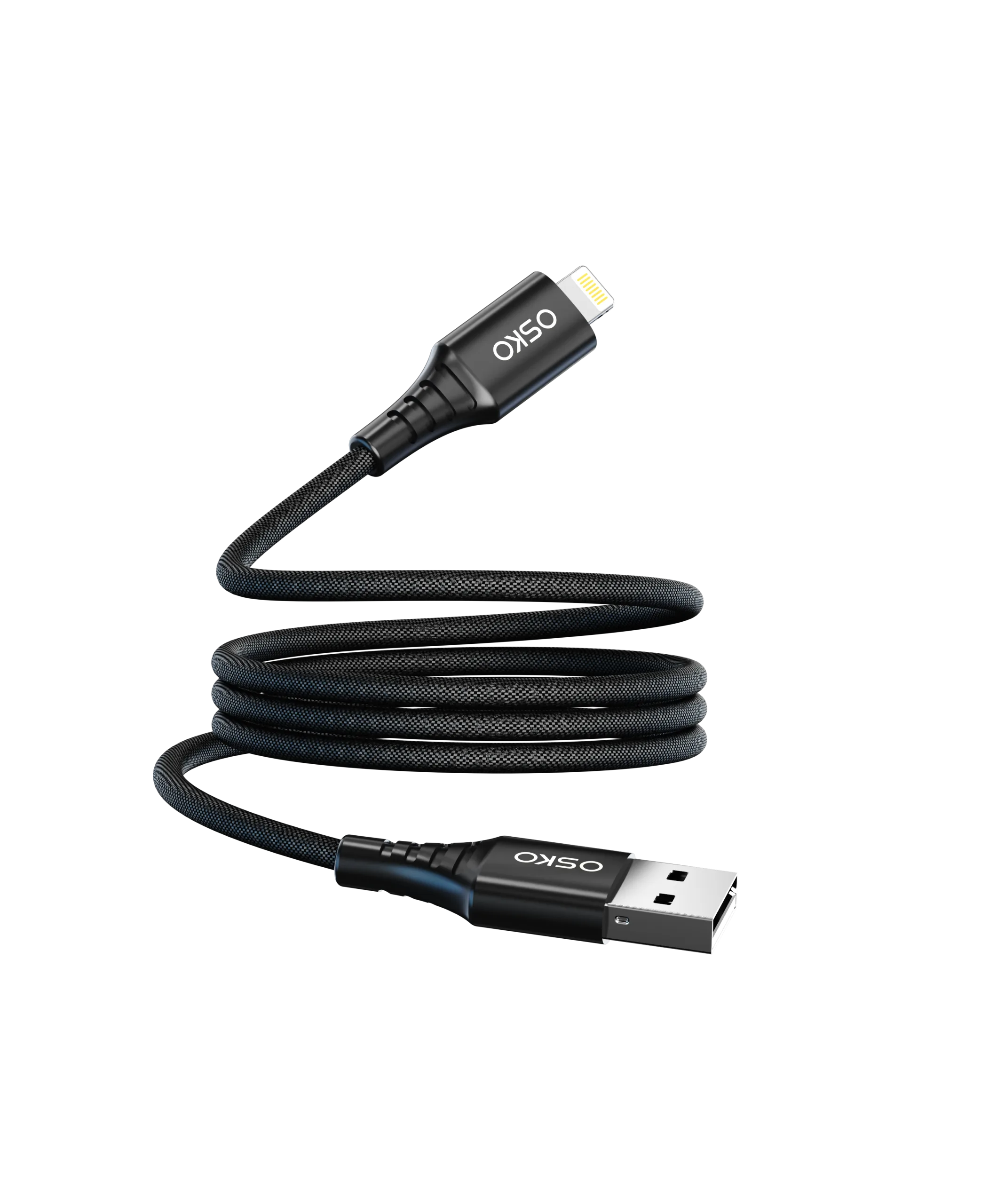
Two of the most widely used standards in the market are 60W USB-C cable and 100W USB-C cable. Although they may look identical externally, internally they are fundamentally different in copper structure, E-Marker integration, thermal control, and current-carrying capability.
For OEM USB cable manufacturers, wholesalers, and retail brands targeting North America and Europe, understanding the engineering difference between 100W vs 60W USB-C cable is essential for product positioning, pricing strategy, and customer satisfaction.
Applicable Scenarios
The choice between 60W and 100W USB-C cable is directly linked to device power demand and usage environment.
60W USB-C Cable Application Scenarios
A 60W USB-C cable is typically used in mid-power consumer electronics:
Smartphones (Android and iPhone USB-C models)
Tablets (iPad Air, iPad Mini, standard iPad)
Lightweight laptops (MacBook Air class devices)
Power banks and portable chargers
Travel charging kits
This category is widely used in OEM USB cable, ODM USB cable, and USB cable wholesale markets, especially for retail bundles and entry-level fast charging products.
100W USB-C Cable Application Scenarios
A 100W USB-C cable is designed for high-power devices:
MacBook Pro 14” and 16”
Gaming laptops
USB-C docking stations
High-power charging hubs
Multi-device charging systems
This category is dominant in bulk USB cable OEM, industrial charging systems, and premium retail USB cable segments.
Market Application Summary Table
| Cable Type | Power Output | Target Devices | Market Segment |
|---|---|---|---|
| 60W USB-C Cable | 20V/3A | Phones, tablets | Retail, travel USB cable |
| 100W USB-C Cable | 20V/5A | Laptops, workstations | OEM, bulk USB cable, enterprise |
Material Science & Dielectric Performance
The key difference between 60W and 100W USB-C cables lies in electrical resistance, conductor structure, and thermal stability.
Copper Conductor Design
60W cable: typically uses 22–24AWG power lines
100W cable: requires thicker 20–22AWG low-resistance conductors
Lower resistance directly improves voltage stability under high load conditions.
E-Marker Chip Requirement
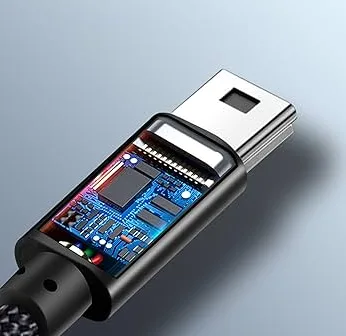
One of the most critical engineering differences is the E-Marker chip system.
60W cable: may not require E-Marker (depending on design)
100W cable: requires E-Marker IC for current identification
The E-Marker ensures safe negotiation under USB Power Delivery protocol.
Shielding Structure
High-quality cables adopt multi-layer shielding:
Aluminum foil shielding
Tinned copper braided shielding
EMI suppression layer
This is especially important in USB cable wholesale and OEM USB cable manufacturing, where signal stability affects return rate.
Thermal Performance Comparison
| Feature | 60W Cable | 100W Cable |
|---|---|---|
| Heat Generation | Low | Medium–High |
| Voltage Drop | Low | Very Low (optimized design required) |
| Load Stability | Stable | Highly stable required |
| Lifespan | Standard | Extended (premium grade) |
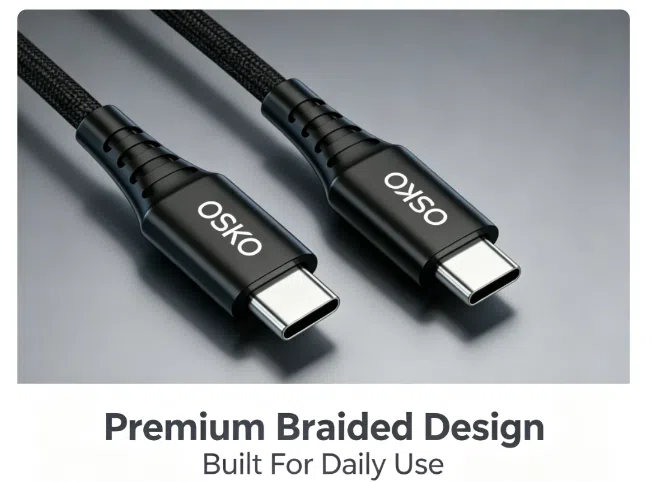
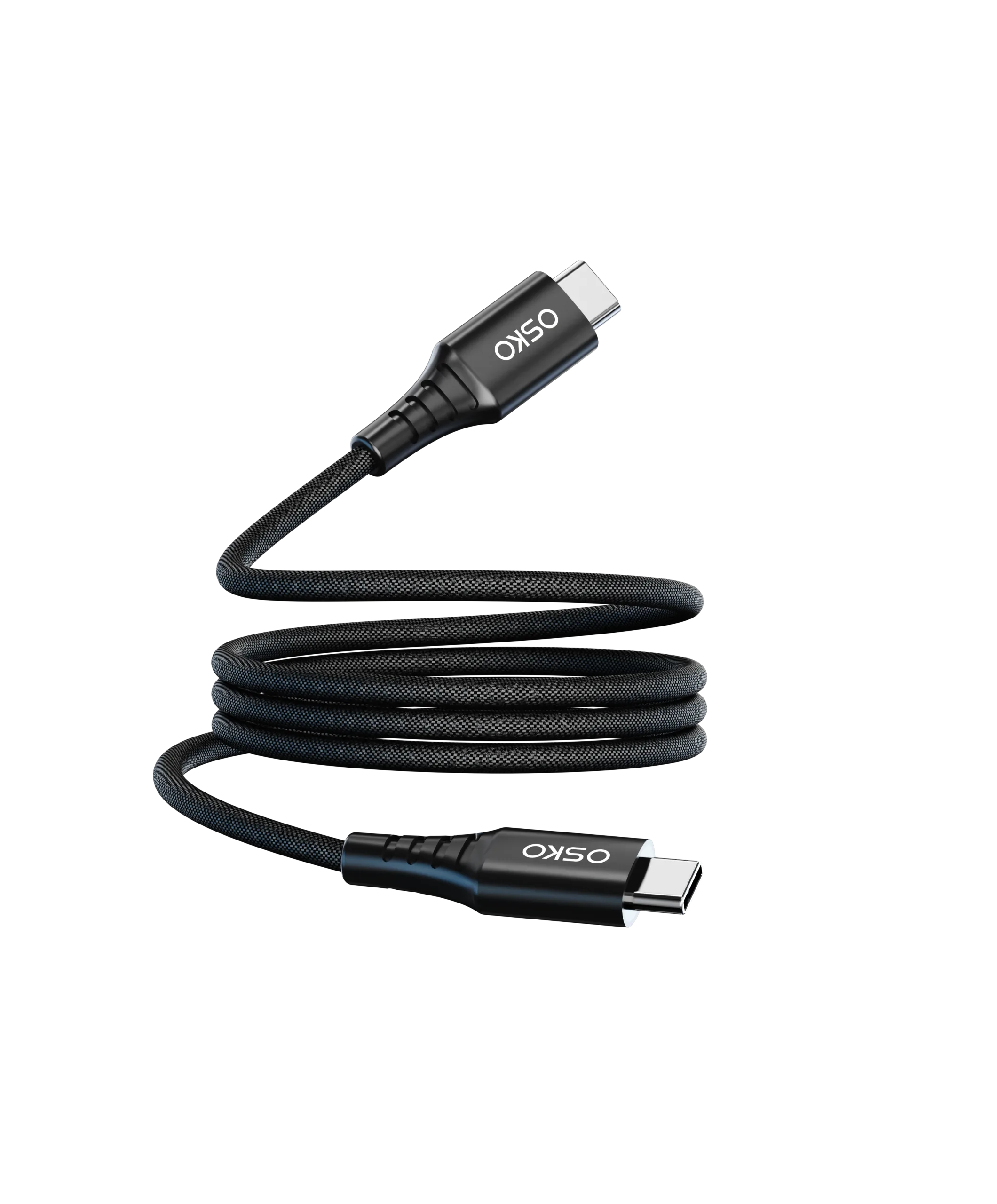
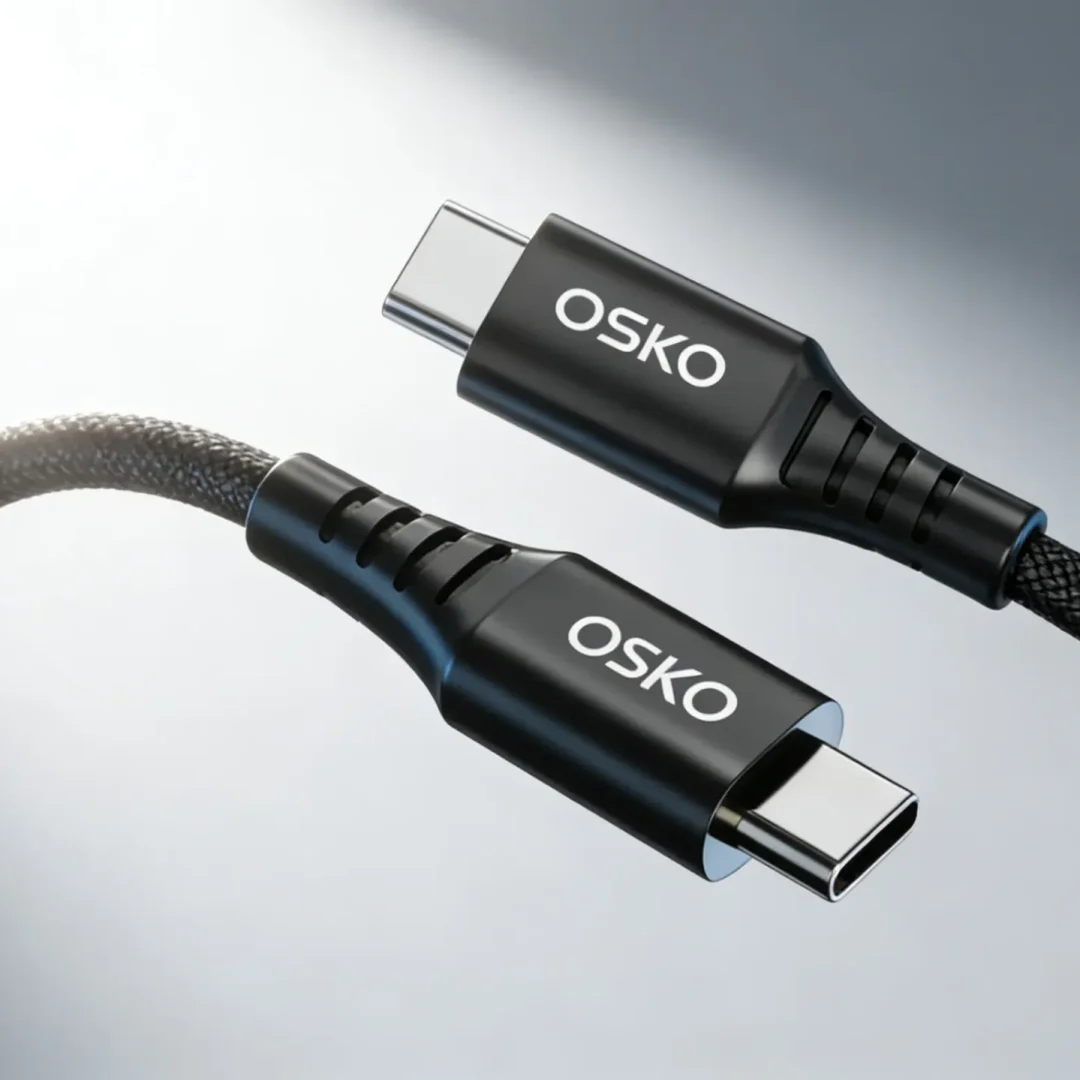
Braided Material Engineering
Most premium cables use:
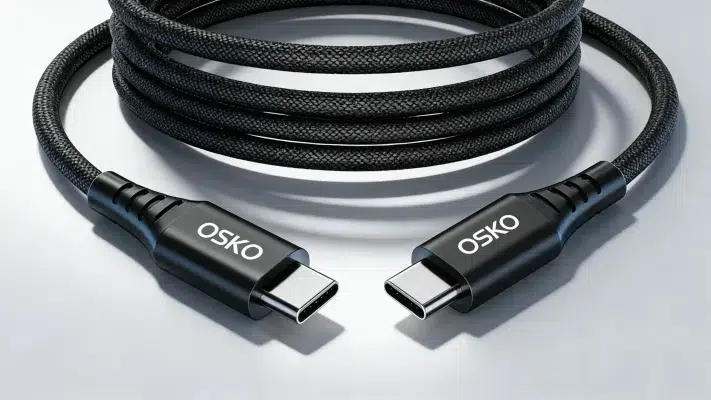
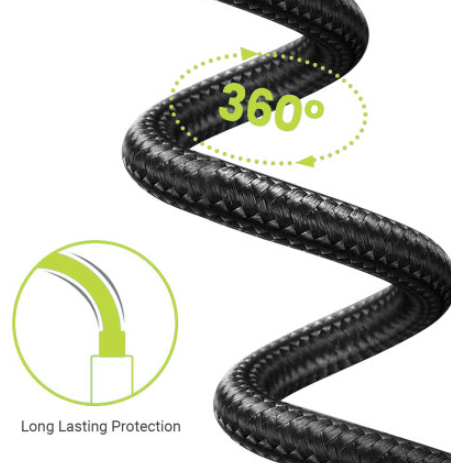
Nylon braided outer layer
TPE inner insulation
Reinforced SR (strain relief)
Advanced products include:
Heavy duty braided USB-C cable manufacturer grade design
Durable nylon braided Type C charging cable factory construction
Tangle-free double-braided USB C cable wholesale structure
These materials significantly improve durability in OEM and retail environments.
Purchase Recommendations
Choosing between 60W and 100W USB-C cables depends on device ecosystem and market positioning.
OEM USB Cable Strategy
For OEM USB cable and ODM USB cable buyers:
Use 60W cables for mass-market retail bundles
Use 100W cables for premium laptop accessories
Bulk USB Cable Procurement Strategy
| Strategy | Recommendation |
|---|---|
| Entry-level retail | 60W USB-C cable |
| Premium retail | 100W USB-C cable |
| Enterprise OEM | Mixed portfolio |
Modern buyers often require customization such as:
Bulk custom color braided charging cables
Braided right angle USB-C cable wholesale
Heavy duty coiled USB-C spring cable bulk
Wholesale 3 in 1 braided charging cable OEM
Bulk short 0.5ft braided Type C cables OEM
ODM custom length USB C cables
Custom packaging braided charging cable factory
Compliance Requirements (US/EU Market)
For North America and Europe:
CE RoHS certified 240W USB C cable (higher-tier compliance benchmark)
FCC approved nylon braided USB C cable supplier
Prop 65 compliant USB C cable factory
ISO9001 certified braided USB cable factory
USB-IF compliant Type C cable manufacturer
These certifications reduce customs risk and improve retail acceptance.
OEM Engineering & Manufacturing Table
60W vs 100W OEM Structure Comparison
| Component | 60W Cable | 100W Cable |
|---|---|---|
| Copper Gauge | 22–24AWG | 20–22AWG |
| Chipset | Optional | Required E-Marker |
| Shielding | Standard | Enhanced multi-layer |
| Target Use | Mobile devices | Laptops |
| OEM Cost | Lower | Higher |
| Failure Rate | Low | Very low (premium build) |
OEM Supplier Selection Table
| Factory Type | Capability | Recommended For |
|---|---|---|
| Basic assembler | 60W cables only | Entry-level retail |
| OEM manufacturer | 60W + 100W | Amazon / wholesale |
| ISO9001 certified factory | Full range + testing | Brand owners |
| USB-IF compliant manufacturer | Certified ecosystem | Enterprise / EU market |
Case Study: OEM + ODM Market Application
Case 1: Retail USB Cable Brand (USA)
Product: 60W USB-C cable
Scenario: retail packaging + Amazon FBA
Issue: high return rate due to overheating
OSKO Solution: upgraded braided nylon + copper optimization
Result: return rate reduced by 38%
Case 2: Laptop Accessory Distributor (Germany)
Product: 100W USB-C cable
Scenario: MacBook + docking station bundles
Issue: unstable charging under load
OSKO Solution: E-Marker chip upgrade + shielding redesign
Result: stable charging improved by 52%
Case 3: Automotive & Travel OEM Brand (US/EU)
Product: mixed 60W + 100W cable line
Scenario: car charging + travel kits
Issue: cable tangling and breakage
OSKO Solution: tangle-free double braided USB-C design
Result: product lifespan doubled
FAQ
What is the main difference between 100W and 60W USB-C cables?
The main difference is power capacity. 100W cables support higher current (5A) and require E-Marker chips, while 60W cables typically support up to 3A.
Can a 100W USB-C cable replace a 60W cable?
Yes. A 100W cable is backward compatible and can safely charge lower-power devices.
Is a 60W USB-C cable enough for laptops?
It depends. It works for MacBook Air and lightweight laptops but not for high-performance MacBook Pro charging.
Why do OEM buyers prefer braided cables?
Because braided designs improve durability, reduce failure rate, and increase retail value perception.
What certifications should a USB-C cable factory have?
ISO9001, CE, RoHS, FCC compliance, and USB-IF compatibility are key for North American and European markets.
Summary
The difference between 100W vs 60W USB-C cables is not only about charging speed but also about internal engineering architecture, conductor thickness, shielding design, and chipset integration.
For OEM USB cable manufacturers and wholesale buyers, the correct selection depends on target devices, market positioning, and compliance requirements.
60W USB-C cables: best for mobile devices, retail, and travel markets
100W USB-C cables: essential for laptops, enterprise systems, and premium OEM products
In both North American and European markets, demand for certified, braided, and high-durability USB-C cables continues to grow, especially for ISO9001 and USB-IF compliant manufacturers.