

Introduction
Many users assume that buying a “fast-charging cable” automatically increases charging speed. In reality, the situation is more complex.
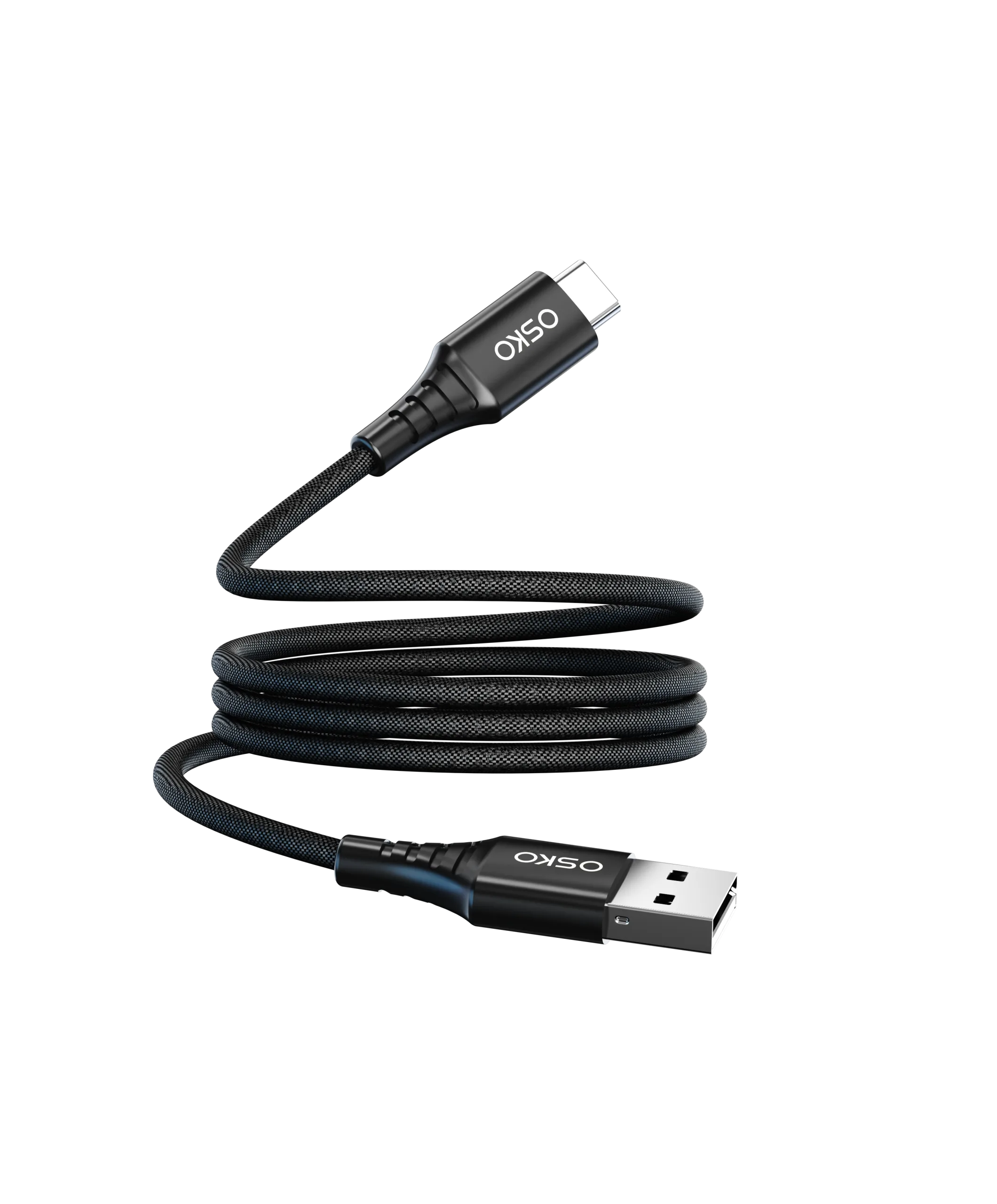
A fast-charging cable does not generate power by itself. Instead, it acts as a controlled electrical pathway that must support higher current, stable voltage, and proper communication between charger and device.
Whether a cable is “faster” depends on multiple engineering factors including copper resistance, power delivery protocol, connector quality, and device compatibility.
For OEM USB cable manufacturers, ODM USB cable suppliers, and Wholesale USB cable distributors, understanding real charging performance is critical for product design and market positioning.

Applicable Scenarios
Fast-charging cables are widely used in modern ecosystems:
OEM USB cable bundled with smartphones and tablets
ODM USB cable for branded electronics accessories
Wholesale USB cable distribution for Amazon and retail markets
Bulk USB cables for enterprise charging stations
Retail USB cable for consumer electronics stores
Travel USB cable for portable power banks
Desk charging cable for office environments
Car charging cable for Android Auto and Apple CarPlay
Home USB cable for multi-device charging setups
Each environment places different demands on electrical performance and durability.
Material Science & Electrical Performance
What Actually Determines Charging Speed
A fast-charging cable only performs well when the entire system supports it:
Charger wattage (20W–240W)
Cable resistance and conductor quality
Device charging protocol (PD / PPS / QC)
Internal chip communication (E-Marker for high wattage)
The cable itself is only one part of the system.
Copper Resistance and Power Loss
Inside every USB-C cable:
Electrical current flows through copper conductors
Resistance generates heat and energy loss
Higher resistance = slower effective charging
High-quality cables use:
Oxygen-free copper (OFC)
Thick gauge multi-strand conductors
Low-resistance engineering design
Low-quality cables reduce charging efficiency even if labeled “fast charging.”

USB Power Delivery (PD) System
USB-C fast charging relies on PD protocol:
| Power Level | Charging Performance | Device Type |
|---|---|---|
| 10W–18W | Basic charging | Older phones |
| 20W–30W | Fast smartphone charging | iPhone / Android |
| 45W–65W | Tablets / laptops | MacBook, Galaxy |
| 100W–240W | High-performance devices | Gaming laptops |
If the cable cannot support PD communication, charging speed will be limited automatically.
E-Marker Chip Function
For cables above 60W:
E-Marker chip is required
It communicates safe current limits
Prevents overheating and device damage
Without it, even a high-wattage charger will downgrade performance.
Cable Length and Speed Loss
| Length | Resistance Level | Speed Impact |
|---|---|---|
| 3ft | Low | Minimal loss |
| 6ft | Medium | Slight voltage drop |
| 10ft | High | Noticeable power loss |
This is why Bulk custom 6ft 10ft USB-C cables must be carefully engineered.
Shielding and Stability
Fast charging cables also need stable signal integrity:
Aluminum foil shielding reduces EMI
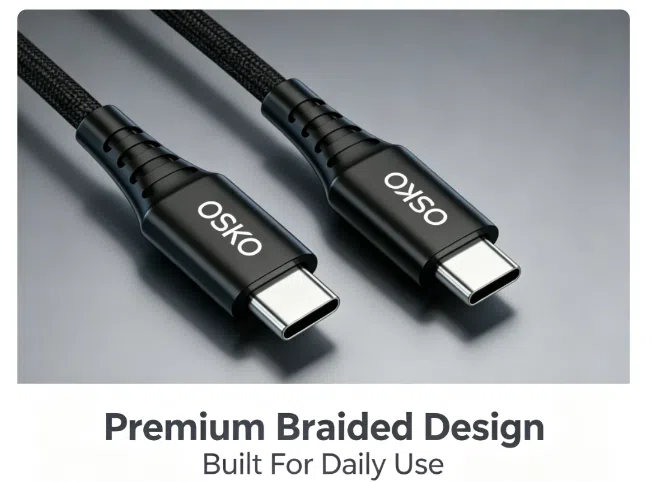
Braided copper mesh improves durability
Signal pair separation ensures stable PD communication
Poor shielding can cause charging interruptions.
Are Fast-Charging Cables Really Faster?
The Simple Answer
No, a fast-charging cable is not inherently faster on its own.
It only enables faster charging when:
The charger supports high wattage
The device supports fast charging protocol
The cable has low resistance and proper certification
When Fast-Charging Cables DO Make a Difference
A high-quality cable improves performance in these cases:
Replacing a low-quality thin copper cable
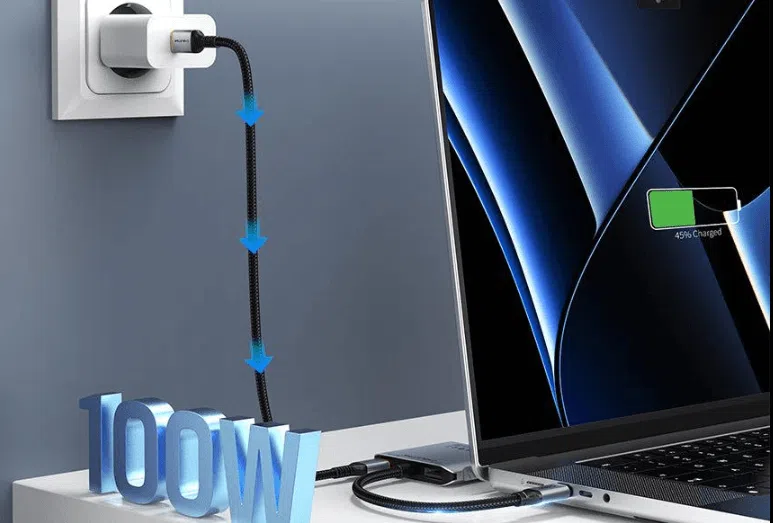
Enabling full PD 60W–100W laptop charging
Maintaining stable current over long cables
Supporting E-Marker authentication for high wattage
When Fast-Charging Cables DO NOT Improve Speed
They do not help when:
Device does not support fast charging
Charger output is limited (e.g., 5W adapter)
Cable already meets required specifications
In these cases, upgrading the cable will not increase speed.
Real-World Example
| Setup | Cable Type | Result |
|---|---|---|
| 5W charger + any cable | Standard USB cable | Slow charging |
| 20W charger + poor cable | Low-quality USB-C cable | Reduced fast charging |
| 20W charger + high-quality cable | 60W braided USB-C cable | Full fast charging |
| 65W charger + E-Marker cable | 100W USB-C cable | Maximum supported speed |
Purchase Recommendations
Cable Selection Table
| Use Case | Recommended Cable |
|---|---|
| Smartphone charging | 60W braided USB-C cable |
| Tablets | 60W–100W cable |
| Laptops | 100W USB-C cable with E-Marker |
| Travel use | 3ft lightweight cable |
| Desk setup | 6ft durable cable |
| Car charging | Right-angle USB-C cable |
OEM Manufacturing Strategy Table
| Category | Engineering Focus | OSKO Solution |
|---|---|---|
| OEM USB cable | Compatibility assurance | Custom testing |
| ODM USB cable | Product differentiation | Material redesign |
| Wholesale USB cable | Cost optimization | Mass QC system |
| Bulk USB cables | Supply consistency | Automated inspection |
| Retail USB cable | Premium positioning | Braided + packaging |
| Travel USB cable | Portability | Lightweight structure |
| Car charging cable | Vibration resistance | Reinforced connectors |
| Home USB cable | Long lifespan | Heat-resistant insulation |
Certification Requirements (US/EU Market)
CE RoHS certified 240W USB C cable
FCC approved nylon braided USB C cable supplier
USB-IF compliant Type C cable manufacturer
ISO9001 certified braided USB cable factory wholesale
Prop 65 compliant USB C cable factory
FAQ
Do fast-charging cables charge faster?
Only if the entire charging system (charger + device + cable) supports fast charging.
Can a bad cable slow down fast charging?
Yes, high resistance cables significantly reduce charging speed.
Do all USB-C cables support fast charging?
No, only properly engineered cables with correct specifications.
Is a 100W cable faster than a 60W cable?
Not always. It depends on device and charger compatibility.
What is the most important factor for fast charging?
Device protocol and charger wattage are more important than cable labeling.
Summary
Fast-charging cables are not inherently faster by themselves. Instead, they function as essential components within a complete power delivery system that includes the charger, device, and cable design.
A high-quality USB-C cable ensures stable current flow, low resistance, and proper communication through USB Power Delivery protocols and E-Marker chips when required.
For OEM USB cable manufacturers, ODM USB cable suppliers, and Wholesale USB cable distributors, the key to market success is not just labeling a product as “fast charging,” but engineering cables that consistently deliver real-world performance across different devices and environments in North American and European markets.