
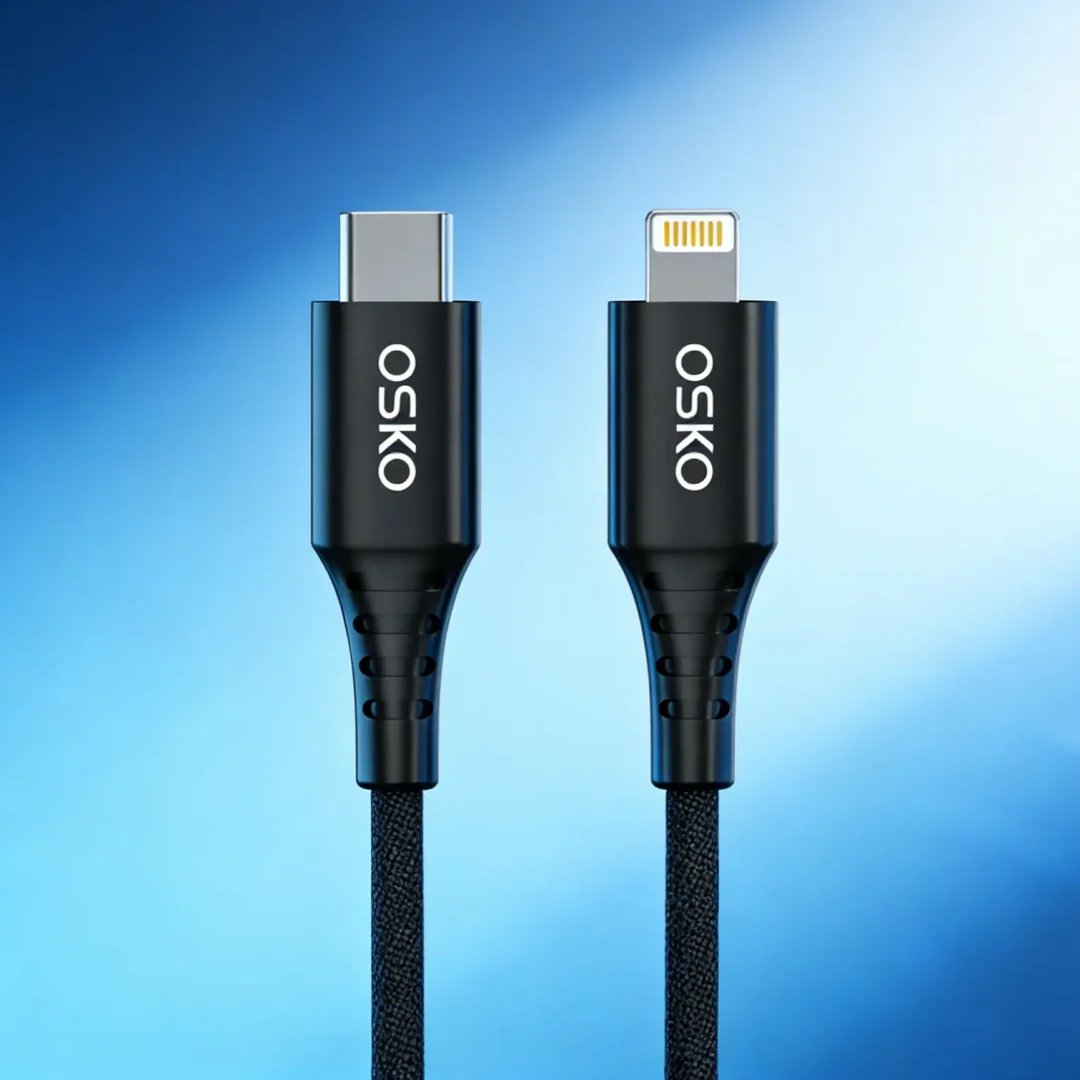
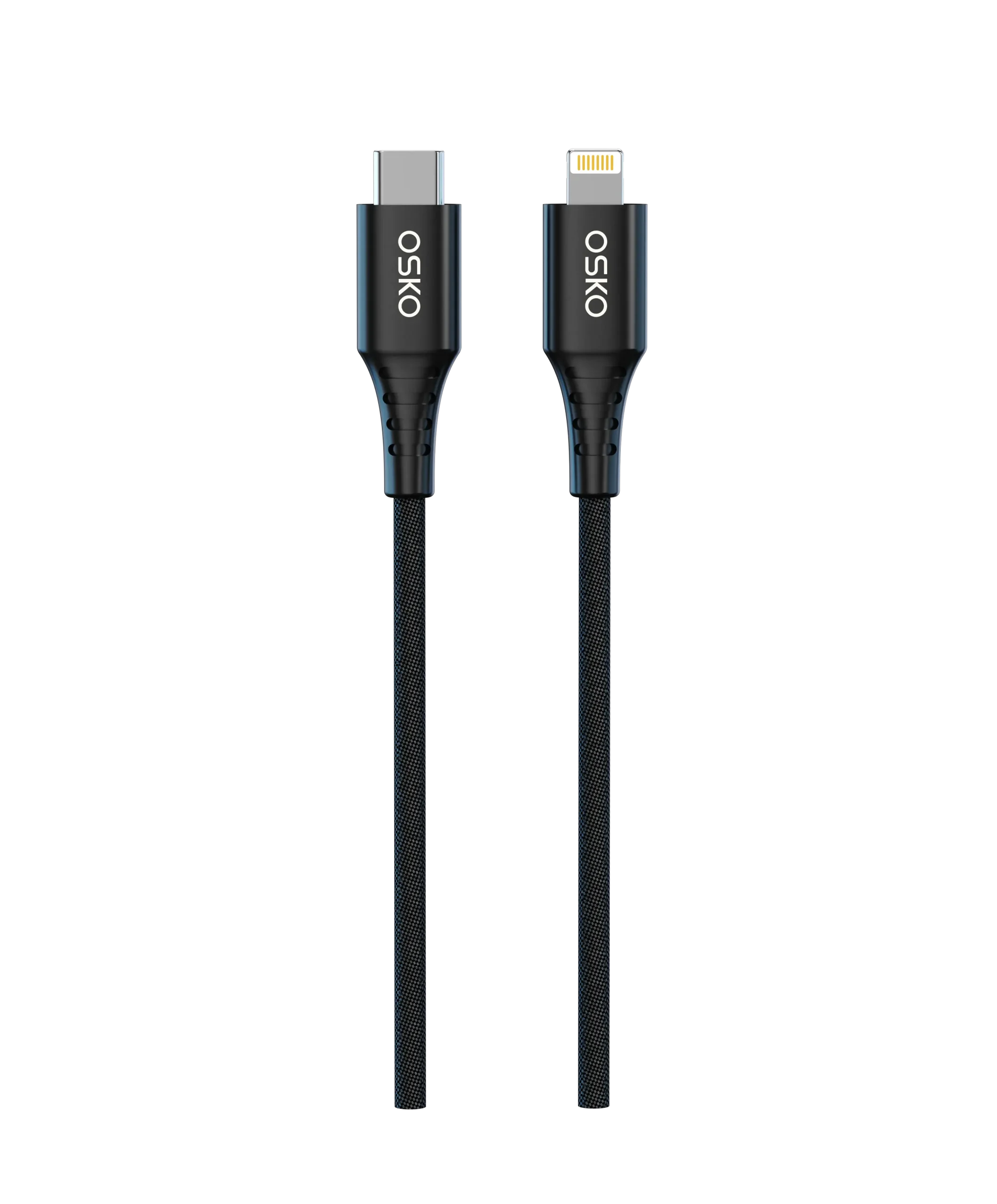
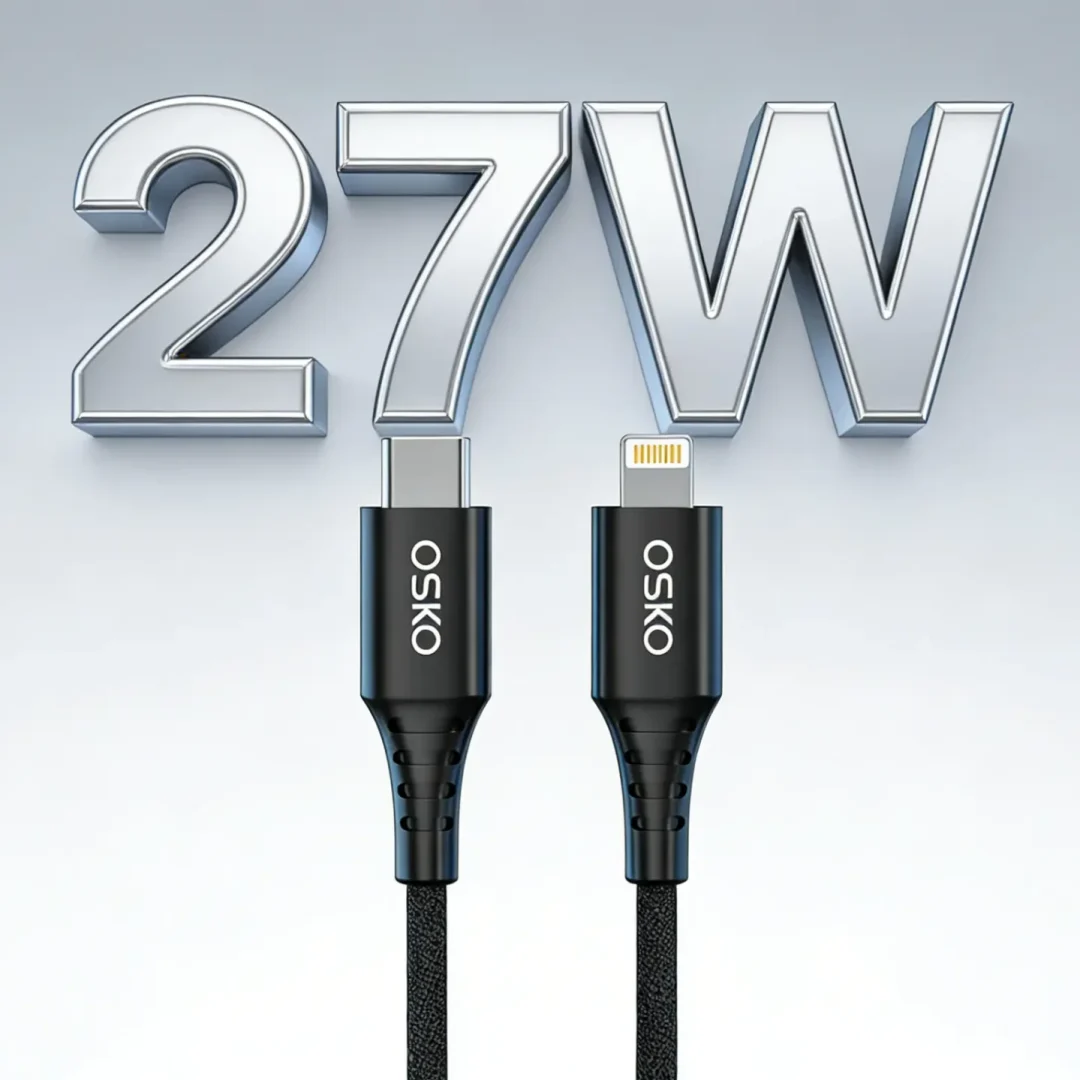
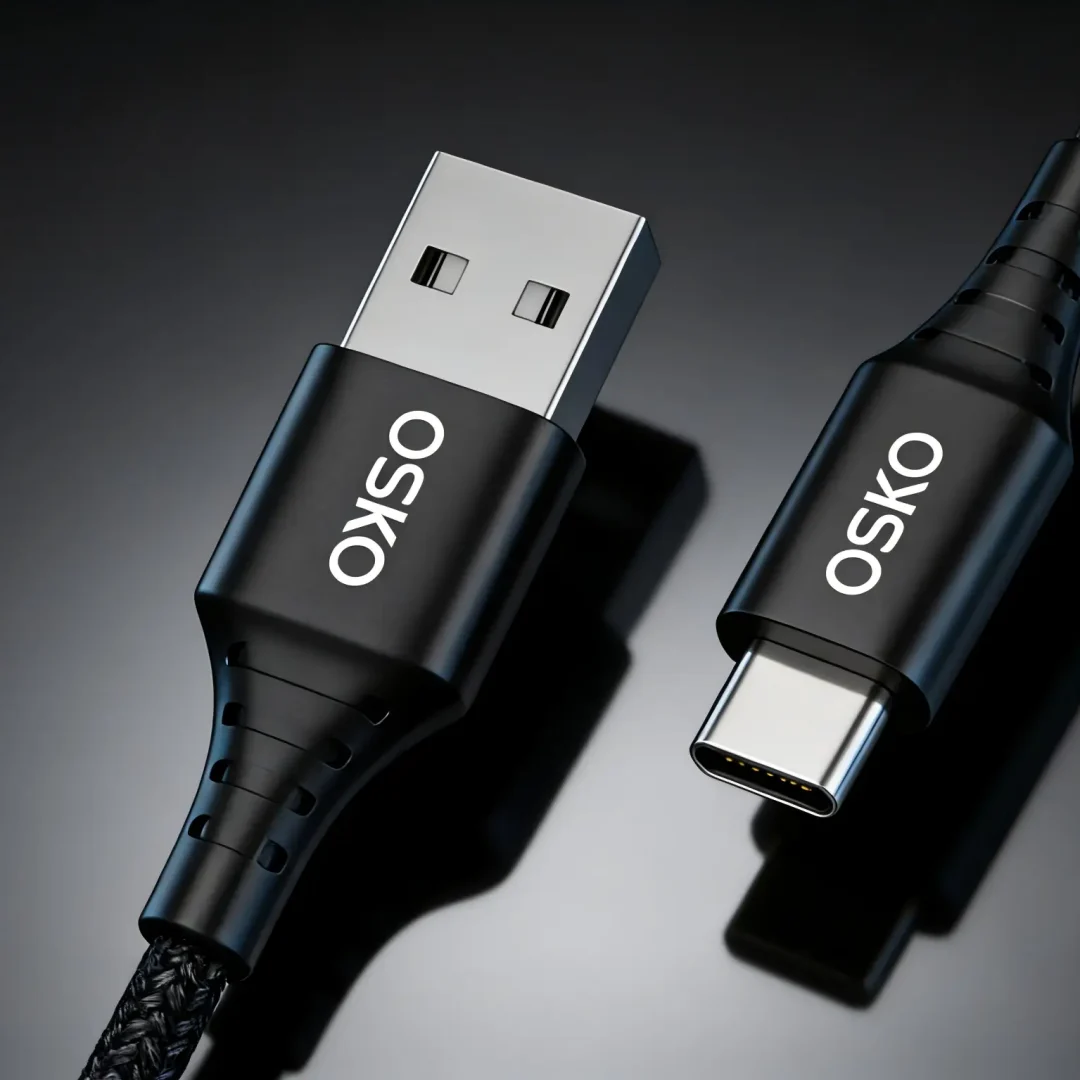
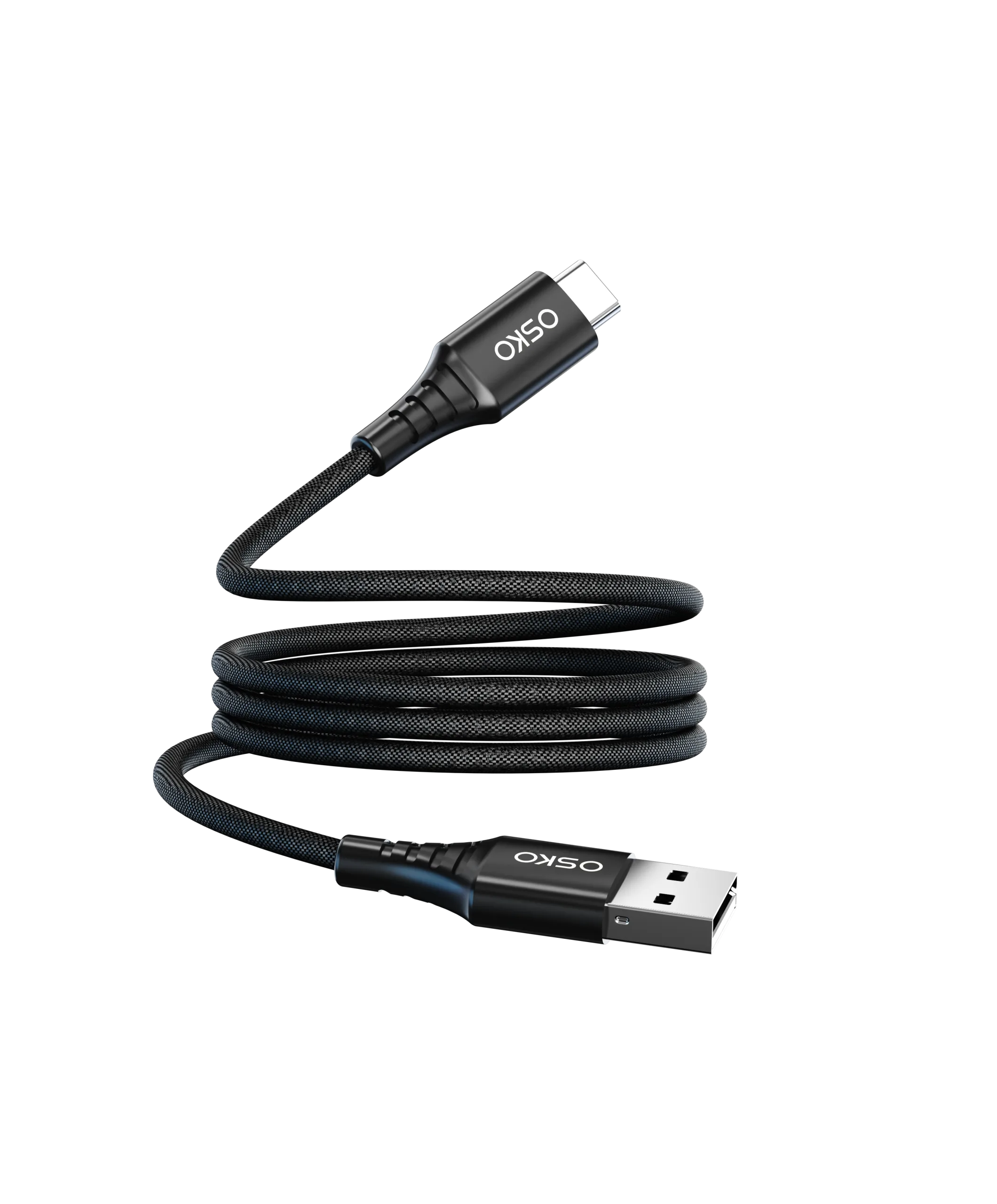
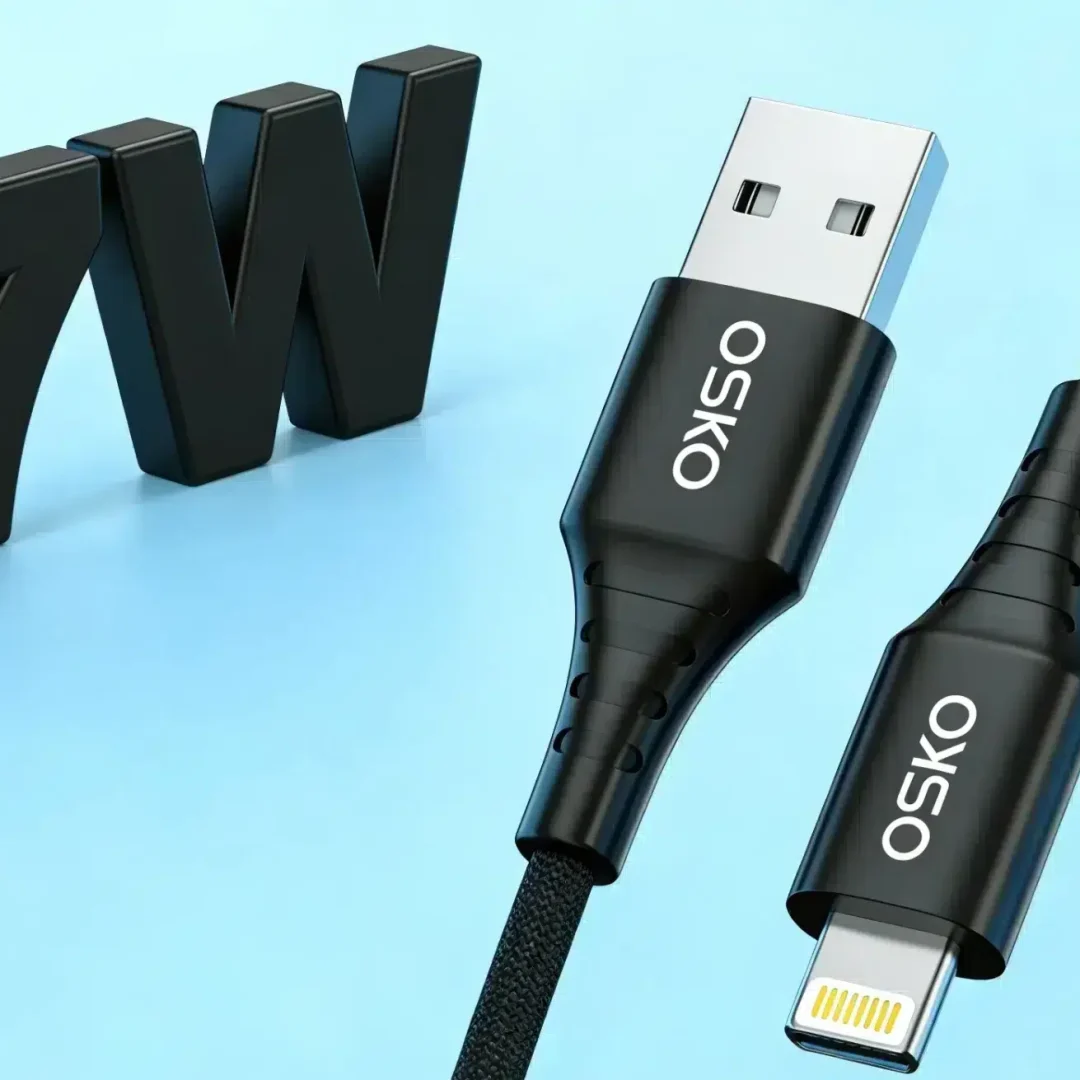
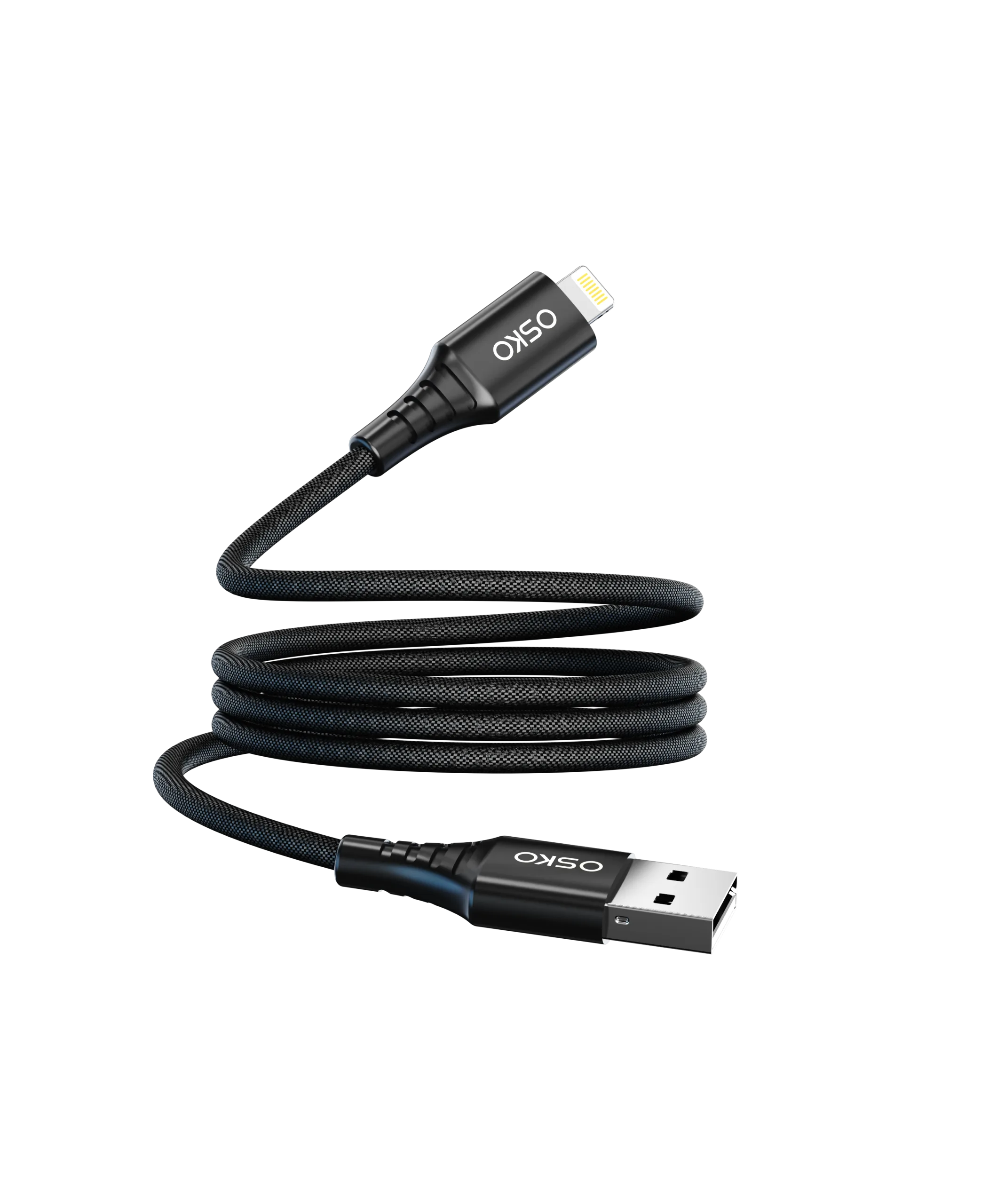
The USB-C to Lightning cable remains an important charging accessory even though Apple has moved newer iPhone models to USB-C.
The key distinction is device generation.
iPhone 15 and later use a USB-C connector. Earlier Lightning-equipped iPhone models, including the iPhone 14 family, can use a USB-C to Lightning charging cable with a compatible USB-C Power Delivery adapter for fast wired charging. Apple currently continues to document USB-C to Lightning as the fast-charging option for earlier iPhone models.
That makes USB-C to Lightning a legacy-device product rather than a new-iPhone connector solution.
For consumers, the main questions are compatibility, charging speed, durability, and cable quality.
For retailers, wholesalers, and private-label brands, there are additional considerations: MFi requirements where applicable, connector construction, material quality, testing, packaging, MOQ, and supply consistency.
This guide explains how USB-C to Lightning cable fast charging works, what buyers should verify, and how to source OEM Lightning charging cables for North American and European markets.
How USB-C to Lightning Fast Charging Works
The basic configuration is:
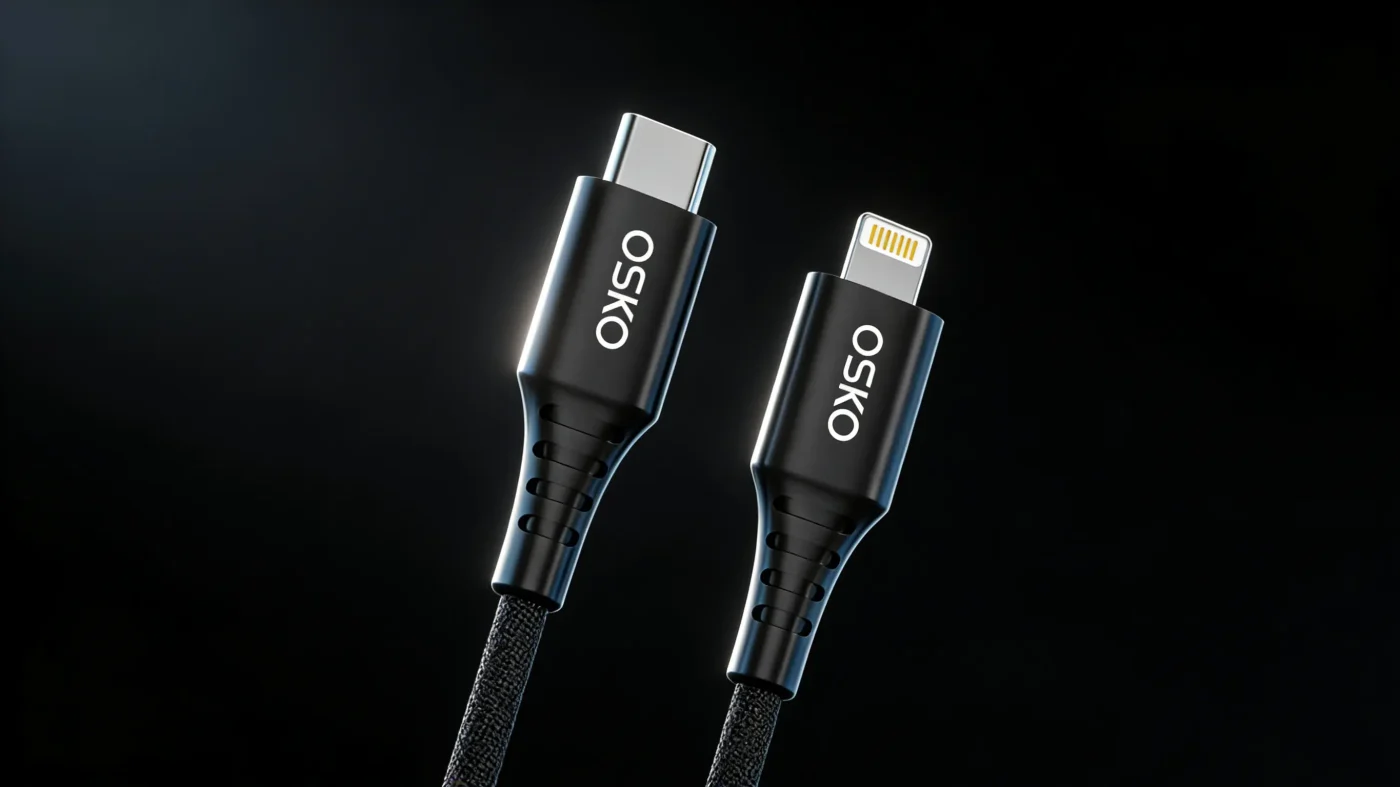
USB-C Power Adapter → USB-C Connector → Cable → Lightning Connector → iPhone or iPad
The USB-C side connects to a USB-C power adapter, while the Lightning side connects to a compatible Apple device.
Apple’s current charging guidance states that earlier iPhone models can use a USB-C to Lightning cable with an Apple 18W-or-higher USB-C power adapter or a compatible third-party USB-C PD adapter for fast charging.
The important point is that the cable does not create the charging power by itself.
Actual charging performance depends on the:
Apple device
Power adapter
Cable
Charging protocol
Battery condition
Temperature
Overall system
This is why a product should not simply be advertised as “30W iPhone cable” without defining the supported device and test conditions.
Which Devices Need a USB-C to Lightning Cable?
The transition to USB-C means retailers need to understand the difference between current and legacy Apple products.
| Device category | Common cable direction |
|---|---|
| iPhone 15 and later | USB-C to USB-C |
| Earlier Lightning iPhones | USB-C to Lightning |
| Lightning-equipped iPads | USB-C to Lightning |
| Older Lightning accessories | USB-C to Lightning may be useful |
| USB-C Apple devices | USB-C to USB-C |
Apple’s iPhone 14 specifications, for example, identify a Lightning connector and state that the included USB-C to Lightning cable supports fast charging.
For a wholesale buyer, this means the Lightning market is still relevant, but the product strategy should focus on the installed base of Lightning devices rather than treating Lightning as the connector for new iPhones.
Does a USB-C to Lightning Cable Need MFi?
This is one of the most important questions for OEM buyers.
Apple’s MFi Program covers third-party hardware accessories that use Apple’s licensed technologies or components. Apple specifically lists Lightning connectors and receptacles and authentication coprocessors among MFi technologies and components.
Apple also states that USB-C charging accessories that do not use MFi-licensed technologies are outside the MFi Program.
For Lightning products, however, MFi requirements can be relevant.
A professional buyer should therefore ask:
Is this product an MFi licensed accessory?
Which MFi technology or component does it use?
Who is the MFi licensee?
Can the finished product be verified through Apple’s MFi resources where applicable?
Do not treat an “Apple compatible” claim as equivalent to MFi certification.
For a private-label Lightning cable, compliance status should be established before packaging artwork is finalized.
USB-C to Lightning Cable Materials
A reliable USB-C to Lightning charging cable is built from several functional components.
Copper Conductors
Conductors carry the electrical power and data signals.
Useful procurement specifications include:
Conductor material
Strand structure
Cross-sectional area
Resistance
Cable length
Flexibility
Do not assume that a phrase such as “high-purity copper” automatically proves better performance. Actual electrical specifications and testing are more meaningful.
Insulation
The insulation separates conductors and provides electrical and mechanical protection.
Common cable materials include:
PVC
TPE
Other application-specific polymer constructions
Material selection should balance electrical performance, flexibility, durability, manufacturing requirements, and target cost.
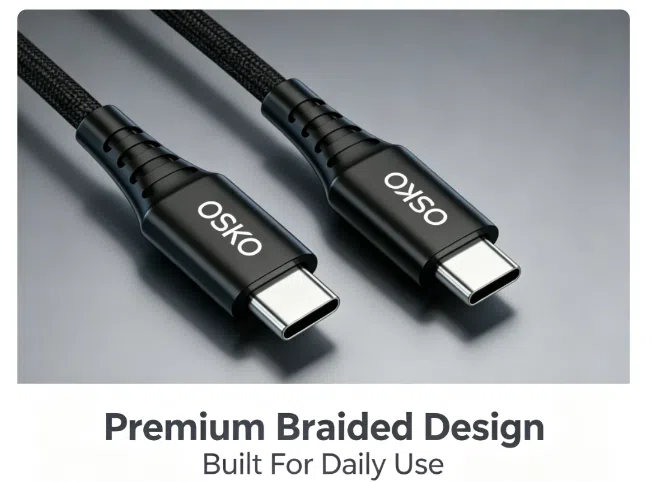
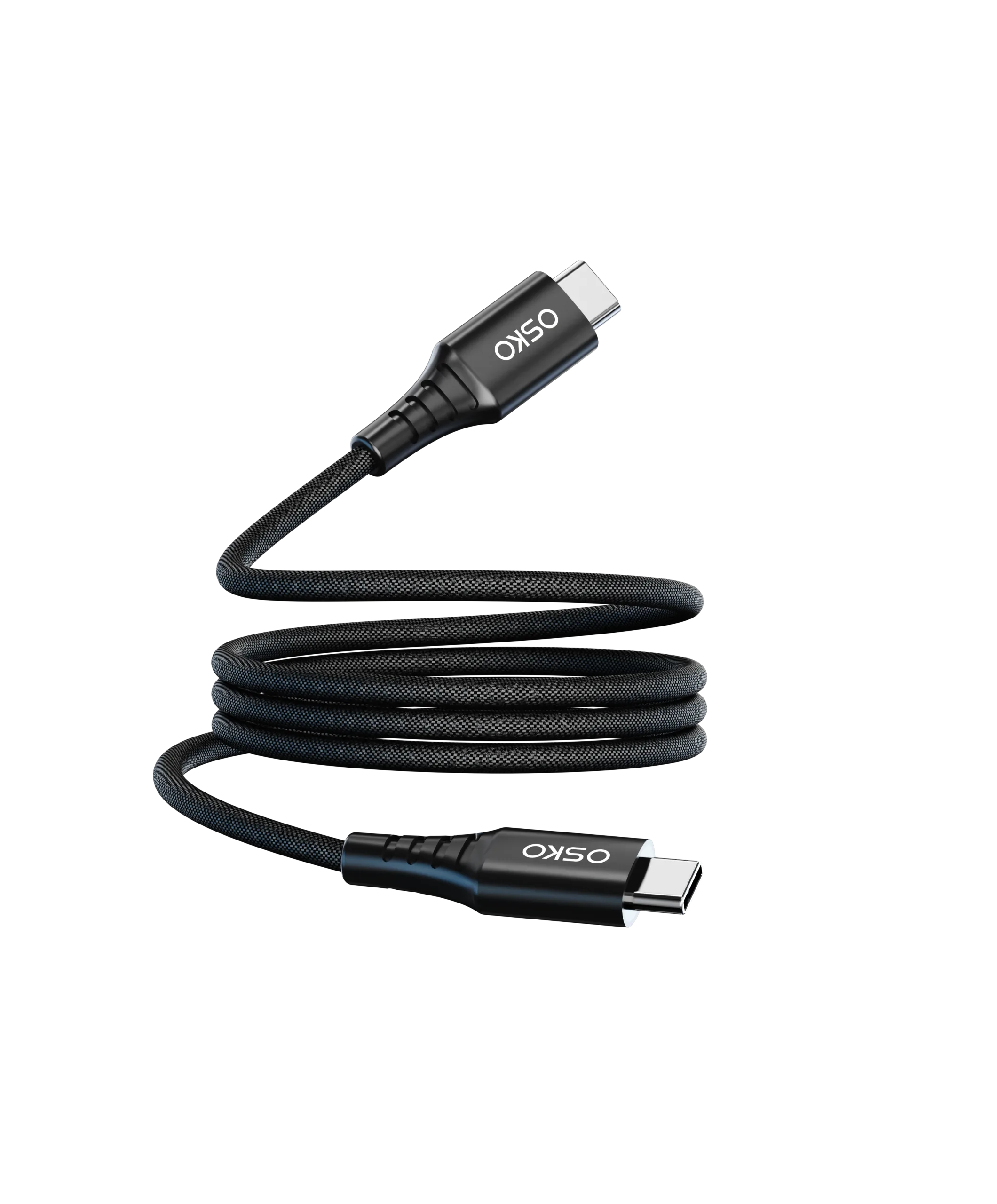
Nylon Braiding
A braided Lightning cable can provide:
Better abrasion resistance
Improved handling
Premium appearance
Additional mechanical protection
However, nylon braiding does not automatically increase charging power.
Charging performance comes from the electrical construction and compatibility of the complete system.
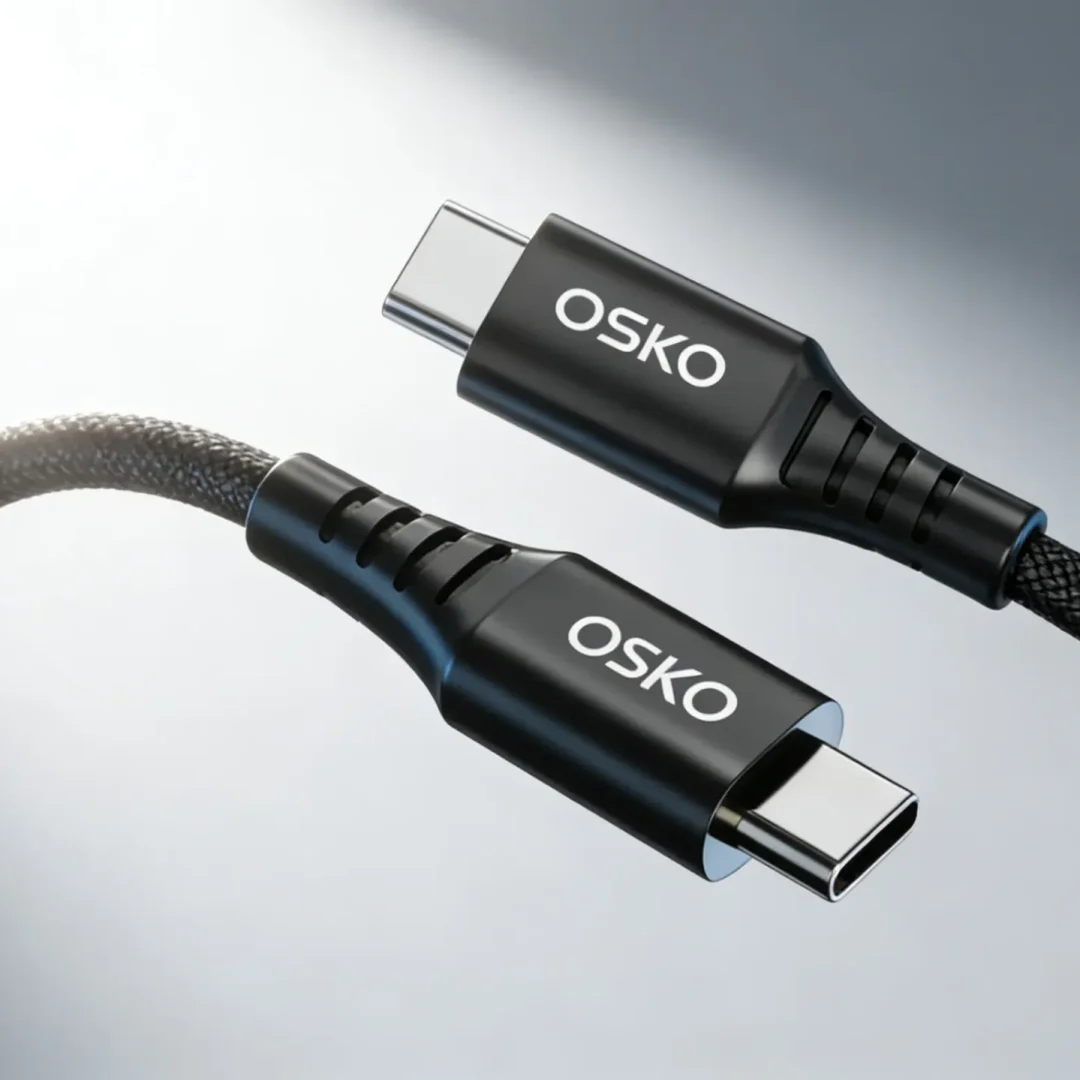
Connector and Strain Relief
The USB-C and Lightning connector transitions are mechanically important.
Poor strain relief can concentrate bending stress near the connector and eventually contribute to internal conductor or termination damage.
A good cable design combines:
Appropriate contact materials
Stable connector assembly
Proper strain relief
Flexible cable construction
Controlled overmolding
USB-C to Lightning Cable Data Transfer
Lightning cable products can support data synchronization, but buyers should be careful with generic “high-speed” claims.
For many Lightning-based configurations, USB 2.0-class data performance is the relevant baseline.
More importantly, charging performance and data performance are separate specifications.
A cable can be perfectly suitable for charging while providing only basic data transfer.
For a retail product, specify the actual supported data capability rather than using a vague “high-speed data” statement.
Why Braided Lightning Cables Are Popular
The Lightning market is strongly influenced by consumer perception of durability.
A braided outer layer gives customers a visible quality cue and can improve resistance to everyday abrasion.
This is particularly useful for:
Travel
Cables are folded, packed, and unpacked repeatedly.
Office
Cables may be connected and disconnected throughout the workday.
Car charging
The cable experiences movement, vibration, and repeated handling.
Retail products
A premium braided appearance can support higher perceived product value.
Still, buyers should remember that the internal construction determines much of the actual reliability.
Fast Charging, Heat and Cable Length
A longer cable does not automatically mean slow charging.
However, longer conductors can introduce additional resistance, so cable length should be considered as part of the complete electrical design.
The same principle applies to heat.
Higher charging power can place greater demands on:
Conductors
Connector contacts
Termination
Insulation
Cable construction
A professional fast charging Lightning cable should therefore be validated under its intended operating conditions.
Avoid promises such as “10ft always charges just as fast as 3ft” unless the exact product has been tested to support that claim.
OEM and Wholesale USB-C to Lightning Cable Solutions
For brands and distributors, the sourcing process should begin with a detailed product specification.
Cable Configuration
Define:
USB-C to Lightning
Cable length
Color
Jacket type
Braid
Connector design
Charging Requirement
Define the intended charging application rather than simply selecting a large wattage number.
For example:
USB-C to Lightning cable for iPhone 14 fast charging
is a clearer commercial specification than:
30W Apple fast-charging cable
Branding
OEM options may include:
Cable logo
Connector branding
Custom color
Retail box
Hang packaging
Barcode labeling
Private-label documentation
Production Quality
Ask suppliers about:
Incoming material inspection
Electrical testing
Connector inspection
Charging-performance testing
Mechanical testing
Finished-goods inspection
Sample approval should take place before mass production.
Engineering Case Study: Private-Label Lightning Cable for a North American Retailer
A representative North American electronics retailer wanted to launch a premium USB-C to Lightning cable wholesale program for customers still using Lightning-equipped iPhones and accessories.
The retailer’s previous product had acceptable pricing but inconsistent connector durability.
Procurement Requirements
The buyer required:
USB-C to Lightning configuration
Retail-friendly 3ft and 6ft lengths
Black braided construction
Reliable fast charging
Private-label packaging
Consistent production quality
Engineering Approach
The cable specification was standardized before production.
The team reviewed:
Conductor design
The power and signal paths were matched to the intended application.
Connector transition
Strain relief and overmolding were improved to reduce mechanical stress.
Braid construction
The outer braid was selected for consistent appearance and everyday abrasion resistance.
Quality control
Inspection focused on electrical continuity, connector assembly, charging behavior, appearance, and finished-product consistency.
The project demonstrated an important sourcing principle:
A good Lightning cable program is not created by adding a logo to an existing cable.
It requires control over the underlying product specification.
How to Evaluate a USB-C to Lightning Cable Supplier
Before choosing a USB-C to Lightning cable manufacturer, review five areas.
Product Experience
Does the factory regularly manufacture Lightning cables?
Can it provide production samples?
Does it understand Apple accessory requirements?
Engineering
Can the supplier explain:
Conductor construction
Connector design
Strain relief
Charging capability
Data capability
Quality Control
Ask for the factory’s inspection process and test methods.
Compliance
Verify the exact status of applicable MFi requirements and market-specific compliance documentation.
Manufacturing and Customization
Check:
MOQ
OEM capability
Logo options
Packaging
Lead time
Production capacity
A supplier should be evaluated on repeat-production capability, not only sample appearance.
US, Germany, Australia and Netherlands Search Intent
United States
B2C searches may include:
USB-C to Lightning cable
fast charging Lightning cable
USB-C to Lightning cable for iPhone 14
braided Lightning cable
B2B searches include:
USB-C to Lightning cable wholesale
bulk Lightning cables
OEM iPhone charging cable supplier
private label Lightning cable manufacturer
Germany
German commercial searches may include:
USB-C auf Lightning Kabel
Lightning Kabel Hersteller
USB-C Lightning Kabel Großhandel
Lightning Ladekabel
German B2B buyers often expect clear technical information, documentation, quality consistency, and reliable delivery.
Australia
Search intent may include:
USB-C to Lightning cable Australia
fast charging Lightning cable
braided Lightning charging cable
Lightning cable wholesaler Australia
Travel, automotive, retail, and everyday charging are useful applications.
Netherlands
Potential searches include:
USB-C naar Lightning kabel
Lightning kabel groothandel
Lightning kabel leverancier
USB-C Lightning kabel wholesale
For Dutch distributors, customization, product quality, delivery, and supply continuity can be important commercial factors.
FAQ
Can I use a USB-C to Lightning cable for fast charging an iPhone?
Yes. Apple states that iPhone 14 and earlier Lightning-equipped models can use a USB-C to Lightning cable with a compatible USB-C power adapter for fast charging.
Do iPhone 15 models use USB-C to Lightning cables?
No. iPhone 15 and later use USB-C connectors. Apple recommends a USB-C cable for wired charging on these newer models.
Does every USB-C to Lightning cable support fast charging?
Not every cable should be assumed to offer identical performance. Use a properly specified cable with a compatible USB-C Power Delivery adapter and verify the intended device compatibility.
Does a USB-C to Lightning cable need MFi certification?
The answer depends on the product’s use of Apple’s MFi licensed technologies and components. Apple states that ordinary USB-C charging accessories without MFi licensed technologies are not part of the MFi Program, while Lightning-related technologies and components are included in the program.
Is a braided Lightning cable better than a PVC cable?
A braided cable can provide better abrasion resistance and a more premium appearance, but the braid alone does not guarantee better charging performance or longer service life.
What length should I choose for a USB-C to Lightning cable?
Three feet is convenient for desks and everyday charging, while six feet offers more flexibility beside beds, desks, and in vehicles. Longer products should be validated for the intended electrical performance.
Can USB-C to Lightning cables be used in cars?
Yes. They can be used with compatible USB-C car chargers for Lightning-equipped iPhones and accessories. Automotive buyers should also consider cable flexibility, connector durability, temperature exposure, and repeated handling.
Can I private-label USB-C to Lightning cables?
Yes. OEM and private-label programs can include cable length, color, braid, logo, connector appearance, and retail packaging. MFi-related requirements should be verified before the branded product is finalized.
What should I ask a Lightning cable manufacturer before ordering?
Ask about connector configuration, charging specification, data capability, MFi status where applicable, cable construction, testing, MOQ, packaging, samples, lead time, and defect-handling procedures.
Where can I buy USB-C to Lightning cables wholesale?
Retailers and distributors can source from specialized Lightning cable manufacturers or OEM suppliers. Compare equivalent specifications, sample quality, compliance documentation, MOQ, production capability, and landed cost rather than unit price alone.
Conclusion
The USB-C to Lightning cable remains commercially relevant even after Apple’s transition to USB-C.
Its primary market is now the installed base of Lightning-equipped iPhones, iPads, and accessories rather than the newest USB-C iPhone generation.
For users of earlier iPhone models, a USB-C to Lightning cable provides a practical path to fast wired charging when paired with a suitable USB-C Power Delivery adapter.
For retailers, wholesalers, and private-label brands, the opportunity is in serving legacy-device demand with reliable, well-specified products rather than treating Lightning as Apple’s current universal connector.
A quality product should address:
Charging compatibility
Cable construction
Connector durability
Data capability
MFi requirements where applicable
Quality testing
OEM customization
OSKO specializes in OEM and ODM USB cable manufacturing for brands, wholesalers, distributors, and retailers, including braided Lightning cables, USB-C to Lightning charging cables, custom lengths, private-label packaging, samples, and bulk production.
For a USB-C to Lightning cable wholesale or OEM project, start with the exact target devices, charging requirement, cable length, construction, branding, and applicable compliance requirements.
Request OEM USB-C to Lightning Cable Solutions
Provide:
Cable length
Quantity
Target iPhone/iPad models
Charging requirement
Braided or TPE/PVC construction
Logo requirement
Packaging requirement
Target market
OSKO can help evaluate the specification, prepare samples, and develop a private-label USB-C to Lightning cable program for retail and wholesale distribution.