
Introduction: Why USB-IF Certification Matters for Custom USB Cable Brands
As USB-C becomes the standard connector for smartphones, laptops, tablets, monitors, and industrial devices, buyers are increasingly demanding reliable and certified cable solutions.
Many businesses assume that a USB-C connector automatically guarantees fast charging, high-speed data transfer, and universal compatibility. However, the connector shape is only one part of the complete cable design.
A professional USB-C cable manufacturer must control:
Electrical performance
Power delivery communication
Signal integrity
Connector design
E-Marker chip configuration
Material quality
Production consistency
For OEM brands, distributors, and electronics companies in the United States, Germany, Australia, and the Netherlands, USB-IF certification has become an important factor when selecting a reliable USB cable supplier.
A certified USB cable helps reduce compatibility problems, improve customer confidence, and support premium product positioning.
What Is USB-IF Certification?
What Does USB-IF Stand For?
USB-IF stands for USB Implementers Forum, the organization responsible for maintaining official USB specifications and certification programs.
USB-IF develops and manages standards including:
USB Type-C
USB Power Delivery (USB PD)
USB 2.0
USB 3.2
USB4
USB4 Version 2.0
The organization works with global technology companies, semiconductor manufacturers, and cable suppliers to ensure USB products achieve interoperability and performance consistency.
For a custom USB cable manufacturer, USB-IF certification demonstrates that a cable design has passed official USB specification testing.
Why Do OEM USB Cable Brands Need USB-IF Certification?
What Problems Can Certification Prevent?
A USB-C cable may look identical externally but perform completely differently internally.
Without proper engineering validation, USB cables may experience:
Slow charging speed
Failed USB PD negotiation
Data transmission errors
Monitor connection failures
Device compatibility issues
Reduced charging power
For example, a customer purchasing a 100W USB-C charging cable expects laptop charging capability. If the cable lacks proper E-Marker communication, the charger may automatically reduce power output.
This creates:
Customer complaints
Product returns
Negative reviews
Increased warranty costs
For brands selling premium accessories, choosing a USB-IF certified USB cable supplier reduces these risks.
Is USB-IF Certification Required for Every USB Cable?
Which USB Cables Should Be Certified?
Not every USB cable requires USB-IF certification.
However, certification is strongly recommended for:
USB4 cables
High-speed USB-C cables
USB PD 100W charging cables
USB PD 240W charging cables
Thunderbolt-compatible cables
Professional electronics accessories
Basic USB 2.0 charging cables may not require certification, but premium retail products usually benefit from USB-IF validation.
For brands targeting markets such as Amazon USA, European electronics distributors, and private-label accessory businesses, certification provides stronger product credibility.
What Does USB-IF Certification Test?
How Are Certified USB Cables Evaluated?
USB-IF testing evaluates multiple technical performance areas.
Electrical Performance Testing
Testing includes:
Voltage drop testing
Current carrying capability
Cable resistance measurement
USB Power Delivery communication
Power negotiation stability
These tests ensure the cable can safely deliver the rated charging power.
Signal Integrity Testing
High-speed USB cables require strict signal control.
USB-IF testing evaluates:
Eye diagram performance
Signal attenuation
Return loss
Insertion loss
Crosstalk interference
These factors are critical for:
USB 3.2 Gen 2 cables
USB 3.2 Gen 2×2 cables
USB4 cables
Poor signal integrity can cause:
Slow transfer speeds
Connection drops
Display flickering
Mechanical Durability Testing
Professional USB cable testing also includes:
Connector insertion cycles
Pull-force testing
Cable bending tests
Strain relief evaluation
Premium cables are commonly designed for:
10,000+ insertion cycles
Thousands of bending cycles
This is especially important for retail products where customers repeatedly connect and disconnect cables every day.
USB Standards and Certification Requirements
How Does USB Version Affect Certification Difficulty?
Different USB standards require different engineering levels.
| USB Standard | Maximum Speed | Certification Importance |
|---|---|---|
| USB 2.0 | 480 Mbps | Medium |
| USB 3.2 Gen 1 | 5Gbps | High |
| USB 3.2 Gen 2 | 10Gbps | High |
| USB 3.2 Gen 2×2 | 20Gbps | Very High |
| USB4 | 40Gbps | Essential |
| USB4 Version 2.0 | 80Gbps | Essential |
As transmission speed increases, cable design becomes more sensitive to:
Impedance control
Shielding structure
Twisted pair design
Connector quality

USB-IF Certification for USB PD Fast Charging Cables
Does USB Power Delivery Require Certification?
Modern USB-C charging cables support different power levels:
100W USB-C PD cables
140W USB-C charging cables
240W USB-C PD 3.1 cables
Power requirements:
| Power Rating | Current | Requirement |
|---|---|---|
| Up to 60W | 3A | Standard USB-C cable |
| 100W | 5A | E-Marker required |
| 140W | 5A | E-Marker required |
| 240W | 5A | USB PD 3.1 EPR + E-Marker |
An E-Marker chip stores information about:
Cable current capability
Power rating
USB specification support
Charging limitations
Without correct E-Marker communication, chargers may limit power output for safety.
Material Engineering Behind Certified USB Cables
USB-IF certification verifies performance, but cable construction determines long-term reliability.
Professional USB cable factories focus on:
Copper Conductor Quality
High-performance cables commonly use:
Pure copper conductors
Low-resistance designs
Optimized AWG selection
Typical applications:
| Application | Recommended AWG |
|---|---|
| Standard charging | 28 AWG |
| 60W USB PD | 24–26 AWG |
| 100W USB PD | 22–24 AWG |
| 240W USB PD | 20–22 AWG |
Thicker conductors reduce voltage loss and improve thermal performance.
Shielding Design
High-speed USB cables require advanced shielding.
Common structures include:
Aluminum foil shielding
Copper braid shielding
Dual shielding systems
Premium designs improve:
EMI protection
Signal stability
Data accuracy
OSKO Manufacturing Case Study: USB-C PD Cable Development for European Electronics Distributor
A European electronics distributor planned to launch a private-label 100W USB-C PD charging cable for the German and Dutch markets.
The main customer requirements included:
Stable laptop charging
Premium braided appearance
Long service life
RoHS and REACH compliance
Consistent bulk production quality
During engineering evaluation, OSKO optimized:
24AWG power conductors
E-Marker chip configuration
Nylon braided jacket structure
Connector reinforcement design
Production validation included:
Resistance testing
PD charging verification
Bend testing
Pull-force testing
Final shipment inspection
The final cable solution helped the customer reduce compatibility complaints and achieve stable retail distribution.
This demonstrates why selecting an experienced OEM USB cable manufacturer is as important as selecting certification standards.
How Does ISO9001 Support USB Cable Certification?
Why Is Factory Quality Management Important?
USB-IF certification validates a product design, but manufacturing consistency determines whether every production batch performs the same.
An ISO9001-certified USB cable factory controls:
Supplier qualification
Raw material inspection
Production procedures
Quality records
Traceability management
Professional QC systems include:
IQC
Incoming Quality Control
Checks:
Copper materials
Connector components
IC chips
Jacket materials
IPQC
In-Process Quality Control
Checks:
Assembly process
Soldering quality
Connector installation
OQC
Outgoing Quality Control
Checks:
Finished cable performance
Packaging
Shipment quality
What Should OEM Buyers Ask Before Choosing a USB Cable Supplier?
Before selecting a supplier, buyers should evaluate:
Technical Capability
Does the manufacturer support:
USB PD cables?
USB4 development?
E-Marker implementation?
High-speed signal testing?
Manufacturing Capability
Ask:
Is the factory ISO9001 certified?
Are production tests performed?
Are materials traceable?
Compliance Documents
Request:
USB-IF reports
RoHS documents
REACH documents
Test reports
Material specifications
A professional supplier should provide engineering documentation instead of only product samples.
Conclusion
USB-IF certification plays an important role in modern USB-C cable manufacturing, especially for premium charging cables, high-speed data cables, and professional electronics accessories.
While not every cable requires certification, it provides important advantages:
Improved compatibility
Reduced product risks
Stronger customer trust
Better market positioning
For OEM brands and distributors in the United States, Germany, Australia, and the Netherlands, choosing a manufacturer with USB engineering capability, ISO9001 quality control, and complete testing procedures is essential.
OSKO provides customized USB cable manufacturing solutions including:
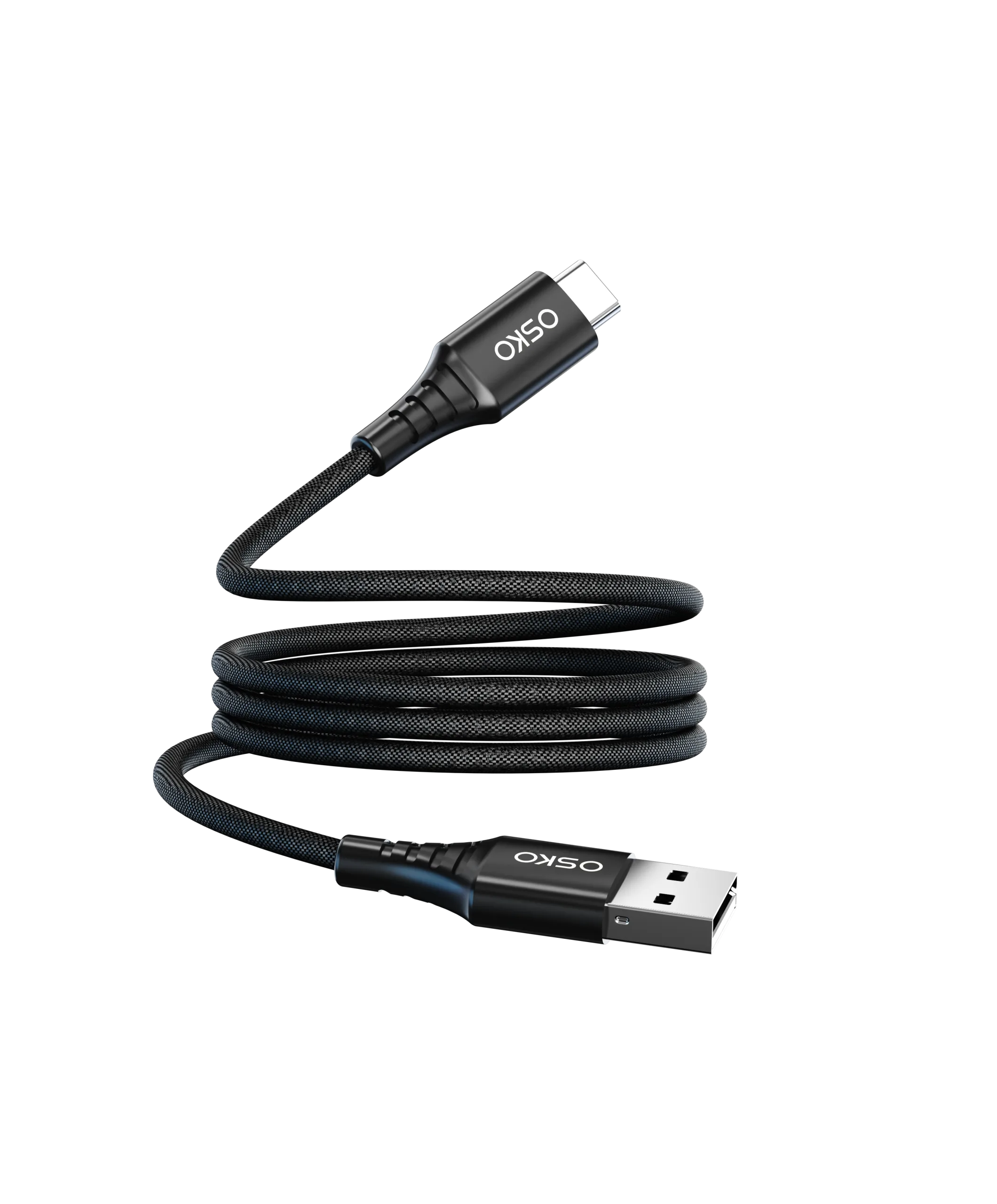
USB-C PD charging cables
100W and 240W USB-C cables
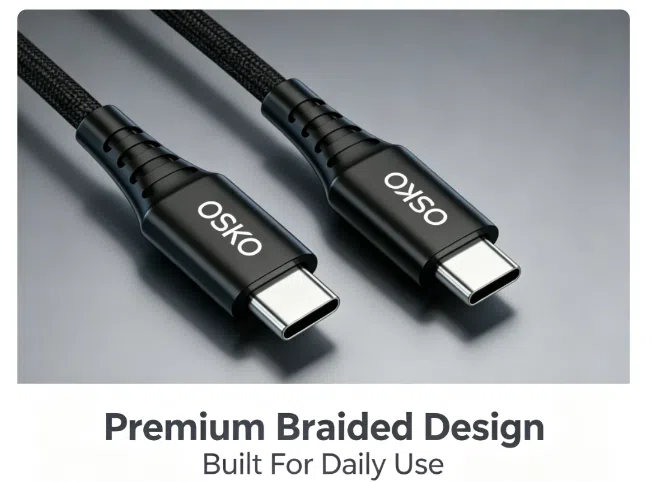
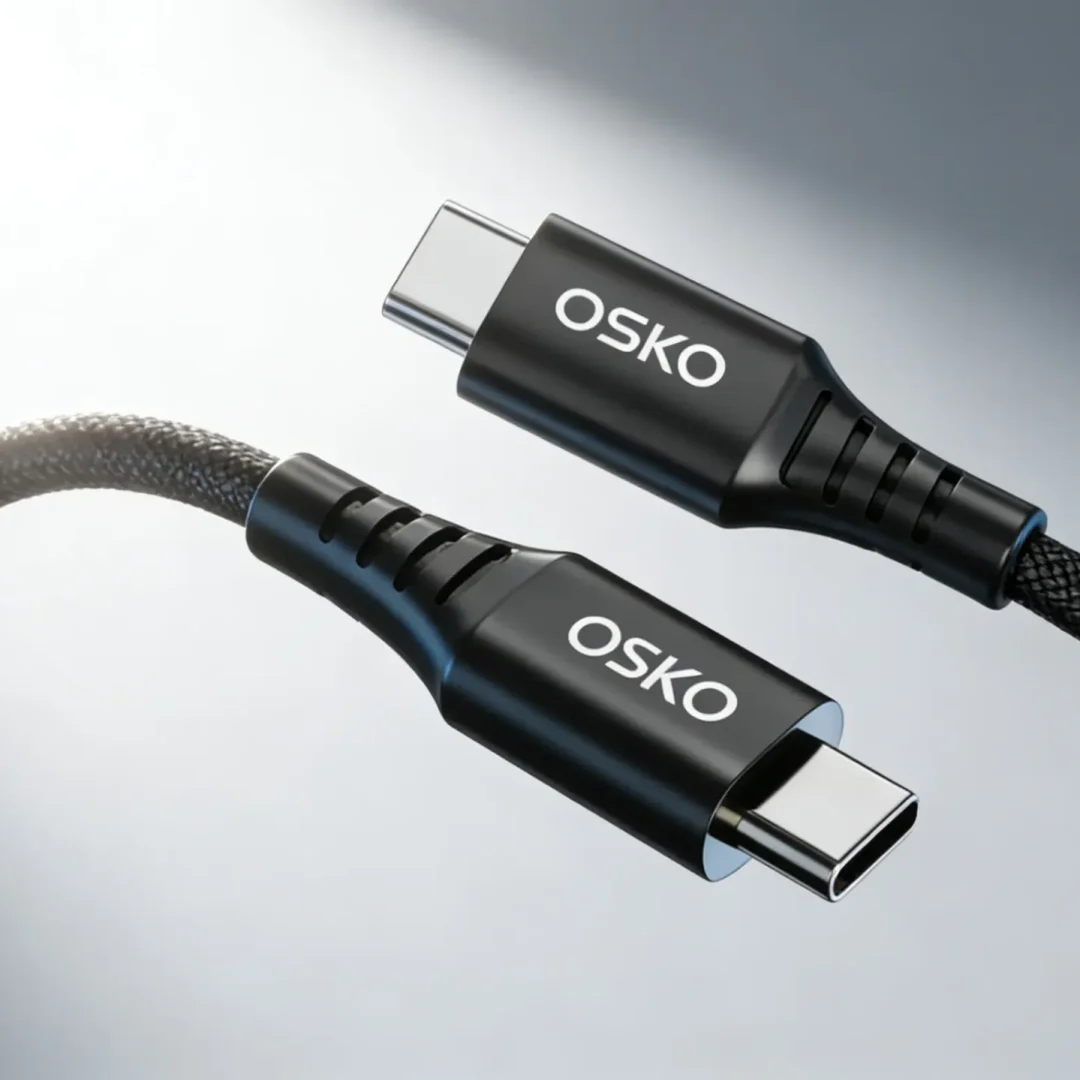
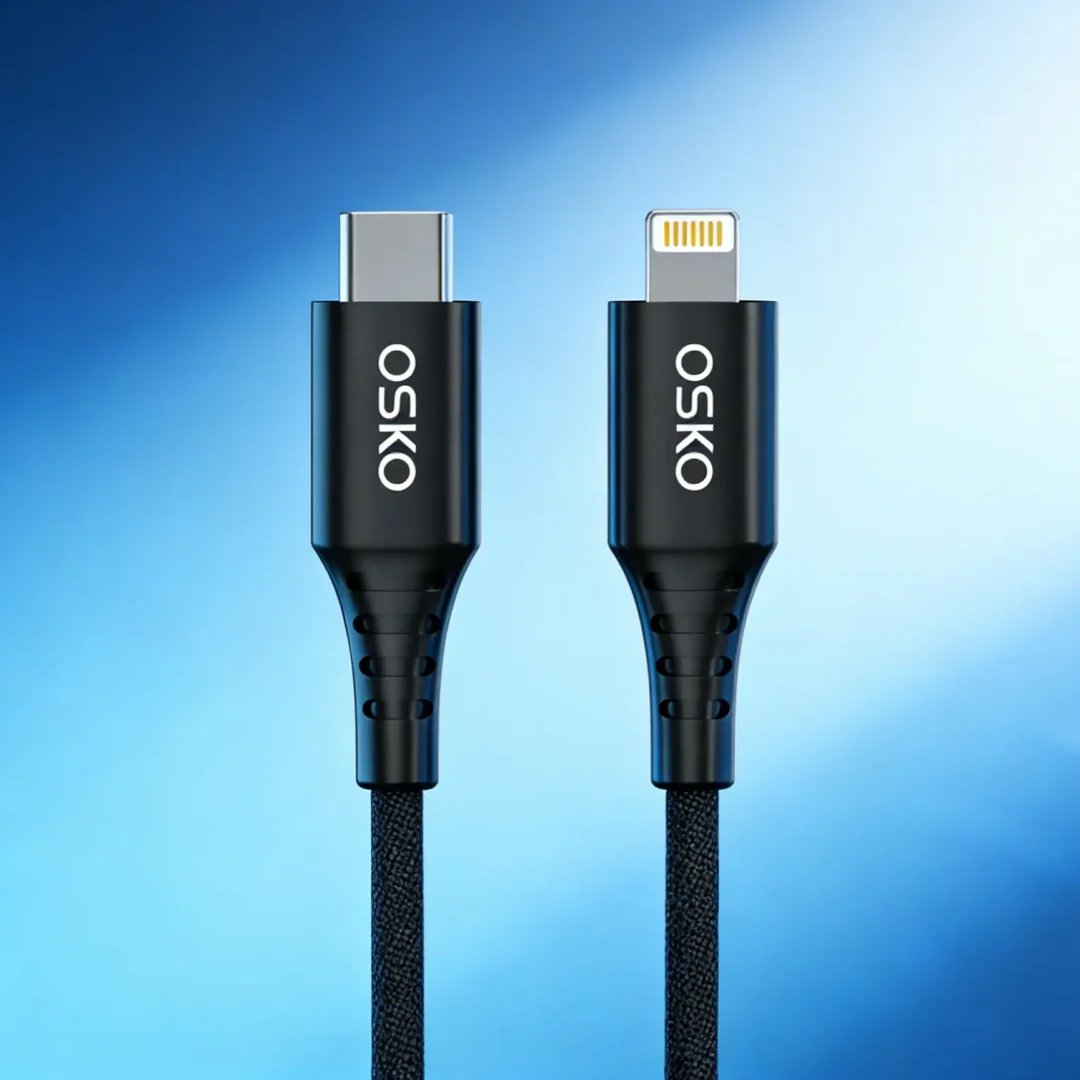
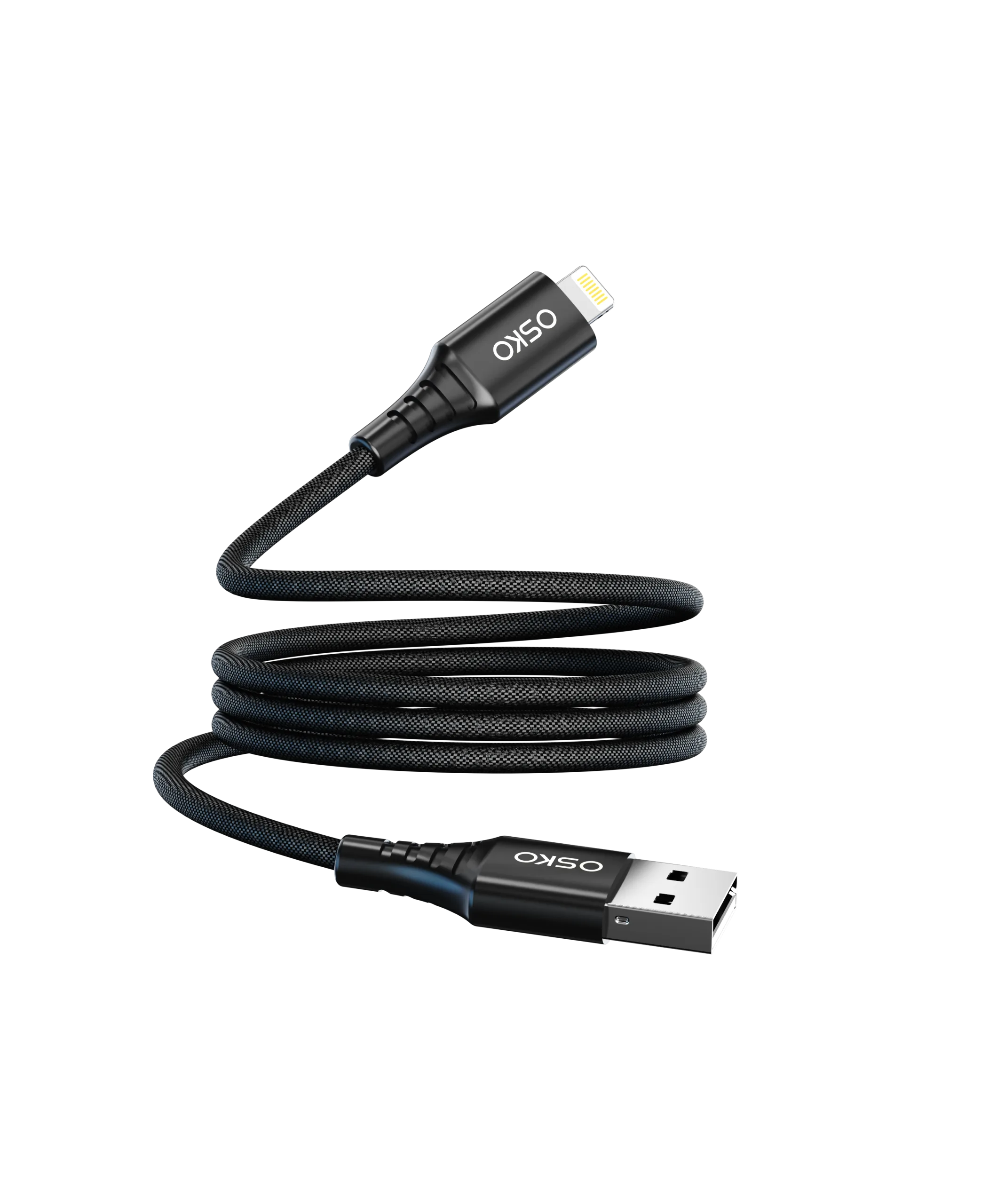
Braided USB cables
OEM private label cables
Custom packaging solutions
FAQ
1. Is USB-IF certification mandatory for USB-C cables?
No. USB-IF certification is not legally required for every USB-C cable. However, it is highly recommended for USB4 cables, high-speed USB-C cables, and high-power USB PD charging cables.
2. Which USB cables benefit most from USB-IF certification?
USB4 cables, USB-C cables above 60W, 100W and 240W PD charging cables, and premium retail products benefit the most from USB-IF certification.
3. Does USB-IF certification guarantee a USB cable is high quality?
USB-IF certification confirms compliance with USB specifications, but overall cable quality also depends on materials, manufacturing processes, testing systems, and factory quality control.
4. What should brands check before sourcing USB-C cables?
Brands should verify USB-IF certification capability, ISO9001 certification, E-Marker technology, conductor specifications, shielding design, durability testing, and compliance documentation.
5. Why do premium USB-C cables need E-Marker chips?
E-Marker chips allow the cable to communicate power capability information. They are required for many 5A USB PD cables such as 100W and 240W charging cables.