
Introduction
USB-C has become the standard connection for most new smartphones, tablets, laptops, and accessories. However, plenty of reliable devices still use Micro USB. Older Android phones, Kindle e-readers, PS4 controllers, Bluetooth speakers, power banks, cameras, and other electronics can continue working perfectly for years, even when their original cable is worn out.
That is why finding the best Micro USB cable still makes sense in 2026.
The right cable should do more than simply fit the port. Conductor quality, connector construction, cable length, charging capability, data performance, insulation, and durability all affect the everyday experience. A cheap Micro USB cable may charge intermittently, transfer data slowly, or fail at the connector after repeated bending.
For consumers, choosing a durable Micro USB charging cable can reduce replacements and charging problems. For retailers, wholesalers, and private-label brands, selecting a reliable Micro USB cable supplier is even more important because inconsistent quality can result in returns, negative reviews, and additional after-sales costs.
This guide explains what to look for when buying Micro USB cables and how businesses can evaluate products for retail and wholesale applications.

Why Do You Still Need a Micro USB Cable in 2026?
The popularity of USB-C does not mean Micro USB devices have disappeared.
Many established products have long service lives, particularly electronics that do not need the latest connector technology.
Common Micro USB applications include:
| Device | Typical Micro USB Application |
|---|---|
| Older Android phones | Charging and data synchronization |
| Kindle and e-readers | Charging and file transfer |
| PS4 controllers | Charging |
| Bluetooth speakers | Charging |
| Power banks | Charging and recharging |
| Digital cameras | Charging and data transfer |
| Older GPS devices | Charging and synchronization |
| Electronic accessories | Power and data |
For these devices, replacing a Micro USB cable is usually much cheaper than replacing the device itself.
A well-built cable can therefore remain a practical accessory for years.
What Makes the Best Micro USB Cable?
Not every Micro USB cable offers the same performance.
The most important factors are construction quality, charging capability, data transfer performance, connector strength, and cable length.
Cable Construction
A reliable Micro USB cable typically uses properly sized copper conductors, suitable insulation, and reinforced connection points.
The conductor determines how efficiently electrical current travels through the cable. Higher resistance can contribute to voltage drop and slower charging, particularly with longer cables.
For everyday charging, buyers should avoid cables that feel unusually thin or have poorly molded connectors.
Connector Quality
The Micro USB connector is one of the most common failure points.
Repeated insertion and removal can place mechanical stress on:
Connector pins
Solder joints
Connector housing
Strain relief
A quality durable Micro USB cable should use a securely assembled connector and adequate strain relief.
This is particularly important for PS4 controllers, power banks, and other devices that are plugged in frequently.
Nylon Braided vs. PVC Micro USB Cable
The outer jacket has a direct effect on durability and handling.
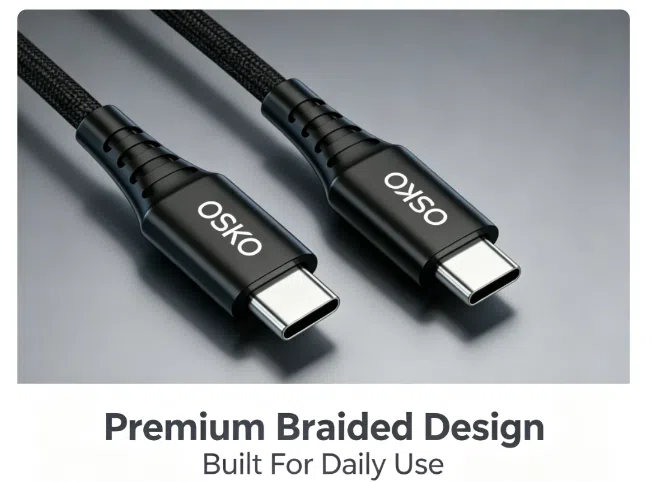
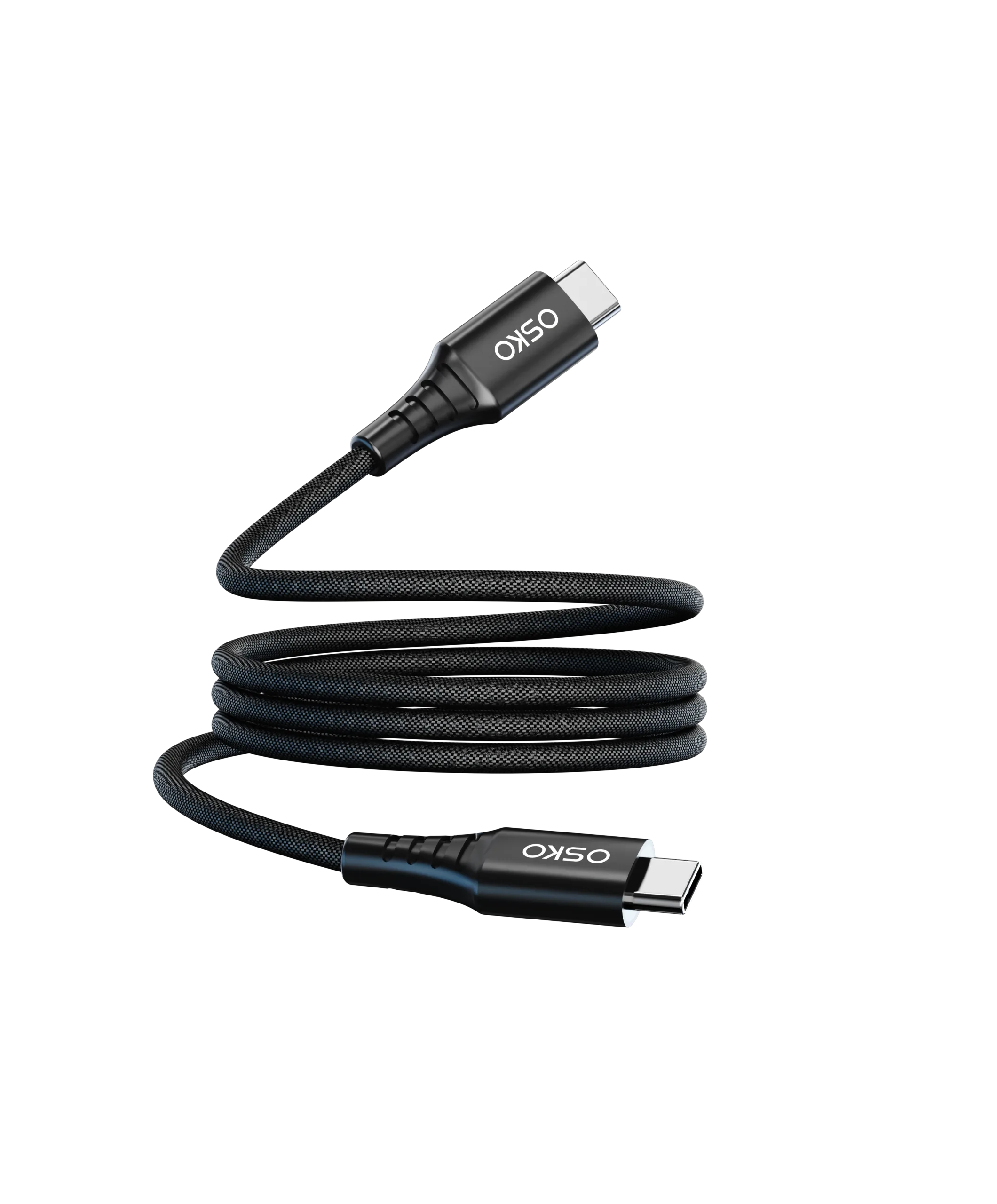
PVC remains common because it is economical and easy to manufacture. Nylon-braided construction, however, provides additional abrasion resistance and a more premium appearance.
| Feature | PVC Cable | Nylon Braided Cable |
|---|---|---|
| Price | Lower | Higher |
| Flexibility | Good | Good |
| Abrasion resistance | Standard | High |
| Tangling resistance | Moderate | Better |
| Premium appearance | Basic | Premium |
| Retail positioning | Entry level | Mid-range/premium |
| OEM branding | Available | Available |
For a retail product where durability is a key selling point, a nylon braided Micro USB cable can provide a stronger value proposition than a basic PVC design.
How Fast Can a Micro USB Cable Charge?
One common misconception is that the cable itself determines charging speed.
In reality, charging performance depends on the complete system:
Power adapter + cable + device + charging protocol
A Micro USB cable can support fast charging when the connected charger and device support a compatible charging technology.
For example, some older Android devices used technologies such as Qualcomm Quick Charge.
However, the actual charging power depends on the specific device and charger.
A high-quality cable helps by maintaining stable current transmission and minimizing unnecessary voltage loss.
This is why buyers searching for a Micro USB fast charging cable should check the specifications of the entire charging setup rather than choosing a cable based only on a headline wattage.
Micro USB Data Transfer Speed
Micro USB cables can also be used for data synchronization.
Standard USB 2.0 Micro USB connections can support theoretical data rates of up to 480 Mbps.
Some devices use a wider Micro USB 3.0 connector for higher-speed data transfer, with a theoretical maximum of up to 5 Gbps under the relevant USB specification.
The important point is that the cable must match the device’s physical connector and supported USB standard.
For example, a standard Micro USB 2.0 cable cannot magically provide USB 3.0 performance simply because it is connected to a faster computer.
If data transfer is important, check:
USB specification
Device compatibility
Connector type
Cable construction
Manufacturer specifications
For basic phone synchronization, e-reader use, and controller charging, USB 2.0 Micro USB cables remain adequate for many applications.
Choosing the Right Micro USB Cable Length
Cable length should match how and where the device is used.
3ft Micro USB Cable
A 3ft Micro USB cable is a practical choice for:
Office desks
Nightstands
Computer connections
Power banks
Short-distance charging
It is compact enough for travel while providing sufficient reach for most desk setups.
6ft Micro USB Cable
A 6ft Micro USB cable provides greater flexibility.
It is useful for:
Sofas
Beds
Gaming setups
Longer-distance charging
Home entertainment systems
For retail products, 3ft and 6ft are practical lengths because they address two common consumer needs without creating an unnecessarily large product range.

How to Choose a Micro USB Cable for Specific Devices
Micro USB Cable for Android Phones
Older Android smartphones may use Micro USB rather than USB-C.
When selecting a cable, check:
Micro USB connector compatibility
Charging requirements
Data synchronization requirements
Cable length
Connector durability
A quality Micro USB cable for Android can extend the useful life of an older phone without requiring expensive accessories.
Micro USB Cable for Kindle
Many older Kindle models use Micro USB for charging and data transfer.
For e-readers, charging speed is generally less important than reliability.
A good cable should provide:
Stable charging
Secure connector fit
Reliable data transfer
Flexible handling
A 3ft cable is convenient for desks, while a 6ft option can be more comfortable for bedside use.
Micro USB Cable for PS4 Controllers
PS4 controllers are another familiar Micro USB application.
Because controllers are frequently connected and disconnected, connector durability matters.
A suitable cable should have:
Strong connector housing
Reinforced strain relief
Flexible construction
Appropriate length
For gaming, a 6ft Micro USB cable can provide more freedom of movement than a short cable.
Micro USB Cable for Bluetooth Speakers
Bluetooth speakers often use Micro USB for charging.
A durable cable is useful for users who repeatedly charge their speaker at home, in the office, or while traveling.
For portable electronics, a braided exterior can also provide better resistance to abrasion during storage and transportation.
What Should Retailers Look for in a Micro USB Cable?
Consumers usually focus on price and compatibility. Professional buyers need to look deeper.
A retailer or distributor should evaluate:
Electrical Performance
Check conductor specifications, current capability, and charging compatibility.
Mechanical Durability
Evaluate bending, connector pull strength, strain relief, and jacket resistance.
Data Performance
Confirm whether the product supports USB 2.0 or another specified data standard.
Material Consistency
The same cable should maintain consistent materials and construction between production batches.
Packaging
For private-label products, packaging can be customized to suit the target market and retail channel.
OEM and Wholesale Micro USB Cable Solutions
Although Micro USB is an older connector standard, it continues to have a place in replacement-accessory and legacy-device markets.
For wholesalers and distributors, the opportunity is not necessarily to compete with the cheapest generic cable. A better strategy is to differentiate through:
Durable construction
Reliable charging
Stable data performance
Better connectors
Nylon-braided options
Custom packaging
Consistent production
An experienced OEM Micro USB cable manufacturer can provide product customization for brands that want to maintain their own specifications and packaging.
Customization may include:
Cable length
Jacket material
Braid color
Connector housing
Logo
Packaging
Private-label branding
For bulk buyers, these details can make the difference between a commodity cable and a differentiated retail product.
Micro USB Cable Quality Control
A professional manufacturing process should control quality from incoming materials through final inspection.
Typical inspection points include:
| Production Stage | Quality Check |
|---|---|
| Incoming materials | Copper, insulation, connectors |
| Cable assembly | Wire connection and structure |
| Connector molding | Alignment and appearance |
| Electrical testing | Continuity and resistance |
| Charging testing | Current and charging stability |
| Mechanical testing | Bending and tensile strength |
| Final inspection | Appearance and functionality |
For wholesale buyers, asking a supplier how cables are tested can provide more useful information than simply comparing unit prices.
Engineering Case Study: Durable Micro USB Cable for a Legacy Device Retail Program
Customer Background
An Australian electronics retailer was maintaining a replacement-cable category for older consumer electronics.
The retailer’s existing low-cost Micro USB products generated frequent customer complaints. The main problems were damaged connectors, inconsistent charging, and cable jackets that deteriorated after regular use.
The retailer wanted a more durable product without moving into an unnecessarily expensive premium category.
Engineering Challenge
The main requirement was to improve mechanical reliability while maintaining compatibility with common Micro USB charging applications.
OSKO reviewed:
Cable construction
Conductor configuration
Connector reinforcement
Strain relief
Outer jacket material
OSKO Solution
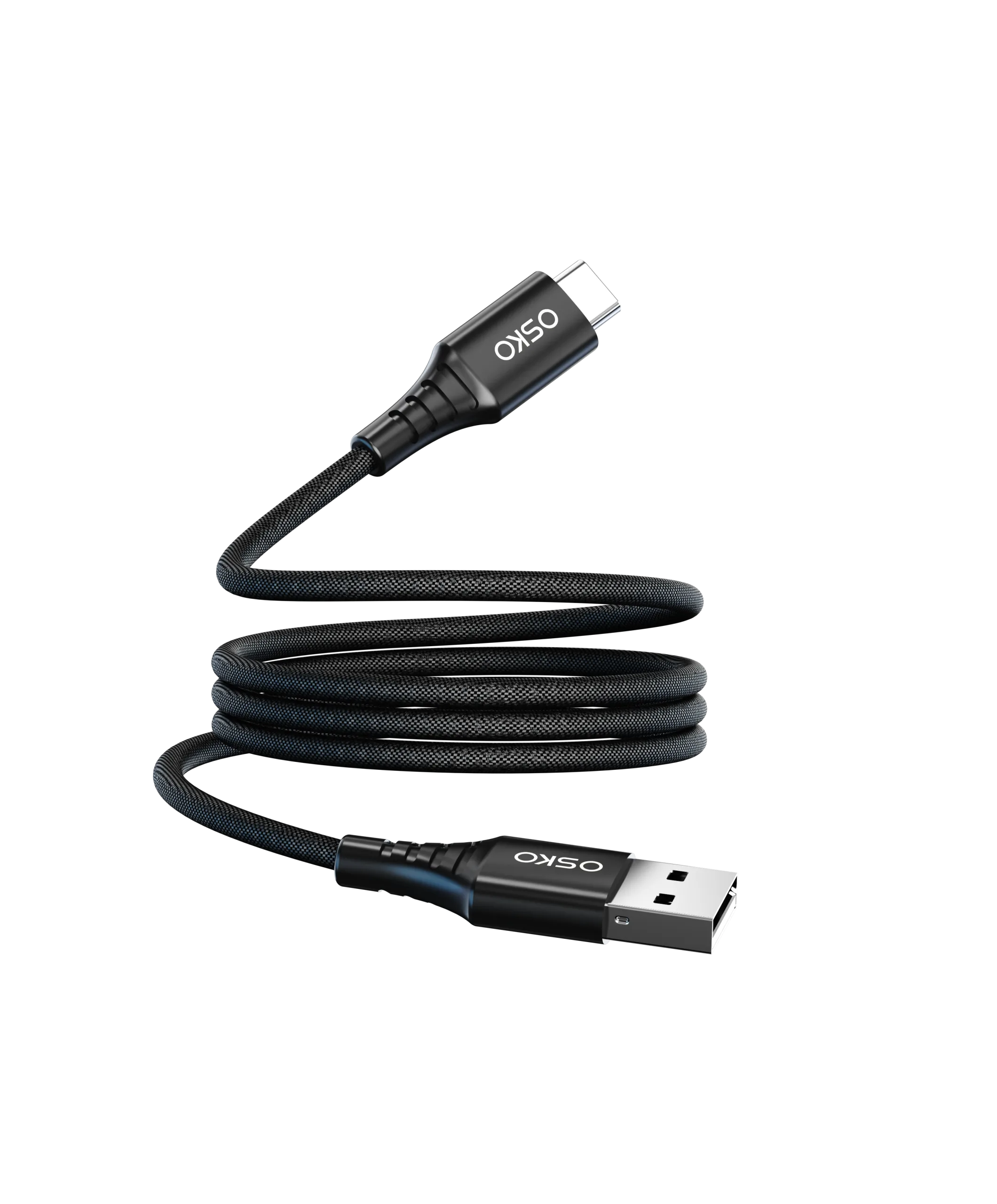
OSKO proposed a reinforced Micro USB cable design using quality copper conductors, improved connector strain relief, and a durable braided outer jacket.
The product was developed around everyday applications such as:
Older Android devices
Gaming controllers
Bluetooth speakers
Power banks
E-readers
The retailer also used customized packaging to distinguish the product from generic replacement cables.
Procurement Result
The upgraded cable gave the retailer a more durable product for its legacy-device category and allowed the company to position the cable around reliability rather than competing solely on the lowest price.
For buyers, the project also demonstrated an important sourcing principle: cable quality should be evaluated according to the actual application, not simply the connector type.
Micro USB vs. USB-C: Which Should You Buy?
USB-C is clearly the better choice for most new devices, but that does not make Micro USB obsolete.
| Feature | Micro USB | USB-C |
|---|---|---|
| Reversible connector | No | Yes |
| Modern device adoption | Lower | Very high |
| Fast charging potential | Limited | Much higher |
| High-speed data potential | Limited | Much higher |
| Legacy device compatibility | Excellent | Limited |
| Best use | Older devices | Modern devices |
If your device has a Micro USB port, buying a USB-C cable will not solve the problem. You need a cable with the correct connector.
For this reason, Micro USB remains relevant as a replacement-accessory category.
How to Choose the Best Micro USB Cable in 2026
Before purchasing, use this simple checklist:
Check the connector first. Make sure your device actually uses Micro USB.
Check charging requirements. Match the cable with the charger and device’s supported charging technology.
Check data requirements. If you transfer files, verify the USB data specification.
Choose the appropriate length. Select 3ft for compact setups or 6ft when you need additional reach.
Look at construction quality. Reinforced connectors and quality conductors can improve long-term reliability.
Consider braided construction. Nylon braiding can provide additional abrasion resistance and a premium appearance.
For business purchases, evaluate the factory. Ask about materials, testing, production consistency, OEM capabilities, and compliance documentation.
FAQ
What is the best Micro USB cable for old Android phones?
The best Micro USB cable for an older Android phone should have a reliable Micro USB connector, quality copper conductors, suitable charging capability, and reinforced strain relief. If the phone is also used for file transfer, confirm that the cable supports the required USB data standard.
Is Micro USB still worth buying in 2026?
Yes. Micro USB remains useful for older Android phones, Kindle models, PS4 controllers, Bluetooth speakers, power banks, cameras, and other legacy electronics. For new devices, USB-C is generally the preferred standard.
Can a Micro USB cable support fast charging?
Yes. Some Micro USB devices support fast-charging technologies such as Qualcomm Quick Charge. However, charging speed depends on the device, charger, cable, and charging protocol working together.
Is a braided Micro USB cable better than a regular cable?
A nylon-braided Micro USB cable generally provides better abrasion resistance and can withstand everyday bending and handling better than a basic PVC design. The quality of the internal conductors and connectors is still important.
What is the difference between a Micro USB charging cable and a Micro USB data cable?
A charging cable is primarily designed to deliver power, while a data cable also contains the necessary connections for data communication. If you need file synchronization, make sure the product is specifically rated for data transfer.
Should I buy a 3ft or 6ft Micro USB cable?
A 3ft cable is convenient for desks, computers, and portable use. A 6ft cable provides more flexibility for beds, sofas, gaming setups, and home entertainment areas.
Can I use a Micro USB cable with a PS4 controller?
Yes, compatible PS4 controllers use Micro USB connections. A durable cable with reinforced connectors is particularly useful because gaming controllers are frequently plugged in and unplugged.
Can I use the same Micro USB cable for Kindle and Android devices?
If both devices use a compatible Micro USB port, the same cable can generally be used for charging. Data-transfer compatibility depends on the device and cable specifications.
How long should a good Micro USB cable last?
There is no universal lifespan because usage varies. Cable construction, bending frequency, connector quality, storage conditions, and manufacturing quality all affect service life. A reinforced, well-made cable can last considerably longer than a low-cost cable with weak strain relief.
What should wholesalers look for in a Micro USB cable supplier?
Wholesalers should evaluate conductor materials, connector construction, charging and data specifications, durability testing, batch consistency, packaging capabilities, MOQ, and OEM support. A reliable supplier should be able to clearly explain its production and quality-control process.
Summary
The best Micro USB cable is not necessarily the cheapest option. For older Android phones, Kindle e-readers, PS4 controllers, Bluetooth speakers, power banks, and other legacy devices, cable construction has a direct impact on charging reliability, data transfer, and service life.
When choosing a Micro USB charging cable, pay particular attention to:
Connector quality
Copper conductor construction
Charging capability
Data transfer specification
Nylon or PVC jacket
Strain relief
Cable length
Overall manufacturing consistency
For consumers, a durable Micro USB cable can be a practical replacement for worn-out original accessories. For retailers, distributors, and private-label brands, working with an experienced Micro USB cable manufacturer can provide better control over product specifications, packaging, quality, and wholesale supply.
OSKO provides OEM and wholesale USB cable manufacturing solutions for international buyers, including custom cable construction, braided cable options, private-label packaging, and bulk production.
If you are sourcing Micro USB cables for wholesale, OEM, private-label, or retail distribution, the most effective approach is to provide the required connector type, cable length, charging requirement, data specification, quantity, and packaging requirements so the factory can recommend the appropriate configuration.