
Introduction
When buyers compare USB-C cables, the first specifications they usually see are charging power, cable length, connector type and outer jacket material. But for engineers and experienced procurement teams, the real difference is often hidden inside the cable.
One of those critical design elements is USB-C cable shielding.
A properly engineered shielded USB-C cable uses conductive shielding around selected internal conductors or cable assemblies to control electromagnetic interference (EMI), reduce unwanted coupling and help maintain signal integrity. This becomes increasingly relevant as USB-C products combine higher power levels with faster data transmission.
A cable used for basic USB 2.0 charging does not necessarily require the same internal construction as a cable designed for high-speed data, external displays, docking stations or professional computing equipment.
For brands, wholesalers, distributors and electronics importers, selecting the right shielded USB-C cable manufacturer therefore requires more than comparing unit prices. Buyers need to evaluate the cable architecture, shielding coverage, conductor construction, connector design, testing process and intended USB performance.
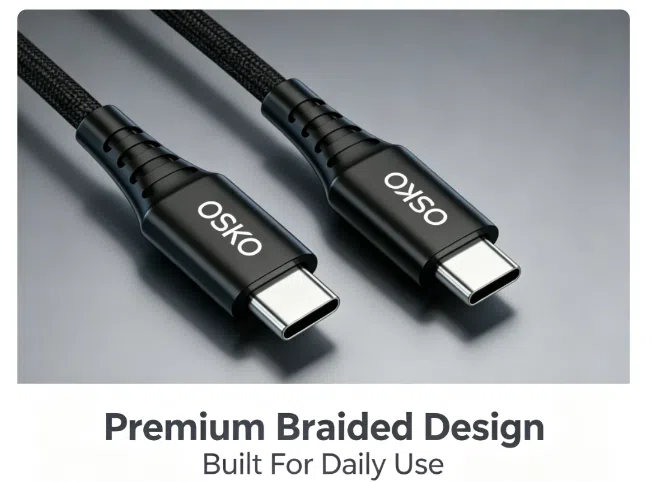
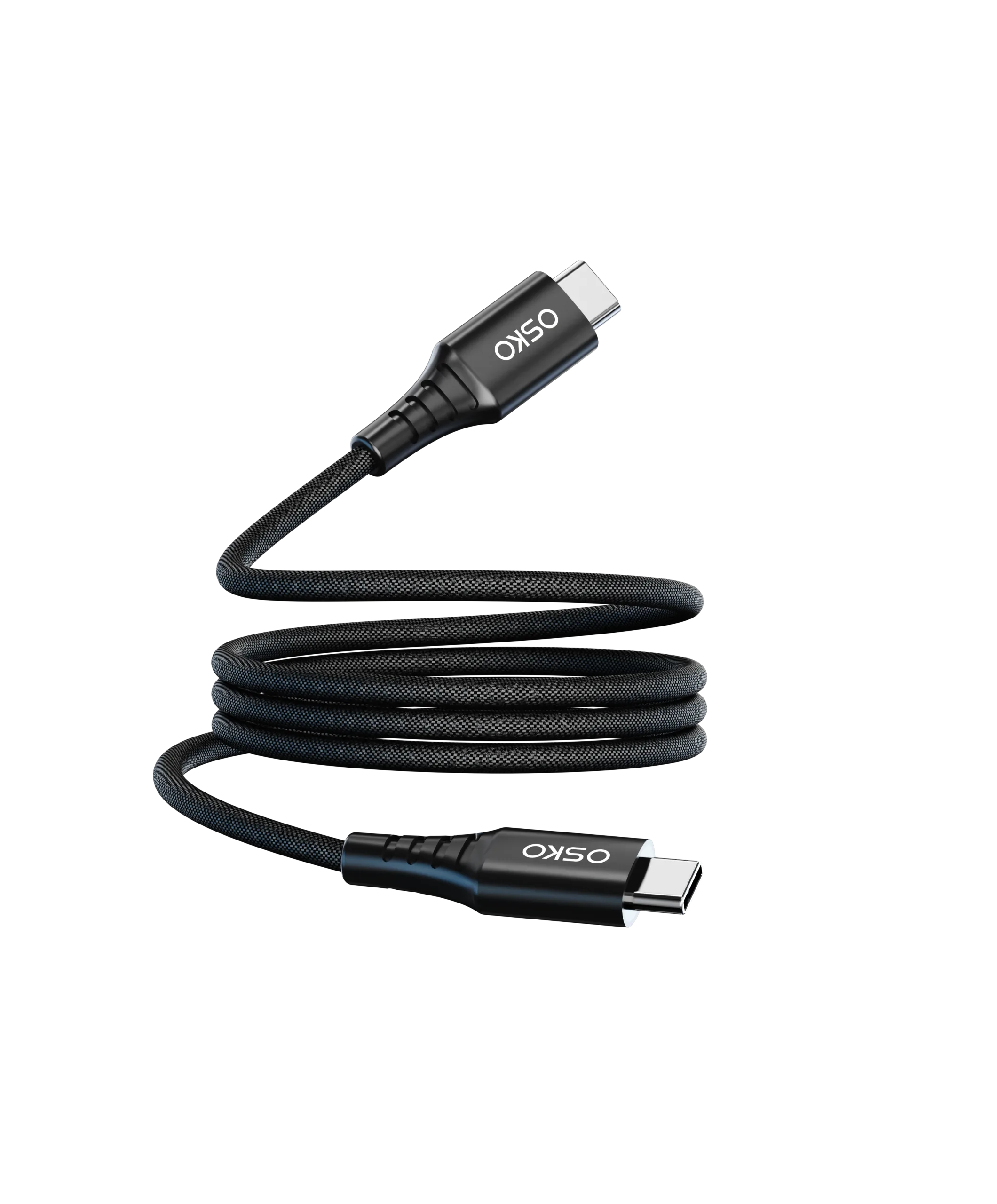
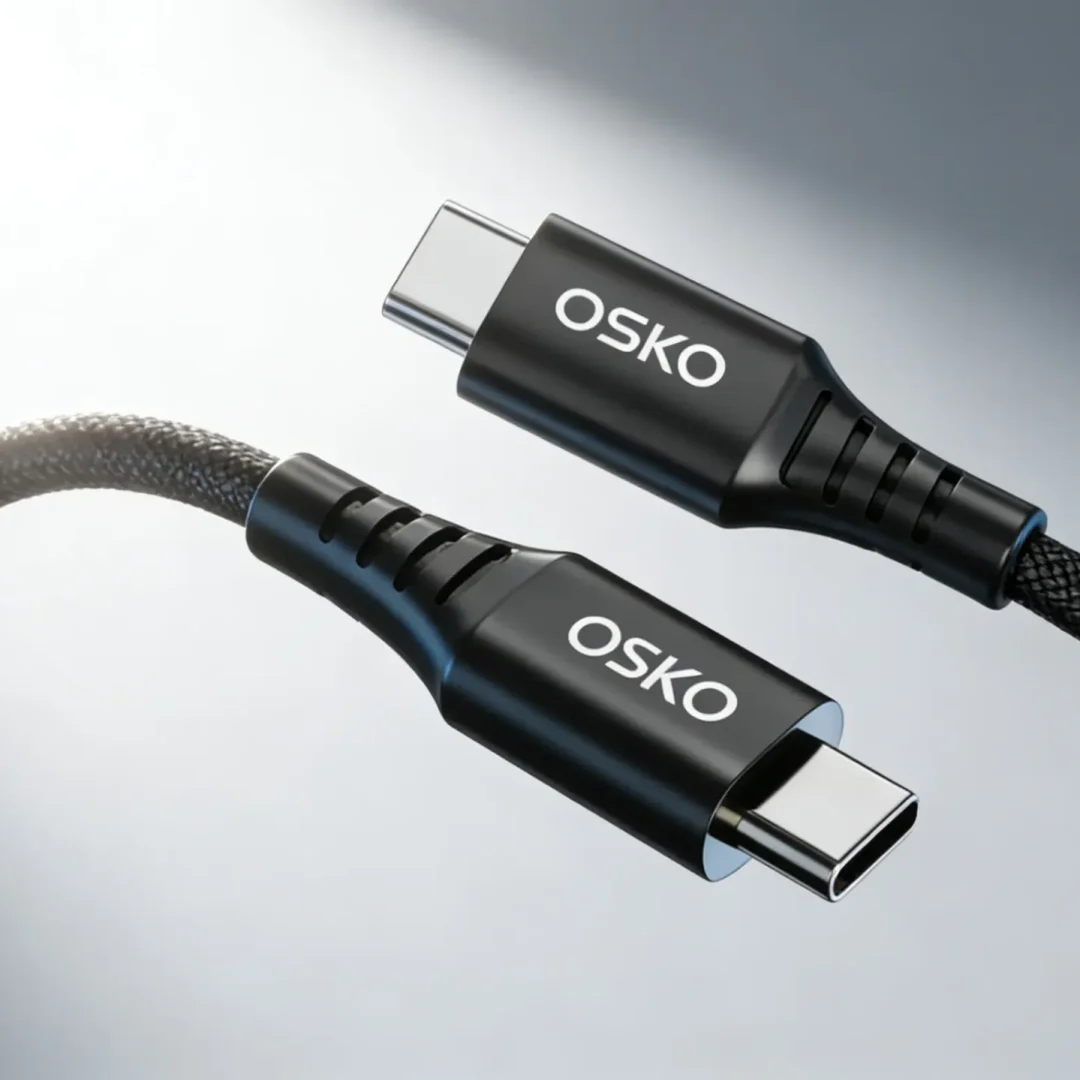
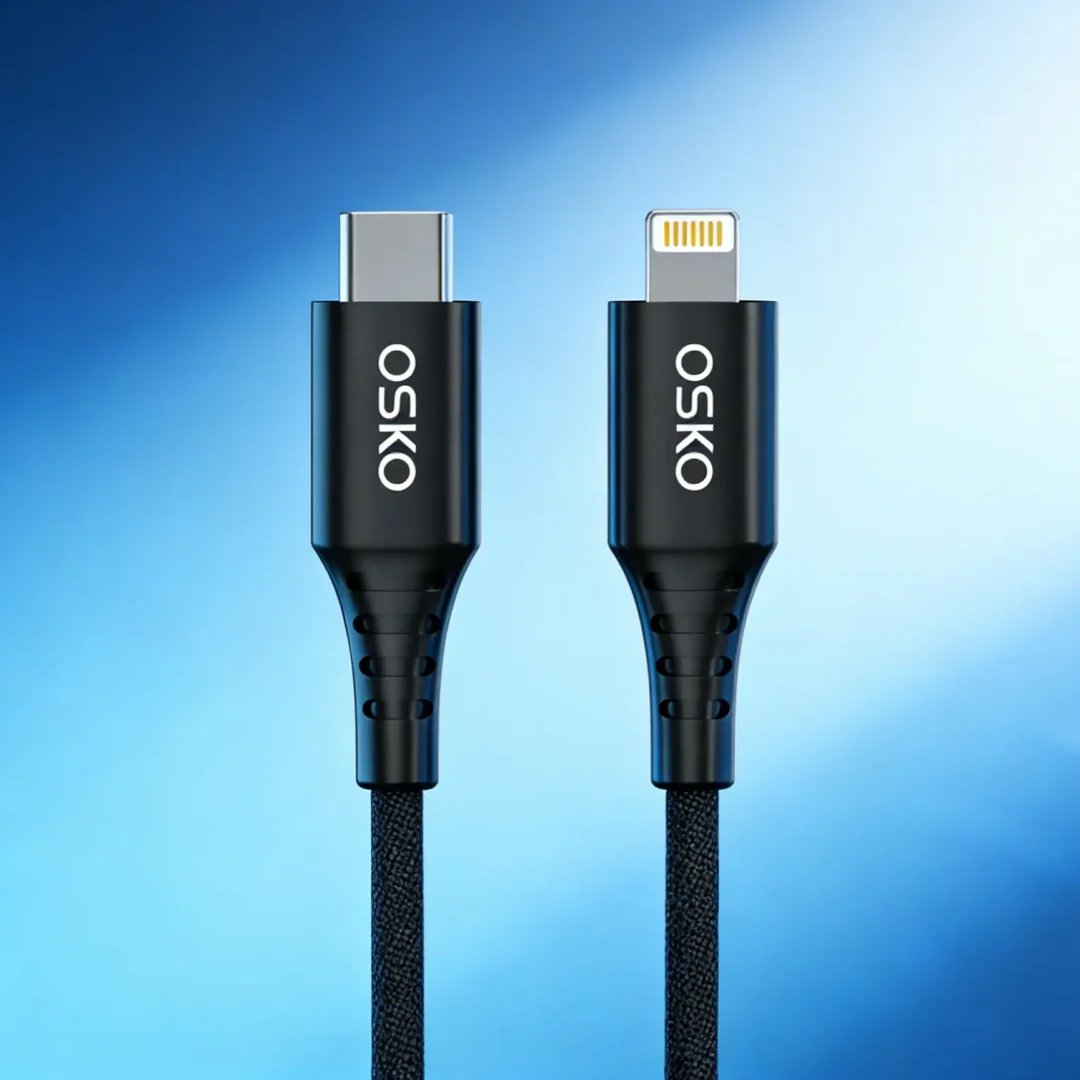
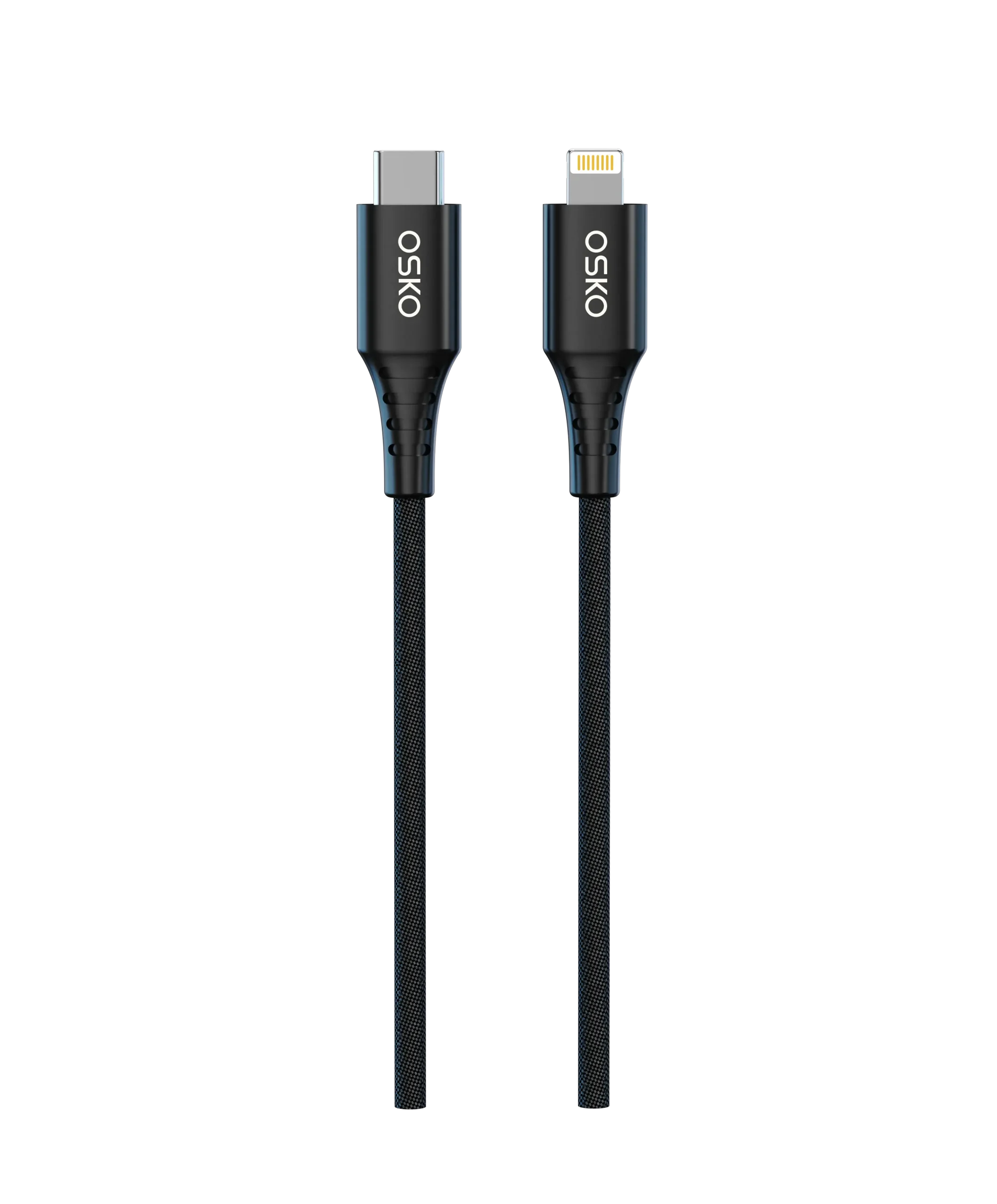
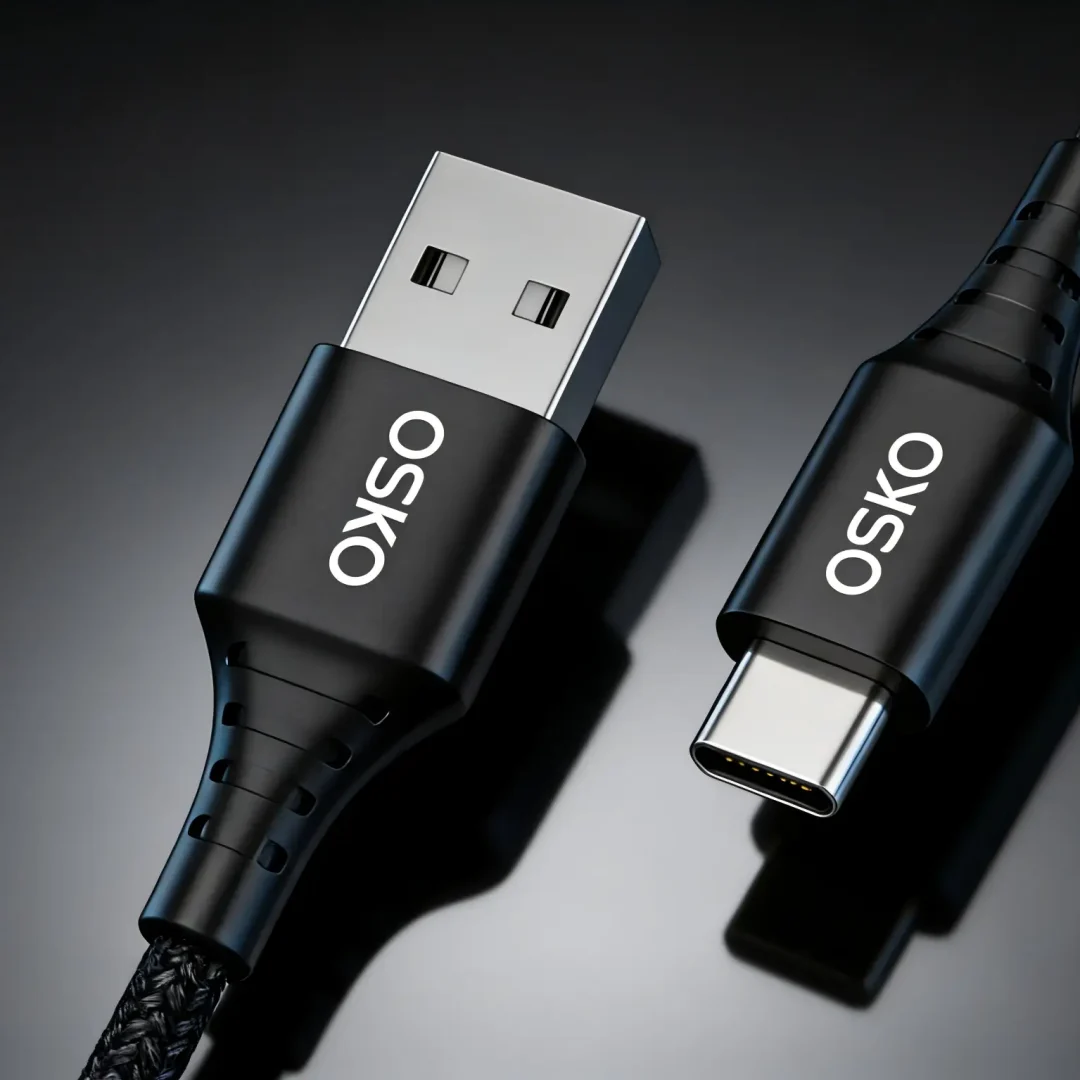
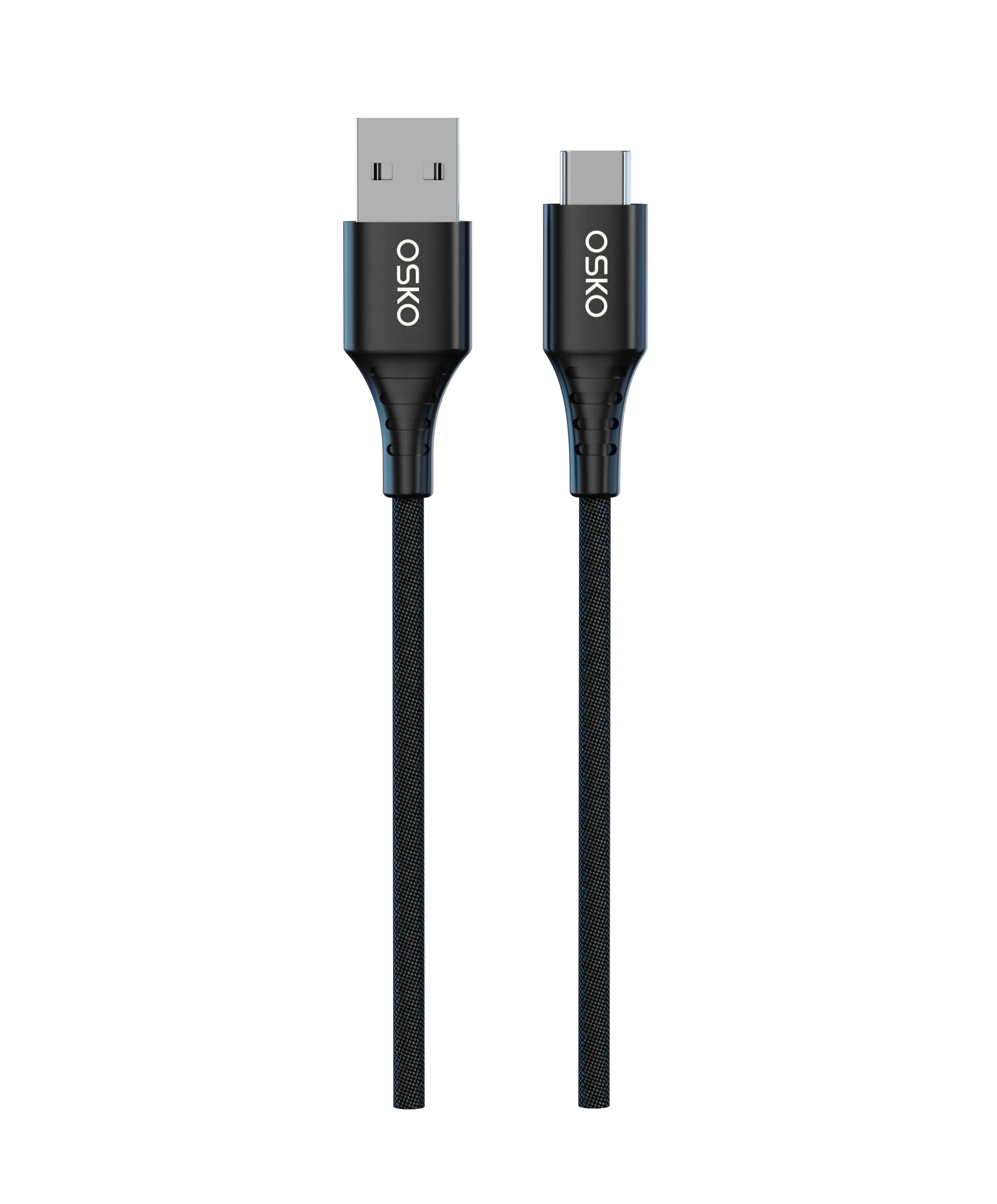
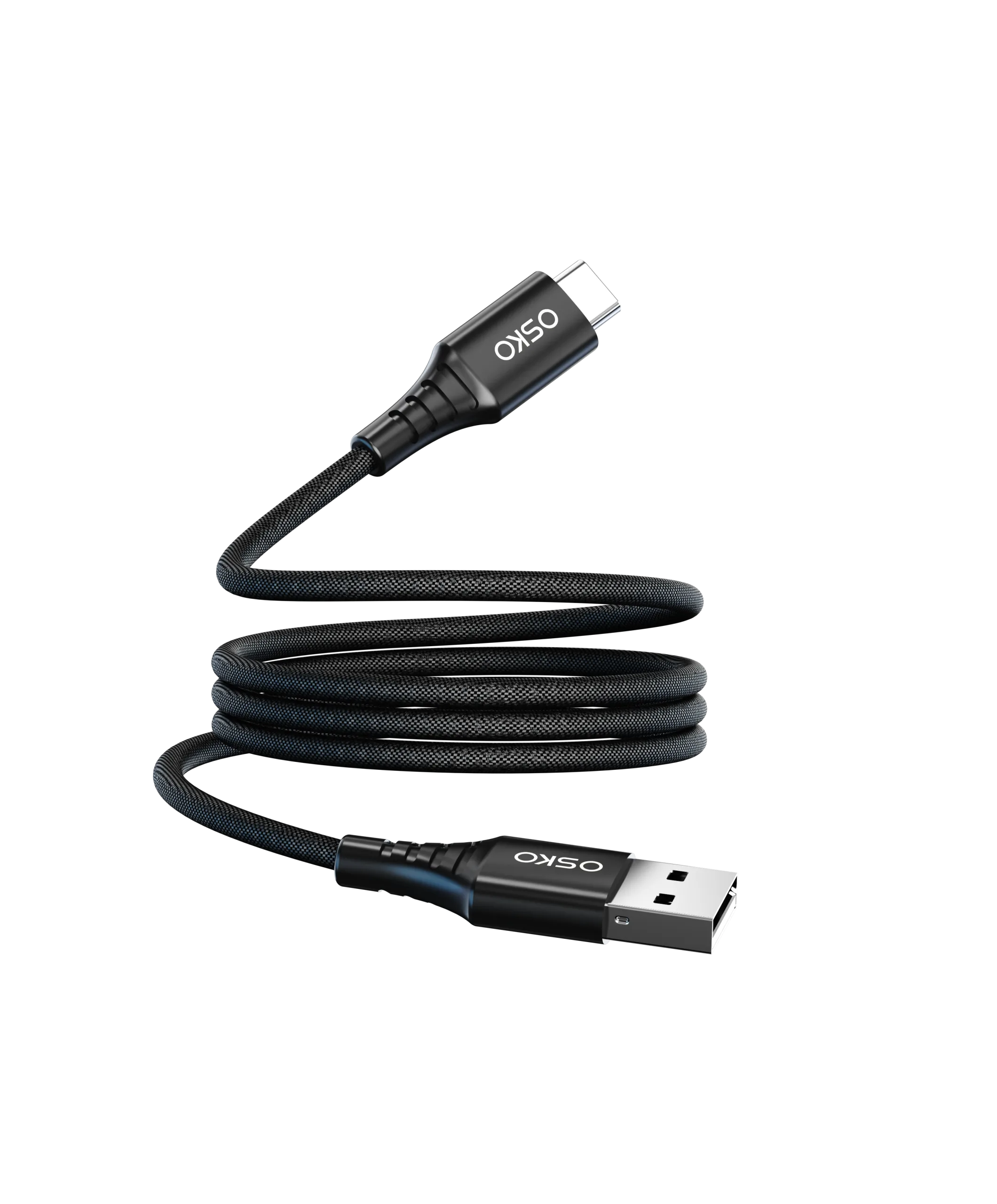
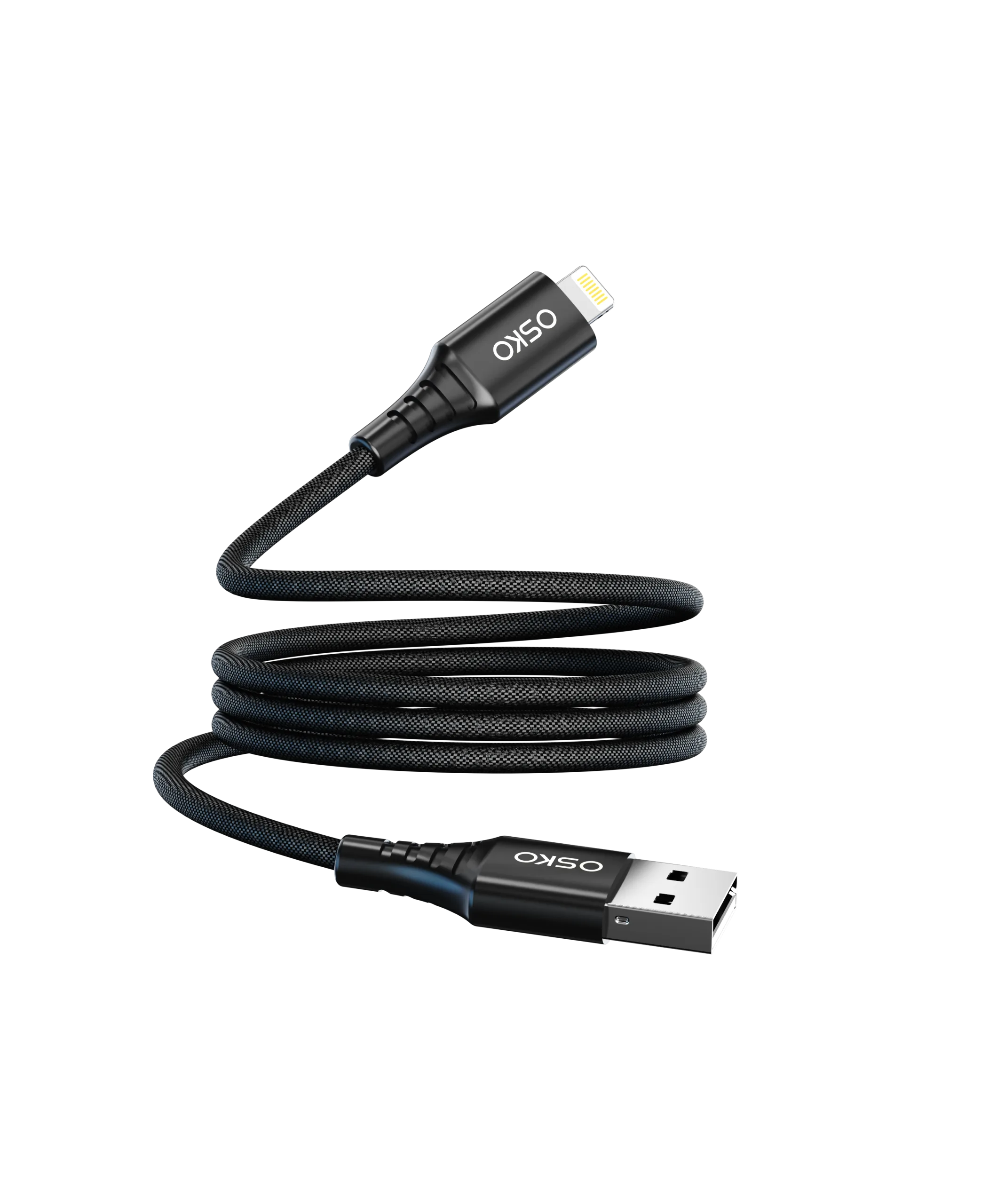
OSKO provides OEM and ODM USB cable manufacturing for brands and distributors, supporting customized cable structures, lengths, colors, branding and packaging for international markets including the United States, Germany, Australia and the Netherlands.
What Is USB-C Cable Shielding?
USB-C cable shielding is a conductive protective structure incorporated into the cable assembly to reduce the effects of electromagnetic interference.
USB-C cables may carry both power and high-speed digital signals. Depending on the cable architecture, nearby electronic equipment can generate electromagnetic energy that couples into signal paths.
Potential sources include:
Laptops
Monitors
Power adapters
Switching power supplies
Wireless equipment
Automotive electronics
Docking stations
External storage devices
The purpose of shielding is not simply to make a cable “faster.” Instead, effective shielding helps control electromagnetic coupling and preserve signal integrity when the application requires it.
Poorly engineered cable construction can contribute to:
Unstable data connections
Increased transmission errors
Intermittent device recognition
Reduced link stability
Charging communication problems in some designs
However, shielding is only one part of overall cable performance. Conductor quality, impedance control, connector construction, insulation, grounding and manufacturing consistency also matter.
Why High-Speed USB-C Cables Need Careful Shielding Design
USB-C is a connector ecosystem rather than a single data-speed standard.
Different USB-C cables can support very different levels of performance.
| USB Technology | Maximum Signaling/Data Rate* | Typical Applications |
|---|---|---|
| USB 2.0 | 480 Mbps | Charging and basic data |
| USB 3.2 Gen 1 | 5 Gbps | Storage and peripherals |
| USB 3.2 Gen 2 | 10 Gbps | High-speed data transfer |
| USB 3.2 Gen 2×2 | 20 Gbps | Compatible high-speed devices |
| USB4 | Up to 40 Gbps | Advanced computing and peripherals |
| USB4 Version 2.0 | Up to 80 Gbps | Compatible high-performance systems |
*Actual performance depends on the cable, host, device, protocol implementation and other system components.
At higher data rates, cable design becomes increasingly sensitive to signal integrity.
Engineers may need to control:
Differential pair geometry
Impedance
Pair-to-pair interaction
Crosstalk
Return paths
Shielding effectiveness
Connector construction
Overall cable length
This is why a high-speed USB-C cable manufacturer should be able to discuss more than the external appearance of the product.
Internal Structure of a Shielded USB-C Cable
A professional USB-C cable may contain several functional layers.
Depending on the cable design, these can include:
Outer jacket → mechanical reinforcement → overall shield → individual pair shielding → insulation → conductors
Not every USB-C cable requires every layer. The correct structure depends on the required power, data speed, length, flexibility and application.
For example, a basic USB 2.0 charging cable and a high-speed USB4 cable have very different signal-integrity requirements.
Aluminum Foil Shielding
Aluminum foil is widely used in cable assemblies as a shielding layer.
In a properly designed cable, foil can provide broad conductive coverage around internal conductors or signal groups.
Potential benefits include:
High-frequency EMI attenuation
Broad coverage
Lightweight construction
Controlled electromagnetic environment around signal paths
Foil shielding is particularly useful where high-frequency digital signals need additional protection from external interference and from coupling between internal circuits.
However, foil coverage alone does not automatically make a cable high performance. Shield continuity, grounding, overlap, drain-wire design and overall cable geometry also affect shielding effectiveness.
This distinction matters when purchasing a USB-C cable with aluminum foil shielding.
Braided Metal Shielding
Another common approach is braided metal shielding.
A conductive braid is constructed from fine metal strands woven around the cable assembly.
Depending on the design, it can provide:
Additional EMI protection
Mechanical reinforcement
Improved shielding coverage
Better resistance to handling stress
Common braid materials include tinned copper and other conductive metal constructions.
Braided shielding is often combined with foil rather than used as a replacement.
For demanding applications, buyers may therefore encounter descriptions such as:
Foil + braided shield
or
Dual-layer EMI shielding
The exact effectiveness depends on construction and testing rather than the number of layers alone.
Foil + Braided Shielding: Why Use Both?
A common premium cable architecture combines foil and braided metal shielding.
The two structures can serve complementary functions.
| Shielding Structure | Typical Function |
|---|---|
| Aluminum foil | Broad, high-frequency shielding coverage |
| Metal braid | Additional shielding and mechanical structure |
| Drain wire | Provides a defined electrical connection for applicable shield structures |
| Insulation | Separates conductors and controls electrical characteristics |
This can be particularly useful in cables designed for demanding data environments.
However, it is important not to oversimplify the physics.
A double-shielded cable is not automatically better than every single-shielded cable. The required shielding depends on the data rate, cable architecture, frequency range, length, application environment and applicable specification.
For procurement teams, the better question is:
Does the shielding structure meet the performance requirements of the target application?
Shielding and Signal Integrity
High-speed USB data is transmitted using differential signaling.
This means the cable must maintain carefully controlled electrical characteristics throughout the transmission path.
Important factors include:
Differential impedance
Conductor geometry
Pair twisting
Insulation characteristics
Crosstalk
Attenuation
Return loss
Connector performance
Shielding and grounding
A shielding layer can help reduce external interference, but it cannot compensate for poor conductor geometry or incorrect impedance.
This is particularly important for buyers looking for a custom high-speed USB-C cable manufacturer.
A professional supplier should evaluate the entire electrical architecture instead of treating shielding as an isolated feature.
Shielding and Fast Charging
Shielding and charging power are related to different aspects of cable design.
Shielding primarily addresses electromagnetic compatibility and signal integrity.
Charging capability depends more directly on:
Conductor resistance
Conductor size
Current rating
Connector contacts
Cable construction
USB Power Delivery implementation
Charger and device capabilities
Therefore, adding more shielding does not automatically increase a cable’s charging wattage.
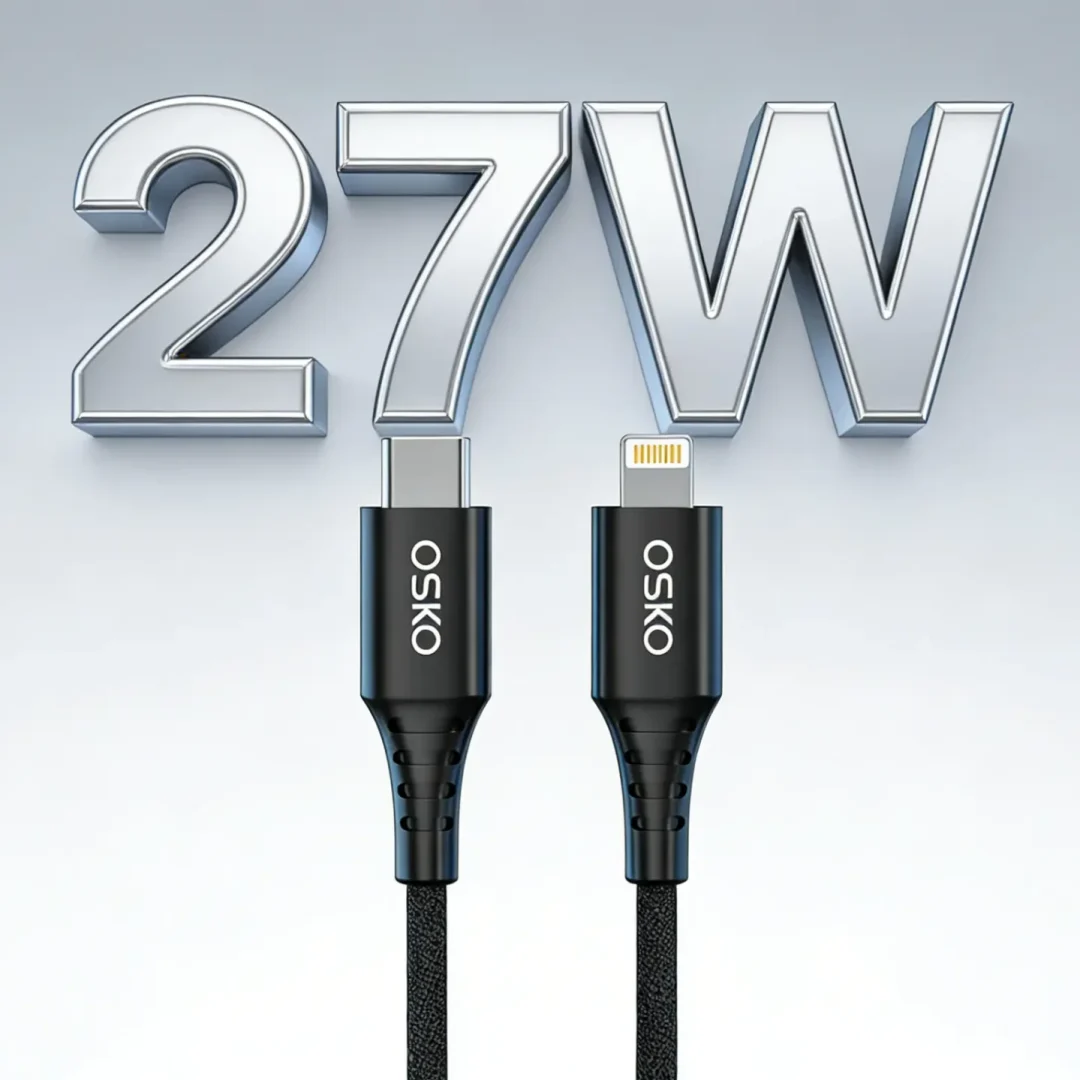
For example, a 100W USB-C charging cable needs an electrical design appropriate for its rated current and power capability. The shielding structure is only one part of the overall design.
Likewise, a 240W USB-C cable requires the appropriate USB Power Delivery specification and cable implementation; the presence of a braided shield alone does not establish 240W capability.
This distinction is valuable for buyers comparing EMI shielded USB-C cable wholesale products.
Shielded USB-C Cables for Laptops and Docking Stations
Laptops, monitors and docking stations can create demanding cable environments because multiple high-speed interfaces and switching power systems may operate close together.
Typical applications include:
Laptop charging
USB-C docking
External SSDs
USB-C monitors
Professional peripherals
Workstations
High-speed data transfer
For these applications, buyers should evaluate both power and data specifications.
A cable designed only for charging may not provide the same data capability as a cable engineered for high-speed USB transmission.
When purchasing shielded USB-C cables for laptops, verify:
- Supported charging power
- Supported data speed
- Cable length
- Connector configuration
- Shielding construction
- Compatibility requirements
- Relevant testing documentation
Shielded USB-C Cables for Automotive Applications
Automotive environments can contain numerous sources of electrical noise.
Examples include:
Alternators
Motors
DC-DC converters
Switching power systems
Vehicle infotainment electronics
Wireless communication systems
USB-C cables used for automotive charging or data applications may therefore require careful mechanical and electrical design.
Potential applications include:
In-car charging
Android Auto
Wired CarPlay
Automotive infotainment
Vehicle USB connectivity
For automotive buyers, shielding should be considered together with:
Cable flexibility
Connector retention
Vibration resistance
Temperature requirements
Strain relief
Data performance
A shielded USB-C cable for automotive applications should be specified according to the actual vehicle environment rather than selected simply because the product description says “EMI shielded.”
Why Some Low-Cost USB-C Cables Perform Poorly
The lowest-cost cable is often optimized around material and assembly cost rather than system-level performance.
Potential cost reductions can include:
Fewer shielding layers
Reduced shielding coverage
Smaller conductors
Simplified connector construction
Lower-cost insulation
Less mechanical reinforcement
Reduced testing
These choices do not automatically mean that a cable will fail. However, they can limit the performance margin available for demanding applications.
For a consumer buying a basic charging cable, that may be acceptable.
For a brand selling premium cables, professional data accessories or laptop charging products, the risk is different.
A product failure can create:
Return → replacement → customer-service cost → negative review → lost repeat purchase
That is why procurement teams often evaluate the manufacturing process as carefully as the quoted price.

How to Choose a Shielded USB-C Cable Manufacturer
Selecting the right supplier requires a technical procurement process.
Check the Cable Architecture
Ask for information about:
Conductor material
Conductor gauge
Insulation
Pair construction
Foil shielding
Braided shielding
Drain wire where applicable
Connector structure
Outer jacket
A reliable USB-C cable manufacturer should be able to explain how the cable is constructed.
Verify Charging Capability
Ask for the actual:
Rated power
Current capability
USB Power Delivery support
Applicable cable specification
Compatibility conditions
Do not select a cable solely because its connector is USB-C.
Verify Data Performance
For high-speed applications, ask for:
Supported USB generation
Maximum data rate
Cable length
Applicable testing
Device compatibility
A cable advertised as “USB-C” does not automatically mean USB 3.2 or USB4.
Review Mechanical Testing
Depending on the product, relevant tests may include:
Bend testing
Pull testing
Connector retention
Insertion and withdrawal cycles
Electrical continuity
Charging tests
Data transmission tests
The exact test method should be documented rather than represented only by a marketing number.
OEM and Private-Label Shielded USB-C Cable Manufacturing
For brands, distributors and wholesalers, off-the-shelf cables are not always enough.
A professional OEM USB-C cable supplier can customize different aspects of the product.
Potential options include:
Cable length
Cable color
Connector housing
Logo
Outer jacket
Shielding structure
Packaging
Labeling
Product specifications
Typical buyers include:
Consumer electronics brands
Mobile accessory distributors
Online retailers
Importers
Computer accessory wholesalers
Engineering procurement teams
For a private-label program, buyers should confirm the complete specification before mass production.
A good workflow is:
Requirement → Technical specification → Prototype/sample → Testing → Approval → Mass production → QC → Shipment
This reduces the risk of receiving a large production batch that does not match the original requirement.
Engineering Case Study: Custom Shielded USB-C Cable for a European Electronics Brand
Customer Background
A European electronics brand was preparing a premium USB-C cable for online retail in Germany and the Netherlands.
The product needed to support everyday charging while also providing reliable data connectivity for compatible laptops and peripherals.
The customer’s previous supplier had received complaints about intermittent connections when the cable was used around computer equipment and docking accessories.
Engineering Challenge
The buyer did not simply want to add a thicker outer jacket.
The key requirement was to improve the overall cable structure while keeping the product flexible enough for everyday consumer use.
The project required attention to:
Signal integrity
Shielding structure
Connector durability
Cable flexibility
Manufacturing consistency
OSKO Solution
OSKO reviewed the cable requirements and developed a construction incorporating:
Multi-strand copper conductors
Aluminum foil shielding
Braided metal shielding
Reinforced connector transition
Durable outer jacket
The cable was then evaluated for charging stability, data transmission and mechanical performance according to the target product specification.
The buyer also requested private-label packaging and customized branding for its retail channel.
Procurement Result
The final design provided the customer with a more clearly defined product specification and a repeatable manufacturing structure.
The project also established a standardized specification for future production batches, helping the buyer maintain consistency when placing repeat orders.
This illustrates an important principle in OEM cable sourcing:
The goal is not simply to add more materials. The goal is to engineer the right cable structure for the intended application.
Shielded USB-C Cable Buying Checklist
Before approving a supplier, procurement teams can use the following checklist.
| Evaluation Factor | Questions to Ask |
|---|---|
| Shielding | What type of shielding is used? |
| Coverage | Is the foil or braid coverage continuous and appropriate? |
| Conductors | What conductor material and gauge are specified? |
| Data | What USB data rate is supported? |
| Power | What charging power and current are supported? |
| Connector | How is the connector mechanically reinforced? |
| Length | Does performance remain within specification at the required length? |
| Testing | What electrical and mechanical tests are performed? |
| Compliance | What documentation applies to the specific model? |
| OEM | Can length, color, logo and packaging be customized? |
| MOQ | What quantity is required for customization? |
| Samples | Can the buyer test samples before mass production? |
FAQ: Shielded USB-C Cables
What is a shielded USB-C cable?
A shielded USB-C cable contains one or more conductive shielding structures designed to reduce electromagnetic interference and help maintain signal integrity. Common constructions may use aluminum foil, metal braid or a combination of both.
Why does USB-C cable shielding matter?
Shielding can help reduce unwanted electromagnetic coupling between the cable and its environment. This becomes more important in applications involving high-speed data transmission or electrically noisy environments.
Are all USB-C cables shielded?
No. USB-C describes the connector and interface ecosystem, not one universal cable construction. Different cables can have significantly different internal architectures.
Does shielding make a USB-C cable faster?
Not directly. Shielding does not increase the advertised data rate by itself. It can help preserve signal integrity, while actual speed depends on the complete cable design and the USB technology supported by the host and device.
Does shielding increase charging power?
No. Shielding itself does not determine the cable’s wattage. Charging capability depends on conductor resistance, current rating, cable specification, connectors, USB Power Delivery implementation and the connected devices.
Is aluminum foil better than braided shielding?
They perform different functions and are often used together. Foil can provide broad high-frequency shielding coverage, while a metal braid can provide additional shielding and mechanical structure.
The best construction depends on the target application.
What is double shielding in a USB-C cable?
Double shielding commonly refers to a cable construction that combines aluminum foil with a braided conductive shield. The actual effectiveness depends on coverage, continuity, grounding and the complete cable architecture.
Is a braided USB-C cable automatically EMI shielded?
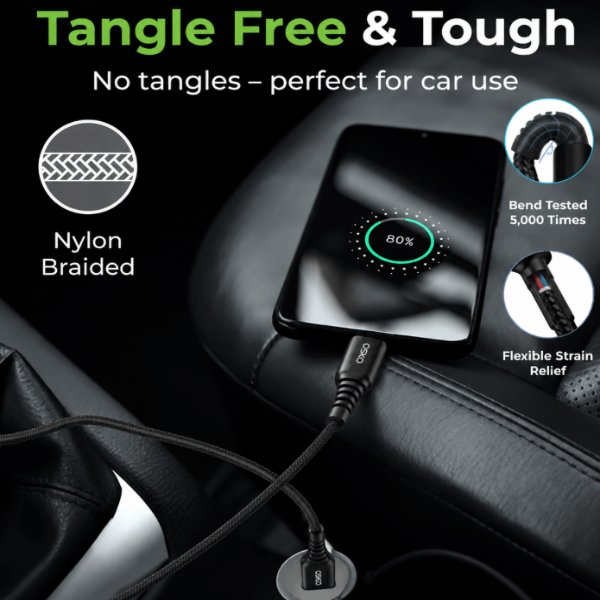
No. A textile nylon braid and a conductive metal braid are completely different structures.
Nylon provides mechanical protection and appearance. A conductive metal braid is used for electrical shielding.
Can I order a custom shielded USB-C cable?
Yes. OEM projects can be developed around requirements such as cable length, connector type, power capability, data performance, shielding construction, cable color, logo and packaging.
Can shielded USB-C cables support 100W or 240W charging?
They can, when the complete cable is designed and rated for the required power and applicable USB Power Delivery specification. Shielding itself does not establish the cable’s power rating.
Are shielded USB-C cables suitable for laptops?
They can be, provided the cable supports the laptop’s required charging power and any required data or display functions. Buyers should verify the complete specification rather than selecting based only on the term “USB-C.”
Are shielded USB-C cables useful for automotive applications?
They can be useful where EMI control and reliable data connectivity are important. Automotive applications should also consider vibration, temperature, connector retention and cable flexibility.
What should I ask an OEM USB-C cable supplier?
Ask for the complete cable specification, power capability, data speed, shielding structure, conductor details, test methods, applicable compliance documents, MOQ, sample availability and customization options.
What MOQ is required for custom USB-C cables?
MOQ depends on the cable design, materials, customization and packaging. A project-specific quotation is the most accurate way to determine the required quantity.
How do I test a shielded USB-C cable before placing a bulk order?
Start with samples. Test the required charging power, data performance, connector fit and mechanical construction. For professional applications, request relevant electrical, mechanical and compliance documentation for the specific cable model.
Conclusion: Choosing the Right Shielded USB-C Cable Manufacturer
USB-C cable performance is determined by the complete engineering system inside the jacket.
For applications involving high-speed data, laptops, docking stations, professional peripherals or electrically noisy environments, shielding can be an important part of cable design.
A properly engineered shielded USB-C cable may incorporate:
Aluminum foil shielding
Braided metal shielding
Carefully designed differential pairs
Appropriate conductors
Controlled insulation
Reinforced connectors
Durable strain relief
Application-specific testing
For brands, wholesalers and distributors, the most important consideration is not simply how many shielding layers a supplier advertises. The real question is whether the cable construction meets the required electrical, mechanical and commercial specifications.
Choosing an experienced shielded USB-C cable manufacturer can help buyers develop a more consistent product, improve quality control and establish a reliable supply chain for repeat orders.
OEM Shielded USB-C Cable Solutions from OSKO
OSKO provides OEM and ODM USB cable manufacturing for brands, wholesalers, distributors and electronics businesses.
Available solutions include:
Custom USB-C charging cables
Shielded USB-C cables
High-speed USB-C data cables
Nylon braided USB-C cables
OEM and ODM manufacturing
Private-label cable solutions
Custom lengths and colors
Logo and packaging customization
Bulk production support
For an OEM project, provide the connector type, cable length, power requirement, data speed, quantity, shielding requirement, logo and packaging requirements