

How to Identify Mobile Phone Data Cable Material
When purchasing a mobile phone charging cable, many people focus on charging speed, data transfer performance, or connector type. However, the material used in a mobile phone data cable plays a critical role in durability, charging efficiency, flexibility, and overall lifespan.
Understanding cable materials can help consumers choose better products and help wholesalers, importers, and retailers evaluate product quality more accurately.
This guide explains how to identify the different materials used in mobile phone data cables and what each material means for performance.
Why Cable Material Matters
The materials used inside and outside a charging cable directly affect:
Charging speed
Data transmission stability
Cable flexibility
Resistance to bending and wear
Heat resistance
Product lifespan
A high-quality cable may look similar to a low-cost alternative from the outside, but the internal materials can make a significant difference in performance and reliability.
Main Components of a Mobile Phone Data Cable
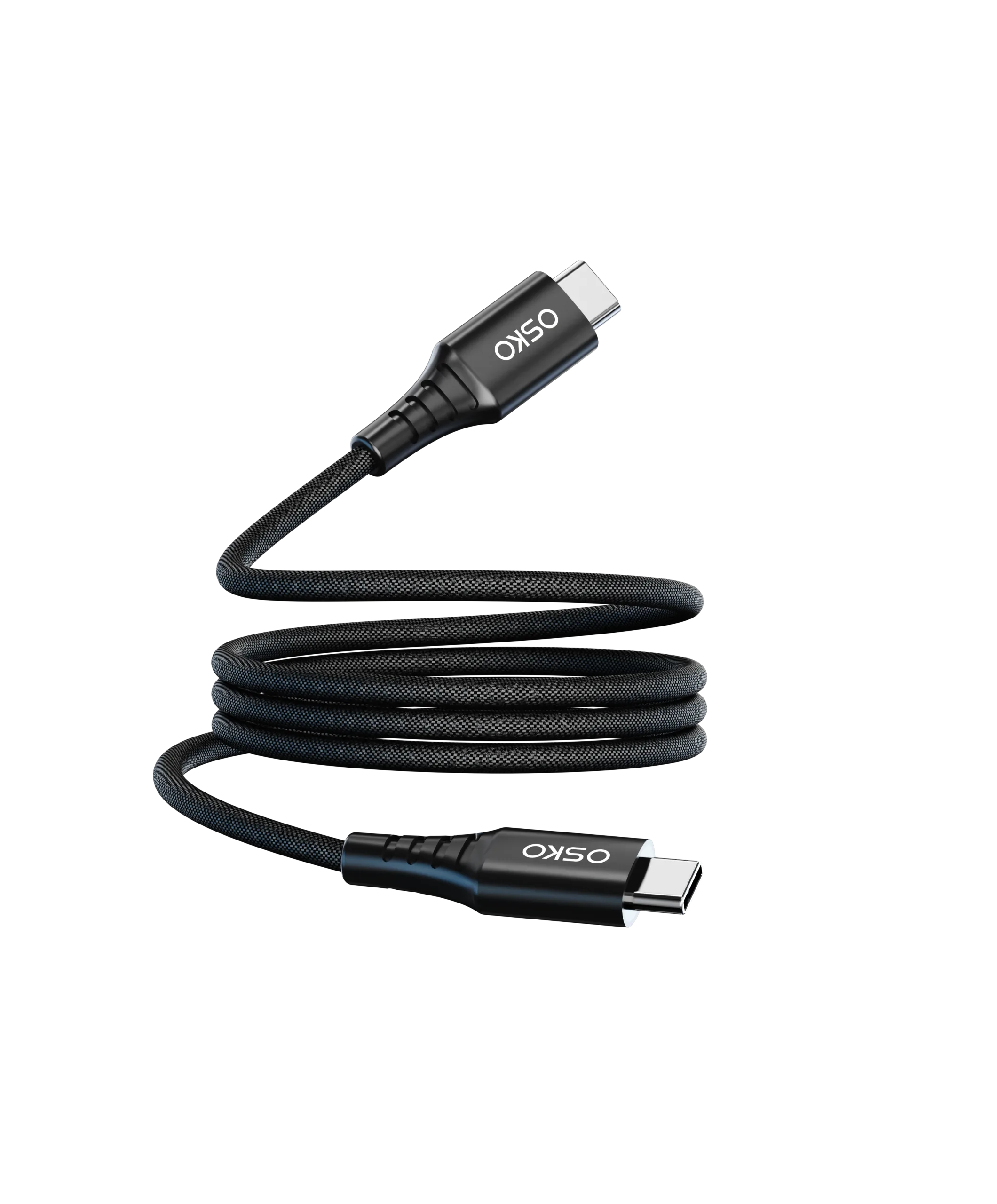
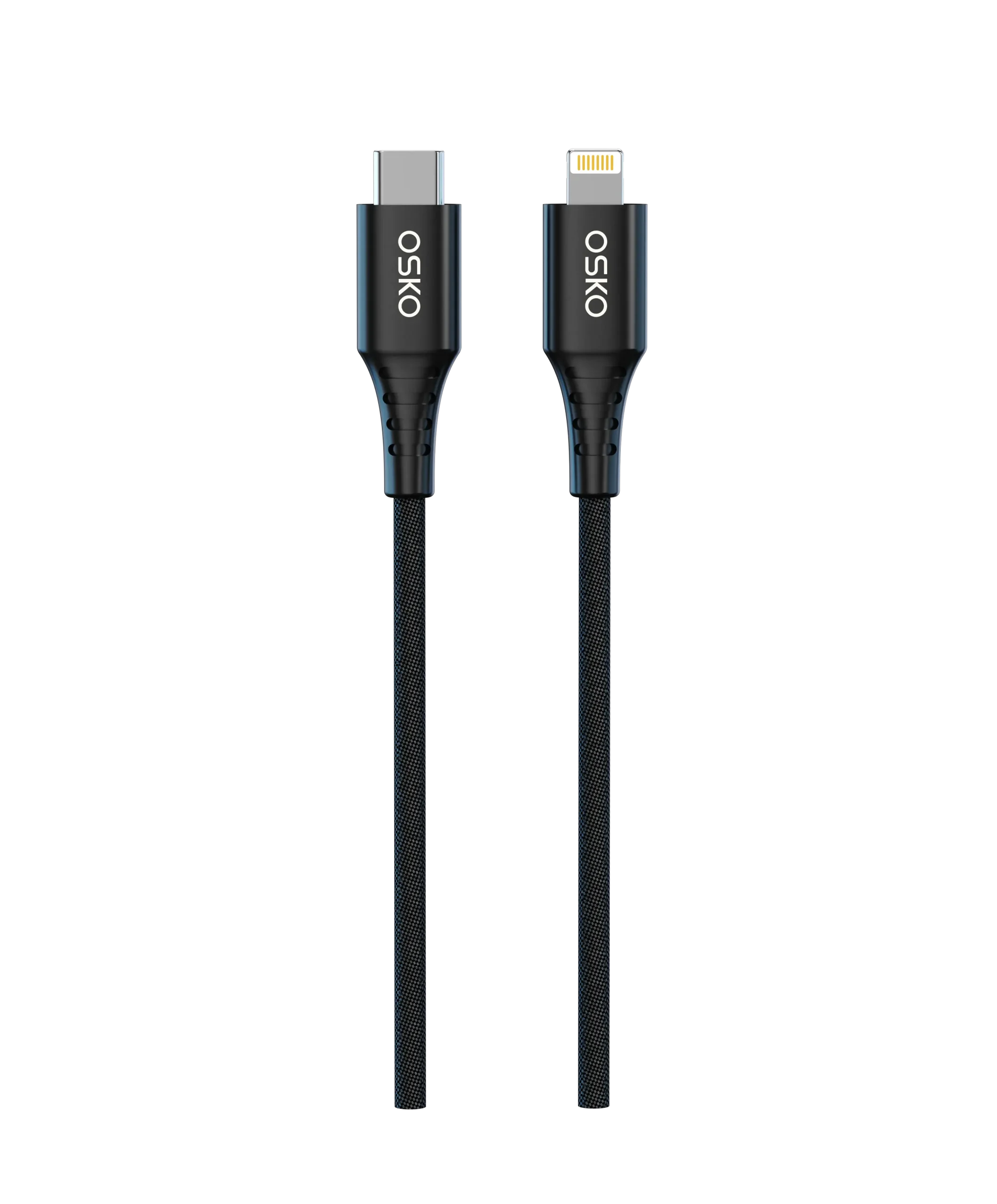
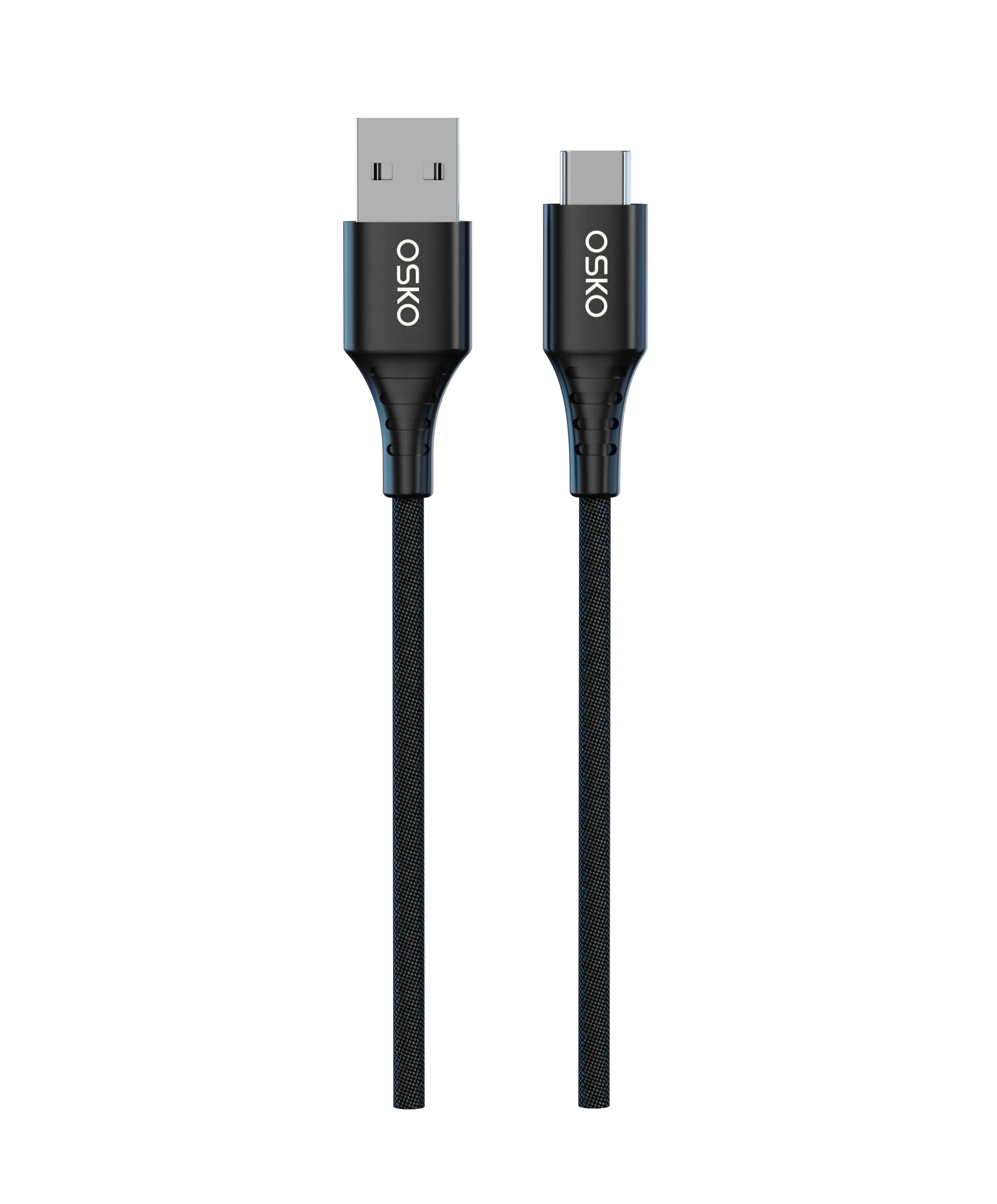
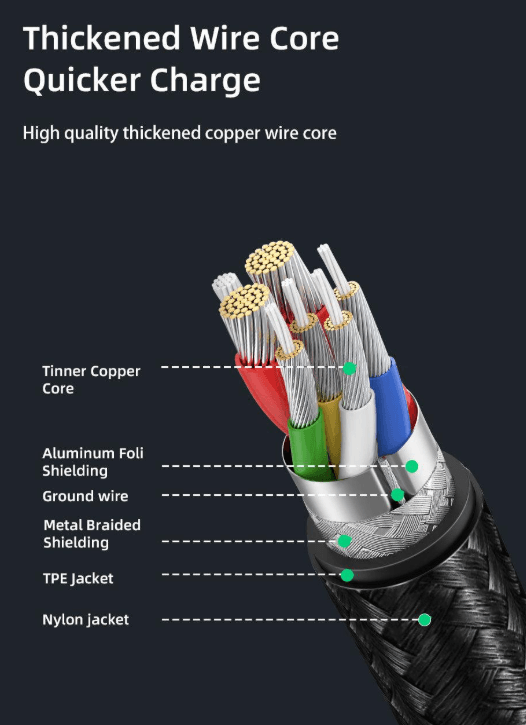
A typical USB charging cable consists of several layers:
These components include:
- Outer Jacket
- Shielding Layer
- Insulation Layer
- Conductor Core
- Connector Housing
- Connector Pins
Each component uses different materials.
1. Identifying the Outer Jacket Material
The outer jacket is the visible layer covering the cable.
PVC (Polyvinyl Chloride)
PVC is one of the most common cable jacket materials.
Characteristics
Smooth surface
Low manufacturing cost
Moderate flexibility
Good abrasion resistance
Widely used in standard charging cables
How to Identify PVC
Slightly glossy appearance
Feels harder than TPE
May become stiff in cold environments
Retains bent shape more easily
Advantages
Affordable
Durable
Easy to manufacture
Disadvantages
Less flexible
Can crack over time with heavy use
TPE (Thermoplastic Elastomer)
TPE is commonly used in premium charging cables.
Characteristics
Soft-touch feel
Excellent flexibility
Environmentally friendly
Better resistance to bending
How to Identify TPE
Matte finish
Softer than PVC
Quickly returns to original shape after bending
Feels rubber-like
Advantages
More flexible
Better user experience
Improved durability
Disadvantages
Slightly higher cost
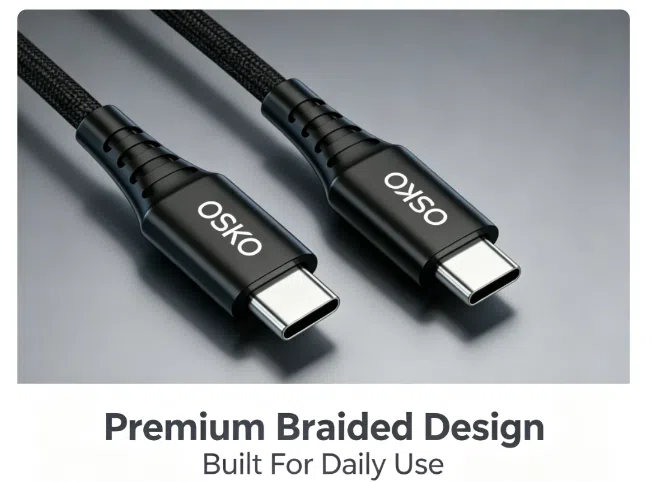
Nylon Braided Material
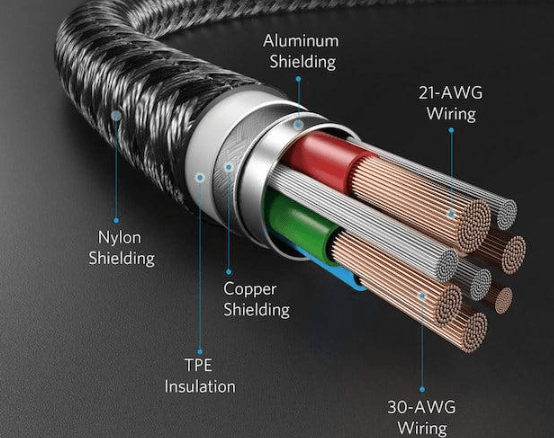
Many premium fast-charging cables use a nylon braided exterior.
Characteristics
Woven fabric exterior
Excellent wear resistance
Premium appearance
Better tensile strength
How to Identify Nylon Braided Cables
Visible woven texture
Fabric-like feel
Thicker cable body
Enhanced resistance to fraying
Advantages
Increased durability
Reduced tangling
Premium look
Disadvantages
Slightly less flexible than TPE
2. Identifying the Conductor Material
The conductor is the most important part of a charging cable because it carries electrical current and data signals.
Pure Copper Conductors
High-quality charging cables usually use oxygen-free copper.
Characteristics
Excellent conductivity
Lower resistance
Faster charging performance
Better data transmission
How to Identify
After stripping the insulation:
Bright reddish-orange color
Uniform appearance
Good flexibility
Benefits
Stable charging
Reduced voltage drop
Longer service life
Copper-Clad Aluminum (CCA)
Some low-cost cables use copper-clad aluminum.
Characteristics
Aluminum core with thin copper coating
Lower cost
Reduced conductivity
How to Identify
After cutting the wire:
Copper-colored surface
Silver-colored center
Drawbacks
Higher resistance
More heat generation
Lower charging efficiency
3. Identifying Shielding Materials
Shielding protects signals from electromagnetic interference (EMI).
Aluminum Foil Shielding
Features
Thin metallic foil wrapping
Blocks external interference
Common in USB data cables
Identification
Visible silver foil layer beneath the outer jacket.
Braided Copper Shielding
Features
Woven copper mesh
Superior EMI protection
Better signal integrity
Identification
Visible copper mesh around internal wires.
Benefits
Stable data transmission
Reduced signal loss
Improved performance for fast charging cables
4. Identifying Connector Housing Material
The connector housing affects durability and appearance.
Plastic Housing
Characteristics
Lightweight
Cost-effective
Common in entry-level cables
Identification
Lightweight feel
Plastic texture
May scratch easily
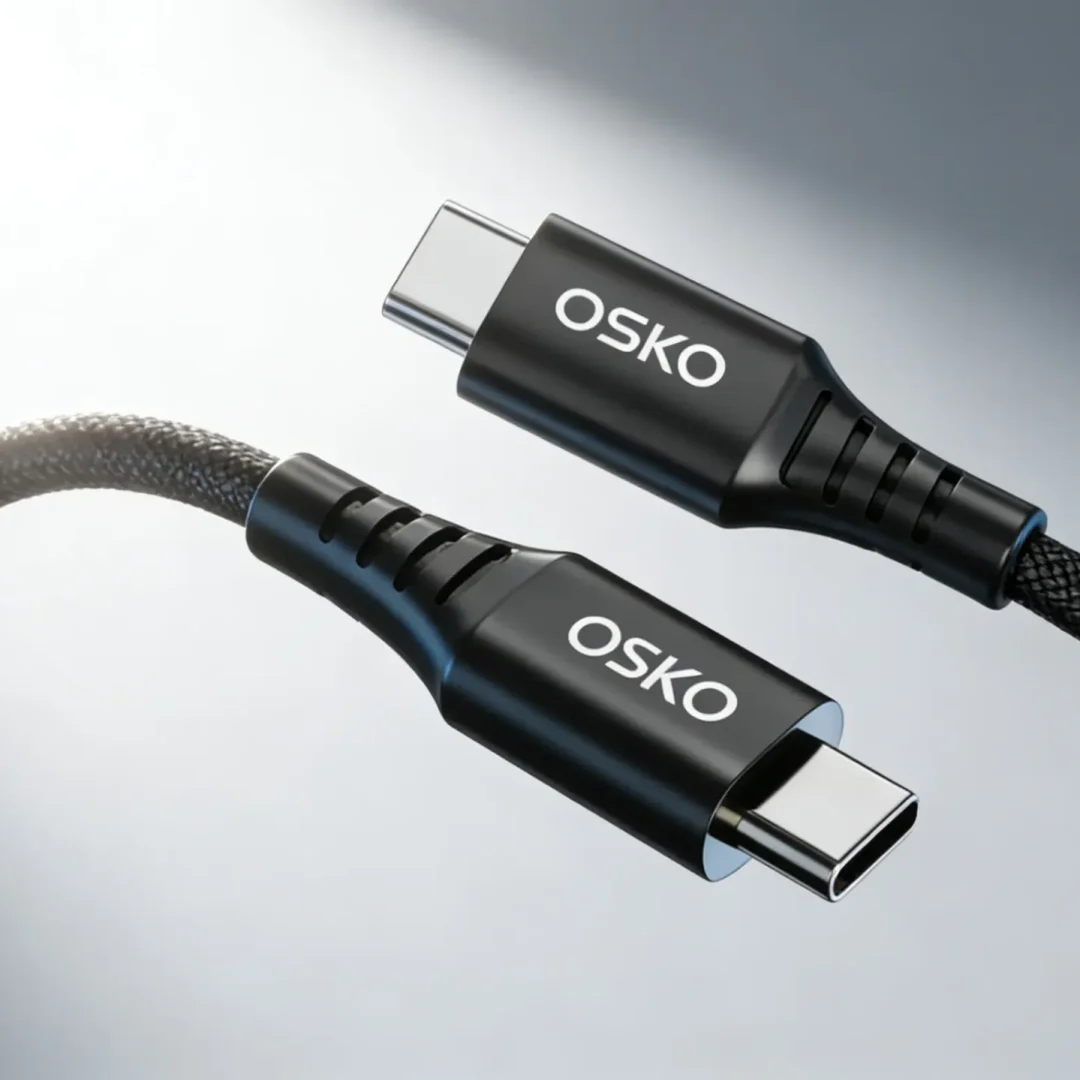
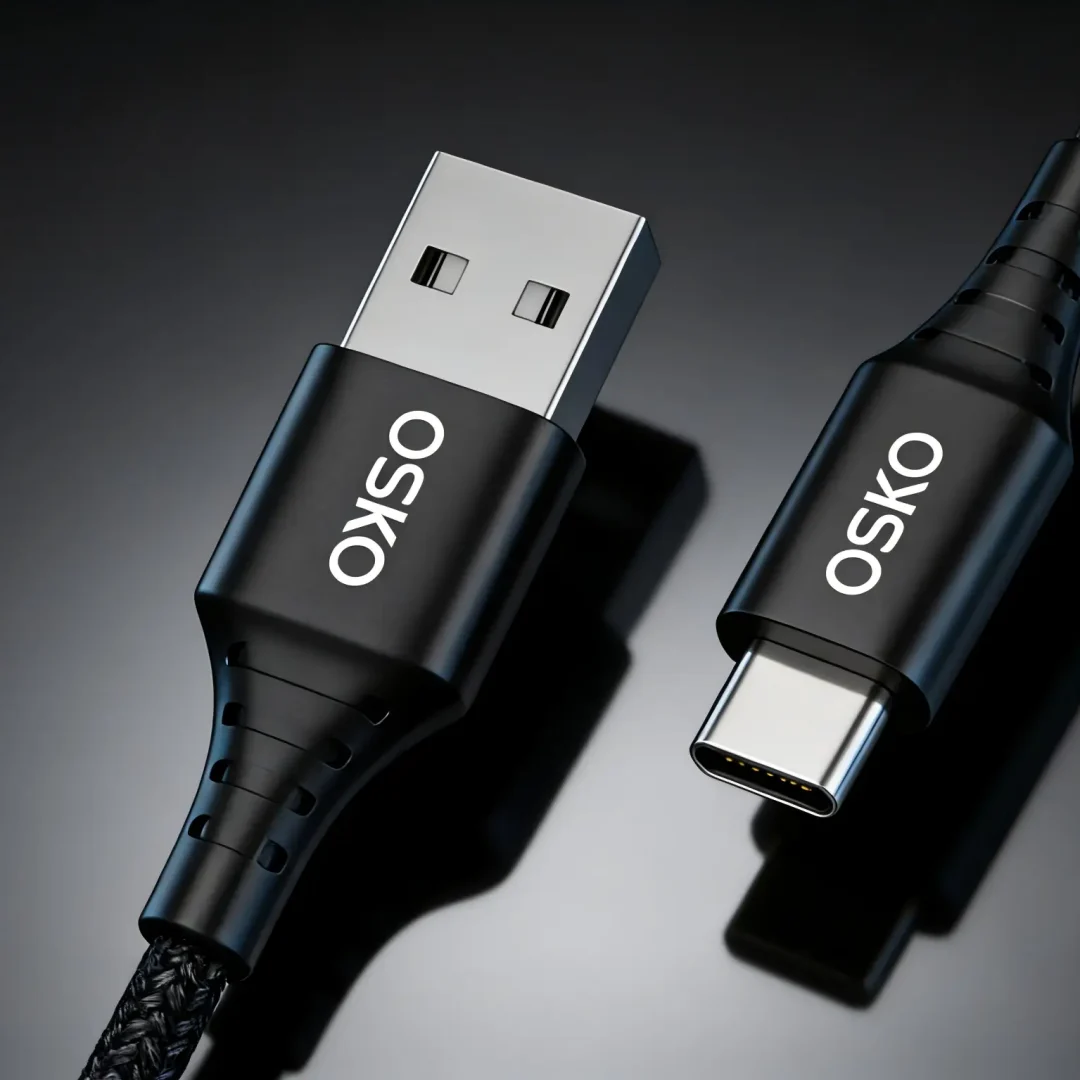
Aluminum Alloy Housing
Characteristics
Premium appearance
Better heat dissipation
Stronger construction
Identification
Metallic feel
Cooler surface temperature
Heavier than plastic
Benefits
Enhanced durability
Better resistance to damage
5. Identifying Connector Pin Material
Connector pins are often overlooked but significantly impact charging performance.
Gold-Plated Connectors
Characteristics
Gold-colored contacts
Corrosion resistance
Improved electrical conductivity
Identification
Visible gold coating on contacts
Smooth, shiny finish
Benefits
Stable connection
Longer lifespan
Reduced oxidation
Nickel-Plated Connectors
Characteristics
Silver-colored appearance
Lower cost
Good basic performance
Identification
Silver finish
Common in budget cables
Quick Material Comparison Table
| Component | Premium Material | Standard Material | Budget Material |
|---|---|---|---|
| Outer Jacket | Nylon Braided | TPE | PVC |
| Conductor | Oxygen-Free Copper | Copper | Copper-Clad Aluminum |
| Shielding | Copper Braid + Foil | Aluminum Foil | Minimal Shielding |
| Housing | Aluminum Alloy | Reinforced Plastic | Plastic |
| Connector Pins | Gold-Plated | Nickel-Plated | Basic Alloy |
Tips for Buyers and Importers
When evaluating a charging cable, ask suppliers about:
Conductor
Pure copper or CCA?
Wire gauge (AWG)?
Supports 60W, 100W, 240W, or higher?
Shielding
Aluminum foil shielding?
Braided copper shielding?
EMI testing available?
Outer Jacket
PVC, TPE, or nylon braided?
Bend test results?
Tensile strength reports?
Certification
USB-IF certified?
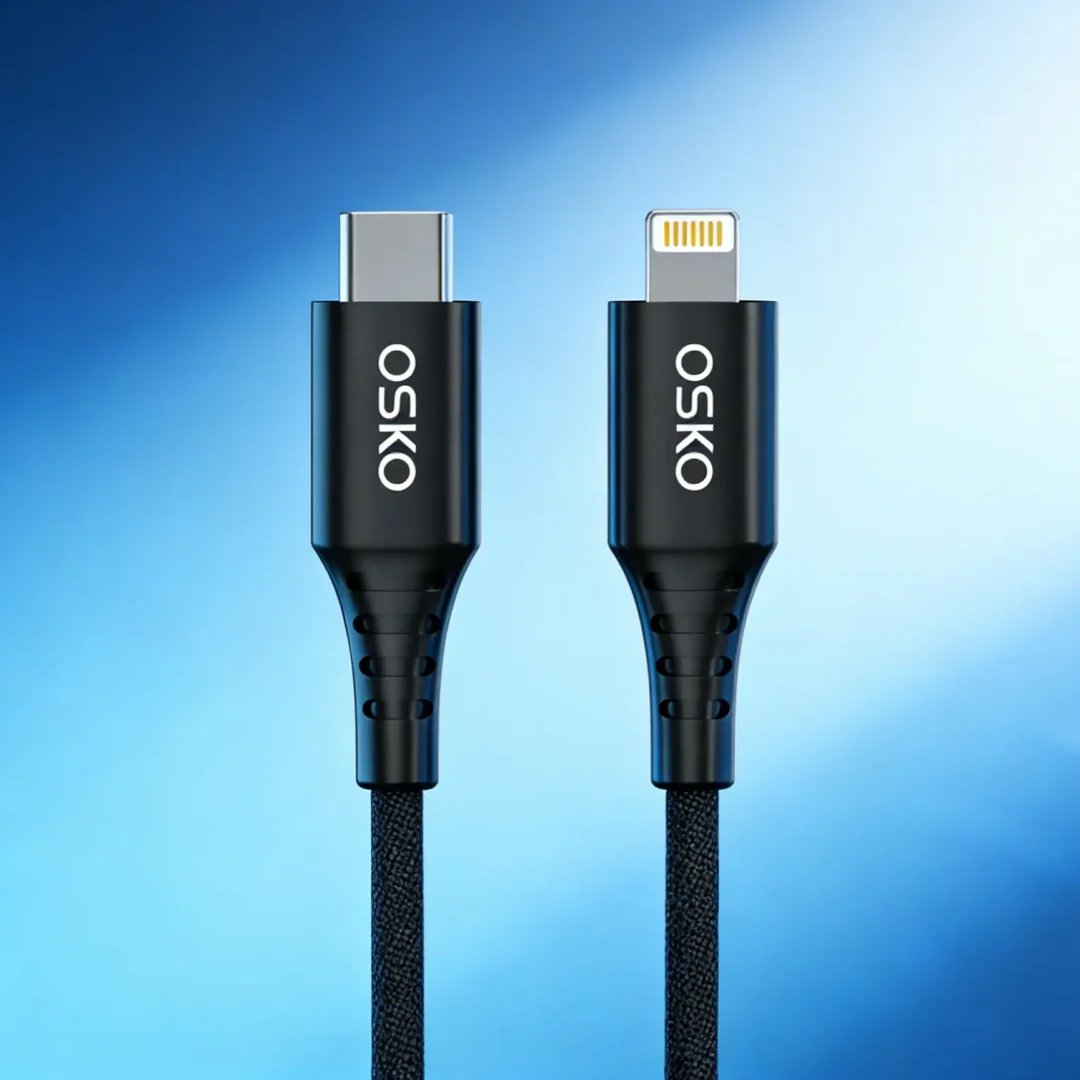
MFi certified (for Lightning cables)?
RoHS compliant?
These factors often determine the real quality of a cable more than appearance alone.
Conclusion
Identifying mobile phone data cable materials is essential for understanding cable quality and performance. A premium cable typically combines a durable outer jacket, pure copper conductors, effective shielding, and high-quality connectors.
When comparing charging cables, don’t focus only on charging wattage or branding. Evaluating the materials used in the cable’s construction can help you choose a product that offers faster charging, better durability, and a longer service life.
For wholesalers, distributors, and OEM buyers, understanding cable materials is also a key step in sourcing reliable products and avoiding quality issues after purchase.