
Introduction
Although Apple has gradually introduced USB-C charging ports in newer devices, millions of iPhone, iPad, AirPods, and Apple accessories users still rely on Lightning cables for charging and data synchronization.
For retailers, distributors, and electronics brands, sourcing a reliable MFi certified Lightning cable manufacturer is essential because Lightning accessories require strict compatibility control to avoid charging failures, warning messages, and customer complaints.
A professional Apple Lightning cable supplier must control:
Lightning connector quality
Original authentication chip compatibility
Copper conductor performance
Charging stability
Data transfer reliability
Manufacturing consistency
OSKO provides OEM and ODM Lightning cable manufacturing solutions for global customers, producing high-quality charging cables compatible with iPhone, iPad, iPod, AirPods, and other Apple Lightning devices.

What Is an Apple Lightning Cable?
An Apple Lightning cable is a proprietary charging and data cable developed by Apple for its mobile devices.
The Lightning connector was introduced as a replacement for the older 30-pin connector and features:
Compact connector design
Reversible plug orientation
Charging capability
Data synchronization capability
Lightning cables are commonly used with:
iPhone models using Lightning ports
iPad models with Lightning connectors
iPod devices
AirPods charging cases
Magic Keyboard and Apple accessories
Unlike standard USB cables, Lightning accessories require specific authentication technology to ensure compatibility with Apple devices.
Why Do Apple Lightning Cables Need MFi Certification?
What Does MFi Certification Mean?
MFi (Made for iPhone/iPad/iPod) is Apple’s certification program for third-party accessories.
An MFi certified Lightning cable has passed Apple’s requirements related to:
Compatibility
Safety
Performance
Authentication
For businesses selling Apple accessories, MFi certification provides stronger market credibility and reduces compatibility risks.
Without proper certification, Lightning cables may experience:
“Accessory not supported” warnings
Charging interruption
Unstable connection
Data synchronization problems
For international distributors in the US, Germany, Australia, and the Netherlands, MFi certification is often an important purchasing requirement when sourcing Lightning cables.
What Makes a High-Quality Lightning Cable?
A premium USB Lightning cable manufacturer focuses on multiple engineering factors.
1. Certified Lightning Connector & Authentication Chip
The Lightning connector contains advanced components that communicate with Apple devices.
A reliable Lightning cable requires:
Stable authentication chip
Accurate communication
Consistent performance
OSKO Lightning cables use controlled component sourcing and production testing to ensure compatibility with Apple devices.
This helps prevent:
Charging failures
Compatibility errors
Customer returns
2. High-Purity Copper Conductors
Charging performance depends heavily on internal conductor quality.
Low-cost Lightning cables often use:
Smaller conductors
Poor-quality materials
Higher resistance wiring
These issues can cause:
Slow charging
Heat generation
Reduced cable lifespan
Professional Lightning cables use optimized copper conductors to improve:
Current transmission
Charging stability
Data transfer efficiency
OSKO engineering team evaluates conductor specifications according to application requirements, including standard charging and fast charging solutions.
3. Durable Cable Jacket Design
Cable durability is one of the biggest concerns for Apple accessory buyers.
Traditional Lightning cables often fail because of:
Broken connector joints
Jacket cracking
Internal wire damage
Premium Lightning cables can use:
Nylon Braided Construction
Advantages:
Higher abrasion resistance
Better flexibility
Longer service life
Premium appearance
Reinforced SR Structure
The stress relief area protects the connection between:
Cable body
Connector housing
OSKO production testing includes:
Bend testing
Pull testing
Connector stress testing
This helps improve reliability for daily charging environments.
USB-A to Lightning vs USB-C to Lightning Cable
What Is the Difference?
There are two major Lightning cable configurations.
USB-A to Lightning Cable
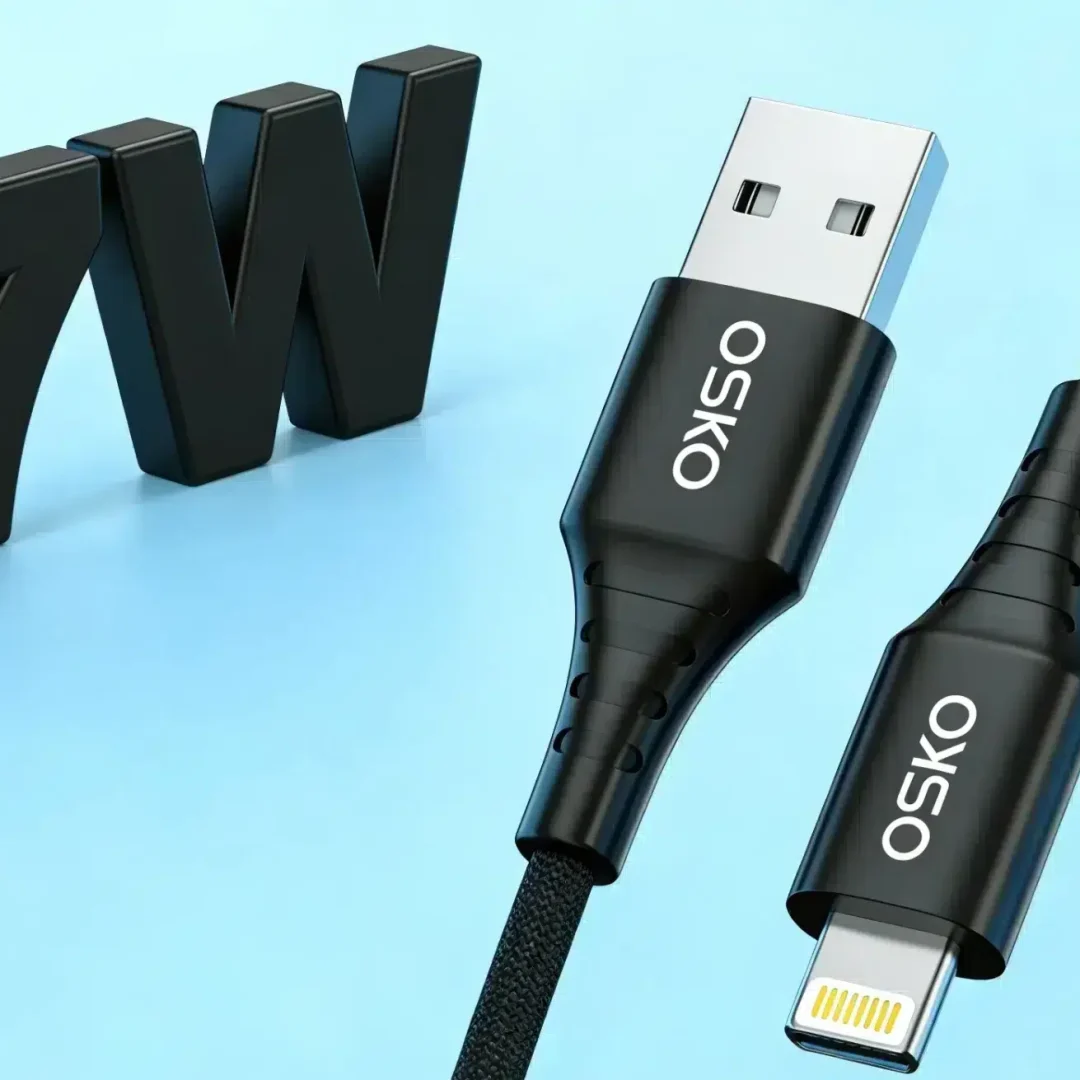
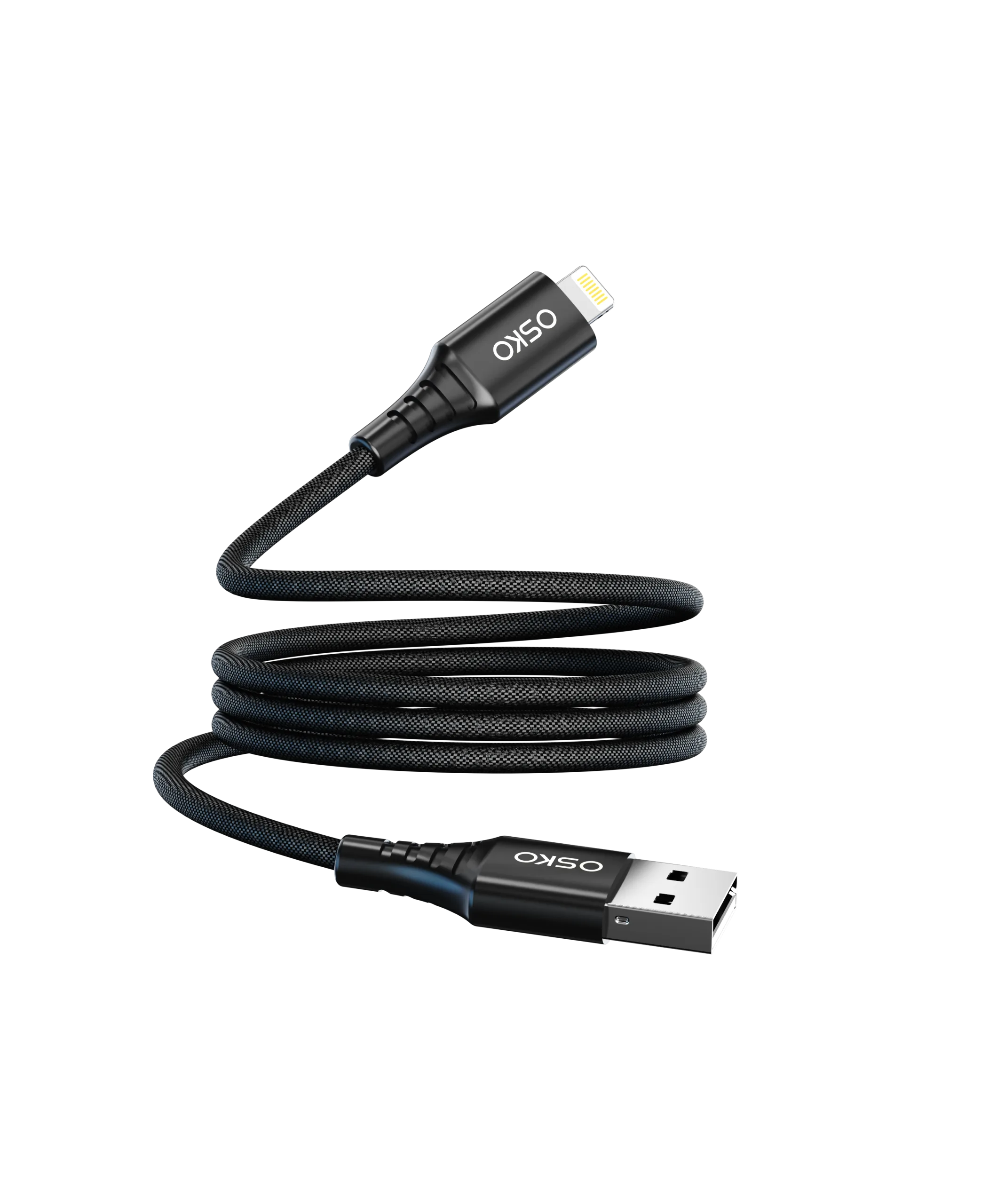
This cable connects Apple devices to traditional USB-A chargers.
Common applications:
Older wall chargers
Computers
Car chargers
Power adapters
Advantages:
Wide compatibility
Lower cost
Suitable for retail accessories
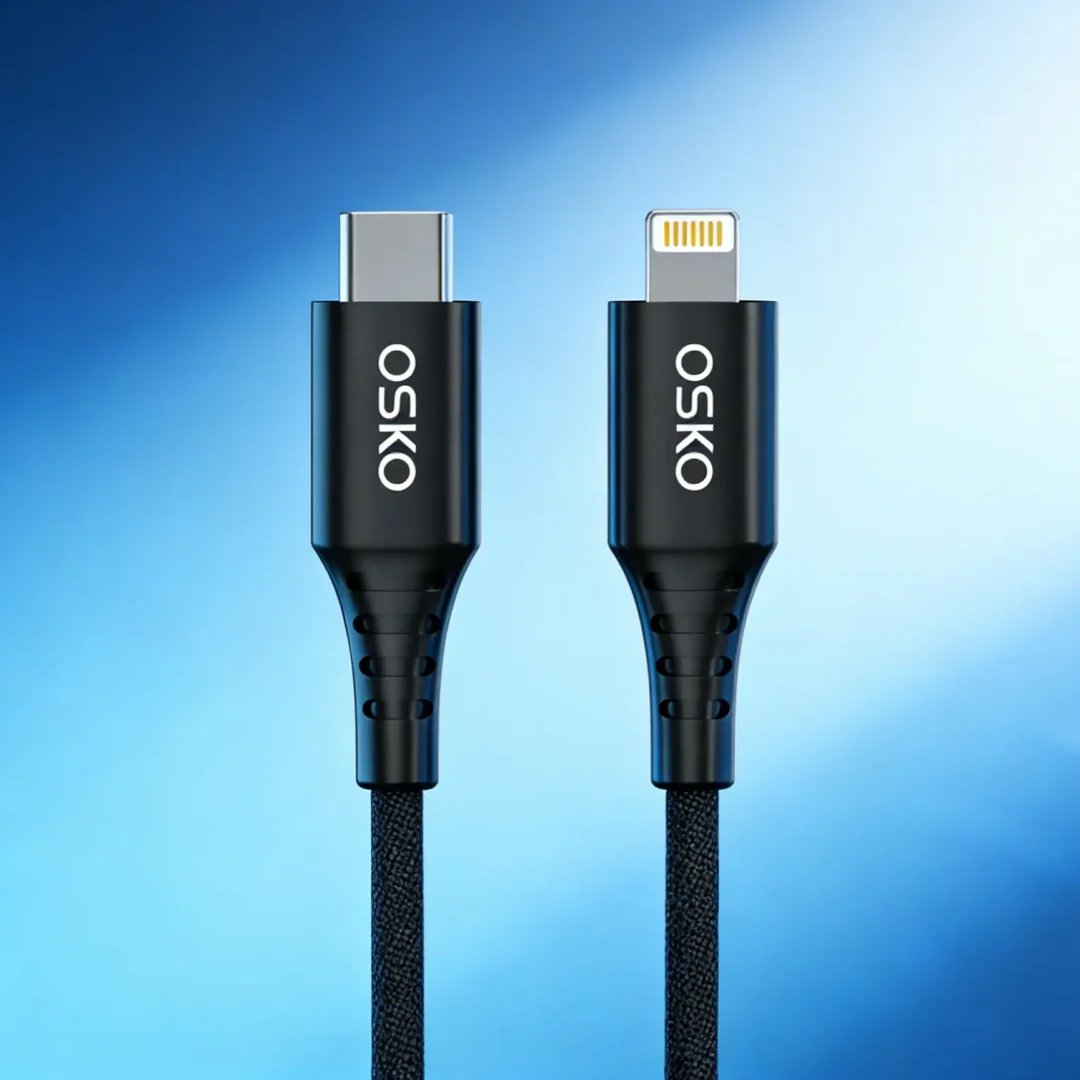
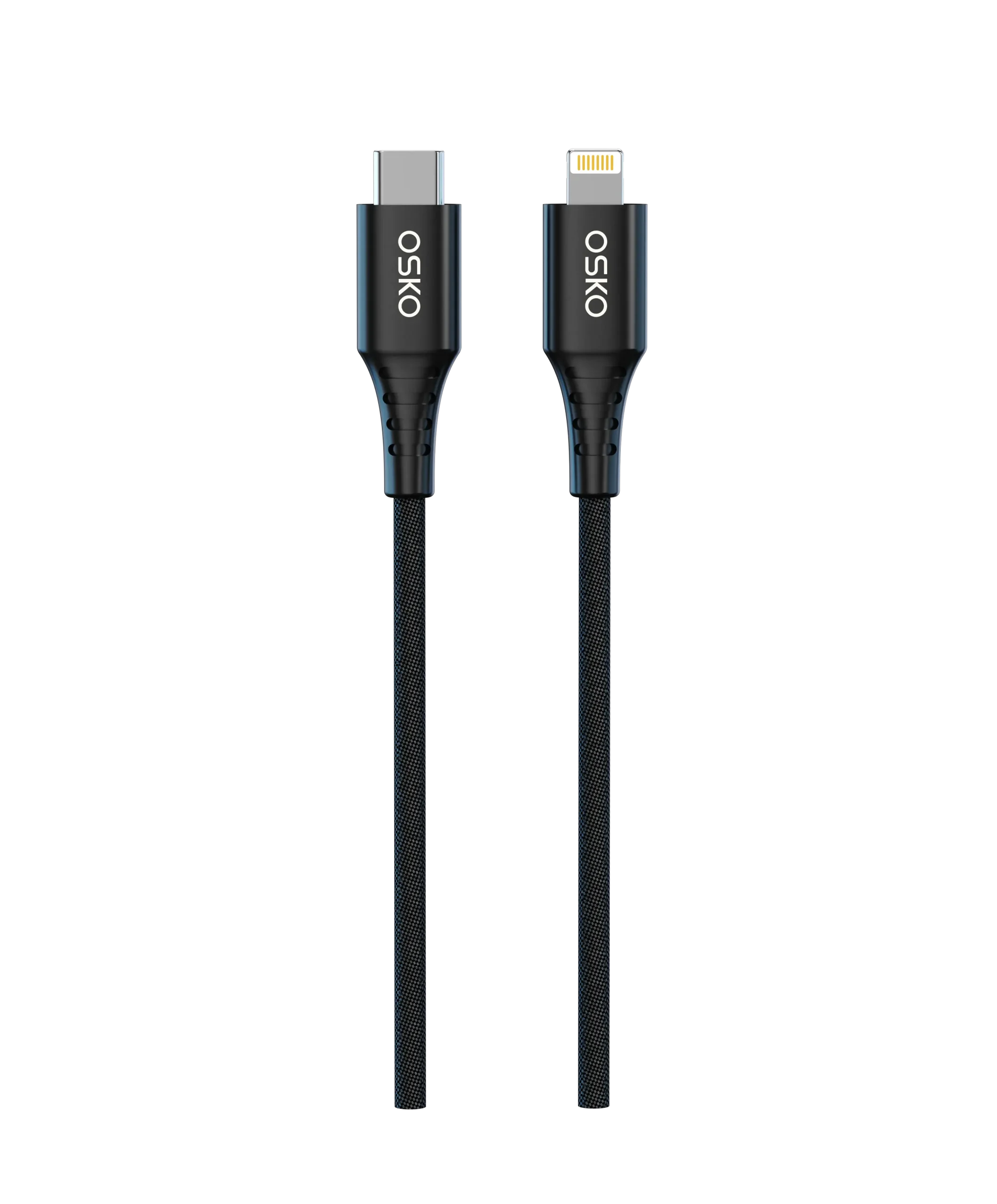
USB-C to Lightning Cable
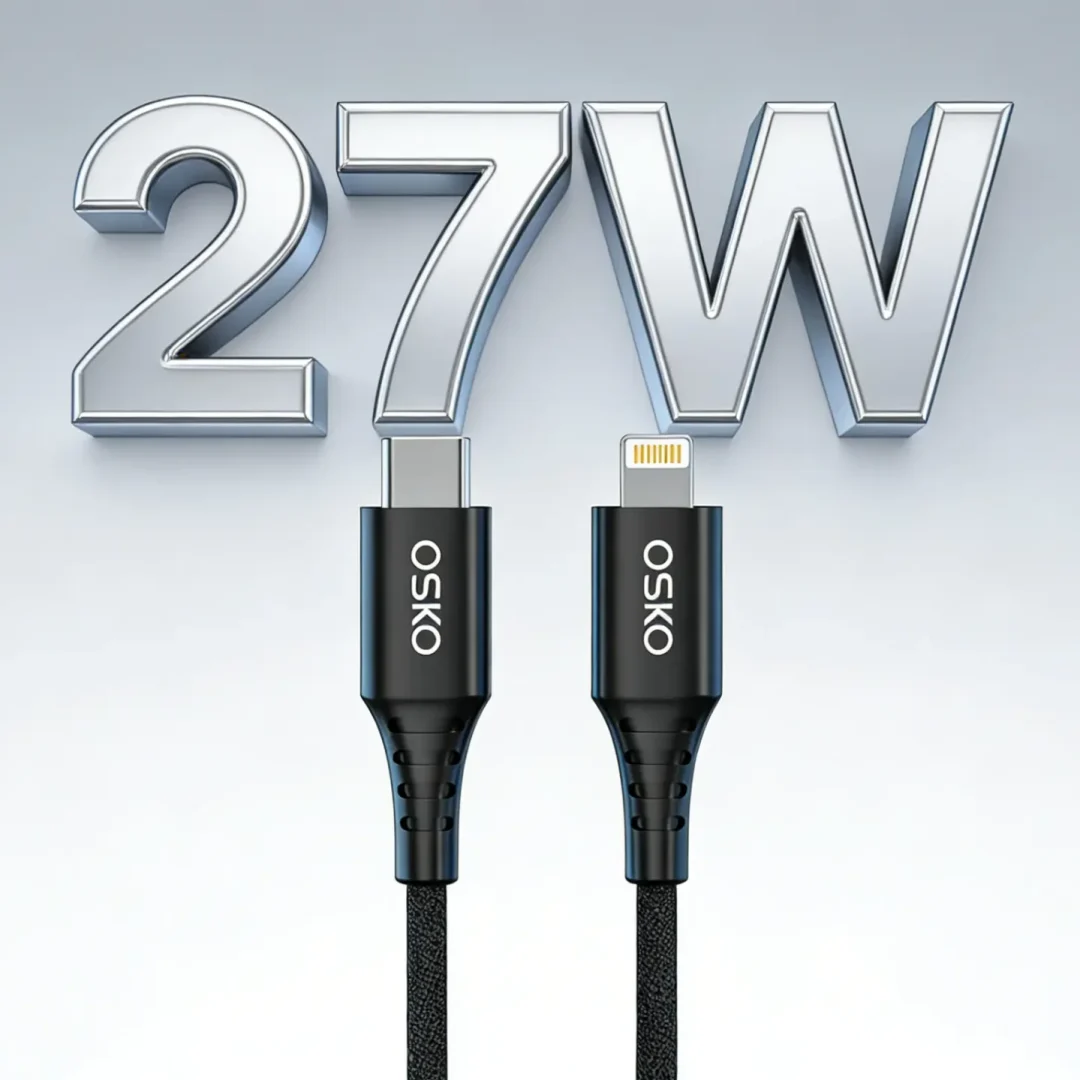
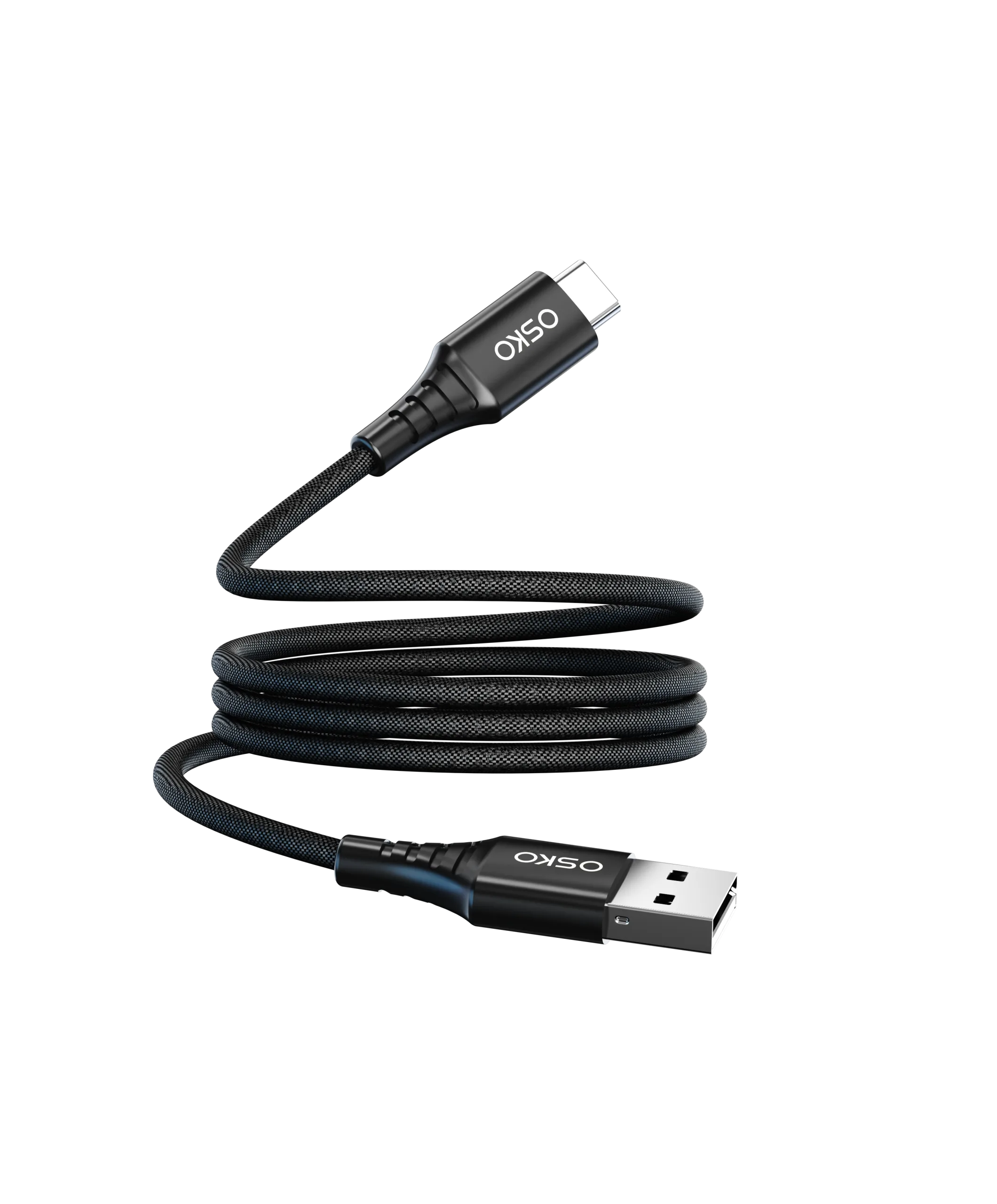
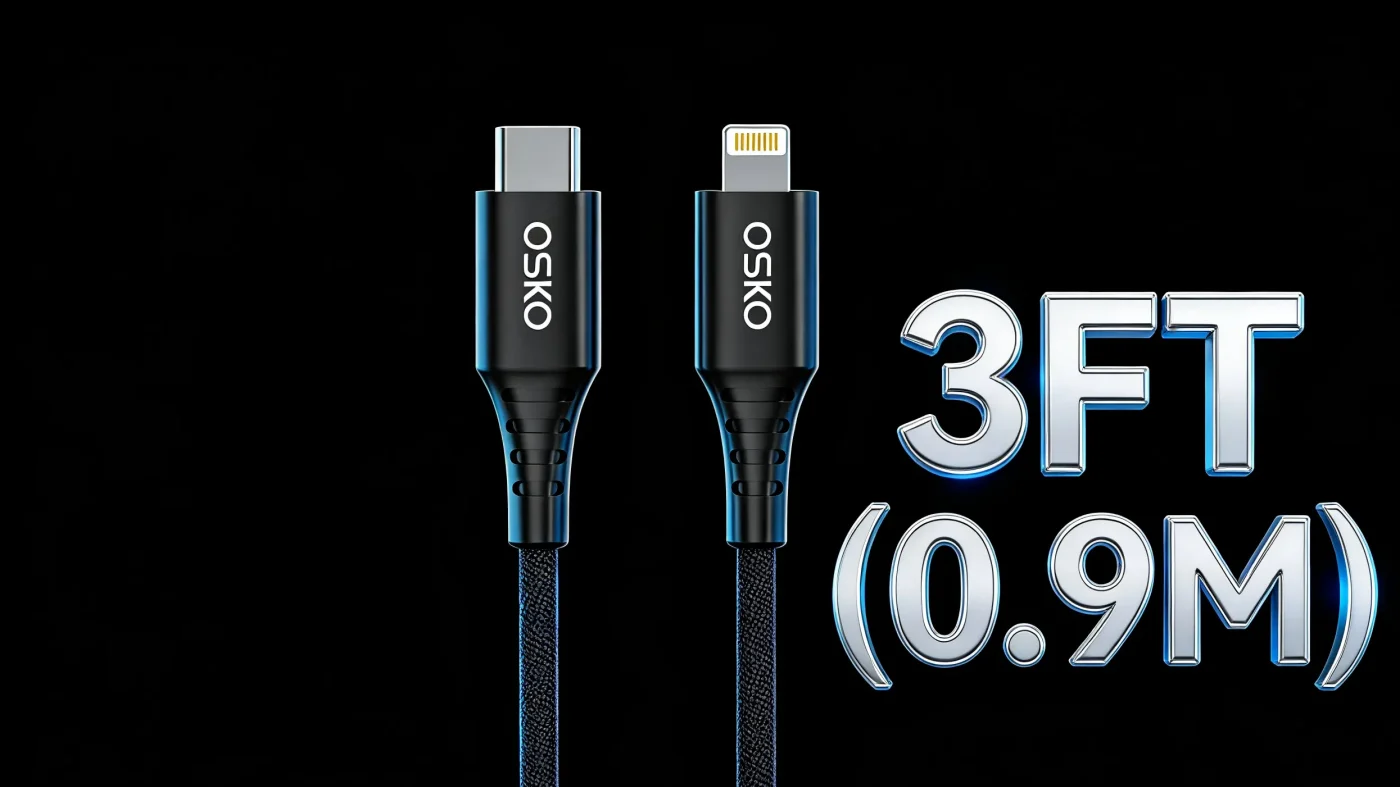
USB-C to Lightning cables are designed for faster charging when paired with compatible USB-C power adapters.
Advantages:
Faster charging support
Modern charger compatibility
Better integration with USB-C ecosystems
Many Apple users choose USB-C to Lightning cables because modern chargers increasingly use USB-C ports.
Does Lightning Cable Support Fast Charging?
Yes, but charging speed depends on the complete charging system.
Fast charging requires:
Compatible Apple device
Compatible power adapter
Quality Lightning cable
A USB-C to Lightning cable paired with a suitable USB-C PD charger can provide faster charging compared with traditional USB-A charging solutions.
However, the cable itself must have:
Proper authentication
Stable electrical design
Reliable connector quality
Why Do Brands Choose OEM Lightning Cable Manufacturers?
For private-label businesses, working directly with a factory provides more flexibility.
OEM Lightning cable customization may include:
Cable Appearance
Custom colors
Custom lengths
Braided materials
Logo printing
Packaging Customization
Retail box design
Brand labels
User manuals
Barcode labels
Technical Specifications
Charging capability
Cable structure
Connector materials
Testing requirements
OSKO supports customized Lightning cable production for:
Electronics brands
Amazon sellers
Retail distributors
Mobile accessory wholesalers
Factory Quality Control for Lightning Cable Production
A professional Lightning cable factory requires strict quality management.
OSKO manufacturing process includes:
IQC (Incoming Quality Control)
Incoming materials are inspected:
Lightning connectors
Chips
Copper wires
Plastic materials
Packaging components
IPQC (In-Process Quality Control)
Production monitoring includes:
Connector assembly
Soldering process
Cable molding
Appearance inspection
OQC (Outgoing Quality Control)
Before shipment:
Charging test
Data transfer test
Compatibility testing
Packaging inspection
This production system helps ensure every bulk order maintains consistent quality.
What Certifications Should Lightning Cable Buyers Request?
Before purchasing wholesale Lightning cables, buyers should evaluate:
| Document | Purpose |
|---|---|
| MFi Certification | Apple compatibility approval |
| RoHS | Hazardous substance control |
| REACH | Chemical compliance |
| ISO9001 | Quality management system |
| Electrical Test Report | Product performance verification |
For premium Apple accessory products, buyers may also request:
Material declarations
Production test records
Compatibility reports
Engineering Case Study: Custom MFi Lightning Cable Solution for Australian Retail Brand
An Australian mobile accessory distributor planned to launch a private-label iPhone charging cable series.
Their previous supplier had problems:
High customer return rates
Unstable charging performance
Connector damage after repeated use
OSKO engineers redesigned the cable structure by:
Improving copper conductor selection
Strengthening SR protection
Optimizing braided jacket material
Adding production charging verification
After mass production, the distributor achieved:
More stable charging experience
Improved customer feedback
Reduced after-sales issues
More reliable supply chain performance
This case shows why selecting an experienced MFi Lightning cable manufacturer is important for international accessory brands.
How to Choose a Reliable Lightning Cable Supplier?
Before cooperation, buyers should evaluate:
Technical Capability
Ask:
Does the supplier provide MFi certified cables?
What authentication solution is used?
Are cables tested before shipment?
Manufacturing Capability
Check:
Factory production experience
Quality control procedures
OEM customization ability
Compliance Capability
Verify:
Certification documents
Material compliance
Testing records
A professional supplier should provide technical evidence rather than only price quotations.
Conclusion
Lightning cables remain an important accessory category because millions of Apple devices still use Lightning connectors.
For brands, distributors, and wholesalers, choosing the right Apple Lightning cable manufacturer helps reduce compatibility risks and improve customer satisfaction.
A reliable Lightning cable supplier should provide:
MFi certification capability
Stable charging performance
Durable construction
Strict quality control
OEM customization services
OSKO specializes in manufacturing professional MFi certified Lightning cables, USB-A to Lightning cables, and USB-C to Lightning cable solutions for global markets.
Working with an experienced factory allows brands to build reliable Apple accessory products with consistent quality and competitive supply chain advantages.
FAQ
What is an MFi certified Lightning cable?
An MFi certified Lightning cable is a cable approved through Apple’s Made for iPhone/iPad/iPod program. It uses certified components to ensure compatibility, safety, and reliable performance with Apple devices.
Are non-MFi Lightning cables safe to use?
Non-MFi Lightning cables may work temporarily, but they have higher risks of compatibility problems, charging interruptions, and unsupported accessory warnings.
What is the difference between USB-A to Lightning and USB-C to Lightning cables?
USB-A to Lightning cables connect Apple devices to traditional USB-A chargers, while USB-C to Lightning cables are designed for modern USB-C chargers and can support faster charging solutions.
Can Lightning cables support fast charging?
Yes. Lightning cables can support fast charging when used with compatible Apple devices, USB-C power adapters, and properly designed charging cables.
What should buyers check when sourcing wholesale Lightning cables?
Buyers should check MFi certification, connector quality, conductor specifications, factory capability, testing procedures, compliance documents, and OEM customization options.
Can Lightning cable manufacturers provide private-label products?
Yes. Professional Lightning cable factories can customize cable length, colors, materials, packaging, logos, and technical specifications for private-label brands.