


Introduction
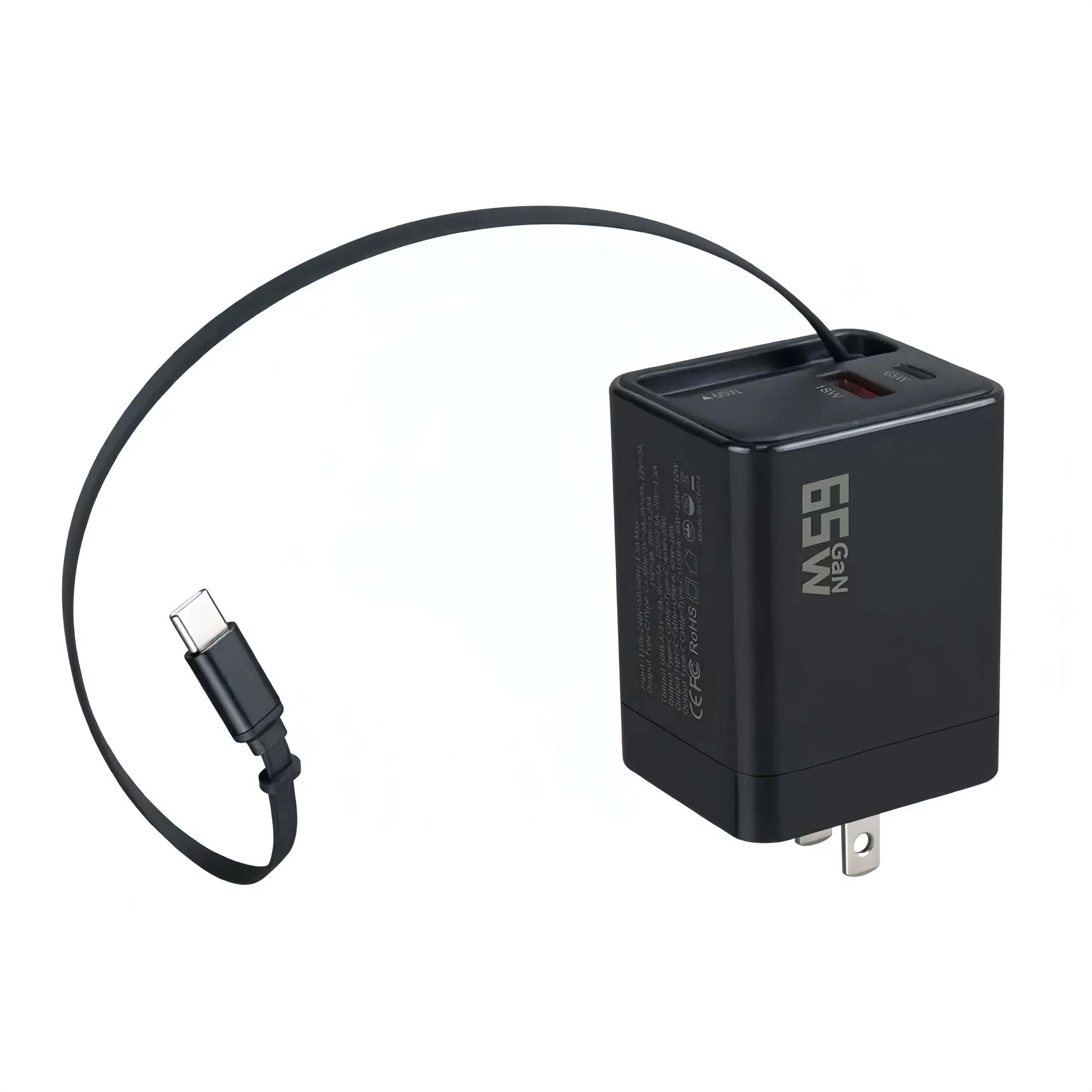
Choosing the best USB-C cable solution for travel and on-the-go charging is essential for users who rely on multiple devices while moving between work, home, hotels, and transportation environments.
In US and European markets, travel charging cables must balance three key factors: portability, durability, and fast charging stability. Unlike desk setups, travel environments expose cables to bending stress, frequent packing, and inconsistent power sources.
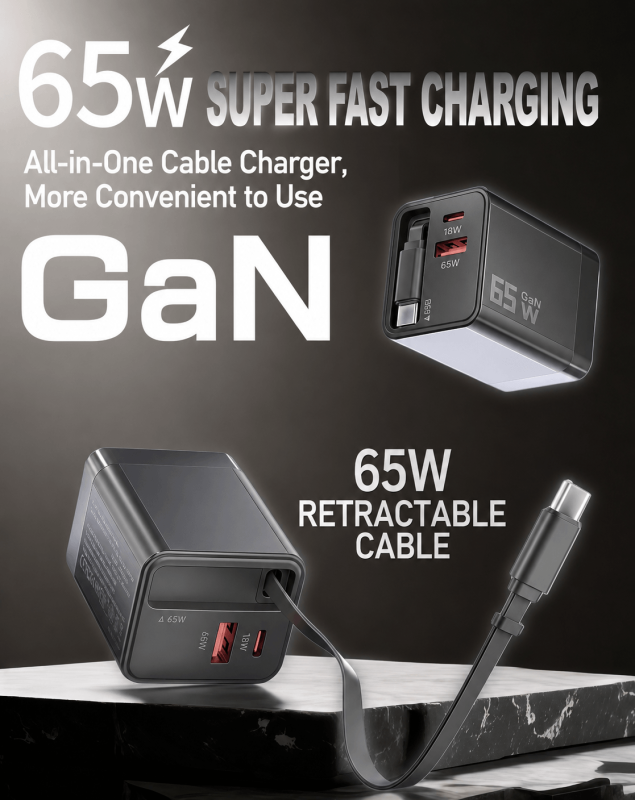
From an engineering perspective, a travel USB-C cable is not just a shortened version of a standard cable—it is a reinforced mechanical system designed for repeated movement and environmental stress.
OSKO develops travel-optimized USB-C cable systems based on durability engineering and real-world usage patterns.
Material Science & Travel-Grade Engineering Design
Mechanical Stress in Travel Environments
Travel cables experience:
Frequent winding and unwinding
Compression inside bags
Constant bending at connector joints
Exposure to temperature variation
These factors significantly increase failure risk compared to home or office use.
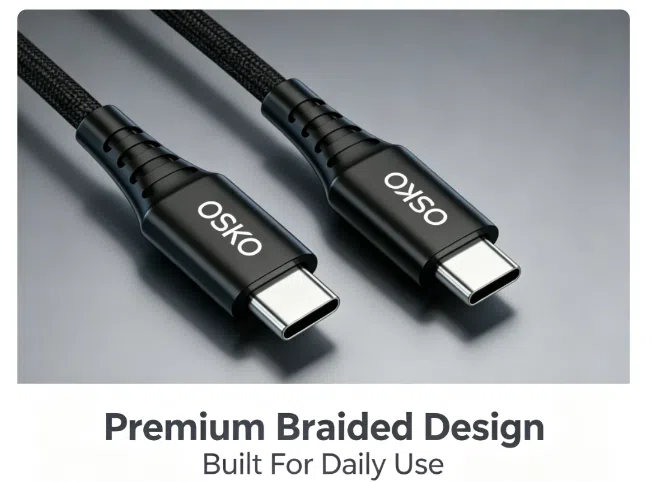
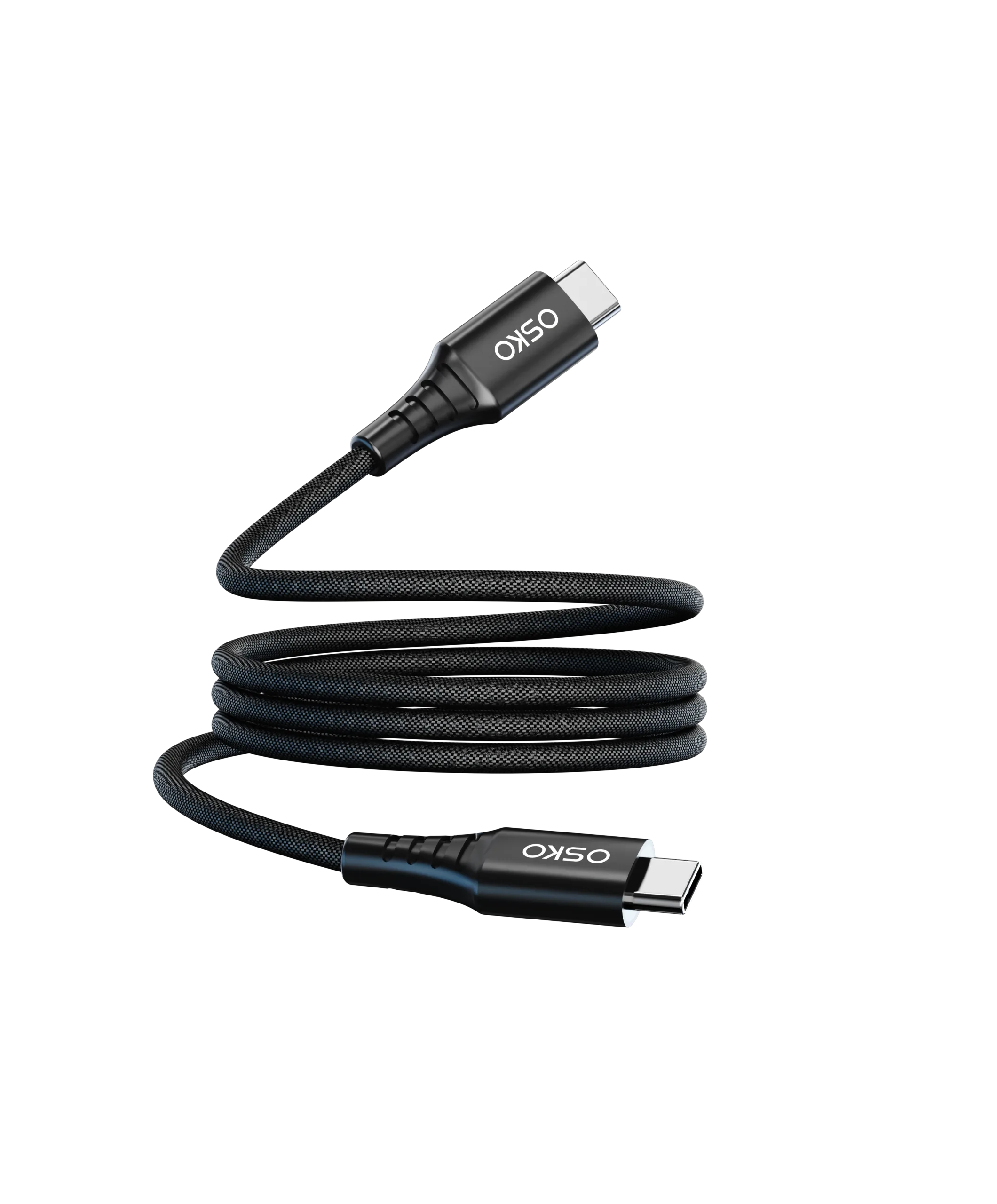
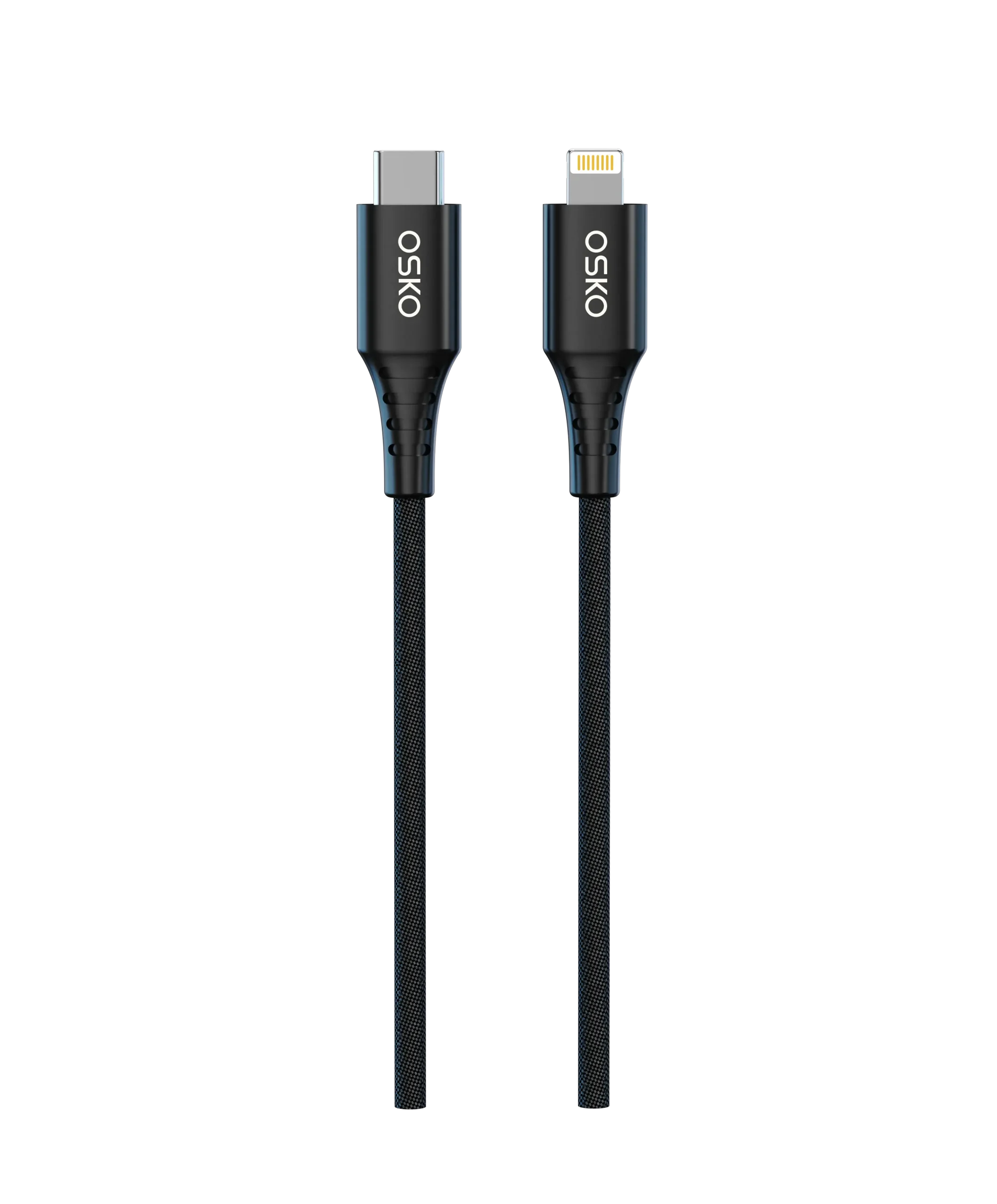
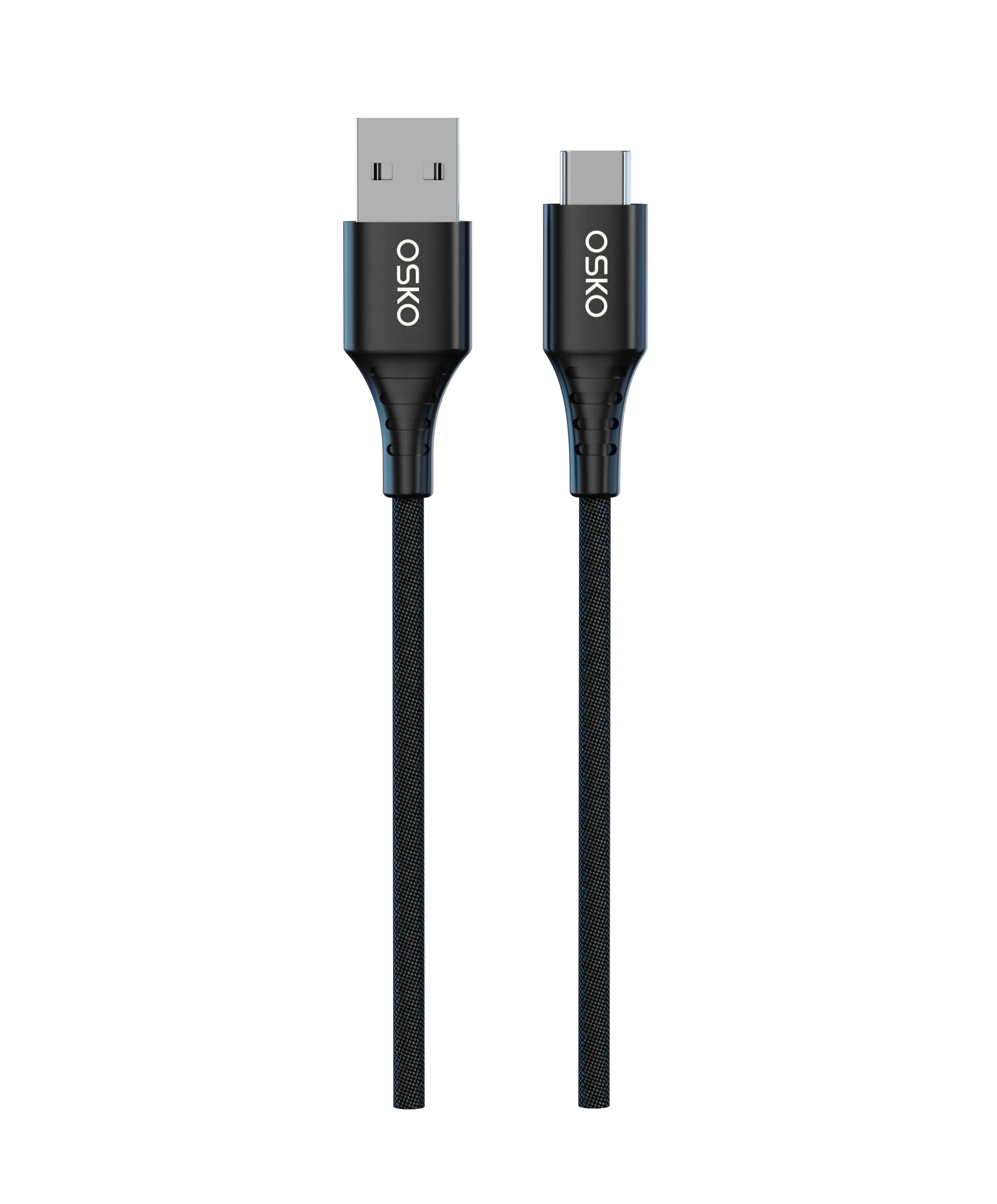
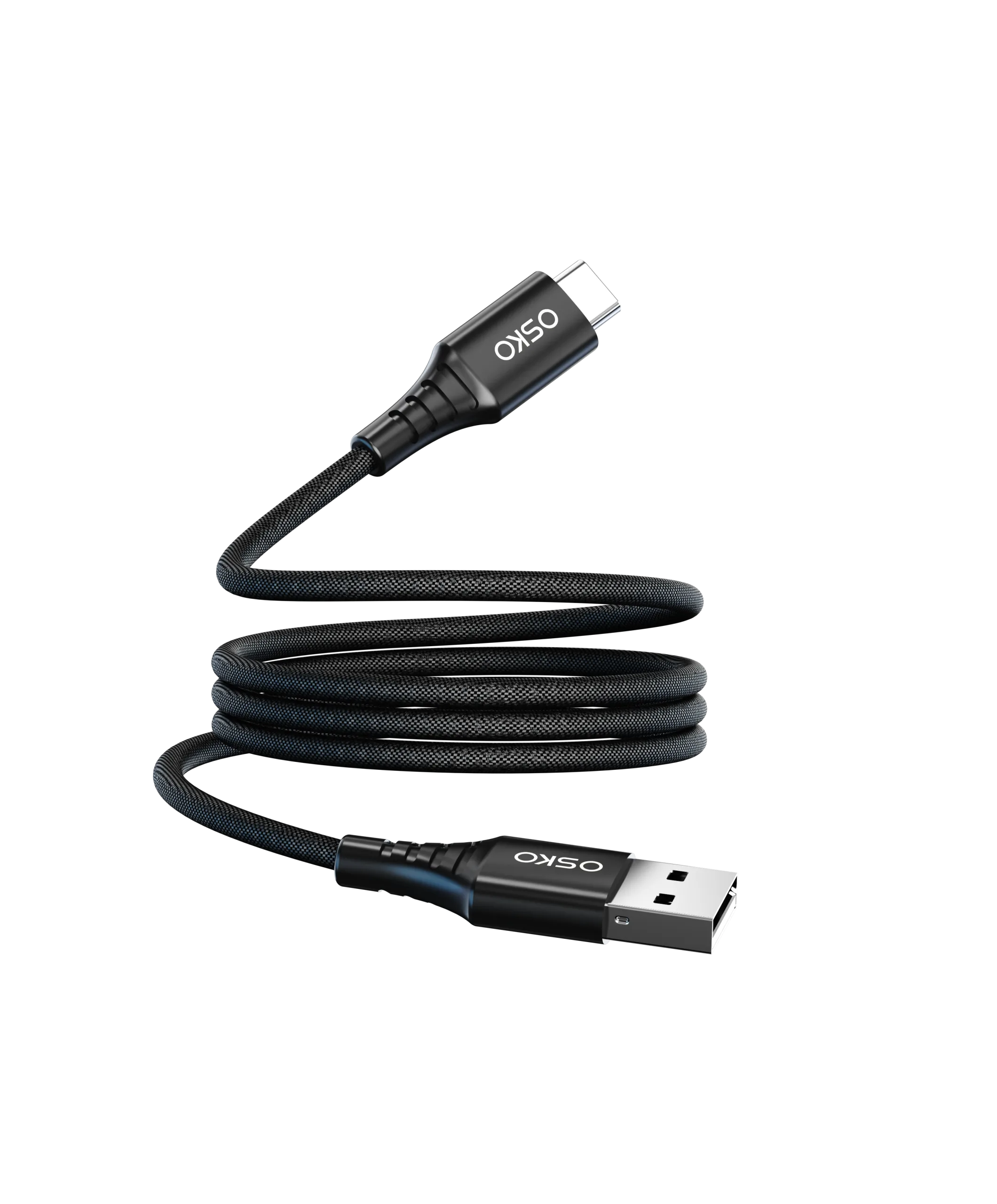
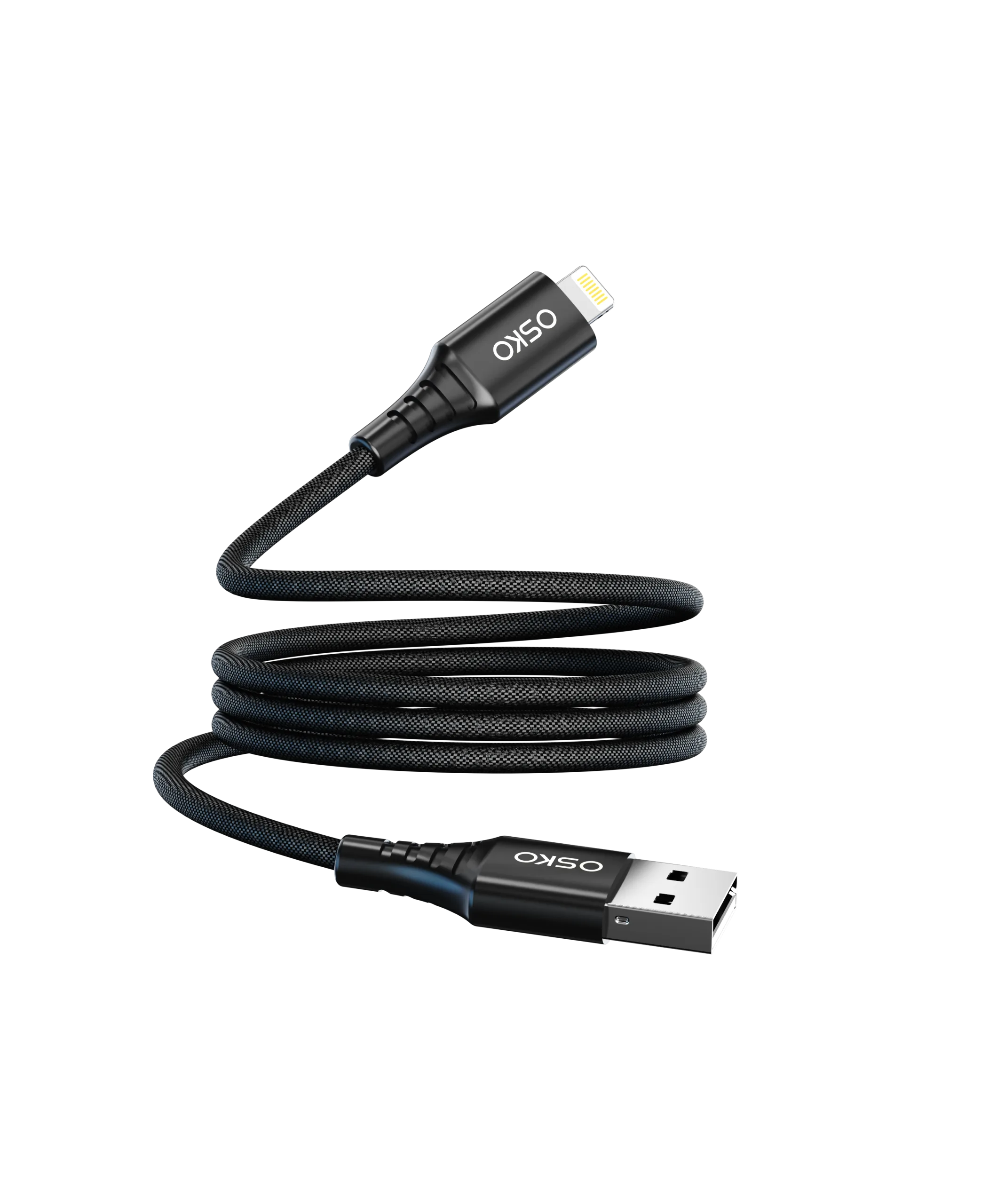
Nylon Braided Structure for Travel Durability
Premium travel USB-C cables typically use:
High-density nylon braided outer layer
Reinforced internal fiber support
Flexible strain relief at both ends
Benefits include:
Higher tensile strength
Reduced tangling in bags
Improved abrasion resistance
Longer lifespan under repeated packing cycles
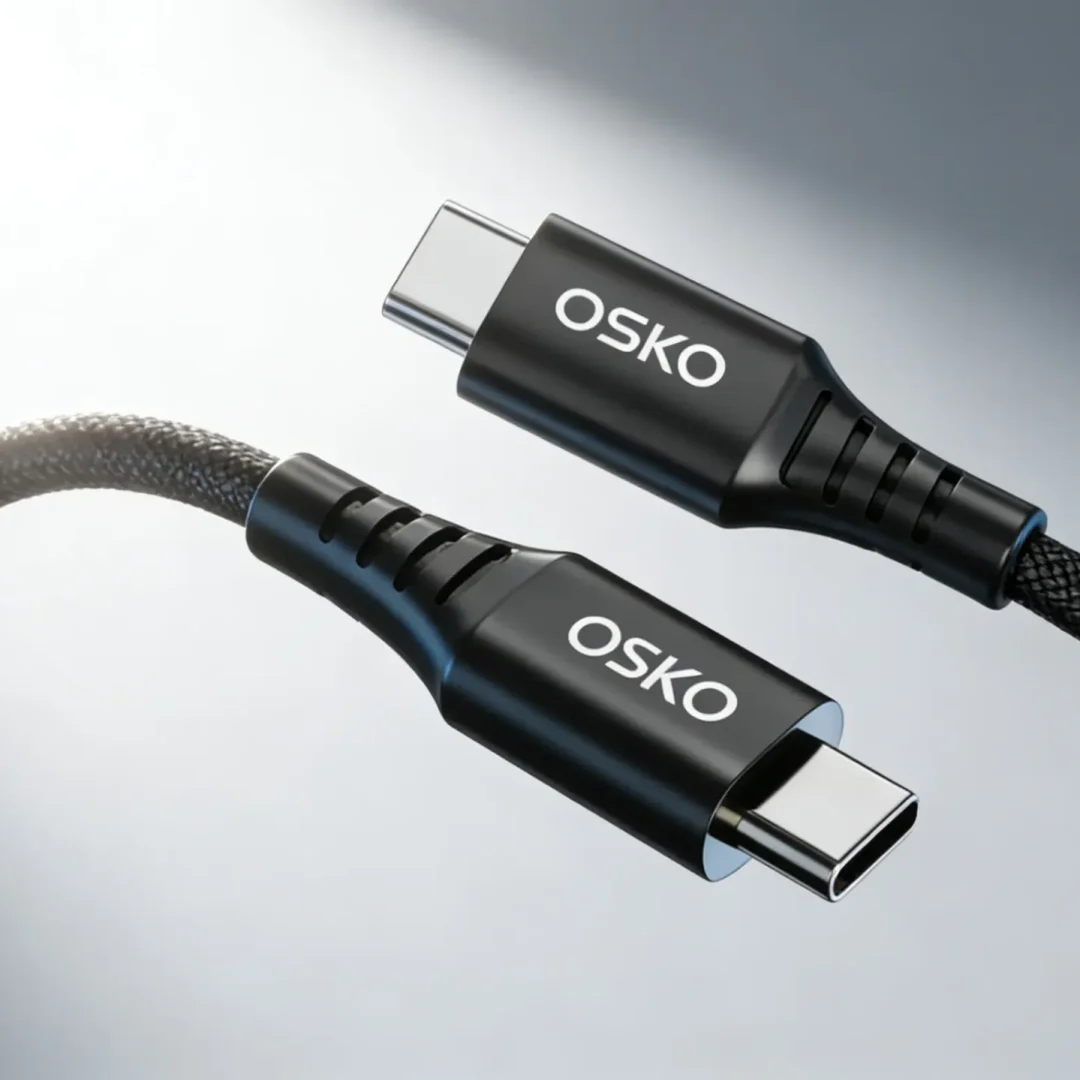
Connector Reinforcement System
Travel cables require stronger connector design:
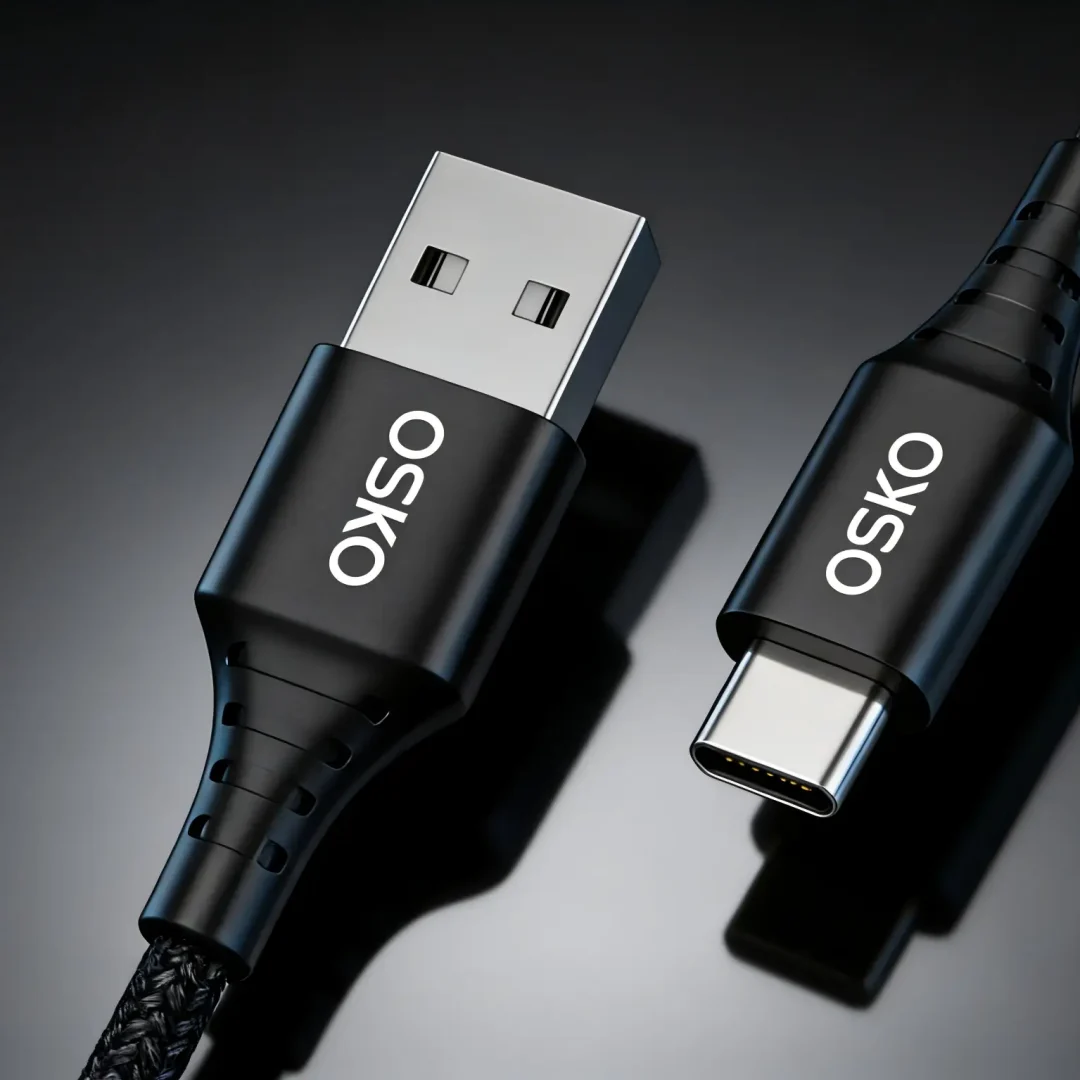
Extended strain relief housing
Shock-absorbing internal transition zone
Secure USB-C port fit to reduce wobble
This prevents one of the most common failures: connector breakage during travel use.
Electrical Stability for Fast Charging
Travel environments often include:
Hotel chargers
Car chargers
Power banks
A high-quality travel USB-C cable must maintain:
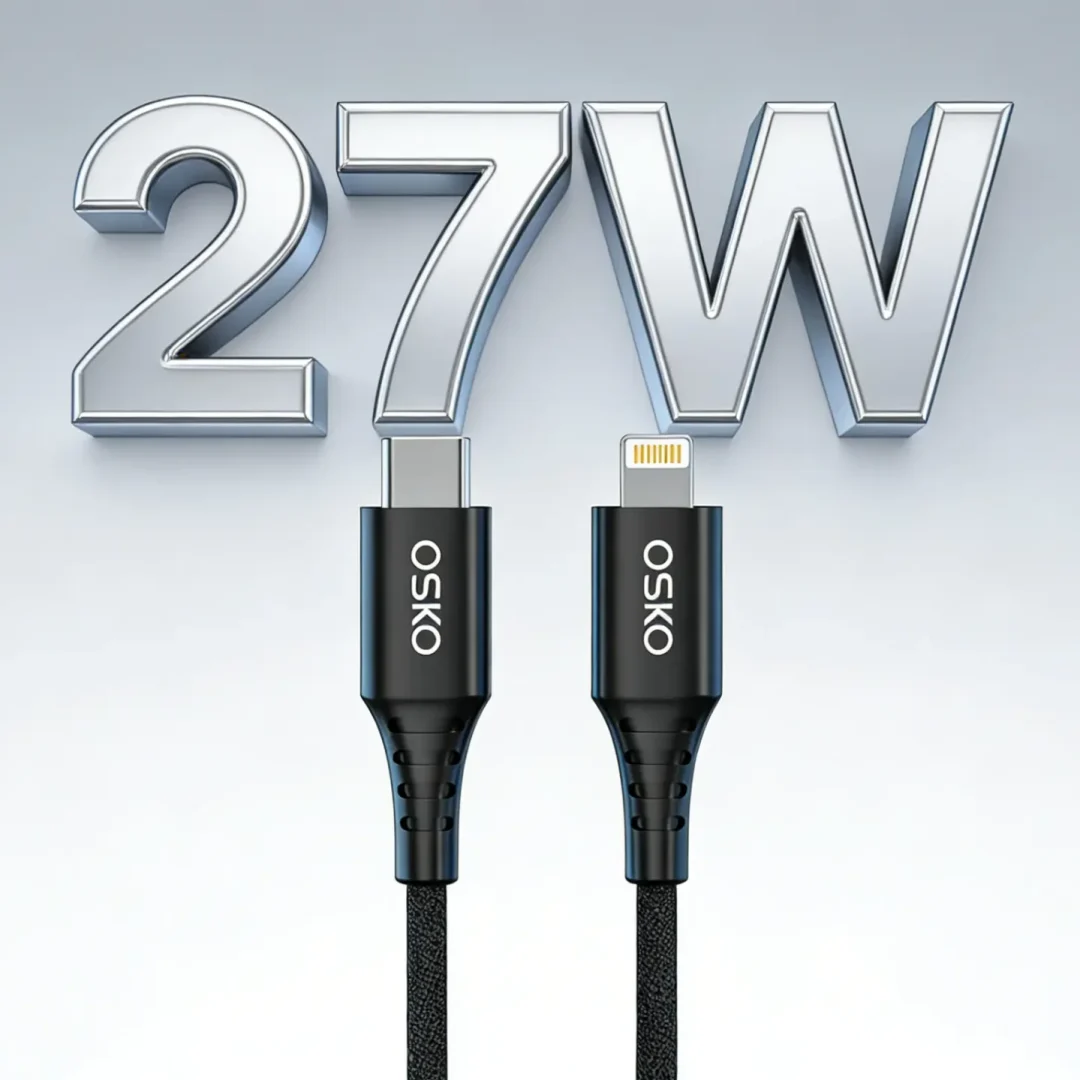
Stable USB Power Delivery (USB-PD) negotiation
Low resistance copper conductors
Consistent voltage under unstable power sources
E-Marker Chip for High-Power Travel Devices
For laptops and multi-device travel kits:
E-Marker ensures safe wattage identification
Supports 60W–240W PD systems
Prevents overheating and power mismatch
Case Study
US Travel Retail Brand Multi-Device Charging Kit Optimization
Customer Background
A US-based travel accessories brand developed a multi-device charging kit targeting business travelers. However, customer feedback indicated frequent cable damage and inconsistent charging performance in hotel and airport environments.
Their goal was to identify the best USB-C cable solution for travel and on-the-go charging.
Engineering Problems Identified
OSKO analysis revealed:
Standard PVC cables failed under repeated bending cycles
10ft cables were too bulky for travel kits
Weak connector strain relief caused early breakage
Poor compatibility with third-party chargers
Lack of structured product differentiation for travel SKUs
OSKO Engineering Solution
OSKO redesigned the travel cable architecture:
Introduced compact 3ft and flexible 6ft braided variants
Upgraded to high-density nylon braided outer shell
Reinforced connector strain relief for travel stress
Optimized copper conductors for stable USB-PD performance
Added E-Marker support for laptop travel charging kits
Compliance system included:
USB-IF compliant Type C cable manufacturer validation
ISO9001 manufacturing quality control
FCC EMI testing for electrical stability
RoHS compliance for EU distribution standards
Result
Significant reduction in cable failure during travel use
Improved customer satisfaction in Amazon reviews
Increased adoption in travel charging kits
Better performance consistency across global voltage environments
Stronger OEM bulk order growth
Selection Guide
How to Choose the Best USB-C Cable for Travel
1. Choose the Right Length for Mobility
3ft → ultra-portable, power bank use
6ft → hotel, desk, and bedside flexibility
10ft → not recommended for compact travel kits
2. Prioritize Durable Materials
Best options:
Nylon braided (highest durability)
Reinforced TPE (flexible alternative)
Avoid thin PVC for frequent travel
3. Check Fast Charging Compatibility
Ensure:
USB-PD support (20W–240W depending on device)
Low resistance copper conductors
Stable charging under variable power sources
4. Evaluate Connector Strength
Look for:
Reinforced strain relief
Anti-bending design
Tight USB-C port fit
5. Consider Multi-Device Use
Travel cables should support:
Smartphones
Tablets
Laptops
Power banks
Comparison Table
| Feature | Standard Cable | Travel-Optimized Cable |
|---|---|---|
| Durability | Medium | High |
| Portability | Low | High |
| Tangling Risk | High | Low |
| Charging Stability | Moderate | Stable |
| Ideal Use | Home | Travel / On-the-go |
Application Scenarios
Travel USB-C cables are widely used in:
OEM USB cables for travel accessory product lines
ODM USB cables for customized portable charging kits
Wholesale USB cables for travel retail distribution
Desktop charging cables for hotel and workspace setups
Travel USB cables for airline and business travel kits
In-car charging cables for automotive charging environments
Home-use USB cables for secondary travel-ready setups
FAQ
What is the best USB-C cable for travel?
A braided, durable, and compact cable with stable USB-PD support.
Is a 6ft cable good for travel?
Yes, it is the best balance between portability and flexibility.
Are braided cables better for travel?
Yes, they reduce tangling and improve durability.
Should I carry a 10ft cable when traveling?
Not recommended due to bulk and inefficiency.
Do travel cables affect charging speed?
Only if the cable has poor resistance or weak construction.
Summary
The best USB-C cable solution for travel and on-the-go charging requires a balance of durability, portability, and electrical stability.
Braided materials, reinforced connectors, and optimized cable length are essential to ensure reliable performance in real-world travel conditions.
OSKO designs travel-grade USB-C cable systems based on engineering durability standards, ensuring stable performance across global travel environments and multi-device charging scenarios.
A well-designed travel cable is not just compact—it is engineered for movement.