
Introduction
Charging accessories have become essential components of modern electronics ecosystems. As smartphones, tablets, laptops, gaming devices, and smart equipment continue adopting USB-C standards, brands require reliable manufacturing partners capable of producing high-performance charging solutions.
A professional charging accessories manufacturer does not only assemble cables or chargers. It provides complete product development capabilities, including:
Electrical engineering
Material selection
Product customization
Safety testing
Certification support
Large-scale production
For brands, distributors, and retailers, selecting the right manufacturer directly affects:
Product reliability
Customer satisfaction
Market reputation
Long-term supply stability
The modern charging accessories market requires products that support:
Fast charging
USB Power Delivery
High-power laptops
Multi-device charging
Premium retail positioning
Therefore, working with an experienced manufacturer is critical for companies developing OEM, ODM, wholesale, and private label charging products.

Material Science & Dielectric Properties
Understanding Charging Accessories Manufacturing
Charging accessories include multiple product categories with different technical requirements.
| Product Category | Main Application |
|---|---|
| USB-C charging cables | Smartphones, tablets, laptops |
| Fast charging cables | High-speed power delivery |
| USB-C chargers | Power conversion |
| GaN chargers | Compact high-power charging |
| Car charging cables | Automotive applications |
| Desktop charging accessories | Office and home environments |
Each product requires specific engineering control.
For example, a laptop charging cable must handle higher current than a smartphone charging cable.
USB-C Charging Cable Manufacturing Technology
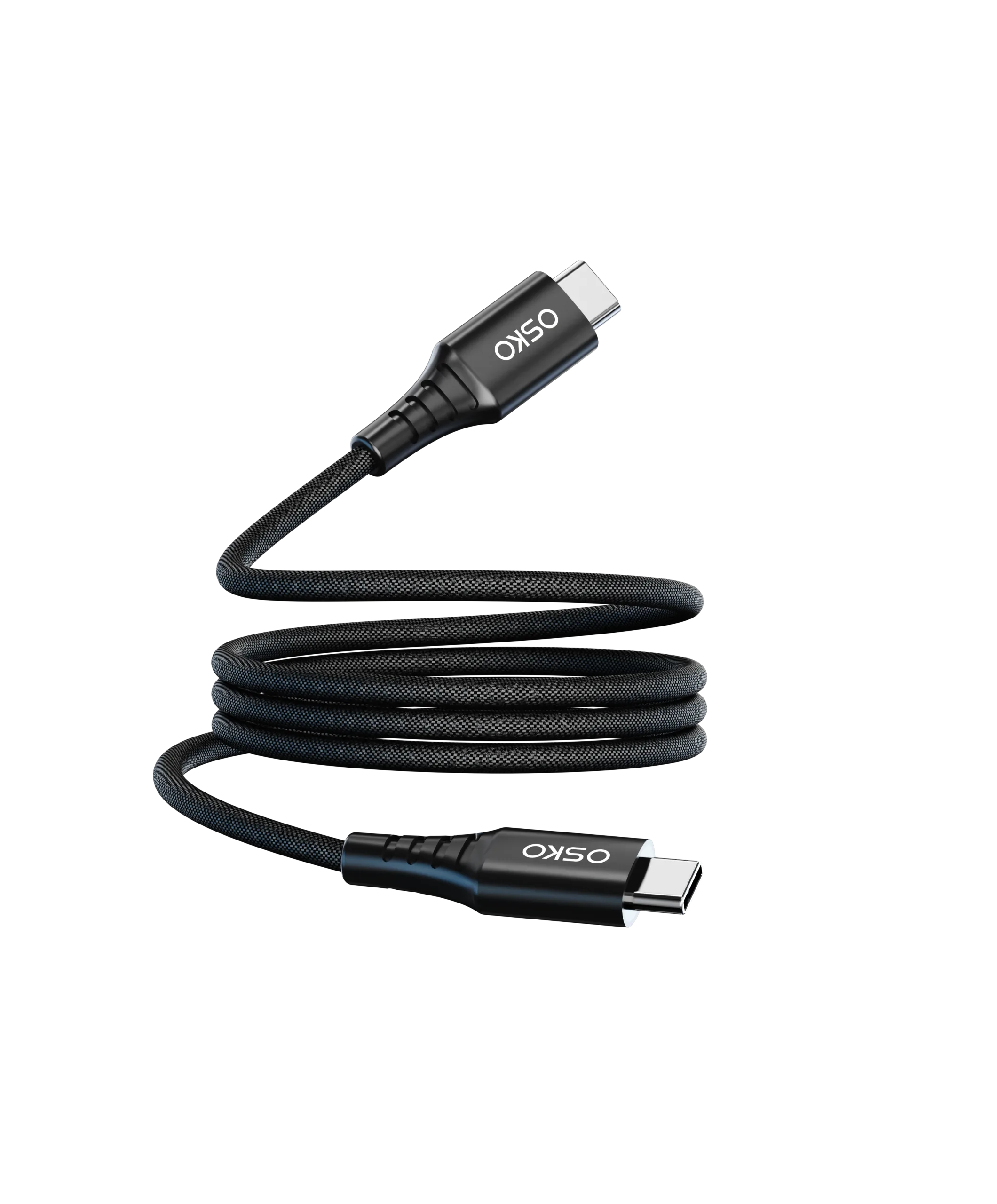
USB-C cables are one of the fastest-growing charging accessory categories.
A professional factory controls:
Conductor structure
Connector design
Cable insulation
Shielding
Power delivery capability
Power Rating Selection
Different devices require different charging capabilities.
| Power Rating | Application |
|---|---|
| 60W USB-C cable | Phones, tablets, portable devices |
| 100W USB-C cable | MacBook Pro, laptops |
| 140W USB-C cable | High-performance laptops |
| 240W USB-C cable | Gaming laptops and USB PD 3.1 devices |
A reliable supplier must verify that the cable performs according to its rated specification.
USB Power Delivery (PD) Technology
Modern charging accessories increasingly depend on USB PD communication.
PD technology enables:
Intelligent power negotiation
Higher charging efficiency
Better device protection
High-power USB-C cables require:
E-marker chips
Proper conductor design
Thermal management
Electrical testing
A qualified:
should have experience developing PD-compatible products.
Material Selection for Charging Accessories
Material quality directly affects product lifespan.
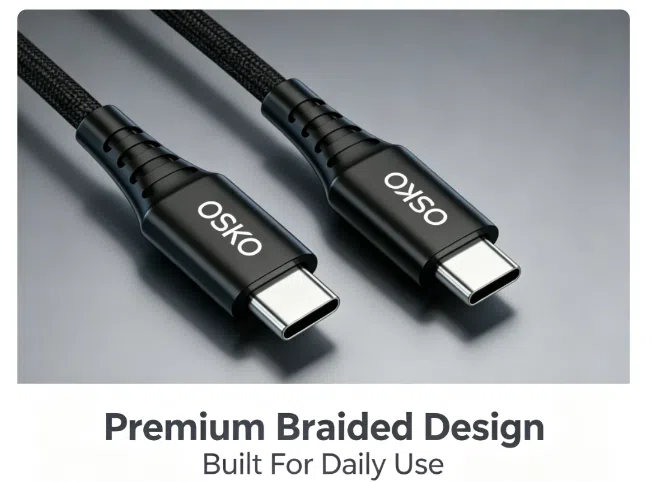
Nylon Braided Charging Cable
Nylon braided cables are widely used in premium markets.
Advantages:
Better abrasion resistance
Reduced tangling
Improved durability
Premium appearance
Brands often choose:
Heavy duty braided USB-C cable manufacturer
solutions for retail products.
TPU Charging Cable
TPU provides:
High flexibility
Better bending resistance
Smooth surface finish
Common applications:
Travel charging cables
Daily-use accessories
PVC Charging Cable
PVC remains popular because of:
Cost efficiency
Stable production
Easy customization
Suitable for:
Large-volume wholesale products
Entry-level retail accessories
Connector Engineering and Durability
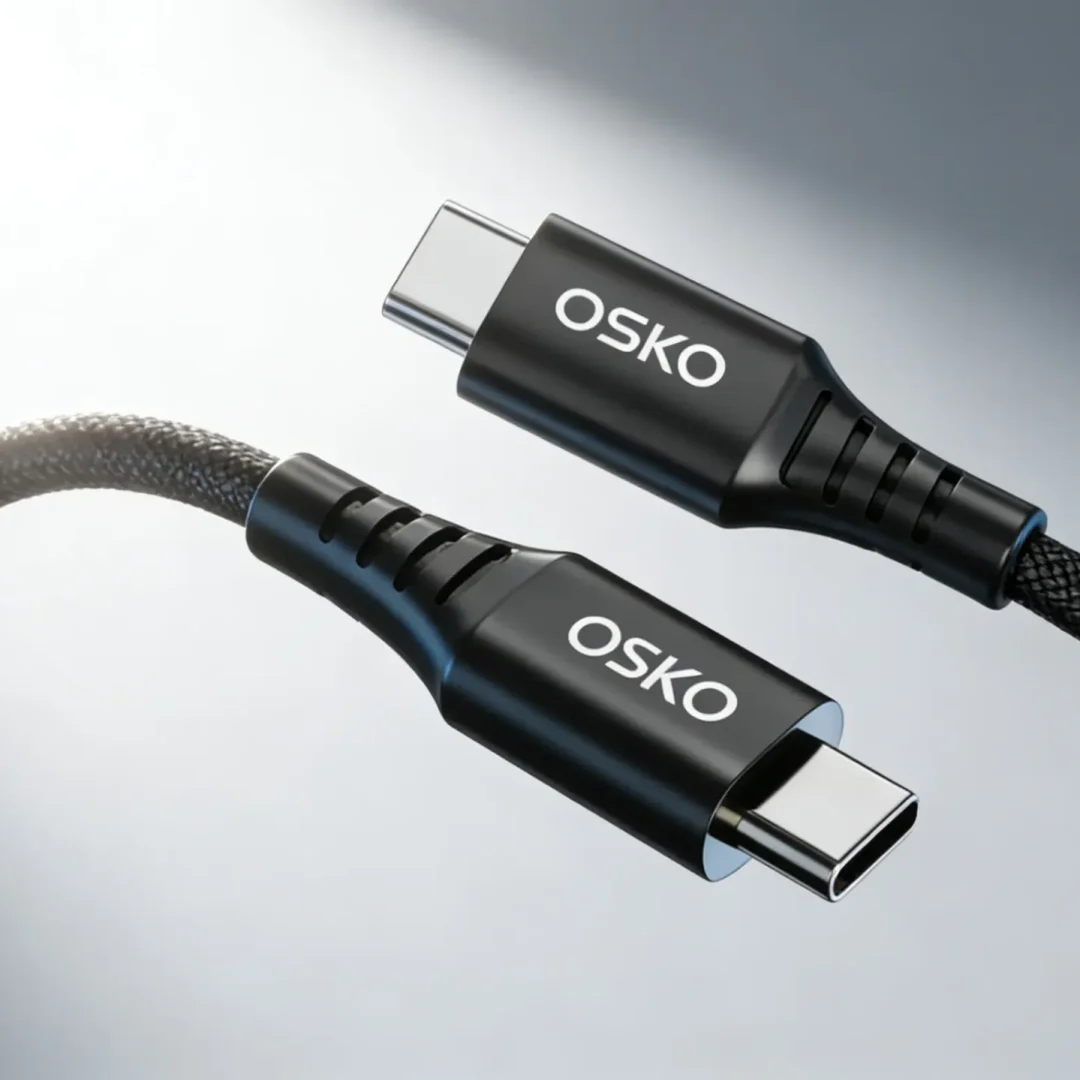
The connector is one of the most critical components of charging accessories.
Poor connector design may cause:
Loose connections
Charging interruption
Short product lifespan
A professional manufacturer evaluates:
Connector dimensions
Contact strength
Plug durability
Strain relief structure
Charging Cable Manufacturing Process
A reliable charging accessories factory follows controlled production steps.
Engineering Development
The process begins with:
Product specifications
Device compatibility analysis
Power requirements
Material selection
Engineering teams define:
Cable structure
Connector type
Testing requirements
Prototype Production
Samples are created before mass production.
Testing includes:
Charging performance
Mechanical durability
Appearance inspection
Compatibility verification
Mass Production
Manufacturing includes:
Copper wire processing
Cable extrusion
Shielding assembly
Connector installation
Injection molding
Surface finishing
Quality Testing Standards
Professional charging accessories manufacturers use multiple inspection methods.
| Testing Method | Purpose |
|---|---|
| Electrical test | Verify power transmission |
| PD charging test | Confirm fast charging |
| Resistance test | Check efficiency |
| Bending test | Evaluate flexibility |
| Tensile test | Measure strength |
| Plug cycle test | Test connector lifespan |
| Temperature test | Safety evaluation |
Certification Requirements for Global Markets
Charging products sold internationally require compliance documentation.
| Certification | Market Purpose |
|---|---|
| USB-IF | USB specification compliance |
| CE | European safety |
| RoHS | Material safety |
| FCC | US electromagnetic requirements |
| ISO9001 | Quality management |
Professional suppliers may provide:
USB-IF compliant Type C cable manufacturer
CE RoHS certified USB-C cable supplier
FCC approved nylon braided USB C cable supplier
OEM and ODM Charging Accessories Solutions
Brands increasingly prefer customized manufacturing instead of standard products.
OEM Charging Accessories
OEM allows brands to customize:
Product specifications
Materials
Cable length
Color
Logo
Packaging
Common OEM products:
Fast charging cables
Braided charging cables
ODM Charging Accessories
ODM provides additional engineering support.
Manufacturers help with:
Product improvement
Structure optimization
Performance upgrades
New product development
This allows brands to launch products faster.

Private Label Charging Accessories
Private label manufacturing helps companies build branded product lines.
Customization options include:
| Feature | Options |
|---|---|
| Cable length | 0.5ft, 3ft, 6ft, 10ft |
| Material | PVC, TPU, nylon braid |
| Color | Custom colors |
| Logo | Printing or molding |
| Packaging | Retail packaging |
Examples:
Private label charging accessories
Custom packaging braided charging cable factory
Bulk custom color braided charging cables
Case Study
European Retail Brand Develops Custom Fast Charging Accessories
Customer Background
A European electronics retailer wanted to expand its charging product category.
The product line included:
Smartphone charging cables
Laptop charging cables
Travel accessories
Desktop charging products
The company needed a supplier capable of supporting multiple product specifications.
Customer Challenges
The retailer experienced:
Inconsistent product quality
Limited customization
Different charging performance between batches
Difficulty managing certifications
They needed a long-term manufacturing partner.
OSKO Solution
OSKO provided a complete charging accessory manufacturing solution.
| Requirement | OSKO Solution |
|---|---|
| Premium design | Nylon braided cable options |
| Fast charging | 60W, 100W, 240W solutions |
| Custom branding | Logo and packaging support |
| Quality control | Electrical and durability testing |
| Market compliance | Certification assistance |
The project included:
OEM USB cable manufacturing
ODM charging cable development
Charging accessories wholesale
Bulk charging cable production
Retail charging accessories solutions
Selection Guide
How to Choose a Charging Accessories Manufacturer
Evaluate Manufacturing Experience
A qualified manufacturer should understand:
USB standards
Power delivery technology
Material engineering
Consumer electronics requirements
Check Production Capability
Important factors:
Factory ownership
Production capacity
Quality control system
Engineering team
Review Certifications and Testing
Before cooperation, brands should request:
Product specifications
Test reports
Certification documents
Quality procedures
Consider Long-Term Partnership
A reliable supplier should support:
New product development
Market expansion
Custom projects
Stable supply
FAQ
What does a charging accessories manufacturer produce?
A charging accessories manufacturer produces USB-C cables, fast charging cables, power accessories, and customized charging solutions for brands and distributors.
What is the difference between OEM and ODM charging accessories?
OEM manufacturing produces according to customer specifications, while ODM includes manufacturer-supported product design and engineering.
What certifications should charging accessories have?
Common certifications include:
USB-IF
CE
RoHS
FCC
ISO9001
How do brands customize charging cables?
Brands can customize:
Cable materials
Length
Colors
Logo
Packaging
Power specifications
What makes a charging cable manufacturer reliable?
A reliable manufacturer provides:
Stable quality
Engineering support
Testing capability
Certification support
Production consistency
Summary
Selecting the right charging accessories manufacturer is essential for brands developing reliable charging products.
A professional supplier provides:
Advanced manufacturing capability
USB-C engineering expertise
OEM and ODM services
Quality testing
Certification support
Flexible customization
For companies sourcing:
Fast charging accessories
Private label products
Wholesale charging solutions
a qualified manufacturing partner helps reduce risks and build competitive products for global markets.
The future of charging accessories depends on higher power delivery, better materials, improved durability, and reliable manufacturing standards.