















Introduction
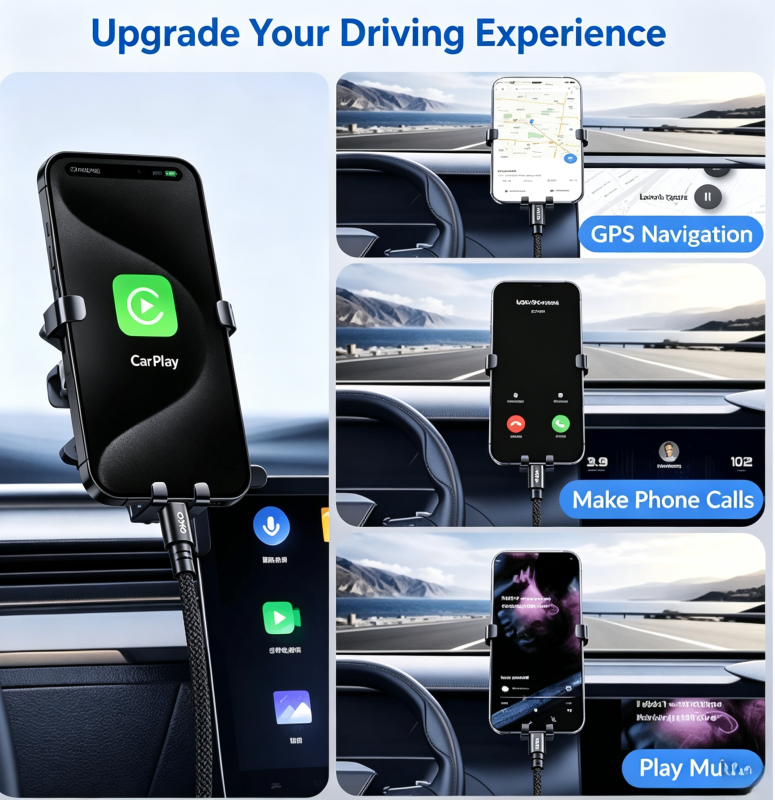
Choosing the right USB-C to USB-A CarPlay Cable has become increasingly important as more drivers upgrade to newer smartphones while continuing to use vehicles equipped with traditional USB-A ports.
With the transition of iPhone devices from Lightning to USB-C connectors, many vehicle owners now require a reliable connection solution between:
USB-C smartphones
USB-A vehicle ports
Car infotainment systems
Apple CarPlay platforms
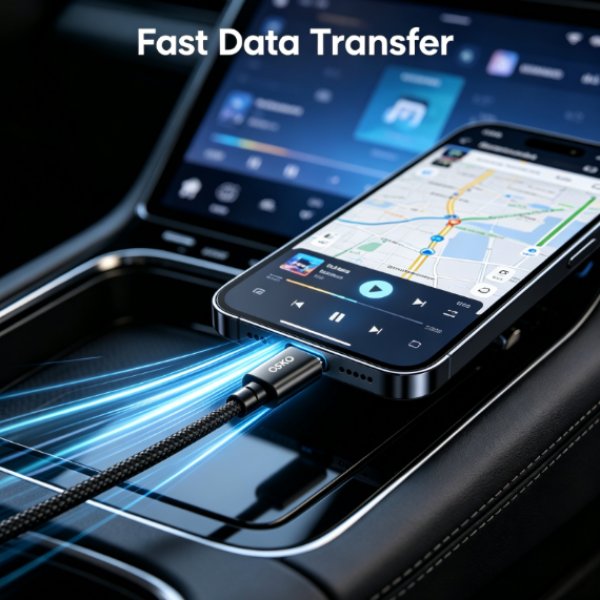
Unlike standard charging cables, a CarPlay cable must handle both power delivery and stable data communication. A cable that only provides charging may not support reliable vehicle connectivity.
A high-quality CarPlay Cable must maintain:
Stable data transmission
Fast device recognition
Low signal interference
Reliable connector performance
Long-term automotive durability
For automotive accessory brands and procurement teams, developing a professional vehicle cable requires more than selecting connectors. Engineering factors include:
Signal shielding
Cable structure
Material durability
Connector reinforcement
Production consistency
OSKO specializes in OEM and ODM USB cable manufacturing, helping global automotive accessory brands develop reliable Car Charging Cable solutions through engineering optimization and strict quality control.
Material Science & Dielectric Properties
Engineering Requirements of USB-C to USB-A CarPlay Cable
A vehicle charging and connectivity cable operates in a more demanding environment than a standard home charging cable.
Automotive applications involve:
Temperature changes
Frequent plugging and unplugging
Electrical interference
Continuous vibration
A professional cable structure includes multiple layers.
| Cable Component | Function | Importance in CarPlay Applications |
|---|---|---|
| Copper conductor | Transfers power and data signals | Maintains stable performance |
| Insulation layer | Separates conductors | Improves electrical safety |
| Shielding layer | Reduces electromagnetic interference | Protects data transmission |
| USB-C connector | Connects modern devices | Supports smartphone compatibility |
| USB-A connector | Connects vehicle ports | Enables CarPlay connection |
| Outer jacket | Protects cable | Improves automotive durability |
Data Transmission Stability for CarPlay
Why CarPlay Requires More Than Charging
A common misunderstanding is that all USB cables can support CarPlay.
In reality, CarPlay requires reliable communication between:
iPhone
Vehicle USB system
Infotainment software
The cable must support continuous data transmission.
Poor-quality cables may cause:
Connection interruption
Device recognition failure
Audio delays
Repeated reconnection
Therefore, a professional iPhone CarPlay Cable requires optimized internal wiring and signal protection.
Shielding Design and Signal Protection
Reducing Automotive Signal Interference
Vehicles contain multiple electronic systems that can generate electromagnetic interference.
Potential sources include:
Engine systems
Wireless devices
Vehicle electronics
A reliable cable uses shielding structures to reduce interference.
Common design elements include:
Aluminum foil shielding
Braided shielding layers
Optimized grounding design
These features help maintain stable data transmission during driving.
Connector Engineering and Durability
Designing for Daily Vehicle Use
Car cables experience frequent mechanical stress.
Typical usage includes:
Daily insertion and removal
Cable bending around the center console
Storage in vehicles
Connector areas require reinforcement to prevent:
Loose connections
Internal wire damage
Charging interruptions
Important design features include:
| Feature | Benefit |
|---|---|
| Reinforced connector housing | Improves impact resistance |
| Flexible strain relief | Reduces bending stress |
| Strong internal soldering | Improves connection reliability |
| Durable materials | Extends service life |
Charging Performance and Compatibility
USB-C Charging Capability
Although CarPlay focuses on data connectivity, users also expect charging performance.
A reliable USB-C Charging Cable should provide:
Stable power transmission
Safe current handling
Compatibility with vehicle charging systems
For higher charging requirements, cable specifications should match:
Device requirements
Vehicle output capability
Charger design
Material Selection for Automotive Applications
Outer Jacket Performance
Vehicle environments require cables that balance:
Flexibility
Durability
Temperature resistance
Common materials include:
| Material | Characteristics |
|---|---|
| PVC | Durable and cost-effective |
| TPE | Flexible and comfortable |
| Nylon braided | Premium appearance and wear resistance |
For retail automotive products, material selection affects both product lifetime and customer perception.
Case Study: USB-C to USB-A CarPlay Cable Development for a German Automotive Accessory Brand
Customer Background
A German automotive accessory company planned to expand its smartphone connectivity product range for European vehicle owners.
The company supplied:
Car accessories
Mobile connectivity products
Automotive electronics solutions
After the introduction of USB-C smartphones, the company needed a new cable solution to connect modern devices with existing vehicle USB-A ports.
The product requirements included:
Stable Apple CarPlay connection
Reliable charging capability
Automotive durability
Retail-ready quality
Engineering Challenges
1. Maintaining Stable CarPlay Communication
During supplier testing, some cables experienced:
Random connection drops
Slow device recognition
Inconsistent performance across vehicles
The customer required improved signal reliability.
2. Improving Cable Durability Inside Vehicles
The cable needed to withstand:
Daily use
Temperature changes
Frequent bending
Standard charging cables were not designed for automotive conditions.
3. Ensuring Retail Product Consistency
The procurement team required:
Stable production quality
Low defect rates
Consistent performance across batches
OSKO Engineering Solution
Signal Transmission Optimization
OSKO developed a customized structure with:
Improved shielding design
Optimized internal wiring
Stable connector assembly
This improved:
Data transmission reliability
Vehicle recognition performance
Automotive Durability Enhancement
OSKO improved:
Strain relief structure
Connector protection
Outer jacket material selection
to support long-term vehicle usage.
Quality Testing Process
| Test Item | Purpose |
|---|---|
| CarPlay connection test | Verify vehicle compatibility |
| Data transmission test | Confirm signal stability |
| Charging test | Evaluate power performance |
| Bend test | Check mechanical durability |
| Connector test | Verify insertion lifetime |
| Batch inspection | Maintain consistency |
The final solution helped the customer launch a reliable automotive USB cable product for European vehicle users.
Selection Guide: How to Choose USB-C to USB-A CarPlay Cable
1. Confirm Vehicle Compatibility
Before selecting a cable, check:
Vehicle USB port type
Smartphone connector type
CarPlay support
2. Prioritize Data Performance
A good CarPlay cable should provide:
Stable connection
Reliable data transfer
Low interference
Charging capability alone is not enough.
3. Evaluate Cable Durability
For automotive use, consider:
Connector strength
Bend resistance
Outer material quality
4. Select an Experienced OEM Supplier
For brands developing automotive accessories, supplier capability is essential.
A professional OEM USB Cable manufacturer should provide:
Custom cable development
Material selection
Performance testing
Packaging customization
Bulk production capability
OSKO supports automotive accessory brands from engineering development to mass production.
FAQ
Does USB-C to USB-A cable support Apple CarPlay?
Yes. A properly designed USB-C to USB-A cable can connect USB-C iPhones with vehicles that use USB-A ports for CarPlay.
Why does my CarPlay cable keep disconnecting?
Common causes include:
Poor signal quality
Insufficient shielding
Connector damage
Cable compatibility issues
Is a charging cable the same as a CarPlay cable?
Not always. CarPlay requires reliable data transmission, while some charging cables only support power transfer.
What makes a good CarPlay cable?
Important factors include:
Stable data transmission
Strong connectors
Quality shielding
Durable materials
Can OSKO customize USB-C to USB-A CarPlay cables?
Yes. OSKO provides OEM and ODM automotive cable solutions including cable length, materials, connectors, packaging, and performance specifications.
Summary
A reliable USB-C to USB-A CarPlay Cable requires advanced engineering to support stable vehicle connectivity, charging performance, and long-term automotive durability.
Unlike standard charging cables, CarPlay cables must maintain consistent data communication between smartphones and vehicle systems.
For automotive accessory brands, selecting an experienced OEM manufacturer helps ensure product reliability, consistent quality, and market competitiveness.
OSKO provides professional OEM and ODM USB-C Charging Cable solutions, including CarPlay cables, automotive USB cables, fast charging cables, and customized cable products.
Through engineering optimization, material selection, and strict quality control, OSKO helps global brands develop reliable connectivity solutions for modern vehicles.
Contact Information
OSKO USB Cable Manufacturing Solutions
OSKO specializes in:
OEM USB Cable Manufacturing
ODM USB-C Cable Development
CarPlay Cable Solutions
Automotive USB Cable Production
Fast Charging Cable Manufacturing
Custom USB Cable Solutions
For automotive accessory brands, distributors, and procurement teams requiring reliable vehicle connectivity products, OSKO provides professional engineering support from product design to mass production.
