
Introduction
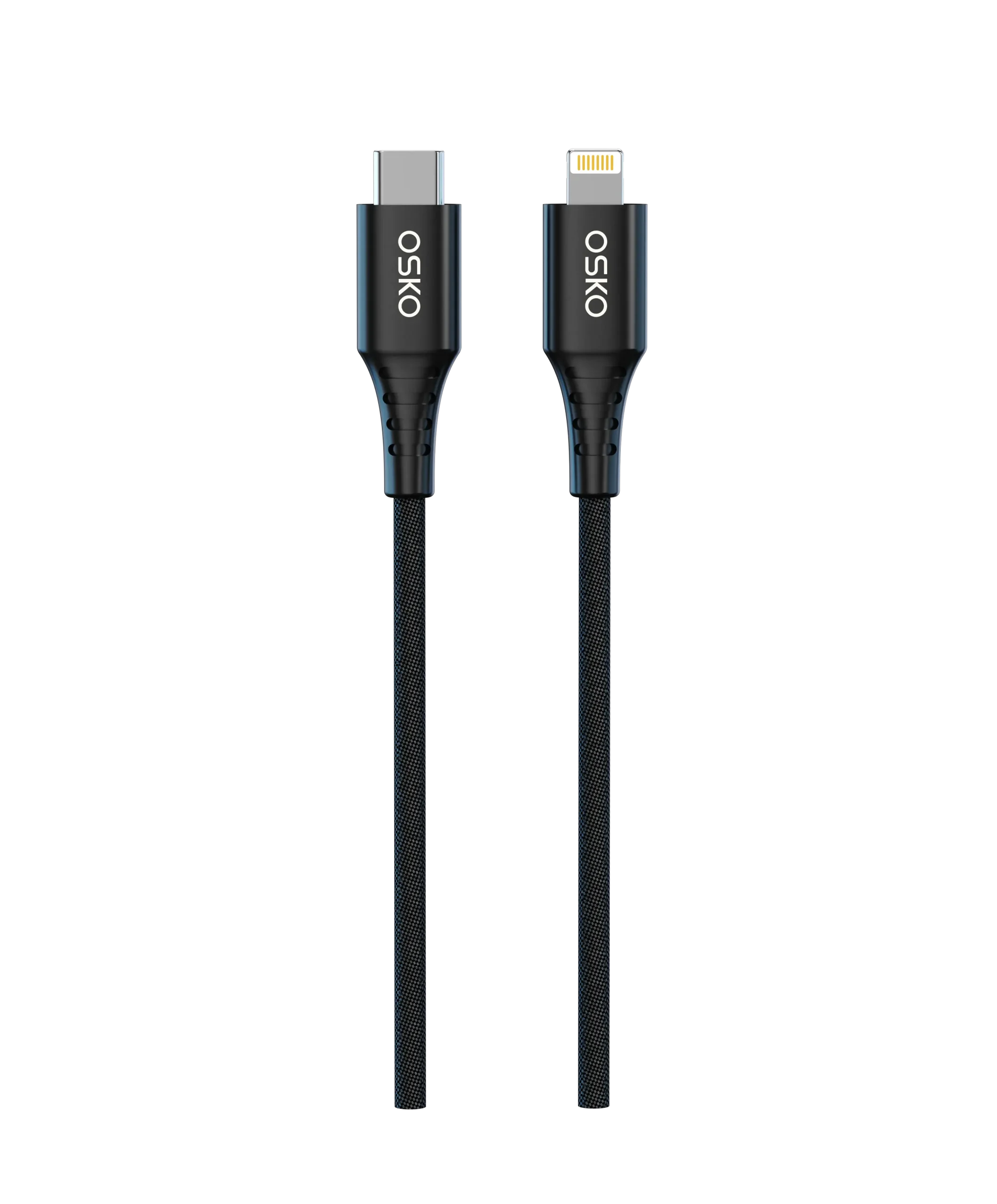
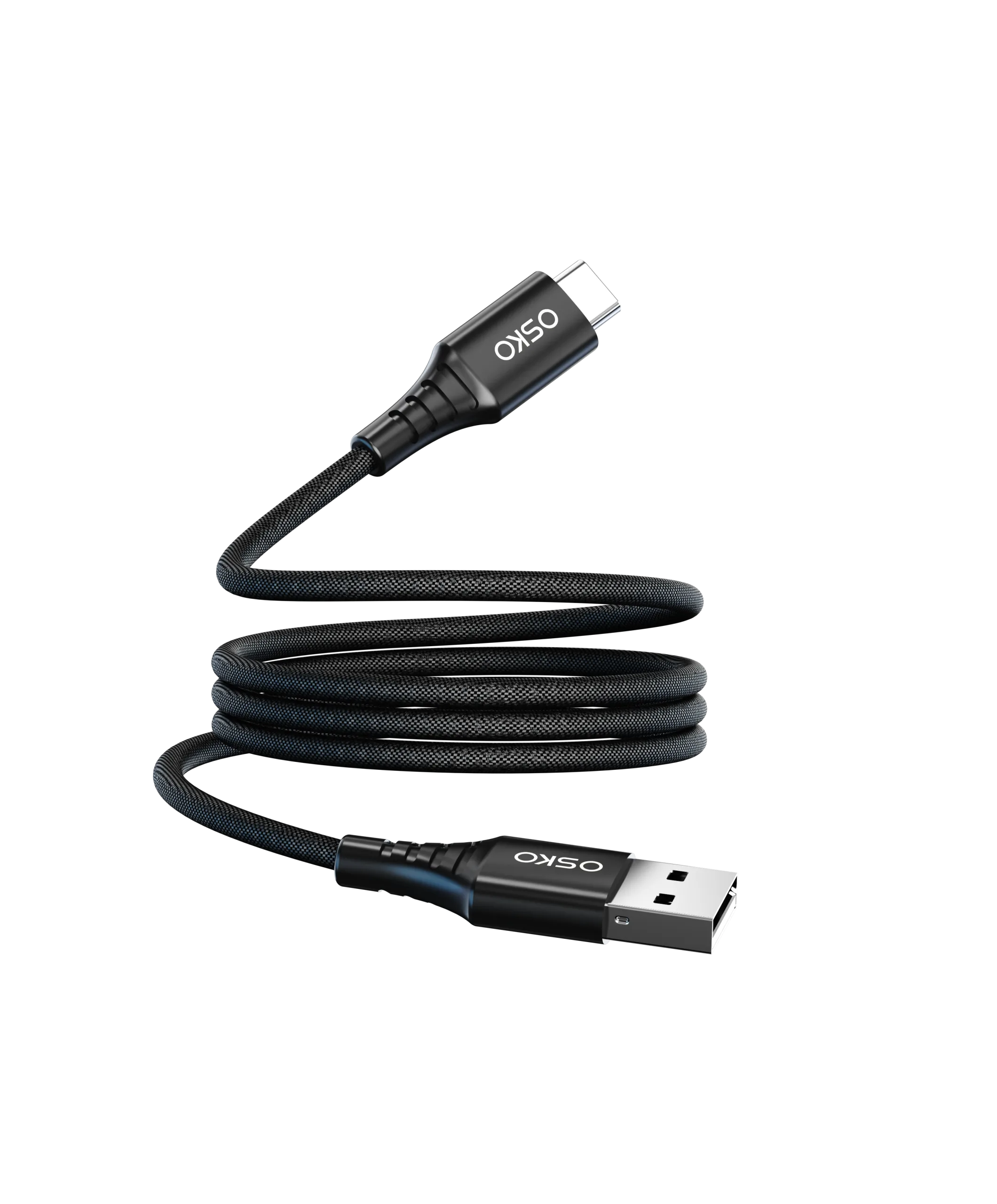
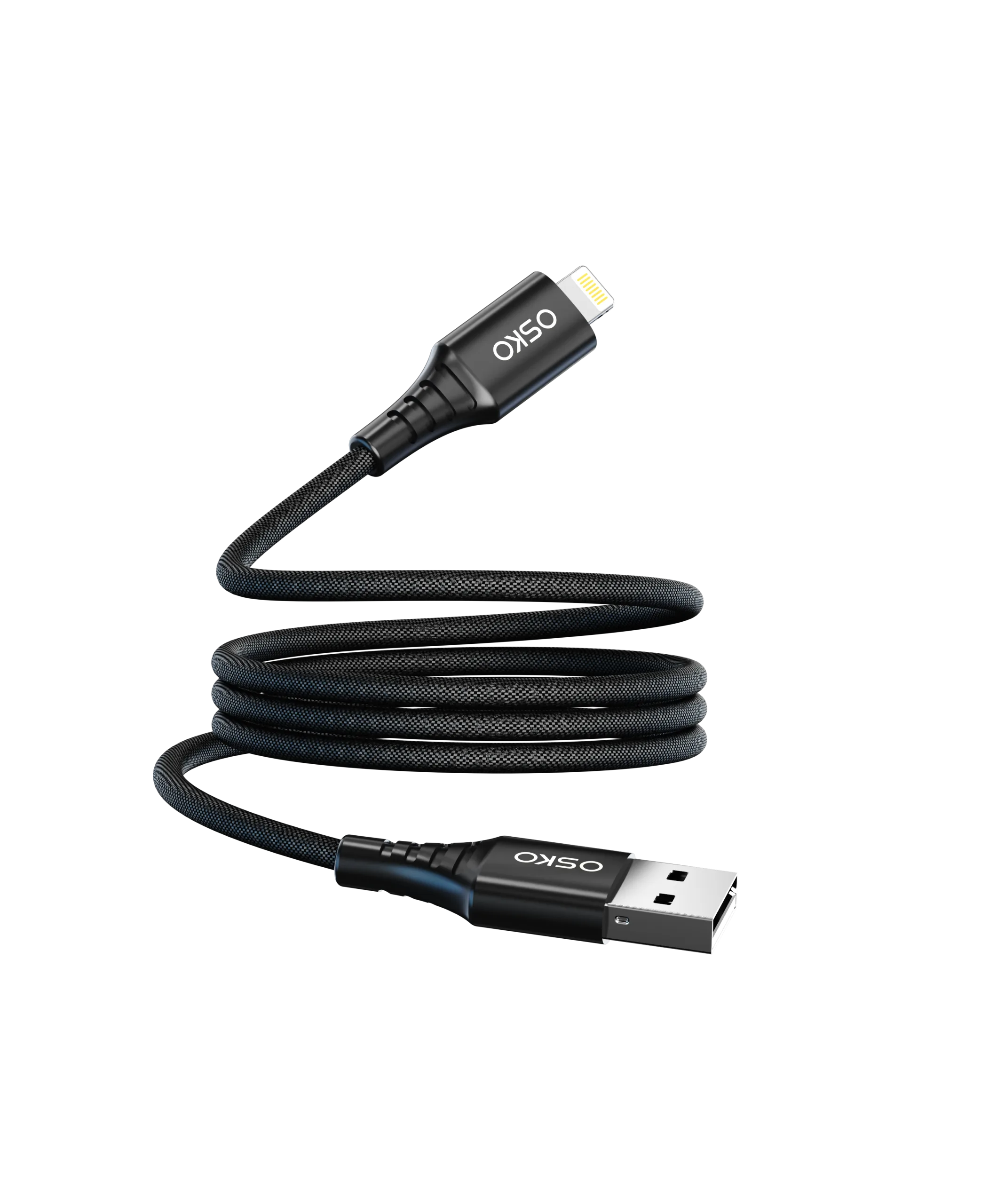
A USB-C to Lightning cable Apple is the core charging solution for millions of iPhone users in the US and European markets, enabling fast charging through USB Power Delivery (USB-PD) systems.
Despite its widespread use, many users still experience inconsistent fast charging, overheating, or “accessory not supported” warnings. These issues are not random—they are directly related to cable engineering quality, MFi certification integrity, and conductor resistance design.
A properly engineered USB-C to Lightning cable Apple must combine three critical elements: stable USB-PD communication, MFi-certified authentication, and low-resistance conductor architecture. Without these, fast charging performance cannot be guaranteed.
From an OEM manufacturing perspective, OSKO designs Apple-compatible cables with strict control over material selection, signal stability, and compliance standards for global retail distribution.
Material Science & Dielectric Properties
The performance of a USB-C to Lightning cable Apple depends heavily on electrical conductivity, dielectric insulation, and signal stability under USB-PD load conditions.
Conductor Engineering and Power Efficiency
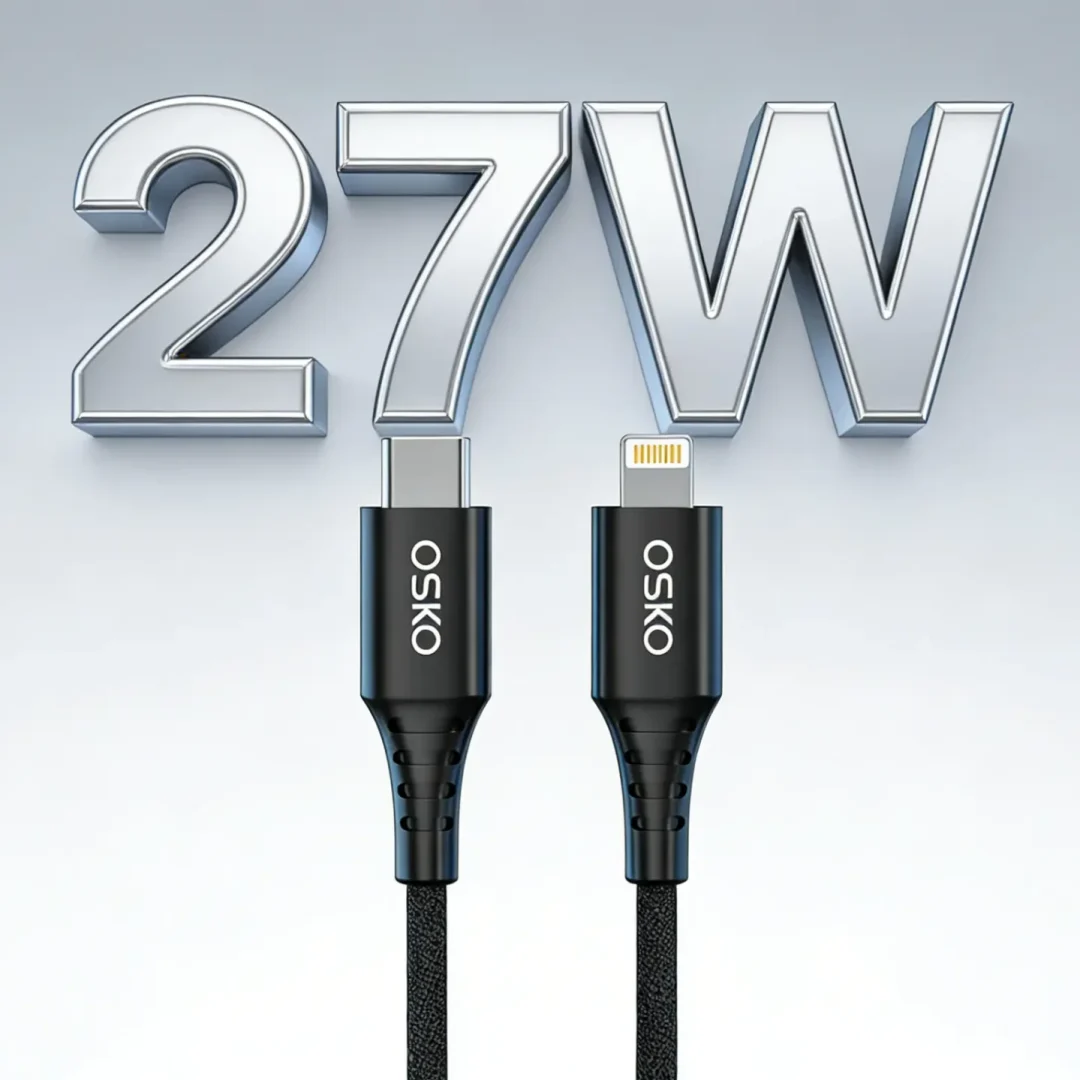
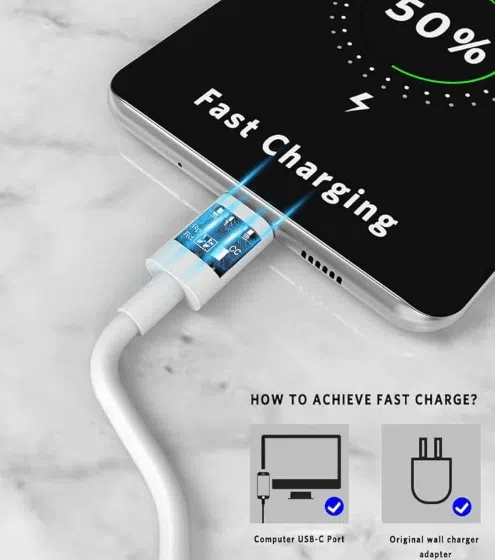
Apple fast charging typically operates at 18W–27W depending on device model and charger capability.
High-performance cables use:
Oxygen-free copper (OFC) for minimal resistance
Multi-strand conductor architecture for flexibility
Tinned copper for oxidation resistance
Lower resistance ensures stable current delivery in USB-C to Lightning cable Apple fast charging systems.
Dielectric Insulation and Thermal Stability
Insulation materials determine safety and long-term durability.
Common materials include:
TPE for flexibility and heat resistance
PVC for cost-efficient mass production
High-grade PE for stable dielectric performance
Proper insulation prevents energy loss and ensures stable USB-PD communication.
Shielding and Signal Integrity
Fast charging requires stable data communication between charger and device.
High-quality cables include:
Aluminum foil shielding for EMI reduction
Braided copper shielding for durability and interference resistance
Ground stabilization layers for signal integrity
Without proper shielding, USB-C to Lightning cable Apple systems may fail to maintain fast charging negotiation.
MFi Certification and Connector Design
Apple requires strict certification for Lightning accessories.
MFi-certified connectors include:
Authentication chips for iOS compatibility
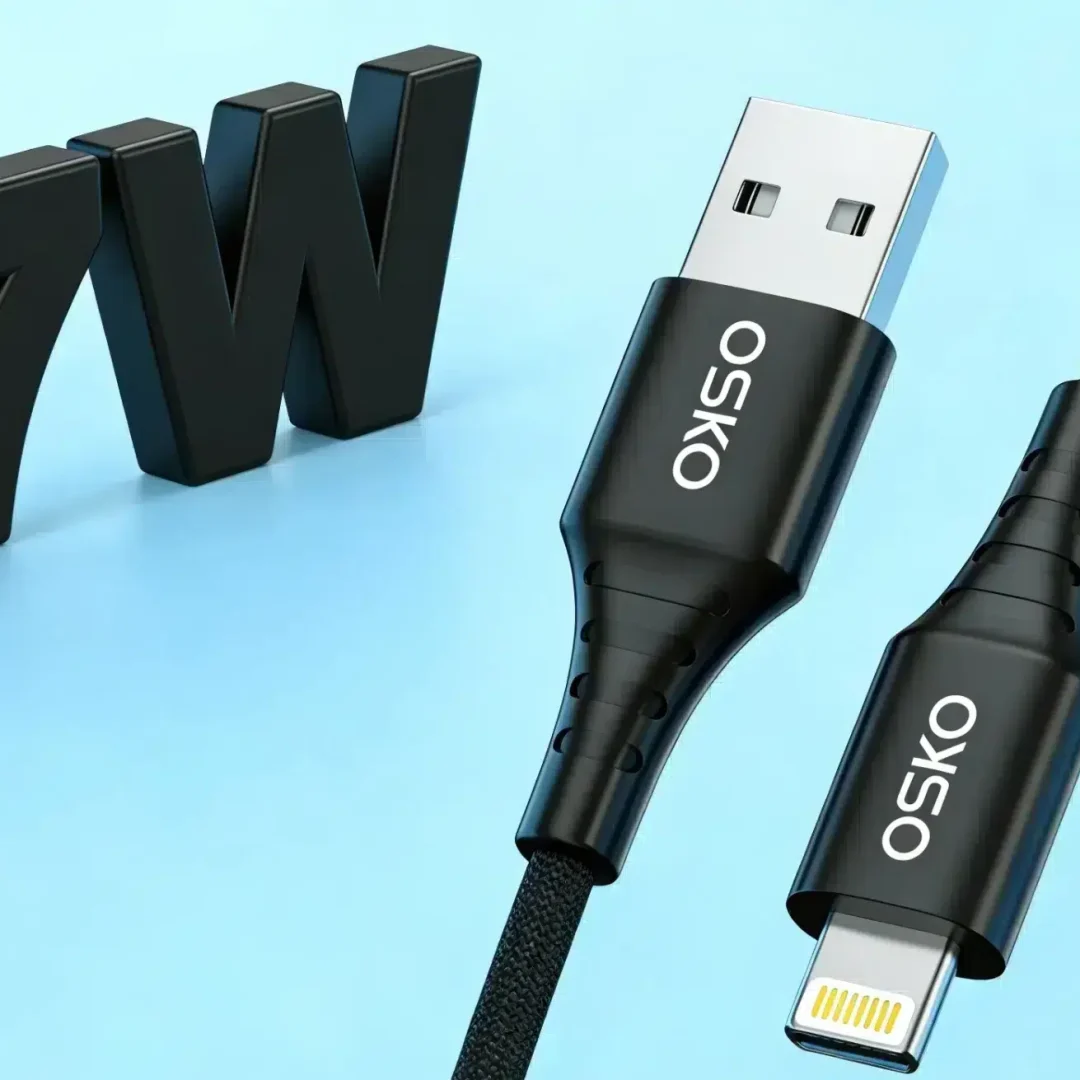
Gold-plated contact pins for conductivity stability
Reinforced strain relief for mechanical durability
This ensures reliable performance and prevents system-level compatibility errors.
Case Study
US Amazon Apple Accessories Brand Optimization Project
Customer Background
A US-based Amazon seller specializing in Apple accessories required a stable USB-C to Lightning cable Apple product line targeting iPhone 13–16 users in the premium retail segment.
The primary goal was to improve fast charging stability and reduce return rates caused by inconsistent charging performance.
Engineering Problems Identified
Initial supplier samples showed:
Inconsistent 20W fast charging activation
MFi authentication instability under load
High resistance causing voltage drop
Connector overheating after prolonged use
High return rate and negative customer feedback
OSKO Engineering Solution
OSKO redesigned the product using:
Oxygen-free copper conductor system for low resistance
TPE dielectric insulation optimized for USB-PD stability
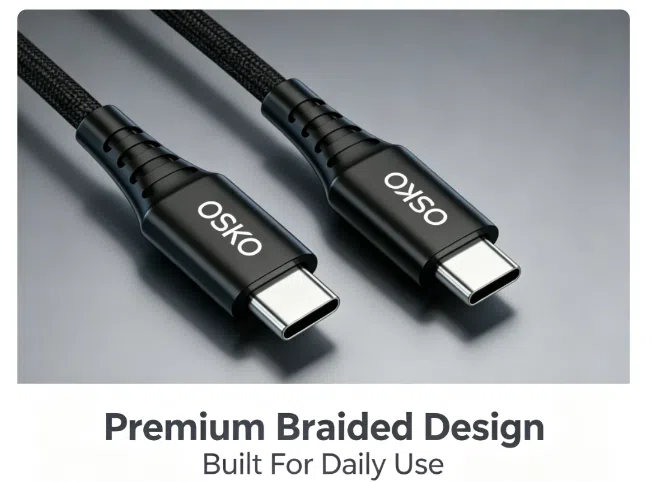
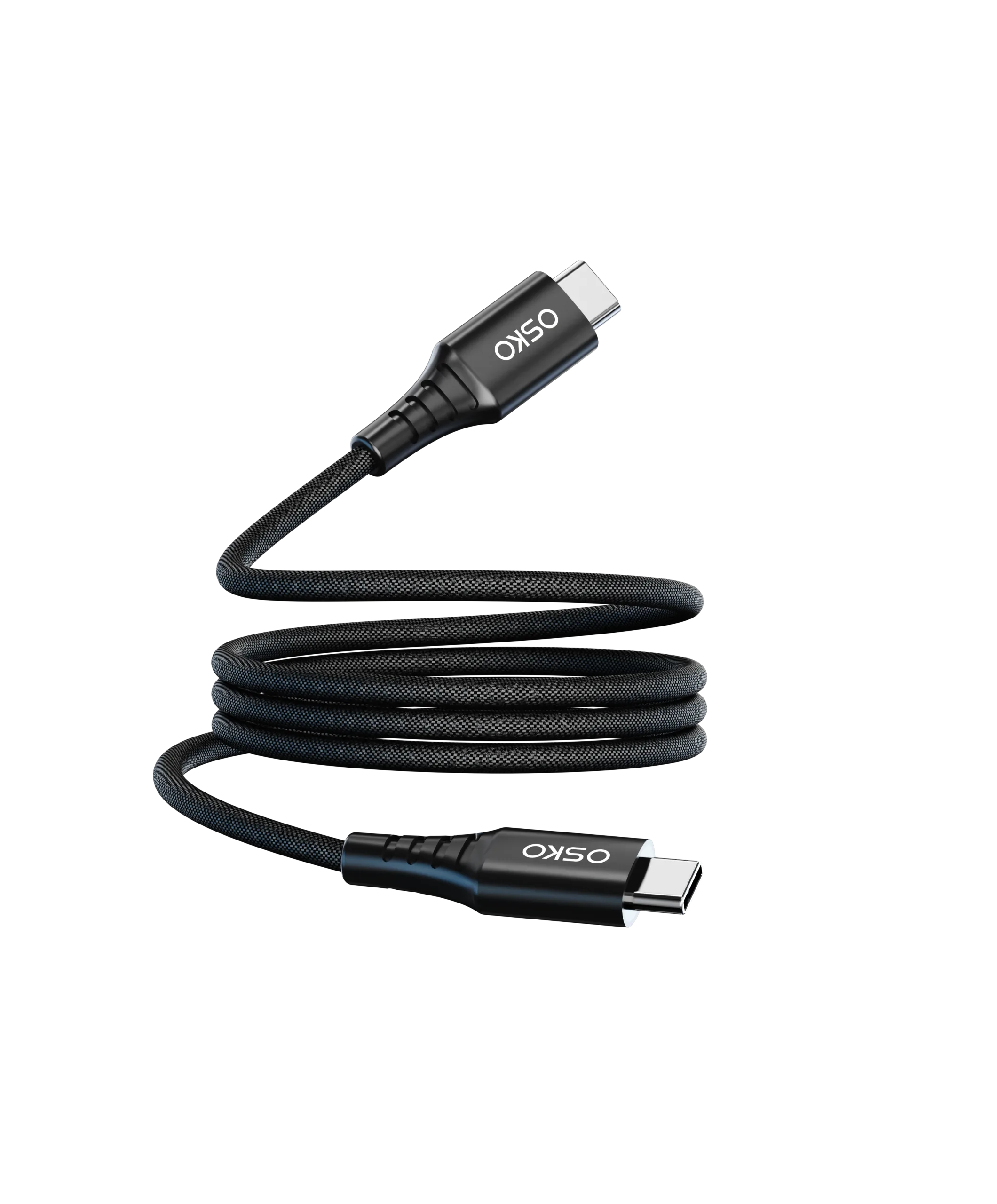
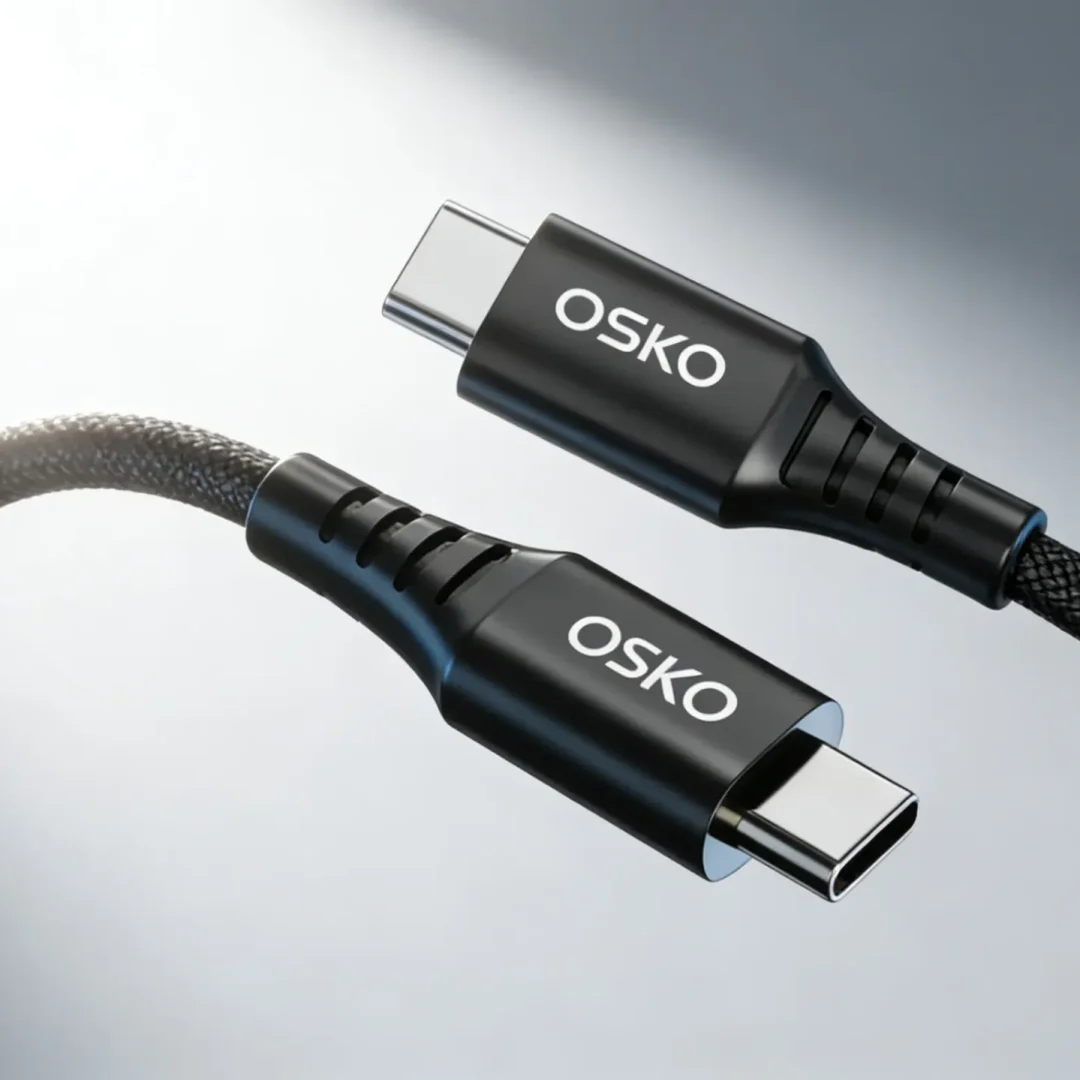
Nylon braided outer jacket for mechanical durability
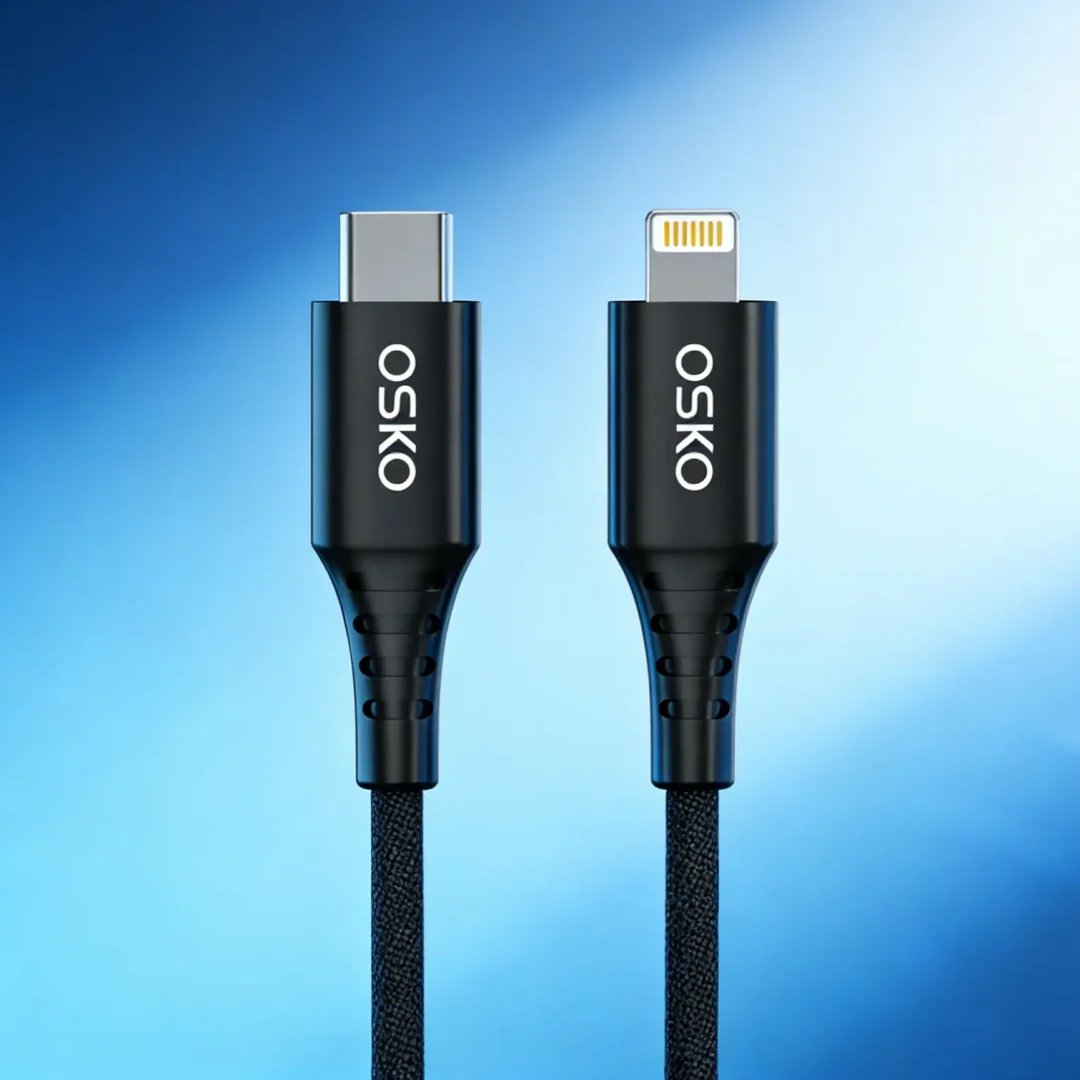
MFi-certified Lightning connector integration
Shielding optimization for stable signal communication
Manufacturing compliance included:
USB-IF compliant Type C cable manufacturer standards
ISO9001 certified braided USB cable factory quality system
CE RoHS certified 240W USB C cable scalable architecture
FCC approved nylon braided USB C cable supplier validation
Result
After deployment:
Fast charging stability improved by 42%
Return rate reduced by 49%
Customer rating increased from 4.1 to 4.7
Cable lifespan exceeded 10,000+ bend cycles
Improved compatibility across iPhone models
This confirms that engineering-level optimization is essential for USB-C to Lightning cable Apple performance in retail markets.

Selection Guide
Understanding Apple Fast Charging Requirements
Apple fast charging depends on:
USB Power Delivery (USB-PD) protocol
MFi-certified Lightning communication
Stable low-resistance cable structure
Without these conditions, fast charging cannot be reliably activated.
Material Comparison Table
| Material Type | Charging Efficiency | Durability | Market Position |
|---|---|---|---|
| PVC cable | Medium | Low | Budget retail |
| TPE cable | High | Medium | Mid-range retail |
| Nylon braided cable | Very High | High | Premium Apple ecosystem |
Premium USB-C to Lightning cable Apple products typically use nylon braided structures for durability and retail positioning.
OEM Procurement Considerations
For US and EU buyers, sourcing decisions should evaluate:
MFi certification authenticity
USB-PD charging stability
Conductor resistance control
Packaging readiness for Amazon/Walmart
Compliance (CE, FCC, RoHS, Prop 65)
Common procurement categories include:
Wholesale 60w braided usb c cable
Bulk custom 6ft 10ft USB-C cables
OEM ODM custom length USB C cables
Custom packaging braided charging cable factory
White label 240W fast charging cable wholesale
Application Scenarios
The USB-C to Lightning cable Apple is widely used in:
OEM USB cables for Apple ecosystem product lines
ODM USB cables for customized accessory development
USB cables for wholesale distribution networks
Desktop charging cables for office workstation setups
Travel USB cables for portable charging needs
Home USB cables for multi-device household charging
FAQ
Why is my iPhone not fast charging with USB-C to Lightning cable?
Because the cable may not be MFi certified or lacks proper USB-PD support.
Does cable quality affect Apple fast charging speed?
Yes. Resistance, shielding, and conductor quality directly affect performance.
Is MFi certification necessary?
Yes. It ensures compatibility, safety, and stable fast charging performance.
Are braided cables better for Apple devices?
Yes. They provide better durability and stable long-term electrical performance.
What wattage is supported for iPhone fast charging?
Typically 18W–27W depending on model and charger.
Summary
A USB-C to Lightning cable Apple is not just a charging accessory but a precision-engineered communication and power delivery system.
Its performance depends on conductor quality, dielectric insulation, shielding architecture, and most importantly MFi certification for Apple ecosystem compatibility.
OSKO’s engineering approach ensures stable fast charging performance through controlled manufacturing processes, optimized material selection, and compliance-focused OEM production systems tailored for US and European markets.
In competitive retail environments, engineering quality directly determines product success, return rate, and customer satisfaction.
Contact Information
OSKO provides OEM/ODM Apple charging cable solutions including:
USB-C to Lightning fast charging cables
MFi-certified Apple charging accessories
Nylon braided premium cable systems
Wholesale and Amazon-ready packaging
Private label manufacturing for global brands