

Introduction
A USB car charger has become an essential automotive accessory as smartphones, tablets, navigation systems, dash cameras, and other electronic devices become part of everyday driving.
Modern drivers expect more than basic charging. They need fast charging performance, multiple charging ports, safe power management, and reliable compatibility with different devices.
For retailers, distributors, and automotive accessory brands, selecting the right USB car charger supplier is equally important. A professional manufacturer must control electrical design, charging protocols, thermal management, safety protection, and production quality to ensure stable performance in global markets.
From traditional USB-A chargers to advanced USB-C PD car chargers, the technology has evolved significantly. This guide explains the different types of car chargers, how fast charging works, key selection factors, and what OEM buyers should evaluate when sourcing from a manufacturer.
What Is a USB Car Charger?
How Does a USB Car Charger Work?
A USB car charger is a power adapter designed to convert a vehicle’s DC power supply into regulated USB charging output.
Most vehicles provide:
12V DC power in passenger cars
24V DC power in commercial vehicles
The charger converts this input voltage into the stable output required by USB devices.
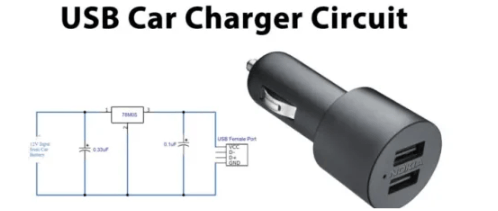
A typical USB car charger includes:
Vehicle power input connector
Voltage conversion circuit
Charging control IC
USB output ports
Safety protection components
The internal charging circuit regulates:
Voltage output
Charging current
Temperature control
Device communication
This allows smartphones and other electronics to charge safely while driving.
Why Are USB-C Car Chargers Becoming More Popular?
What Are the Advantages of USB-C Car Chargers?
USB-C has become the preferred charging interface for many modern devices because it supports higher power delivery and faster charging compared with traditional USB-A.
A USB-C car charger provides several advantages:
Higher Charging Power
USB-C Power Delivery (USB PD) enables higher charging performance.
Common power levels include:
18W PD charging
30W PD charging
45W PD charging
65W PD charging
100W+ USB-C charging solutions
This makes USB-C car chargers suitable for:
Smartphones
Tablets
Gaming devices
Portable monitors
Some laptops
Reversible Connector Design
Unlike traditional USB-A connectors, USB-C connectors are reversible.
Users can insert the cable in either direction, improving convenience and reducing connector damage caused by incorrect insertion.
Better Future Compatibility
Many global electronics brands have transitioned toward USB-C charging.
Examples include:
Android smartphones
Tablets
Laptops
Portable gaming devices
Automotive accessories
For retailers targeting the US, Germany, Australia, and Netherlands markets, USB-C charging products generally have stronger long-term market potential.
What Types of USB Car Chargers Are Available?
USB-A Car Chargers
USB-A car chargers are the traditional solution and remain widely used.
Advantages:
Low production cost
Broad compatibility
Mature technology
Easy replacement
Typical applications:
Entry-level phone charging
Promotional products
Fleet accessories
However, USB-A chargers usually have lower maximum charging capability compared with USB-C PD solutions.
USB-C PD Car Chargers
Why Do Consumers Prefer PD Car Chargers?
USB Power Delivery (USB PD) is a charging protocol designed to deliver higher power efficiently.
A USB-C PD car charger can automatically negotiate charging parameters between the charger and device.
Benefits include:
Faster charging speed
Better power management
Improved device compatibility
Reduced charging time
Common applications:
iPhone fast charging
Android fast charging
Tablet charging
Laptop charging
For premium automotive accessory brands, PD car chargers provide stronger product positioning.
Multi-Port USB Car Chargers
Why Are Multi-Port Chargers Popular?
Modern users often carry multiple devices.
A family traveling by car may need to charge:
Multiple smartphones
Tablets
GPS devices
Wireless headphones
Portable gaming devices
A multi-port USB car charger allows several devices to charge simultaneously.
Common configurations include:
Dual USB-A ports
USB-A + USB-C combination
Dual USB-C ports
Three-port PD chargers
Advantages:
Multiple Device Charging
One charger can support several passengers.
Space Saving
Users do not need multiple adapters.
Better Travel Experience
Ideal for:
Family trips
Business travel
Long-distance driving
What Is a Dual USB Car Charger?
How Does a Dual Port Car Charger Work?
A dual USB car charger contains two independent charging outputs.
For example:
USB-C PD port
USB-A QC port
The internal charging IC distributes power based on connected devices.
A quality dual port charger should manage:
Power allocation
Temperature control
Over-current protection
Short-circuit protection
Professional manufacturers design dual-port chargers with intelligent power distribution to maintain stable charging performance.
What Is Fast Charging Technology in Car Chargers?
How Does Fast Charging Work?
Fast charging is not only determined by charger wattage.
It depends on communication between:
Charger
Cable
Device
The system identifies the required charging voltage and current.
Common charging technologies include:
USB Power Delivery (USB PD)
Used mainly for USB-C devices.
Supports:
20W smartphone charging
45W tablet charging
Higher power applications
Qualcomm Quick Charge (QC)
QC technology is commonly used in Android devices.
Typical versions:
QC 2.0
QC 3.0
QC 4+
PPS Charging
Programmable Power Supply (PPS) provides more precise voltage adjustment.
It improves:
Charging efficiency
Thermal control
Battery protection
How Many Watts Does a Good USB Car Charger Need?
Choosing the Correct Power Output
Different devices require different charging power.
| Device | Recommended Power |
|---|---|
| Basic smartphone | 10W–18W |
| Fast charging smartphone | 20W–30W |
| Tablet | 30W–45W |
| Laptop compatible devices | 60W+ |
For retail markets, the most popular choices are:
20W USB-C PD car chargers
30W USB-C PD car chargers
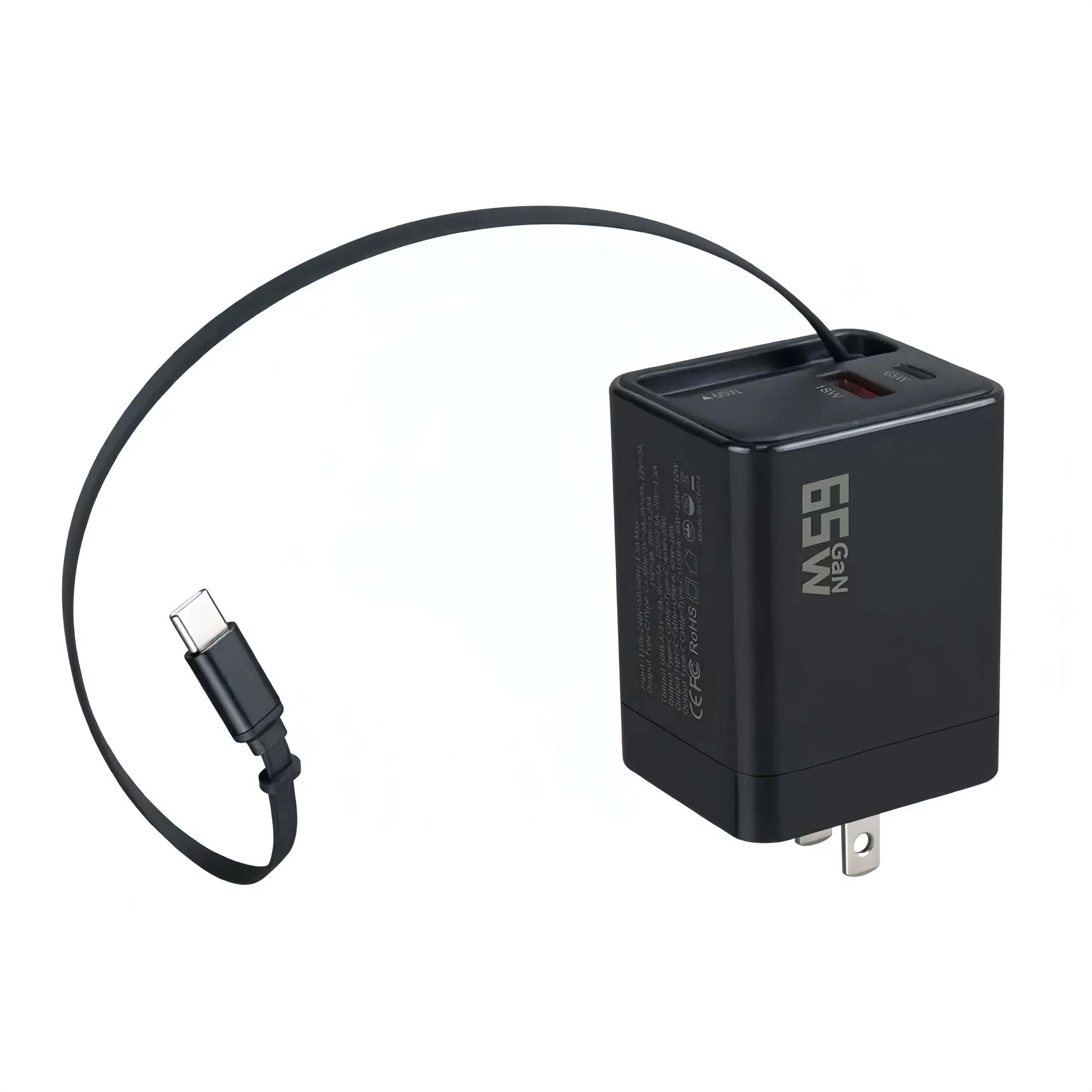
65W dual-port car chargers
Why Is Safety Protection Important for USB Car Chargers?
What Protection Features Should a Quality Charger Have?
Automotive environments create unique challenges:
Voltage fluctuations
Temperature changes
Electrical interference
A professional USB car charger should include:
Over-Current Protection
Prevents excessive current flow.
Over-Voltage Protection
Protects connected devices from unstable voltage.
Short-Circuit Protection
Disconnects power during electrical faults.
Over-Temperature Protection
Reduces output when excessive heat occurs.
These protection systems are essential for reliable operation.
How Are USB Car Chargers Manufactured?
What Processes Are Used in USB Car Charger Production?
A reliable USB car charger manufacturer must control every stage of production, from electronic component selection to final performance testing.
The typical OEM manufacturing process includes:
1. Product Design and Engineering Development
Before mass production, engineers evaluate:
Power requirements
Charging protocols
Circuit design
Thermal performance
Housing structure
Customer branding requirements
For example, a 65W USB-C PD car charger requires careful design of:
Power management IC
Heat dissipation structure
PCB layout
Safety protection system
A professional factory performs engineering verification before production begins.
2. Electronic Component Selection
The performance of a car charger depends heavily on internal components.
Important components include:
Power Management IC
Controls:
Voltage conversion
Current regulation
Charging communication
Capacitors
High-quality capacitors improve:
Stability
Heat resistance
Product lifespan
MOSFET Components
Used for:
Power switching
Efficiency improvement
Thermal control
Charging Protocol IC
Supports:
USB PD
QC
PPS
AFC
Other fast charging protocols
For OEM buyers, component quality directly affects product reliability.
What Materials Are Used in USB Car Charger Housing?
Why Does Housing Material Matter?
The external housing protects internal electronics and affects:
Heat dissipation
Mechanical strength
Appearance
Product durability
Common materials include:
| Material | Advantages | Applications |
|---|---|---|
| ABS | Cost-effective, lightweight | Standard chargers |
| PC | Heat resistance, strength | Premium chargers |
| Aluminum alloy | Better thermal performance | High-power chargers |
| Flame-retardant PC | Higher safety level | Professional electronics |
For premium USB-C PD car chargers, manufacturers often select PC or aluminum alloy materials to improve thermal management.
What Testing Should USB Car Charger Manufacturers Perform?
How Do Factories Ensure Product Reliability?
Professional manufacturers perform multiple quality inspections before shipment.
Electrical Performance Testing
Includes:
Input voltage testing
Output power testing
Charging protocol verification
Current stability testing
Voltage fluctuation testing
Safety Testing
Includes:
Over-current protection testing
Short-circuit protection testing
Over-temperature testing
Insulation testing
Mechanical Testing
Includes:
Plug insertion testing
Housing strength testing
Vibration testing
Drop testing
These tests help ensure chargers can withstand daily automotive environments.
What Certifications Are Required for Global USB Car Charger Sales?
Which Compliance Standards Should OEM Buyers Request?
For international markets, USB car chargers usually require compliance documentation.
Important certifications include:
| Certification | Purpose |
|---|---|
| CE | European market safety compliance |
| FCC | US electromagnetic compatibility |
| RoHS | Restriction of hazardous substances |
| REACH | Chemical compliance |
| UL | Electrical safety requirements |
| UKCA | United Kingdom compliance |
For buyers in:
United States
Germany
Australia
Netherlands
compliance documents improve import confidence and reduce market risks.
Why Is RoHS Compliance Important for USB Car Chargers?
What Materials Need Compliance Control?
USB car chargers contain multiple materials:
PCB components
Plastic housing
Metal contacts
Solder materials
Electronic components
A professional manufacturer controls:
Supplier documentation
Material testing
Production records
Batch traceability
RoHS compliance helps ensure products do not contain restricted substances such as:
Lead
Mercury
Cadmium
Hexavalent chromium
Engineering Case Study: Custom 65W USB-C PD Car Charger Developmen
Customer Requirement
A European automotive accessory distributor approached OSKO to develop a customized 65W USB-C PD car charger for premium vehicle users.
The customer needed:
Compact size
Dual-device charging
USB-C PD fast charging
Custom logo branding
Stable operation under automotive temperature conditions
The main challenges were:
Challenge 1: Heat Management
High-power charging generates additional heat inside a compact housing.
OSKO engineering team optimized:
PCB layout
Component spacing
Thermal design
Housing material selection
A flame-retardant PC housing was selected to improve safety performance.
Challenge 2: Stable Fast Charging
The product needed to support:
USB PD fast charging
Multiple device charging
Intelligent power distribution
Engineers implemented:
PD charging controller
Protection circuit design
Output power monitoring
Challenge 3: International Compliance
Because the customer targeted European retail channels, the product required:
CE documentation
RoHS compliance
REACH compliance
Electrical safety testing
OSKO provided:
Material documentation
Production testing reports
Quality inspection records
Production Result
After engineering validation:
Charging performance remained stable under continuous operation
Dual-port power distribution worked reliably
Product passed required compliance inspections
Customer successfully launched the product in European retail channels
This case demonstrates why selecting an experienced OEM USB charger manufacturer is important for reducing development risks.
How Should Businesses Choose a USB Car Charger Supplier?
What Should OEM Buyers Evaluate?
When selecting a supplier, companies should evaluate several areas.
1. Manufacturing Capability
A professional supplier should have:
Experienced engineering team
Stable production lines
Quality control procedures
Customization capability
Questions to ask:
Can you support OEM logo printing?
Can you customize housing design?
Can you provide product samples?
Can you support small batch testing?
2. Charging Technology Capability
The supplier should understand:
USB PD technology
QC fast charging
PPS protocol
Power management design
For high-power products, confirm:
Maximum output wattage
Thermal performance
Protection systems
Compatibility testing
3. Quality Control System
A reliable factory should operate according to structured quality procedures.
Typical systems include:
IQC (Incoming Quality Control)
Checks:
Electronic components
Plastic materials
PCB quality
Supplier documents
IPQC (In-Process Quality Control)
Checks:
Assembly process
Soldering quality
Circuit installation
OQC (Outgoing Quality Control)
Checks:
Finished products
Charging performance
Packaging
What USB Car Charger Features Are Most Popular in Global Markets?
US Market Requirements
US buyers commonly search for:
USB-C PD car charger
Fast charging car adapter
65W car charger
Dual USB car charger
iPhone car charger
Important selling points:
High charging speed
FCC compliance
Reliable safety protection
Germany Market Requirements
German buyers usually focus on:
Product reliability
Safety certification
Environmental compliance
Important keywords:
USB C Autoladegerät
PD Autoladegerät
CE certified car charger
RoHS compliant charger
Australia Market Requirements
Australian consumers value:
Durability
Heat resistance
Travel convenience
Popular products:
Dual USB-C car charger
Fast charger adapter
Compact car charger
Netherlands Market Requirements
Dutch buyers often prefer:
Sustainable materials
Compact design
Multi-device charging
Important product advantages:
Energy efficiency
RoHS compliance
Premium appearance
How to Select the Best USB Car Charger for Your Business?
OEM Buyer Checklist
Before placing a bulk order, verify:
Product Specifications
✔ Output power rating
✔ USB PD support
✔ QC compatibility
✔ Number of ports
✔ Device compatibility
Safety Requirements
✔ CE certification
✔ FCC certification
✔ RoHS compliance
✔ Over-temperature protection
✔ Short-circuit protection
Manufacturing Capability
✔ OEM customization ability
✔ Quality control process
✔ Production capacity
✔ Testing reports
✔ Material traceability
Choosing the correct supplier reduces product failures and improves customer satisfaction.
FAQ
1. What is the best USB car charger for fast charging?
The best USB car charger depends on device requirements. For modern smartphones and tablets, a USB-C PD car charger with 20W–65W output provides faster and more efficient charging compared with traditional USB-A chargers.
2. Is a USB-C car charger better than a USB-A car charger?
Yes, in many cases. USB-C car chargers support higher charging power, faster charging protocols, and better compatibility with newer smartphones, tablets, and laptops.
3. How many watts should a car charger have?
A smartphone usually requires 20W–30W for fast charging. Tablets may require 30W–45W, while some laptops require 60W or higher USB-C PD output.
4. Are multi-port car chargers safe?
A high-quality multi-port USB car charger is safe when it includes protection features such as over-current protection, over-voltage protection, temperature control, and short-circuit protection.
5. What certifications should a USB car charger manufacturer provide?
Professional suppliers should provide CE, FCC, RoHS, REACH, and relevant electrical safety documentation depending on the target market.
6. Can USB car chargers be customized with a brand logo?
Yes. OEM manufacturers can customize logos, packaging, housing colors, product design, and specifications according to brand requirements.
Summary
A USB car charger is no longer just a simple power adapter. Modern products require advanced charging technology, reliable safety systems, quality materials, and strict manufacturing control.
For consumers, choosing the right charger means considering:
Charging speed
Device compatibility
Safety protection
Product reliability
For brands and distributors, selecting an experienced USB car charger manufacturer is essential.
A professional OEM supplier should provide:
USB PD fast charging solutions
Custom product development
Quality-controlled production
International compliance support
OSKO provides customized USB charging solutions for global customers, including USB-C PD car chargers, multi-port charging solutions, and OEM electronic accessories.
With engineering experience, strict quality management, and international market knowledge, OSKO helps brands develop reliable charging products for the US, Germany, Australia, Netherlands, and other global markets.
Contact OSKO for custom USB car charger OEM/ODM solutions.