















Introduction: Why Choosing the Right Type C Charging Cable Matters in 2026
A Type C charging cable is no longer just a simple accessory for charging mobile phones. In 2026, USB-C technology has become an essential connection standard for smartphones, laptops, tablets, gaming devices, automotive electronics, and professional equipment.
Unlike traditional USB cables, modern USB-C charging cables combine multiple functions:
High-speed charging
Data transmission
Video output
Universal device connectivity
With the increasing adoption of USB Power Delivery (USB PD), users can now charge devices ranging from smartphones to high-performance laptops with a single cable.
However, not all Type C cables are the same.
A low-quality USB-C cable may cause:
Slow charging speed
Unstable power delivery
Excessive heat
Poor durability
Data transfer failure
For consumers, selecting the right cable improves daily charging experience.
For brands, distributors, and professional buyers, choosing a reliable USB-C cable manufacturer directly affects product reputation, customer satisfaction, and long-term business growth.
OSKO specializes in OEM and ODM USB cable manufacturing, providing customized solutions including:
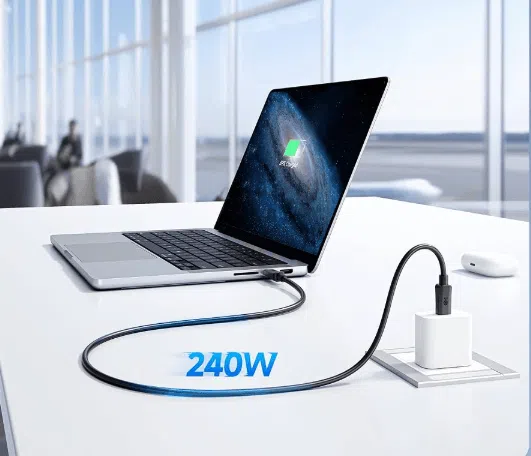
60W / 100W / 240W USB-C charging cables
Nylon braided charging cables
Custom logo and packaging solutions
What Is a Type C Charging Cable?
Understanding USB Type-C Technology
A Type C charging cable, also known as a USB-C cable, is a new generation USB connector designed to replace older USB-A and Micro USB interfaces.
The biggest improvement of USB-C is its reversible connector design.
Traditional USB-A connectors require correct orientation during insertion, while USB-C connectors can be plugged in either direction.
This design provides:
Easier daily operation
Reduced connector damage
Better user experience
A USB-C cable can support multiple functions depending on its internal design and specifications:
Charging Function
USB-C supports advanced charging technologies including:
USB Power Delivery (USB PD)
PPS fast charging
High-power laptop charging
Data Transfer Function
USB-C cables can support:
USB 2.0 data transfer
USB 3.2 high-speed transfer
USB4 connectivity
Audio and Video Function
Some USB-C cables support:
DisplayPort Alternate Mode
External monitor connection
Digital audio transmission
This multifunction capability makes USB-C the preferred connector for modern electronics.
Why Are USB-C Charging Cables Becoming the Global Standard?
The transition from older USB connectors to USB-C is accelerating worldwide.
Markets including the United States, Germany, Australia, and the Netherlands are seeing increasing demand for reliable USB-C accessories because consumers and businesses require faster, safer, and more universal charging solutions.
1. Universal Compatibility
One major advantage of USB-C is its wide compatibility.
A single USB-C cable can support:
Smartphones
Tablets
Laptops
Gaming consoles
Portable monitors
Car charging systems
For example:
A USB-C charging cable can be used for:
Samsung Galaxy smartphones
Google Pixel devices
iPhone 15 series and newer
MacBook Air
MacBook Pro
Windows laptops
For businesses, this reduces the need to manage multiple cable types and simplifies inventory management.
2. Higher Power Delivery Capability
One of the biggest advantages of modern USB-C cables is high-power charging.
Traditional USB-A charging solutions are limited in power output.
USB-C Power Delivery technology allows cables to support much higher charging performance.
Common USB-C PD cable specifications include:
60W USB-C Cable
Suitable for:
Smartphones
Tablets
Portable devices
100W USB-C Cable
Suitable for:
MacBook Pro
Business laptops
High-performance tablets
140W USB-C Cable
Suitable for:
USB PD 3.1 EPR devices
Professional laptops
240W USB-C Cable
Suitable for:
Gaming laptops
High-power computing devices
For high-power USB-C cables, manufacturers must consider:
Copper conductor size
Cable temperature control
Insulation materials
E-Marker chip configuration
A professional USB-C cable manufacturer must ensure the cable structure matches the required charging power.
3. Faster Data Transfer Performance
Charging is only one function of a USB-C cable.
Modern users also need fast data transmission.
Different USB-C cables support different speeds.
USB 2.0 USB-C Cable
Typical performance:
Up to 480 Mbps
Suitable for:
Basic charging
Smartphone synchronization
USB 3.2 USB-C Cable
Performance:
Up to 5Gbps
Up to 10Gbps
Up to 20Gbps
Suitable for:
Large file transfer
External storage devices
Professional applications
USB4 / Thunderbolt Compatible Cable
Performance:
Up to 40Gbps
Suitable for:
Video production
High-resolution displays
Professional workstations
Important:
The USB-C connector itself does not determine speed.
The internal cable structure determines performance.
A professional USB cable supplier must correctly design:
Signal wires
Shielding structure
Internal layout
Connector quality
Key Factors to Consider When Choosing a Type C Charging Cable
When purchasing a fast charging USB-C cable, buyers should evaluate more than appearance.
Important factors include:
Charging capability
Cable materials
Durability
Length
Compatibility
Manufacturer reliability
1. Check USB PD Power Capability
Power Delivery is one of the most important specifications.
Before purchasing a Type C charging cable, check:
Maximum supported wattage
Current rating
Voltage capability
For example:
A 60W cable cannot replace a 240W cable for high-performance laptops.
A 240W USB-C cable usually requires:
5A current support
E-Marker chip
Advanced manufacturing process
For OEM buyers, selecting the correct power specification prevents:
Product returns
Customer complaints
Safety risks
2. Evaluate Cable Durability and Build Quality
Charging cables are frequently bent, pulled, and twisted during daily use.
Therefore, durability is a key purchasing factor.
High-quality USB-C cables usually include:
Reinforced Connector Design
The connector area receives the most stress.
Professional designs include:
Extended SR protection
Stronger housing structure
Improved strain relief
Premium Copper Conductors
High-quality copper improves:
Electrical efficiency
Charging stability
Heat control
Protective Cable Jacket
Common materials include:
TPE Jacket
Advantages:
Flexible
Soft touch
Cost-effective
TPU Jacket
Advantages:
Better abrasion resistance
Higher durability
Nylon Braided Jacket
Advantages:
Anti-tangle
Premium appearance
Better bending resistance
For retail markets in the US and Europe, braided USB-C charging cables are becoming increasingly popular because they provide better user experience and stronger product value.
How to Choose the Best Type-C Charging Cable for Different Devices
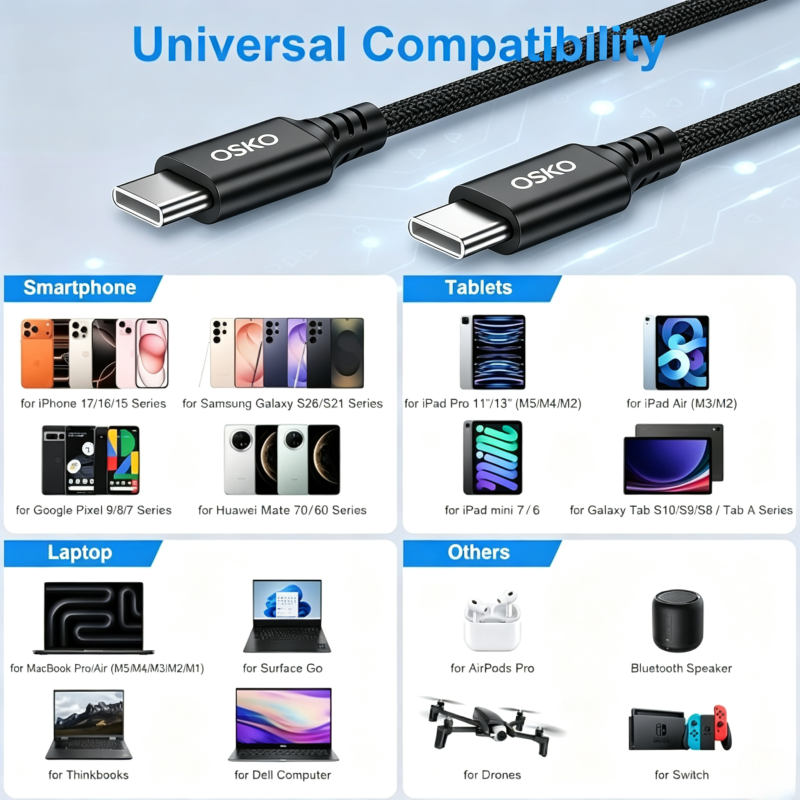
Choosing a Type C charging cable is not only about selecting a cable with the correct connector. Different devices require different charging protocols, power levels, and data capabilities. A cable designed for a smartphone may not provide enough performance for laptops, gaming devices, or professional equipment.
For consumers and procurement buyers, understanding the relationship between the USB-C cable, charger, and device is essential. A high-performance charging system requires all three components to work together.
For example:
A smartphone such as Samsung Galaxy, Google Pixel, or iPhone 15 series may require a USB-C fast charging cable with PD support.
A MacBook, Dell XPS, or other USB-C laptops may require a 100W or 240W USB-C PD cable with an E-Marker chip.
Gaming devices such as Nintendo Switch require stable power delivery and durable connectors for long-term use.
Therefore, choosing the right USB Type C charging cable manufacturer and checking technical specifications before purchasing can prevent slow charging, overheating, or compatibility problems.
USB-C Cable Charging Power: 60W, 100W, and 240W Explained
One of the biggest improvements of USB-C technology is its ability to deliver higher charging power compared with traditional USB-A cables.
The charging capability of a Type-C cable is usually measured in watts (W). Higher wattage allows faster charging for devices with larger batteries.
60W USB-C Cable
A 60W USB-C charging cable is suitable for:
Smartphones
Tablets
Power banks
Small laptops
USB-C accessories
For most daily charging needs, a 60W USB-C cable provides an excellent balance between performance, cost, and portability.
100W USB-C PD Cable
A 100W USB-C PD cable is designed for higher-power devices including:
MacBook Pro
Dell laptops
Lenovo ThinkPad
Portable monitors
These cables normally require an integrated E-Marker chip, which communicates charging information between the charger and device to ensure safe power delivery.
240W USB-C Cable
The latest USB-C PD 3.1 standard supports up to 240W charging power, making it possible to power high-performance laptops, gaming equipment, and professional devices through a single USB-C connection.
A high-quality 240W USB-C cable requires:
Thick copper conductors
Advanced heat management
E-Marker IC
Reliable connector design
High-temperature insulation materials
For businesses sourcing USB-C cables wholesale, selecting cables according to actual power requirements helps reduce returns and improves customer satisfaction.
Why Cable Materials Matter: Engineering Behind a Durable USB-C Cable
Many buyers focus only on charging speed, but cable construction directly determines product lifespan.
A professional USB-C cable manufacturer evaluates multiple components, including conductor materials, insulation layers, shielding structure, and connector reliability.
Copper Conductors
The internal conductor is responsible for transmitting power and data signals.
Premium USB-C cables usually use:
High-purity copper wire
Multi-core conductor structure
Increased wire diameter for higher current capacity
Compared with low-cost aluminum conductors, copper provides:
Lower resistance
Better charging efficiency
Reduced heat generation
More stable data transmission
Nylon Braided Outer Jacket
For frequently used charging cables, durability is a major purchasing factor.
A nylon braided USB-C cable provides:
Better abrasion resistance
Improved flexibility
Reduced tangling
Longer service life
This is especially important for retail markets in the United States, Germany, Australia, and the Netherlands, where consumers expect charging accessories to withstand daily use.
Reinforced Connector Design
Most cable failures happen near the connector because this area experiences repeated bending.
High-quality USB-C cables use:
Extended SR strain relief
Laser-welded connector structure
Reinforced metal shell
Flexible internal support
These improvements help cables survive thousands of bending cycles.
OSKO Engineering Case Study: Custom USB-C Cable Solution for European Electronics Distributor
A European electronics distributor supplying smartphone accessories required a customized USB-C charging cable for retail customers in Germany and the Netherlands.
The customer’s main requirements included:
1.8m cable length
USB-C to USB-C connection
100W PD fast charging support
Premium braided appearance
Retail packaging compatibility
Long-term durability
During product development, OSKO engineers optimized:
- Cable diameter
The engineering team adjusted conductor size to support stable 100W power delivery while maintaining flexibility.
- Connector structure
The connector housing was redesigned with reinforced SR protection to reduce failures caused by repeated bending.
- Material selection
A high-density nylon braided jacket was selected to improve durability and match European retail expectations.
After testing:
Charging stability was improved
Cable durability exceeded standard daily-use requirements
The product successfully entered the distributor’s retail channel
This project demonstrates OSKO’s capability as a professional USB cable manufacturer providing OEM and ODM USB-C cable solutions for international markets.
USB-C Cable Buying Guide for Wholesale and OEM Buyers
For distributors, importers, and brands purchasing USB-C cables in bulk, technical specifications are more important than simply comparing prices.
Before placing a wholesale order, consider the following factors:
1. Confirm Charging Requirements
Determine whether your market needs:
20W USB-C cable
60W USB-C cable
100W USB-C PD cable
240W USB-C PD 3.1 cable
Choosing the correct power level prevents product complaints.
2. Check Data Transfer Performance
USB-C cables may support different speeds:
USB 2.0: up to 480Mbps
USB 3.2: up to 20Gbps
USB4 / Thunderbolt: up to 40Gbps
Many low-cost cables support charging only and cannot provide high-speed data transfer.
3. Verify Certifications
For international markets, buyers should check compliance requirements:
United States:
FCC
USB-IF
UL-related requirements
European markets:
CE
RoHS
REACH
Australia:
RCM-related requirements
Certified products improve customer trust and reduce import risks.
4. Consider Customization Options
Professional OEM suppliers can provide:
Custom cable length
Logo printing
Custom colors
Packaging design
Connector customization
Retail/private label solutions
For brands developing charging accessories, working directly with a factory can reduce costs and improve quality control.
Type-C Cable Trends in 2026
The demand for USB-C cables continues growing because more devices are adopting USB-C as the universal charging standard.
Major trends include:
Higher Power Charging
More laptops and mobile devices are moving toward USB-C PD charging, increasing demand for:
100W USB-C cables
240W USB-C cables
E-Marker equipped cables
Sustainable Materials
Consumers in Europe and Australia increasingly value environmentally responsible products.
Future USB-C cable designs will focus on:
Recycled materials
Reduced plastic packaging
Longer product lifespan
Multi-Device Compatibility
Users prefer one cable that can charge multiple devices:
Phones
Tablets
Laptops
Gaming devices
Accessories
This creates opportunities for retailers and distributors selling universal USB-C charging solutions.
Frequently Asked Questions (FAQ)
Are all Type-C charging cables the same?
No. Type-C cables can have different charging power, data speeds, materials, and internal designs. Some cables support only basic charging, while others support high-power PD charging up to 240W and high-speed data transfer.
How many watts should my USB-C cable support?
For smartphones, a 60W USB-C cable is usually sufficient. For laptops and high-performance devices, choose a 100W or 240W USB-C PD cable depending on the device requirements.
Does a USB-C cable affect charging speed?
Yes. The cable determines how much power can safely pass between the charger and device. A low-quality cable may limit charging speed even when using a powerful charger.
What is an E-Marker chip in a USB-C cable?
An E-Marker chip is an electronic identification chip inside some USB-C cables. It allows the cable to communicate power capability information and safely support higher charging levels.
Can USB-C cables transfer data and charge at the same time?
Yes. Many USB-C cables support simultaneous charging and data transfer. However, the actual speed depends on the cable specification and connected devices.
Why does my USB-C cable charge slowly?
Slow charging can happen because of:
Low-quality cable
Insufficient charger power
Device compatibility issues
Damaged connectors
Using a certified USB-C cable from a reliable manufacturer can improve charging stability.
Conclusion
A Type C charging cable is no longer just a simple charging accessory. In 2026, it has become an important connection solution for smartphones, laptops, gaming devices, and professional electronics.
When choosing the right USB-C cable, buyers should consider:
Charging power
Data transfer speed
Cable materials
Durability
Compatibility
Certification requirements
For businesses looking for reliable USB-C cable wholesale suppliers, OEM USB cable manufacturers, and custom charging cable solutions, OSKO provides professional engineering support, customized production, and quality-controlled manufacturing capabilities.
With advanced production technology and years of cable manufacturing experience, OSKO helps global brands develop reliable USB-C charging products for the US, European, Australian, and international markets.
Contact OSKO for OEM/ODM USB-C Cable Solutions
OSKO specializes in:
USB-C cable manufacturing
Custom charging cable production
OEM/ODM cable solutions
Wholesale USB cable supply
Develop your next charging cable product with an experienced manufacturing partner.
