
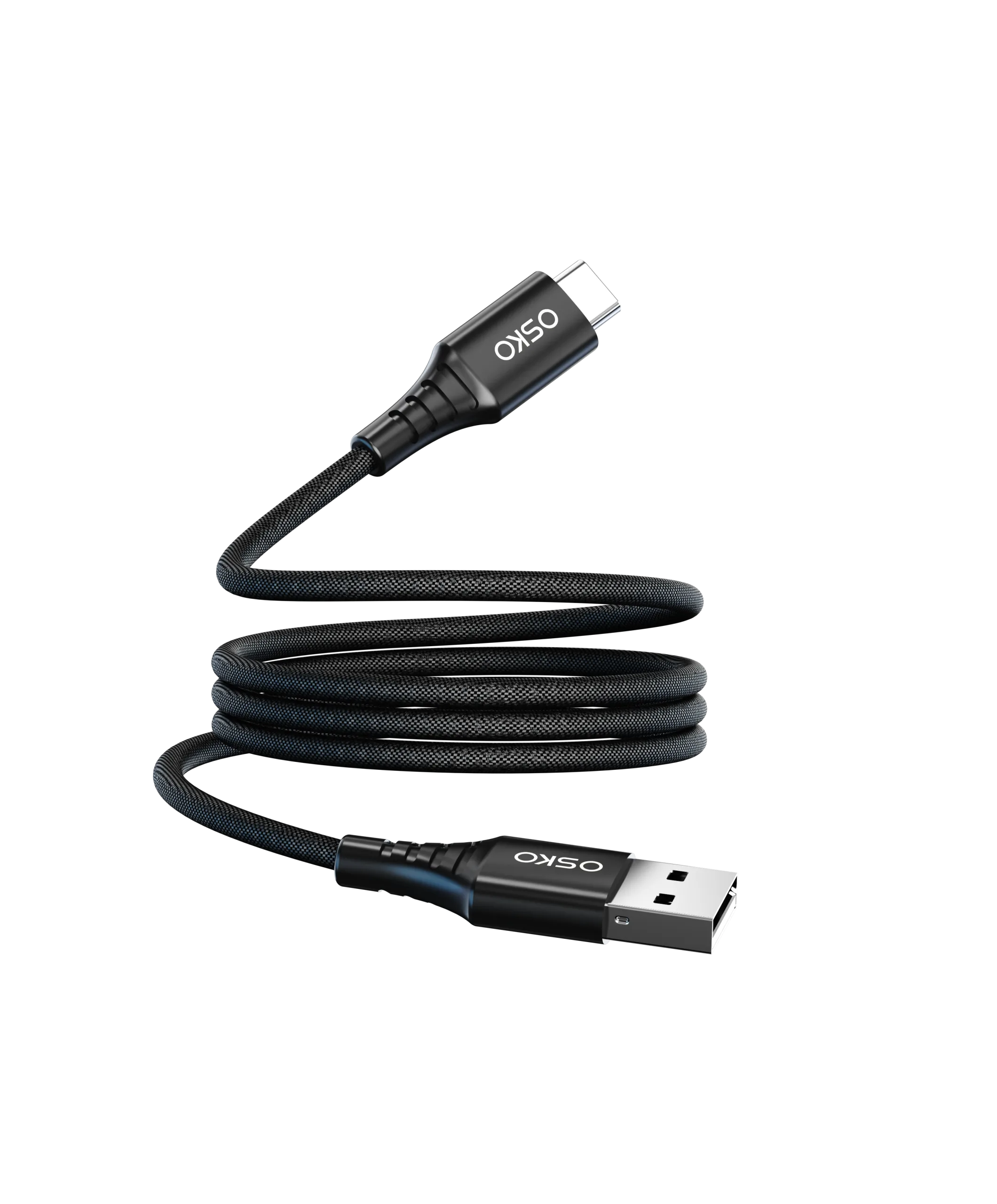
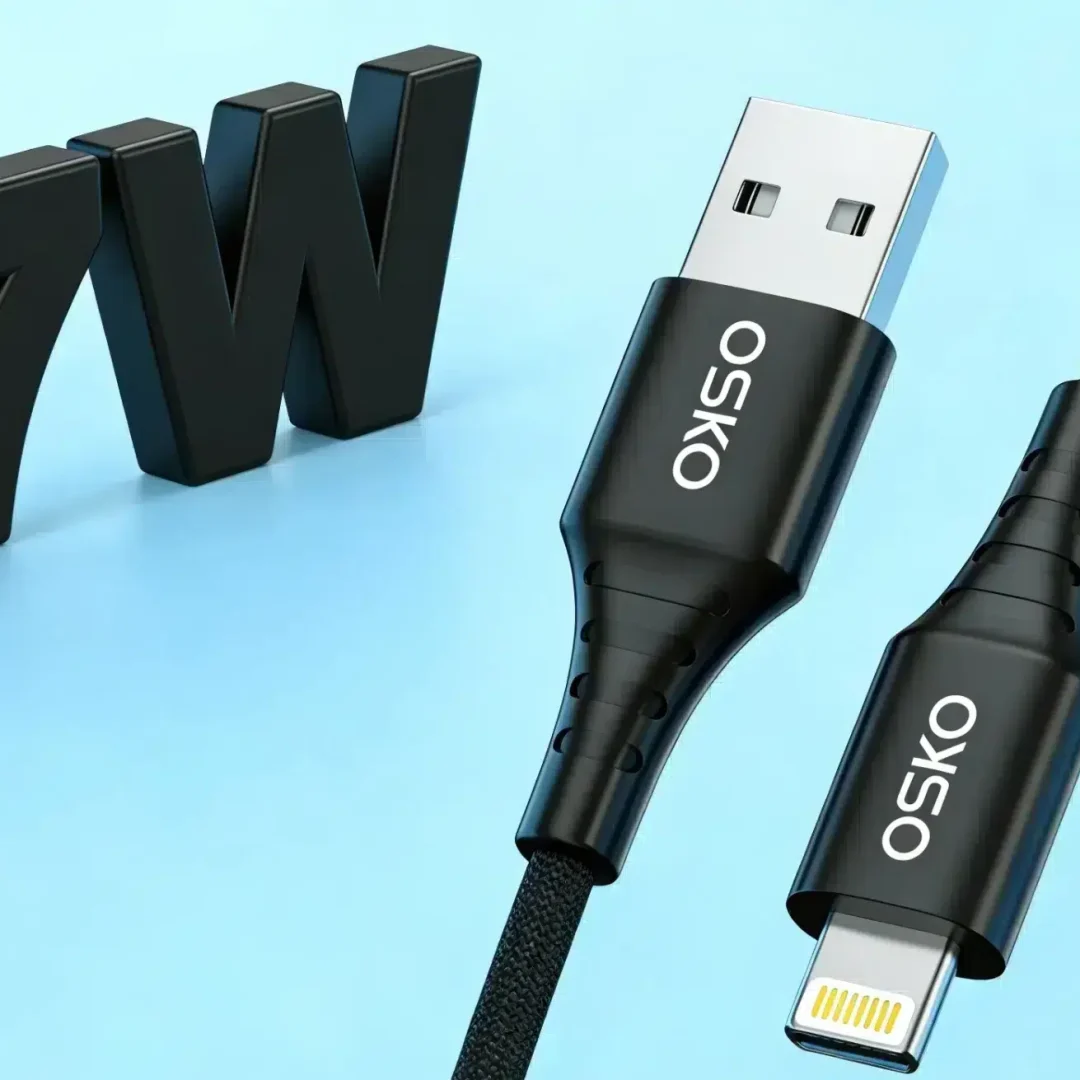
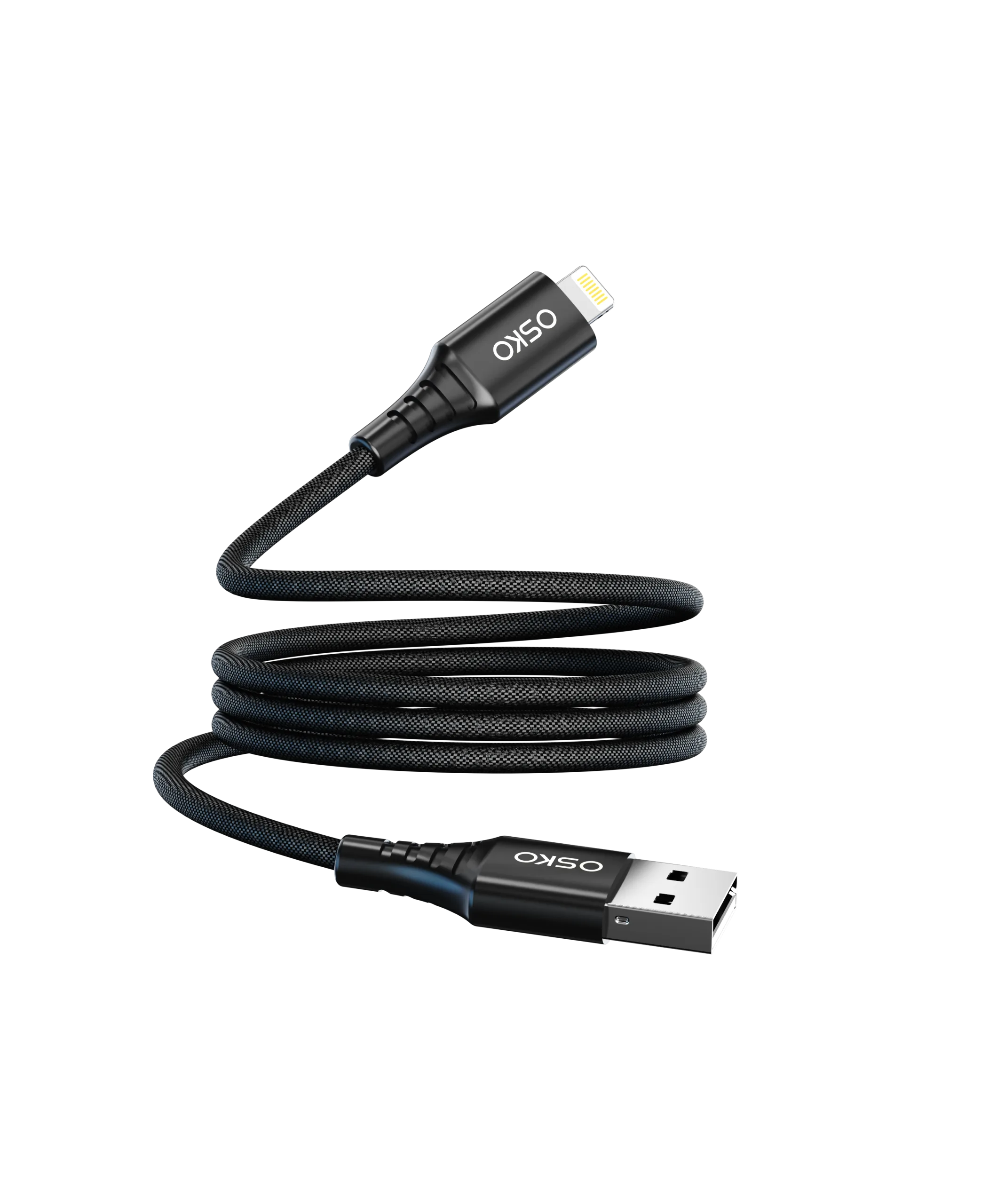
For importers, distributors, e-commerce sellers, and consumer electronics brands, sourcing a reliable 3ft Lightning cable OEM China manufacturer requires more than comparing factory quotations.
A Lightning cable may look simple from the outside, but its performance depends on connector construction, cable materials, electrical design, authentication-related requirements, production consistency, testing, packaging, and the specifications of the target market.
This is especially important for brands selling through Amazon, Shopify, electronics retailers, distributors, and private-label channels in the United States, Germany, Australia, and the Netherlands.
Common sourcing problems include:
Inconsistent charging performance
Connector damage after repeated use
Poor strain relief
Cable jacket cracking or fraying
Data-transfer instability
Inconsistent production batches
Packaging mistakes
Unclear compliance documentation
Unauthorized or unsupported Apple compatibility claims
For OEM buyers, the goal should therefore be more than finding a cheap Lightning cable supplier.
The better approach is to evaluate the manufacturer’s engineering capability, Apple-related program status where applicable, quality-control process, customization capabilities, documentation, and ability to maintain the same specification from sample approval through mass production.
This guide explains how to source a 3ft Lightning cable OEM China solution for North American and European retail, wholesale, distribution, and private-label applications.
Why 3ft Lightning Cables Remain Relevant
USB-C has become increasingly important across the consumer electronics market, but Lightning accessories still have an established installed base.
Depending on the target customer segment and product ecosystem, buyers may still require Lightning cables for compatible iPhone, iPad, iPod, AirPods, and other Lightning-equipped accessories.
Apple’s MFi program continues to cover licensed technologies and components used by compatible third-party accessories, including Lightning connectors and authentication-related components.
For retailers, this means there can still be a commercial opportunity for well-specified MFi Lightning cables, particularly when the product is positioned toward compatible legacy Apple devices and existing accessory demand.
Why 3ft Is a Practical Retail Length
A 3ft cable offers a useful balance between portability and everyday usability.
Typical applications include:
Desk charging
Office workstations
Nightstand charging
Power-bank use
Vehicle charging
Travel kits
Retail accessory bundles
Compared with a 6ft or 10ft cable, a 3ft cable takes less space in a travel bag and creates less cable clutter around a desk or charging station.
For retailers, this also makes the 3ft format suitable for multi-pack products and compact retail packaging.
3ft Lightning Cable Construction: What Buyers Should Check
A professional Lightning cable manufacturer should be able to explain the cable as a complete engineered assembly rather than simply describing the outer jacket.
A typical construction includes:
Conductor → insulation → signal/power structure → shielding where required → filler/binder → outer jacket → connector assembly → strain relief
Each layer affects a different aspect of performance.
For procurement teams, this distinction is important because two cables with the same length and appearance can have significantly different electrical and mechanical performance.
Conductor Design and Electrical Performance
The conductor is responsible for carrying power and data through the cable.
Important factors include:
Conductor material
Cross-sectional area
Strand construction
Resistance
Cable length
Insulation
Thermal behavior
Connector termination
The original assumption that “OFC automatically means premium performance” is too simplistic.
A cable’s real-world performance depends on the complete electrical design, including conductor size, resistance, connector contacts, termination quality, and cable length.
For a 3ft Lightning cable manufacturer, the shorter length can help reduce total conductor resistance compared with a longer cable of otherwise similar construction, but it does not automatically guarantee faster charging.
Buyers should request measurable specifications rather than relying only on phrases such as:
“Premium copper”
“High conductivity”
“Fast charging”
or
“Professional grade.”
Insulation and Jacket Materials
The insulation system separates conductors and helps maintain electrical integrity.
Common outer-jacket materials include PVC, TPE, and braided constructions.
| Material | Advantages | Typical Positioning |
|---|---|---|
| PVC | Cost-effective and easy to manufacture | Entry-level retail |
| TPE | Soft and flexible | Everyday consumer cable |
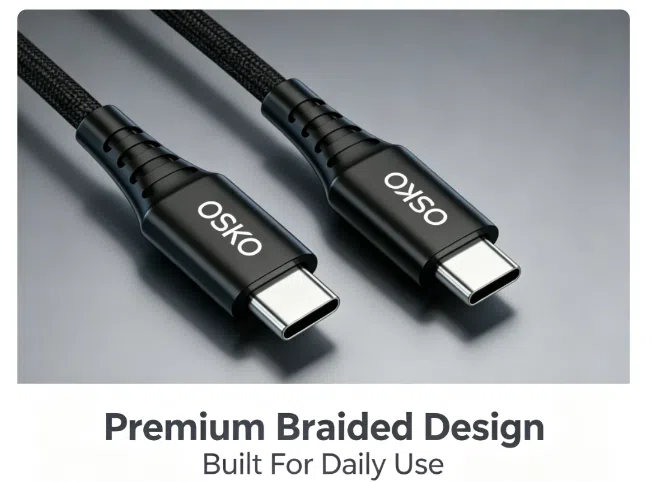
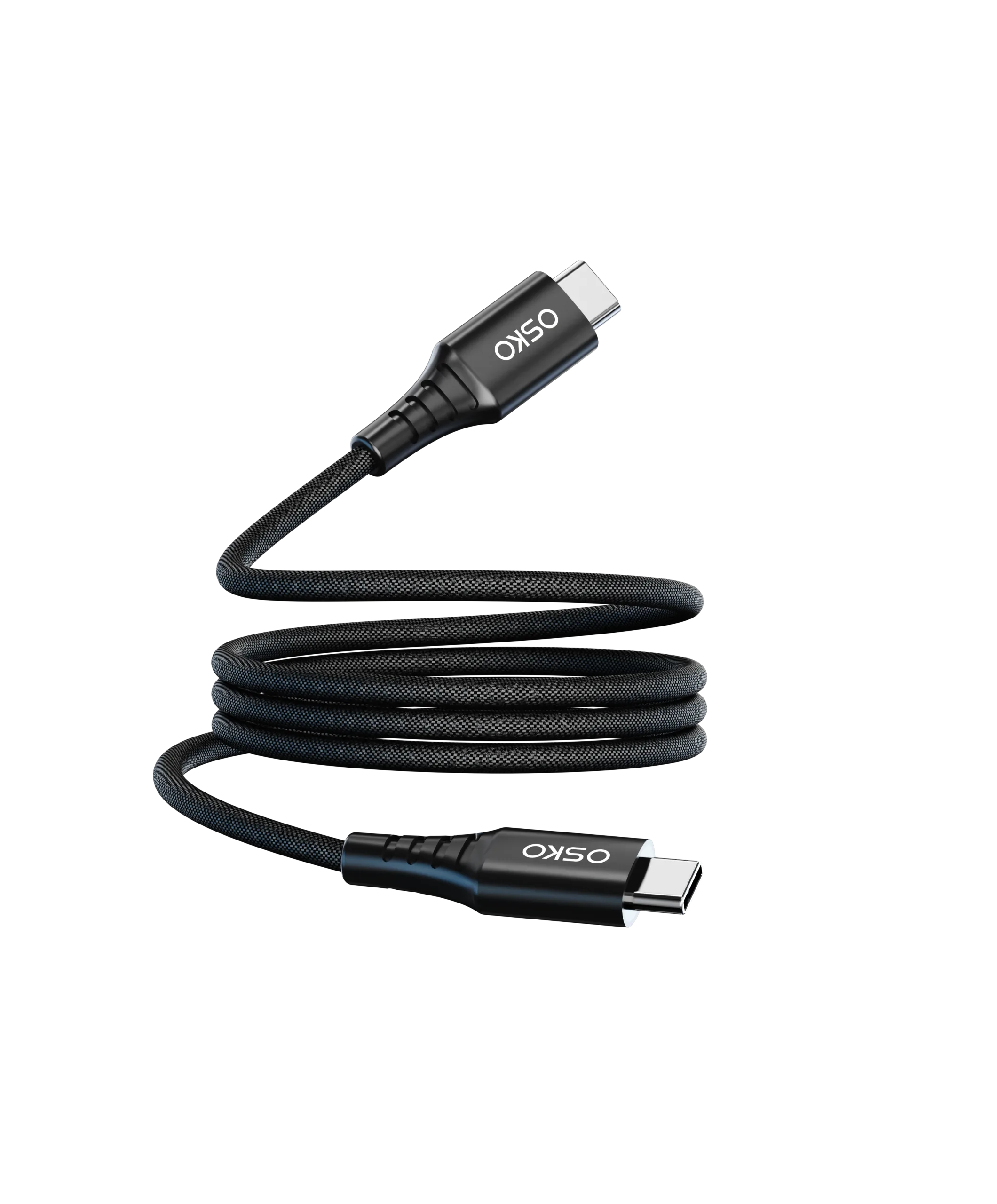
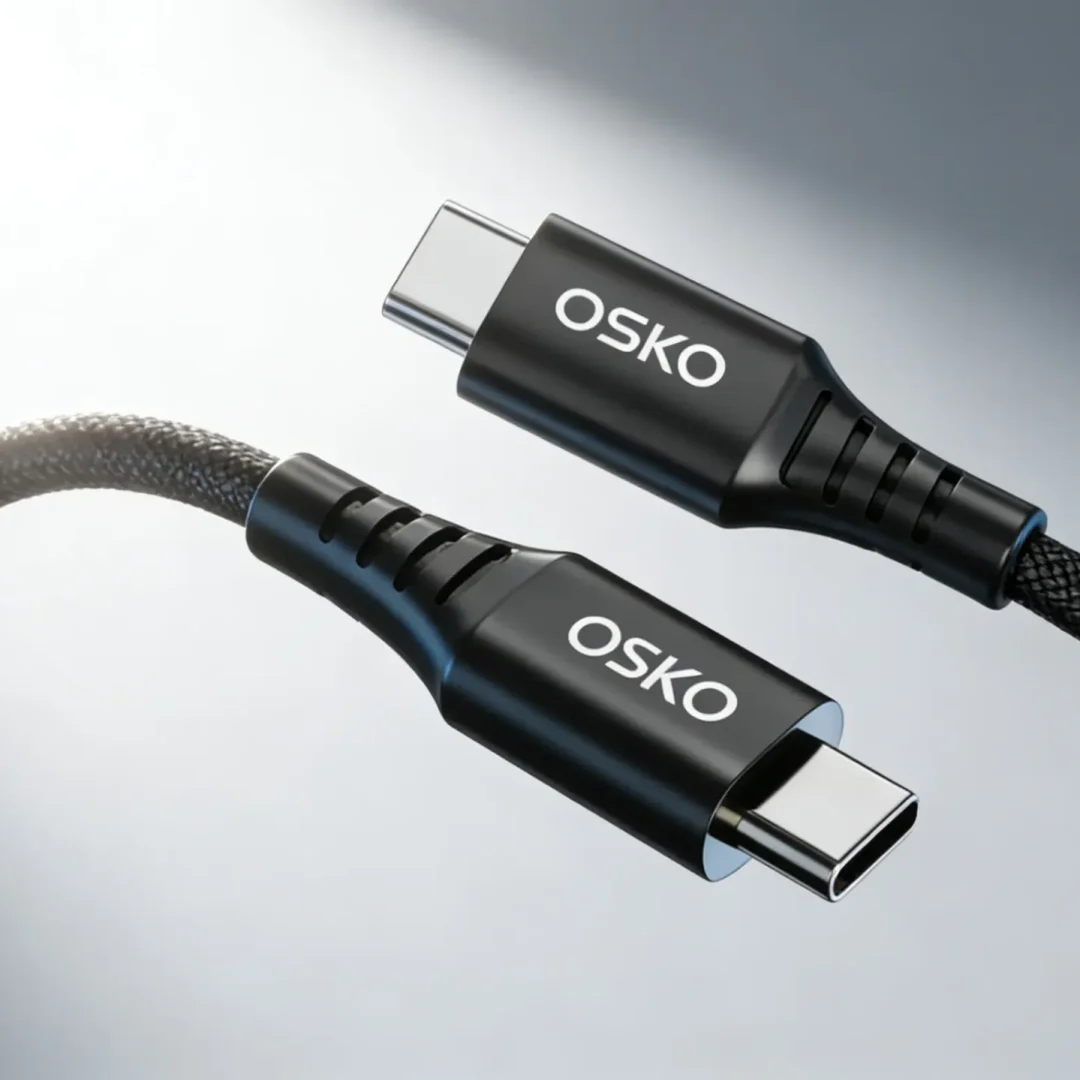
| Nylon braid | Abrasion resistance and premium appearance | Premium retail and OEM |
For brands targeting premium accessory buyers, a 3ft braided Lightning cable can provide a stronger visual and tactile product proposition than a basic PVC cable.
However, the outer jacket does not determine charging or data performance by itself.
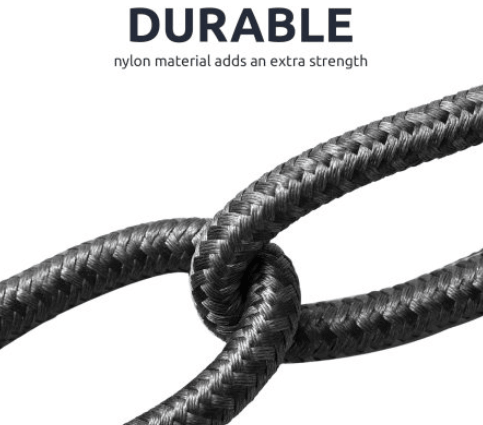
Why Nylon Braided Lightning Cables Are Popular
Nylon braiding is increasingly used in premium charging accessories because it combines mechanical protection with a more premium retail appearance.
Potential benefits include:
Better abrasion resistance
Improved handling
Reduced visible surface wear
More premium appearance
Better suitability for frequent travel
Stronger differentiation on e-commerce listings
A braided structure may also make the cable easier to manage during daily use.
However, the braid should not be described as an electrical shield unless the cable includes a separate conductive shielding layer.
This distinction is important for technical product pages.
Durability Testing Matters More Than Marketing Numbers
Some cable manufacturers advertise 20,000, 30,000, or even 50,000 bend cycles.
A bend-cycle number only has meaning when the testing conditions are defined.
A professional buyer should ask:
What bending angle was used?
What bending radius?
Was the cable energized?
What load was applied?
What constitutes failure?
Were the connector and strain relief included?
Was the test performed on samples or production batches?
For a durable Lightning cable manufacturer, test methodology is more useful than simply advertising a large cycle number.
MFi and Apple Compatibility: What OEM Buyers Need to Know
MFi is one of the most important considerations when sourcing Lightning accessories.
Apple’s official MFi documentation states that the program covers companies developing or manufacturing accessories that use MFi licensed technologies. It also includes Lightning connectors and authentication-related components among the technologies/components covered by the program.
Apple also distinguishes MFi accessories from ordinary USB-C charging accessories that do not use MFi licensed technologies.
This means buyers should not treat “Apple compatible” and “MFi licensed” as interchangeable marketing terms.
What Should a Buyer Verify?
For an OEM Lightning cable project, ask the supplier:
Is the manufacturer an MFi participant where required?
Is the specific product covered by the applicable MFi requirements?
Are the relevant Apple components sourced through authorized channels?
Can the supplier provide appropriate documentation?
Who is responsible for certification and production compliance?
Is the product permitted to use Apple-related MFi branding?
Apple explains that MFi certification involves product planning, development, testing, certification, and mass production after approval.
Apple also states that MFi finished goods sold by distributors or resellers should be sourced from an authorized MFi manufacturer.
For a brand owner, this makes supplier verification much more important than simply seeing “MFi” printed on a quotation.
Fast Charging and Lightning Cable Performance
Fast charging is another area where product pages often make overly broad claims.
A Lightning cable does not independently determine charging speed.
Actual charging performance depends on the complete charging system:
Power adapter + charging protocol + cable + device + connector implementation
For example, a cable may be physically capable of carrying a particular current, but the connected charger and Apple device determine the actual charging behavior.
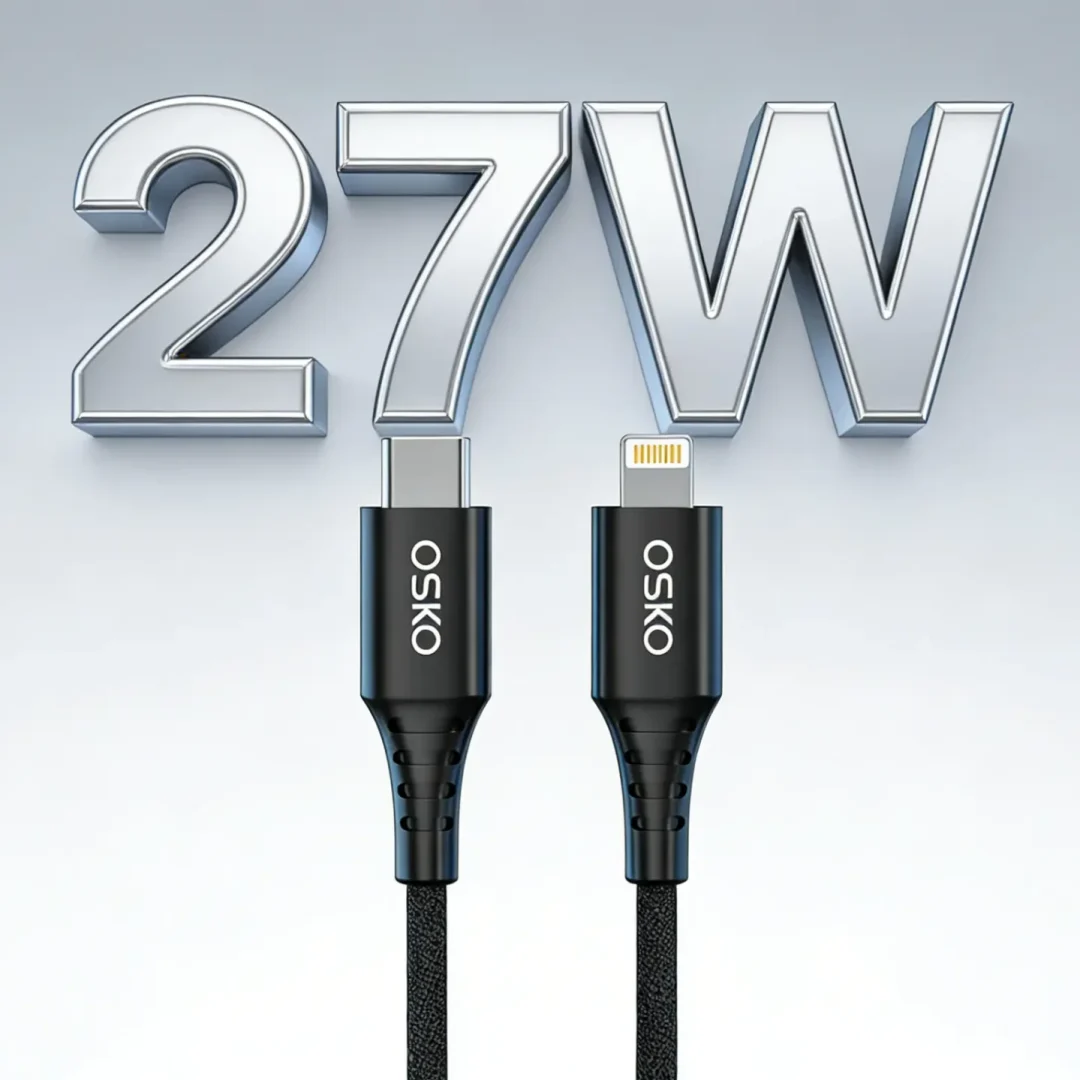
Apple also recommends using appropriate power adapters and compatible cables for fast charging. For current Apple devices, exact charging capability varies by model and charging configuration.
For this reason, an OEM product page should avoid statements such as:
“Every Lightning cable provides 20W fast charging.”
Instead, specify the tested configuration and intended use.
For example:
USB-C to Lightning cable tested with a compatible USB-C PD power adapter and supported Apple device.
This is much stronger technically and commercially.

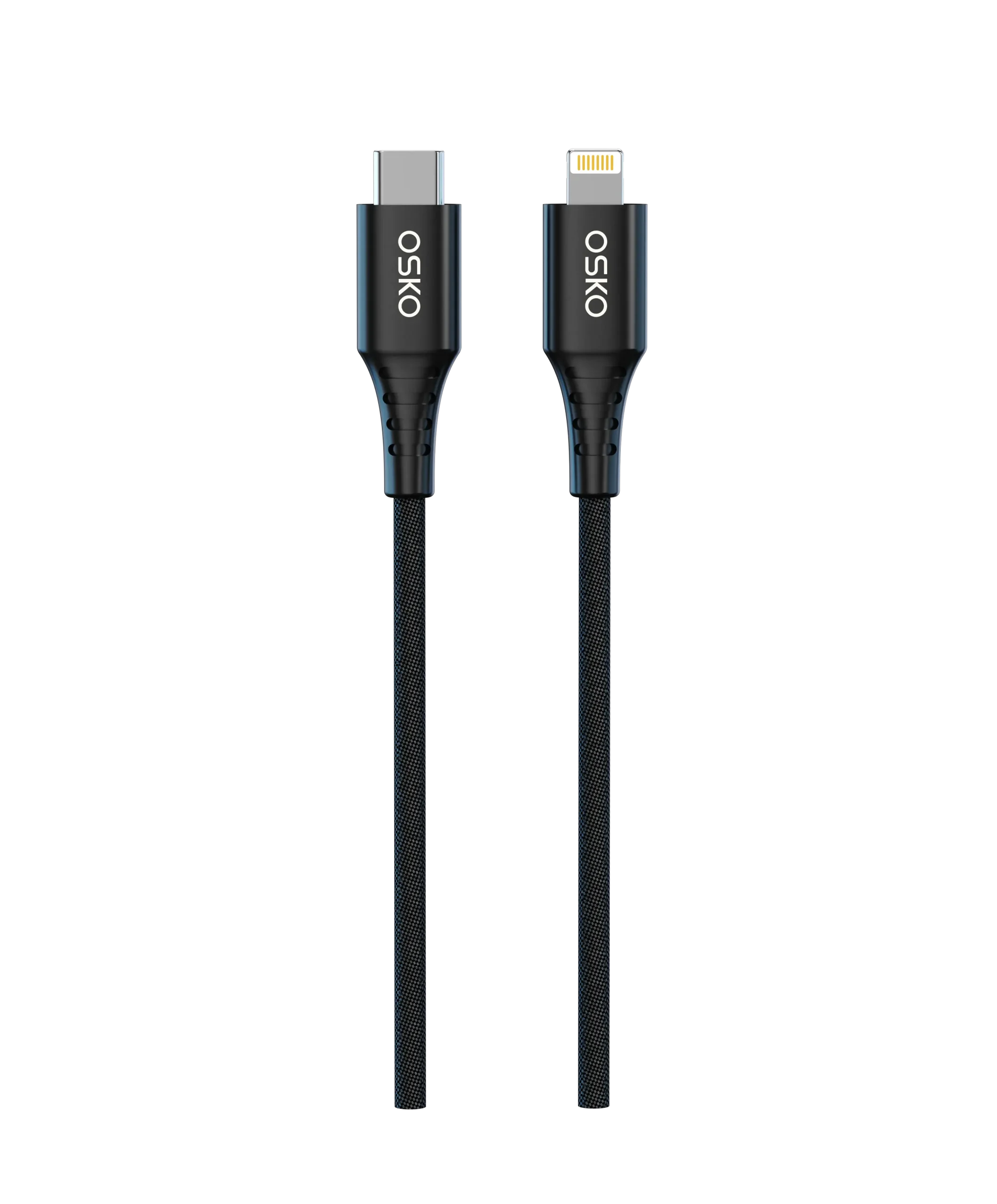
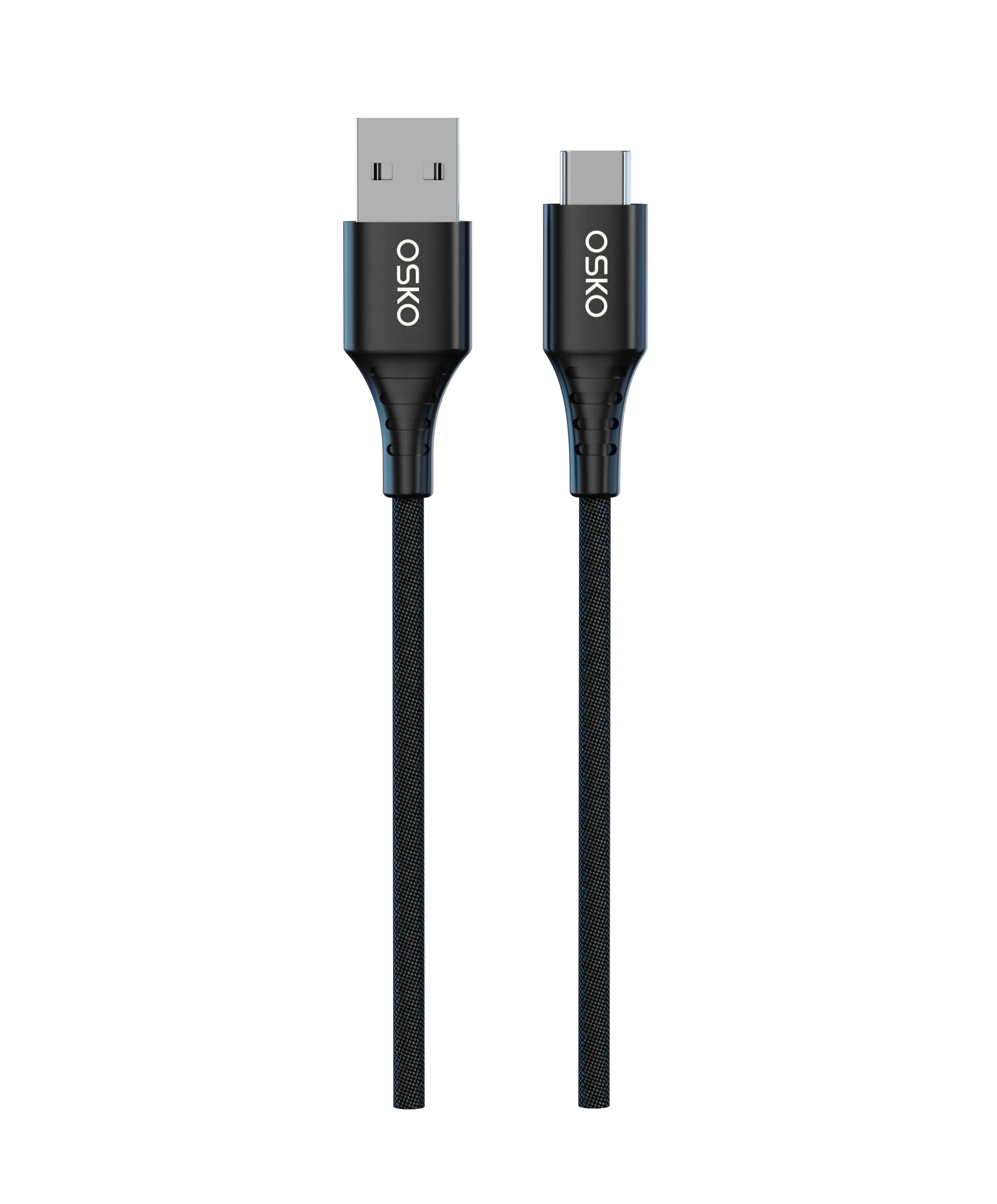
USB-A to Lightning vs USB-C to Lightning
OEM buyers often need both configurations.
| Cable Type | Typical Application | Key Consideration |
|---|---|---|
| USB-A to Lightning | Legacy USB-A chargers, computers, cars | Compatible with USB-A source |
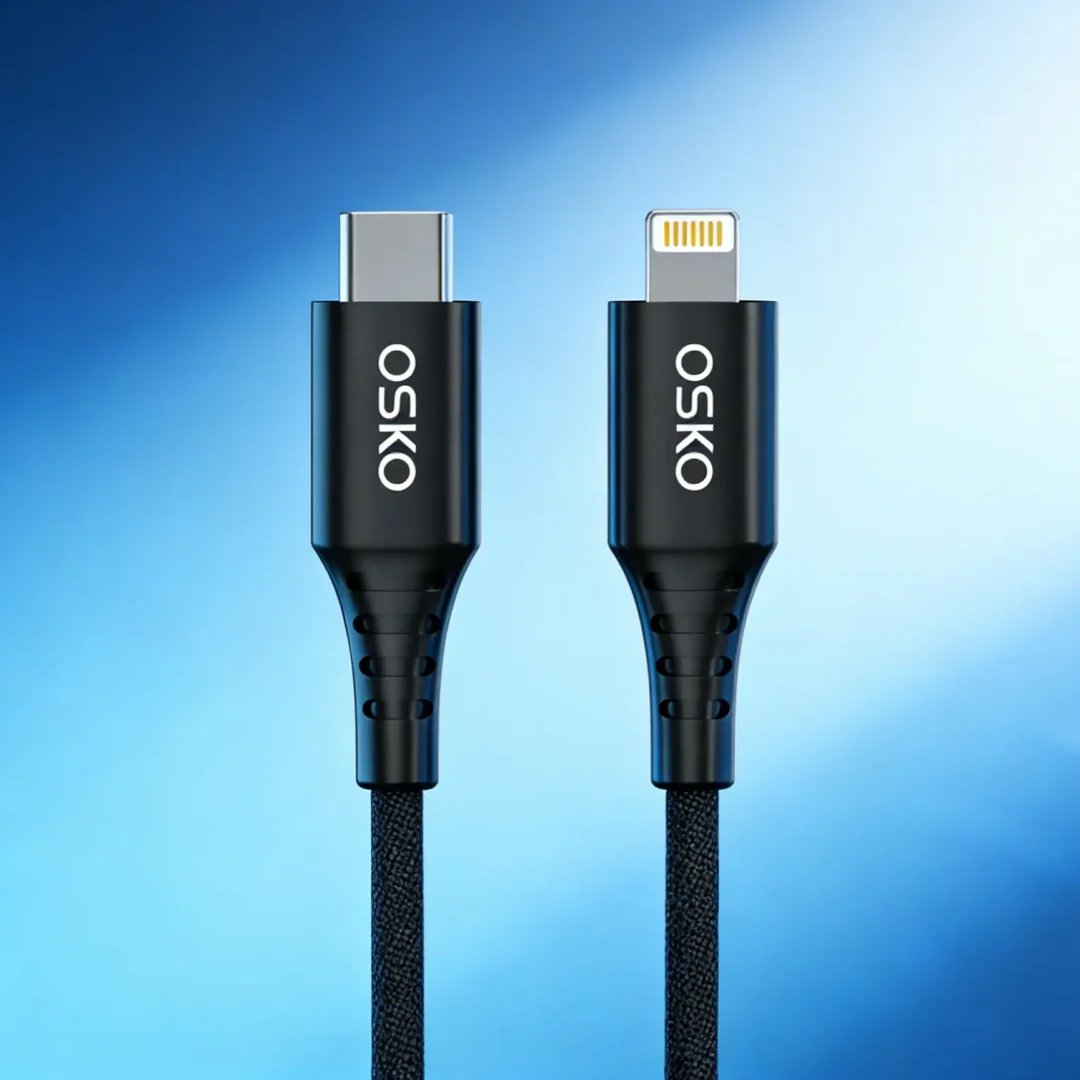
| USB-C to Lightning | USB-C chargers and modern power adapters | Better fit for newer USB-C charging ecosystems |
The correct configuration depends on the customer’s charger and device ecosystem.
Apple itself documents USB-C to Lightning use with USB-C power adapters and Lightning devices.
For retailers, offering both configurations can help address different customer segments.
For OEM brands, it may also be more efficient to develop a product family using the same jacket, packaging language, and visual identity across both connector configurations.
Connector Engineering
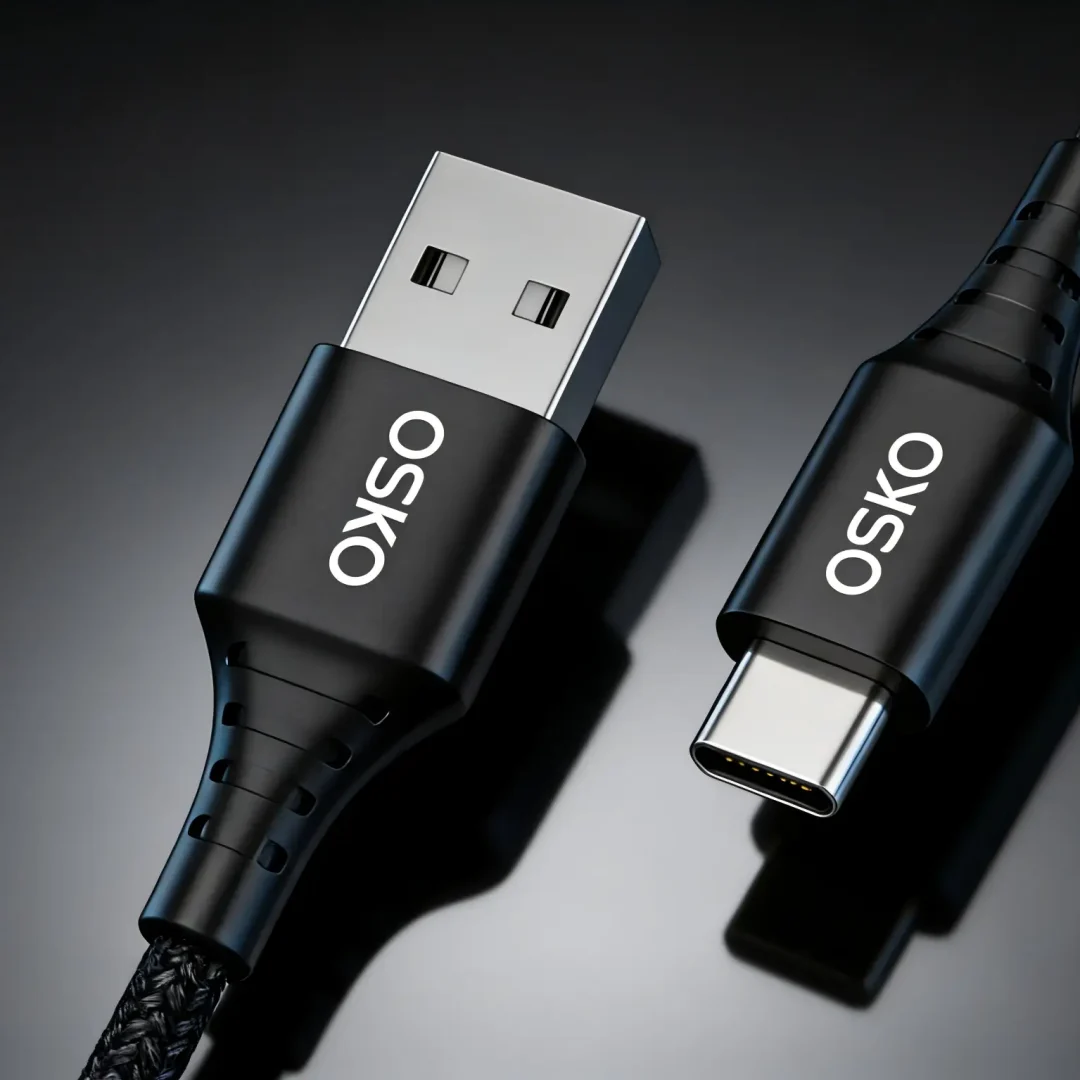
The connector is one of the most mechanically stressed areas of a charging cable.
Repeated insertion, pulling, bending, and twisting can concentrate stress near the connector housing.
A high-quality Lightning cable supplier should control:
Connector dimensional accuracy
Contact quality
Termination
Housing design
Overmolding
Strain relief
Cable exit geometry
The strain relief should gradually transfer bending forces from the flexible cable into the rigid connector body.
For a 3ft cable used at a desk or in a car, connector durability can have a significant effect on customer satisfaction because users often bend the cable directly behind the connector.
Shielding and Data Stability
Charging cables may also carry data signals.
Depending on the cable architecture, internal shielding may include:
Aluminum foil
Conductive braid
Drain wire
Twisted signal structures
Multiple insulation layers
Shielding is primarily related to signal integrity and electromagnetic interference control.
It should not be marketed as a direct method of increasing charging wattage.
Similarly, nylon braiding should not be described as EMI shielding unless the braid is conductive and specifically designed as part of the shielding system.
This distinction helps procurement teams compare premium braided Lightning cables based on engineering specifications rather than appearance.
OEM Customization for 3ft Lightning Cables
One of the main advantages of working with an experienced Chinese OEM manufacturer is customization.
A custom Lightning cable manufacturer China can potentially customize several aspects of the product.
Cable Length
Common retail lengths include:
1ft
3ft
6ft
10ft
The 3ft configuration is especially useful for compact retail products and everyday charging.
Cable Color
Popular options include:
Black
White
Gray
Blue
Red
OEM buyers may also request color matching according to a brand’s packaging or product identity.
Logo Customization
Depending on the connector design, manufacturers may offer:
Molded logo
Laser logo
Printed logo
Custom connector housing
Packaging
Private-label packaging may include:
Retail boxes
Hanging boxes
Blister packaging
Eco-oriented paper packaging
Multi-pack packaging
Gift-style packaging
For Amazon and Shopify brands, packaging can also be designed around barcode, SKU, product photography, installation instructions, and marketplace requirements.
3ft Lightning Cable OEM for Wholesale Buyers
Wholesale buyers typically care about five areas:
Product consistency
Unit cost
MOQ
Lead time
Documentation
A supplier that offers a low unit price but produces inconsistent connector quality can create a higher total cost after returns, replacements, customer-service cases, and marketplace reviews are considered.
For this reason, a professional Lightning cable wholesale supplier should provide a controlled process from sample approval to mass production.
A useful procurement workflow is:
Product Specification
Define:
Cable type
3ft length
Charging requirement
Data requirement
Jacket material
Color
Connector
Packaging
Sample Approval
Before production, inspect:
Connector fit
Cable flexibility
Jacket quality
Logo placement
Packaging
Charging behavior
Data function
Mass Production
Production should follow the approved sample and specification.
Final QC
Inspect:
Appearance
Connector
Continuity
Charging
Data
Cable length
Packaging
Quantity
This process reduces the risk of receiving a mass-production product that differs from the approved sample.
How to Evaluate a Lightning Cable Factory in China
Searching for a Lightning cable factory China supplier can produce hundreds of results, but factory capability varies significantly.
Before placing an order, evaluate the following.
Manufacturing Capability
Ask whether the company actually manufactures the cable or mainly acts as a trading company.
Useful questions include:
Where is production located?
What cable types are manufactured?
What is the monthly capacity?
What OEM projects have been completed?
What is the standard MOQ?
Can samples be provided?
Quality Control
A serious supplier should have a documented QC process covering:
Incoming materials
Connector inspection
Conductor inspection
Continuity
Charging performance
Data testing where applicable
Pull testing
Bend testing
Appearance inspection
Packaging inspection
Engineering Support
OEM buyers may also need help with:
Product specifications
Cable construction
Connector selection
Packaging
Sample development
Production validation
Documentation
This is where an experienced OEM manufacturer can provide more value than a simple trading supplier.
Compliance for North America and Europe
Compliance should be evaluated according to the actual product, market, configuration, and applicable legislation.
The original approach of simply listing “CE + RoHS + FCC + REACH + ISO9001 + MFi” as product certifications is too broad.
MFi
MFi is Apple’s accessory program for licensed technologies and components. It is not equivalent to CE or RoHS.
CE
CE marking applies where relevant EU legislation requires it. It is not a generic quality certificate or an EU government approval label. EU guidance states that CE marking is required only for products covered by harmonized EU rules that specifically mandate it.
RoHS
EU RoHS restricts specified hazardous substances in electrical and electronic equipment. It is a regulatory requirement rather than a generic factory-quality certificate.
FCC
For US sales, buyers should determine which FCC requirements apply to the actual product configuration rather than assuming that every passive charging cable carries the same certification obligation.
REACH
For European supply chains, buyers should evaluate applicable REACH obligations and documentation according to the product and substances involved.
ISO 9001
ISO 9001 relates to a quality-management system. It should not be presented as proof that an individual cable model is electrically or Apple-certified.
A professional supplier should provide the documents relevant to the actual product and destination market.
Market-Specific Sourcing Intent
A strong SEO page should reflect how buyers in different markets search for suppliers.
United States
US buyers commonly use commercial terms such as:
3ft Lightning cable wholesale
Lightning cable supplier USA
MFi Lightning cable manufacturer
bulk Lightning charging cables
private label Lightning cables
Lightning cable manufacturer China
Lightning cable OEM supplier
For US e-commerce buyers, product consistency, packaging, MOQ, shipping, and compatibility claims are often central purchasing considerations.
Germany
German procurement searches may include:
Lightning Kabel Großhandel
Lightning Kabel Hersteller
Lightning Kabel Lieferant
Lightning Ladekabel Großhandel
MFi Lightning Kabel
Lightning Kabel China Hersteller
Technical documentation, product consistency, and EU compliance information should therefore be easy to find on the page.
Australia
Potential commercial searches include:
Lightning cable wholesale Australia
Lightning cable supplier Australia
MFi Lightning cable
braided Lightning cable wholesale
bulk Lightning cables
Lightning cable manufacturer China
Durability, travel use, retail packaging, and wholesale supply are useful content angles.
Netherlands
Dutch buyers may combine Dutch and English:
Lightning kabel groothandel
Lightning kabel leverancier
Lightning laadkabel
MFi Lightning kabel
Lightning cable wholesale Europe
Lightning cable supplier Netherlands
For European B2B buyers, technical documentation and clear product specifications can be important conversion factors.
Engineering Case Study: 3ft Private-Label Lightning Cable
Consider a representative OEM project for a European online electronics retailer.
The buyer wanted a compact 3ft Lightning cable positioned above entry-level marketplace products.
Buyer Requirements
The product needed:
3ft length
Black braided jacket
Premium connector appearance
Private-label packaging
Consistent production quality
Appropriate Apple compatibility program requirements
Retail-ready presentation
Engineering Challenges
The project needed to balance:
Compact size
Connector durability
Flexible handling
Retail appearance
Electrical performance
Production consistency
The buyer’s previous product had received complaints around connector durability and inconsistent packaging.
OSKO Approach
OSKO approached the project as an integrated product-development program.
The process included:
Cable construction review
Connector specification
Strain-relief optimization
Braided jacket selection
Charging and data validation
Mechanical testing
Packaging development
Production QC
The final product specification was frozen after sample approval so that mass production could be compared against the approved sample.
Procurement Lesson
For a private-label 3ft Lightning cable OEM China project, supplier selection should focus on repeatable manufacturing quality rather than only the initial quotation.
A $0.10 or $0.20 unit-price difference can become insignificant if inconsistent quality creates returns, replacements, customer-service costs, or marketplace complaints.
3ft Lightning Cable Purchasing Checklist
Before placing a bulk order, ask the manufacturer for:
| Category | What to Verify |
|---|---|
| Cable length | Exact 3ft / 0.9m specification |
| Connector | Lightning configuration and supplier |
| Apple program | Applicable MFi status/documentation |
| Charging | Tested charging configuration |
| Data | Supported data performance |
| Conductor | Material, size and resistance |
| Jacket | PVC, TPE or nylon braid |
| Connector housing | Material and construction |
| Strain relief | Mechanical design |
| Testing | Electrical and mechanical QC |
| Packaging | Retail/private label options |
| MOQ | Sample and mass-production MOQ |
| Lead time | Sample and production timing |
| Compliance | Target-market documentation |
| Warranty | Commercial replacement terms |
FAQ: 3ft Lightning Cable OEM and Wholesale Sourcing
Is a 3ft Lightning cable still worth selling?
It can be, depending on the target customer segment and compatible Apple-device demand. Three feet is practical for desks, vehicles, travel kits, and compact retail packaging.
Are all Lightning cables MFi certified?
No. Buyers should not assume that every cable with a Lightning connector is MFi-certified. Apple distinguishes accessories using MFi licensed technologies/components and provides specific requirements for MFi participation and certification.
Why is MFi important for Lightning cable OEM sourcing?
MFi can be relevant when the accessory uses Apple MFi licensed technologies or components. For OEM brands, the supplier’s program status, applicable product requirements, and documentation should be verified before production.
Can a Chinese factory manufacture MFi Lightning cables?
Yes, companies can participate in the MFi ecosystem as accessory developers, manufacturers, contract manufacturers, or ODMs when they meet Apple’s program requirements. Apple specifically lists contract manufacturers and ODMs among the roles that can participate.
Can distributors buy MFi Lightning cables directly?
Apple states that distributors and resellers seeking MFi finished goods should source those products from an authorized MFi manufacturer.
Are braided Lightning cables better than PVC cables?
Braided cables can provide better abrasion resistance and a more premium appearance, but the braid alone does not determine electrical performance or Apple compatibility.
Does a 3ft cable charge faster than a 6ft cable?
Not automatically. A shorter cable can have lower resistance when construction is otherwise comparable, but actual charging performance depends on the entire charging system and cable design.
Can I customize the logo on a Lightning cable?
OEM manufacturers may offer molded, printed, or laser logo options depending on the connector design and production process.
Can a Lightning cable have custom packaging?
Yes. OEM packaging can include retail boxes, blister packs, multi-pack packaging, eco-oriented paper packaging, and other private-label formats.
What is the MOQ for OEM Lightning cables?
MOQ varies according to the cable configuration, Apple-related program requirements, logo customization, packaging, and production process. Buyers should request a project-specific quotation rather than relying on a generic MOQ.
Can OSKO provide samples before mass production?
Yes. For OEM projects, sample approval should be completed before mass production so the final production specification is clearly defined.
What is the difference between USB-A to Lightning and USB-C to Lightning?
The connector on the power-source side is different. USB-A to Lightning is suited to USB-A chargers and ports, while USB-C to Lightning is designed for USB-C power sources and other compatible USB-C equipment.
Can a Lightning cable support fast charging?
Charging performance depends on the cable, power adapter, device, and charging implementation. The cable should be evaluated using a defined charging configuration rather than a generic wattage claim.
Is a nylon braided Lightning cable waterproof?
Nylon braiding does not make a cable waterproof. Water resistance depends on the complete cable construction, connector sealing, materials, and any applicable ingress-protection design.
What should I check before choosing a Lightning cable supplier in China?
Check manufacturing capability, Apple-related program requirements, connector sourcing, cable construction, testing, QC, MOQ, packaging, lead time, documentation, and sample consistency.
Can Lightning cables be sold under a private-label brand?
Yes, private-label programs can include custom cable appearance, logo, packaging, labeling, and other product specifications, subject to applicable Apple program and market requirements.
Summary
Sourcing a 3ft Lightning cable OEM China product requires a much broader evaluation than comparing factory prices.
A reliable OEM program should address:
Apple compatibility requirements
MFi program considerations
Conductor construction
Connector quality
Strain relief
Charging performance
Data performance
Braided or TPE/PVC jacket selection
Mechanical testing
Production QC
Private-label packaging
Target-market compliance documentation
For US, German, Australian, and Dutch buyers, a well-engineered 3ft Lightning cable can still serve useful retail, travel, vehicle, desk, and accessory-bundle applications where compatible Lightning devices remain part of the customer base.
The strongest sourcing strategy is to define the product specification first, validate samples second, and scale production only after quality and documentation have been confirmed.
For brands and distributors, the right MFi Lightning cable manufacturer China partner should provide not only a competitive quotation, but also engineering support, controlled production, testing, customization, and the documentation required for the intended sales market.
OEM and Wholesale Lightning Cable Solutions from OSKO
OSKO is a professional USB cable manufacturer specializing in OEM and ODM charging cable solutions for brands, wholesalers, distributors, and retail businesses.
Available Lightning cable solutions include:
3ft Lightning cables
USB-A to Lightning cables
USB-C to Lightning cables
Nylon braided Lightning cables
Custom cable lengths
Custom colors
Custom logos
Private-label packaging
Retail multi-pack solutions
OEM and ODM development
Sample testing
Production quality control
For a custom project, buyers can provide:
Cable type + length + quantity + charging requirement + logo + packaging + target market
OSKO can then evaluate the appropriate product configuration and provide a project-specific quotation.
Request samples, technical specifications, applicable Apple/MFi documentation, and OEM pricing from OSKO.