















Introduction: Why Charging Cables Still Matter in a Wireless World
Modern technology continues moving toward a more wireless experience.
Wireless earbuds replaced many traditional headphone cables. Wi-Fi reduced dependence on network cables. Bluetooth accessories made device connections easier than ever.
Because of this trend, many consumers expected charging cables to eventually disappear.
The idea seemed simple:
Place your smartphone on a charging surface, and it automatically receives power.
No searching for cables.
No tangled wires.
No damaged charging ports.
Wireless charging has certainly changed the way people interact with their devices. It provides convenience and creates cleaner, more organized spaces.
However, despite years of development, wireless charging has not replaced traditional charging cables.
Smartphones, tablets, laptops, and professional devices still rely heavily on wired charging.
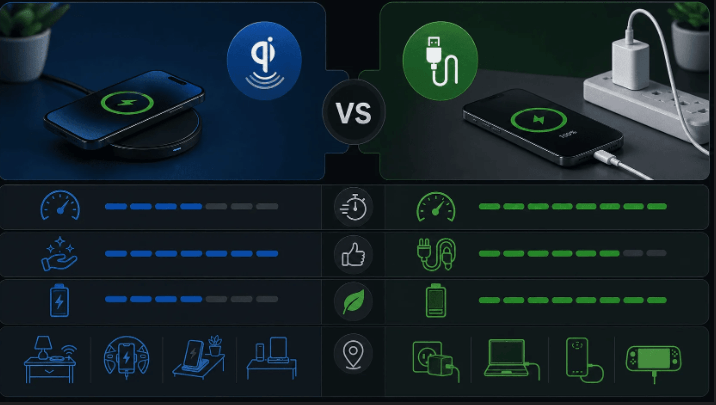
The reason is that wireless and wired charging solve different problems.
Wireless charging focuses on:
Convenience
Simplicity
Cable-free environments
Wired charging focuses on:
Faster charging speed
Higher power delivery
Better energy efficiency
Reliable performance
The future of charging is not necessarily wireless replacing cables. Instead, both technologies are developing together to serve different user needs.
Why Wireless Charging Became Popular
The biggest advantage of wireless charging is convenience.
Traditional charging requires users to connect a cable every time they need power. Although this takes only seconds, it is repeated hundreds of times during a device’s lifetime.
Wireless charging removes this small inconvenience.
Users simply place their phone on a charging pad, charging stand, or compatible surface.
Common wireless charging applications include:
Bedroom charging stations
Office desks
Vehicle charging systems
Public charging areas
For example, placing a smartphone on a wireless charging stand beside a bed creates a simple nighttime charging routine.
In offices, wireless charging helps reduce visible cable clutter and keeps workspaces cleaner.
For vehicles, wireless charging provides a convenient way to maintain battery levels during daily driving.
These benefits explain why wireless charging continues growing.
However, convenience is not the same as performance.
Wireless Charging vs Wired Charging: The Main Differences
Understanding the difference between wireless charging and wired charging requires looking at several important factors.
1. Charging Speed: Why Wired Charging Is Still Faster
The biggest advantage of a charging cable is speed.
A wired connection creates a direct path between the charger and the device battery.
This allows more efficient power transfer.
Modern USB-C Power Delivery (USB-C PD) charging cables can support high power levels, including:
60W charging
100W charging
140W charging
240W charging
This makes USB-C cables suitable for:
Smartphones
Tablets
Gaming devices
Laptops
Wireless charging has improved significantly, but it still faces limitations because energy must transfer through electromagnetic fields instead of a direct connection.
For users who need quick battery recovery, wired charging remains the preferred solution.
Example:
A user preparing to leave home with a low battery may prefer a fast USB-C charging cable because several minutes of charging can provide significant battery improvement.
Wireless charging is better suited for situations where speed is less important, such as overnight charging.
2. Energy Efficiency: Wired Charging Has Less Power Loss
Wireless charging works through electromagnetic induction.
The charging pad creates an electromagnetic field, and the receiving coil inside the device converts that energy into electrical power.
During this process, some energy is lost.
This energy loss usually appears as heat.
Wired charging is generally more efficient because electricity travels directly through the cable.
This difference becomes more important when charging:
Larger batteries
Tablets
Laptops
High-performance devices
For high-power applications, efficiency directly affects charging speed, temperature control, and energy consumption.
3. Heat Management: Why Wireless Charging Can Become Warm
Heat is another important factor.
During wireless charging, both the charging pad and device may generate additional heat.
When temperature increases, many smartphones automatically reduce charging speed to protect battery health.
This means wireless charging performance can change depending on:
Device temperature
Charger design
Alignment between coils
Charging environment
A high-quality wired charging system also produces heat, but better cable design and efficient power delivery help maintain stable charging performance.
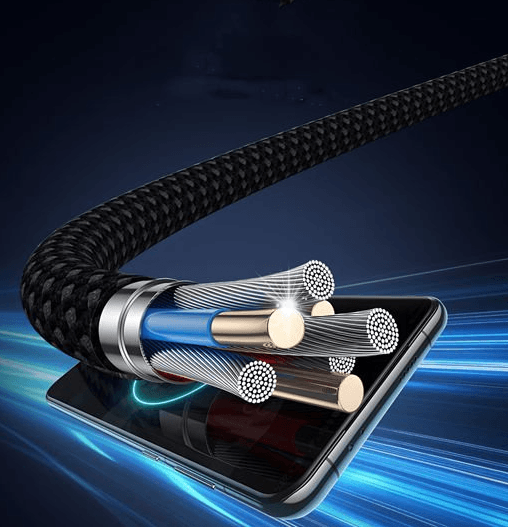
Modern USB-C charging cables use technologies such as:
Better conductor materials
Improved shielding
E-Marker chips
Reinforced connector structures
to support safer power transmission.
4. Device Usage: Charging Flexibility Matters
Wireless charging usually requires the device to remain positioned on the charging surface.
If the user picks up the phone, charging may stop.
This can become inconvenient when:
Watching videos
Using navigation
Answering calls
Playing games
A charging cable provides more freedom.
Users can continue using their smartphone while charging.
This is especially important for:
Long flights
Road trips
Office work
Emergency charging situations
A reliable USB-C cable allows users to charge and use devices simultaneously.
Why USB-C Charging Cables Are Still Essential
Although wireless charging has become popular, USB-C charging cables remain one of the most practical charging solutions.
The reason is simple:
A cable provides universal compatibility.
A single USB-C cable can often support:
Smartphones
Tablets
Power banks
Laptops
Gaming devices
Modern USB-C cables also provide advantages in professional environments.
For example:
A laptop user may need a 100W USB-C PD cable to charge a computer while transferring data.
A content creator may require a high-speed USB-C cable for external SSD connections.
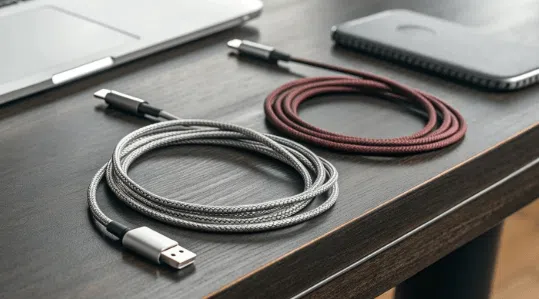
A traveler may prefer a durable braided USB-C cable that survives frequent packing and transportation.
Wireless charging cannot replace these use cases completely.
Engineering Case Study: OSKO USB-C Cable Solution for Australian Travel Accessory Brand
An Australian travel accessory company wanted to develop a durable charging cable designed for frequent travelers.
Their customers included:
Business travelers
Digital nomads
Outdoor users
The company identified several problems:
Standard cables failed after repeated bending
Travelers needed longer cable options
Customers wanted fast charging compatibility
Packaging needed clear charging specifications
OSKO engineering team developed a customized USB-C charging cable solution with:
Reinforced connector design
Nylon braided outer jacket
USB-C PD compatibility
Customized 1m and 2m lengths
OEM packaging support
The cable was tested for:
Bending durability
Charging stability
Connector strength
Daily travel usage conditions
The final product provided a reliable charging solution for international customers who needed performance beyond basic wireless charging.
This example shows that charging cables are not outdated accessories. They remain essential engineering products designed around real-world requirements.
Will Wireless Charging Replace USB-C Cables in the Future?
The answer is unlikely to be a complete replacement.
Instead, charging technology will probably develop into a combination of wired and wireless solutions.
Wireless charging will continue improving in:
Convenience
Charging distance
Efficiency
Integration into furniture and vehicles
Wired charging will continue leading in:
High-speed charging
Laptop power delivery
Professional applications
Reliable performance
Technology history shows that newer solutions do not always eliminate older ones.
Streaming did not eliminate all physical media.
Digital cameras did not eliminate every traditional camera.
Wireless charging will not necessarily eliminate cables because cables still solve important problems.
How to Choose Between Wireless Charging and Charging Cables
Choosing the right charging method depends on your situation.
Choose Wireless Charging If You Need:
Convenient daily charging
Cleaner desk setup
Nightstand charging
Less cable clutter
Choose USB-C Charging Cables If You Need:
Fast charging
Laptop charging
Travel flexibility
Maximum efficiency
Reliable performance
For most users, the best solution is combining both.
A wireless charger can provide convenience at home, while a USB-C fast charging cable provides power when speed matters.
Why Quality USB-C Cable Manufacturing Matters
Charging cables are no longer simple accessories.
A modern charging cable requires careful engineering.
Important factors include:
Power capability
Signal stability
Material quality
Connector durability
Safety testing
For brands developing charging products, selecting an experienced OEM USB cable manufacturer helps ensure consistent quality.
OSKO specializes in custom USB cable manufacturing, supporting:
OEM/ODM production
Custom lengths
Custom materials
Branding solutions
Global market requirements
Reliable cable design remains essential as charging technology continues evolving.
FAQ: Wireless Charging vs Charging Cable
Is wired charging faster than wireless charging?
Yes. Wired charging is generally faster because it transfers power directly through a physical connection with less energy loss.
Will wireless charging replace USB-C cables?
Wireless charging is unlikely to completely replace USB-C cables because wired charging still provides advantages in speed, efficiency, and high-power applications.
Why does my phone charge slower wirelessly?
Wireless charging transfers energy through electromagnetic fields, which creates additional efficiency limitations and heat compared with wired charging.
Are USB-C cables better than wireless chargers?
It depends on your needs. USB-C cables are better for fast charging and high-power devices, while wireless chargers provide more convenience.
Can USB-C cables charge laptops?
Yes. USB-C PD cables with appropriate power ratings can charge many modern laptops.
What is the best USB-C cable for fast charging?
A high-quality USB-C PD cable with sufficient wattage, reliable materials, and proper certification is recommended for fast charging applications.
Do wireless chargers damage phone batteries?
Modern smartphones manage charging temperature and power automatically. However, excessive heat during charging can affect long-term battery performance.
Conclusion: The Future of Charging Is Choice, Not Replacement
Wireless charging has changed how people think about powering devices.
It offers convenience, simplicity, and cleaner everyday setups.
However, charging cables continue to provide advantages that wireless technology has not fully replaced:
Faster charging
Higher power delivery
Better efficiency
Greater compatibility
The future of charging is not about wireless replacing wired technology.
Instead, the best charging experience will come from using the right solution for the right situation.
Wireless charging makes daily life easier.
USB-C charging cables make high-performance charging possible.
Together, they create a more flexible and efficient charging ecosystem for modern devices.
