
Introduction
The growing adoption of USB-C charging technology has increased demand for reliable and efficient 60W USB-C cables across smartphones, tablets, lightweight laptops, portable gaming devices, and charging accessories. While many USB-C cables appear similar externally, their charging capability, durability, and engineering quality can vary significantly.
Choosing the wrong cable often results in unstable charging, slow power delivery, overheating, connector damage, or reduced product lifespan. These issues become especially problematic in commercial applications such as OEM accessory projects, wholesale distribution, automotive charging systems, and retail charging products.

To avoid performance failures, buyers must evaluate multiple technical factors including conductor specifications, cable material structure, PD charging compatibility, connector engineering, and certification compliance. A properly engineered 60W USB-C cable should provide stable power delivery while maintaining long-term durability under repeated daily use.
This becomes increasingly important in North American and European markets, where consumers expect charging accessories to support modern fast charging ecosystems while meeting strict regulatory requirements.
This guide explains how to professionally select the right 60W USB-C cable for retail, OEM, ODM, wholesale, desk charging, automotive charging, and travel charging applications.
Applicable Scenarios
Desk Charging Cable Systems
Desk charging systems remain one of the most common applications for 60W USB-C cables.
Modern workstations often include:
Smartphones
Tablets
Lightweight laptops
Wireless charging pads
USB-C docking stations
Under continuous daily use, low-quality charging cables frequently experience connector fatigue, unstable charging performance, or cable deformation.
To improve reliability, many buyers now prefer:
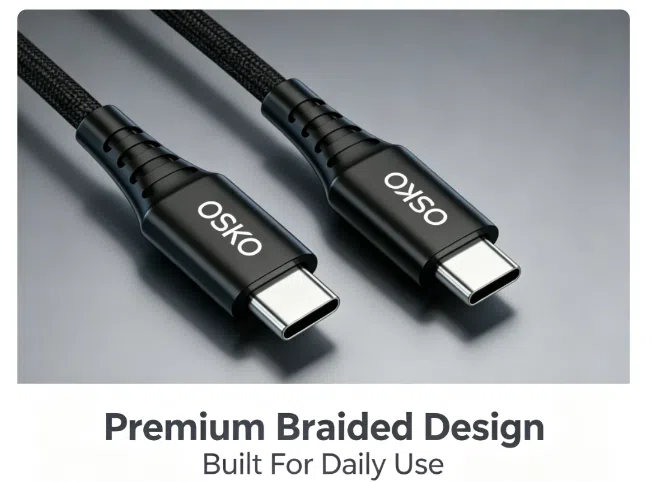
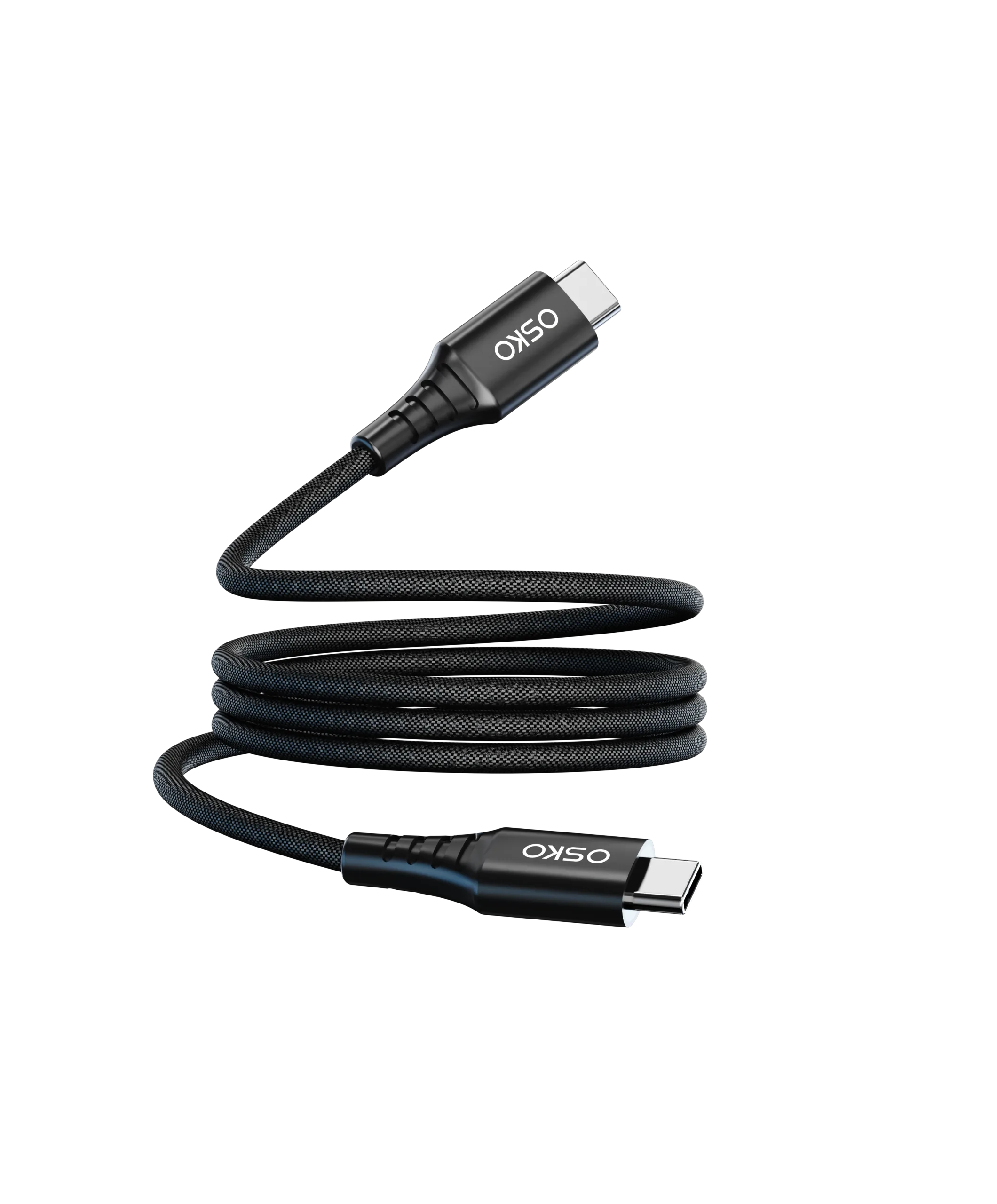
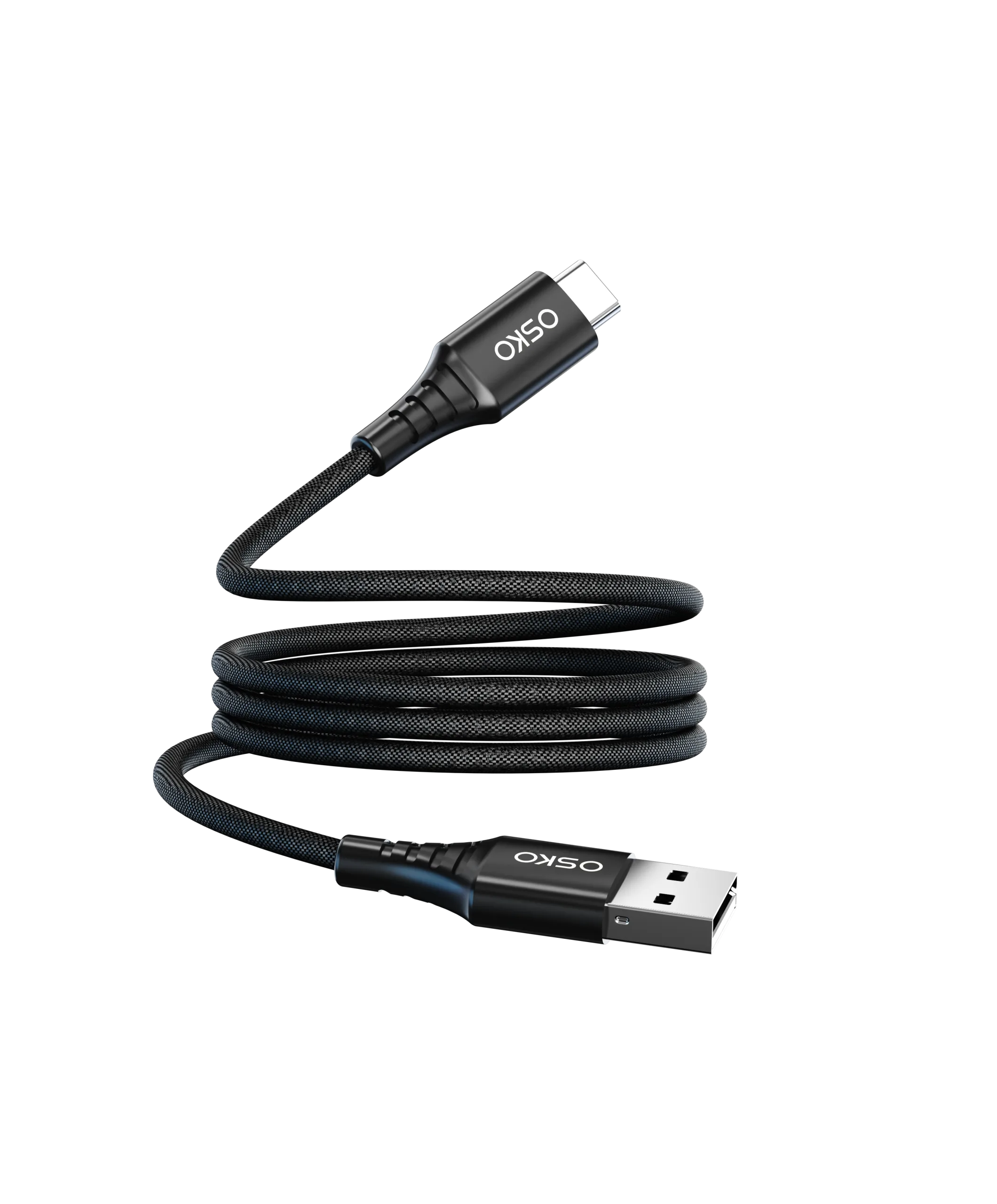
Nylon braided USB-C cables
Reinforced connector structures
Tangle-free cable designs
USB-IF compliant charging cables
Compared with standard PVC cables, heavy duty braided USB-C cables provide improved flexibility and better resistance to abrasion and repeated bending.
This becomes particularly important in office environments where cables remain connected for extended periods throughout the workday.
Travel USB-C Charging Applications
Travel charging environments place additional stress on charging cables.
Frequent packing, bending, and movement often damage low-cost charging cables after short-term use.
To solve this issue, travel accessory brands increasingly source:
Short braided charging cables
Tangle-free cable structures
Reinforced strain-relief designs
Compact USB-C charging solutions
For example, bulk short 0.5ft braided Type C cables are commonly used for portable power banks and compact travel charging kits.
Similarly, tangle-free double-braided USB C cable wholesale products are becoming more popular among travel accessory distributors because they reduce cable damage during transportation.
From an engineering perspective, braided nylon structures improve cable longevity by protecting internal conductors against excessive bending pressure.
Car Charging Cable Systems
Automotive charging systems create unique durability challenges.
Vehicle charging cables must tolerate:
Vibration
Heat exposure
Tight charging spaces
Frequent cable movement
Connector tension
As a result, standard charging cables often fail prematurely inside vehicles.
To improve long-term durability, manufacturers developed:
Braided right-angle USB-C cables
Coiled spring USB-C cables
Reinforced connector housings
Flexible nylon braided structures
For wholesale automotive accessory projects, Braided right angle USB-C cable wholesale products are particularly effective because they reduce stress near charging ports while improving cable management.
Meanwhile, heavy duty coiled USB-C spring cable bulk solutions help reduce dashboard clutter and improve user convenience.
OEM and Wholesale USB Cable Distribution
OEM and wholesale buyers require charging cables that balance cost efficiency, charging performance, durability, and compliance standards.
Unlike retail consumers, wholesale buyers must evaluate:
Product return risk
Certification requirements
Brand customization options
Packaging flexibility
Manufacturing consistency
To support these requirements, professional factories now provide:
OEM ODM custom length USB C cables
White label packaging
Custom braided color options
Custom connector molding
Regional compliance support
For North American and European markets, wholesale buyers increasingly prioritize:
CE certification
RoHS compliance
FCC approval
USB-IF certification
Prop 65 compliance
This becomes especially important for distributors sourcing wholesale 60w braided usb c cable products for retail stores, online marketplaces, and enterprise charging solutions.
Purchase Recommendations
Verify PD Charging Compatibility
The first step in choosing a 60W USB-C cable is confirming PD charging support.
A properly engineered 60W cable should support:
20V/3A power delivery
Stable voltage transmission
Low charging resistance
Consistent thermal performance
Low-quality cables often lack proper internal conductor specifications, leading to charging instability and reduced charging speed.
To improve compatibility, buyers should verify:
USB Power Delivery support
E-marker chip integration when required
Device charging compatibility
Maximum supported wattage
This is especially important for tablets, lightweight laptops, and gaming handheld devices.
Evaluate Cable Material Quality
Cable material significantly affects operational lifespan.
Standard PVC cables are more likely to experience:
Surface cracking
Tangling
Reduced flexibility
Connector separation
By comparison, durable nylon braided Type C charging cable factory products offer:
Better abrasion resistance
Higher tensile strength
Improved flexibility
Enhanced heat resistance
In practical applications, braided cables maintain structural stability more effectively during long-term desk charging and automotive charging use.
For this reason, heavy duty braided USB-C cable manufacturer products are increasingly preferred by professional buyers.
Analyze Connector Engineering
Connector failure remains one of the most common causes of charging cable replacement.
Repeated insertion and removal gradually weakens low-cost connector joints.
Professional USB-C cable manufacturers improve durability through:
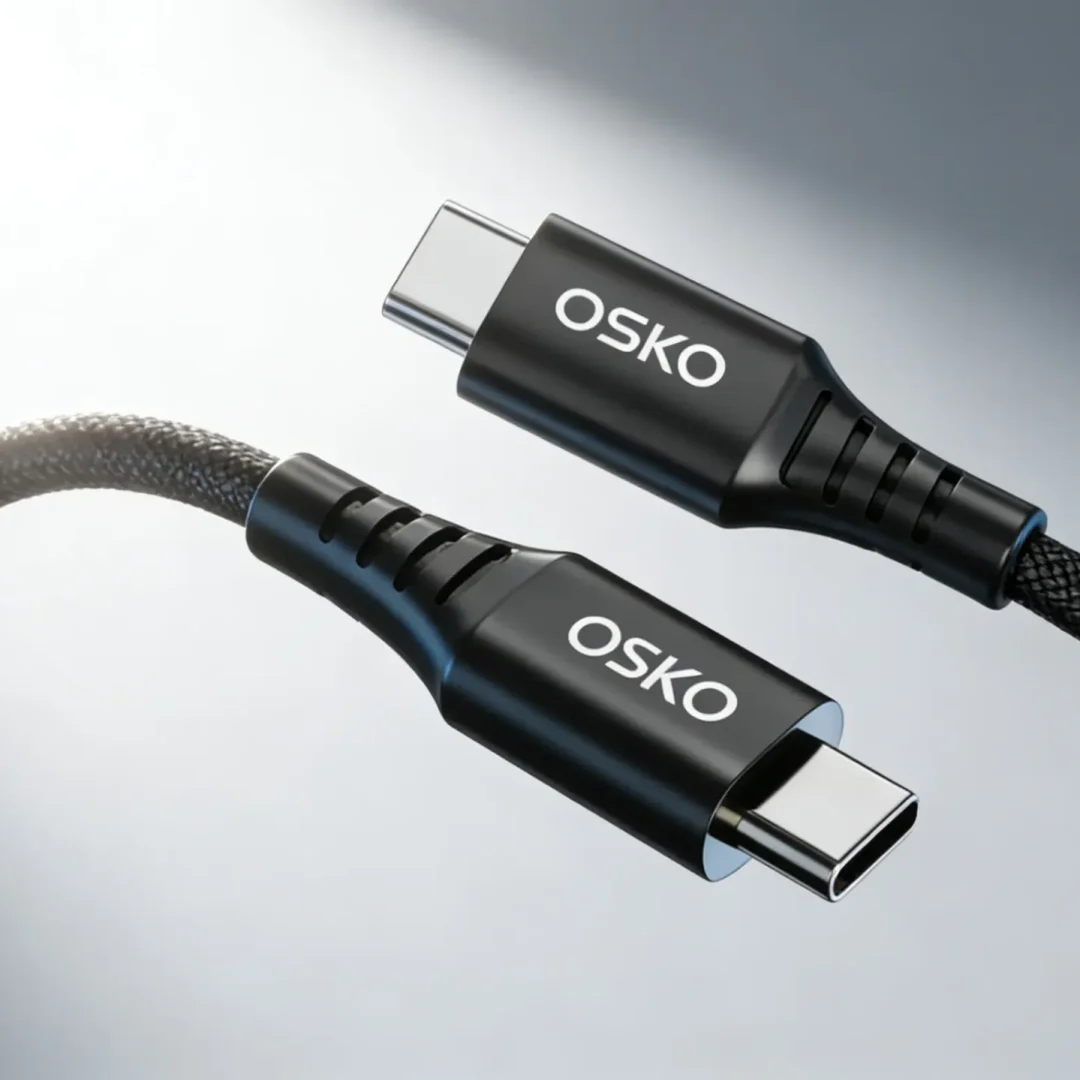
Reinforced aluminum shells
Laser-welded connector joints
Extended strain-relief molding
Gold-plated connector terminals
In compact charging environments such as vehicles or portable charging stations, reinforced connectors significantly improve cable lifespan.
This becomes particularly important for car charging cable applications where cable movement occurs continuously during driving

Check Certification Compliance
Certification compliance is essential for commercial USB-C cable distribution.
Professional buyers should prioritize:
CE certification
RoHS compliance
FCC approval
USB-IF certification
Prop 65 compliance
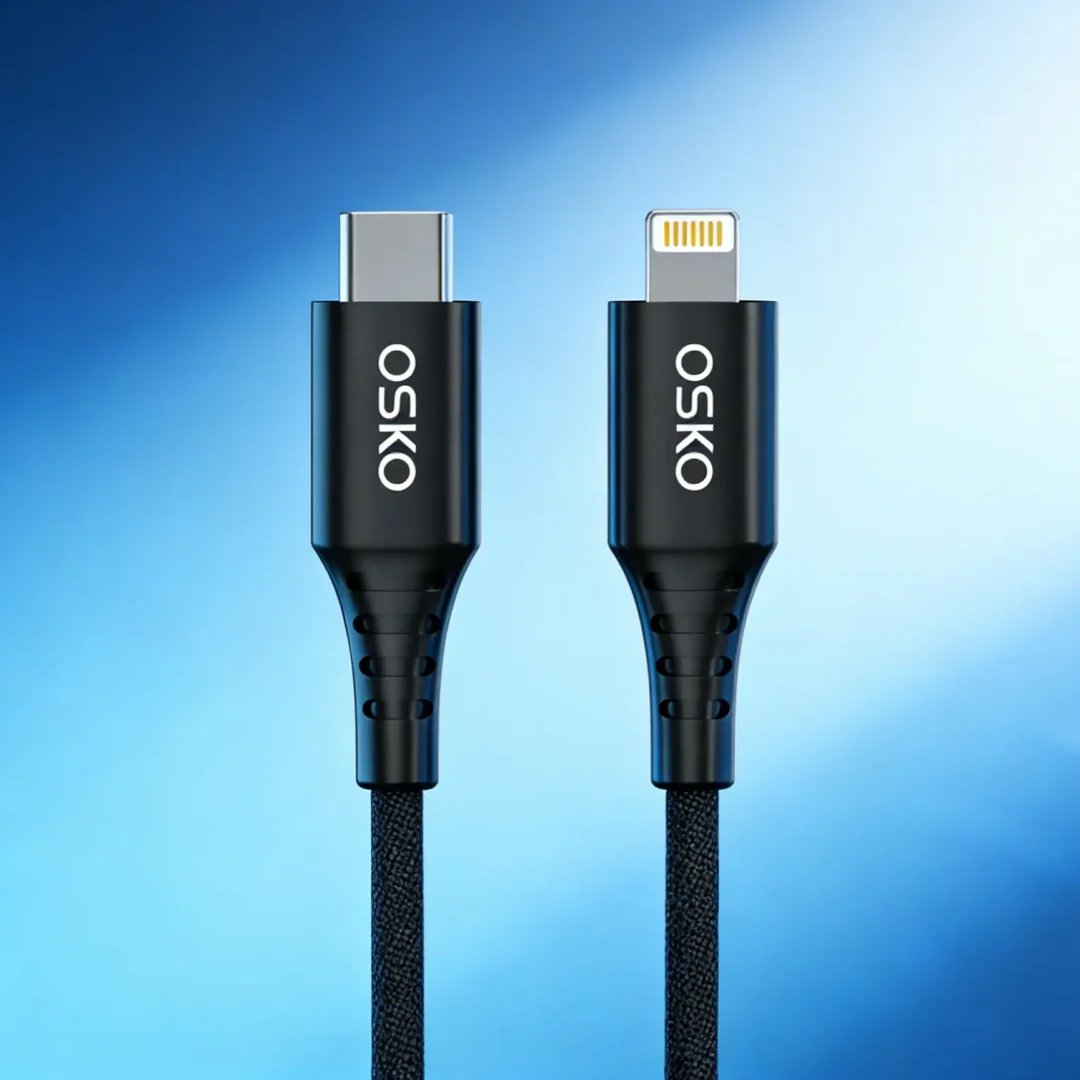
For example, USB-IF compliant Type C cable manufacturer partnerships help ensure interoperability across smartphones, tablets, laptops, and charging adapters.
Similarly, FCC approved nylon braided USB C cable supplier certifications improve compatibility within automotive charging systems and consumer electronics environments.
Compare Recommended 60W USB-C Cable Types
| Cable Type | Length | Material | Recommended Application |
|---|---|---|---|
| USB-C to USB-C Cable | 3ft | Nylon Braided | Travel and portable charging |
| USB-A to USB-C Cable | 6ft | Reinforced Braided | Desk charging systems |
| Right-Angle USB-C Cable | 6ft | Double Braided Nylon | Automotive charging |
| Coiled USB-C Cable | 3ft | Spring Braided Structure | Vehicle charging systems |
| OEM Custom USB-C Cable | Custom Length | Heavy Duty Braided | Wholesale and OEM projects |
FAQ
Is a 60W USB-C cable enough for laptop charging?
Yes. A 60W USB-C cable can support many lightweight laptops, tablets, smartphones, and gaming handheld devices that require up to 60W PD charging.
Why are braided USB-C cables more durable?
Braided cables provide improved abrasion resistance, better bend protection, and stronger external structural support compared with standard PVC charging cables.
Does cable length affect charging speed?
Yes. Longer cables may experience greater resistance if internal conductor specifications are insufficient. High-quality cables use optimized copper gauge design to minimize voltage drop.
What certifications should wholesale buyers verify?
Wholesale buyers should prioritize CE, RoHS, FCC, USB-IF, and Prop 65 certifications to ensure market compliance and charging safety.
Are right-angle USB-C cables better for vehicles?
Yes. Right-angle connectors reduce cable stress near charging ports and improve cable management inside vehicles.
Summary
Choosing the right 60W USB-C cable requires evaluating charging capability, cable materials, connector engineering, certification compliance, and application-specific requirements.
From an engineering perspective, professionally designed braided USB-C cables provide superior charging stability, improved heat resistance, and longer operational lifespan compared with low-cost standard cables. These advantages become particularly important in desk charging systems, travel charging kits, automotive charging environments, and OEM accessory projects.
At the same time, stable 60W PD charging performance depends heavily on conductor quality, optimized wire gauge structure, reinforced connector design, and USB-IF compliant charging architecture.
For OEM, ODM, wholesale, and retail buyers operating within North American and European markets, certification standards including CE, RoHS, FCC, USB-IF, and Prop 65 compliance remain essential for ensuring compatibility, operational safety, and long-term market reliability.
By selecting high-quality 60W USB-C charging cables with reinforced braided construction and certified PD charging support, buyers can improve product durability, reduce return rates, and deliver stable fast charging performance across modern USB-C device ecosystems.