

Introduction
The demand for higher-power USB-C charging is increasing rapidly as laptops, gaming devices, monitors, and professional electronics move toward universal USB-C Power Delivery solutions.
Traditional USB-C charging cables commonly support power levels such as:
60W
100W
140W
However, the introduction of USB Power Delivery 3.1 Extended Power Range (EPR) increases the maximum supported power to 240W, creating new opportunities for advanced charging accessories.
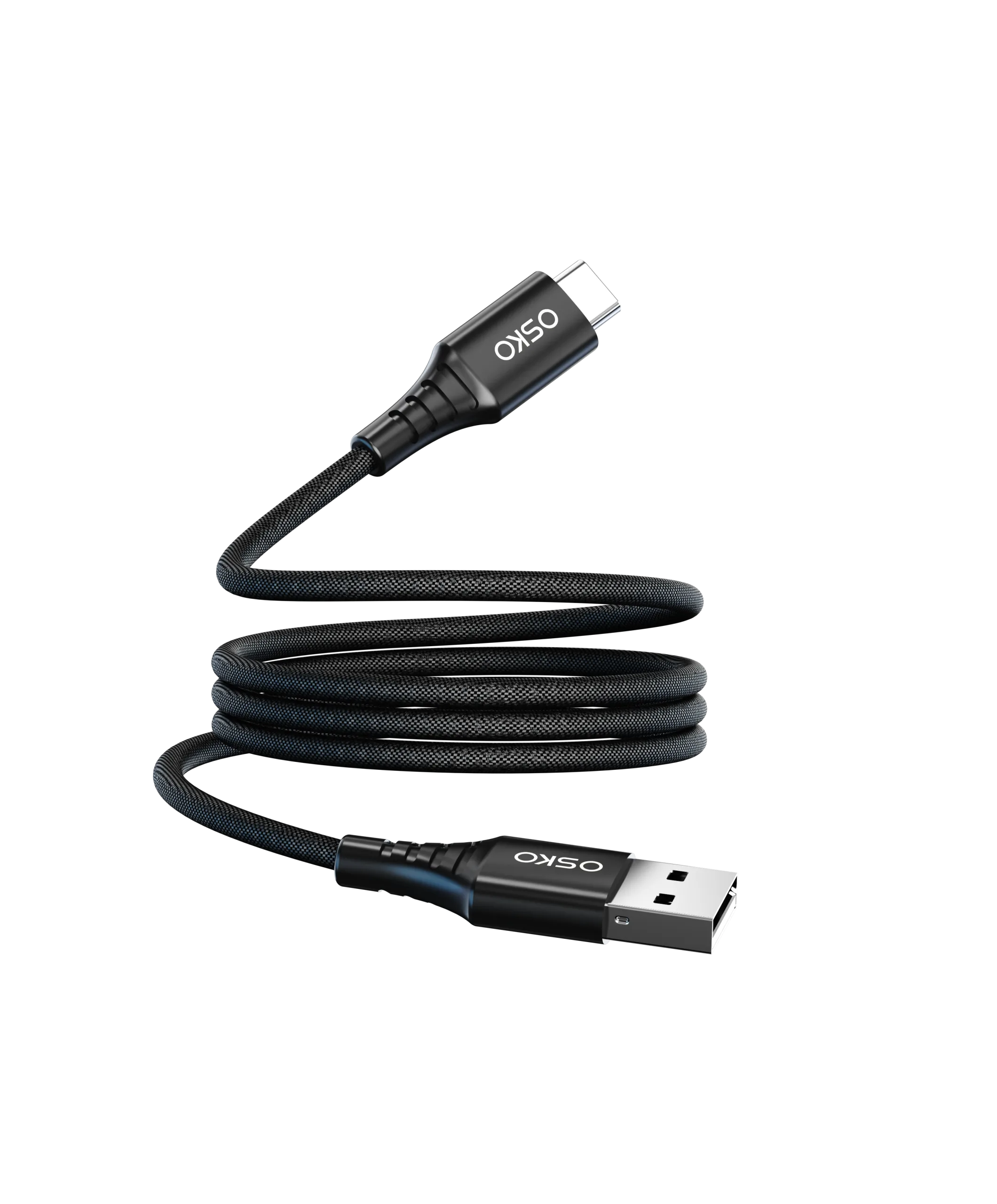
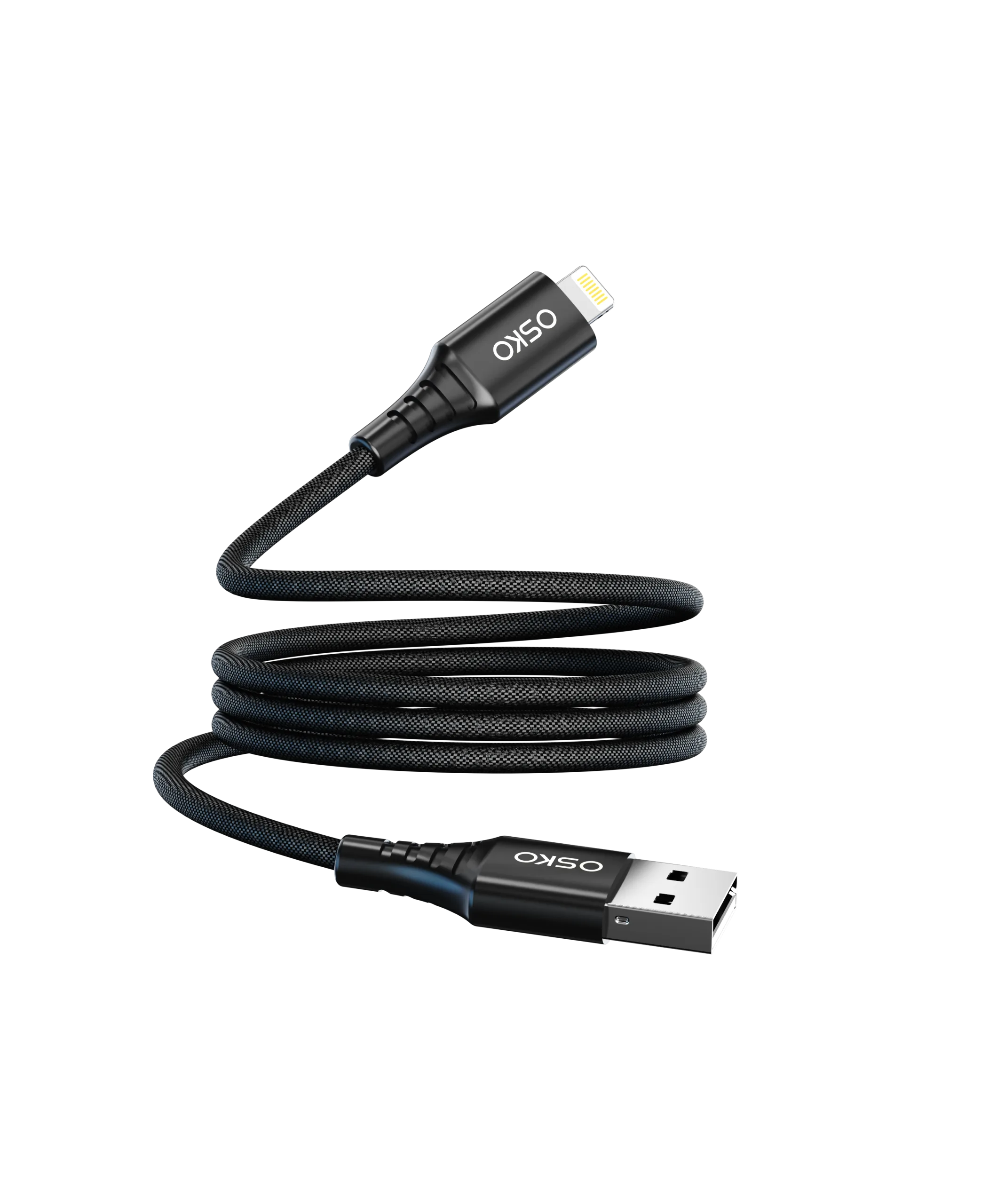
A PD 3.1 240W cable is designed to safely deliver up to 240 watts of power through a USB-C connection. These cables are engineered for applications requiring high current transmission, advanced identification technology, and improved thermal management.
Typical applications include:
High-performance laptops
Gaming notebooks
Professional workstations
Large USB-C monitors
Future high-power consumer electronics
For brands developing charging accessories, a 240W cable requires much more than a USB-C connector and thicker wire. It requires:
Proper E-marker chip implementation
High-quality conductor design
Heat management
Reliable connector structure
Production testing
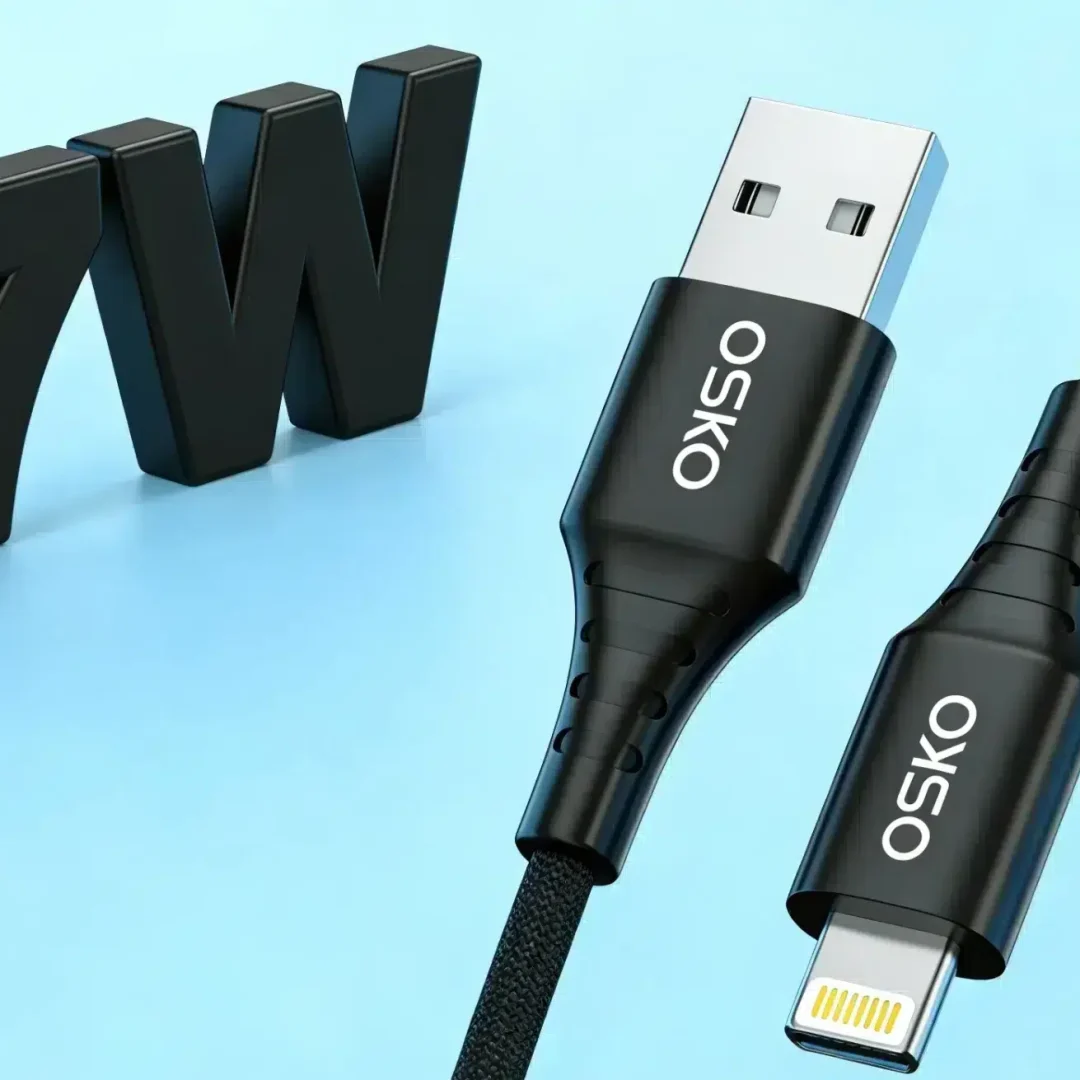
As an experienced USB-C cable manufacturer, OSKO develops high-power cable solutions for OEM, ODM, wholesale, and retail applications.
Material Science & Electrical Performance
What Is USB PD 3.1 240W Charging?
USB Power Delivery 3.1 is an updated charging standard that expands USB-C power capability.
Compared with previous USB PD versions, PD 3.1 introduces Extended Power Range (EPR).
| USB PD Version | Maximum Power |
|---|---|
| USB PD 2.0 | Up to 100W |
| USB PD 3.0 | Up to 100W |
| USB PD 3.1 SPR | Up to 100W |
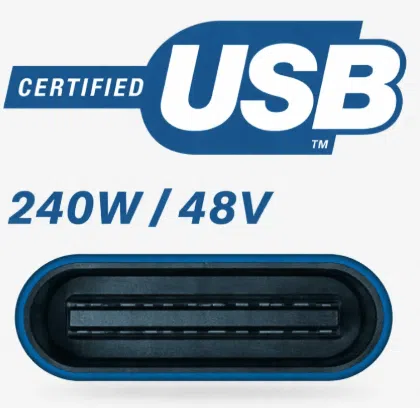
| USB PD 3.1 EPR | Up to 240W |
The 240W level is achieved through higher voltage and current combinations.
The maximum PD 3.1 EPR specification supports:
Up to 48V
Up to 5A
Up to 240W
Why 240W USB-C Cables Require Advanced Engineering
A standard charging cable is not designed for extreme power delivery.
A 240W USB-C cable must handle:
Higher electrical current
Increased thermal load
Continuous power transmission
Poor cable design may cause:
Excessive heat
Charging instability
Reduced efficiency
Safety concerns
The cable structure must optimize:
Electrical resistance
Heat dissipation
Mechanical durability
E-Marker Chip Technology in 240W Cables
One of the most important components in a PD 3.1 cable is the E-marker chip.
The E-marker communicates information between:
Charger
Cable
Device
It provides details such as:
Cable current capability
Power rating
Data transmission capability
For 240W charging, an E-marker is essential because the system must identify that the cable can safely support high-power operation.
Internal Structure of a PD 3.1 240W Cable
A professional high-power cable usually includes:
| Component | Function |
|---|---|
| High-quality copper conductor | Supports higher current |
| HDPE insulation | Electrical separation |
| Shielding layer | Protects signal quality |
| E-marker chip | Power identification |
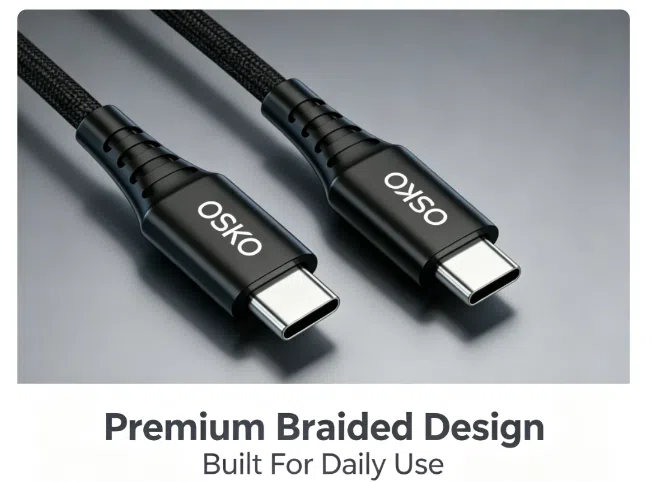
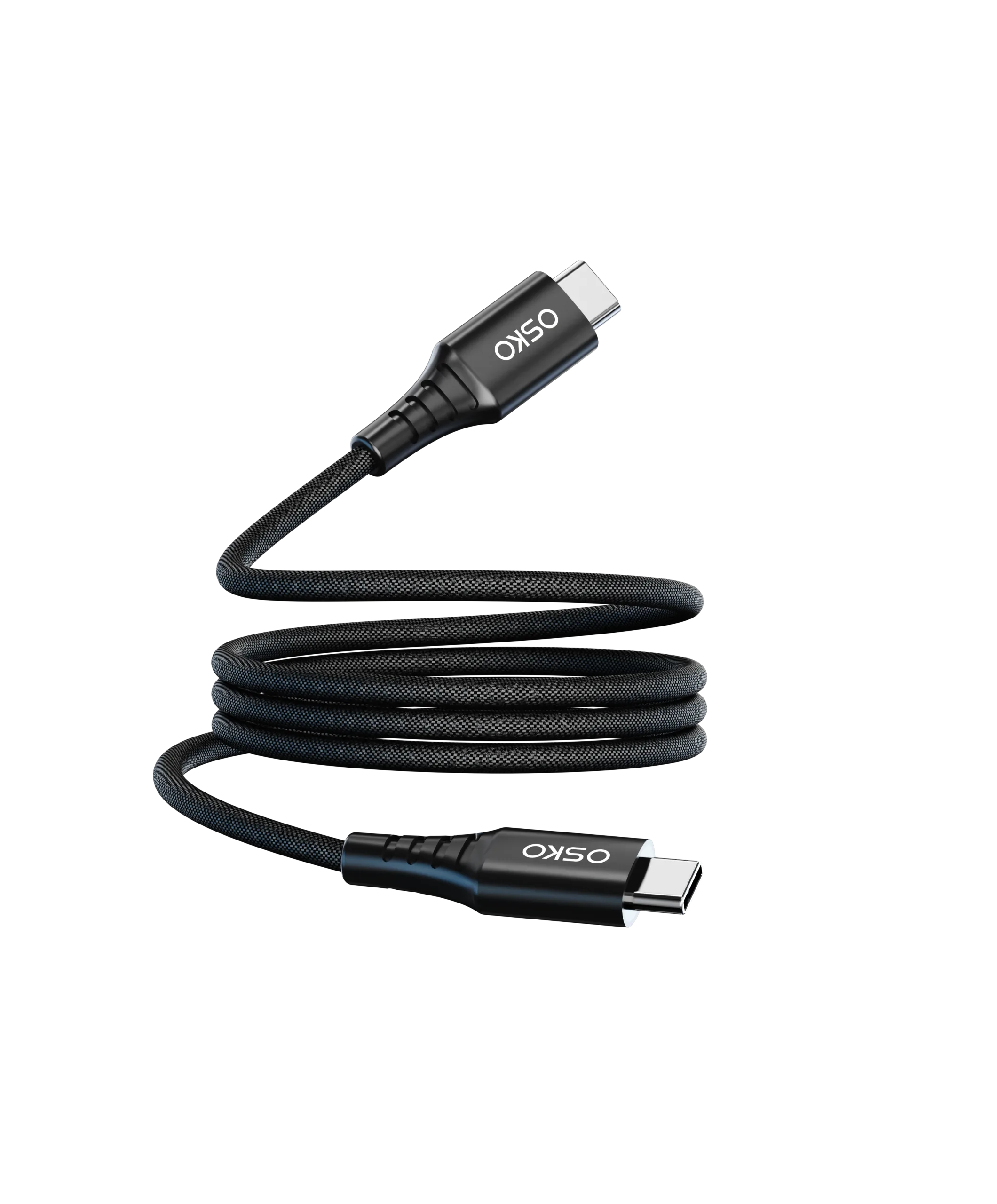
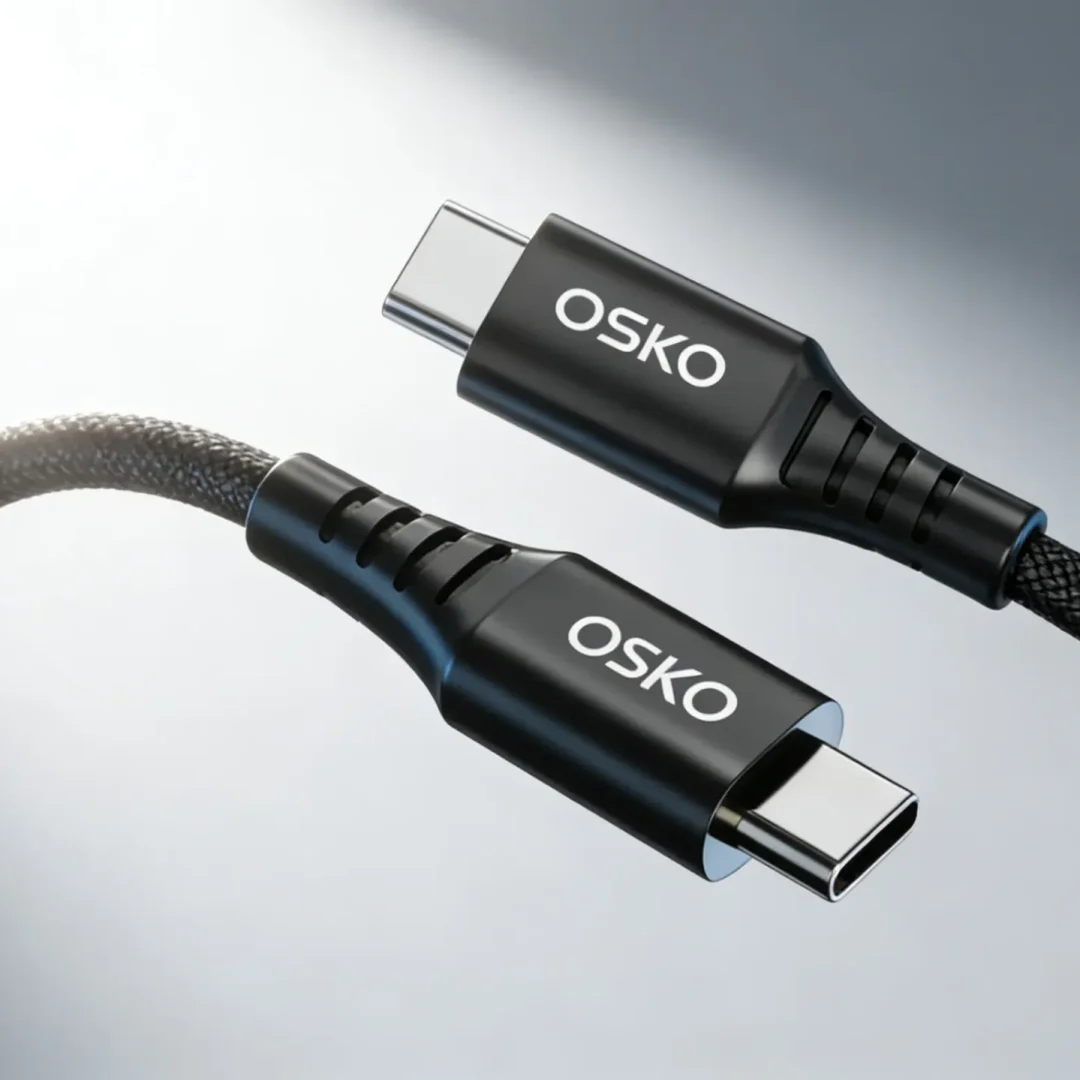
| Nylon braided jacket | Mechanical protection |
| Reinforced connector | Improves lifespan |
Conductor Design for High Power Transmission
The conductor is one of the most important elements.
A 240W cable requires:
Lower resistance
Stable current flow
Improved thermal performance
Copper quality directly affects:
Charging efficiency
Cable temperature
Long-term reliability
Thermal Management in 240W USB-C Cables
High-power charging generates heat.
Cable manufacturers must consider:
Resistance Control
Lower resistance reduces:
Energy loss
Heat generation
Material Selection
Common premium materials include:
High-quality copper
Heat-resistant insulation
Durable outer jacket
Mechanical Protection
A strong outer structure helps maintain performance after repeated bending.
A heavy duty braided USB-C cable manufacturer typically uses reinforced designs for premium applications.
240W USB-C Cable Applications
Gaming Laptops
Gaming laptops often require:
High charging power
Stable performance
Durable accessories
A PD 3.1 cable supports next-generation charging systems.
Professional Workstations
Professional users need:
Reliable power delivery
Long operating hours
Stable connections
Applications include:
Engineering computers
Creative workstations
Business laptops
USB-C Monitors
Modern monitors increasingly use USB-C for:
Display
Data
Power
A high-power cable supports advanced desktop setups.
Cable Length Considerations for 240W Charging
Cable length affects electrical performance.
| Length | Application |
|---|---|
| 0.5ft | Compact charging accessories |
| 3ft | Travel charging |
| 6ft | Home and office |
| 10ft | Extended charging |
Longer cables require:
Better conductor design
Improved voltage control
Stronger engineering
For retail products, brands often choose:
Bulk custom 6ft 10ft USB-C cables
to cover different customer scenarios.
Case Study
US Laptop Accessory Brand Developed 240W USB-C Cable Product Line
A US electronics accessory company planned to launch a premium USB-C charging cable series for high-performance laptops.
The company previously sold 100W cables but wanted to enter the next-generation high-power charging market.
Customer Requirements
The brand required:
PD 3.1 240W capability
Premium braided appearance
Multiple retail lengths
Custom packaging
Stable production capacity
Target applications:
Gaming laptops
Professional laptops
Desktop charging systems
Engineering Problems
OSKO reviewed the existing cable design.
Power Performance Issue
The previous structure was designed for 100W charging and could not support 240W requirements.
Problems included:
Insufficient conductor capacity
Limited thermal performance
Mechanical Issue
The customer required:
Premium retail appearance
Long-term daily usage durability
OSKO Engineering Solution
OSKO redesigned the cable structure.
Electrical Optimization
Implemented:
High-current conductor design
E-marker integration
PD 3.1 compatibility testing
Mechanical Optimization
Added:
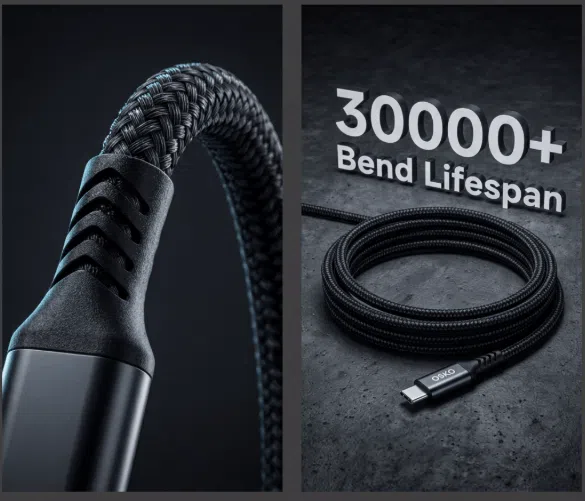
Nylon braided outer layer
Reinforced connector housing
Improved strain relief
Quality Testing
Testing included:
| Test | Purpose |
|---|---|
| Power delivery test | Verify 240W capability |
| Temperature test | Evaluate heat control |
| Bend test | Confirm durability |
| Connector test | Improve reliability |
| Compatibility test | Verify device support |
Project Results
The final product achieved:
Stable 240W charging performance
Improved premium positioning
Reduced customer complaints
Expanded product category opportunities
The project supported:
OEM USB cable manufacturing
ODM USB cable development
Wholesale USB cable supply
Retail USB-C charging products
Selection Guide
How to Choose a PD 3.1 240W Cable Supplier
Verify Technical Capability
A qualified supplier should provide:
PD 3.1 engineering experience
E-marker integration capability
Power testing equipment
Quality control procedures
Check Product Certification and Compliance
For global markets, buyers should consider:
USB-IF compliance
CE requirements
RoHS compliance
FCC requirements
Professional suppliers may provide:
USB-IF compliant Type C cable manufacturer
CE RoHS certified 240W USB C cable
FCC approved nylon braided USB C cable supplier
Evaluate Manufacturing Experience
Important capabilities include:
| Capability | Importance |
|---|---|
| Material control | Product reliability |
| Electrical testing | Power safety |
| Customization | Market differentiation |
| Production capacity | Supply stability |
OSKO 240W USB-C Cable Manufacturing Capability
OSKO supports:
White label 240W fast charging cable wholesale
Heavy duty braided USB-C cable manufacturer
Durable nylon braided Type C charging cable factory
OEM ODM custom length USB C cables
Bulk custom color braided charging cables
ISO9001 certified braided USB cable factory wholesale
USB-IF compliant Type C cable manufacturer
FAQ
What is a PD 3.1 240W cable?
A PD 3.1 240W cable is a USB-C cable designed to support USB Power Delivery 3.1 Extended Power Range charging up to 240 watts.
Can a 240W USB-C cable charge any laptop?
The cable supports high-power capability, but actual charging depends on the laptop, charger, and device requirements.
Does a 240W cable need an E-marker chip?
Yes. High-power USB-C cables require cable identification technology to safely support higher power levels.
Is a braided 240W USB-C cable better?
A braided design improves durability and appearance, but electrical design and certification determine actual performance.
Can a 240W USB-C cable transfer data?
Some 240W cables support data transfer, but performance depends on the specific cable design and USB standard.
Summary
A PD 3.1 240W cable represents the next generation of USB-C high-power charging technology.
Unlike traditional charging cables, 240W cables require:
Advanced conductor design
E-marker technology
Thermal management
Reliable manufacturing processes
For brands entering high-power charging markets, selecting an experienced OEM supplier is essential.
OSKO provides professional PD 3.1 USB-C cable solutions, supporting product development, customization, testing, and bulk manufacturing for global electronics brands.
Contact Information
OSKO High-Power USB-C Cable Solutions
Products:
PD 3.1 240W USB-C cables
Laptop charging cables
Braided USB-C cables
OEM USB-C cables
Wholesale charging cable solutions
OSKO supports brands with USB-C cable engineering, high-power design, testing, customization, and scalable OEM manufacturing solutions.