
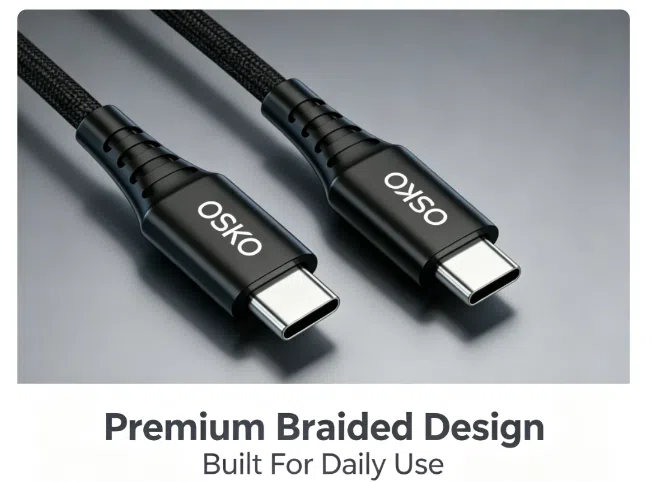
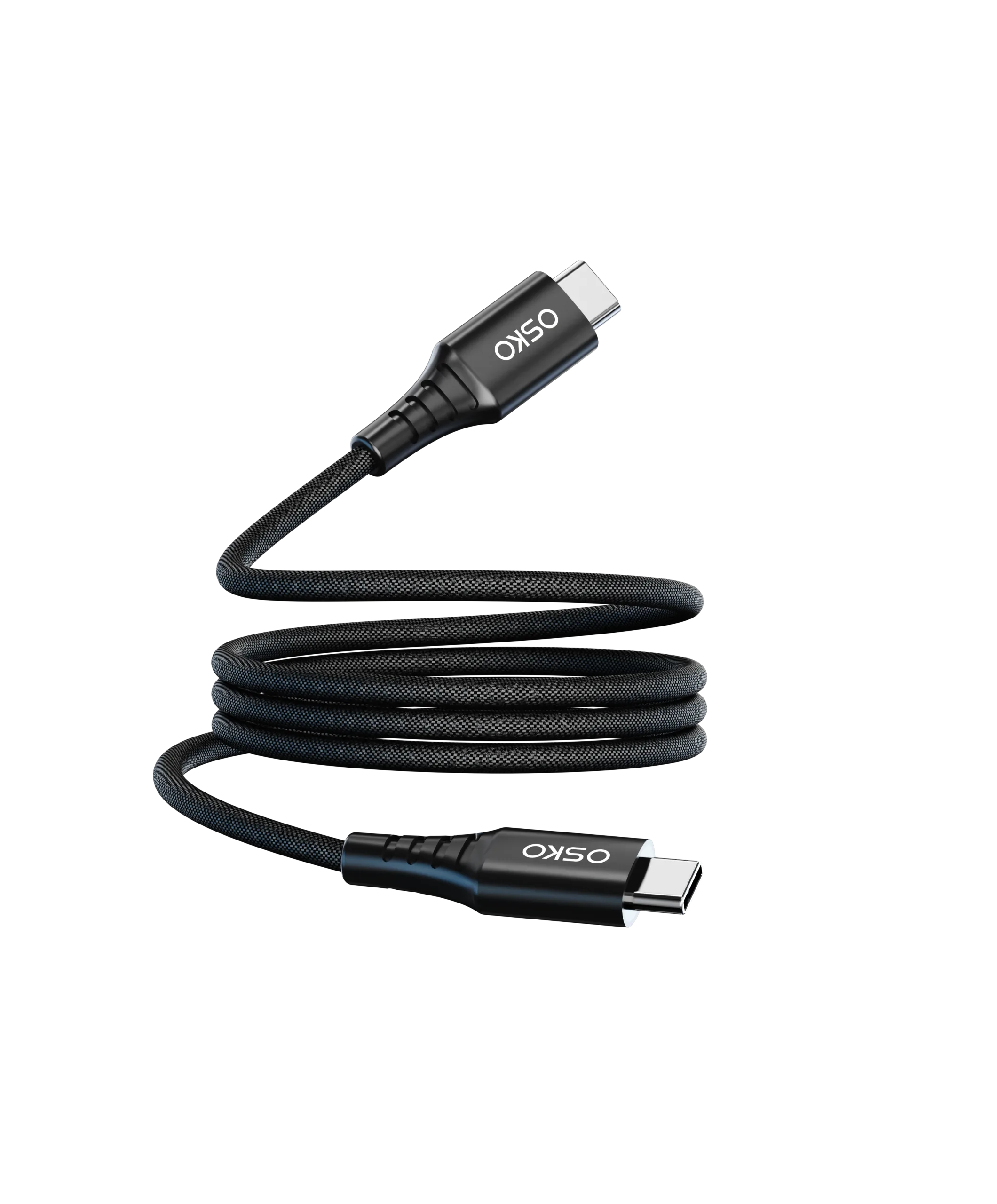
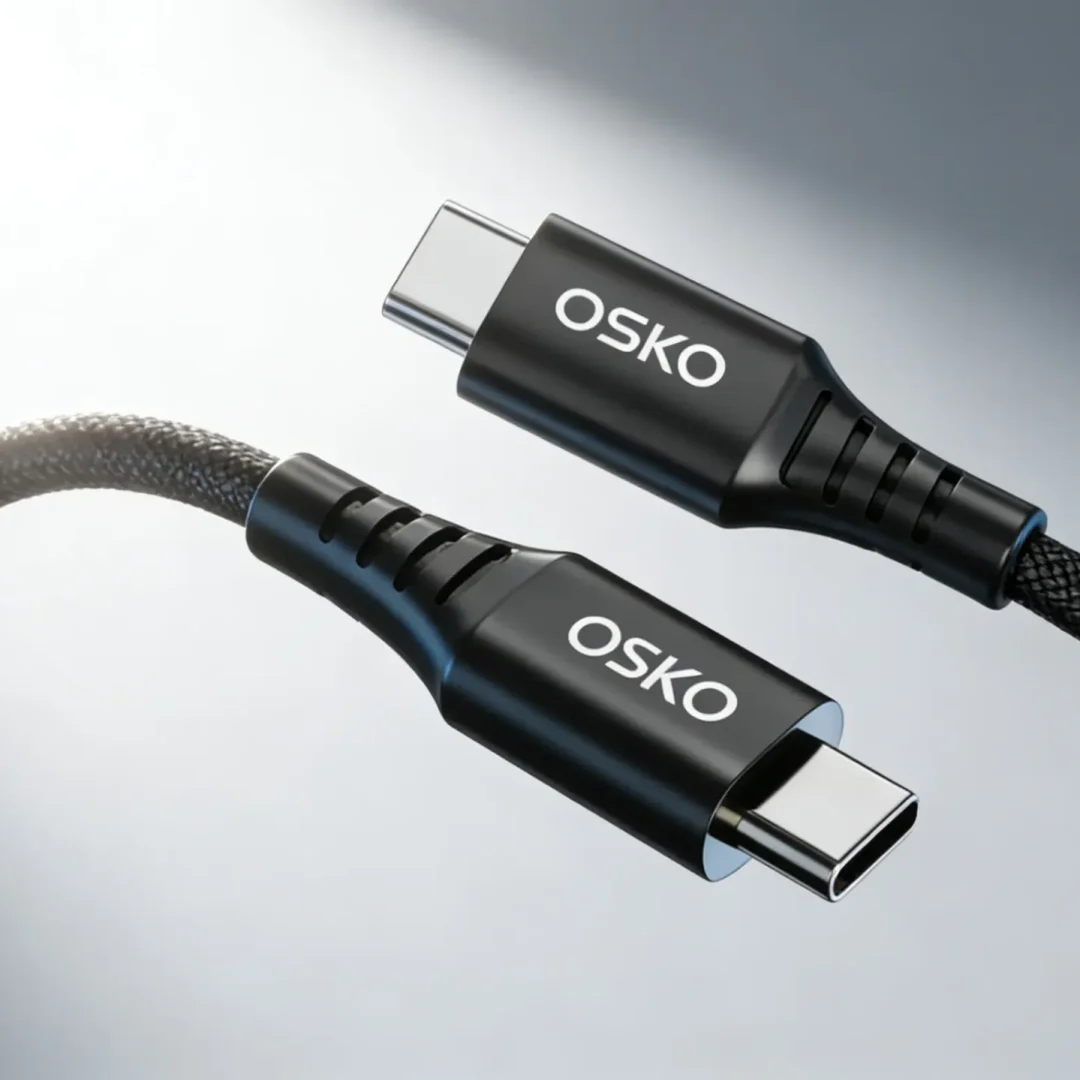
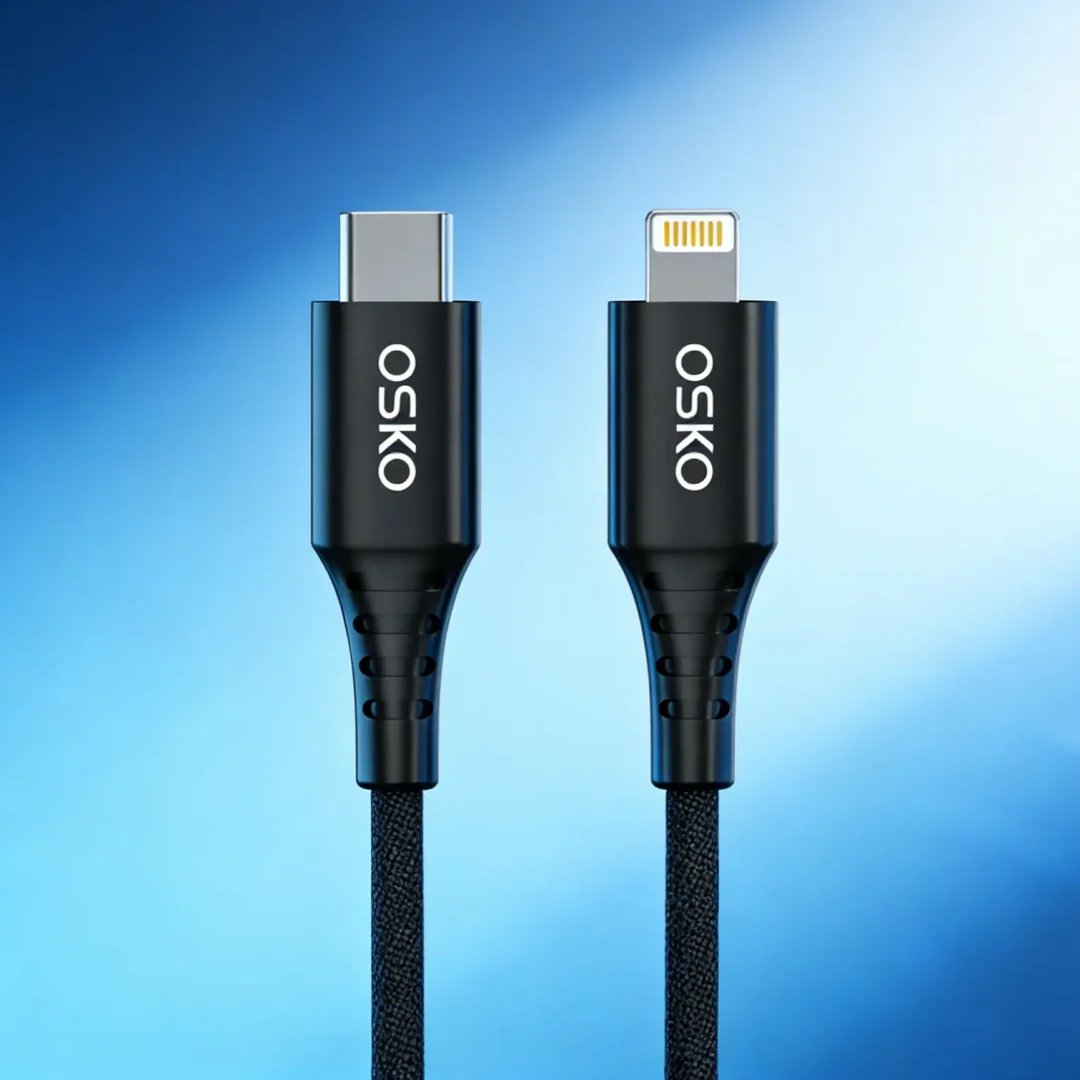
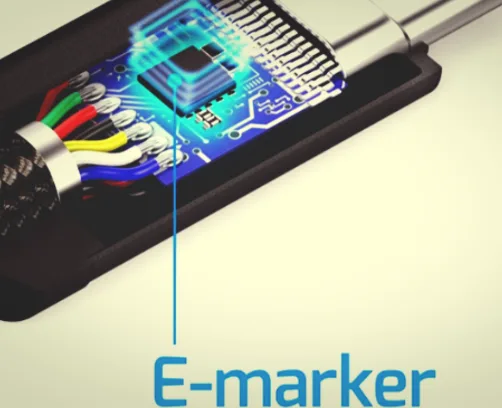
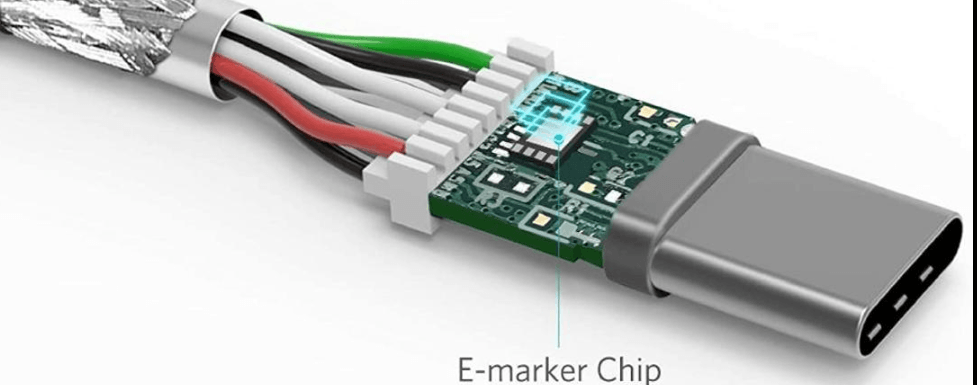
The USB4 E-Marker chip is a critical component in modern high-speed USB-C cable systems, especially those supporting high wattage charging and high-bandwidth data transmission.
As USB standards evolve toward USB4 and USB Power Delivery (PD) 3.1, cables are no longer passive components. Instead, they are intelligent systems capable of communicating electrical limits, thermal thresholds, and data capabilities between devices.
Many users mistakenly believe that faster charging or higher data speeds come from the charger or device alone. In reality, the cable—specifically the E-Marker chip embedded inside—plays a decisive role in system performance.
Without a properly designed E-Marker system, USB4 cables cannot safely operate at higher power levels or full data bandwidth.
Material Science & Dielectric Properties
Although the E-Marker chip is a semiconductor component, its performance is closely tied to the physical cable architecture.
Role of the E-Marker in USB4 Architecture
The E-Marker chip is embedded inside USB-C cables that support:
High power delivery (beyond 60W)
High-speed data transmission (up to 40Gbps in USB4 systems)
Active cable identification and negotiation
Its primary function is communication, not power transmission.
It informs the host device and charger about:
Cable current rating
Voltage limits
Data lane capabilities
Cable length and quality class
This ensures safe and optimized power negotiation.
Electrical Design Constraints
USB4 cables operate under strict electrical constraints:
Controlled impedance transmission lines
Low-loss dielectric insulation materials
Shielded differential pair structures
High-frequency signal integrity requirements
The E-Marker chip must operate within this environment without introducing noise or signal degradation.
This is why high-quality OEM manufacturers carefully integrate chip placement into cable strain relief zones.
Dielectric and Signal Integrity Interaction
While the chip is electronic, the cable’s dielectric materials still determine performance.
Common materials include:
Low-loss polyethylene for signal pairs
TPE insulation for flexibility
Multi-layer shielding for EMI reduction
If dielectric performance is poor, even a high-end USB4 E-Marker chip cannot compensate for signal degradation.
This is a critical design principle in USB-IF compliant Type-C cable manufacturer systems.
Power Delivery Communication Layer
The E-Marker chip is essential for USB Power Delivery 3.1 systems supporting up to 240W.
It communicates:
Maximum current rating (3A or 5A)
Voltage compatibility (20V–48V in EPR systems)
Cable temperature behavior
Safety thresholds
This enables safe operation of 240W USB-C cable design architectures.
Case Study
High-Speed USB4 Cable Development for OEM Market
A European electronics brand required a next-generation cable supporting USB4 data transfer and high-power charging.
Project Requirements
USB4 40Gbps data support
240W Power Delivery compatibility
Stable cross-device performance
CE and FCC compliance
OEM branding and packaging
Engineering Problems
Initial prototypes failed due to:
Missing or incompatible E-Marker chip integration
Signal degradation at high frequency
Inconsistent power negotiation between devices
Poor EMI shielding performance
These issues made the cable unstable under USB4 workloads.
OSKO Engineering Solution
OSKO implemented a full system redesign including:
High-precision USB4 E-Marker chip integration
Oxygen-free copper high-speed conductors
Multi-layer shielding structure
Low-loss dielectric insulation system
Optimized PCB chip positioning inside connector housing
The design followed standards used in:
OEM USB cable
ODM USB cable
Wholesale USB cables
Bulk USB cables
Retail USB cables
Results
After optimization:
Stable 40Gbps transmission achieved
Power delivery reached 240W without instability
EMI interference reduced significantly
Certification testing passed successfully
This confirmed that USB4 performance depends equally on chip design and physical cable engineering.
Selection Guide
When Do You Need an E-Marker Chip?
Not all USB-C cables require an E-Marker chip.
| Cable Type | E-Marker Required |
|---|---|
| 60W USB-C cable | Not required |
| 100W USB-C cable | Recommended |
| 240W USB-C cable | Required |
| USB4 40Gbps cable | Required |
Cable Classification in USB4 Systems
USB4 cables are typically divided into:
Passive cables (short distance, lower speed)
Active cables (E-Marker enabled, high-speed transmission)
Active cables rely heavily on chip intelligence for signal management.
OEM Manufacturing Considerations
For global buyers, selecting a USB4 E-Marker chip cable supplier requires evaluating:
Chip authenticity and sourcing
USB-IF certification compliance
Signal integrity testing capability
High-frequency measurement equipment
Factory-level quality control systems
Common sourcing categories include:
Heavy duty braided USB-C cable manufacturer
White label 240W fast charging cable wholesale
CE RoHS certified 240W USB C cable
USB-IF compliant Type C cable manufacturer
ISO9001 certified braided USB cable factory
Physical Cable Design Requirements
Even with advanced chips, cable structure remains critical:
Shielded twisted differential pairs
Low impedance copper conductors
Reinforced strain relief zones
High-density braided jackets for durability
Without these elements, USB4 performance cannot be stabilized.
FAQ
What is a USB4 E-Marker chip?
It is an embedded identification chip that communicates cable capabilities, including power limits and data transmission specifications.
Do all USB-C cables need an E-Marker chip?
No. Only high-power or high-speed cables (100W+, USB4, Thunderbolt-class) require it.
Does the E-Marker chip affect charging speed?
Indirectly. It enables devices to safely negotiate higher power levels.
Can a cable work without an E-Marker chip?
Yes, but it will be limited to lower power and data performance.
Is the E-Marker chip the same across all manufacturers?
No. Chip quality, firmware, and USB-IF compliance vary significantly between manufacturers.
Summary
The USB4 E-Marker chip is a foundational component in modern high-performance USB-C and USB4 cable systems.
It does not directly transmit power or data, but it plays a critical role in system intelligence by enabling safe negotiation between devices, chargers, and cables.
For high-power and high-speed applications such as 240W USB-C charging and 40Gbps USB4 data transfer, the E-Marker chip works in combination with advanced conductor materials, dielectric insulation systems, and multi-layer shielding structures.
From an OEM and global supply chain perspective, selecting a qualified manufacturer with proper USB-IF compliance, chip integration capability, and engineering validation is essential to ensure stable performance in North American and European markets.
Ultimately, USB4 performance is not defined by a single component, but by the coordinated interaction between chip intelligence and physical cable engineering.
Contact Information
OSKO provides OEM/ODM USB4 and high-speed cable solutions, including:
USB4 40Gbps cables with E-Marker chips
240W USB-C fast charging cable systems
Nylon braided high-durability cable designs
USB-IF compliant manufacturing solutions
Custom OEM branding and packaging
Request Engineering Support
Name: ___________________
Company: ___________________
Email: ___________________
Product Type: USB4 Cable / USB-C Cable / OEM Cable
Target Market: North America / Europe / Global
Requirements: ___________________