
Introduction
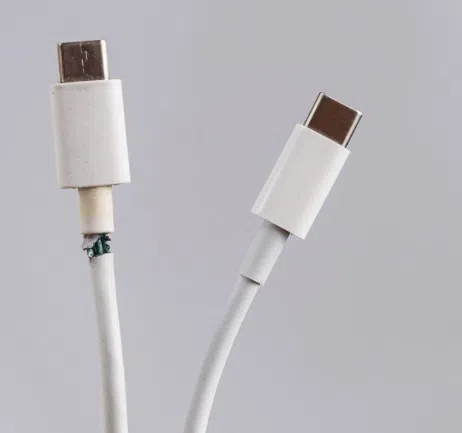
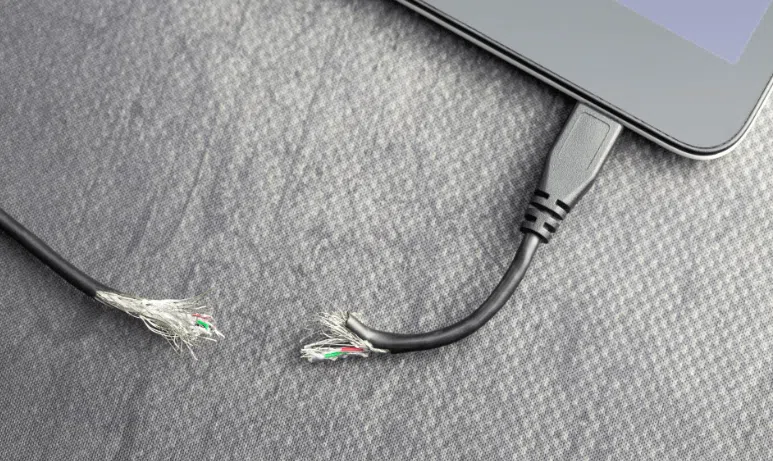
A charging cable breaking easily is one of the most common problems reported by users of smartphones, tablets, and laptops.
In most cases, users assume the issue is caused by poor luck or normal wear. However, from an engineering perspective, cable failure is a predictable result of mechanical stress, material fatigue, and design limitations.
Modern charging cable durability depends on multiple structural factors, including conductor flexibility, insulation quality, strain relief design, and usage behavior.
When any of these elements are weak, failure typically occurs near the connector or along high-stress bending points.
Understanding why cables break requires analyzing both mechanical engineering and material science principles.
Material Science & Dielectric Properties
Cable durability is directly related to how internal materials respond to repeated stress and electrical load.
Conductor Fatigue and Micro-Breakage
Inside every USB cable are thin copper strands designed to carry electrical current.
Over time, repeated bending causes:
Micro-fractures in copper strands
Increased electrical resistance
Heat accumulation at weak points
Progressive signal instability
This is one of the primary reasons USB cable breaking reasons are concentrated near connectors.
Lower-quality cables often use fewer or thinner strands, accelerating fatigue failure.
Insulation Layer Degradation
The insulation layer protects conductors from external damage and internal short circuits.
Common materials include:
PVC (cost-effective but rigid over time)
TPE (flexible and durable)
Silicone (high flexibility, premium applications)
When insulation repeatedly bends, it can:
Crack at stress points
Lose elasticity
Expose internal conductors
This leads to sudden cable failure even if the outer jacket appears intact.
Dielectric Stress and Heat Generation
During fast charging, cables experience continuous electrical load.
If resistance increases due to internal damage, it results in:
Localized heating
Accelerated insulation breakdown
Reduced charging efficiency
This is especially critical in fast charging cable materials used for USB-C Power Delivery systems.
Strain Relief Weaknes
The transition area between connector and cable is the most failure-prone zone.
Without proper strain relief:
Bending stress concentrates at one point
Internal wires break faster
Connector housing loosens over time
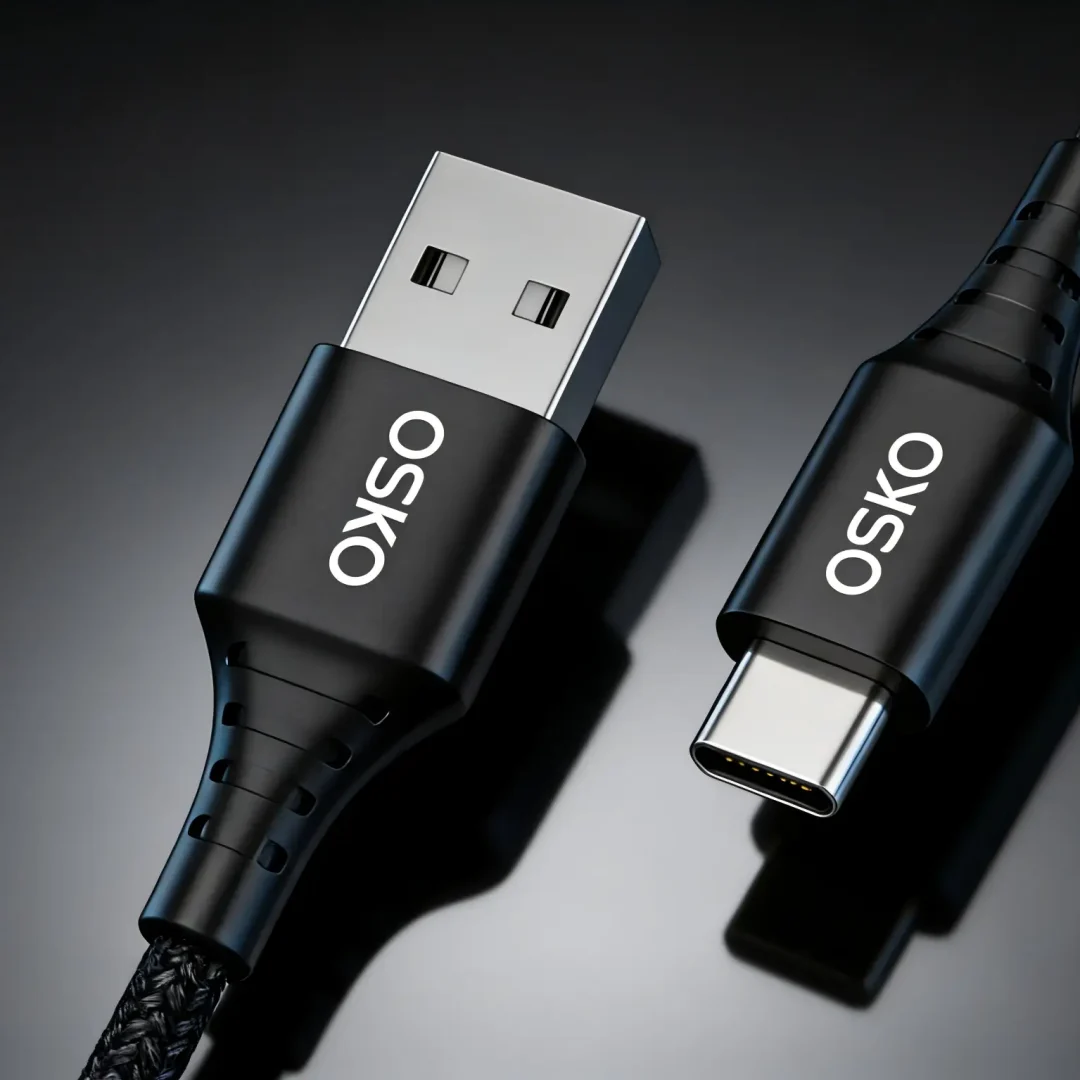
High-quality cable strain relief design distributes mechanical force more evenly.
Case Study
Global E-Commerce Cable Failure Rate Analysis
A European electronics retailer analyzed return data for USB-C charging cables over a 12-month period.
Customer Feedback Issues
Cable breaks near connector head
Outer jacket splits after 2–3 months
Charging becomes intermittent
Cable stops working under slight movement
Engineering Investigation
Two cable types were compared:
Standard PVC cable
Nylon braided USB-C cable
Both used similar charging specifications but different mechanical designs.
Key findings:
PVC cables showed earlier insulation cracking
Connector stress concentration was significantly higher
Braided cables reduced external abrasion damage
Internal conductor failure still occurred if bending stress persisted
OSKO Engineering Solution
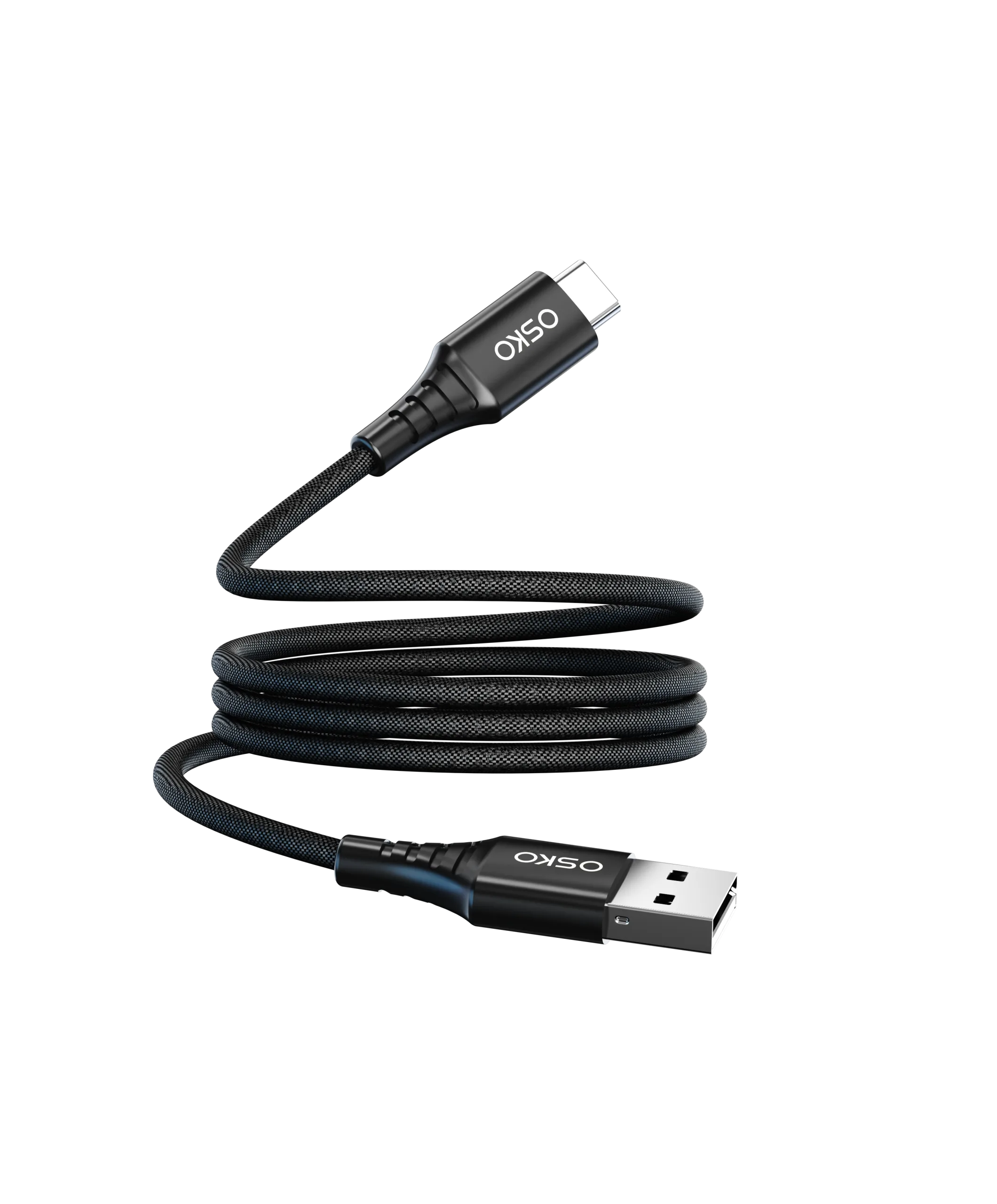
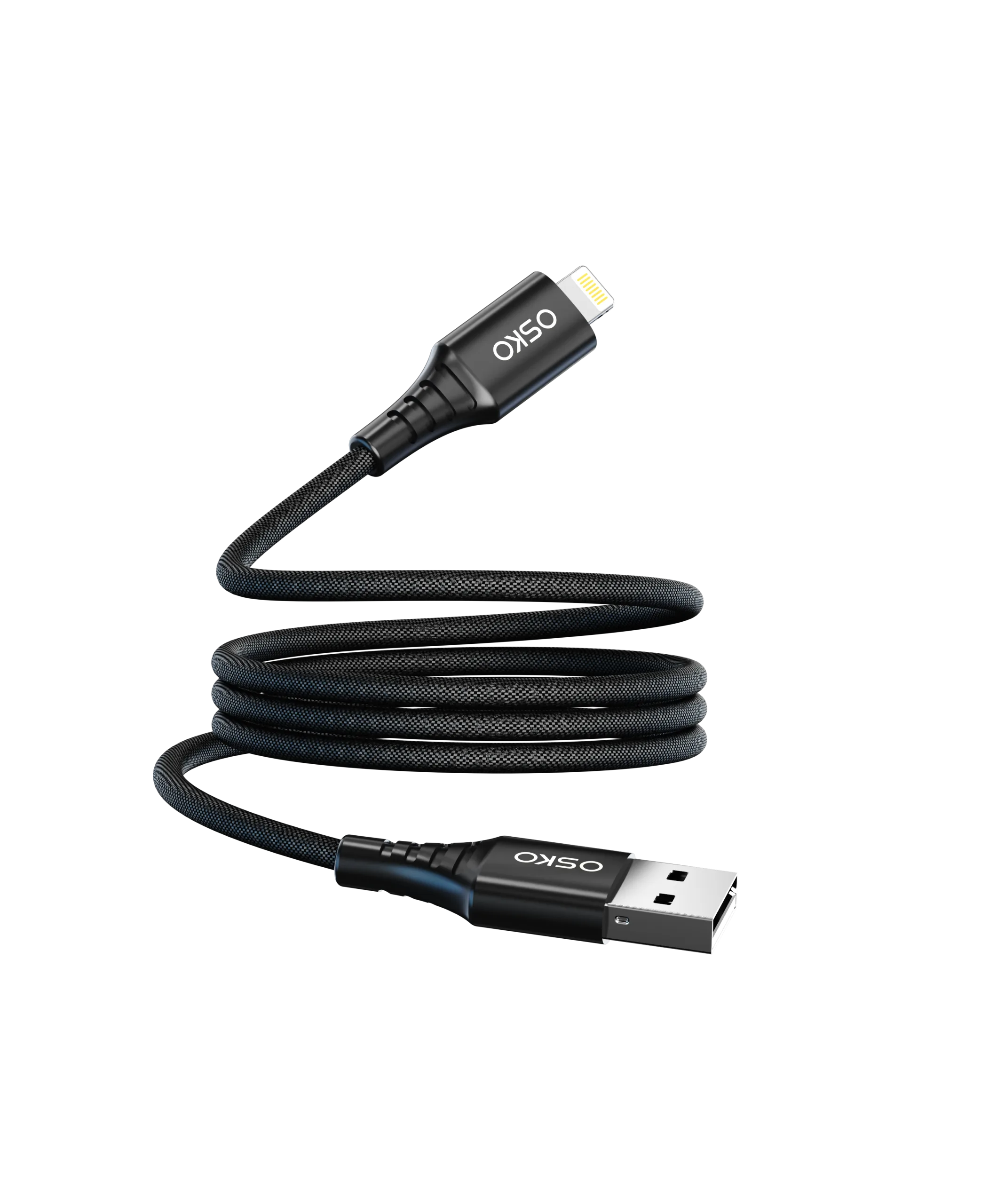
OSKO redesigned the product using:
Oxygen-free copper multi-strand conductors
Reinforced TPE insulation system
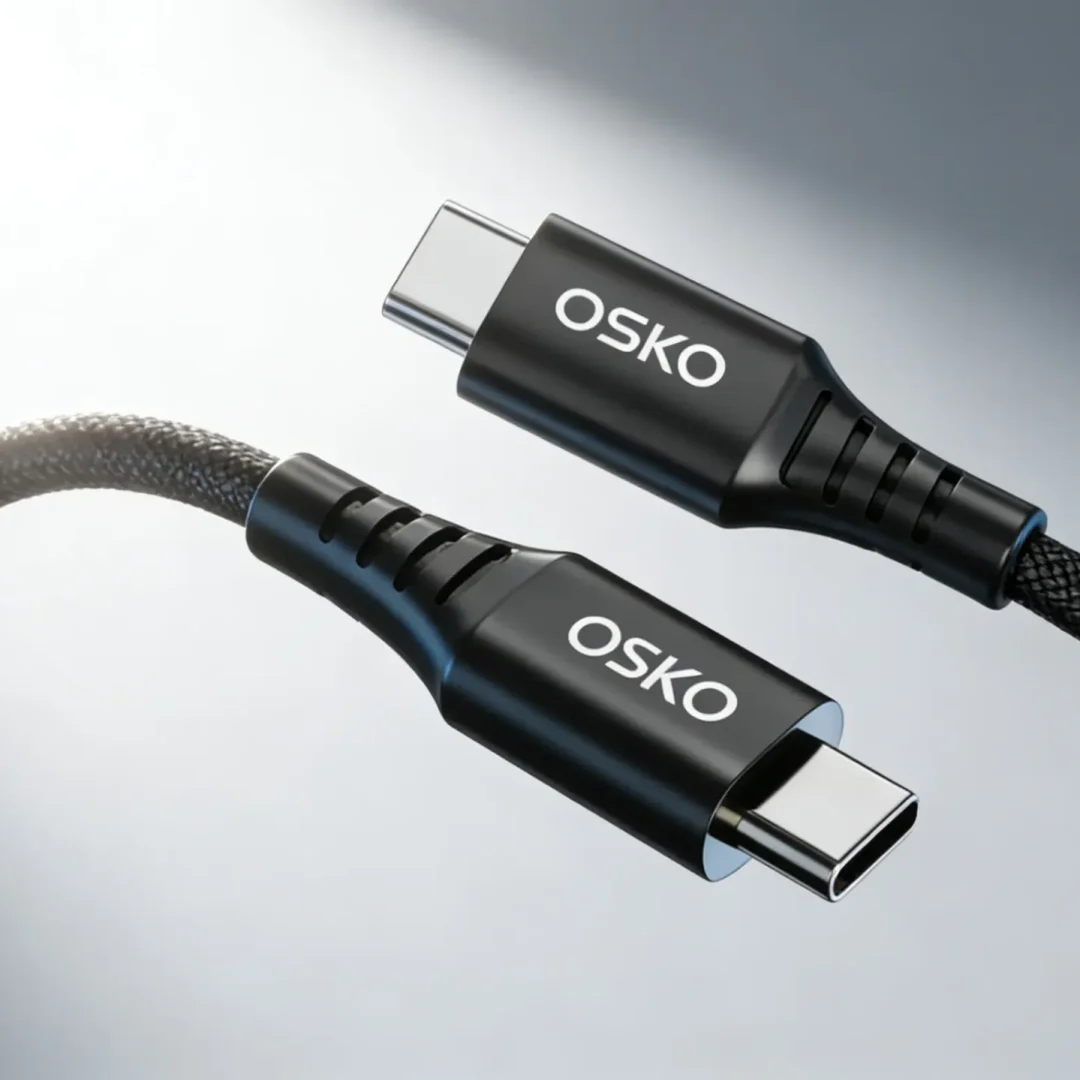
Extended strain relief housing
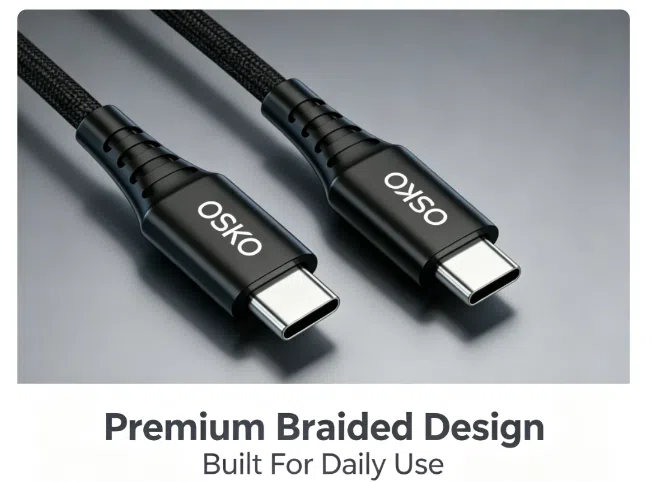
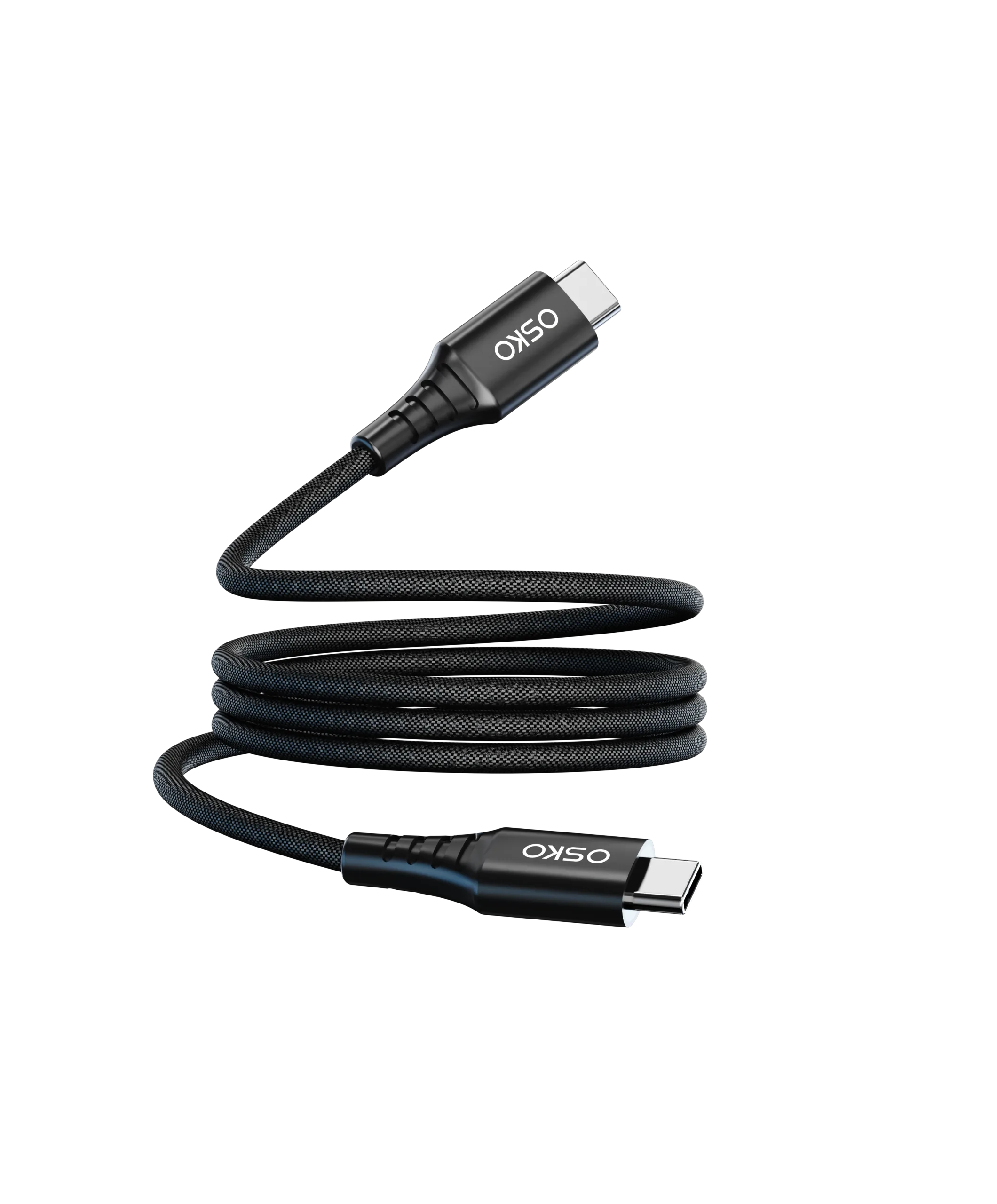
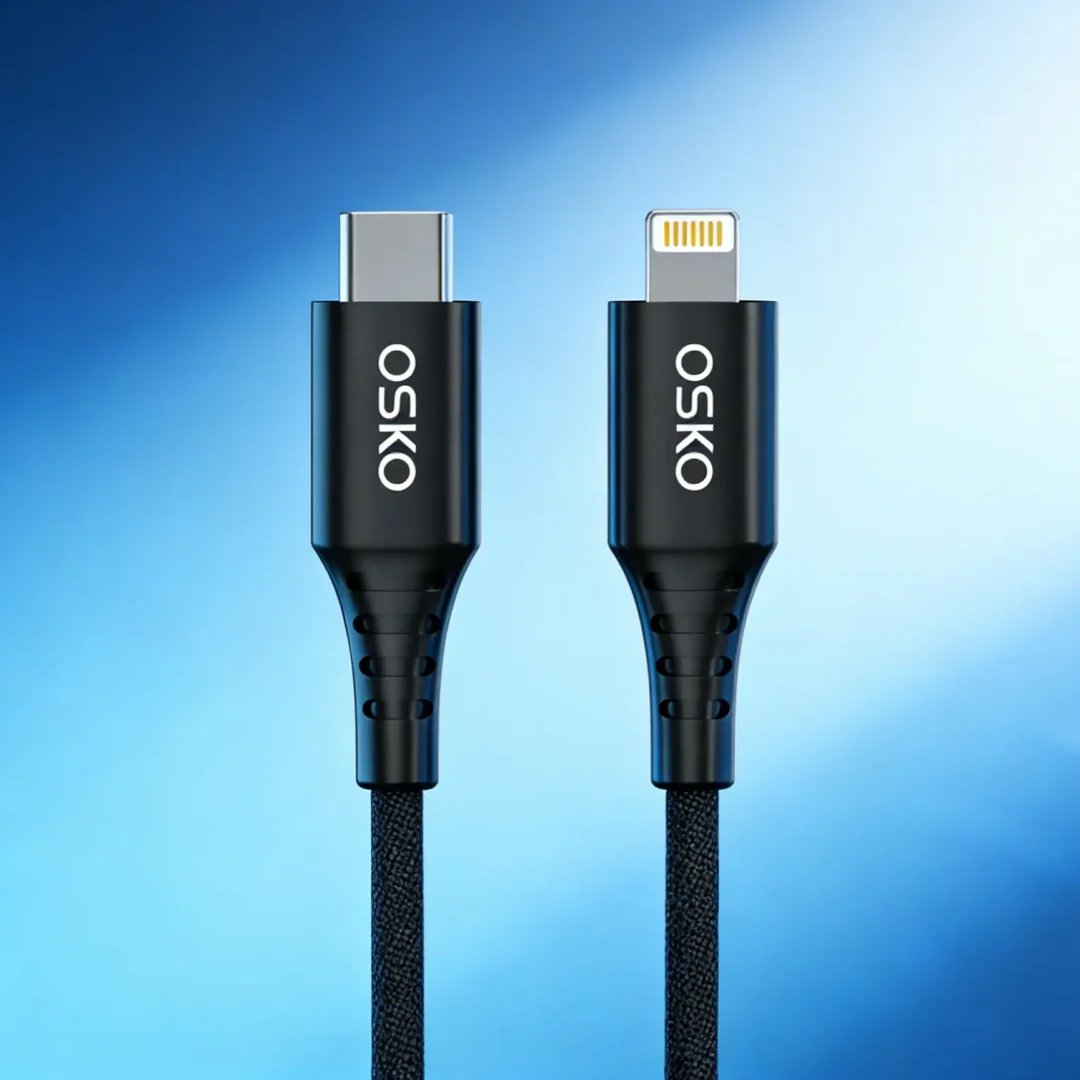
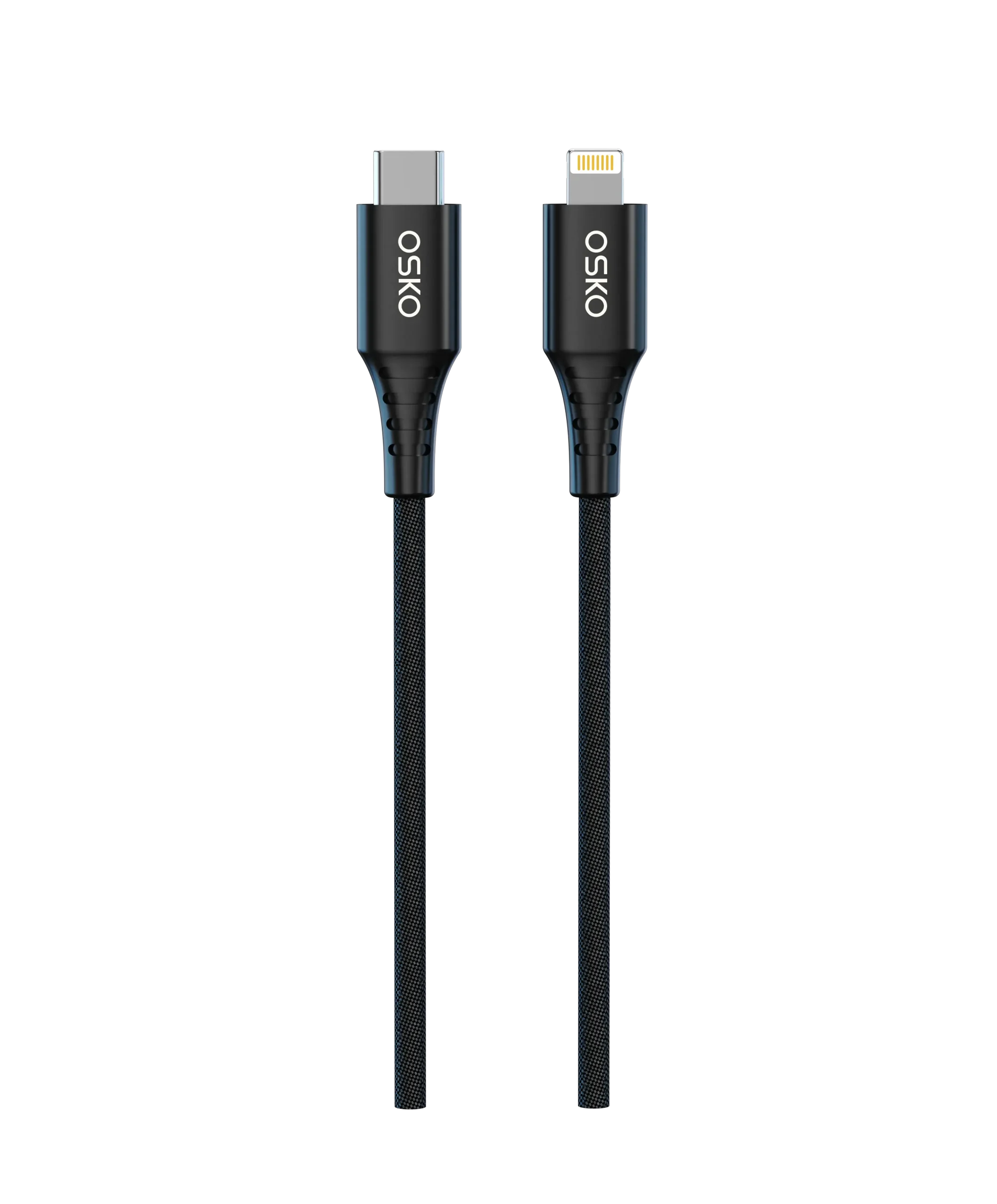
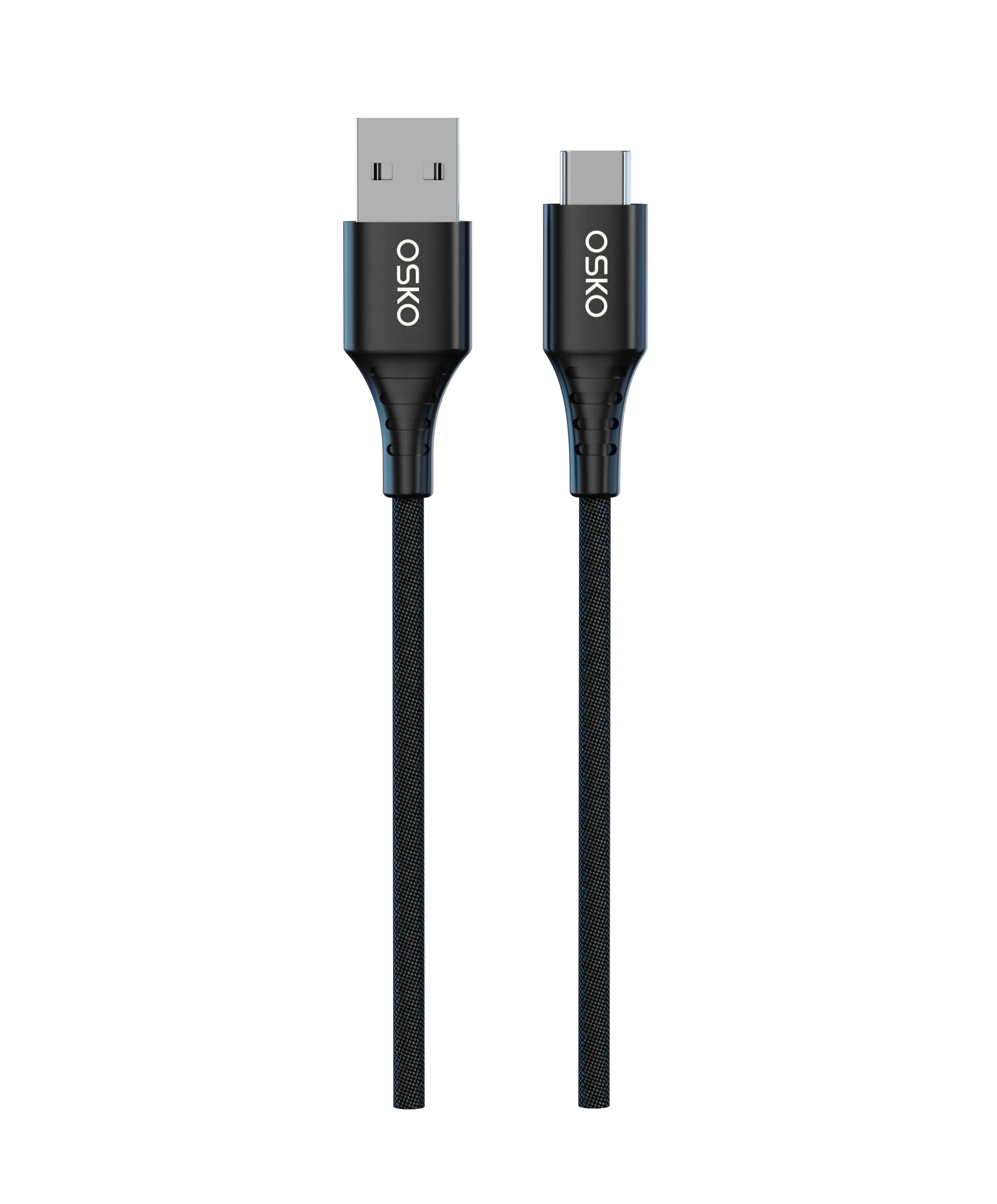
Nylon braided outer jacket for abrasion resistance
Optimized internal wire routing geometry
This architecture is commonly used in:
OEM USB Cables
ODM USB Cables
Wholesale USB Cables
Bulk USB Cables
Retail USB Cables
Result
After redesign:
Cable lifespan increased significantly
Connector breakage reduced
Return rate dropped
Customer satisfaction improved in retail channels
This confirmed that cable failure is primarily a mechanical design issue, not random wear.
Selection Guide
Why Some Cables Break Faster Than Others
Cable durability depends on multiple engineering factors:
| Factor | Impact on Durability |
|---|---|
| Copper strand quality | High |
| Jacket material | High |
| Strain relief design | Critical |
| Bending frequency | High |
| Connector reinforcement | High |
Material-Based Durability Ranking
Nylon Braided Cables
Best for:
High-use environments
Travel and office use
Heavy daily bending
Products such as Durable nylon braided Type C charging cable factory designs offer improved mechanical protection.
PVC Cables
Best for:
Light usage
Low-cost applications
Short-term replacement cables
OEM Manufacturing Quality Factors
Professional manufacturers improve durability through:
Multi-layer shielding design
High strand-count copper cores
Reinforced connector molding
Precision injection overmolding
Common product categories include:
Bulk custom 6ft 10ft USB-C cables
Wholesale 60w braided usb c cable
White label 240W fast charging cable wholesale
OEM ODM custom length USB C cables
CE RoHS certified 240W USB C cable
Usage Behavior Factors
Even high-quality cables can fail if used improperly:
Excessive bending near connector
Pulling cable instead of plug
Coiling too tightly
Frequent plugging/unplugging under tension
User behavior significantly affects lifespan.
FAQ
Why do charging cables usually break at the connector?
Because mechanical stress concentrates at the transition point between rigid connector and flexible cable.
Do braided cables last longer than normal cables?
Yes. Braided cables improve external durability but do not eliminate internal conductor fatigue.
Can fast charging damage cables faster?
Yes, if cable quality is low, higher current increases heat and accelerates material degradation.
How can I make my cable last longer?
Avoid sharp bends, pulling from the cable, and tight coiling near connectors.
Summary
Charging cables break easily due to predictable engineering limitations rather than random failure.
From a materials and mechanical engineering perspective, the primary causes include copper conductor fatigue, insulation degradation, strain relief failure, and excessive mechanical bending stress.
While braided cables improve external durability and reduce abrasion damage, true cable longevity depends on internal design quality, including conductor structure and connector reinforcement.
For OEM manufacturers and global buyers, optimizing cable lifespan requires balancing material selection, mechanical design, and user behavior considerations.
Ultimately, cable failure is not a single-point defect but a system-level engineering challenge involving both internal structure and real-world usage conditions.
Contact Information
OSKO provides engineered charging cable solutions for global markets, including:
Nylon braided USB-C cables
PVC charging cables
High-durability fast charging cables (60W–240W)
OEM & ODM manufacturing services
Wholesale and private label solutions
Custom strain relief and connector engineering
Request Engineering Support
Name: ___________________
Company: ___________________
Email: ___________________
Project Type: OEM / ODM / Wholesale
Target Market: North America / Europe / Global
Requirements: ___________________
OSKO engineering team provides full technical documentation, durability testing support, and scalable manufacturing solutions for global cable brands.