















Introduction
Selecting the right OEM USB-C cable supplier is one of the most critical decisions in the global charging accessories supply chain, especially for brands targeting the US and European e-commerce markets.
Unlike standard commodity products, USB-C cables are highly engineering-dependent components. Small differences in conductor quality, shielding structure, connector precision, and PD protocol stability can significantly affect charging performance, product return rates, and brand reputation.
Many buyers focus only on price or appearance, but in real procurement practice, the real differentiators are manufacturing consistency, engineering capability, and quality control systems.
From an OEM and ODM perspective, choosing the right supplier determines whether a product line can scale reliably in competitive markets like Amazon, Shopify, and offline retail channels.
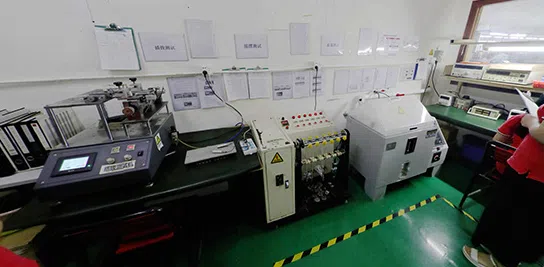
Material Science & Manufacturing Capability
A reliable OEM USB-C cable supplier must demonstrate strong control over both materials and production processes.
Conductor Engineering Capability
The most important foundation of cable performance is the conductor system.
High-quality manufacturers typically use:
Oxygen-free copper (OFC) for low resistance
Multi-strand fine-wire architecture for flexibility
Tin-coated copper for oxidation resistance
Low-quality suppliers often reduce copper content or mix aluminum conductors, which leads to unstable charging performance and higher return rates.
Dielectric and Jacket Material Control
A professional supplier must control insulation materials such as:
TPE for flexibility and heat resistance
PE for low dielectric loss and stable signal transmission
PVC for cost-effective but lower-grade applications
Material consistency across production batches is essential for maintaining stable USB-C cable performance in large-scale OEM programs.
Shielding Structure and Signal Integrity
Shielding determines stability under fast charging conditions.
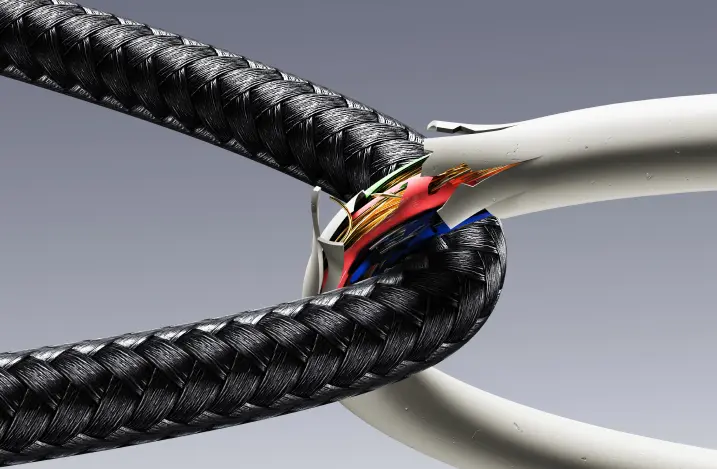
Advanced suppliers use:
Aluminum foil shielding
Braided copper shielding
Multi-layer EMI protection systems
Without proper shielding, USB-C cables may suffer from unstable PD communication and inconsistent fast charging behavior.
Connector Precision and Mechanical Stability
Connector quality is a key indicator of OEM capability.
Key engineering features include:
Precision-molded USB-C heads
Gold-plated contact pins
Reinforced strain relief structures
Poor connector control is one of the most common failure points in bulk USB cable production.
Case Study
US E-Commerce Brand Supplier Selection Failure Analysis
A US-based electronics brand sourcing from low-cost suppliers experienced high return rates and inconsistent charging performance across its USB-C product line.
Customer Requirements
Stable 60W fast charging performance
Compatibility with iPhone, Android, and laptops
Low return rate under 5%
CE and FCC compliance for US and EU markets
Scalable OEM production for Amazon and retail channels
Engineering Problems Identified
The initial supplier failed in multiple areas:
Inconsistent copper conductor quality across batches
Weak shielding design causing EMI instability
Poor connector tolerance control
Lack of PD protocol validation testing
These issues directly impacted product performance and customer satisfaction.
OSKO Engineering Solution
OSKO re-engineered the product and supply system with:
Oxygen-free copper conductor standardization
Reinforced TPE insulation system for stability
Double-layer braided shielding for EMI protection
Precision USB-C connector manufacturing control
Full USB-IF compliant PD testing protocol
This production system supports:
OEM USB Cables
ODM USB Cables
Wholesale USB Cables
Bulk USB Cables
Retail USB Cables
Results
After switching to an engineered supplier model:
Charging stability improved significantly
Return rate reduced in US retail channels
Product consistency improved across batches
Customer satisfaction increased
This demonstrates that supplier selection directly impacts product success in global markets.
Selection Guide
How to Evaluate an OEM USB-C Cable Supplier
A professional evaluation framework should include engineering, production, and compliance factors.
Step 1: Evaluate Manufacturing Capability
A reliable supplier should demonstrate:
Stable mass production capacity
Multi-line automated assembly
Consistent batch-to-batch quality control
This ensures scalability for wholesale and bulk orders.
Step 2: Check Material Engineering Standards
Key materials must include:
Oxygen-free copper conductors
Stable dielectric insulation (TPE/PE)
Reinforced braided or TPU outer jacket
Material transparency is a strong indicator of supplier reliability.
Step 3: Verify Certification Systems
For US and European markets, essential certifications include:
CE compliance
FCC certification
RoHS compliance
USB-IF certification for Type-C cables
ISO9001 quality management system
Certified suppliers significantly reduce compliance risk.
Step 4: Test PD Performance and Stability
A qualified OEM USB-C cable supplier must provide:
60W–240W PD test reports
Voltage drop testing data
Thermal stability validation
Compatibility testing across major devices
Step 5: Evaluate OEM/ODM Flexibility
Strong suppliers support:
Custom length production (3ft, 6ft, 10ft)
Custom branding and packaging
Bulk custom color braided charging cables
Private label OEM programs
Engineering customization for different markets
Supplier Comparison Table
| Evaluation Factor | High-Quality Supplier | Low-Quality Supplier | Risk Level |
|---|---|---|---|
| Conductor material | OFC copper | Mixed aluminum | High |
| Certification | USB-IF, ISO9001 | None or partial | High |
| PD testing | Full system validation | Minimal testing | High |
| Shielding design | Multi-layer EMI protection | Basic shielding | Medium |
| OEM flexibility | Full customization | Limited options | Medium |
OEM Procurement Insight
Professional buyers typically source from:
OEM USB-C cable manufacturing partners
ODM engineering-focused suppliers
Wholesale USB cable distributors
Bulk USB cable production factories
Advanced manufacturing capabilities include:
Bulk custom 6ft 10ft USB-C cables
CE RoHS certified 240W USB C cable
USB-IF compliant Type C cable manufacturer
ISO9001 certified braided USB cable factory
FCC approved nylon braided USB C cable supplier
FAQ
What is the most important factor when choosing an OEM USB-C cable supplier?
Engineering capability and quality consistency are more important than price.
Why do USB-C cables from different suppliers perform differently?
Differences in materials, shielding, and connector precision affect performance.
Do certifications matter for USB cable suppliers?
Yes. Certifications like USB-IF and ISO9001 ensure compliance and quality control.
Is OEM or ODM better for cable sourcing?
OEM is better for existing designs, while ODM is suitable for product innovation.
How can I reduce return rates for USB-C cables?
Choose suppliers with stable PD testing, high-quality materials, and strict QC systems.
Summary
Choosing the right OEM USB-C cable supplier is a system-level decision that affects product performance, brand reputation, and long-term profitability.
From an engineering perspective, supplier evaluation must include material science, shielding design, connector precision, certification systems, and PD performance validation.
In US and European markets, where competition is strong and customer expectations are high, only suppliers with stable engineering and scalable manufacturing capabilities can support sustainable growth.
Ultimately, successful OEM sourcing depends on selecting partners who can deliver consistent performance, not just low-cost production.
Contact Information
OSKO provides professional OEM and ODM USB-C cable manufacturing solutions, including:
USB-C fast charging cables (60W–240W)
Braided and reinforced cable systems
Private label and OEM packaging solutions
Wholesale and bulk supply programs
Engineering-grade PD testing support
OSKO engineering team provides full technical support, certification guidance, and scalable OEM manufacturing solutions for global brands.
